
The World Expo has long held a nostalgic significance for architects, particularly for those whose formative experiences were rooted in Western architectural paradigms, in which the events not only celebrated architectural marvels but also served as touchstones in the evolution of architectural thought.
From the Crystal Palace in London (1851), a pioneering structure of prefabrication and industrial logic, symbolising technological rise and imperial ambition, to the Eiffel Tower in Paris (1889), which marked France’s technological ascendancy, political transformation, inspiring architectural movements like Constructivism and Hi-Tech architecture, these structures introduced at the Expos have shaped modernist ideals and national identity.
Equally significant was the German Pavilion by Mies van der Rohe in Barcelona (1929), an abstract architectural exhibit that embodied the principles of the International Style and post-WWI modernism. Also, the 1970 Osaka Expo marked the first in the East reflected Japan’s postwar reintegration, and was master-planned by Metabolist architects Kenzo Tange and Uzo Nishiyama, who envisioned architecture as a living, evolving organism. Later, the 2000 Hannover Expo featured MVRDV’s Netherlands Pavilion, an ecological manifesto of stacked landscapes and spatial efficiency.
The World Expo has earned renown as a platform for experimentation, for architectural experimentation, where built forms become mediums for innovation, culture, and speculation. Other iconic examples, such as the Atomium (1958), the Portuguese Pavilion (1998), and the Sacred Cathedral (2010), are not merely exhibition structures but cultural artefacts that reflect the spirit of their times while offering glimpses into the future.
Each Expo has addressed society’s evolving priorities, from industrial advancement to sustainability, resilience, and equity. Each iteration reflects contemporary values and challenges, functioning as a cultural barometer for geopolitical, environmental, and technological shifts. On a national level, it has long been a tool for expressing identity and progress, from Britain’s industrial pride in 1951 to Japan’s post-war resurgence in 1970, and China’s emergence in 2010.
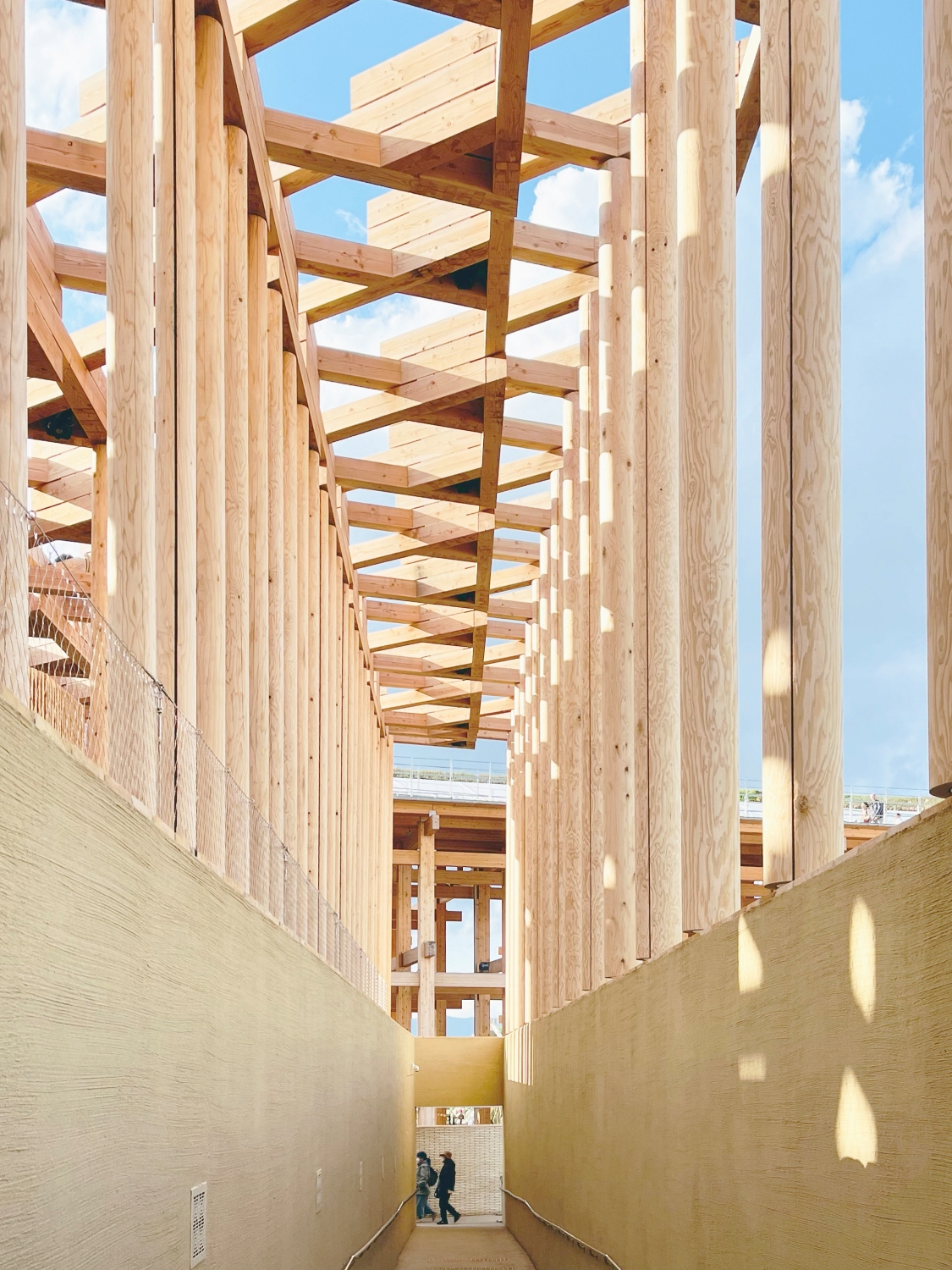
At the perimeter of World Expo 2025 Osaka stands The Grand Ring, a 2-kilometre wooden circular structure designed by Sou Fujimoto, encircling the Expo site and offering an immersive architectural experience. Ascending its rooftop terrace marked the symbolic start of our Pilgrimage, with panoramic views of the Seta Inland Sea and distant mountain range. More than a circulation path or landmark, the Ring served as a spatial condition merging function with experiential depth. As night fell, it became the illuminated backdrop for the “One Word, One Planet” ceremony, a sensory spectacle of light, water, and sound.
Departing from earlier Expos’ focus on tangible themes like industrial, urbanism or ecology, Expo 2025 tackled abstract, philosophical questions. The Grand Ring embraced this ambiguity, offering no fixed answers but inviting existential reflection through connection with nature and temporality, provoking both contemplation and critique.
THE NATIONAL PAVILIONS
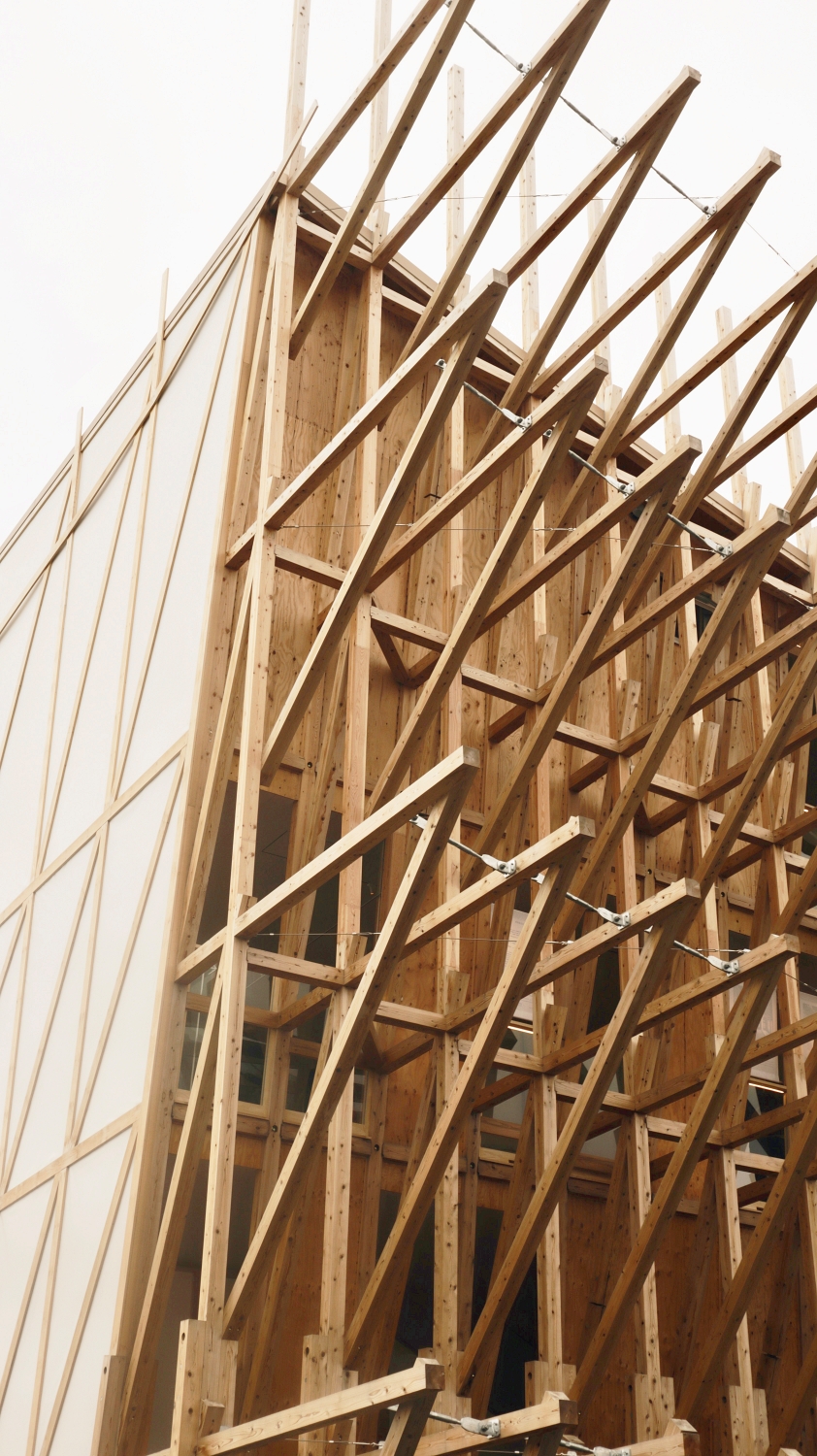
With 161 nations participating, the Expo reinforced its role as a globally inclusive platform for cultural diplomacy through architecture. The Japan Pavilion, “Between Lives” by Nikken Sekkei and Nendo, stood out as a radial timber ring and ‘Domino’ configured structure made using traditional joinery and local cedar. Doubling as a biogas plant, it poetically embodied life’s cyclical nature.
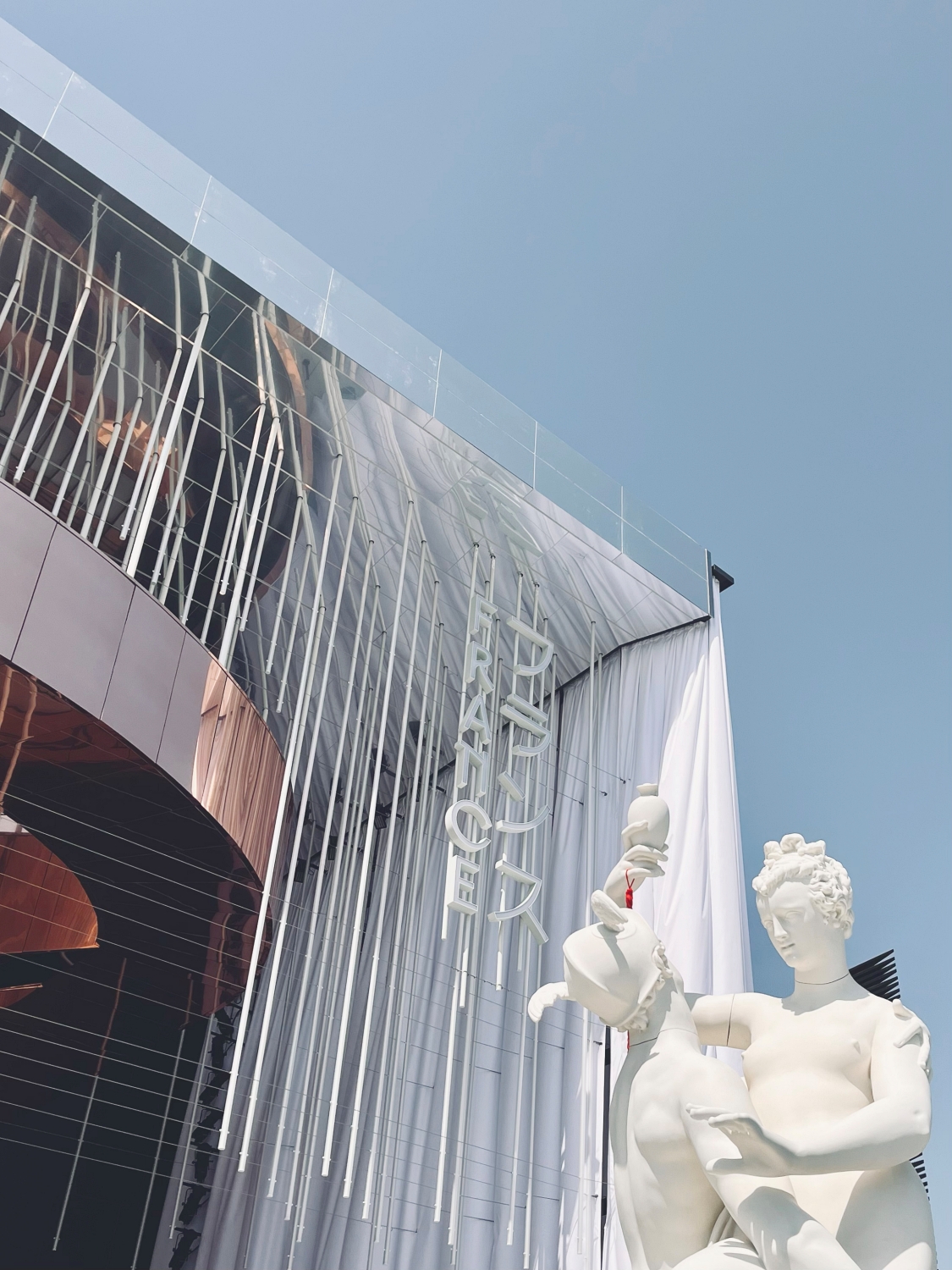
From Europe, designed by Coldefy & Associés and Carlo Ratti Associati, drawing from the French’s deeply rooted fashion cultural legacy, the France Pavilion expressed the nation’s Art de Vivre through the language of fashion and haute couture. Its theatrical veil façade and rose-gold reflective staircase embodied French elegance through a multisensory scenography, curated by luxury houses – Dior and LVMH.The Italy Pavilion, by Mario Cucinella Architects, reinterpreted the Renaissance ideals through a theatre and rooftop garden under the theme “Art Regenerates Life”.Spain celebrated maritime ties with Japan through a prefabricated structure. Its ceramic façade evoked the Mediterranean sea and sunlight.
From the Gulf, the Bahrain Pavilion, by Lina Ghotmeh, honoured maritime heritage through a timber dhow structure cooled naturally by water. The Saudi Arabia Pavilion, by Foster + Partners, recreated a courtyard village, depicting national transformation under Vision 2030.
From Central Asia, Uzbekistan’s “Garden of Knowledge” by Atelier Bruckner combined earth bricks and timber to symbolise growth along the Silk Road. Meanwhile, China’s pavilion unfolded like a bamboo scroll, referencing Taoist and Confucian philosophies to portray harmony between humanity and nature.
Our pilgrimage journey concluded at Malaysia’s pavilion, designed by Kengo Kuma & Associates. Its interwoven bamboo façade, inspired by songket textiles, symbolises unity and ecological sensitivity. Located in the Empowering Lives zone, it was elegant and symbolic. However, outside the Expo grounds, public reception back home was mixed, raising critical reflections on ethical procurement, representation, and the recognition of local creatives. The pavilion became more than a national showcase but a conversation starter, prompting introspection on creative equity and ethical governance in national representation.
The World Expo Osaka 2025, with its central theme “What is the happy way of life?”, invited global reflections, diverse cultural interpretations, and architectural expressions, and raised questions about relativism, equity, and ecological responsibility. From the Crystal Palace to the Grand Ring, the Expo traced an evolving narrative -from industrial monumentality to introspective inquiry and environmental sensitivity.
Architecture at the Expo became a vehicle for storytelling, interrogating identity, confronting global challenges, and reflecting shared aspirations. The Grand Ring embodied a contemplative architectural gesture, framing not only the Expo grounds but a broader question of how we live and connect. We, as architectural pilgrims, were reminded that architecture is not just about aesthetics or innovation, but about resonance, agency, and ethics.
The Expo reaffirmed architecture’s role as a testing ground for forward-thinking. Ultimately, we witnessed a shift, from materialism to meaning, from prestige to empathy, and from nostalgia to responsibility. Architecture, as the Expo showed us, is an evolving dialogue shaped by time, context, and humanity’s ever-changing values.humanity’s evolving concerns, transforming nostalgia into forward-thinking responsibility.