
In a pivotal moment for civic architecture in Sarawak, the Bintulu Urban Park competition has emerged not only as a platform for design excellence but as a demonstration of how public spaces can be envisioned through inclusive, merit-based processes. Convened by the Bintulu Development Authority (BDA) in collaboration with Pertubuhan Akitek Malaysia Sarawak Chapter (PAMSC), the competition sought thoughtful proposals to unify two key sites in Bintulu: Pantai Tanjung Batu and the Bintulu Waterfront.
The winning proposal, titled “Project Confluence,” reimagines Bintulu’s coastline as a continuous civic and ecological corridor. More than a master plan, the project reframes the waterfront and beachside edges as spaces of identity, encounter, and environmental resilience.
In a context where public projects are often shaped by administrative expediency or commercial interests, the Bintulu Urban Park competition marked a significant shift. By opening the design process to competition, it placed emphasis on architectural merit and contextual understanding as essential criteria for shaping civic environments. The outcome demonstrates the value of adopting design competitions as a standard practice, particularly for projects that impact the public realm.
When managed with clarity and professional oversight, competitions can generate fresh, well-considered solutions. In Bintulu’s case, they encouraged multidisciplinary dialogue across landscape, heritage, ecology, and urban design. This led to a deeper, more meaningful engagement with the site, not as a blank canvas, but as a place layered with history and potential.
“Project Confluence” is guided by three strategic pillars: Ecological Regeneration, Civic Activation, and Cultural Resonance. These strategies operate at different scales, responding to immediate site conditions while establishing a framework for long-term public value.
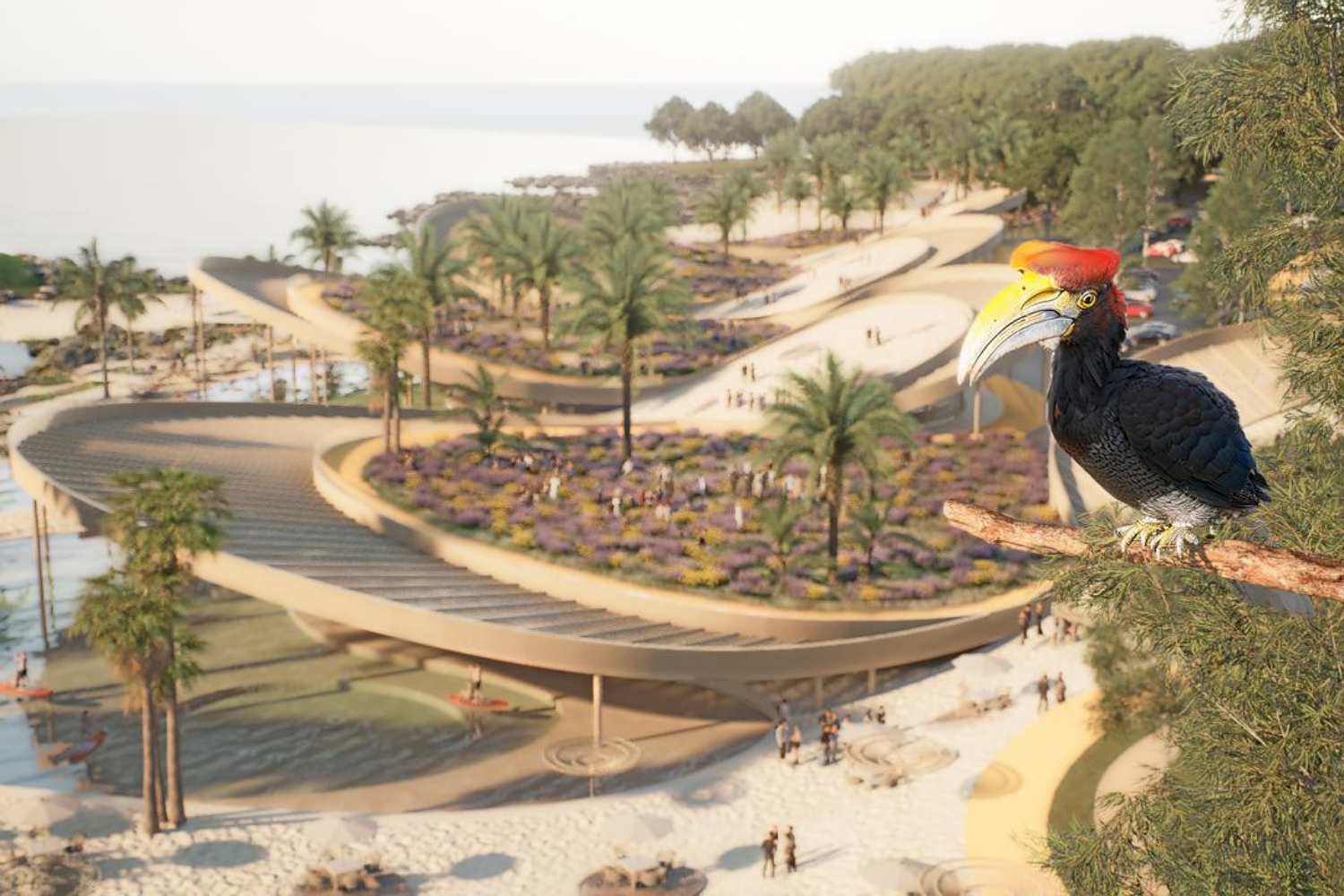
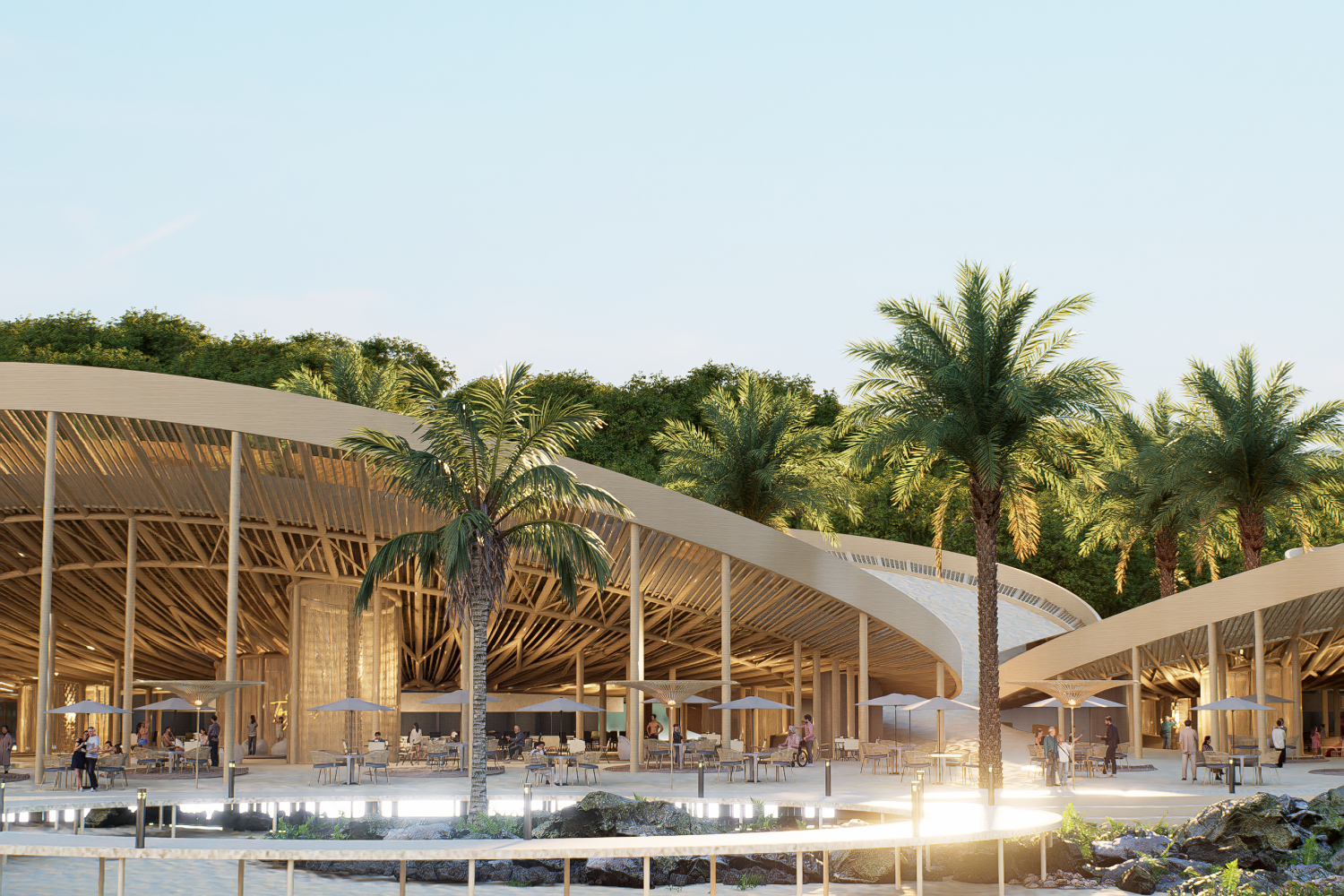
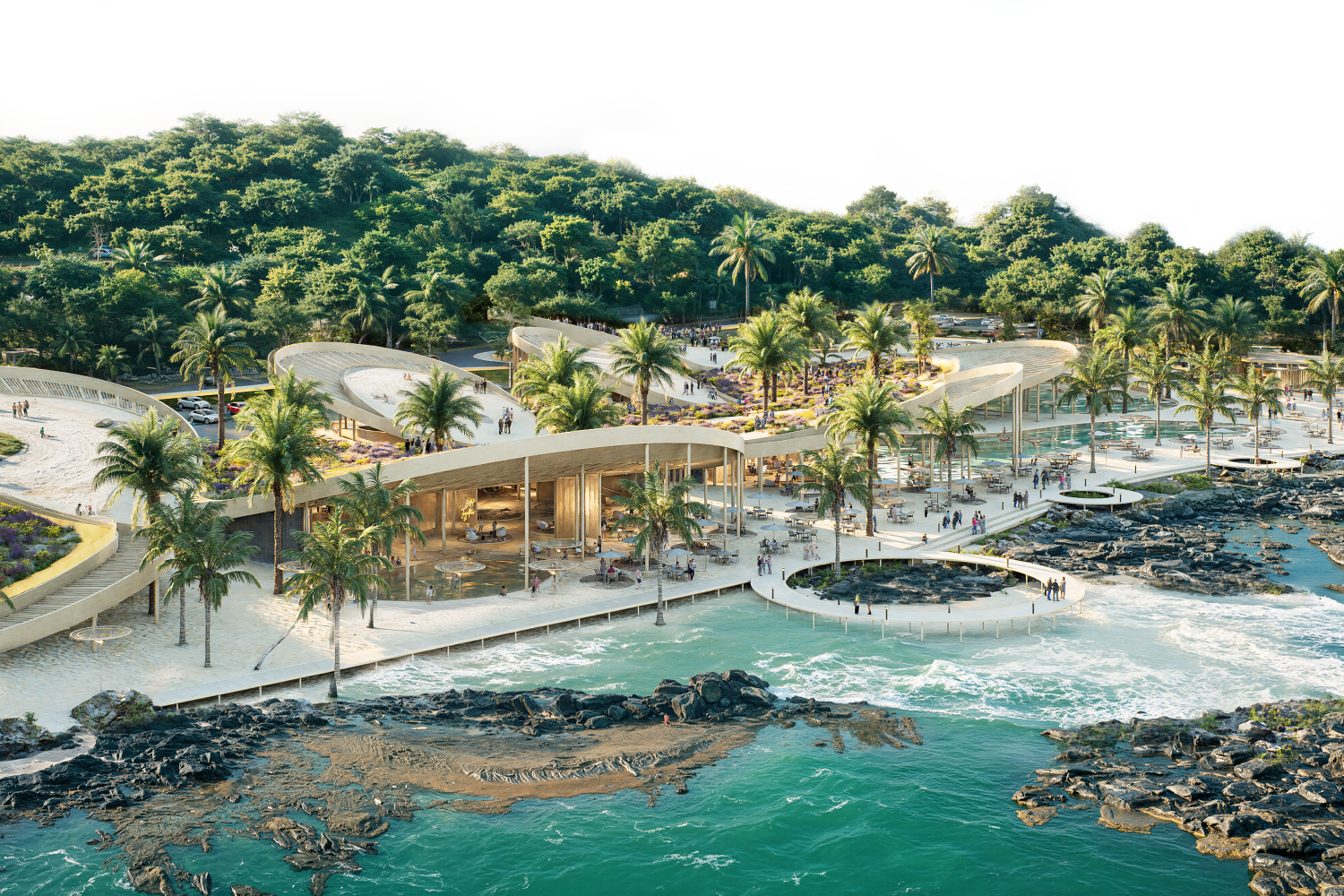
At Pantai Tanjung Batu, the plan introduces Alun (The Wave), a civic promenade that flows with the topography and accommodates shaded walkways, recreational spaces, and native coastal planting. At the heart of Alun is a sweeping canopy structure designed not only as an architectural gesture, but as a climatic buffer providing shelter from intense equatorial sun and heavy coastal rain. The structure offers continuous shaded cover over gathering spaces, seating terraces, and public amenities, enabling all-weather use and supporting a resilient public realm. The ground surface beneath is intentionally varied -partially paved to support civic functions, yet allowing the beach to continue seamlessly into the canopy, blurring the line between built and natural landscape. The resulting environment invites people to linger, gather, or retreat-protected, yet still connected to the shore.
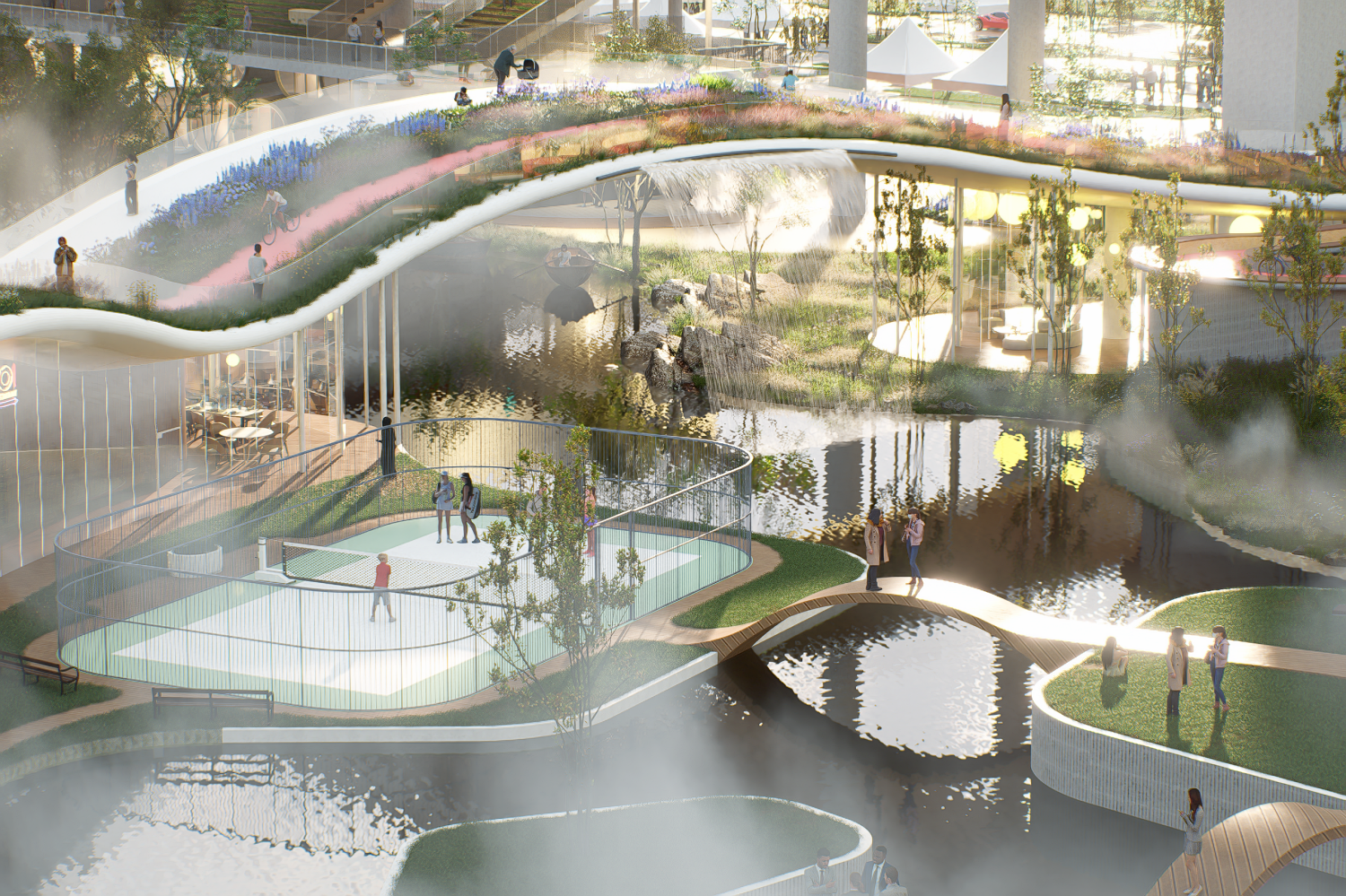
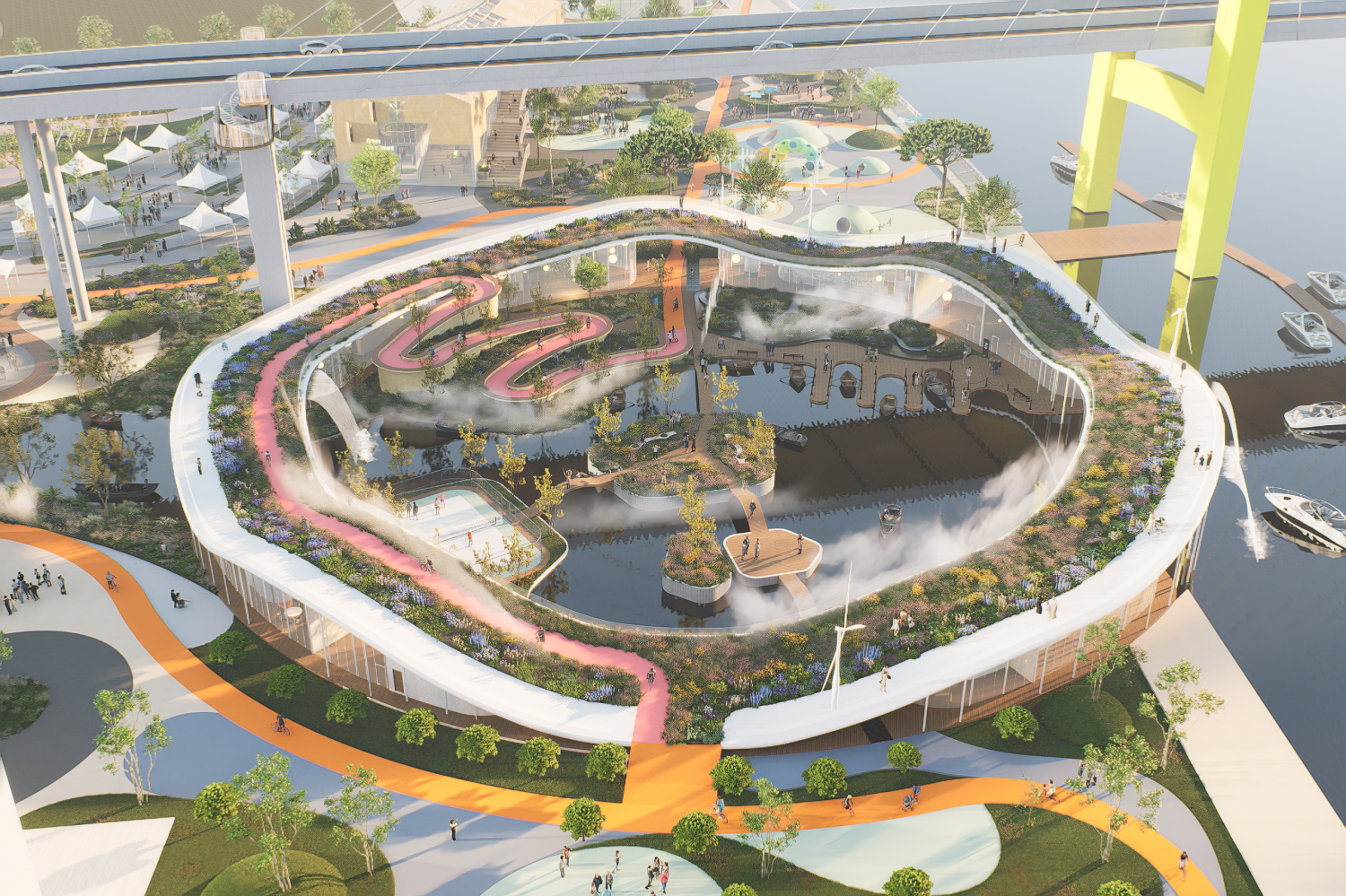
At the Waterfront Site, the design features the Floating Rotunda, a circular, open-air structure elevated above tidal lines and spanning across a natural stream. More than a pavilion, it functions as a multi-purpose envelope: a public platform for gathering and performances, an observation point over the tidal zone, and a key connector between two parts of the site. A pedestrian and cycling path flows across its upper level, integrating it into the broader movement network while offering shaded traversal and framed coastal views.
The Rotunda also acts as a landscape bridge, joining the two stream edges and softening the relationship between water, walkway, and parkland. Its open form invites multiple interpretations – contemplative retreat, cultural space, ecological threshold – making it a pivotal spatial and symbolic anchor in the waterfront masterplan.
Other elements, such as the Heritage Spine, Adaptive Green Building, and Energy Pavilion, expand on sustainability themes and strengthen the connection between cultural memory and contemporary use.
Importantly, these features are rooted in a deep understanding of the site.enhanced; and the circulation network is reshaped to accommodate walking, cycling, and collective gathering. The overall system is responsive, designed to shift with the rhythms of weather, tide, and human activity.
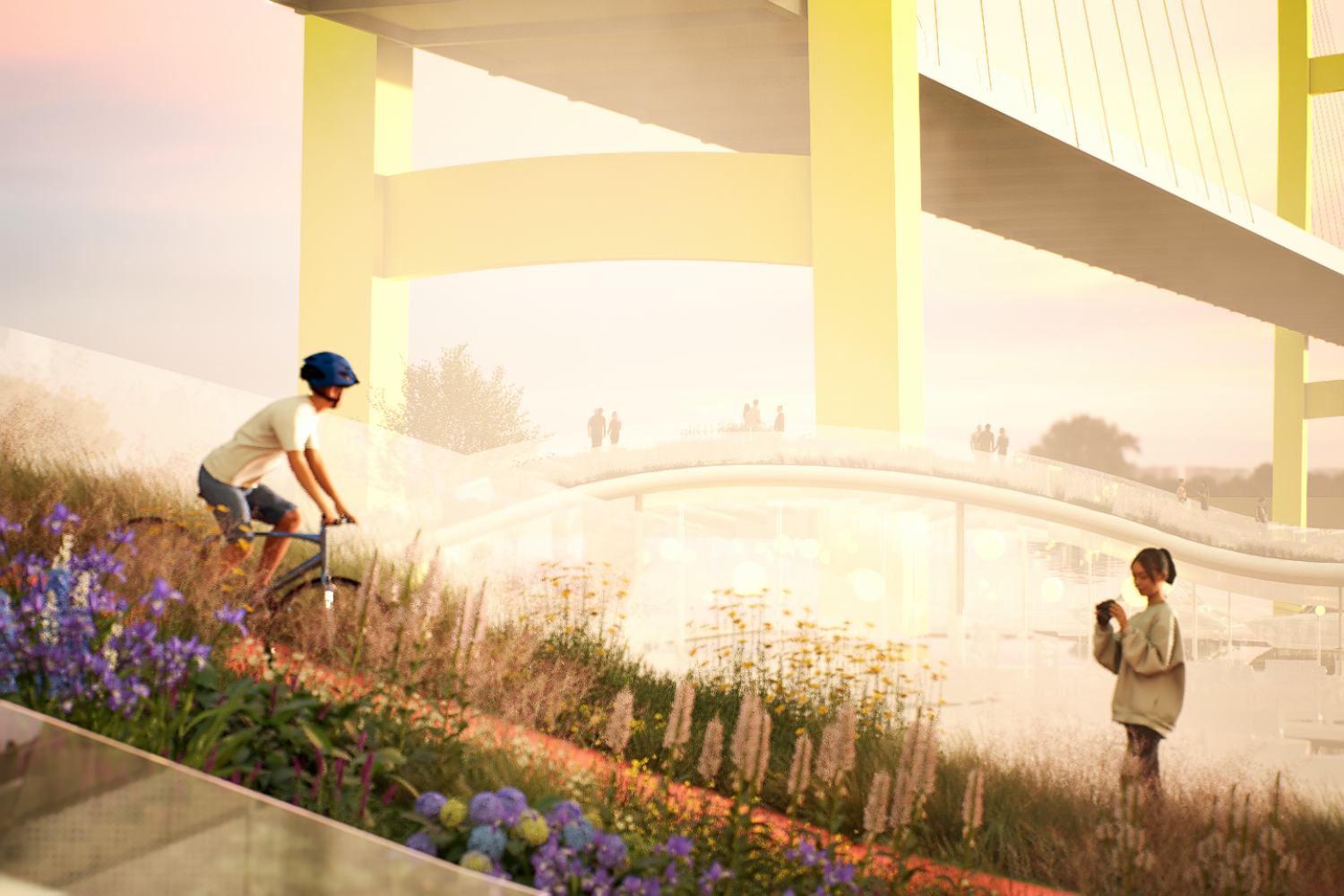
Bintulu’s coast is more than a scenic edge. It is a layered landscape shaped by fishing communities, colonial infrastructure, and energy-driven urbanisation. The proposal acknowledges these layers and seeks to reconcile them with dignity and care. For example, the undercroft areas beneath raised structures are designated as “Underquarters” flexible spaces for vendors, makers, and cultural programming.
Rather than impose a top-down vision, the design creates room for local ownership and diverse uses. It balances architectural expression with a strong social dimension.
The strength of the Bintulu Urban Park competition lies not only in the design outcome but in the commitment shown by its organising institutions. The collaboration between PAMSC and BDA ensured a well-structured process-complete with briefings, site access, jury deliberation, and plans for implementation.
This framework has set a positive precedent. As Sarawak moves ahead with major infrastructure initiatives -such as the Autonomous Rapid Transit (ART) system and renewable energy targets-there is growing urgency to integrate good design thinking at policy and project levels. Design competitions are not optional extras; they are effective tools for engaging public interest and improving long-term project quality.
At its best, architecture does more than solve technical problems; it helps shape civic life. It frames how we come together, commemorate, celebrate, and connect with our environment. The Bintulu Urban Park, in its ambition and execution, holds the potential to become such a place.
Not through monumental gestures, but through meaningful ones, walkways that invite, pavilions that protect, and landscapes that regenerate.
As the project progresses toward realisation, it is hoped that the value of the design competition continues to be recognised, not only for what it delivered, but for the clarity and professional process that made it possible. It is a reminder that the public realm deserves our best thinking, and that communities, when trusted, are eager collaborators in the shaping of place.