Data Centre for NTT at Cyberjaya that evolves around the transition of four seasons:
spring, summer, autumn, and winter
Text by the architects
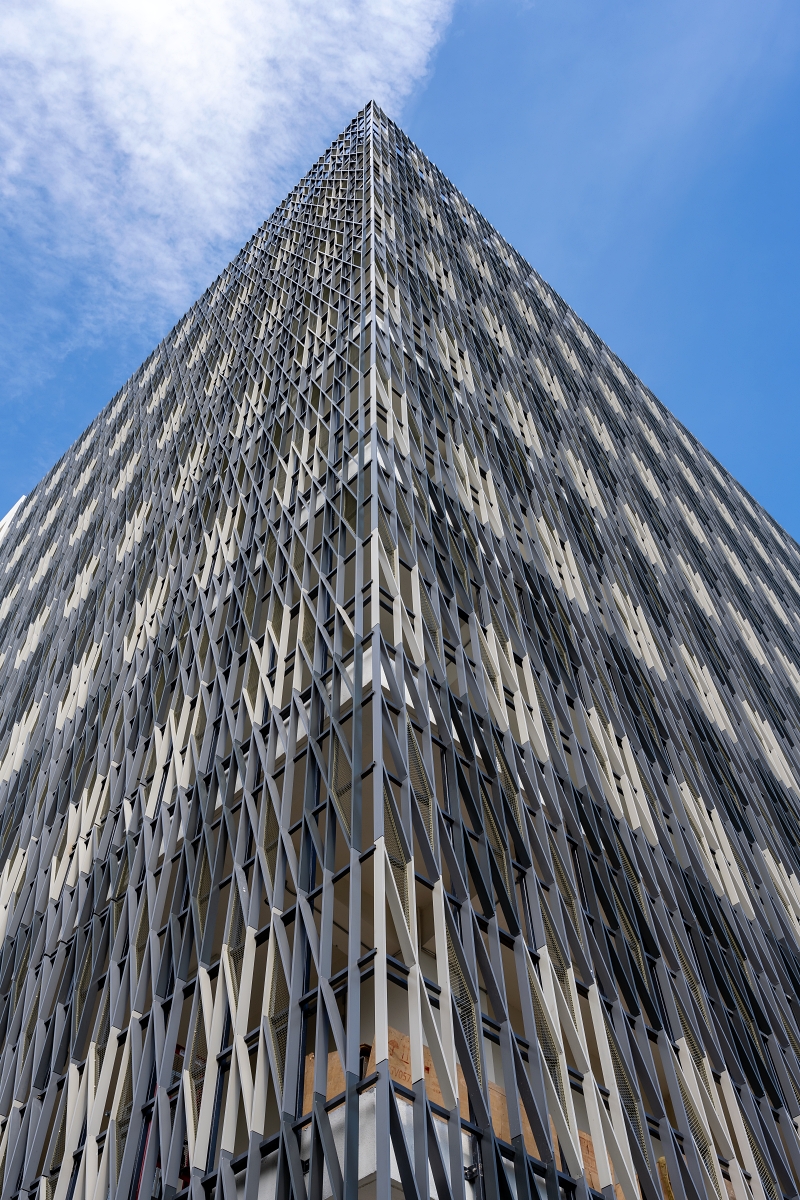
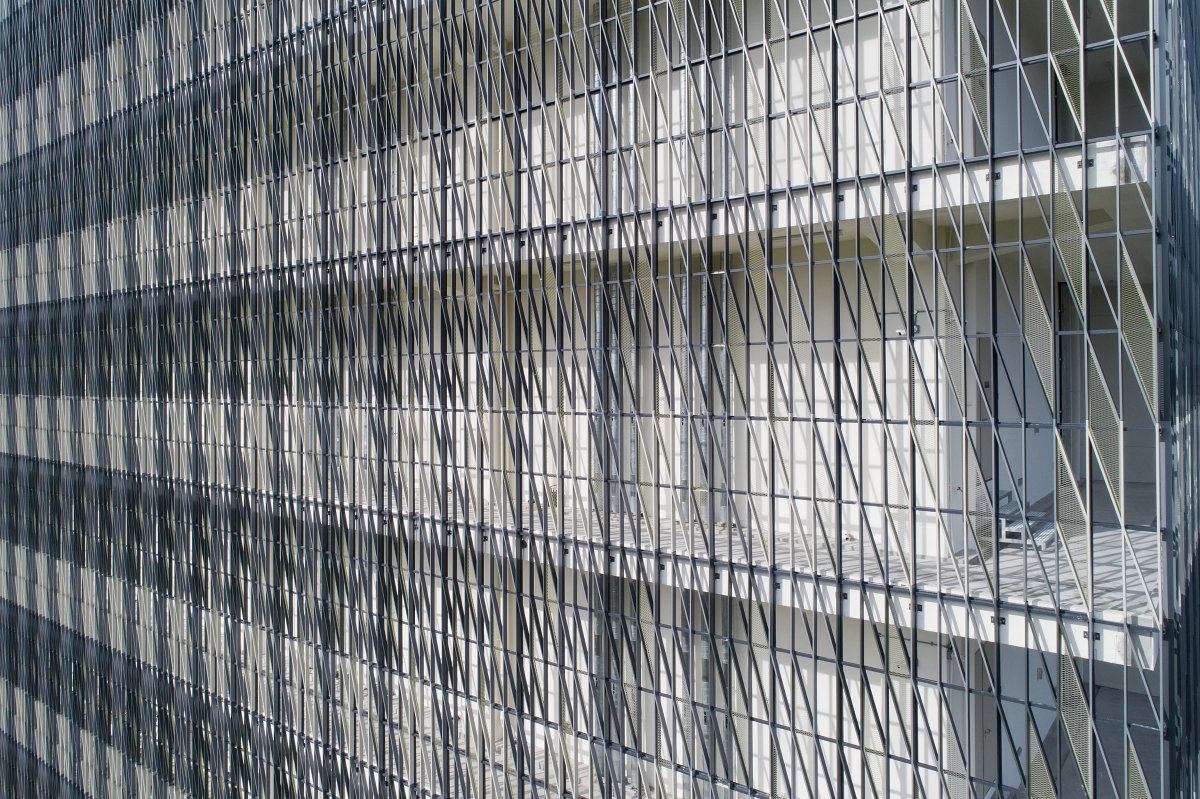
Close-up shot of façade detail
The new Data Center (DC) block, Yuki, is built within the existing campus of NTT MSC Sdn. Bhd., as part of the expansion plan. It is located at Cyberjaya, the centre of the Multimedia Super Corridor (MSC) in Malaysia. NTT MSC is a subsidiary of NTT Communications, the international and long-distance arm of NTT (Nippon Telegraph and Telephone Corporation), the largest telecommunications company in Japan and a leading global provider of information and communication technologies (ICT) solutions.
The DC block is named after the Japanese word Yuki (雪) which means “snow” in Japanese. Yuki is a 7-storey high DC block that houses computer servers with backup power supplies, redundant data communications connections, and high level security within a controlled environment.
Yuki represents winter, transiting from the existing autumn block. In winter, Japan is famous for powder snow with a major snowfall. Hence, the name Yuki.
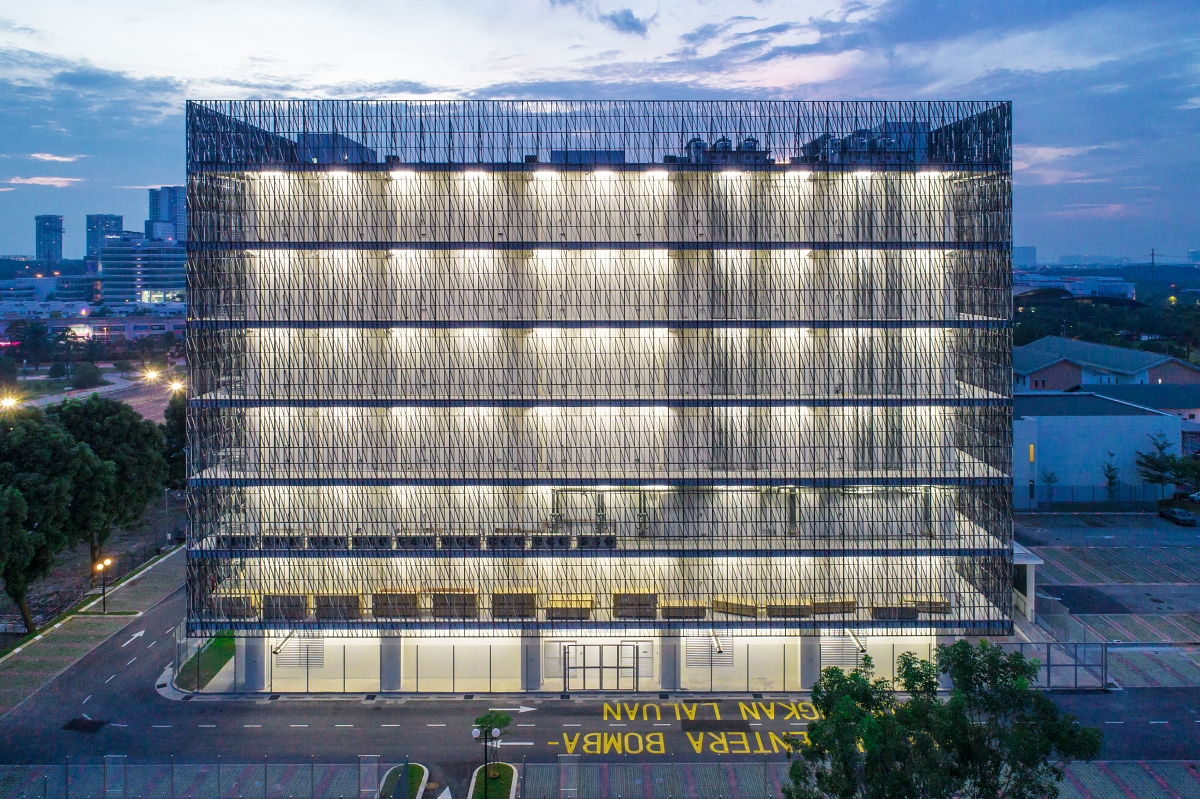
Yuki at night
COMPLETING THE FOUR SEASONS
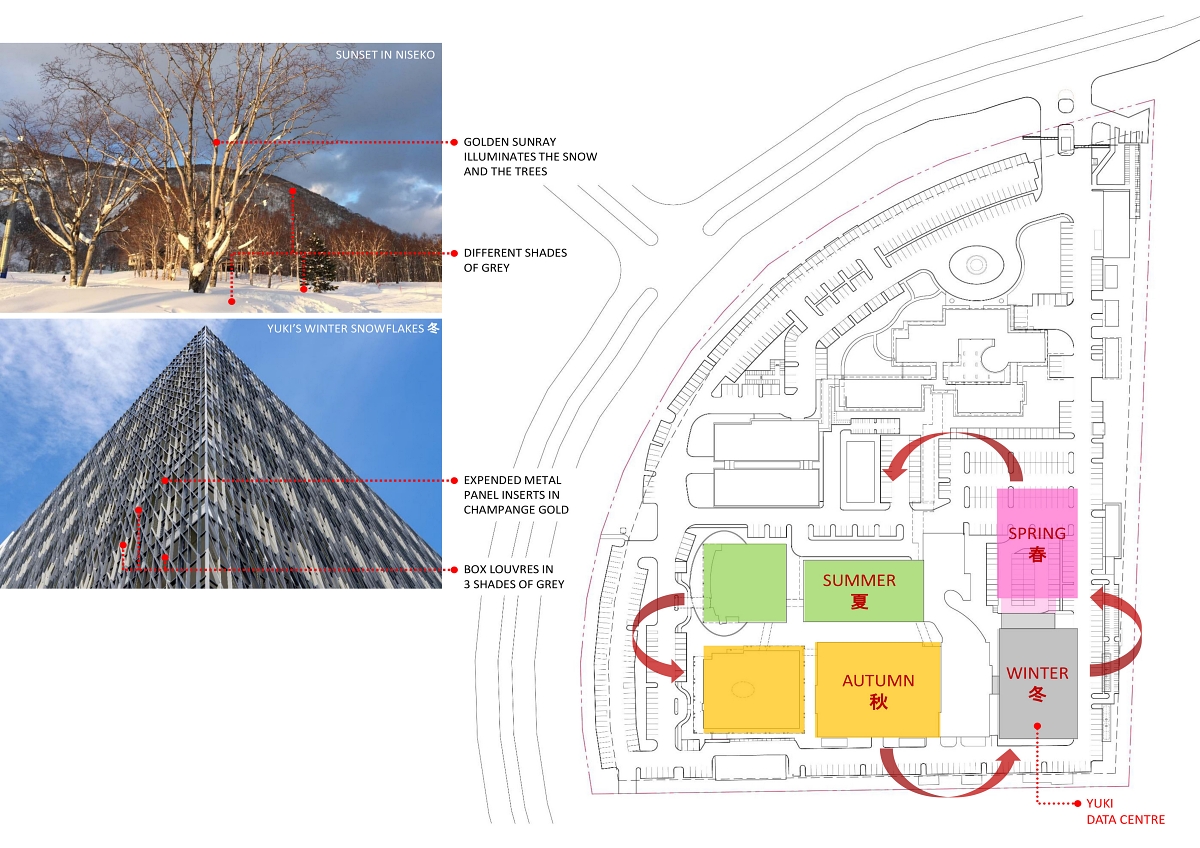
The data centres on-site evolved around the transition of four seasons: spring, summer, autumn and winter (春夏秋冬) in Japan. Yuki represents winter, transiting from the existing autumn block. In winter, Japan is famous for powder snow with a major snowfall. Hence, the name Yuki.
Diagram 1 shows the transition of four seasons of the whole campus
THE MORPHING OF NATURAL ELEMENTS
Snow is made up of snowflakes which are ice crystals. Winter snowflakes are, therefore, ‘graphicalised’ with overlapping of NTT letters, forming the monogrammed louvres on Yuki.
Each block is colour coded according to its season and distinctive element. Yuki is a time of greyness and cold. Winter colours such as grey, slate blue, winter white and charcoal are used on the façade. The ‘graphicalised’ snowflakes are further enhanced with different shades of grey aluminium louvres punctuated with golden expanded metal panels much like the setting sunray melting into the snow-capped mountains.
BUILDING MATERIALS
The building is mainly constructed with three materials in varying levels of opacity – concrete, bricks and metal louvres. They are used for different degrees of enclosures to suit the function of the spaces within.
Concrete is durable and fire-resistant and is mainly used for structural members, such as floor slabs, columns, and beams.
Data halls are delicate rooms which required specific temperature and humidity conditions. They are enclosed with a double brick wall system for thermal, moisture and solar control.
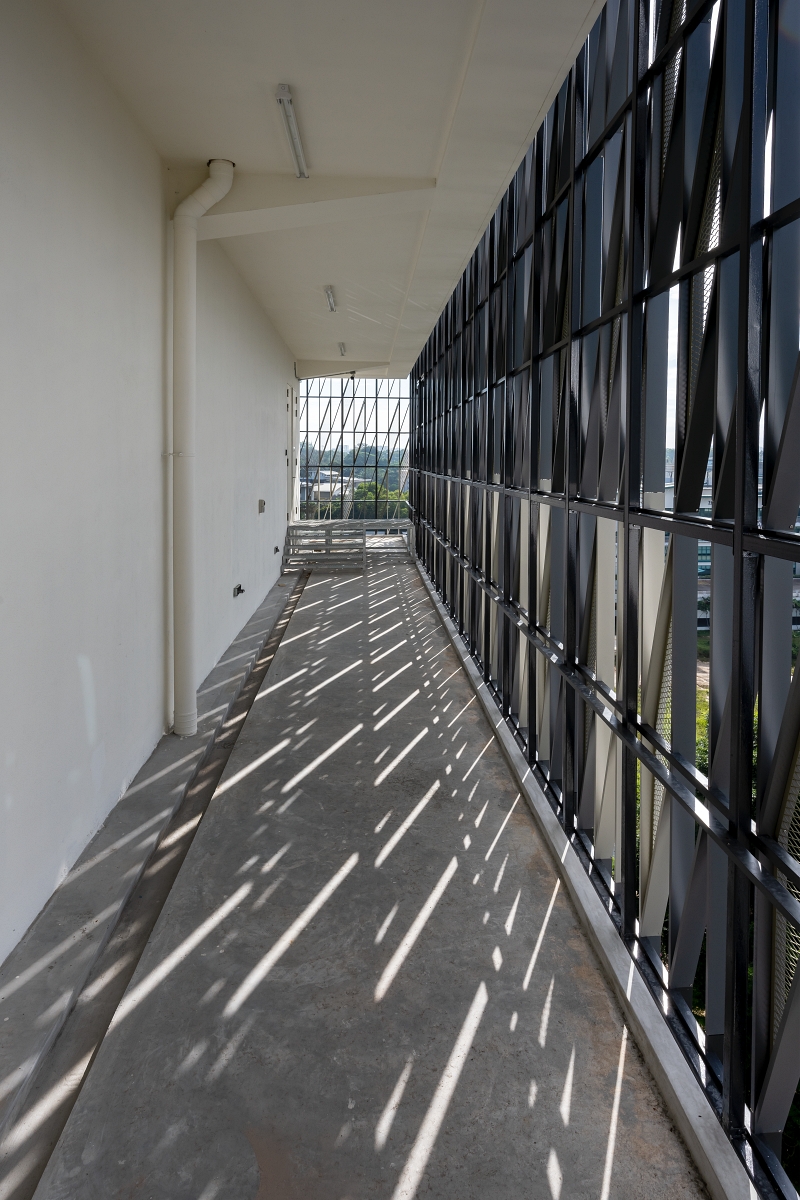
The outdoor air conditioning units servicing the data hall have situated on the periphery of the building. AC ledge is the back of the house of a building and is often an eyesore. In Yuki, the monogrammed snowflakes louvres envelope the entire DC to screen these outdoor units. It forms the façade and the identity of Yuki while protecting technicians servicing the A/C ledge. The permeability of the louvres also allows heat generated from the air conditioning units to escape to the open air freely.
The louvers façade, enveloping the AC ledge
GREEN BUILDING
The 7-storey block has achieved Bronze Provisional GreenRE Certification. The building’s double brick wall with an air gap system helps to achieve very low OTTV.The louvres that wrap around the building further insulate it. Low-E glass glazing used in common areas promotes natural ventilation and kept air conditioning to a minimum.
The building is equipped with a monitoring system to capture energy, thermal and humidity conditions within the data centre. The building also uses highly efficient LED lighting throughout the entire building. Daylight use is maximized throughout the building where possible in the common areas with no windows into the data centre to improve thermal insulation.
In addition, insulation is installed at the soffit of the roof level, further insulating the whole building. This effective insulation system reduces direct solar gain through the RC roof into the building. Each room in the building can be kept at the desired temperature, without increasing energy consumption.
Façade acting as a protective barrier at the AC Ledge
LINKAGE
Yuki is linked to the Annex Building through a link bridge, creating a gesture of transitioning between seasons, connecting Yuki with other blocks, and complementing the other data centre buildings while allowing both equipment and human to move across different blocks.
SAFETY AND SECURITY
Data centre holds sensitive and proprietary information. Security of the data centre is of the utmost importance. The architecture of a data centre is responsible for its physical security.
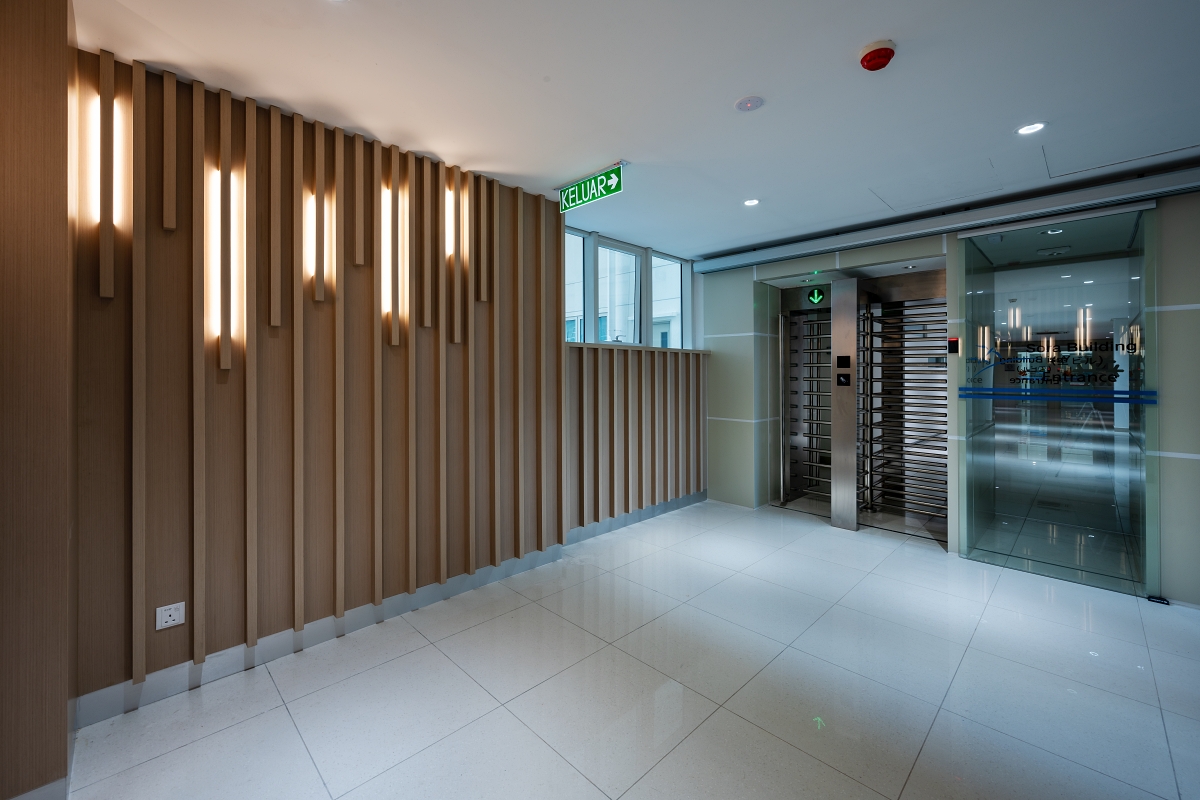
The building has limited entry points on the Ground Floor: The Loading Bay and the Visitor’s Lobby. The whole building is surrounded by a 3m high-security fence, further securing the building. The access from the neighbouring blocks is limited by mantrap, preventing unauthorized people from entering the data centre area.
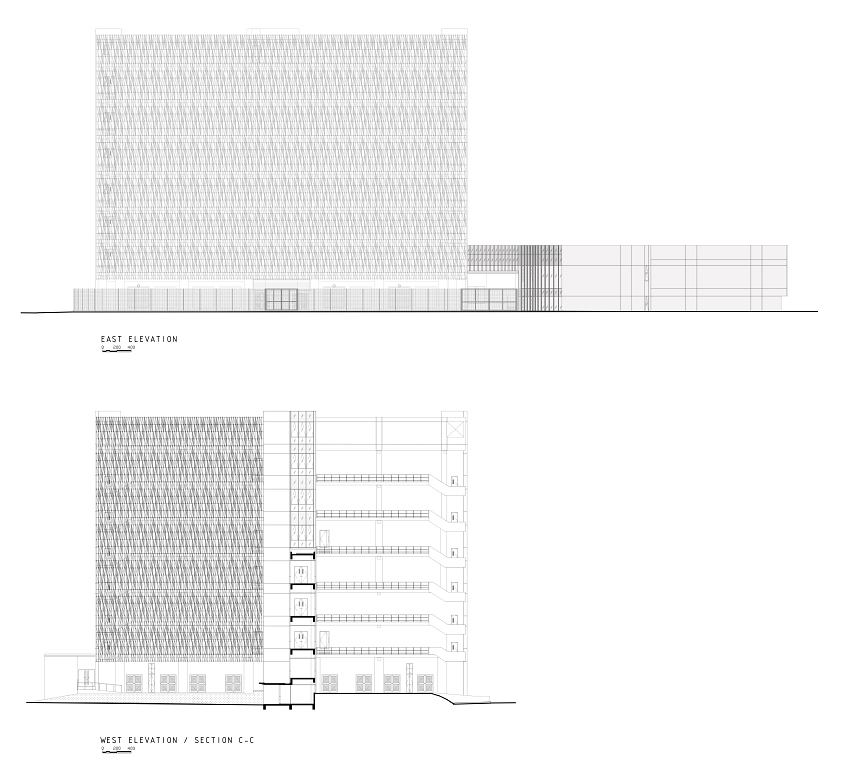
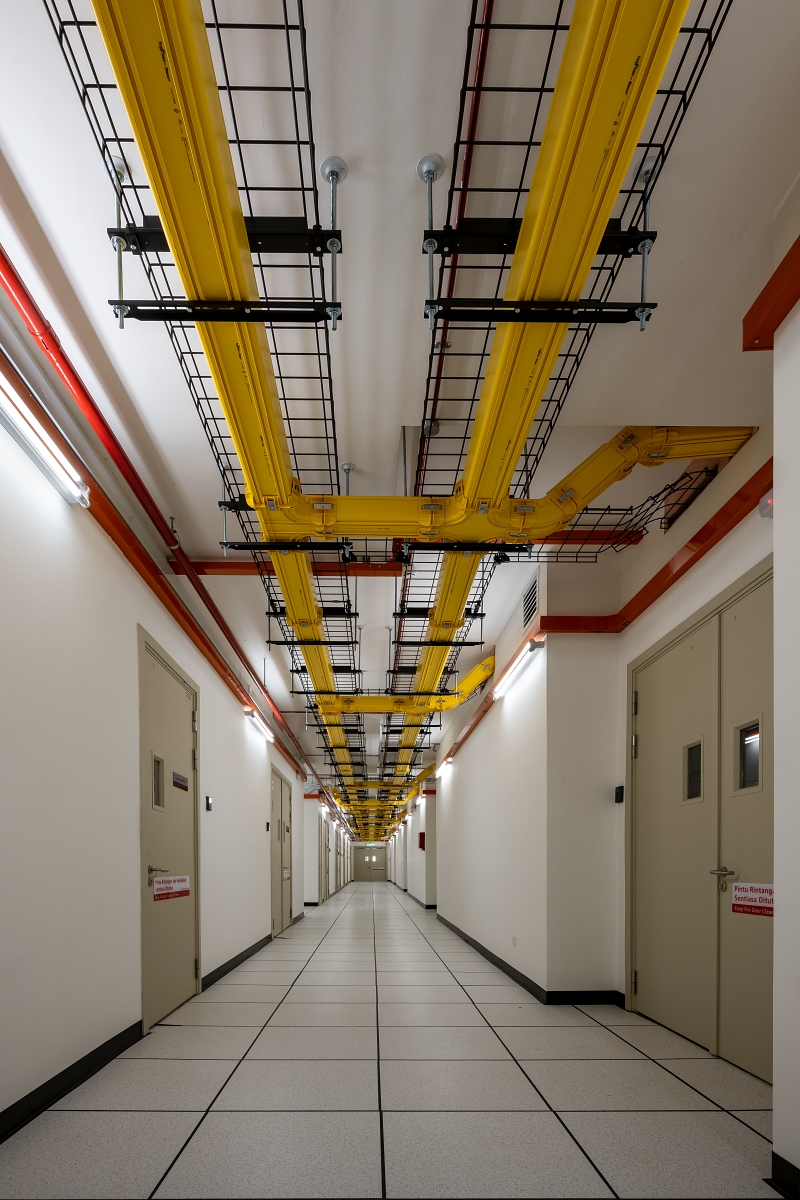
The central service corridor of typical floor
FULFILLING OWNER’S NEEDS
As NTT MSC runs a 24/7 business operation, the building design has achieved the company’s need for security, equipment accessibility and sustaining long operating hours without compromising its operation standard. It has also achieved green building standards from Green Building Index (GBI, Malaysia).This has created a healthy environment, a highly efficient and cost-saving building, which further enhanced Yuki’s one-stop ICT solutions.
Each block is colour coded according to its season and distinctive element. Yuki is a time of greyness and cold. Winter colours such as grey, slate blue, winter white and charcoal are used on the façade.