TEXT BY BY NURUL ALIA AHAMAD & VERONICA NG FOONG PENG. ALL IMAGES WERE PHOTOGRAPHED BY LAURENCE CHOO FROM PIXELAW PHOTOGRAPHY. FEATURED IN THE MONOGRAPH TITLED “STADIUM MERDEKA” (2ND EDITION) (2023). PUBLISHED BY TAYLOR’S PRESS.
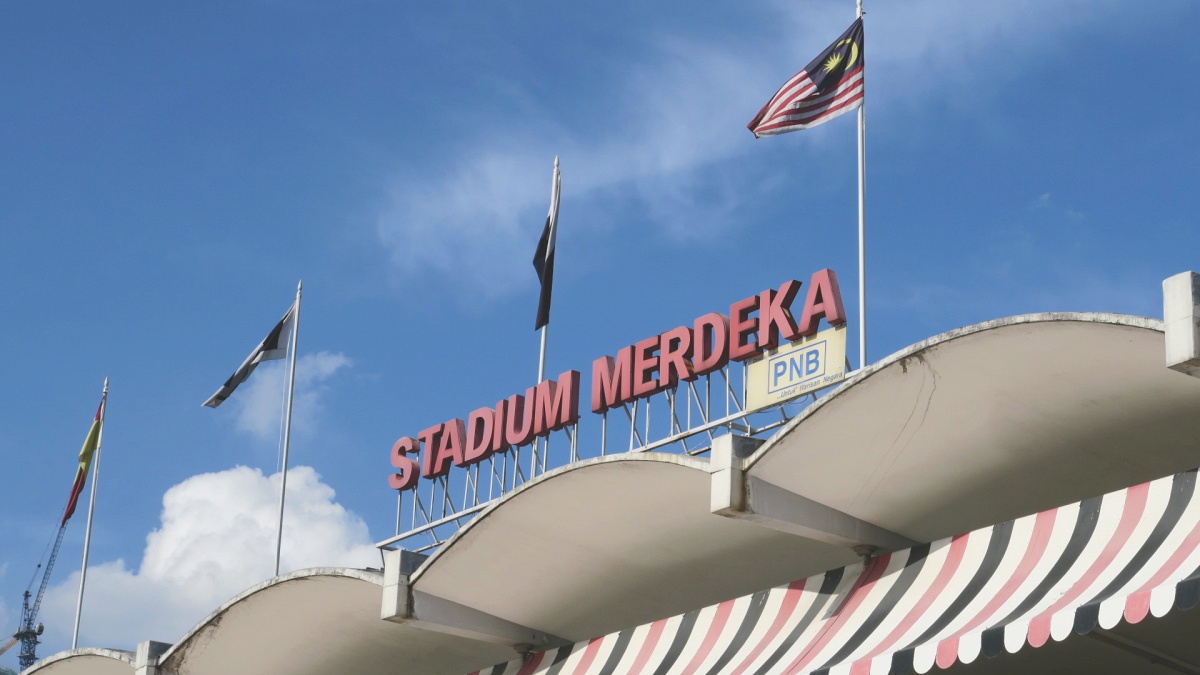
A prominent signage greets visitors at the main entrance
‘SALAM HORMAT DAN SALAM BAHAGIA, SELAMAT DATANG KE STADIUM MERDEKA’
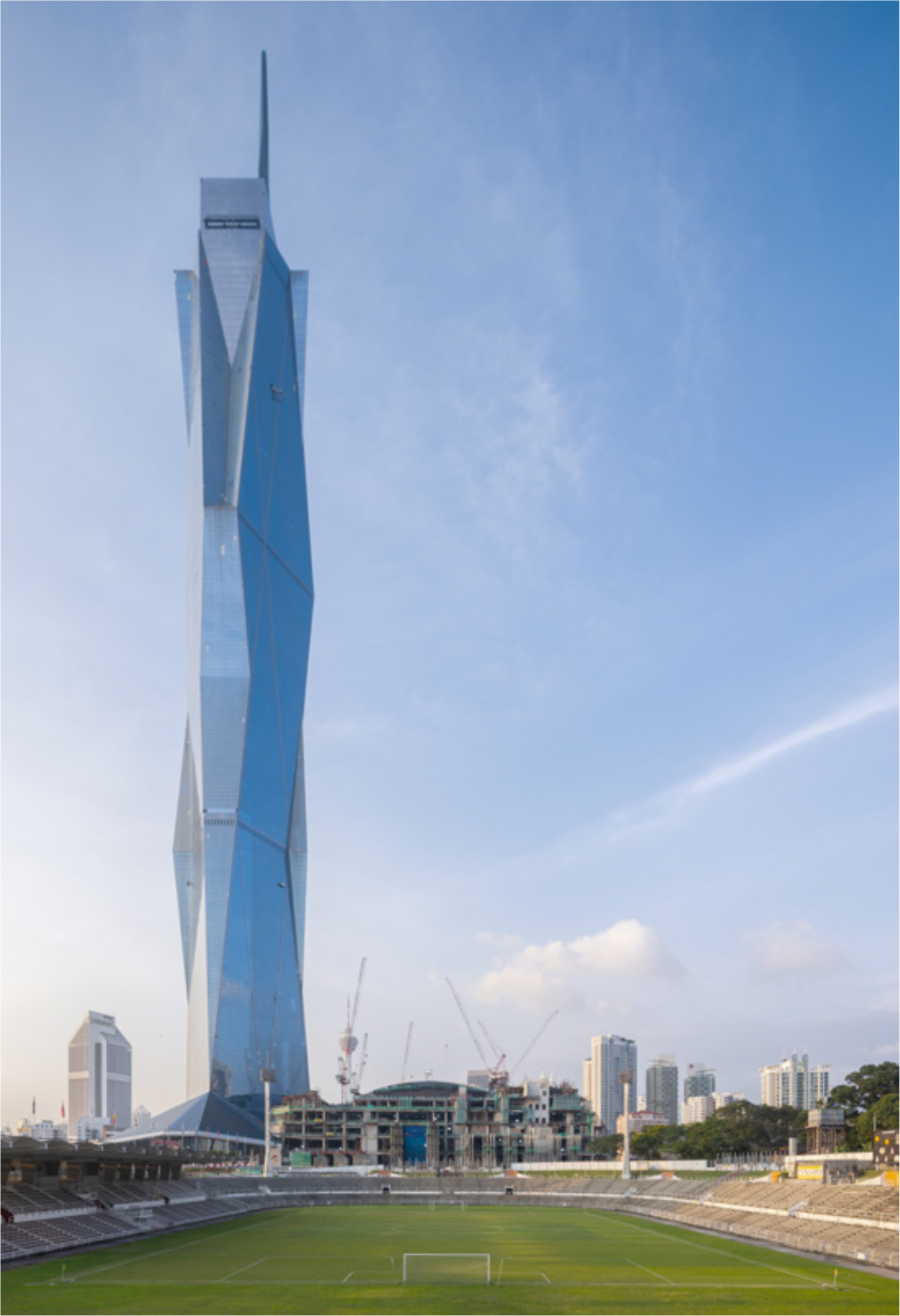
Stadium Merdeka finally reopened its doors to the public on August 17, 2024, after being closed for almost eight years. Located on Jalan Davidson (now known as Jalan Stadium), its construction began in 1956 and was completed just in time for the proclamation of Malaya’s independence in August 1957. It was designed by Stanley Edward Jewkes, then Malaya’s Public Works Department deputy director. The stadium is now part of the 40acre Merdeka 118 precinct, comprising the Merdeka 118 tower, a retail mall, serviced apartments, a hotel, and Stadium Negara. It was claimed that no other architectural edifice in Malaya during the independence period held greater significance than Stadium Merdeka, as it allowed people of diverse backgrounds and beliefs to unite and celebrate a shared dream. The stadium symbolises political freedom and the resilience of a young modern nation.
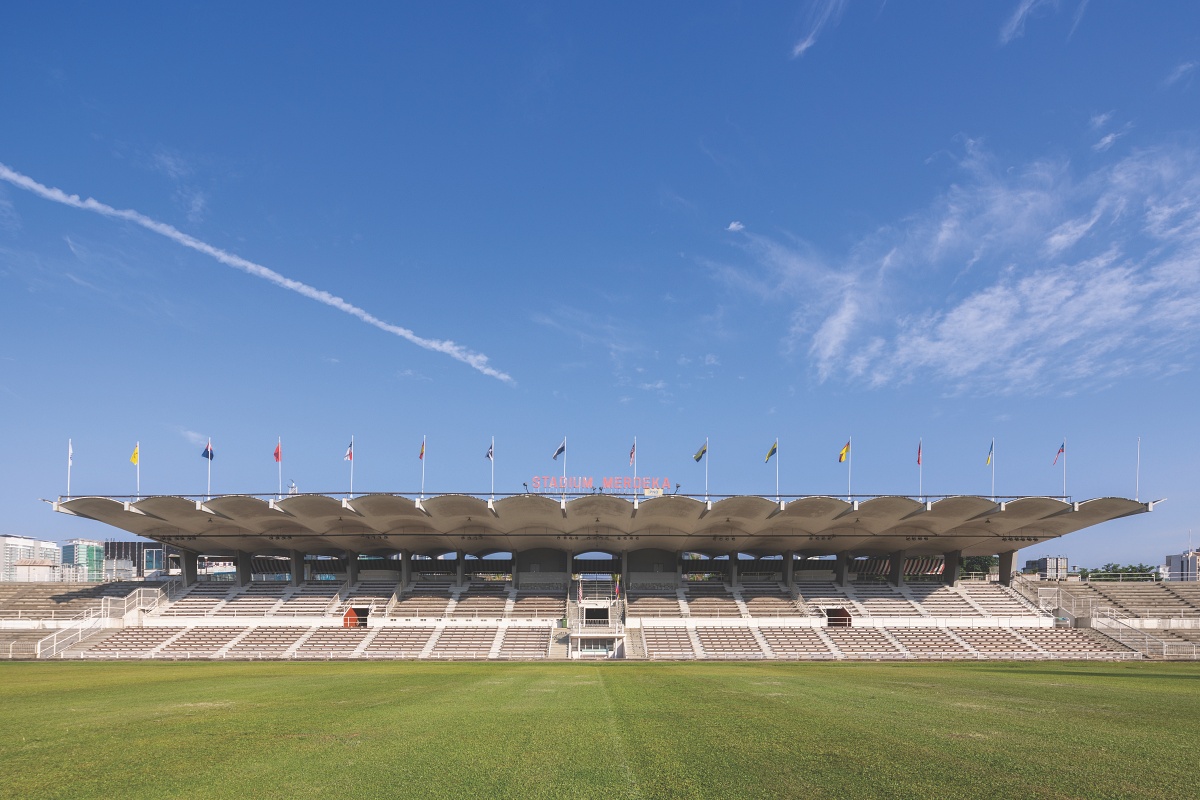
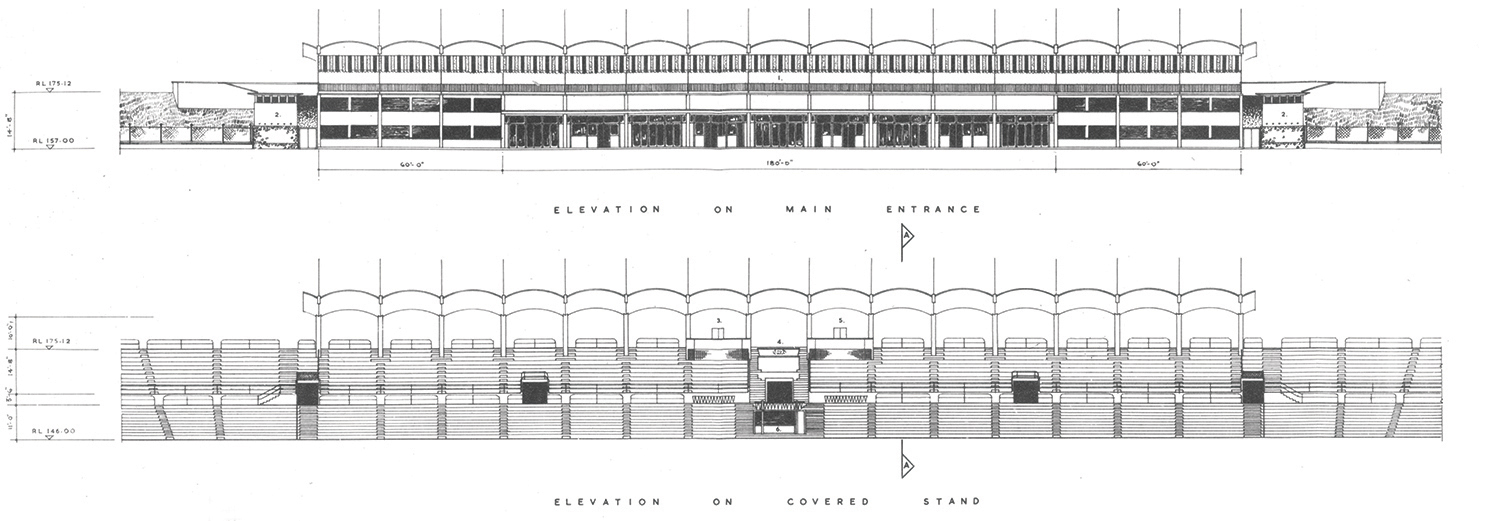
Covered stand under fifteen cantilevered reinforced concrete shells
IF STRUCTURES COULD TALK
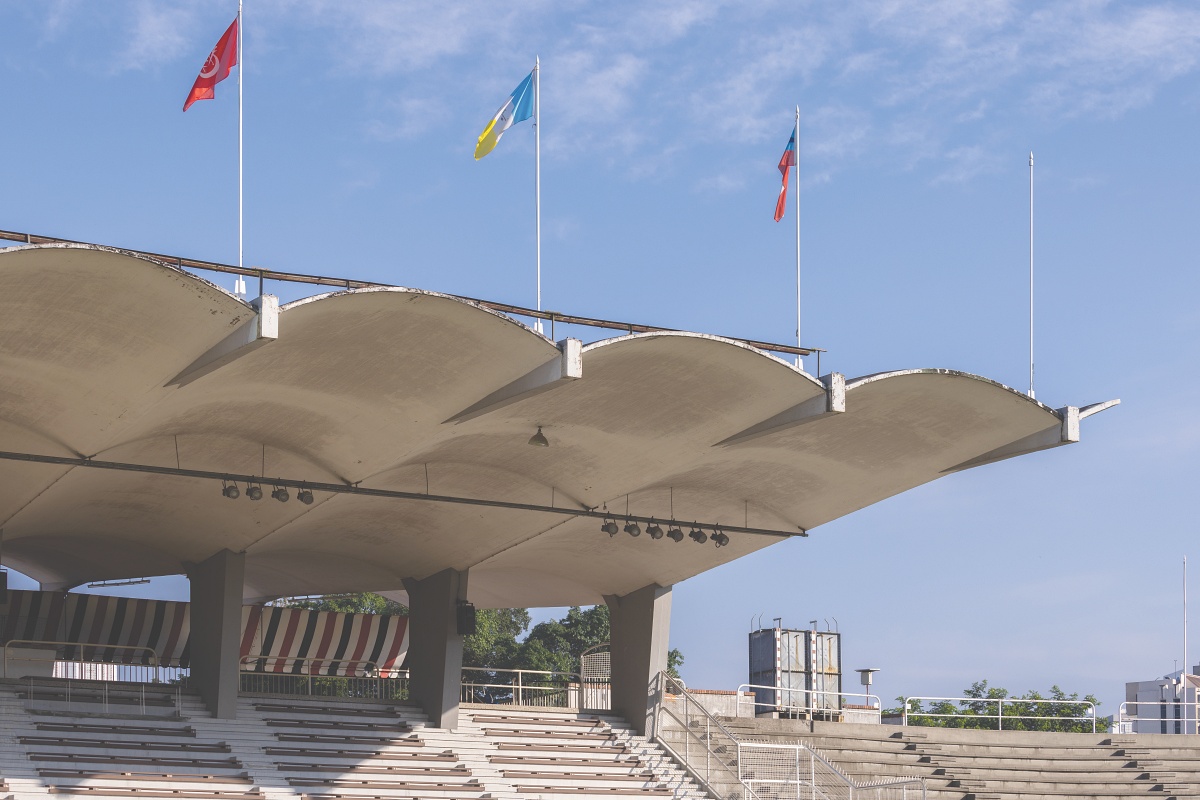
The stadium’s design was envisaged as an Olympic Games arena. At the time of completion, it was the largest stadium in Southeast Asia. It also boasted two engineering feats: the tallest pre-stressed floodlight towers and the most extended cantilevered shell roofs in the world at the time. However, Stadium Merdeka was more than just an architectural marvel or a venue for sports and cultural events. The influence of this stadium extends beyond that, affecting our communities’ social and cultural fabric. It witnessed three pivotal moments in our history that shaped our nation: the declaration of independence of the Federation of Malaya on August 31, 1957; the proclamation of Malaysia’s formation on September 16, 1963; and the third, though less discussed, occurred in the aftermath of May 13, 1969, where people sought refuge within its structures. For these reasons, restoring to its original state has become even more critical, as it serves as an essential reminder to us and future generations of what our forefathers fought for.
RESTORING MEMORIES
Despite its immense historical significance, the stadium was almost forgotten, overtaken by the country’s rapid urbanisation. At one point, it even faced the threat of demolition to make way for new development. In 2000, PNB Merdeka Ventures came to the rescue by acquiring Stadium Merdeka. Subsequently, approval for restoration work was obtained and carried out in two phases. Laurence Loh of Arkitek LLA was appointed as the leading architect for this conservation project to restore the glory of our stadium.
The first phase involved removing the concrete upper tier of seating to restore its original 20,000-seat capacity, removing the running tracks, and reinstalling the football field. The second phase focused on reconstructing the scoreboard and washrooms previously demolished on the eastern terrace, returfing the arena track, and completing other areas requiring restoration. It included retiling the main entrance with mosaic tiles matching the 1957 look, installing new carpet that matched its original state in all VIP rooms, and installing a lift to access the first floor.
According to the architect, this restoration work recaptured the authenticity of the stadium, not only in terms of design, form, and materiality but also its craft and workmanship. In addition to that, Stadium Merdeka’s original colour scheme was also reinstated. However, beyond the physical restoration of the stadium, the project should also be understood as an attempt to restore memories. Understanding how we acquire past narratives for present purposes reinforces the argument that studying memories is urgent because, without memory, a sense of self, identity, culture, and heritage is lost.
Covered stand shaded by cantilevered reinforced concrete shells
THE SECOND LIFE OF OUR STADIUM
The rebirth of this historical edifice is essential to honouring our nation’s independence and ensuring its significance endures for years to come. It has been restored meticulously to its former glory, as it was 68 years ago. Stadium Merdeka remains a symbol of unity, where Malaysians from all walks of life come together, bound by a shared sense of pride and belonging. Over the years, it has become the setting for numerous momentous events and created precious memories, and together, we shall look forward to many more in the future. Stadium Merdeka is now ready to reclaim its rightful place in the hearts of Malaysians.
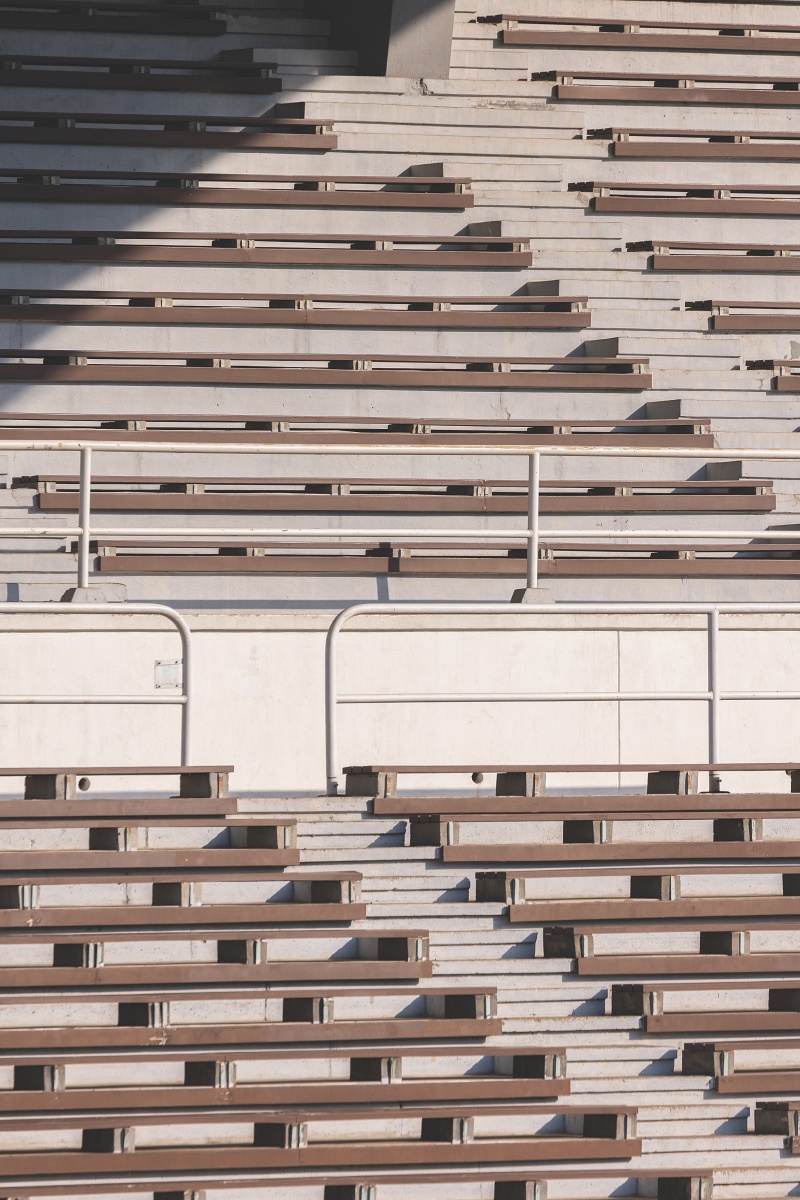
View of the east stand of the stadium
The rebirth of this historical edifice is essential to honouring our nation’s independence and ensuring its significance endures for years to come. It has been restored meticulously to its former glory, as it was 68 years ago.
Covered stand shaded by cantilevered reinforced concrete shells
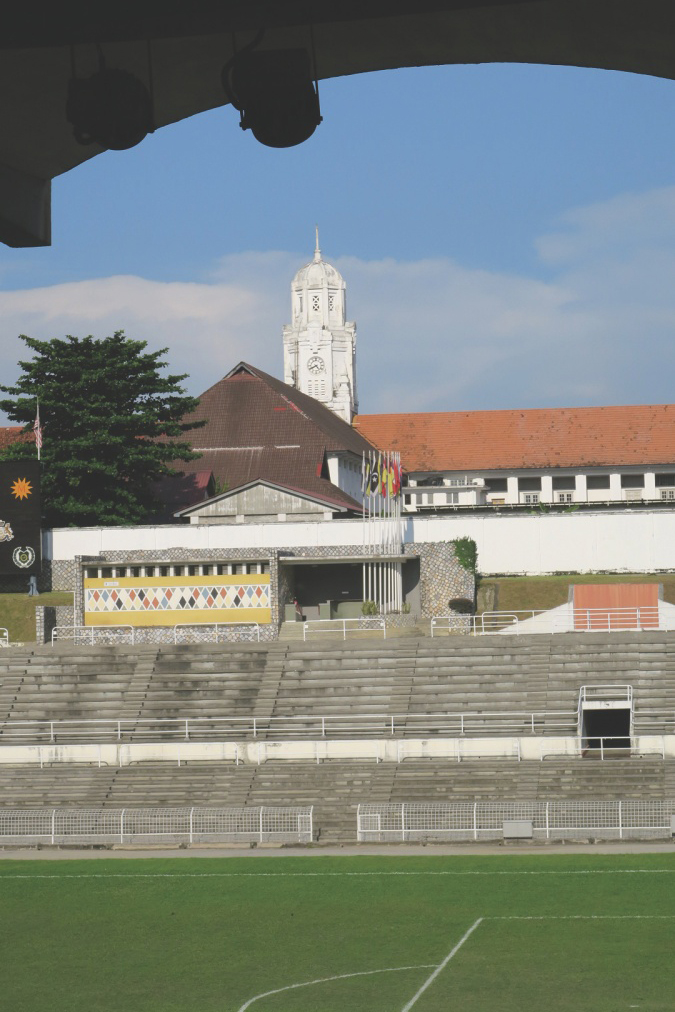
View of the historic building of Victoria Institution, one of the oldest missionary schools in Malaysia from the covered stand.
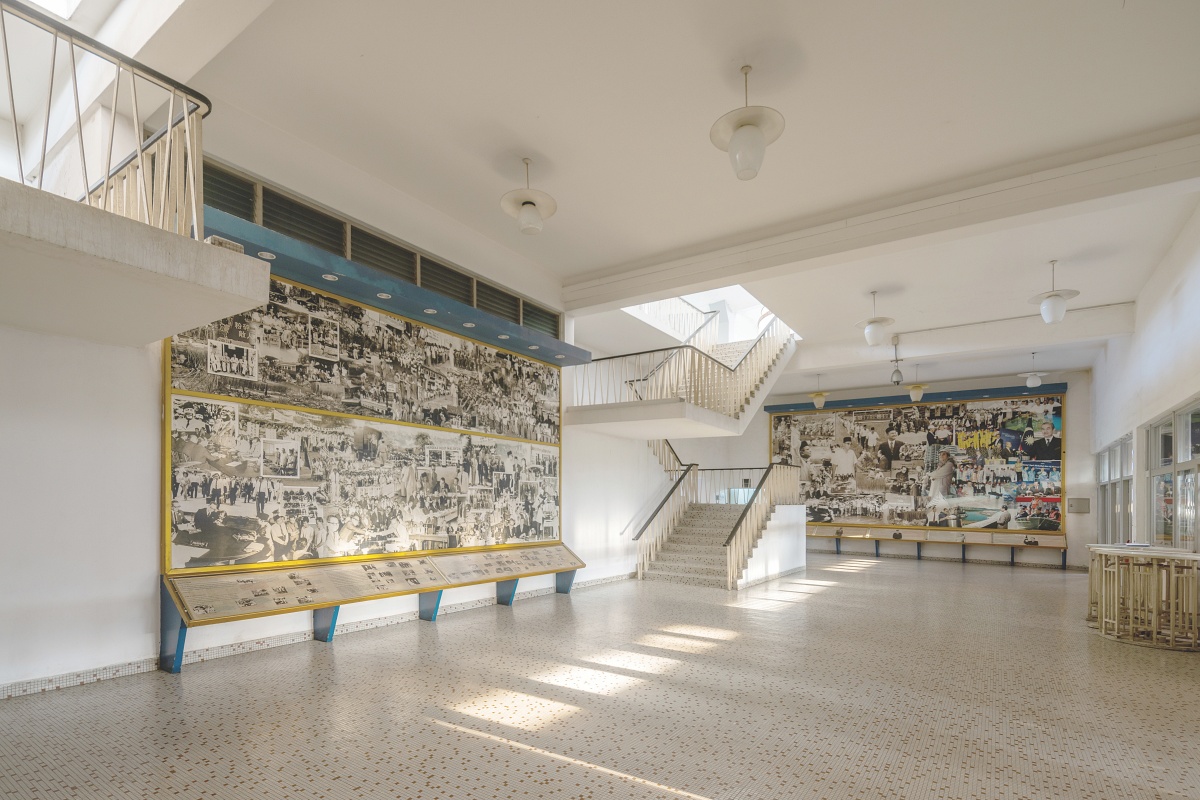
Foyer area at ground level with pedestrian accesses and staircases to upper terraces of the covered stand