
What comes to mind when you think of Thailand?
Supreme temples and shrines? Statues of Golden Buddha?
Sex tourism?
Street food and cuisine? Stunning beaches?
Many people have different perspectives towards Thailand depending on various attractions. Thailand is ranked the 8th most popular travel destination in the world, thanks to its vibrant culture, street markets, tropical beaches, and temples. Another factor that contributes to this is the affordability of travel. Many consider it a relatively affordable destination, especially for budget travellers. Thailand has also been crowned with the name “The Land of Smiles” due to the people’s kind hospitality, thus enhancing the country’s reputation.
On the other hand, Thailand’s culture is deeply connected to its national religion, Buddhism, which is practised by more than 93% of its people. Being named the Land of Buddhism, Thailand has 41,205 temples, and over 30,000 are in use today. Besides religion, food, and culture, Thailand’s coffee business is often overlooked. So, when did coffee start to establish itself on the map of Thailand?
How did coffee culture emerge in Bangkok and Chiang Mai?
In the 1970s coffee was initially introduced as an alternative to opium cultivation. The late King Bhumibol Adulyadej spearheaded this initiative, which aimed at promoting sustainable agriculture in the northern regions of Thailand, particularly in Chiang Mai and Chiang Rai. Then in the late 20th century, the coffee industry began to gain momentum as demand for speciality coffee increased globally. Consequently, highland farmers shifted their focus to cultivating Arabica beans, which thrive in the cooler climates of Northern Thailand.
In recent years, Chiang Mai has blossomed into Thailand’s vibrant coffee hub, where locally produced beans have strived to establish local cafes that showcase Thailand’s home-produced beans. As the purchasing power of the low to medium-class society has expanded, coffee has shed its image as a luxury, transforming into an accessible delight that more and more people can enjoy. Cities like Bangkok and Chiang Mai are thriving in this coffee renaissance, bolstered by large franchises such as Cafe Amazon and Black Canyon that have introduced a diverse array of coffee options. Yet, intertwined with these chains are the small independent cafes that proudly serve locally sourced coffee, showcasing the rich heritage of Thai coffee.
The bloom of coffee in Bangkok and Chiang Mai is indicated by several factors. In particular, Chiang Mai’s rise in cafes is due to the proximity to obtaining fresh coffee beans from highland plantations such as Doi Tung and Doi Chang. This proximity to fresh, high-quality coffee has inspired a wave of entrepreneurial spirit among the local community, showcasing home-grown and roasted coffee beans. Furthermore, establishments such as the Arabica Association of Thailand and the Royal Coffee Research Center have played a pivotal role in nurturing this burgeoning coffee culture, providing vital support and resources in Chiang Mai province. An entire chain of farmers, suppliers, roasters, baristas, and coffee connoisseurs are part of this great picture of Chiang Mai’s coffee scene. Bangkok’s rise in the coffee scene is often associated with the high demand for speciality coffee, which has become a more affordable drink since coffee was mainlyplanted in Thailand.
The Number of Temples versus Cafes in Thailand
To understand the coffee culture in Thailand, let’s compare the number of Thai temples and cafes in both Bangkok and Chiang Mai. Chiang Mai has over 300 temples, which are outnumbered by 547 coffee shops. In Bangkok, temples outnumber coffee shops, but it is worth noting that over 1000 of them are brewing coffee throughout the city. The data demonstrates the highly competitive coffee business scene in Thailand. With the evolution of technology and the rise of social media over the years, cafe owners have started to realise the trend of being “Instagrammable,” and are creating spaces where people can take photos. As such, the focus on serving a good cup of coffee has been shifted to accommodate the quality of the space that the patrons can enjoy; in addition to selling coffee, architecture serves as a backdrop for which customers pay. Notably, the architecture in Thailand intersects between aesthetics and nature. Using natural materials such as wood, stones, and clay has formed a harmonious relationship with nature. Modern architecture in Thailand adopts the traditional design philosophy while addressing the Thai traditional language by designing in a humble and contemporary way. It is defined by intangible qualities such as scale and light. The rise and influence of modern architecture also saw the emergence of adaptive reuse with traditional architecture, on which this article will focus.
The Emergence of Adaptive Reuse in Thailand
Buildings can hold significant historical and cultural value, and adaptive reuse allows for their preservation while serving a new purpose. Adaptive reuse in architecture involves repurposing old buildings that may have been used for a particular purpose, and injecting life back into them for a new use. This form of architecture often preserves heritage values for the building and its surroundings, highlighting the importance of tangible history and avoiding its loss through development. This is also a sustainable approach to reducing costs and wastage, ultimately reducing carbon emissions and protecting the planet. The usage of vernacular architecture stood out throughout our Thailand trip. The charm old buildings carry is unmatched by the new buildings seen today, and the increasing popularity of adaptive reuse is an exciting thing to witness in a world of modern minimalist buildings. As there are so many examples of adaptive reuse buildings to explore, the decision is to filter it down to a common interest that is shared by the architects, which is, coffee. The rapid growth of cafes in the country allows plenty of room for creativity to attract consumers to coffee and its architecture. Cafes, known as “third places,” in urban life, are distinct from home and work. They provide spaces for relaxation, socialising, and community building. Here, three examples of adaptive reuse cafes – two in Chiang Mai and one in Bangkok are shared.
Obchoei Original Homemade, Chiang Mai
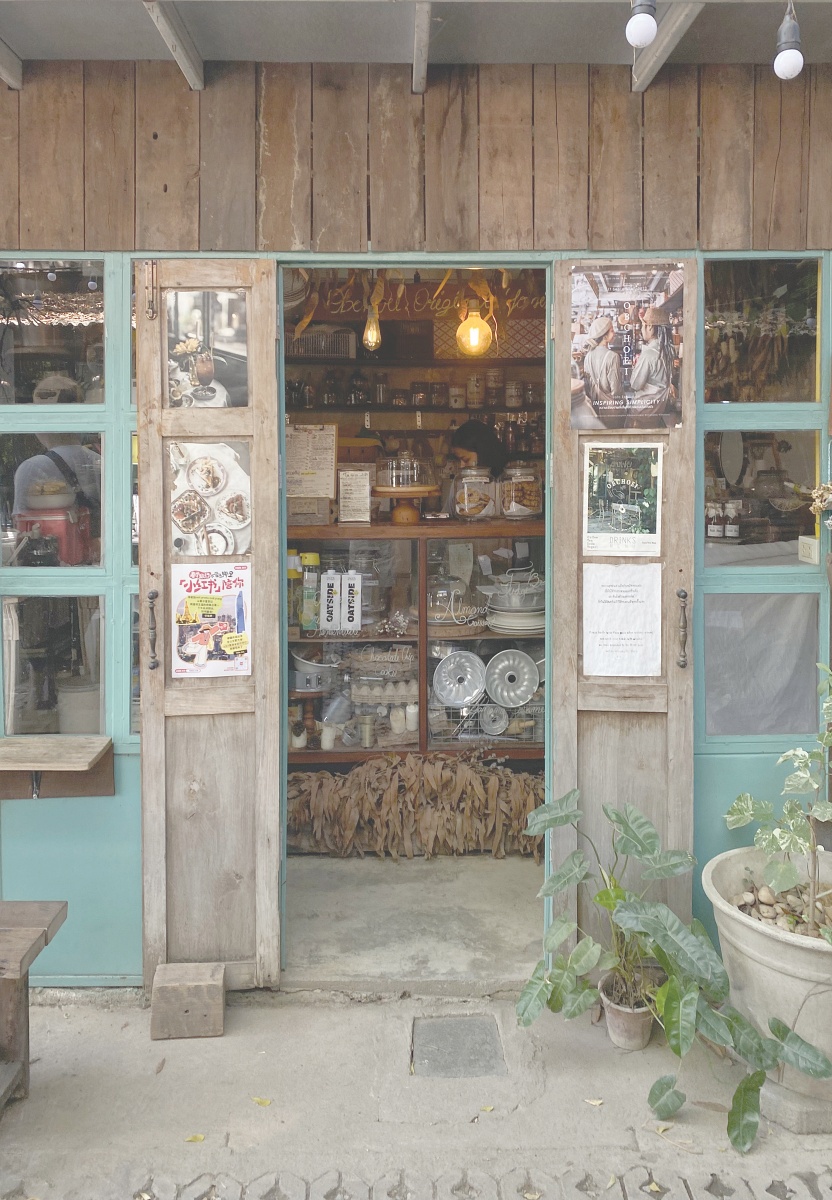
Located in Baan Kang Wat, a suburb southwest of Chiang Mai, Obchoei Original Homemade is part of an artistic village. The little village intends to create a space for local artisans to develop small businesses. As one meanders the path, a mixture of architectural styles — Thai wooden architecture and modern brickwork comes into view. The brickwork is believed to be reclaimed from old houses, which could be seen destroyed and being renovated for future usage. The play of architecture highlights the charming village with a mix of Thai wooden architecture for roof and ornamentation elements. The village begins to acquire a new meaning for creative entrepreneurs through the adaptive reuse approach. Obchoei Original Homemade is a cooking studio cum cafe.
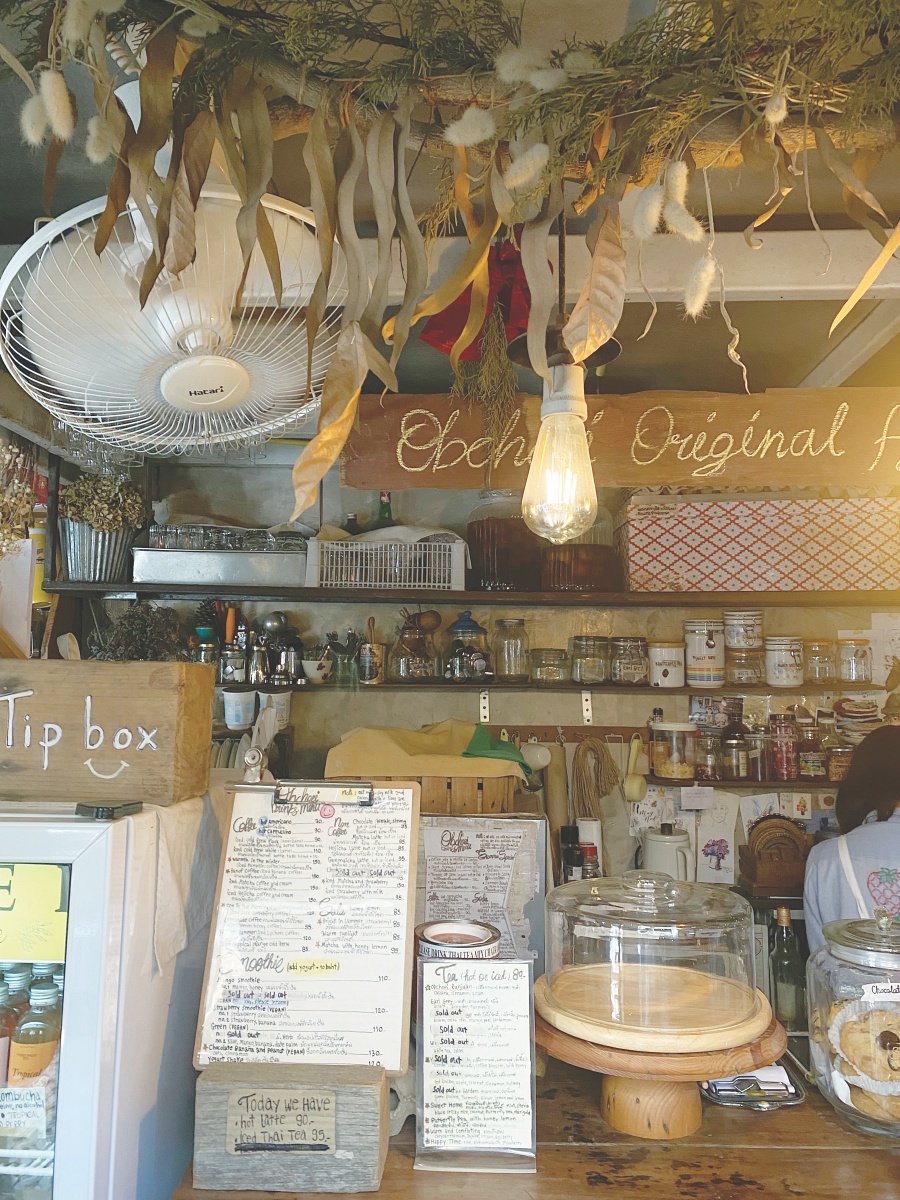
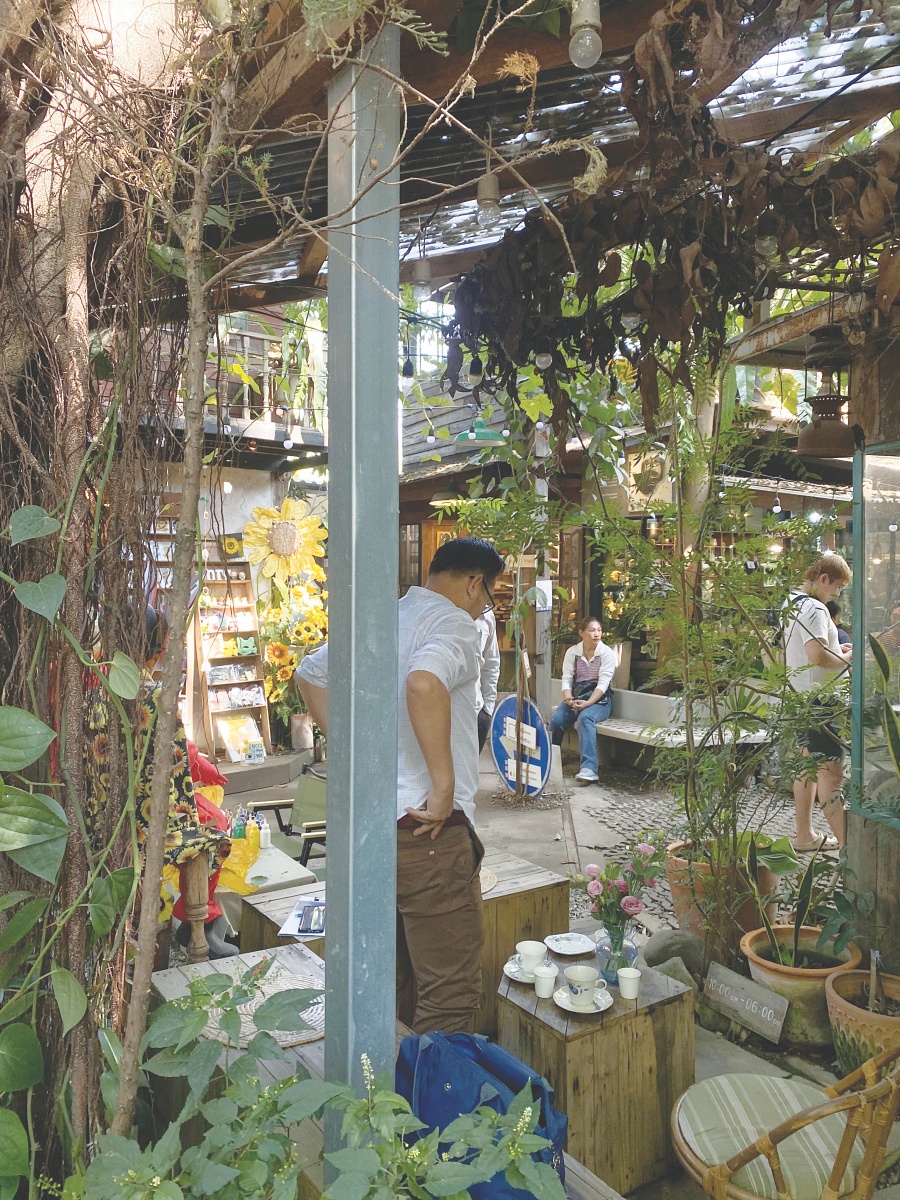
Nestled deep in the artisan village, its exterior is clad with reclaimed wood while maintaining its original window. The wooden accent of the cafe is further completed with wooden benches and tables to allow cafe connoisseurs to enjoy dining outdoors. The setting of the cafe is somewhat vintage-decorated with vintage furniture and dried flowers. Tucked in the vintage atmosphere, patrons enjoy their homemade pastries and cakes with various apple crumble pies, tiramisu, strawberry short-cakes, and so on! Cold brew is a must to order as they use locally roasted beans, which give a chocolatey taste note; try out some of their specialities such as the iced lychee coffee and iced banana coffee if you are an adventurer. The adaptive reuse approach and usage of reclaimed wood align with the homemade concept, which anchors on the originality and pureness of the material, either in space crafting or food making.
Brewginning, Chiang Mai
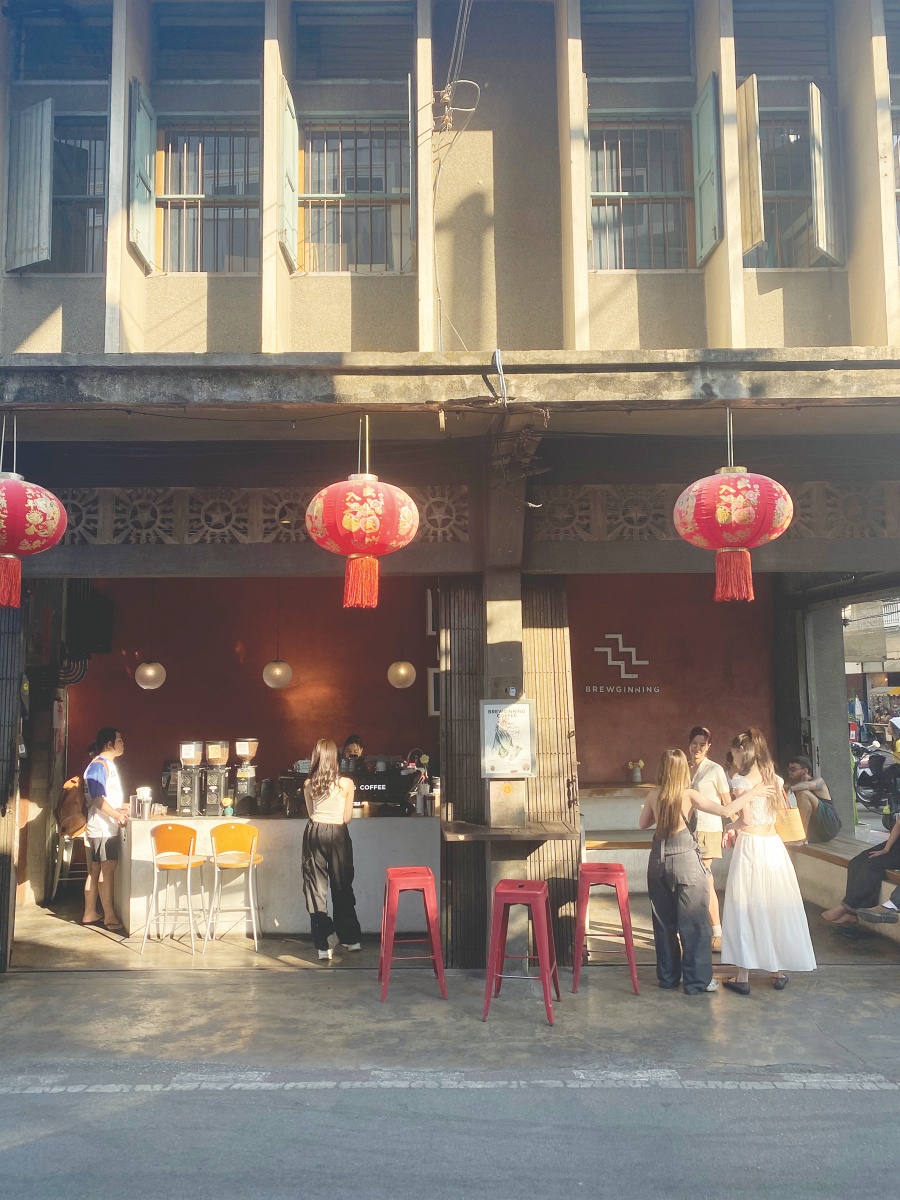
Being one of Chiang Mai’s most Instagrammable cafes, Brewginning has a gem besides its strategic location on Chang Moi Road, famous for selling cane-weaved products. Chang Moi Road retains Chiang Mai’s early modern shophouses, which house Brewginning. The cafe retains its original exterior look with early modern architecture characteristics such as sun shading fins, recessed windows, and glass panel windows. The interior also retains its original floor and wall finishes, allowing patrons to enjoy coffee under the original shophouse setting. The cafe sits on a corner lot while opening its door completely to blur the indoor and outdoor boundaries — connecting cafe owners to the local community. It is packed with office workers in the morning, cafe hoppers, and coffee connoisseurs from noon till late evening. The bijou cafe is well-designed to be a community space, allowing the emergence of a diverse community in Chang Moi.
Brewginning has gained its fame through social media due to its strategic location and photo frenzy interior. Its red-painted wall is eye-catching, and the aroma of coffee can be smelled from far away! Elevated seatings are designed to be versatile — a seat or a table, depending on how the user utilises them. A hidden performing space is in the cafe where local bands could perform live music. The interplay of different elevated seatings allowed various activities to be catered to. Brewginning also collaborates with local talents to host flower pop-up events, live music jam sessions, etcetera. A dirty latte is a must-chilled milk poured over espresso on a chill afternoon! The Orange Americano is also recommended, as it blends a tangy flavour over the espresso’s robust and bitter taste.
Sarnies, Bangkok
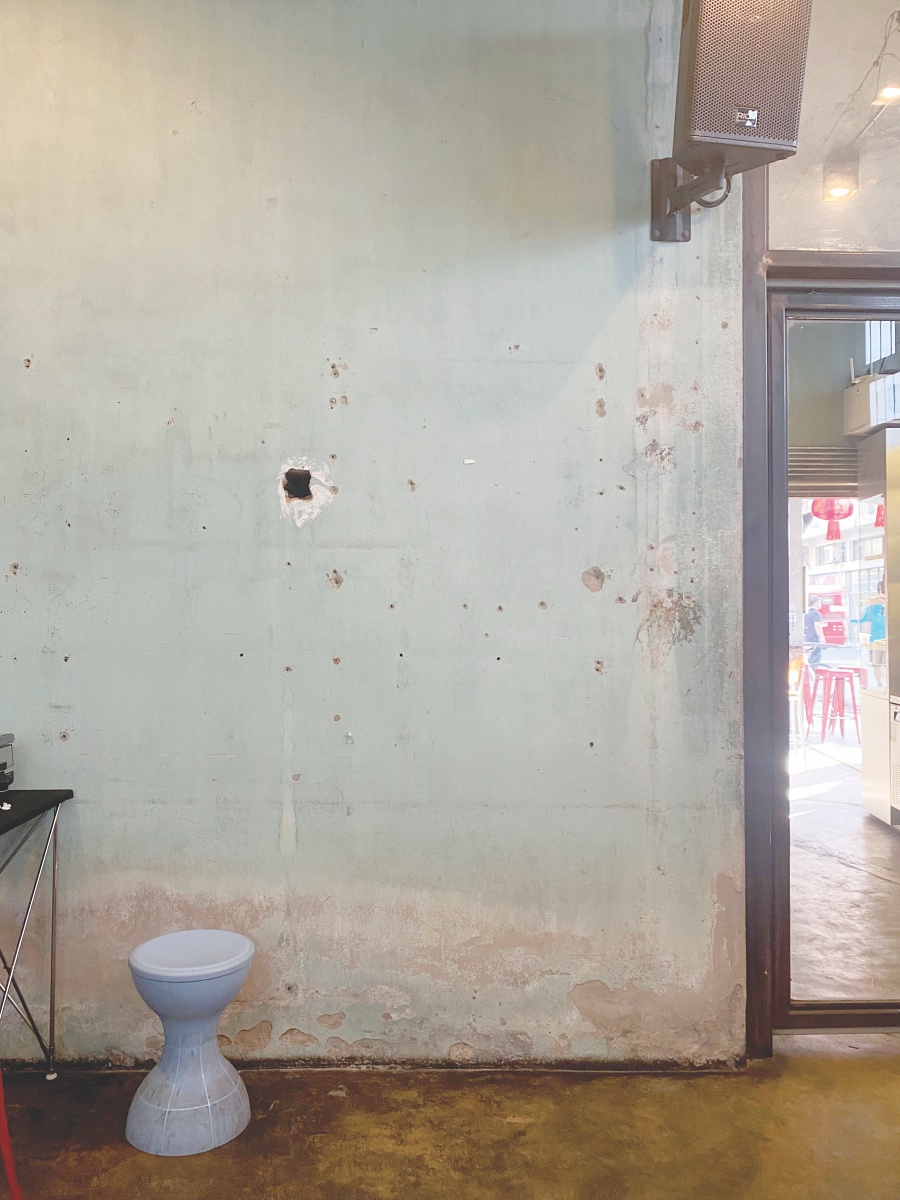
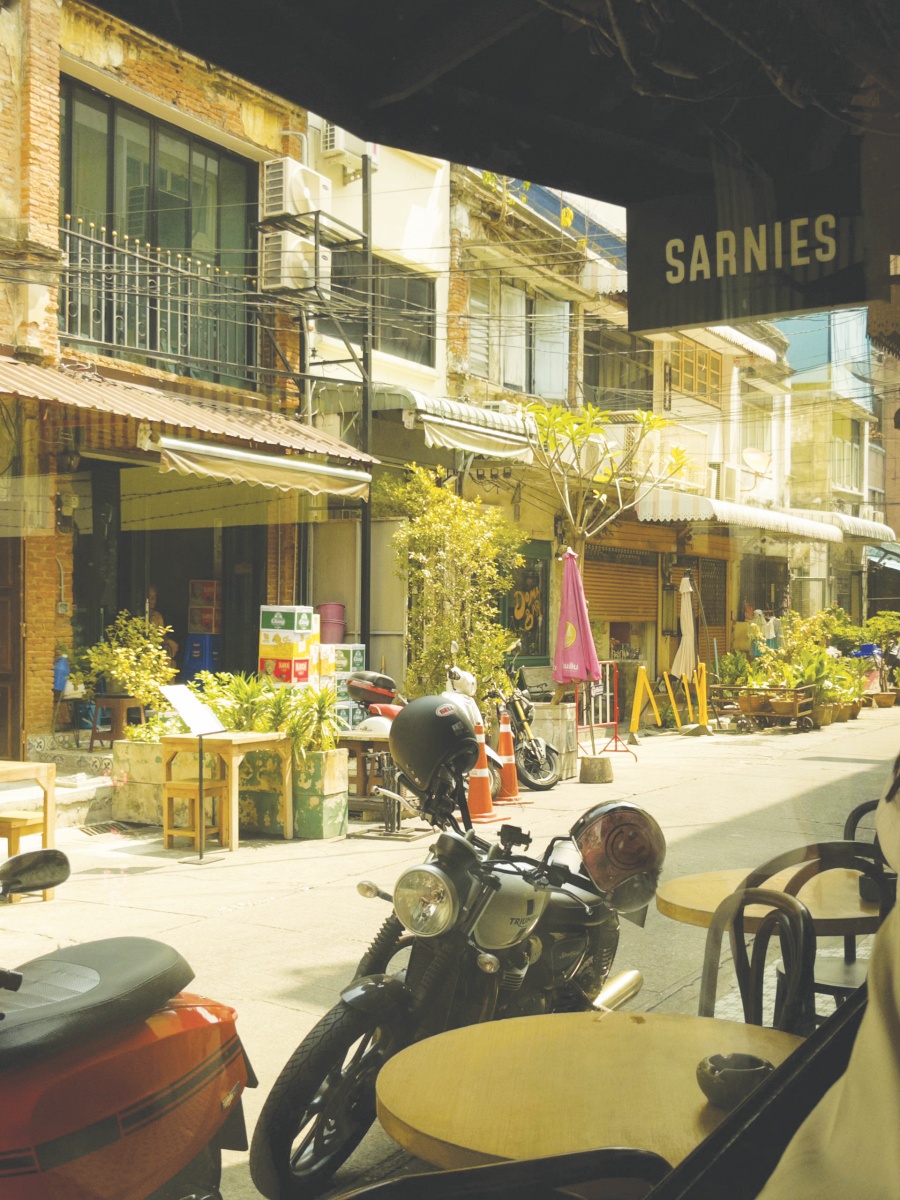
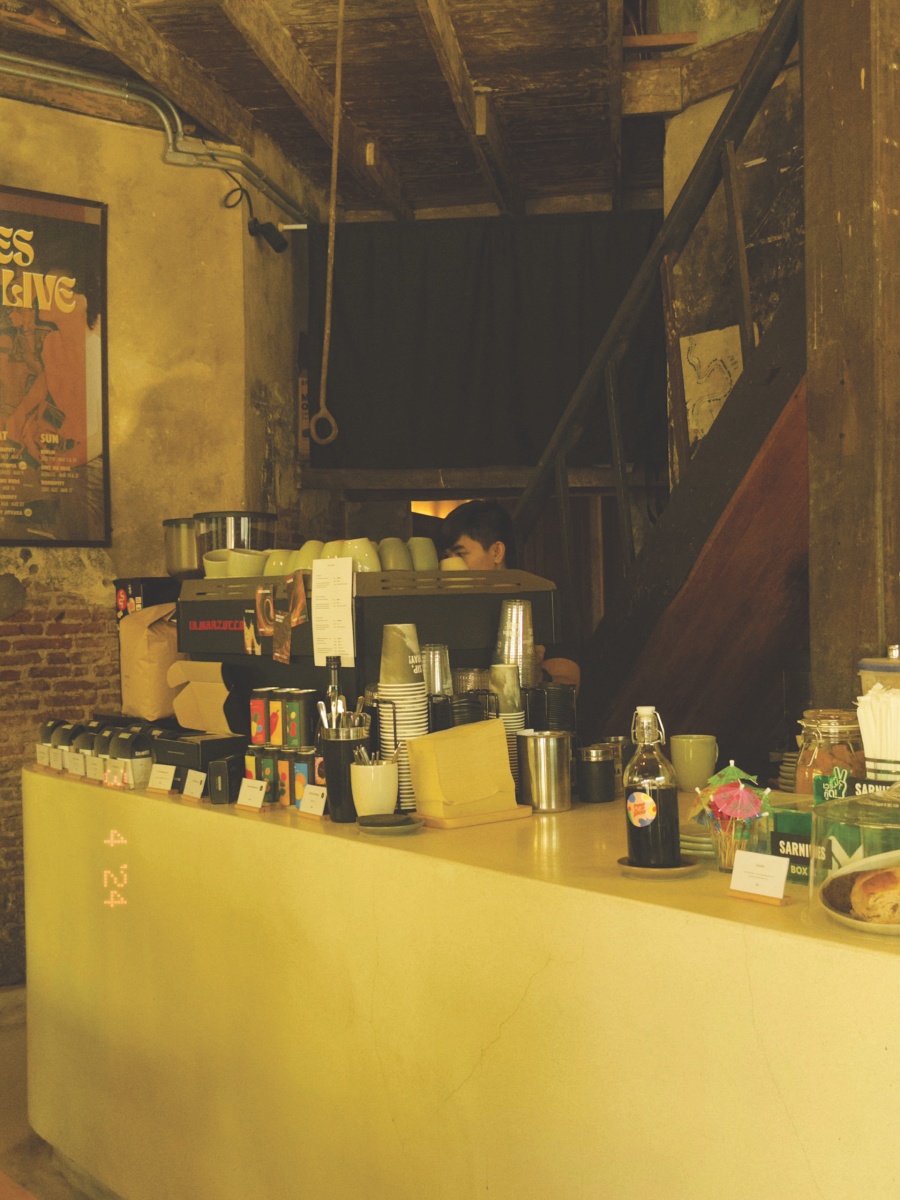
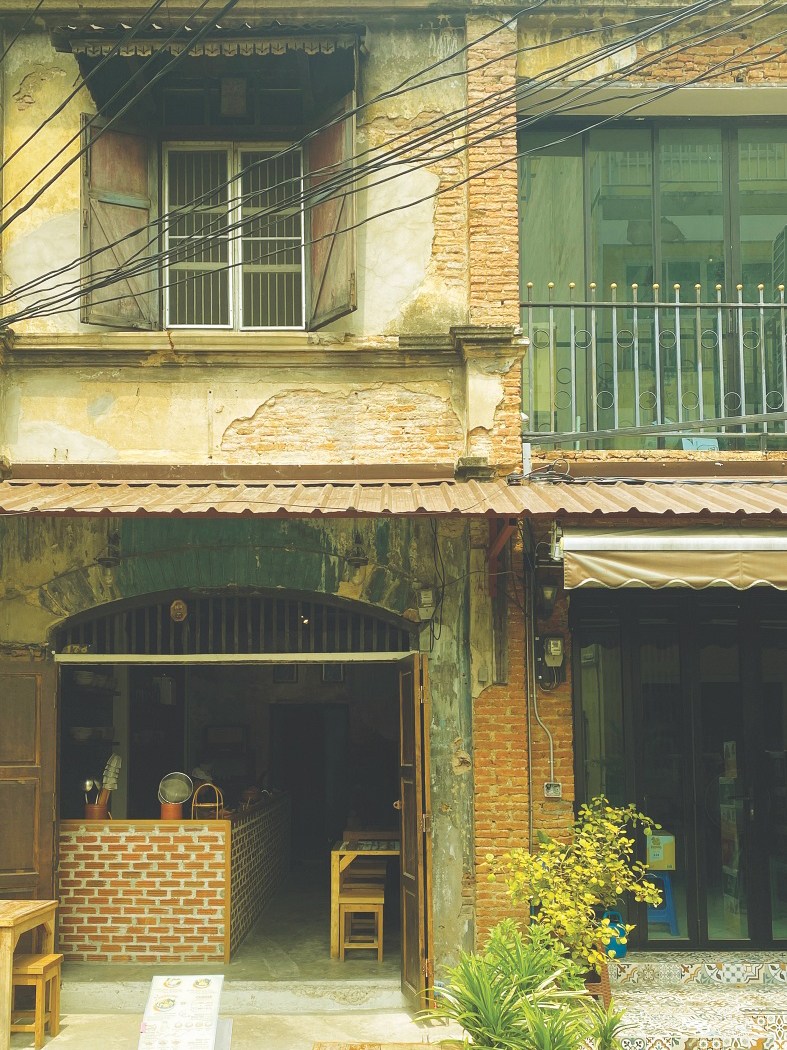
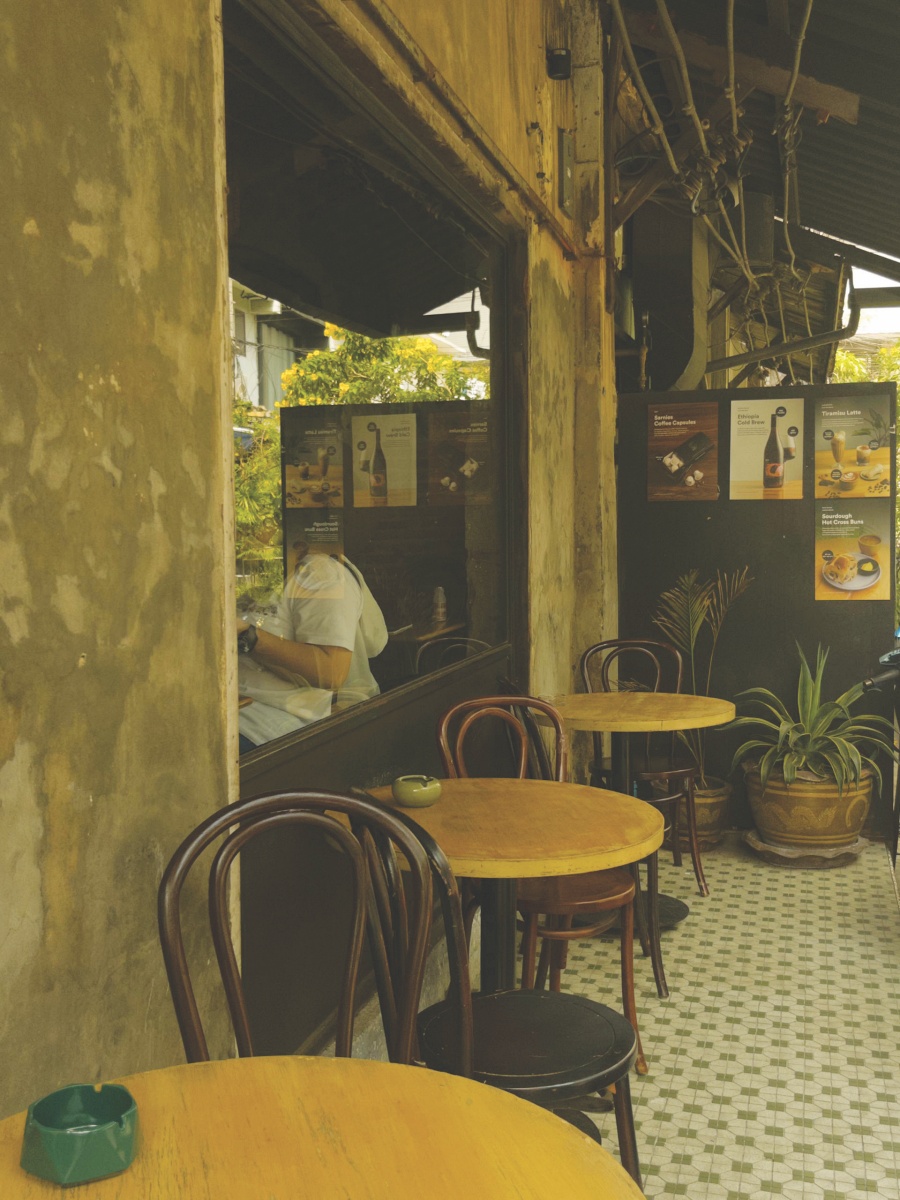
Sarnies opened its Bangkok branch in 2018, serving premium coffee and brunch in the heart of the city. Their commitment to uniquely craft a menu with locally sourced ingredients makes every Sarnies bespoke to its city. Located within an alleyway near the Chao Phraya River, it instantly adds another stop to the itinerary. What catches the eye upon approaching this establishment is its immediate presence of adaptive reuse of what has previously been a boat repair shop. Its unassuming design blends into the context of the streets of Charoen Krung Alley, keeping a piece of history in the middle of the sprawling city of Bangkok. The owners have kept the original structure of a typical old Thai shophouse, exposing its weathered concrete and brick walls and posts/beams. Warm earth tones and cool concrete textures extend its concept of adaptive reuse throughout its interior. Warm lighting and contemporary furniture invite a hot cup of coffee. Interior-wise, the furniture selection could be better for more extended seating periods. The chairs were relatively light and flat, emulating more traditional coffee shops.
How does the coffee taste?
Sarnies sourced their coffee beans with local Thai Arabica beans and beans from other regions, creating twists of varying coffee blends with their distinct tastes. We sampled their ‘Tiramisu’ coffee blend, which was pleasantly smoky and sweet, leaving a deep roasted aftertaste on the tongue. It has a creative approach to introducing rich and diverse flavours to coffee, which every cafe wants to achieve, and Sarnies has delivered beautifully. Although the price range is from mid-to-high, it was worth the try. Food offerings ranging from pastries to hot meals are adequate to pair with their coffee, perfect for an evening coffee after the rain.
Conclusion
Summing up, our trip into architecture and coffee might not be a conventional approach, but both relate well with each other, like sipping a cup of double shot to stay awake during the late night hurdles in completing a set of floor plans. It also goes beyond that. Adaptive reuse has slowly become an additional ‘product’ of cafes in Thailand besides coffee. Combining the art of crafting spaces through adaptive reuse and the art of brewing a cup of good coffee certainly changed the landscape of coffee culture in both Bangkok and Chiang Mai. The popularity of laid-back, calm atmospheres in the retail and hospitality industries encapsulates a new (or familiar) experience through adaptive reuse. Undeniably, this approach to architecture is an effective way to preserve older buildings while updating them for contemporary use. It minimises waste and reduces the demand for new materials. By repurposing these buildings, cultural heritage is maintained and history and memories are kept alive for future generations.
Authors’ notes
This article is written as part of Taylor’s University SABD Mobility Program, which took place from February 16 to March 4, 2024, in Thailand. The program offers a distinctive educational experience, focusing on cultural immersion, architectural discovery, and hands-on learning to expand students’ global perspectives. Ten students, guided by two lecturers, participated in this enriching journey.