When one thinks of travelling to Stockholm, a carousel of images comes up: Swedish utilitarianism, clean Scandinavian cityscapes, and last but not least, the cold weather. Prior to my visit, the structures on my ‘List to See’ included a pilgrimage to the local IKEA to see the behemoth interior brand in its origin nation. There was also the Fotografiska Museum Stockholm, a mecca for photography enthusiasts, and the Stockholm Stadshuset, a key building in the capital — you can’t miss it. Niggling at the back of my mind was this desire to explore beneath the surface of the city’s typical tourist spots. Enter the most impressive public structure in Stockholm: the Tunnelbana.
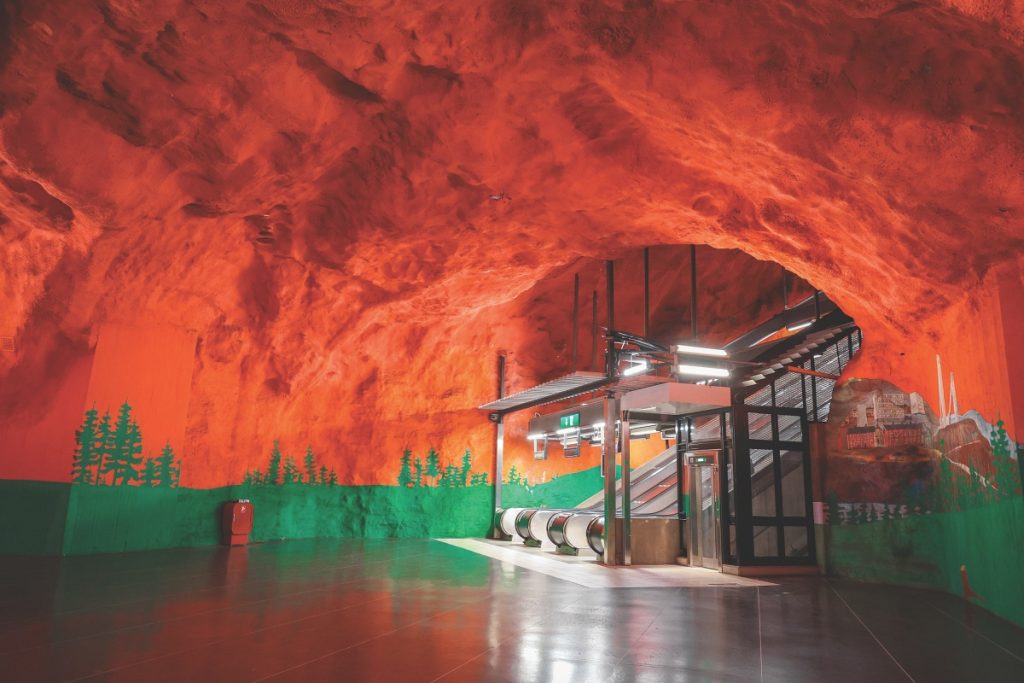
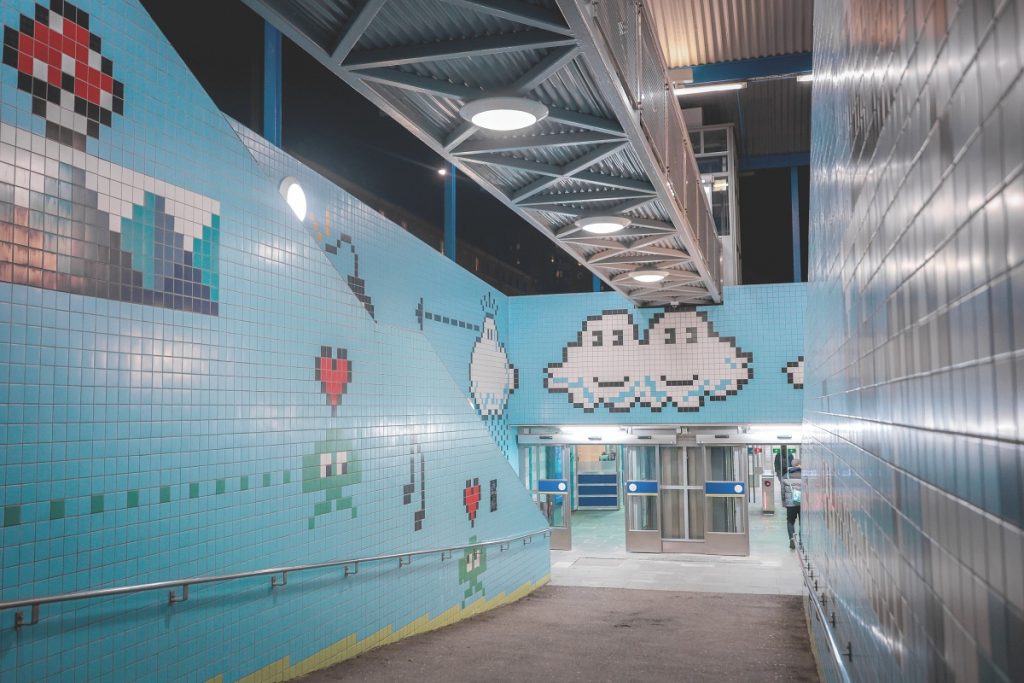
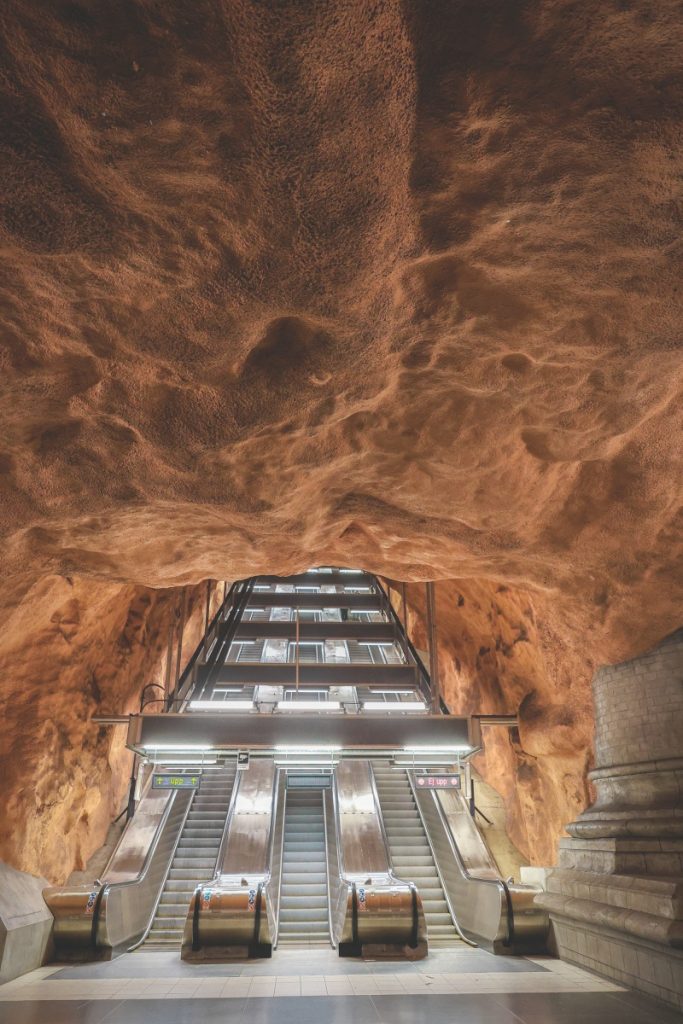
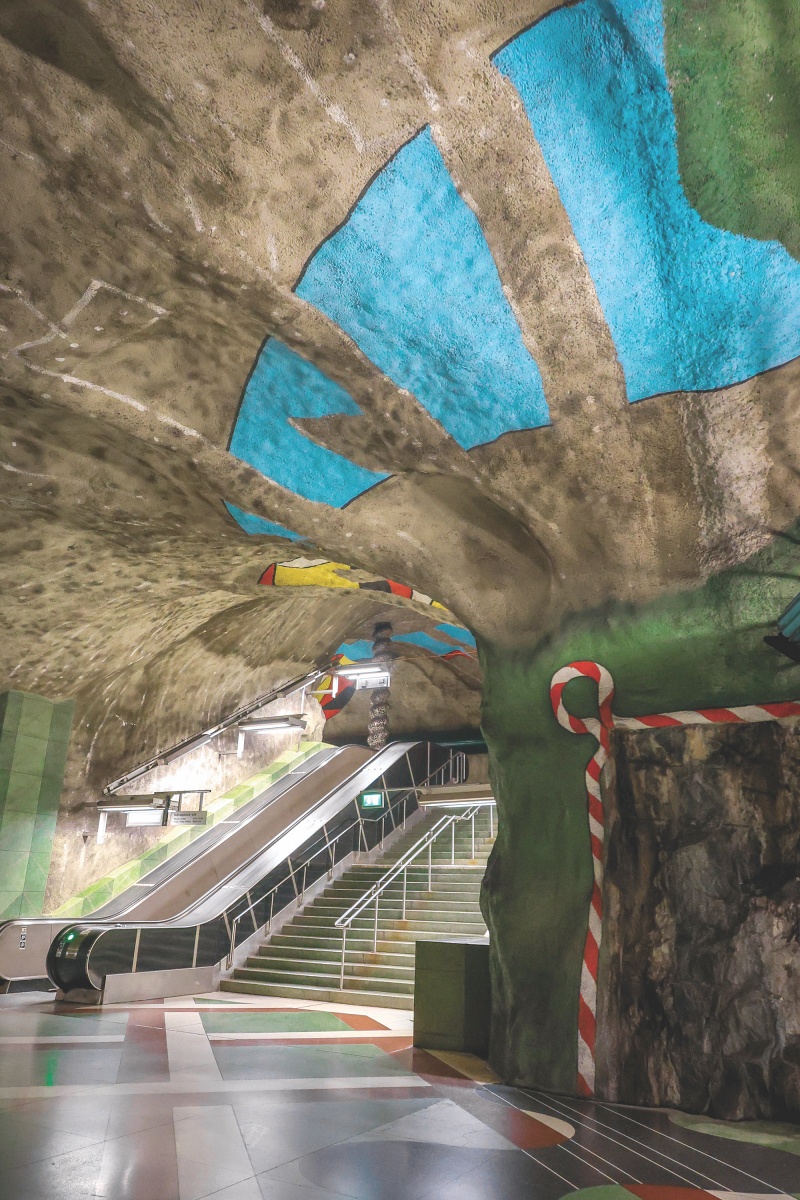
Stockholm’s metro system, known as the Tunnelbana, is often called the world’s longest art gallery. Spanning 110 kilometres, the Tunnelbana is a mesmerising combination of first-world engineering, artistic expression, and immersive architecture. Unlike many urban metro systems that prioritise function over form, the Stockholm metro decided to utilise its public transit to tell a story. Each of the 100 stations is decked out in a distinctive design, some jarring, some amusing, but all an homage to Swedish culture, creativity and history.
To fully appreciate the breadth of this project, one would have to understand that the idea to integrate art with transportation was set in place in the mid-1950s. Throughout the years, over 150 architects, painters, sculptors, and staging artists have immortalised themselves in the Tunnelbana’s various stations. As the capital was built on an archipelago, with over fifty islands crisscrossed by bridges and waterways, it was necessary to dig deep underground to make the system, resulting in its cave-like architecture.
Stepping from the streets into a standard metro entrance, with its sleek steel finishes, you travel down the escalator and are greeted by a different world at every stop. Each station parades a unique identity, a stark contrast to the uniformed, streamlined trains and the clean signage design. It feels like you’re peering into the depths of a city’s mind, one that’s a far cry from the sensible aesthetics of Scandinavian visual schemes.
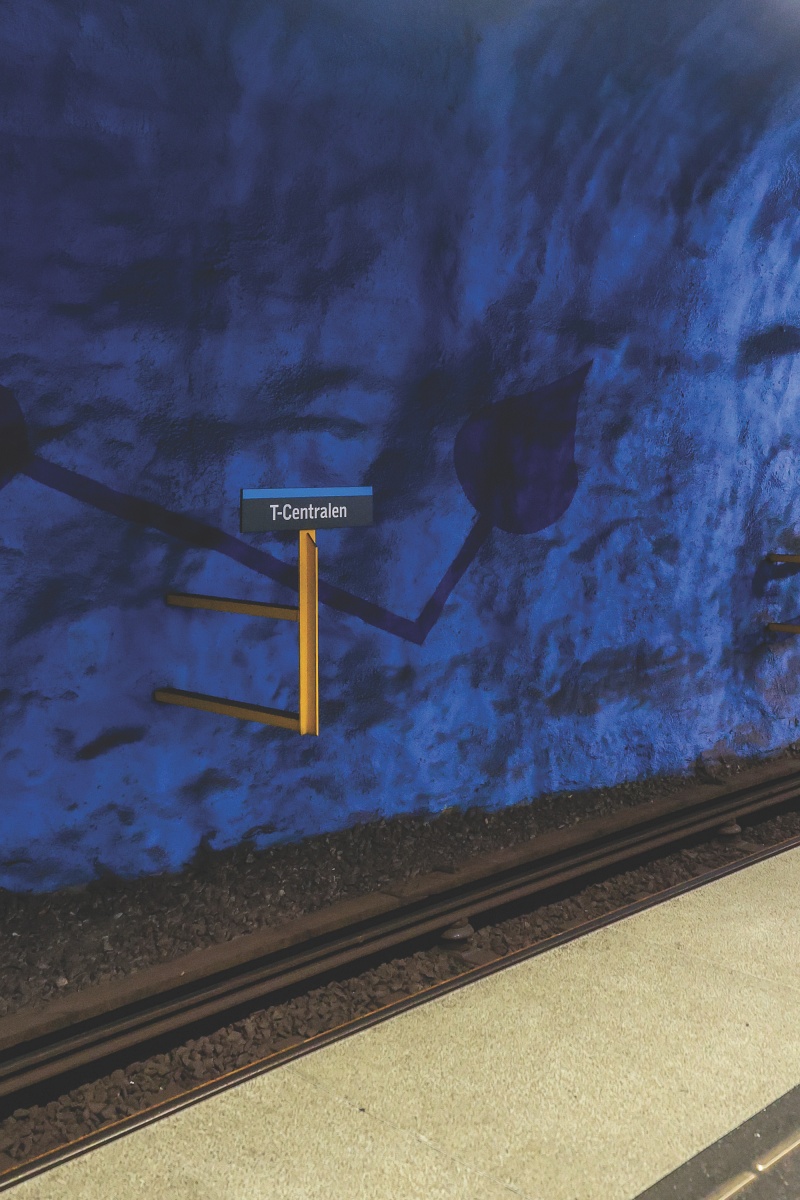
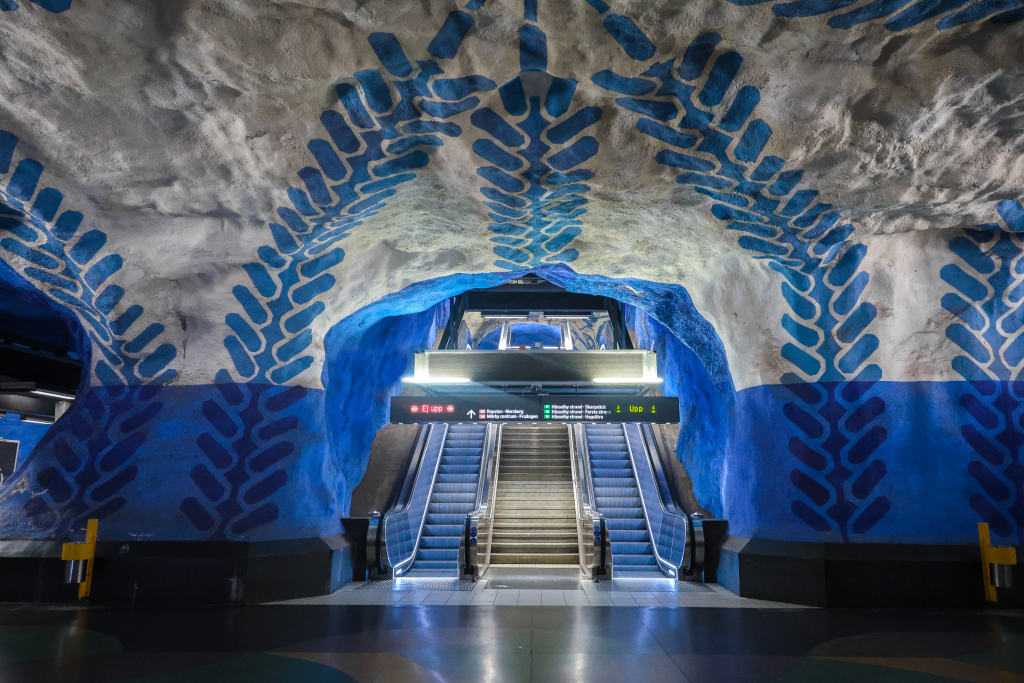
I began my tour of the Tunnelbana at its nucleus, the T-Centralen station. As the capital’s main transit hub, T-Centralen is the busiest station in the metro system. In the 1970s, when the station was being renovated, artist Per Olof Ultvedt sought to design a serene and calming space to counteract the stress of the daily commute. He drew inspiration from Swedish folk art and nature, creating an iconic mural of gigantic floral and vine motifs onto the station’s walls and ceilings, in hues of blue and white.