The Surrender Point Memorial is located on a modest 0.1-acre coastal site at Layang-Layangan Beach in Labuan, marking the historic location where the Japanese forces formally surrendered on 9 September 1945, effectively bringing the Pacific War of the Second World War to an end. The memorial stands at the very ground where Lieutenant-General Masao Baba, commander of the 37th Japanese Army, surrendered to Major General George F. Wootten of the 9th Australian Division. This moment not only marked a decisive conclusion to the war in the Pacific theatre but also signified the restoration of peace to Labuan, the broader Asia-Pacific region, and ultimately the world.
The refurbishment project, proposed by Australia’s Department of Veterans’ Affairs, seeks to respectfully reinterpret the original memorial while preserving its historical significance. Much of the existing deteriorated structure was carefully demolished and replaced with a new architectural composition that strengthens the memorial’s narrative clarity and spatial experience. While the intervention introduces new materials and forms, the design remains grounded in the spirit of the original site, ensuring that the memory and symbolism of the historic event are respectfully preserved.
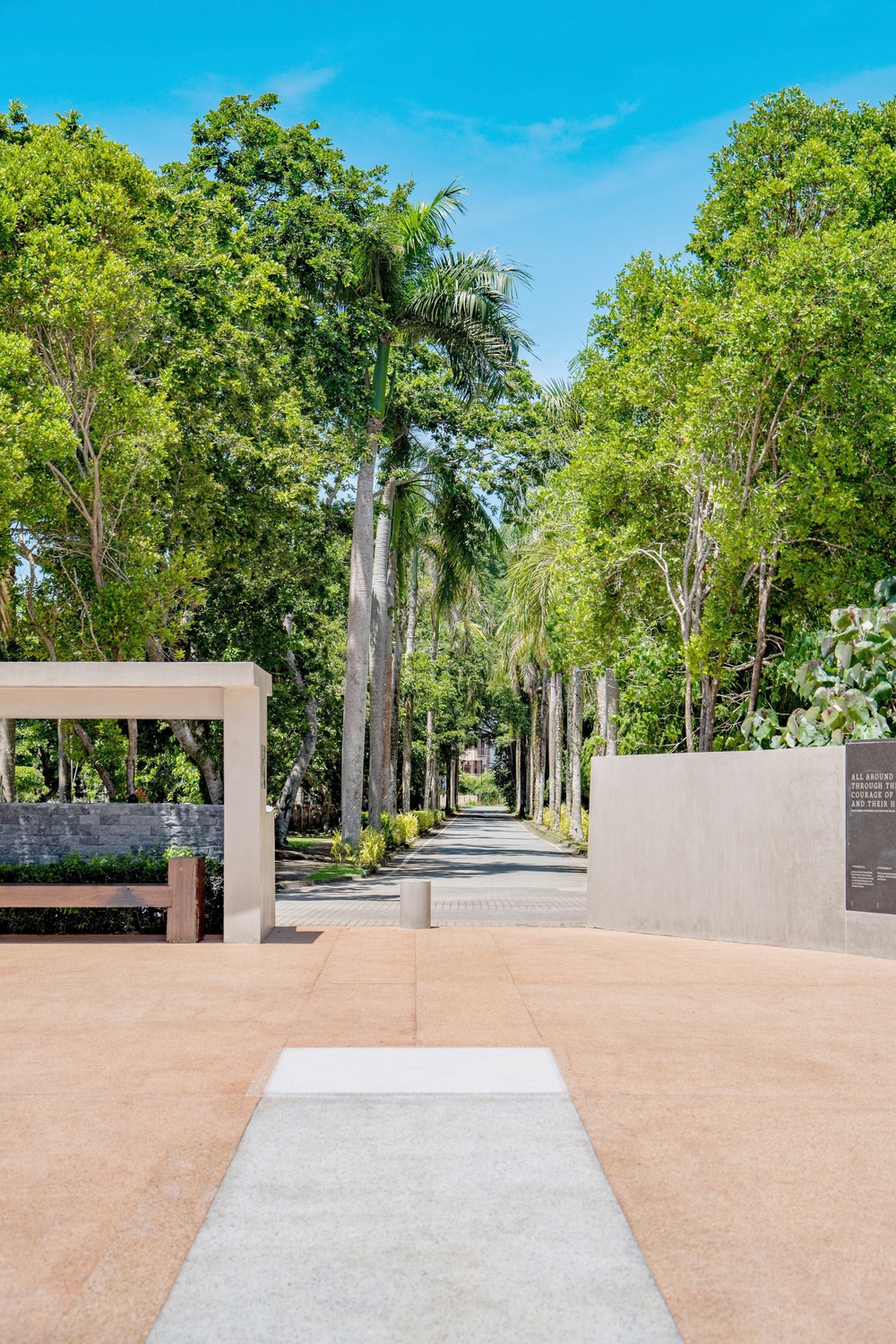
Approached from Jalan Damai, a palm-lined road that leads directly toward the shoreline, the memorial establishes a strong spatial axis aligned with the original point of surrender. This deliberate orientation frames the visitor’s movement from the inland approach toward the open horizon of the South China Sea, reinforcing the solemn narrative of transition from conflict to peace. The architectural arrangement encourages a gradual, contemplative progression, guiding visitors through the memorial space before they arrive at the expansive seafront vista.
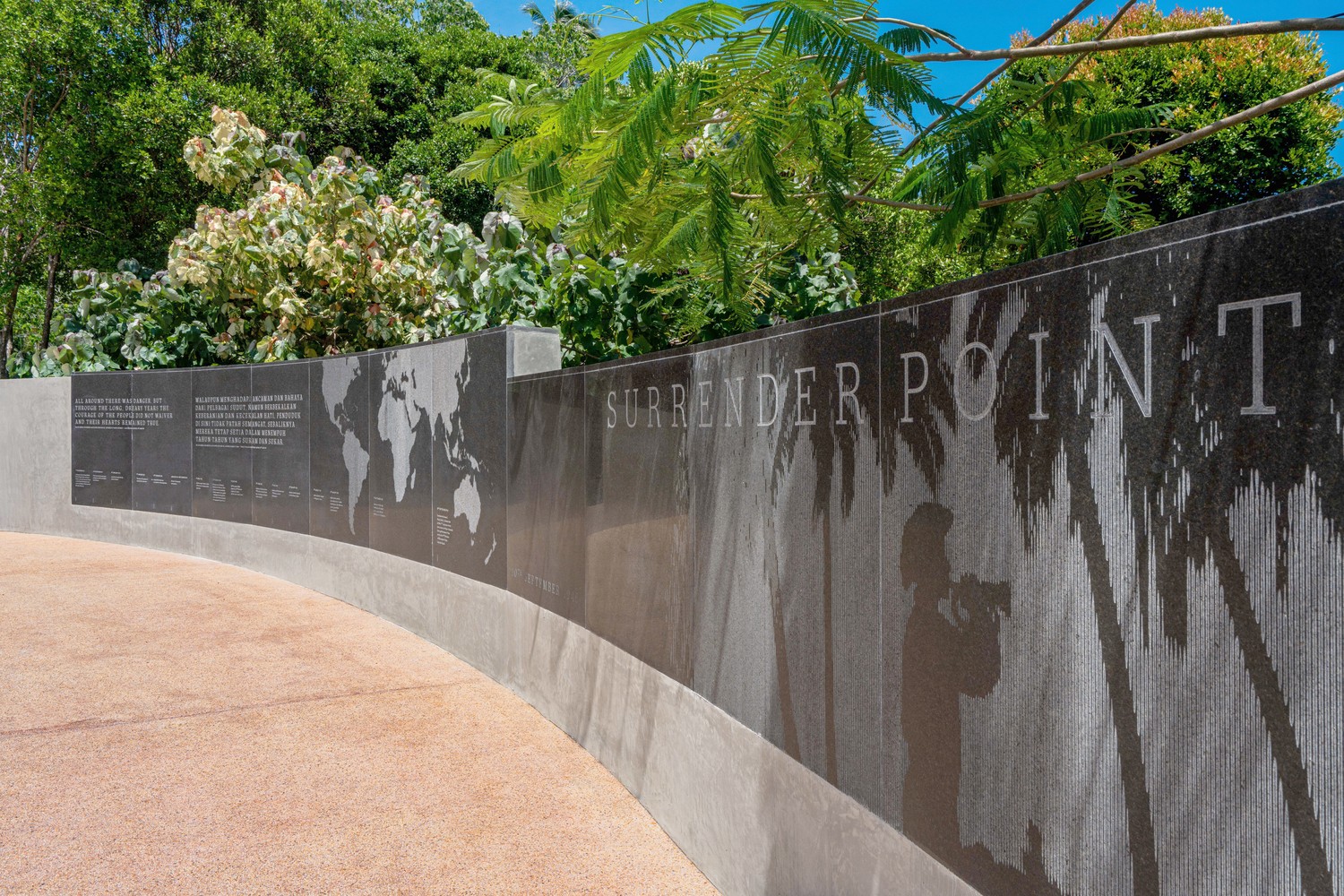
A defining architectural element of the memorial is the curved narrative wall, which serves as the site’s central storytelling device. This sweeping concrete structure is clad with carefully fabricated Australian granite panels, imported specifically for the project. The granite surfaces are engraved with historical graphics, inscriptions, and interpretive narratives that recount the events surrounding the surrender. The curvature of the wall creates a sense of gentle enclosure, inviting visitors to follow its arc while engaging sequentially with the historical narrative embedded in the stone. The wall thus functions both as an architectural form and as a medium of storytelling, merging spatial experience with historical interpretation.
Materiality plays an important symbolic role throughout the memorial. The use of Australian granite reflects Australia’s direct involvement in the historical event and reinforces the commemorative link between the two nations. Complementing this imported material are reddish local pebble stones, carefully selected to evoke the distinctive red-earth landscapes of Australia. This subtle material dialogue establishes a poetic connection between Australia’s geography and the tropical coastal context of Labuan.
Equally significant is the retention of salvaged Malaysian rubble stones from the original memorial structure. These stones are thoughtfully incorporated into the new design, grounding the memorial in its local context and preserving a tangible connection to the earlier monument. By integrating both new and reclaimed materials, the project establishes a meaningful dialogue between past and present, acknowledging the layers of history embedded within the site.
Sheltering parts of the memorial space is a timber canopy structure, constructed using specially designed panels imported from Australia. The warm, natural texture of timber introduces a contrasting softness to the otherwise robust stone and concrete elements. The canopy provides shaded seating areas where visitors can pause, reflect, and contemplate the site’s significance while enjoying uninterrupted views of the sea.
The surrounding landscape design further enhances the memorial’s contemplative atmosphere. Carefully selected coastal trees, shrubs, and flowering plants frame the memorial grounds, softening the architectural forms and integrating the structure seamlessly with the beachfront environment. The planting palette is intentionally restrained, allowing the memorial elements and the vast seascape beyond to remain the primary visual focus.
Together, the architectural form, material choices, and landscape composition create a quiet and dignified setting for remembrance. The memorial does not seek monumentality through scale, but rather through clarity of narrative, thoughtful material symbolism, and a deep sensitivity to place. As visitors move through the site, the architecture gently guides them from historical reflection toward the open horizon, symbolising the transition from war toward reconciliation and peace.
Ultimately, the renewed Surrender Point Memorial stands as a powerful expression of shared history and enduring friendship between Malaysia and Australia. Through its carefully considered design and symbolic material language, the memorial honours the service and sacrifice of those involved while providing a timeless place for reflection, remembrance, and gratitude.
A restrained memorial intervention that transforms a historic surrender point into a contemplative spatial experience through simplicity, axis, and landscape.