Adaptive Re-Use - Commendation ARCHITECT: Tan'ck Architect CLIENT: Banyan Cafe & Bistro (Exsim Development Sdn Bhd) CONTRACTOR: CYS Works Enterprise
Lorong Yap Kwan Seng represents a layered urban condition, where remnants of domestic architecture survive amidst intense densification, offering rare opportunities for adaptive reuse and urban intervention
Banyan Café and Bar is a true testament to the concept of urban palimpsest within the rapid densification and layered history of Kuala Lumpur, capturing stories and traces of Kapitan Yap Kwan Seng from the period of British colonial rule, Tun Dr Mahathir’s tenure and his modernisation vision, until today’s contemporary setting. The site, alongside its mature banyan tree, witnessed a significant shift from low-density bungalows to high-density commercial and luxury residential use, where the adaptive reuse of buildings is critical to preserving the neighbourhood’s memory and human scale.
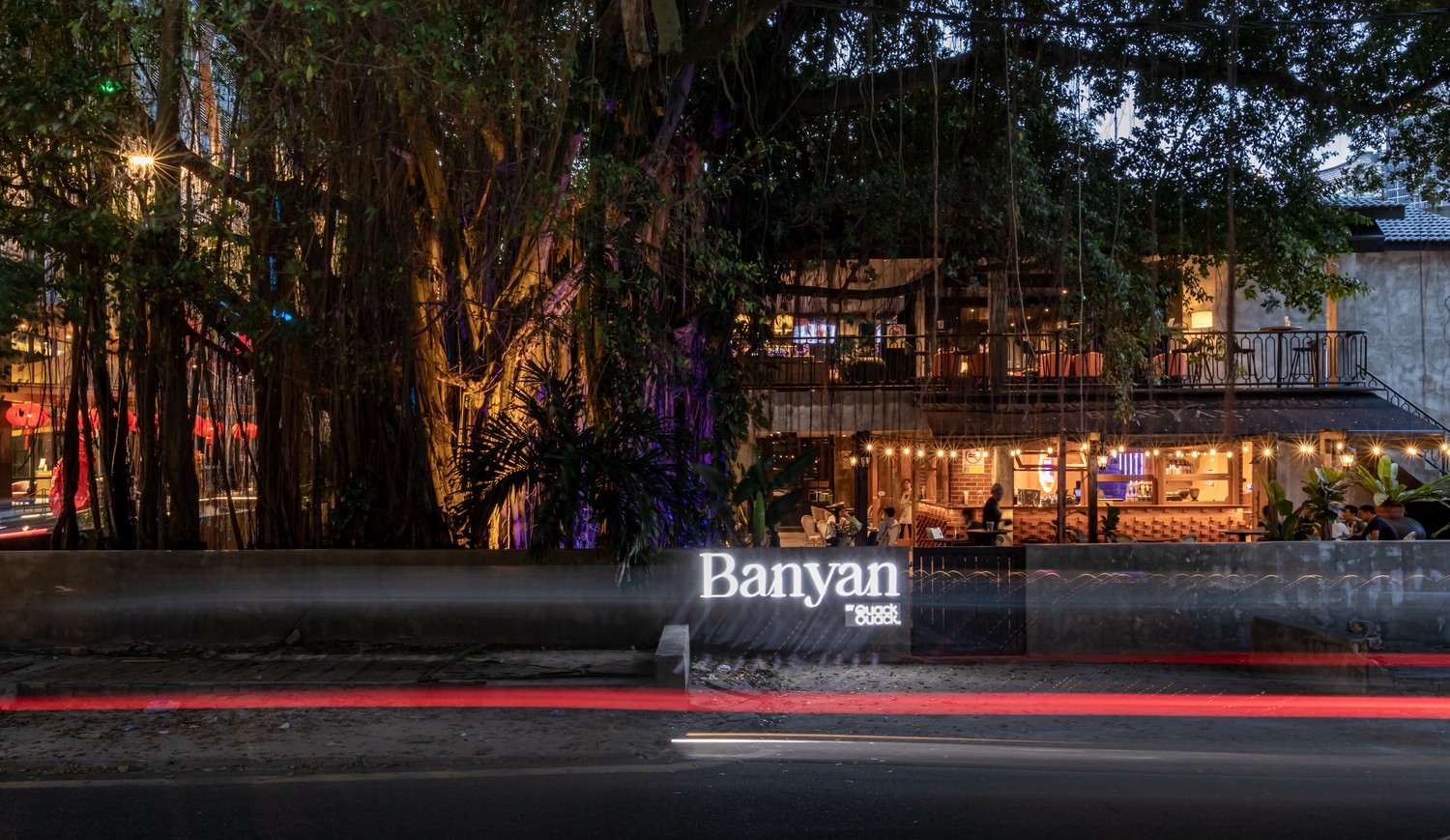
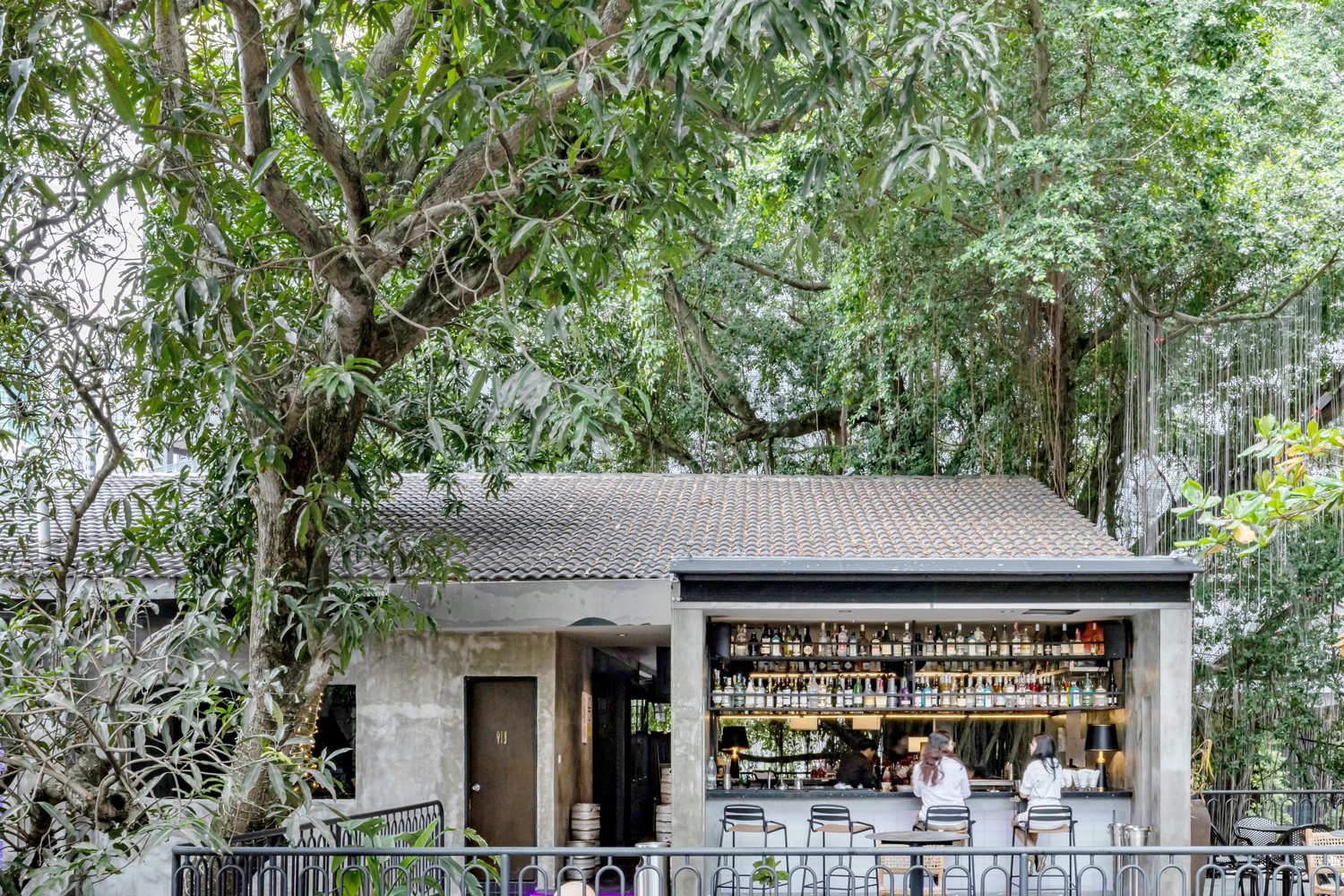
The project rejuvenates a formerly abandoned private bungalow into a meaningful shared social platform for everyday encounter and exchange, reconnecting the site with contemporary urban life. The design introduces a glasshouse dining hall and an upper-level terrace, allowing the building to transition seamlessly from a relaxing café into a vibrant night bar. Rather than replacing the existing structure, the project retains the bungalow’s framework and footprint while preserving the site’s mature trees, conserving embodied energy and maintaining a tangible link to the area’s past.
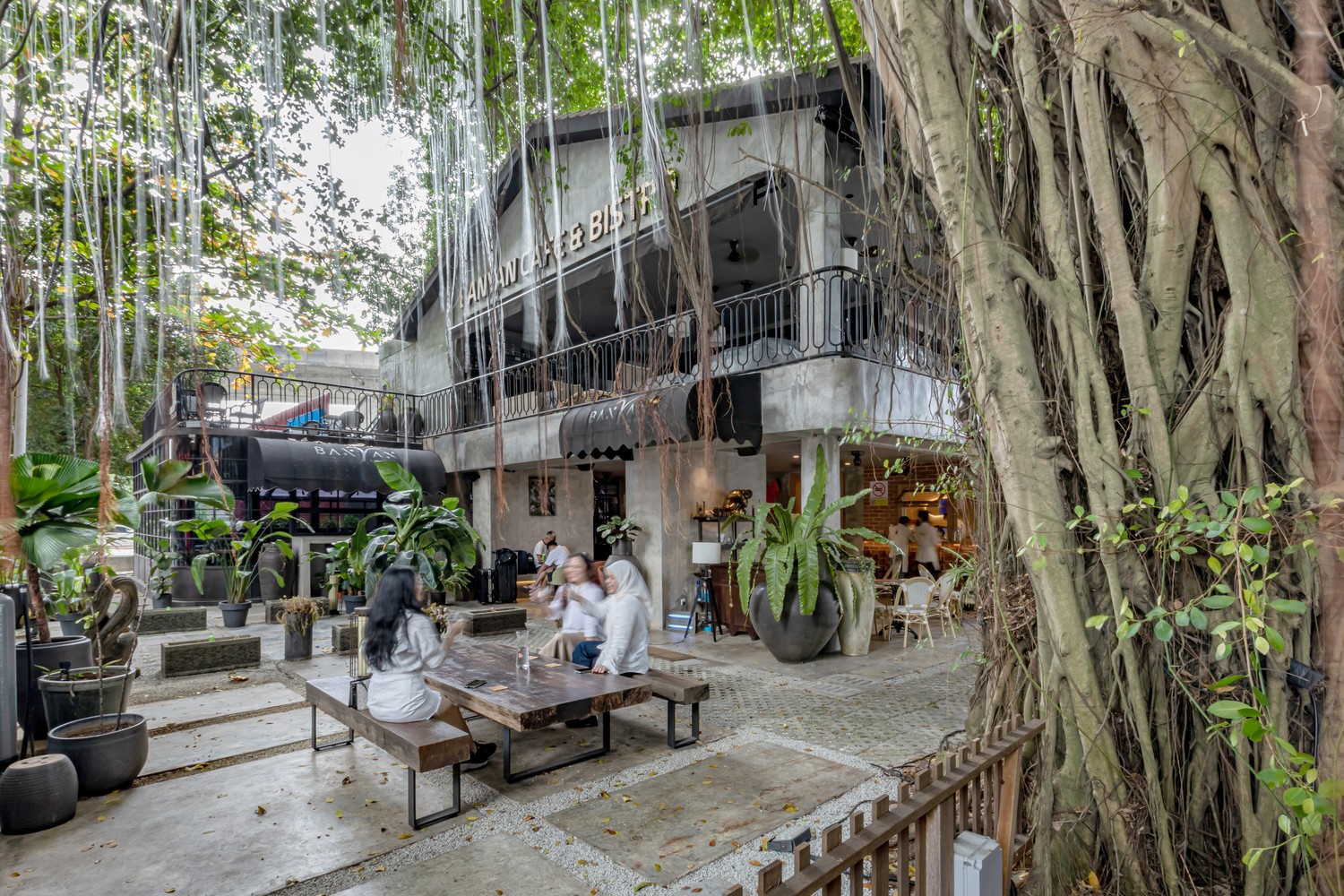
Adaptive reuse is embraced not as a limitation but as a creative catalyst. The existing structures and landscape guide spatial organisation, orchestrating a clear relationship between served and servant spaces while defining indoor, outdoor, and semi-outdoor environments that accommodate different functions and weather conditions. From the start of the planning phase, two existing mature trees on site are recognised as being preserved and celebrated as architectural protagonists, treated as living columns and natural canopies. The Banyan tree welcomes the front entrance, whereas the mango tree delights the courtyard experience. Their lush foliage creates a comfortable microclimate within the surrounding concrete urban jungle.
Urban revitalisation of site from an abandoned bungalow turns a meaningful shared social platorm for everyday encounter and exchange
Material selection and detailing respond sensitively to the tropical setting. Raw concrete and exposed clay brick are expressed honestly, celebrating texture, weight, and craft. Protruding brick patterns introduce rhythm, shadow, and tactile richness, while the banyan’s aerial roots cascade above like suspended natural “confetti,” blurring the boundary between architecture and nature. Rather than relying on loose furniture, columns and slabs are playfully reimagined as seating platforms, allowing visitors to engage directly with the building’s anatomy rather than being a static backdrop.
The project carefully responds to its geographical and climatic context by preserving the bungalow’s human scale at street level amid surrounding skyscrapers. A one-room-deep spatial strategy, combined with semi-outdoor buffer spaces, enhances cross-ventilation, natural light, and environmental permeability appropriate to a tropical climate. Systems of opening and closing, including collapsible screens, operable doors, and awnings, allow spaces to expand, contract, and adapt to different weather conditions and patterns of use. This flexibility enables the building to accommodate its dual identity as a tranquil café during the day and a lively bar at night.
Since its completion, Banyan Café & Bar has maintained strong occupancy, serving residents, visitors, and neighbouring developments such as Scarletz Suites, which rely on the café as a convenient breakfast, dining, and social destination. Through this symbiotic relationship, the project contributes to the area’s urban rejuvenation while mitigating crime commonly associated with an otherwise abandoned house.
In many ways, the banyan tree remains a silent witness to the ever-changing stories of the site. As the city grows taller around it, the tree remains rooted, offering shade, memory, and places to gather beneath its branches. Banyan Café and Bar embraces this quiet resilience, allowing architecture to grow alongside nature rather than replace it. What was once a forgotten private residence now becomes a shared stage for daily rituals: morning coffees, lingering conversations, and evening celebrations. Like the banyan itself, the building extends gently over time, proving that architecture can evolve with the city while preserving the traces of life that came before it. In a rapidly transforming Kuala Lumpur, where redevelopment often erases traces of earlier urban layers, Banyan Café and Bar offers a modest yet persuasive reminder that resilient architecture lies not in replacement but in the thoughtful continuation of what already exists.
Anchored by a preserved banyan tree, the project transforms an abandoned bungalow into a tranquil tropical retreat within the surrounding urban landscape.
For decades long, the Banyan had taken root as the original inhabitant of the site, growing over the years as a silent witness to changing lives, uses and the surrounding street of Lorong Yap Kwan Seng