
Contemporary architecture in Malaysia is often discussed through the lens of stylistic expression, iconic buildings, or technological advancement. Yet, such framings risk oversimplifying a far more complex and contested condition. Malaysian architecture today does not speak in a singular voice; instead, it articulates multiple, sometimes contradictory identities shaped by rapid urbanisation, shifting socio-economic realities, environmental pressures, and increasing global interconnectedness. It is within these tensions that the challenges — and possibilities — of contemporary architectural practice in Malaysia can be most clearly understood.
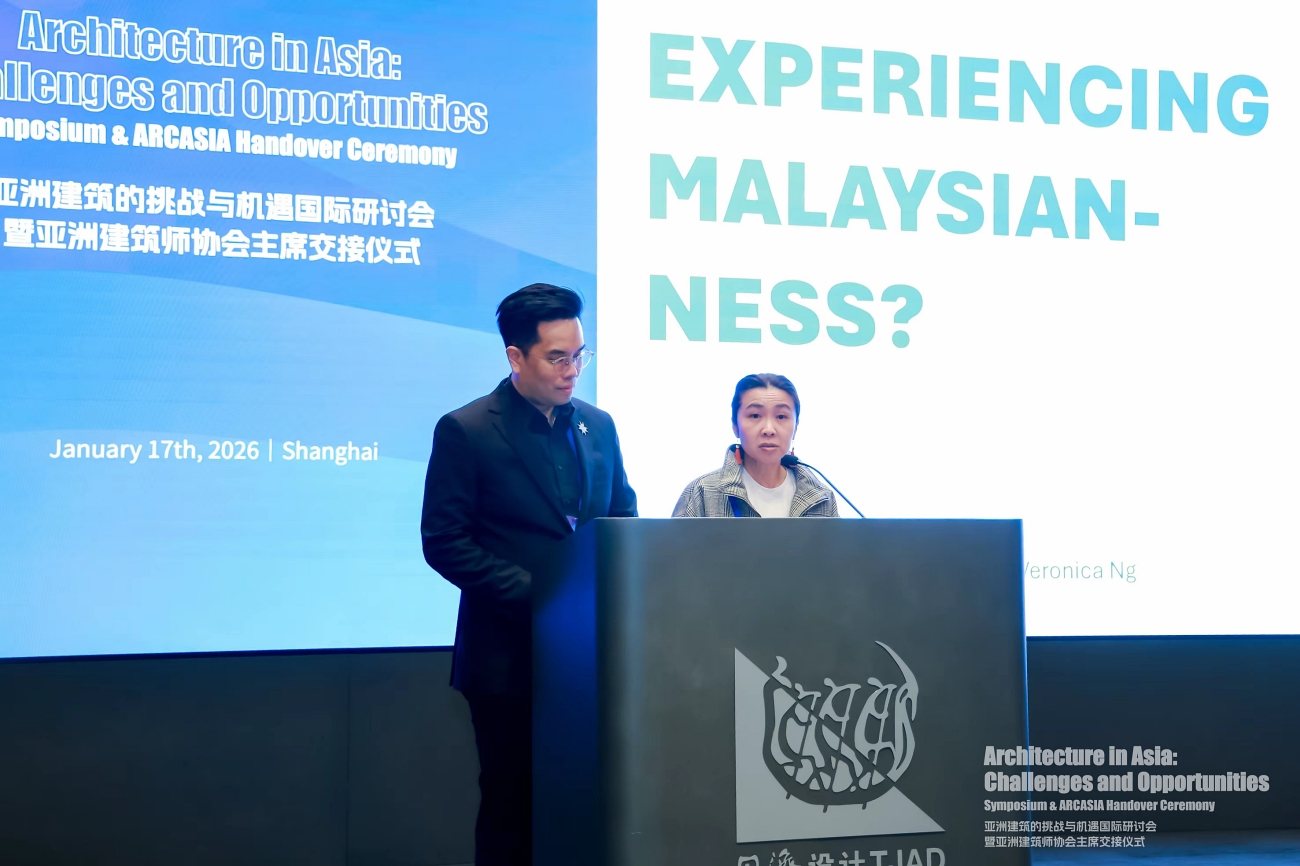
This article draws from the curatorial framework developed for the 2025 Malaysian Special Issue of Architecture Asia, co-curated by David Teoh and Veronica Ng. The basis is underpinned by a transcription of a talk delivered at the “Architecture in Asia: Challenges and Opportunities” Symposium held in conjunction with the ARCASIA Handover Ceremony held on January 16, 2026, in Shanghai, China.
Rather than merely showcasing exemplary buildings to frame contemporary Malaysian architecture, the talk sought to interrogate what “Malaysian-ness” might mean today and how architecture embodies, negotiates, or resists this idea. The outcome reveals that the challenge facing Malaysian architects is not a lack of quality work, but the difficulty of situating architectural practice meaningfully within a plural, uneven, and rapidly transforming context.
CURATING THE WORKS: MALAYSIAN-NESS AS A PLURAL CONDITION
One of the fundamental challenges of contemporary Malaysian architecture lies in defining its identity. Malaysia is culturally diverse, geographically varied, and historically layered.
Architecture, therefore, cannot be reduced to a single formal language or ideological position. Instead of asking what Malaysian architecture is, a more productive question is how Malaysian-ness is experienced, constructed, and contested through architecture.
To navigate this diversity, the projects featured in the special issue were organised by scale—from extra-small (XS) installations and community interventions to extra-large (XL) urban and infrastructural developments. This approach allows Malaysian architecture to be read as a continuum rather than a linear narrative, revealing how architectural intentions, constraints, and impacts shift across scales. Across this spectrum, Malaysian-ness emerges not as a fixed identity, but as a dynamic negotiation between global forces and local specificities.
To reflect this complexity, we organised the selected projects across a spectrum of five scales—XS (extra small), S (small), M (medium), L (large), and XL (extra-large). This curatorial framework does more than represent physical dimensions; it allows us to examine how ideas of Malaysian identity play out differently across typologies, functions, and contexts. From intimate community spaces and adaptive reuse projects to corporate campuses and monumental towers, each project invites readers to consider how scale mediates experience, cultural meaning, and spatial agency.
At the XS scale, Temple of Togetherness by Bunga Design Atelier represents a poignant example of how architecture can nurture belonging in fractured urban conditions. Built as a small yet potent spiritual and social space, the Temple of Togetherness exemplifies how an architectural sculpture can facilitate social agency in an expansive urban park. Through rigour in exploring a habitable space with an unconventional material penyapu lidi, a common cleaning tool found in Malaysian households, the designers created an ethereal and ephemeral form that brings people together in a tropical urban park.
Similarly, small-scale projects such as Women’s Aid Organisation (WAO) Shelter Home and UR-MU demonstrate that design excellence can emerge through constraints — whether they be budgetary, spatial, or programmatic—while still foregrounding human dignity, empathy, and context. WAO Shelter is a Corporate Social Responsibility Project by Veritas Architects. Being one of the first childcare centres with Green certification, achieving the highest Platinum score, this modest yet innovative architecture provides a dignified, supportive and regenerative environment for those less fortunate. Urban Museum Malaysia (UR-MU) by DTLM Architect is an adaptive reuse of a 1950s modernist four-storey walk-up apartment building in Kuala Lumpur into a contemporary private gallery. Modest in its scale, the urban museum offers collections of Southeast Asian art and culture.
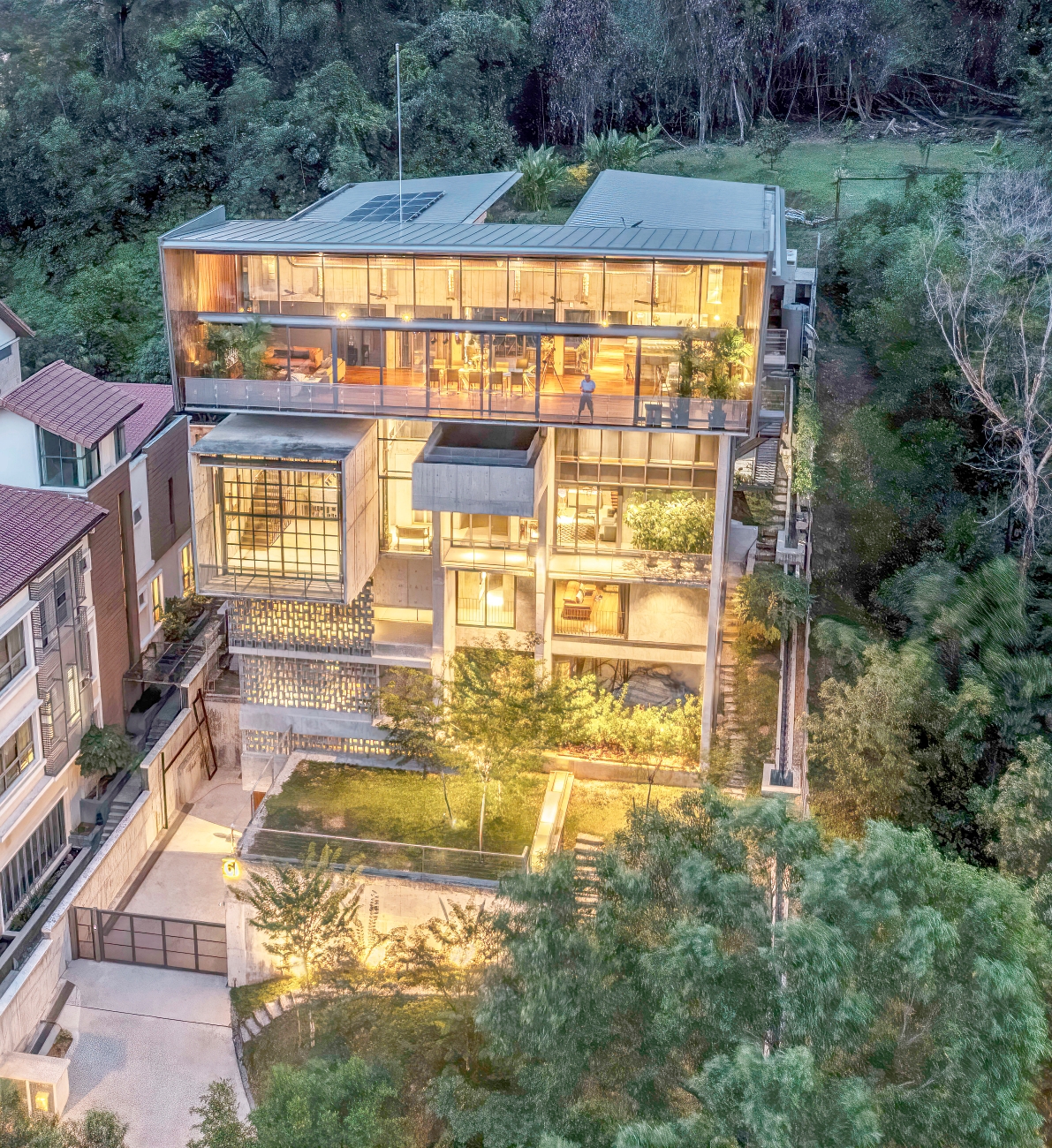
Moving into medium-scale works, Sama Square and Sentul Works exemplify how cultural hybridity is significant in contemporary Malaysian architecture. These projects reflect a growing design culture responsive to memory and modernity, where buildings no longer impose identity but allow it to unfold through time and use. Sama Square by TKC Architects is a composition of a colourful ensemble of civic spaces that explores a new market and retail development paradigm, creating an inclusive and vibrant public realm for the community. In contrast, in collaboration with YTL Land & Development, Sentul Works by CPL Architects explores the adaptive reuse of a colonial-era railway administration building into a new contemporary heritage office. Oculus House by Wooi Architect explores similar themes within a domestic typology, using spatial layering and material tactility to reinterpret dwelling forms for contemporary domesticity. It pushes the boundaries of rethinking building on a steep site, while creating a tropical living environment that is naturally ventilated and washed with natural lighting.
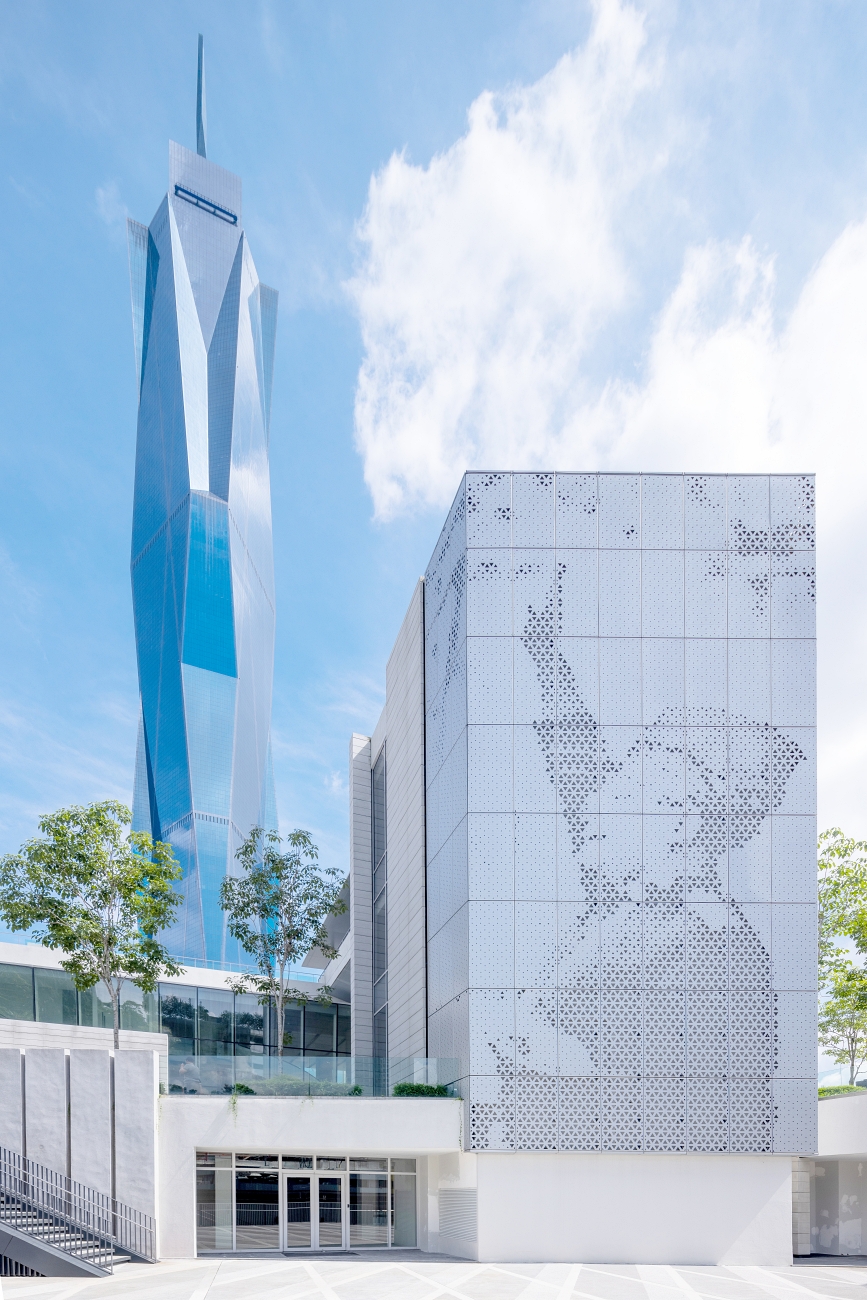
We observe the complexities and contradictions of representing nationhood in architecture on large and extra-large scales. GDP Campus by GDP Architects speaks to the role of institutional architecture in shaping educational and cultural aspirations, while Bagan Hospital and Paramit Factory address questions of wellness, labour, and sustainability in the Malaysian industrial and healthcare landscapes. Finally, Merdeka 118—the tallest tower in Southeast Asia—stands as a powerful symbol of ambition, innovation, and global presence, yet also prompts critical reflection on scale, context, and meaning in architectural representation.
To complement the featured projects, this issue includes academic and reflective contributions from key Malaysian architectural and urban discourse voices. Eleena Jamil, in revisiting themes from her recent book Essence of Place, reflects on how placebased thinking and environmental responsiveness remain central to Malaysian design identity. Her essay invites us to look beyond aesthetics towards architectural practice’s ethical and ecological dimensions. Lee Jia Ping offers insights into the evolving role of placemaking and the “creative city” in shaping more inclusive, participatory urban environments. In contrast, Ahmad Nazmi’s exploration of “cities within a city” provides a layered understanding of Malaysian urbanism as a mosaic of historical, cultural, and socio-political forces. In this issue, David Teoh and Edric Choo share an insightful conversation with two prominent architectural and development figures. Tengku Dato’ Ab. Aziz Tengku Mahmud, CEO of PNB Merdeka Ventures, and Ar. Farid Baharuddin, Principal of RSP Architects, share their insights and perspectives on the iconic Merdeka 118 and the surrounding precinct.
These contributions collectively underscore a shift in how architecture is practised, and they are grounded in discourse from Architecture Malaysia, the PAM Awards, and broader regional conversations, demonstrating plurality, juxtaposition, and tension. These qualities are not shortcomings; rather, they reflect the realities of architectural practice in a country shaped by uneven development, climatic intensity, and socio-political complexity.
URBANISATION AND THE FRAGMENTED CITY
Urbanisation remains one of the most pressing challenges shaping contemporary architectural practice in Malaysia, particularly in Kuala Lumpur. As Ahmad Nazmi describes through the concept of the “Urban Archipelago,” the city has not evolved into a continuous, integrated urban fabric. Instead, it has developed as a constellation of large, self-contained enclaves — such as Mid Valley City, KL Eco City, and Empire City — that function as cities within the city.
These developments are commercially driven, inward-looking, and often disconnected from their surrounding urban context. Their emergence is closely tied to Malaysia’s neoliberal turn during the Mahathir era, when privatisation and market-led development became dominant and state involvement in urban-making diminished. As a result, large private projects increasingly dictated the city’s form and logic.
Today, Kuala Lumpur is characterised by dense, vehicular-dependent developments and architecturally spectacular forms. Yet, this visual intensity often masks deeper spatial and social fragmentation. Public space, pedestrian connectivity, and collective memory are frequently sidelined in favour of speculative growth. For architects, the challenge lies in operating within this environment while resisting the erosion of civic life and urban continuity.
GRASSROOTS PLACEMAKING AND ALTERNATIVE URBANISMS
Running parallel to large-scale urban enclaves is a quieter but significant mode of urbanisation: grassroots placemaking. Often emerging in suburban neighbourhoods such as Bangsar, or in secondary cities like Ipoh and George Town, these initiatives prioritise everyday social life, local identity, and adaptive reuse.
Projects such as COEX in George Town demonstrate how bottom-up, community-driven interventions can reframe urban transformation. Here, architecture becomes a facilitator of social exchange rather than an object of spectacle. Similarly, UR-MU reimagines the traditional shophouse as an urban museum, inserting art, culture, and public engagement back into the city through an architect-led initiative.
SAMA Square further challenges conventional notions of urban space by transforming a dormant site into a temporal public square—part market, part plaza, part village square. Its emphasis on togetherness and informality redefines what a contemporary Malaysian urban square might be, foregrounding social interaction over monumental form.
At an industrial scale, the Paramit Factory challenges the assumption that efficiency and environmental performance are incompatible with human-centric design. Achieving approximately 40 per cent energy savings while significantly improving workers’ spatial experience, the project demonstrates that sustainability in Malaysia must be understood as spatial, social, and experiential, rather than purely technical.
MAKING, MATERIALITY, AND CULTURAL GROUNDING
Another persistent challenge for contemporary Malaysian architecture is maintaining a meaningful relationship with place, materiality, and making in an era of globalised construction systems. In her essay for the special issue, Eleena Jamil argues for an expanded role of the architect—one that involves direct engagement with materials, craft, and local knowledge.
This approach resists the detachment often produced by standardised building processes and reasserts architecture’s grounding in climate, tradition, and tactility. Bunga Design Atelier’s Temple of Togetherness exemplifies this ethos. Constructed from penyapu lidi — a familiar domestic object—the temporary installation transforms an everyday material into a reflective civic space. Through careful experimentation with assembly techniques, the project creates a robust yet delicate structure that invites pause, encounter, and contemplation within the urban environment.
At the domestic scale, projects such as Oculus House by Wooi Architect demonstrate how environmental responsiveness can turn constraints into opportunities. Through natural ventilation, daylighting, and sensitive site integration, the house engages a steep terrain not as a problem to be flattened, but as a condition to be embraced.
Collectively, these works suggest that one of the key challenges for Malaysian architects is to remain attentive to making and material intelligence, even as the pressures of speed, cost, and scale intensify.
ADAPTIVE REUSE AND THE ETHICS OF RENEWAL
As Malaysia’s building stock from the 1980s and 1990s begins to age, adaptive reuse has emerged as a critical architectural challenge. The question is no longer whether to preserve or demolish, but how to renew existing buildings responsibly, socially, and economically.
The WAO Shelter by Veritas Architects offers a powerful example of ethical and resourceful design. Adapted from a partially fire-damaged 1960s house, the project provides a safe home for rescued children using rejected and recycled materials. Burnt roof tiles were repurposed as screen walls, while passive cooling strategies enabled the building to achieve Platinum Green certification. The project demonstrates that high-performance architecture does not require excessive budgets, but empathy, ingenuity, and care.
UR-MU by DTLM Architects similarly illustrates how adaptive reuse can inject new cultural life into generic urban housing. By transforming a 1950s walk-up apartment into a contemporary art museum, the project retains the domestic scale and layout while opening the building to the public. The result is an inclusive, slightly quirky space that respects its neighbourhood context while redefining its purpose.
At a larger scale, Sentul Works exemplifies an alternative conservation strategy. Rather than restoring a colonial railway building to a singular historical moment, a new independent structure clad in Corten steel was inserted within the existing shell. This approach allows contemporary office use to coexist with historical fabric without erasing its layered past.
PRACTICE, SCALE, AND COLLABORATION
The expansion of Bagan Hospital in Butterworth highlights another challenge: renewing buildings that must remain operational. Designed by MINWEE Architects, a relatively small practice based in Kuching, the project was executed on a live site, requiring careful phasing and coordination. Through strategic collaboration with a Kuala Lumpur-based healthcare planner, the architects successfully integrated a new block with an existing building, demonstrating that practice size need not limit project ambition.
This raises broader questions about architectural practice in Malaysia. As projects grow increasingly complex, architects must rethink studio management, collaboration models, and professional alliances. The assumption that only large corporate firms can handle complex buildings is increasingly challenged by smaller, agile practices operating through networks rather than hierarchies.
INTERNATIONALISATION AND GLOBAL READINESS
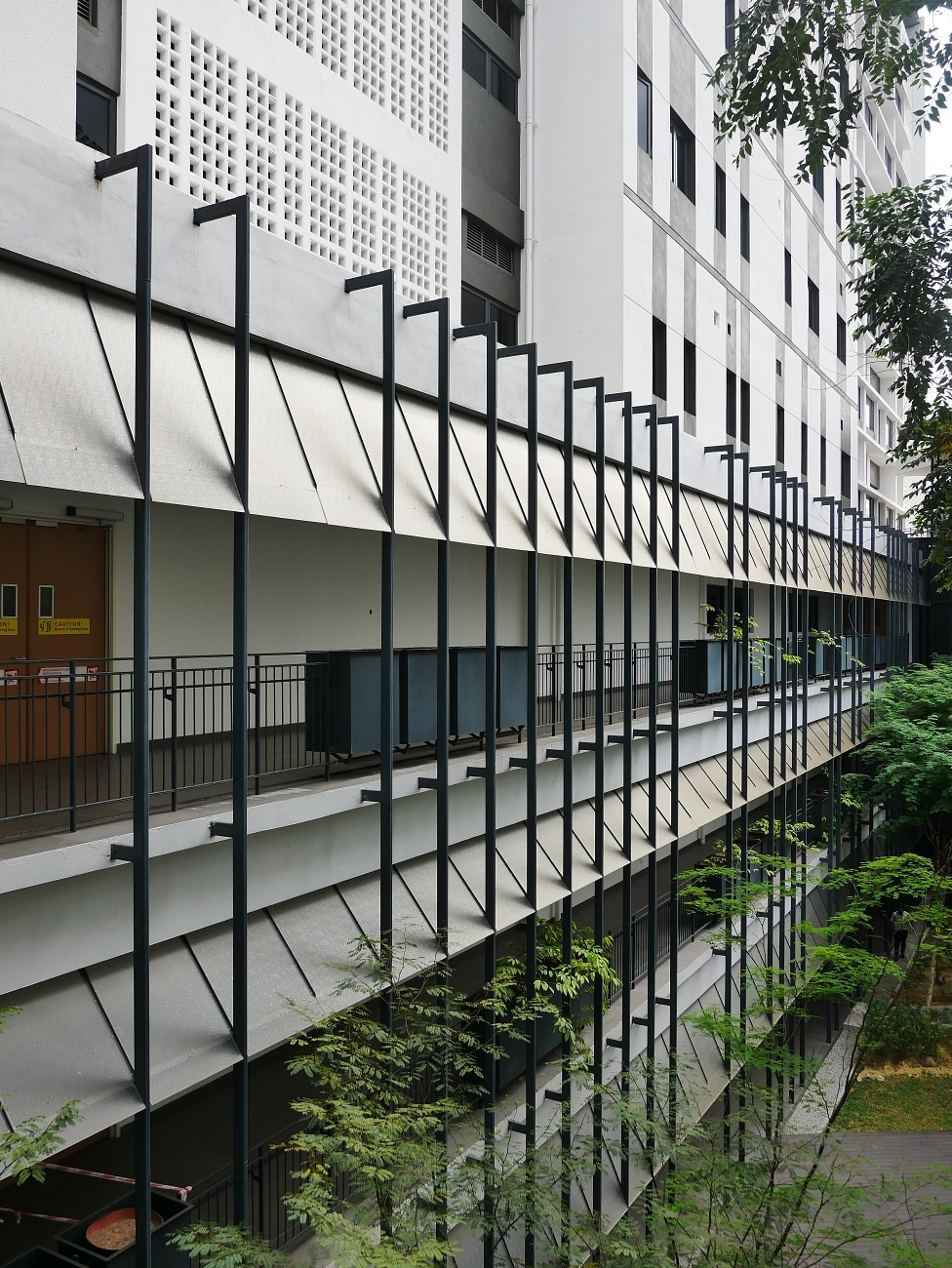
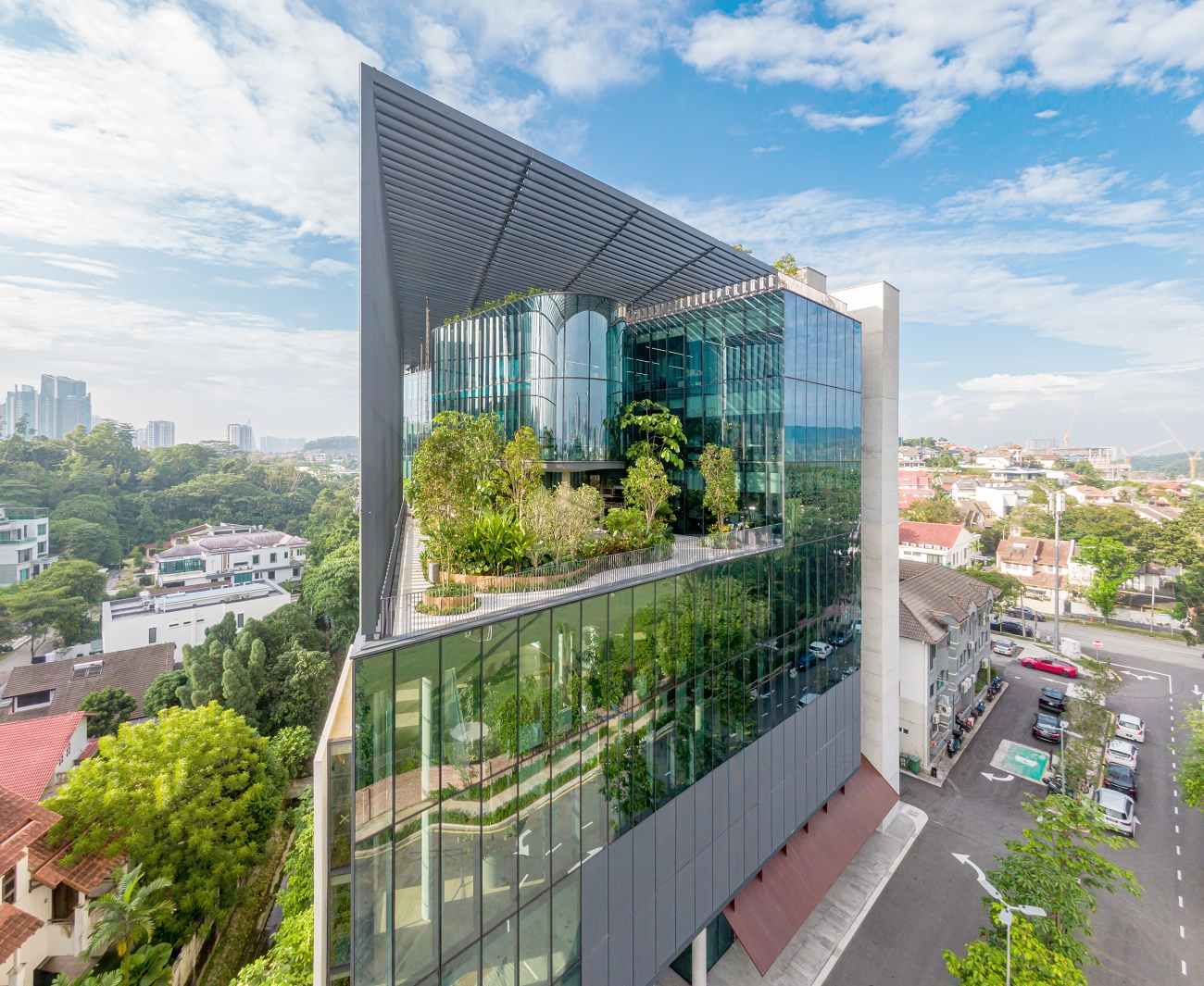
Internationalisation presents both an opportunity and a challenge for Malaysian architects. Firms such as GDP Architects exemplify a mature practice poised to operate at a global level. Their recently completed GDP Campus in Bukit Damansara consolidates seven specialised studios under one roof, fostering interdisciplinary collaboration in an academic-like environment. The building’s tectonic clarity — expressed through off-form concrete, precision steelwork, and cascading terraces—embodies a culture of rigorous making and professional maturity.
Similarly, RSP Architects (Malaysia), as executive architects for Merdeka 118, demonstrate Malaysia’s capacity to deliver projects of extraordinary technical complexity. While the concept design originated from Australia-based Fender Katsalidis, the execution and resolution were driven locally. As the world’s second-tallest building and the tallest LEED Platinum-certified tower globally, Merdeka 118 symbolises both ambition and competence, while drawing formal inspiration from Malaysia’s songket textile heritage.
CONCLUDING REFLECTIONS
Contemporary Malaysian architecture cannot be understood through a singular stylistic or ideological lens. Instead, it is shaped by three interrelated phenomena: urbanisation, adaptive reuse, and internationalisation. Across these conditions, Malaysian architects are challenged to reconcile global pressures with local care, efficiency with empathy, and spectacle with substance.
Practising in Malaysia requires navigating a highly regulated environment alongside cultural diversity, climatic conditions, and economic disparities. These constraints, however, also cultivate a particular kind of architect—resilient, adaptable, and deeply sensitive to context. It is within this negotiation, rather than in any fixed architectural language, that Malaysian-ness continues to evolve.
DAVID TEOH is a registered Architect in Malaysia and Australia and has worked on a broad range of projects as both a team player and a leader. His experience encompasses healthcare facilities, diplomatic facilities, commercial offices, institutional buildings and multi-residential buildings. Having worked in offices in Melbourne and Kuala Lumpur, David gained international experience through working on projects in Australia, Malaysia, Singapore, Vietnam and the UAE. He was the recipient of the AIA Glenn Murcufl Prize – Popular Choice Award for his final year design project and was formerly engaged in research and tutoring at the University of Melbourne. He currently serves as the Honorary Treasurer of the Malaysian Institute of Architects (PAM); Editor-in-Chief of Architecture Malaysia (AM) Magazine; and Chair of the Media & Publications Commiflee.
VERONICA NG is Professor and Head of the Department of Architecture at Sunway University, with research interests in place-making and contemporary Malaysian architecture. Her work is grounded in her PhD titled Re-thinking Place and extends into socio-spatial studies on migrant housing and purpose-driven learning in architecture education. Commifled to bridging education, research, and real-world application, she champions empathetic, place-based design approaches that empower local communities and contribute to a sustainable urban future. They include the educational programme in Malaysia with Aga Khan Trust for Culture, and curated community-based projects such as PavilionNOW, SentulWorks, and the Kampong Baru Vernadoc Camp. As an avid writer, she has authored books and contributed regularly to Architecture Asia, World Architecture, Architecture Malaysia, and d+a. Actively engaged in editorial and curatorial work, Veronica serves on PAM’s Media and Publication Committee and PAM Education Commiflee.