AR SARLY RUMINATES ON HIS RECENT TRIP TO THE CLEAN, EFFICIENT, INTELLIGENT, AND DEEPLY INTERCONNECTED INCHEON, KOREA, ANCHORED AROUND THE ARCASIA ACGSA MEETING.
By Ar Sarly Adre Sarkum
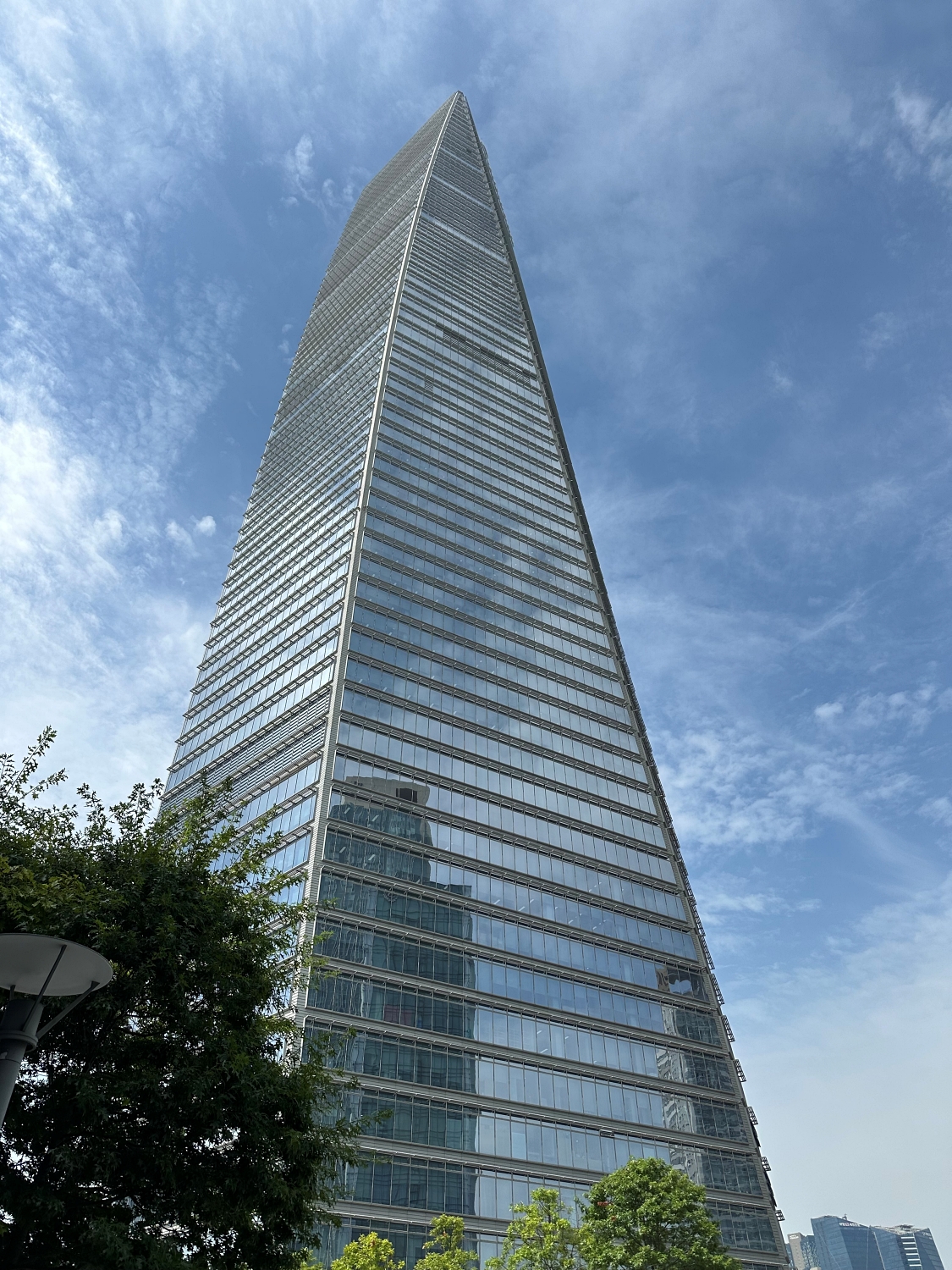
Posco Tower-Songdo designed by Kohn Pedersen Fox and Heerim Architects & Planners
My journey to Incheon, South Korea, from September 8, 2025, was anchored around the Arcasia ACGSA meeting as part of the Asian Congress of Architects #21 – a gathering of regional experts and professionals exploring sustainable growth and the future of our cities. Yet, beyond the conference halls, Incheon itself became a subject of reflection-a city that perfectly embodies the promise and paradox of modern urbanism.
I stayed in an apartment near the Songdo International Business District, a place that felt more like a city of the future than the present. Everything around me functioned with precision-transport systems that synchronised seamlessly, streets free of clutter, buildings that seemed to hum with silent intelligence.It was clear that Incheon has succeeded in becoming one of the world’s most advanced smart cities. But as I explored, I began to sense that this achievement came with a certain emotional distance-as if the city’s perfection had come at the cost of its warmth.
Songdo Central Park was a highlight-a beautifully planned green space set amidst the district’s glass and steel towers. Its calm waterways, sculpted landscapes, and quiet promenades offered a visual and spatial respite from the rigidity of the surrounding cityscape. The nearby Convensia area, with its striking architectural forms and clean geometries, reflected Korea’s ambition to position Incheon as a global business and convention hub. It was efficient and meticulously designed-every line deliberate, every detail polished. Yet, even there, I couldn’t help but feel that the human element was secondary to the technological one.
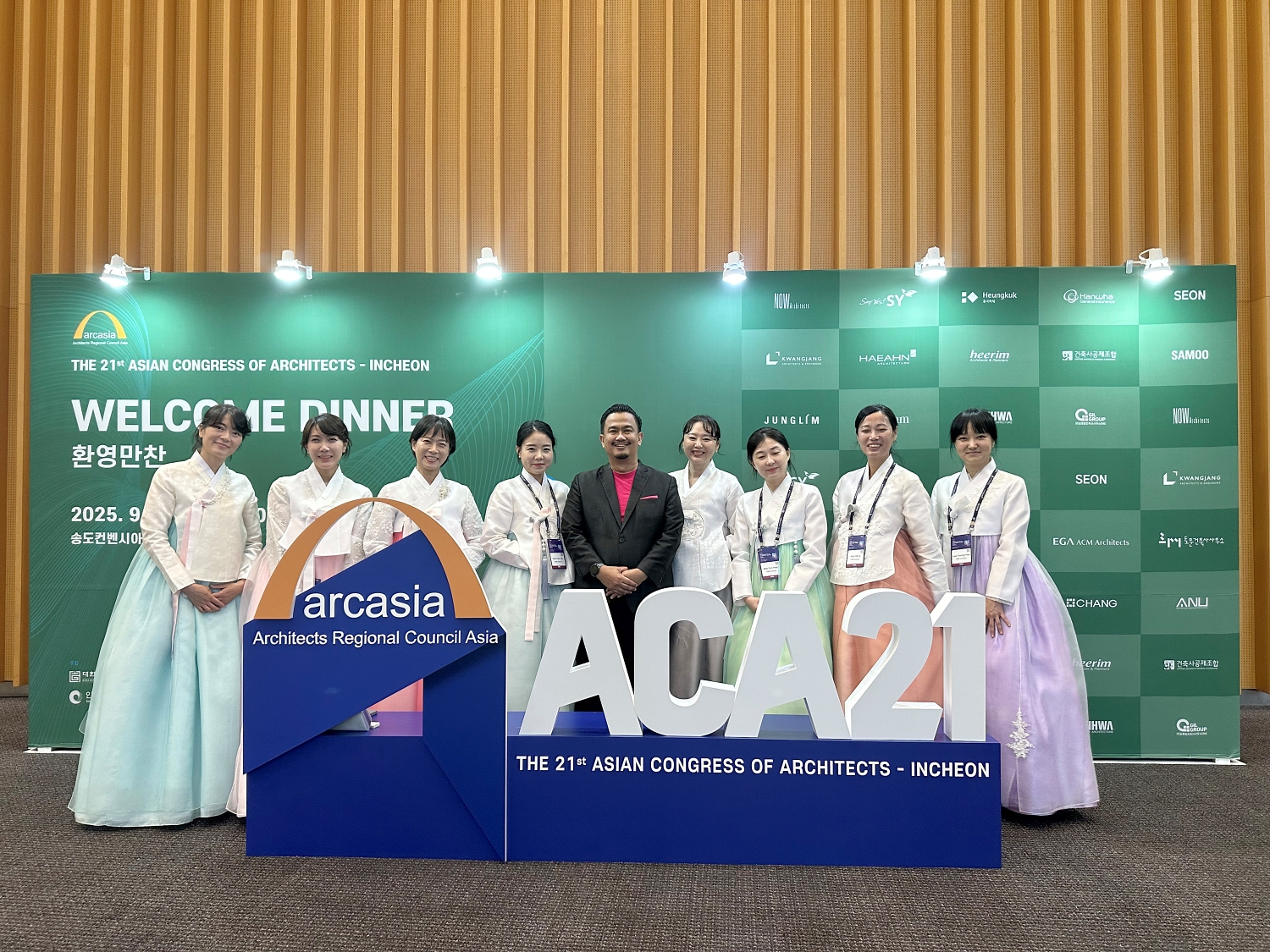
Surrounded by Korean culture, local architects in traditional Korean traditional garb is called Hanbok
Crossing the Incheon Bridge, that elegant span linking the airport to Songdo, I was struck by both its grandeur and its sterility. The journey revealed vast reclaimed lands and wide expressways with minimal vegetation-a landscape engineered more for efficiency than for emotion. The absence of natural softness made the city feel somewhat detached, as though it existed in a state of perpetual readiness, waiting for life to happen. It was beautiful in form but almost clinical in spirit.
Incheon’s execution-based so heavily on technology, data, and precision-may appear to some as visionary, yet to others, perhaps a touch dystopian. There is a certain irony in how a city built to enhance human living can at times feel almost devoid of humanity. It lacks the layered chaos, the imperfect charm, and the palpable soul that older cities possess – places where history lingers in the streets, and emotion seeps into the architecture itself.
Still, Incheon deserves admiration for its ambition. It stands as a bold experiment in sustainable modernity, a glimpse into how cities may one day operate – clean, efficient, intelligent, and deeply interconnected. As I left, I reflected that perhaps this is simply Incheon’s adolescence. Its systems are already flawless; now it must discover its heart. The soul of a city, after all, takes time – it grows not from technology, but from the lives that fill its spaces and give it meaning.
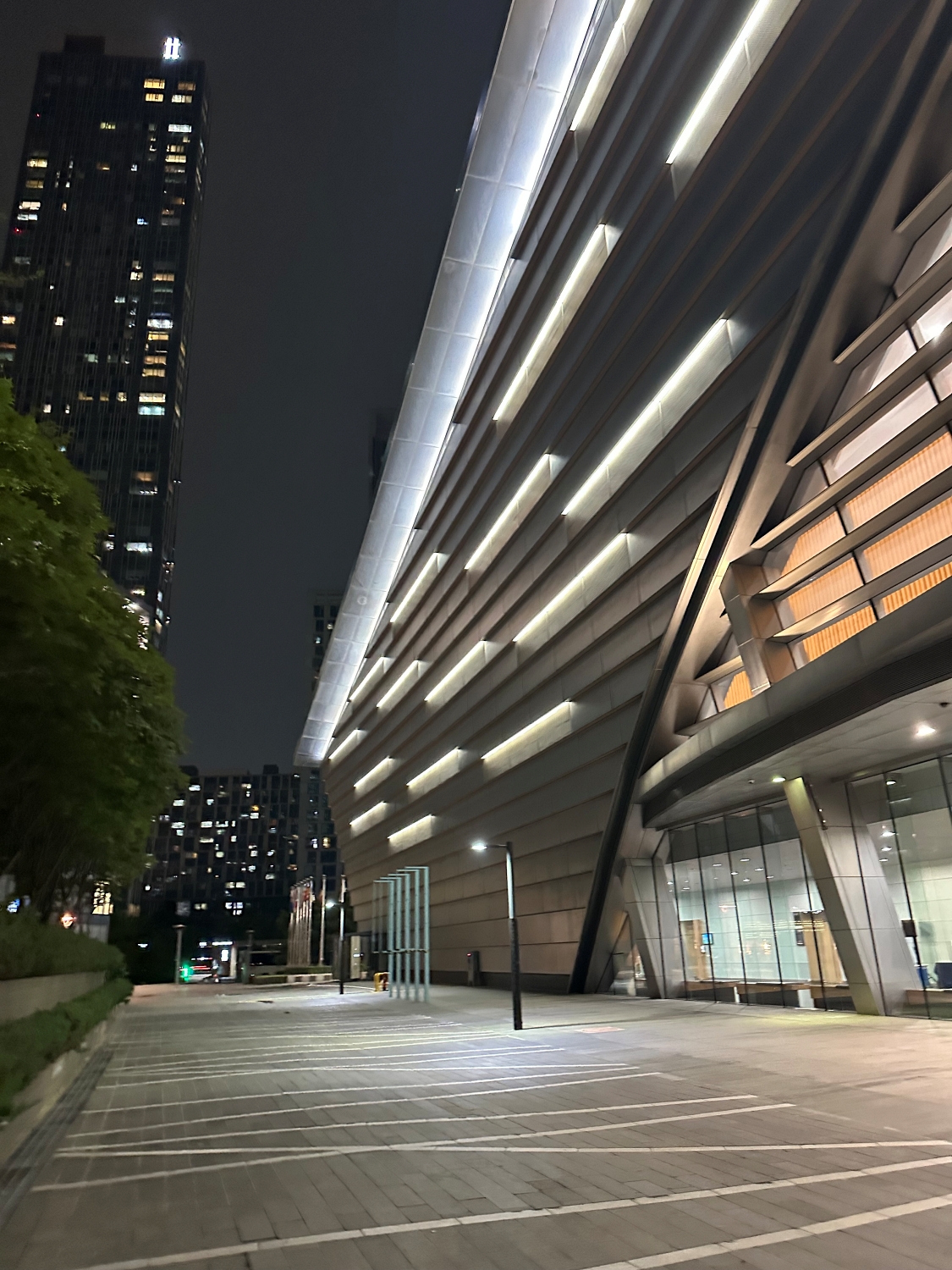
The smart but clinical architecture of Songdo Convesia
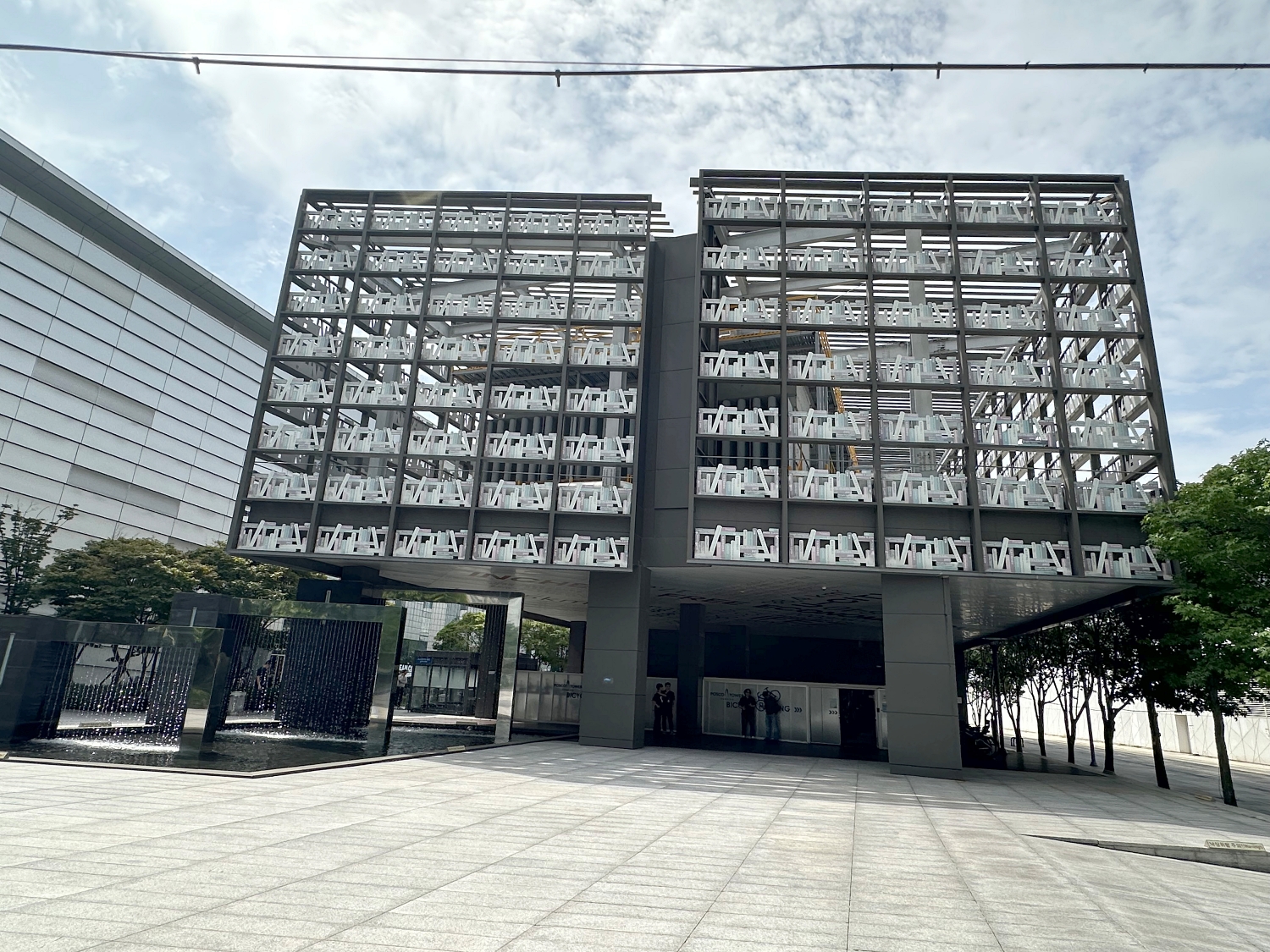
Intricate façade of the Posco Tower bicycle parking