SYNC PAVILION

A MODULAR URBAN FURNITURE SYSTEM
BY FZEROLABby Cheah Ee Von

Designed as a playful yet functional assembly, fzerolab’s first realised project – SYNC Pavilion is an innovative urban furniture system that reimagines public space through modular design, material efficiency, and creative collaboration. The project encourages communities to interact with their shared spaces, turning rigid urban structures into an ever-evolving platform. The pavilion transcends conventional street furniture by becoming an interactive medium – one that absorbs and reflects the collective identity of those who shape it. Through its adaptable design, SYNC morphs from a physical object into a dynamic expression of community dialogue, where each interaction leaves its mark and every configuration carries a new form.

SYNC Pavilion embodies three core principles that define its innovative design: modularity, ease of assembly, and community-centric engagement. The journey to realising SYNC was marked by material experimentation and unexpected challenges. The team first explored fibre cement boards, drawn to their durability and density. However, CNC cutting proved problematic as the material’s hardness caused drill bits to overheat, spark, and even catch fire. Adjustments, such as water cooling and bit changes, only exacerbated friction due to cement dust accumulation. After weeks of troubleshooting, the team concluded that fibre cement was unsuitable within their timeline.

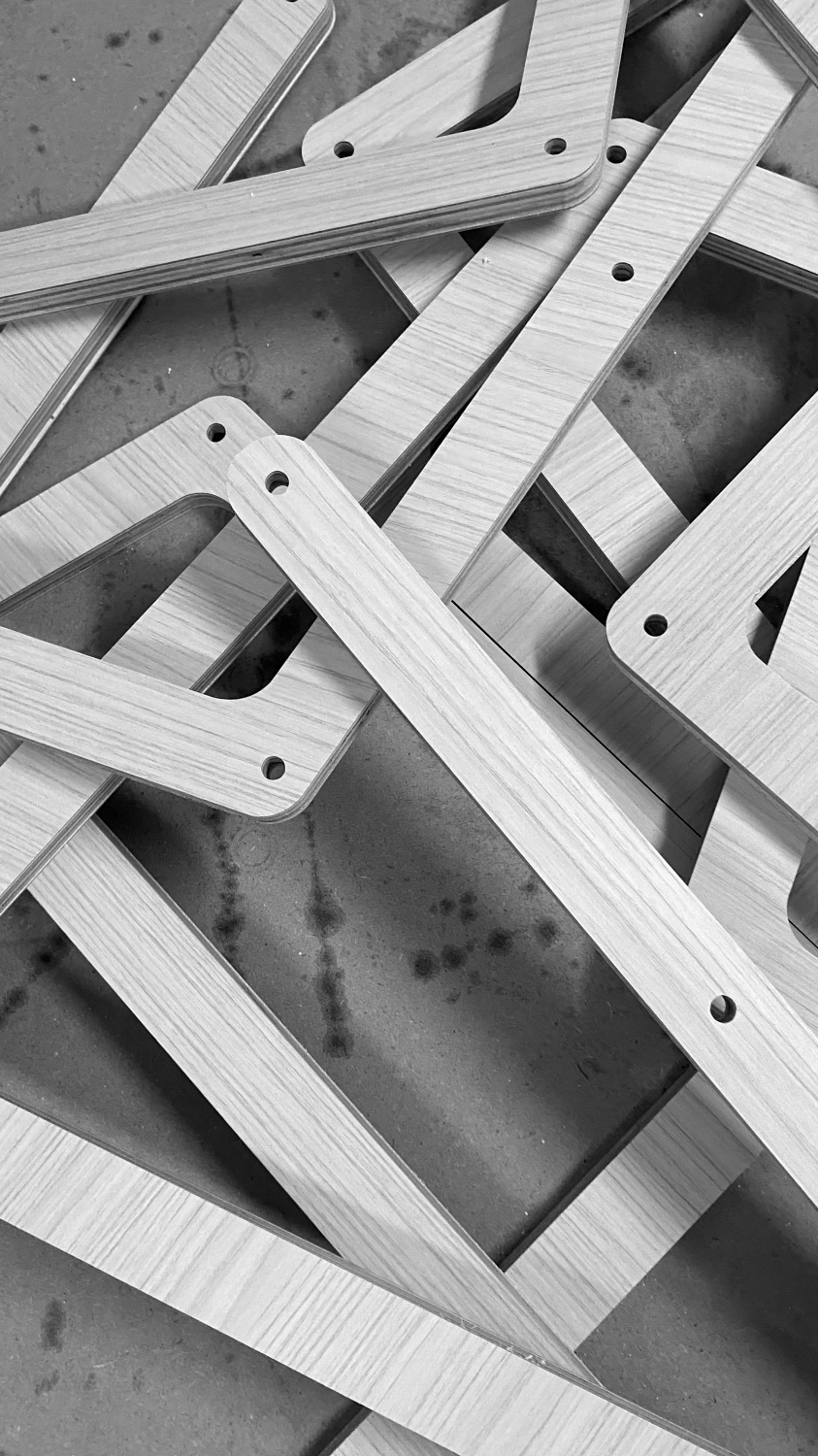
witching to plywood offered a more workable solution. However, sourcing the right quality required extensive collaboration with local suppliers. Initial samples from carpenters were inconsistent, prompting direct engagement with manufacturers to ensure precision in CNC cutting. The design ultimately evolved to utilise standardised 4’ x 8’ plywood panels as its fundamental building blocks. The design was meticulously planned to ensure zero waste. Every cutout is repurposed into functional components. These modular pieces interlock in countless configurations, allowing for benches, partitions, and social hubs that adapt to different contexts. Its components are crafted to fit together in countless arrangements, enabling endless spatial variations while maintaining structural coherence.The use of bolted connections ensures quick and intuitive construction, allowing even those without technical expertise to assemble, dismantle, and reconfigure the pavilion with ease.
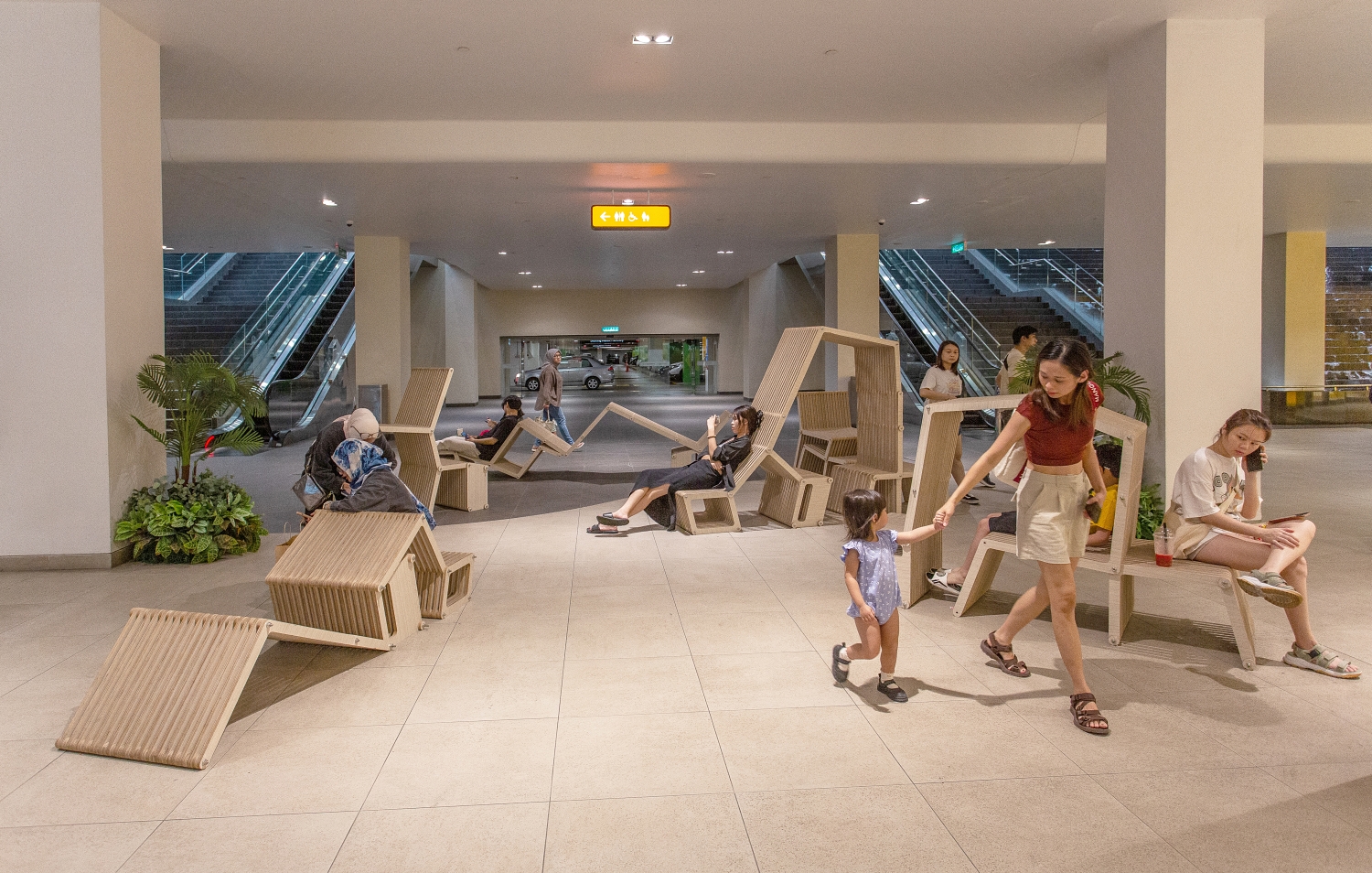
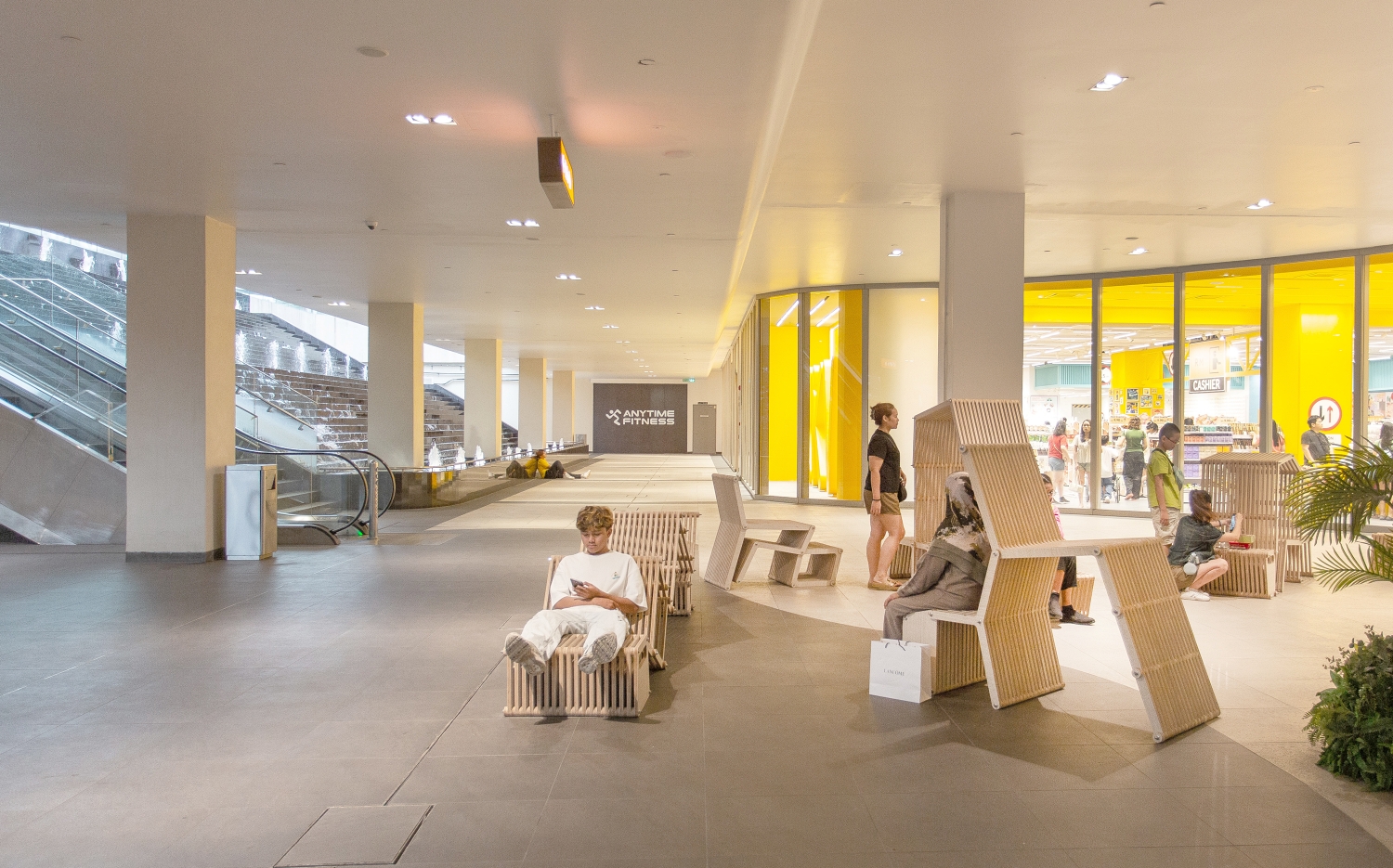
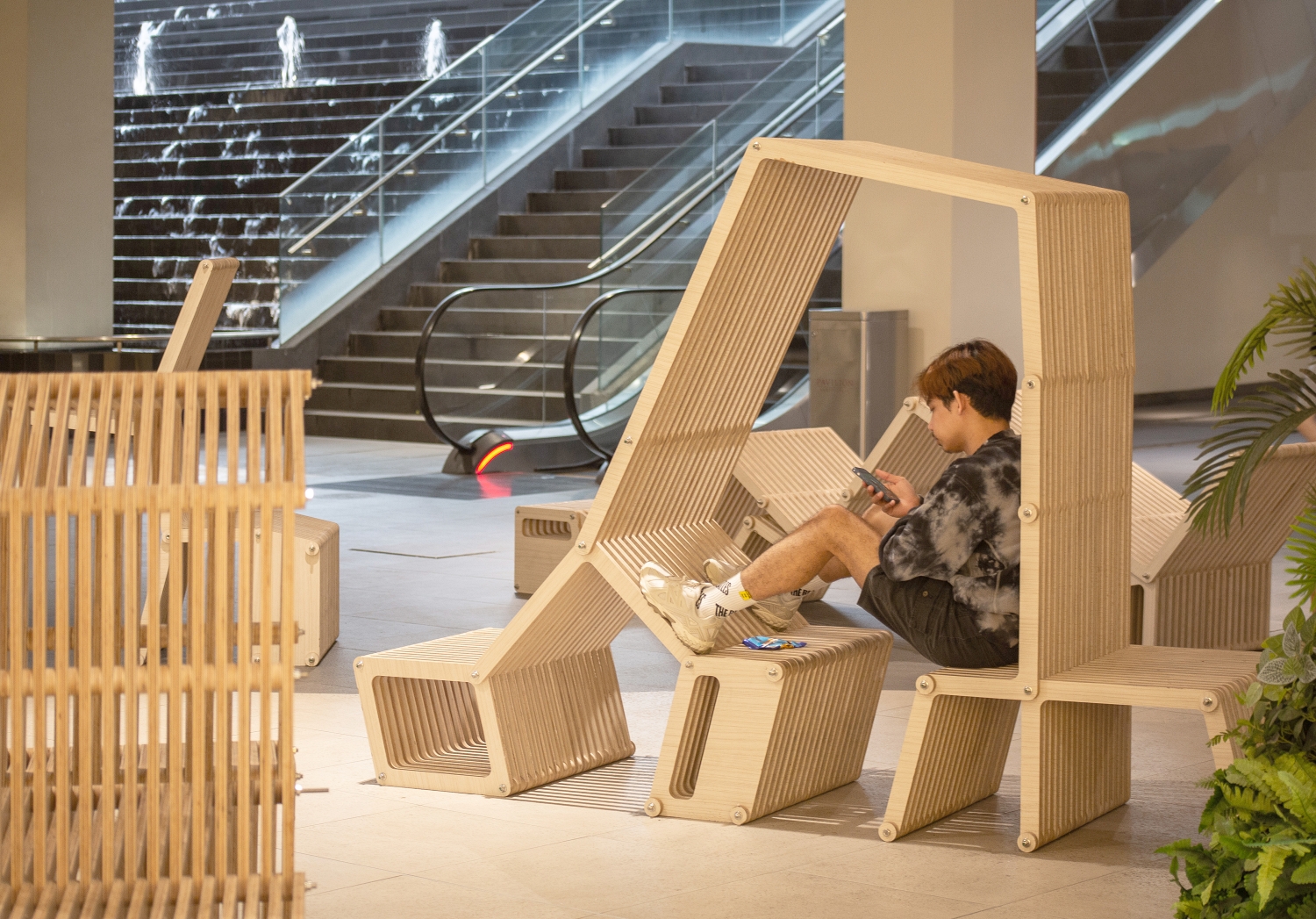
SYNC Pavilion (second iteration) at Pavilion Bukit Jalil, located in front of the Tsutaya Bookstore entrance
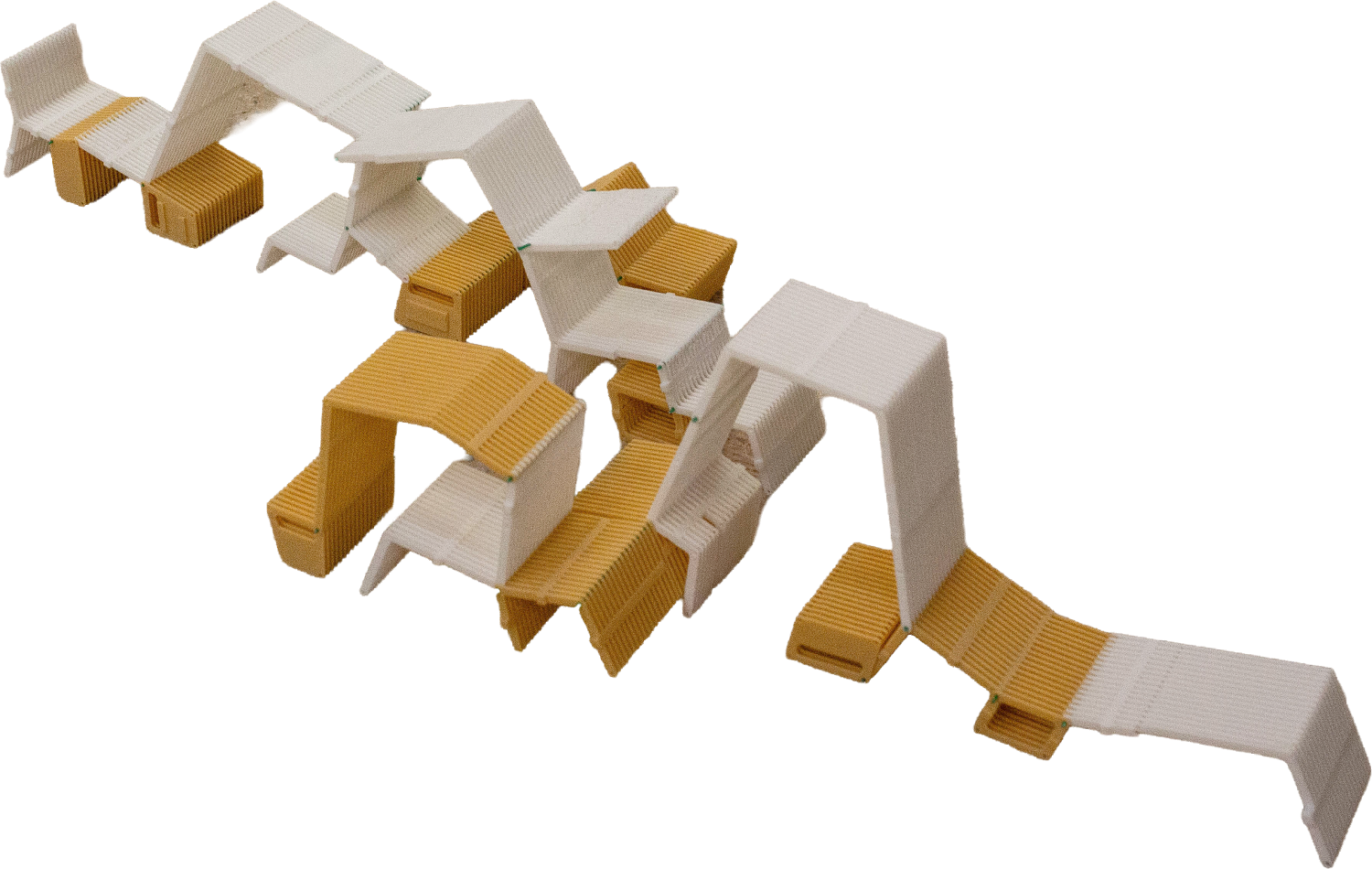
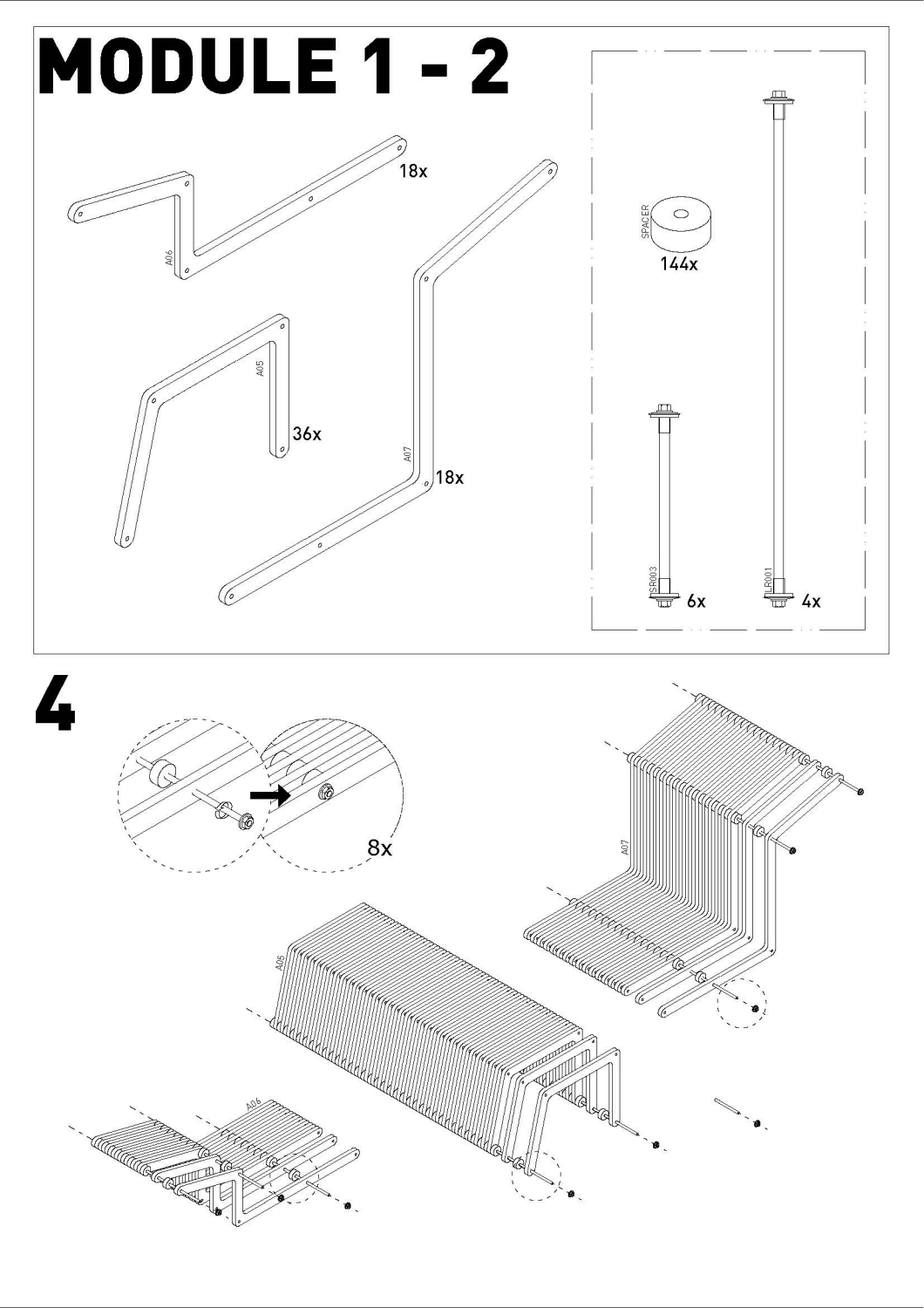
To validate the design, a mock-up session was conducted with architecture students from UCSI University’s School of Architecture and Built Environment (SABE). The session aimed to examine three key aspects: CNC workmanship and material integrity, assembly efficiency and structural stability, and user interaction with design flexibility. Aesthetic refinements such as plywood colour and surface finishing were also noted for future iterations.Before full-scale production, the team also used 1:10 scale 3D-printed models to experiment with spatial configurations. Another workshop with UCSI students further explored creative layouts, demonstrating SYNC’s adaptability. Despite successful prototyping, production hurdles arose. Laminated plywood interfered with CNC routing, causing misalignment and material loss. After recalibrating drawings and consulting CNC experts, the team optimised cutting paths to ensure precision. To democratise assembly, a step-by-step build manual was also developed, tested, and refined for clarity in parallel.
SYNC Pavilion (second iteration) at Pavilion Bukit Jalil, located in front of the Tsutaya Bookstore entrance
SYNC’s first public installation at Semua House demonstrated its potential as a piece of social infrastructure. Users left behind subtle marks – scratches, drink stains, imprints – each telling a story of momentary pause, conversation, or solitude. When relocated to Pavilion Bukit Jalil, SYNC transformed again, proving its nomadic adaptability. The team documented these transitions, capturing the ephemeral traces of human interaction before each reset.As SYNC continues to evolve, its legacy lies not just in its physical forms, but in the dialogues, it sparks between material and maker, designer and user, structure and story. SYNC Pavilion is currently seeking institutional and commercial partners to serve as hosts for future installations. For serious inquiries regarding commercial or collaborative development, contact fzerolab via info@fzerolab.net or Instagram @fzerolab to initiate discussions.
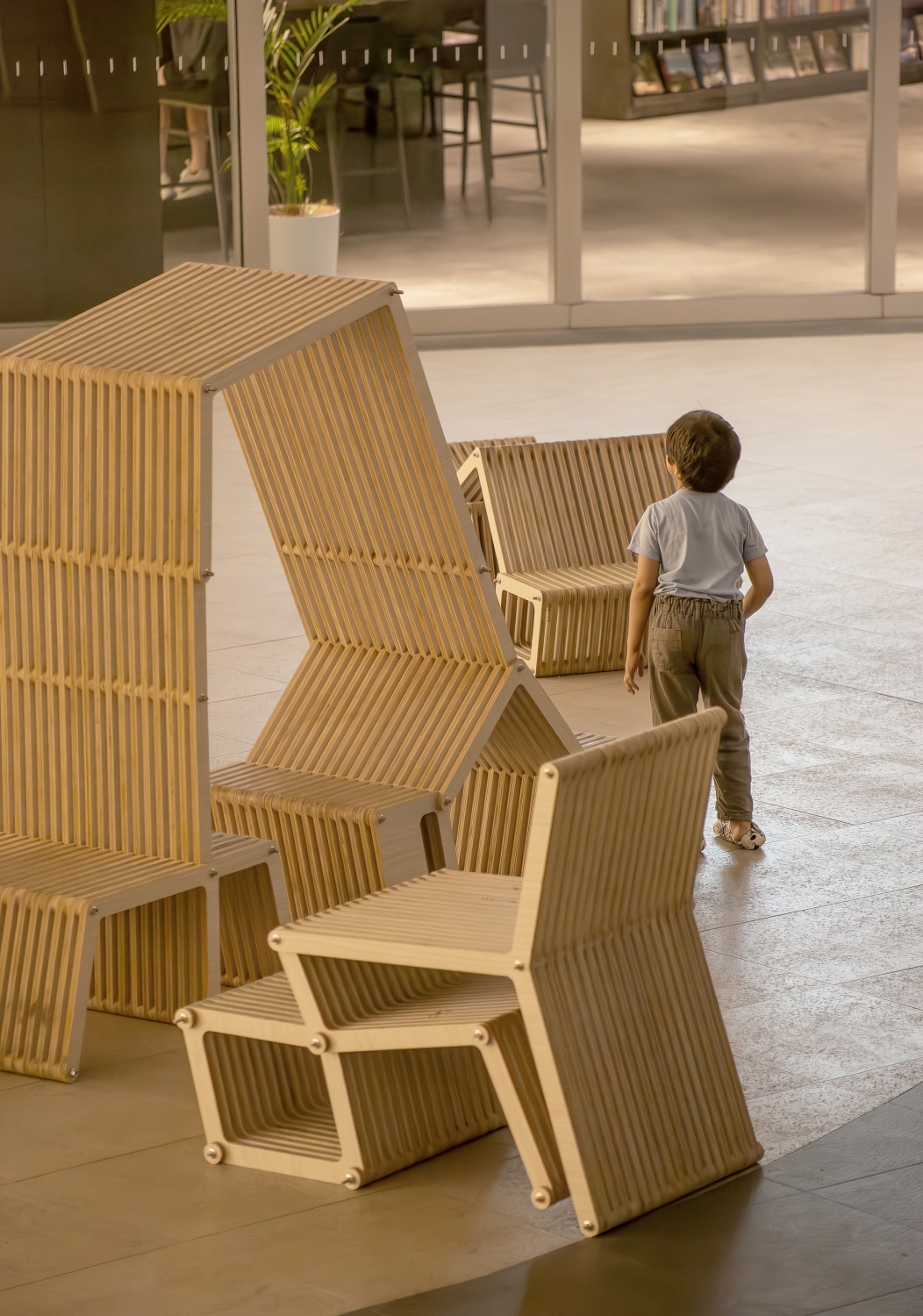
(Top) SYNC Pavilion (first iteration) at Semua House (Bottom) SYNC Pavilion (second iteration) at Pavilion Bukit Jalil, located in front of the Tsutaya Bookstore entrance
Founded by Lee Cherng Yih, Caleb Ong, and Cheah Ee Von, fzerolab operates as the research arm of formzero, extending its parent practice’s architectural vision through focused material and cultural investigations. Based in Malaysia, this specialised unit dedicates itself to reinterpreting traditional craftsmanship within contemporary design contexts. The research arm bridges craft traditions with modern fabrication technologies through hands-on material experimentation and collaborative making processes. fzerolab actively engages with local craftspeople to expand the language of Malaysian architectural identity while informing formzero’s built projects with deeper cultural resonance.
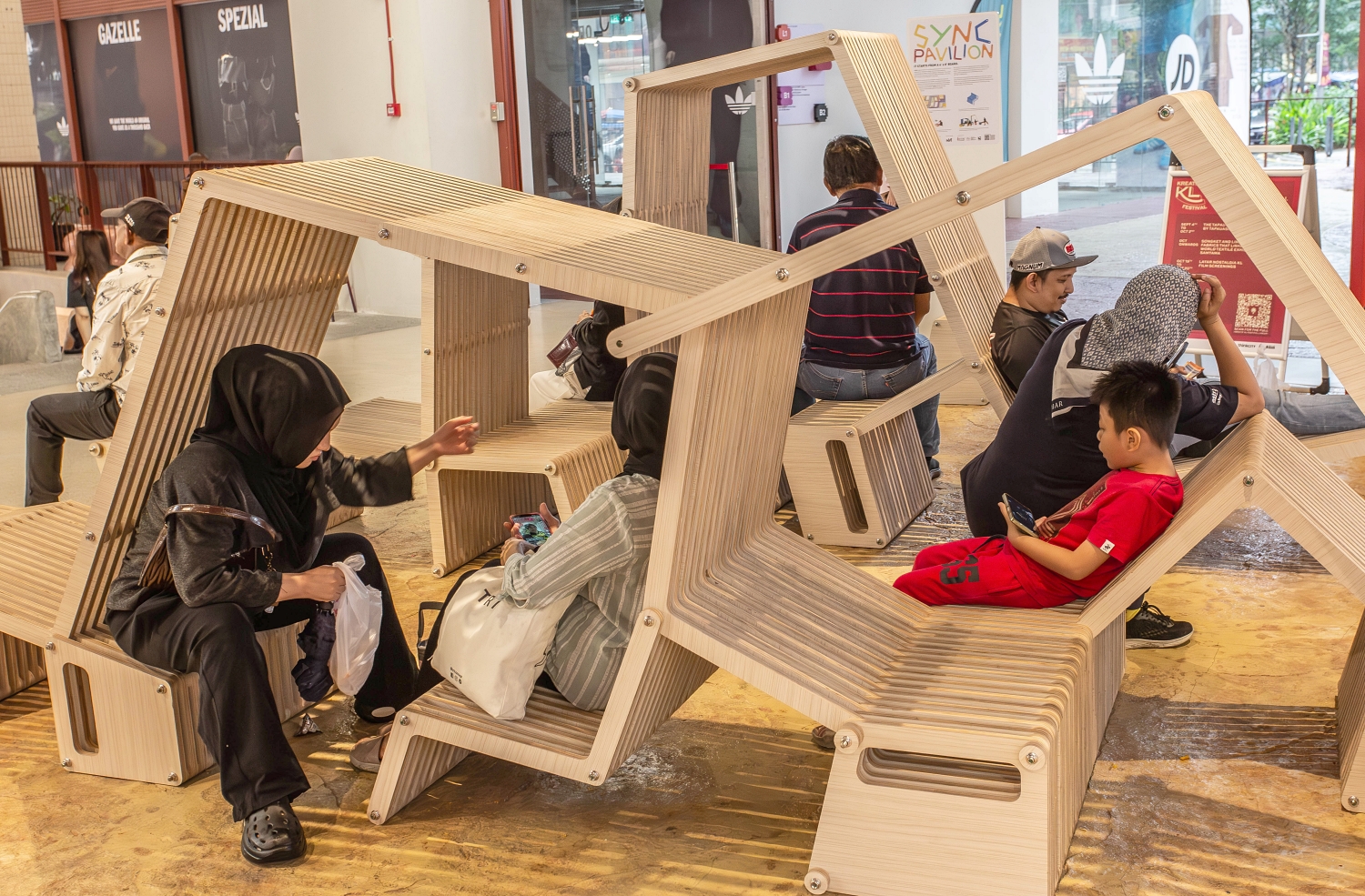
Joinery detail of SYNC Pavilion
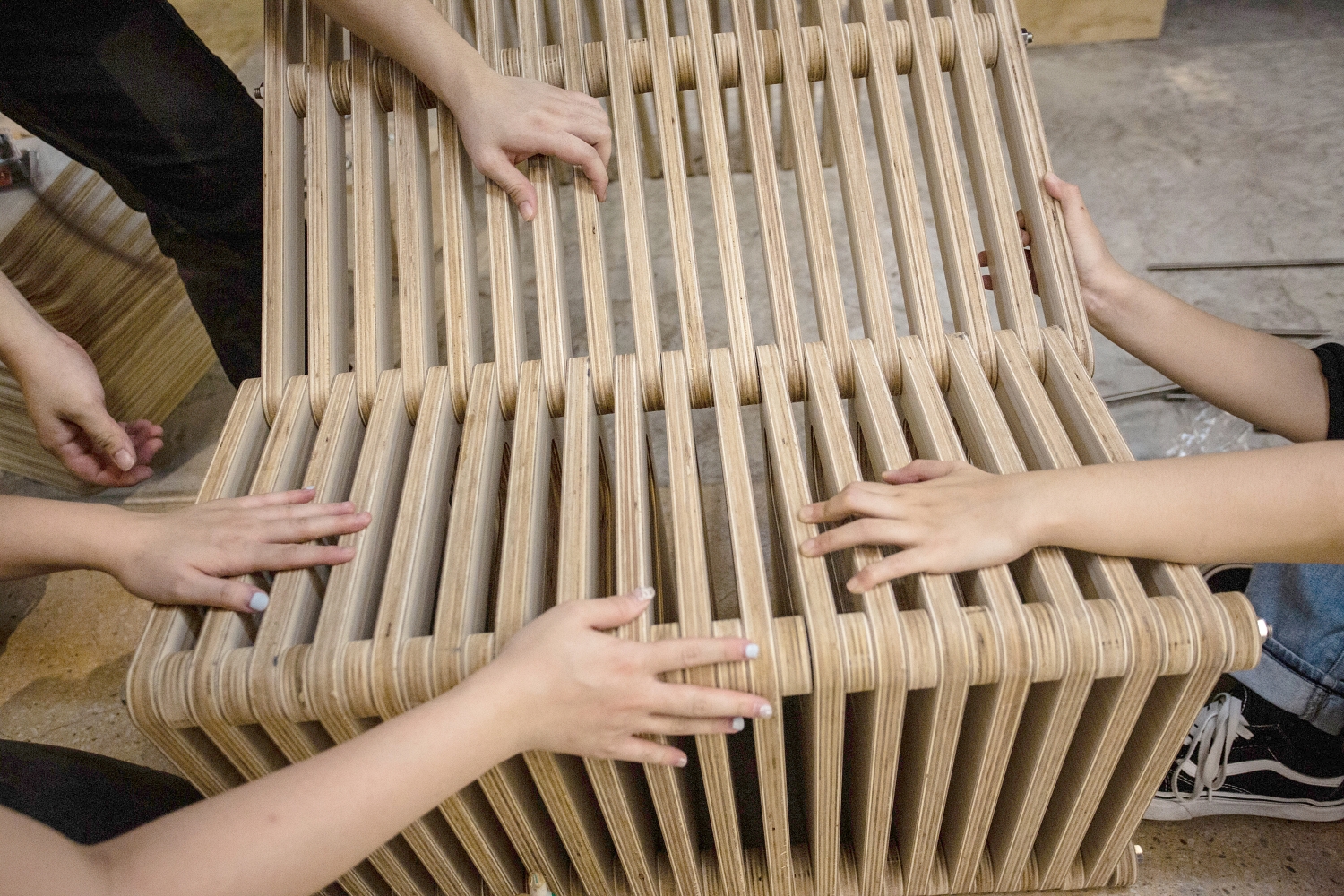
Close-up of the SYNC Pavilion assembly

FEATURES

RELATED ARTICLES