
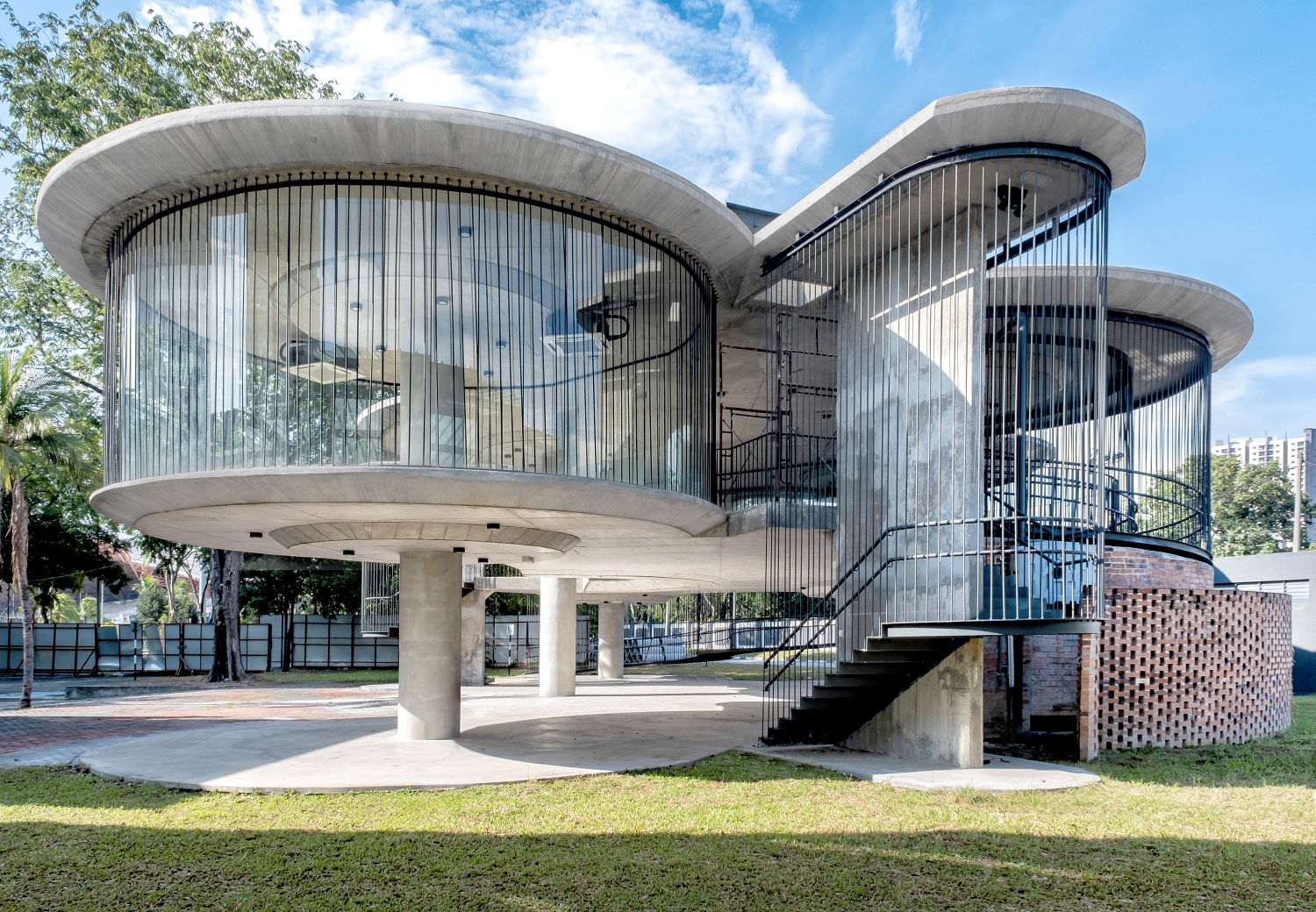
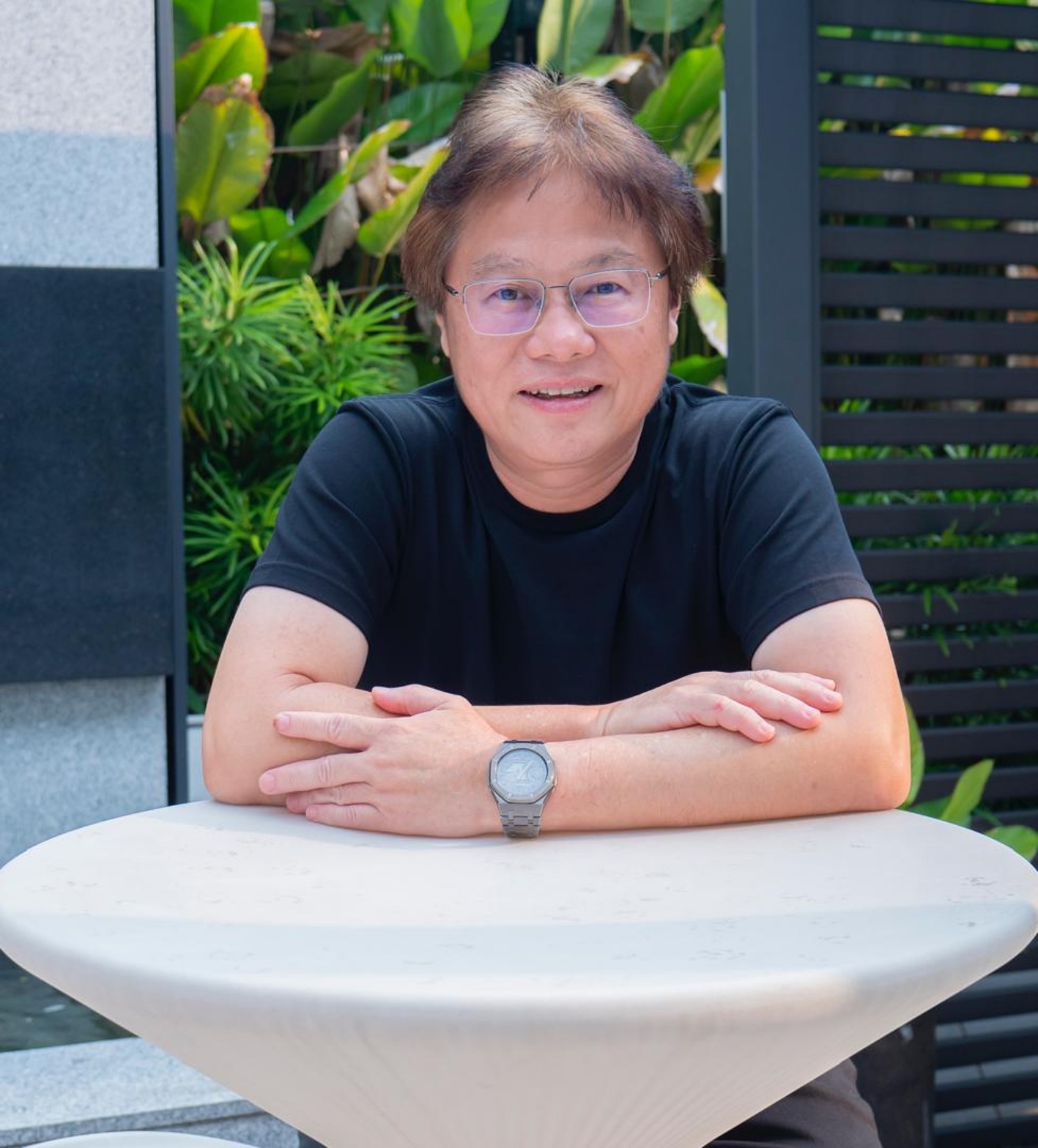
That’s a tough question. I always believed that it’s sometimes not what you know or what you study or what you read. It’s the people that you meet along the way.
My professor, who guided me through my doctoral studies, had a big influence on my life. He said two things that I will never forget. One was that in the land of the blind, the one man is king. I never forgot that because he told me, “Look at all these people, they’re actually blind, and you don’t need to know it all. But if you have one eye, you can read them.”
The second thing he told me was exactly what I said just now: It’s not about your qualifications or the medals you win. It’s about the people you meet along the way.
One of the few people I met, probably the first one, was an architect, a social architect who had a big influence on my life. The second person who had a big influence on my life very early on was a Danish planner named Dennis Ingemann. He was my first boss and an expert at presenting his ideas. His job was to win tenders for the Victorian state government. Earlier, he was in the Ministry of Housing, where I worked under him. But later, he went on to represent the state government of Victoria in getting jobs from overseas. He won so many tenders because he knew what the brief was and how to present it.
Go straight to the point. I think it’s a skill that I still find a lot of young architects, or even older architects, don’t get. They don’t see the actual point. I think the ability to present something. Succinctness is very important to me.
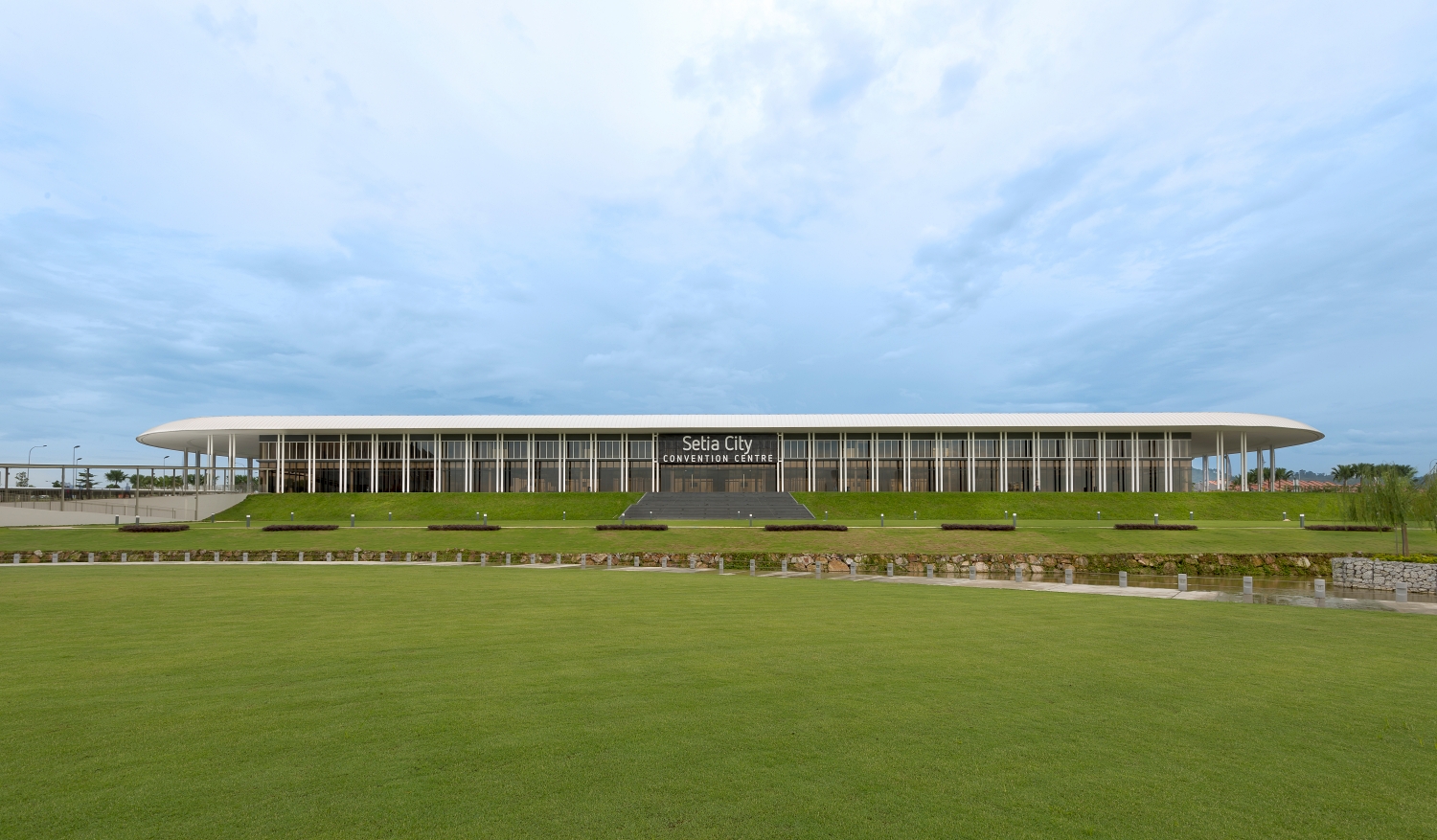
VN
TLM
VN
TLM
I think most architects are trained to be sustainable, climate-conscious, and environmentally sensitive. Sustainability has always been taught from day one in our schools. I think the reality hit me somewhere in the early 2000s, when I was PAM president. That probably came from Al Gore in The Inconvenient Truth. It highlighted that we were headed towards self-annihilation, and we had to do something about it. Buildings contribute a large part to climate change, so we embarked on starting the Green Building Index (GBI).
After that, all our projects are predominantly green, tropical, and sustainable. We wouldn’t design any other way.
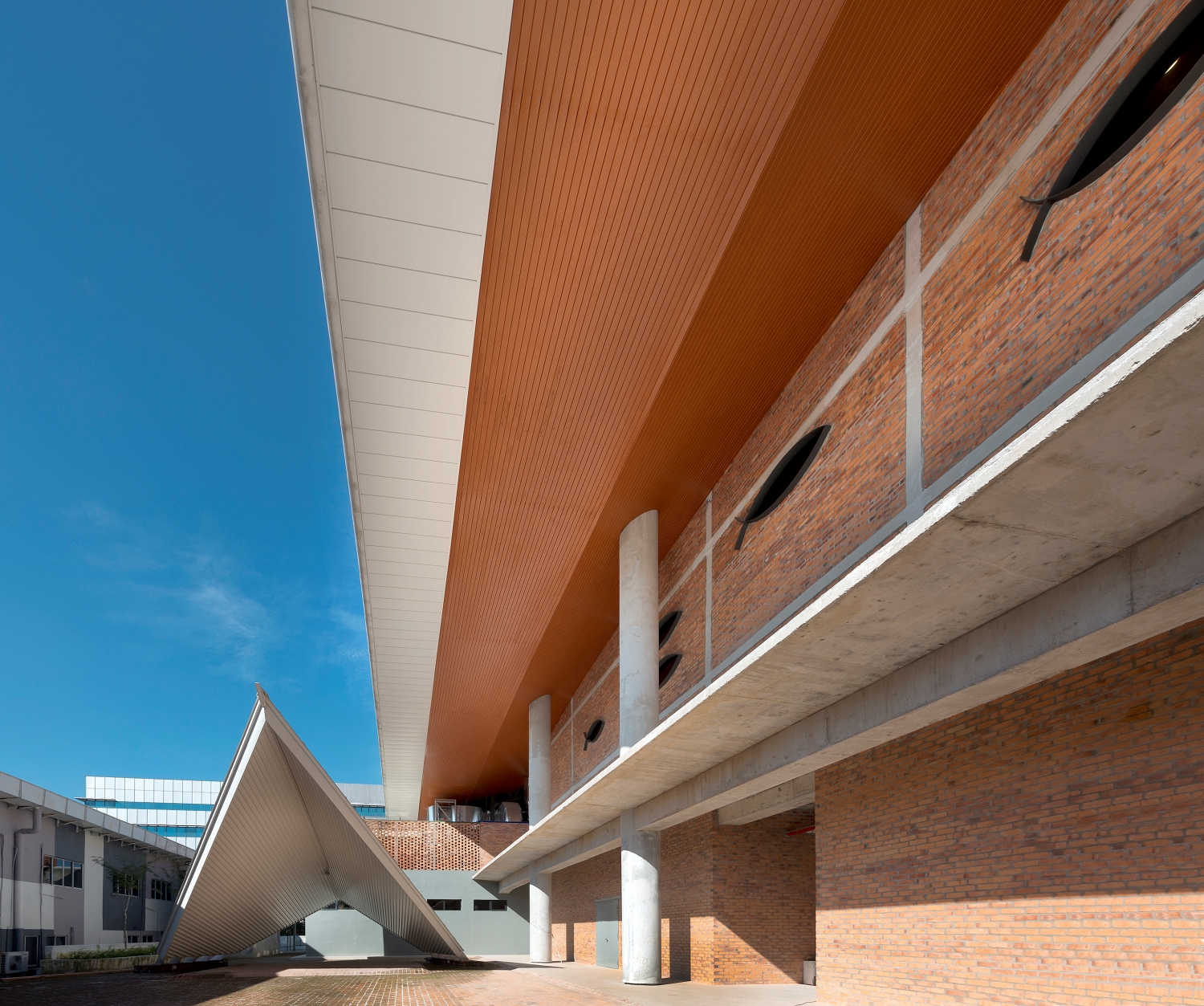
VN
TLM
Any architect will say that the best project will be the next one! I’ll just touch on S11.
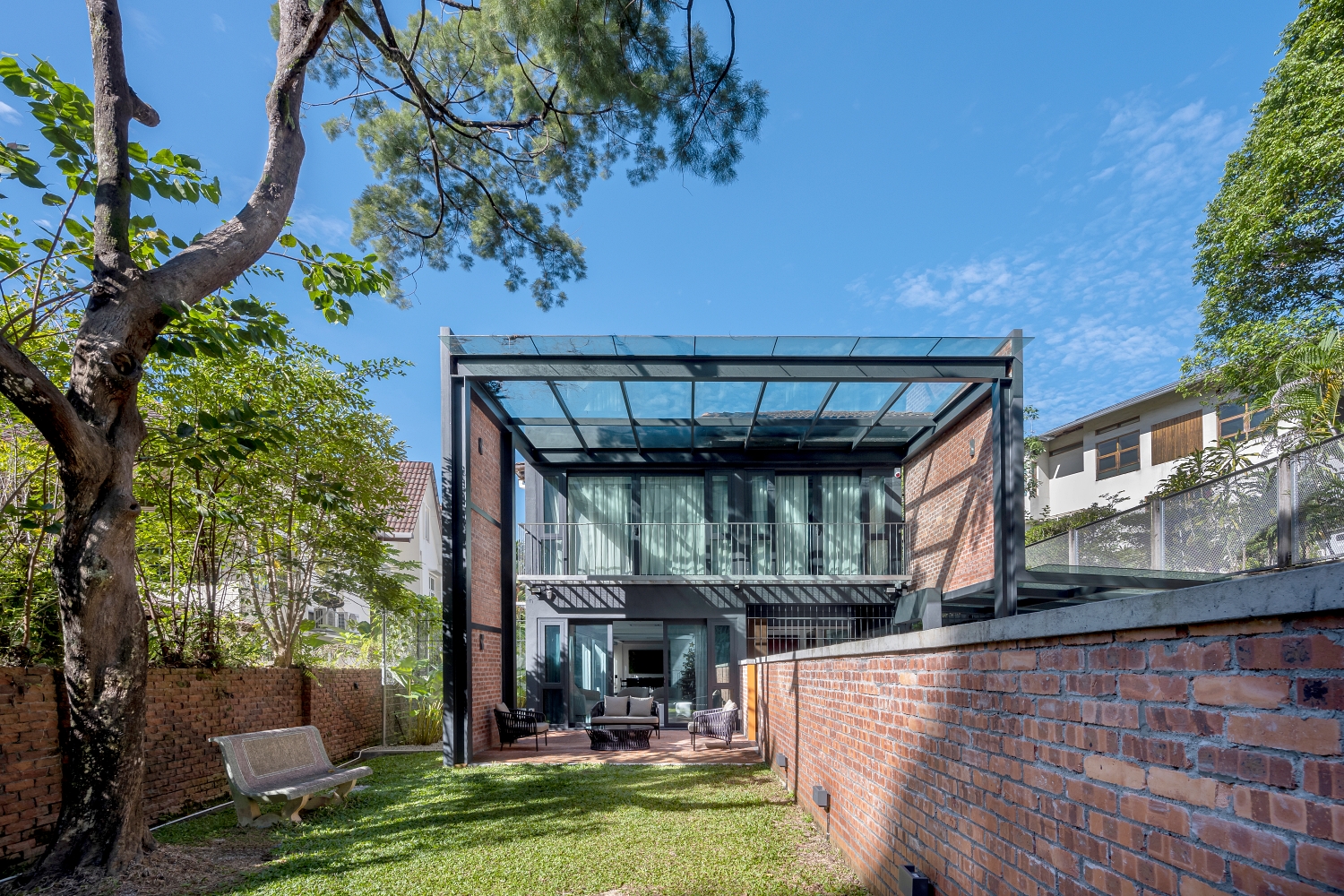
I realised that an architect’s best client is himself. I wanted to build a check to test whether the GBI rating tool that we were developing, led by Chan Seong Aun, is going to really work. Will it produce a “green” house? So, I decided to go all the way because everyone said it was very costly. And I wanted to just prove a point. I was very curious – Does it work? Can it be done? I took it as a challenge and, being my own client, I made it work. I built the house for a very affordable cost, and I managed to put in a lot of things that you would not get in a property developer’s project. The house indeed works as a green machine. Just before COVID, I put another 20 kilowatts on the roof, so I’ve got 25-kilowatt peak for my house. I’m basically off the grid. I don’t pay electric bills, and it’s a very cool house. It has 8 inches of insulation, 1 foot of air vacuumed in the roof, and the house predominantly stays 25 degrees Celsius right through the whole year. To me, it was an interesting experiment, and it’s a machine that can constantly be tweaked and improved upon. Indeed, Le Corbusier was right, a house is a machine for living in.
VN
TLM
The green rating tool, GBI, fulfilled its function very well. To ensure that buildings are well-insulated and environmentally friendly, we utilised the tool to reward property developers. For example, if you achieve the rating, you can get an additional plot ratio, and so on. Today, the regulations are all embedded into the uniform building by-laws, including minimum insulation in roofs, OTTV, shading coefficient through windows, using low VOC paint and finishes… It has now become a norm instead of something additional. So, in some sense, it has worked.
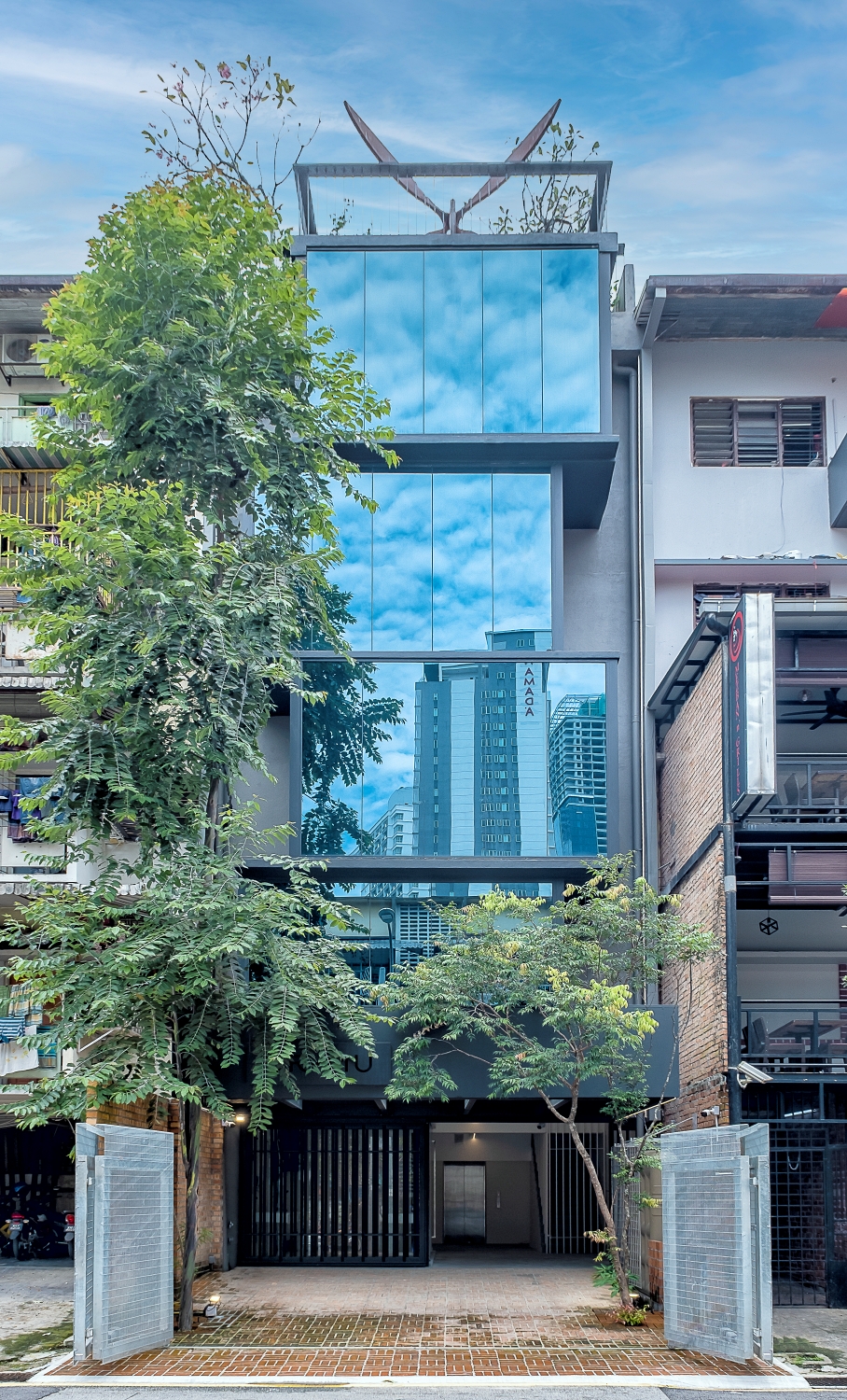
Now, whether you know we do more innovative designs, I think that during COVID was quite interesting. I got involved in book publishing, and we published a very interesting book called Terrace Transformations, written by Robert Powell with his sketches. That book became very influential because we took intermediate terrace houses, which have always suffered from one thing: bad daylighting and bad ventilation. Interestingly, many developers buy this book and give it to all their marketing staff, saying, “Please look at this and see how we can implement some of these ideas.” The ideas in this book are unique because individual house owners are their best clients. They can accept rain coming down in the courtyard, a motorised roof over, and plants in the centre of the house. So, we tried to translate some of these ideas into our property development project. Some of the more avant-garde and innovative developers actually subscribe to it, and they have tried, and in some sense, it’s moving step by step in that direction.
VN
TLM
VN
TLM
I wouldn’t say that I’m most proud of any contribution in particular, but I think the first major one that I contributed to was introducing Continuing Professional Development (CPD).
When I graduated from Australia, they had just introduced it, and it closed the gap between a graduate architect and a professional architect. It was more about meeting people and realising that, oh, they’re not so far apart from us. They are normal humans, and CPD then became compulsory. I’m quite happy about that because it made people real and created opportunities for networking.
The second one was perhaps the PAM Awards. I felt that it was good to reward design because that differentiates us from everyone else. We have this uncanny ability to create. It’s a God-like thing because God creates, and he made us in his image, so he can create. Not many other creatures can create. They can build, but they cannot create. I standardised the award, I designed the trophy, and I made it something that people wanted to win because it was recognition by their peers. It’s getting harder and harder to win, but when you do win one, you’ll really get very happy.
Perhaps the third one is the Green Building Index (GBI). It is not something that should last forever. It did its purpose, it made people aware of the need to deal with climate change, and now it’s embedded into our standards and laws, and I’m very glad that you.
I continue to be quite involved in practice with Lembaga Architect Malaysia (LAM), and I’m currently the Chair of the Disciplinary Committee. I’ll continue to do that because again, the same thing, I would want to be judged by my peers.
TLM
We were very fortunate when we started. You know, in the early 90s, a small house renovation was a big deal, and you always started with friends and relatives and then slowly got recommendations to begin bigger jobs.
During my time, the challenge was to find the right developer who respected you and understood and supported your work. I’m very happy that in our early days, we had people like that trying to understand the value of design. We were able to do many great master plans and many interesting buildings, and again shift the needle another level. So today, I think some of the challenges are finding this kind of patron developer client who understands design, appreciates design, and, most importantly, respects the designer.
VN
TLM
VN
VN