FABIAN TAN ARCHITECT REIMAGINES AN ALTERNATIVE NARRATIVE TO CONVENTIONAL OPENINGS.
TEXT BY THE ARCHITECTS
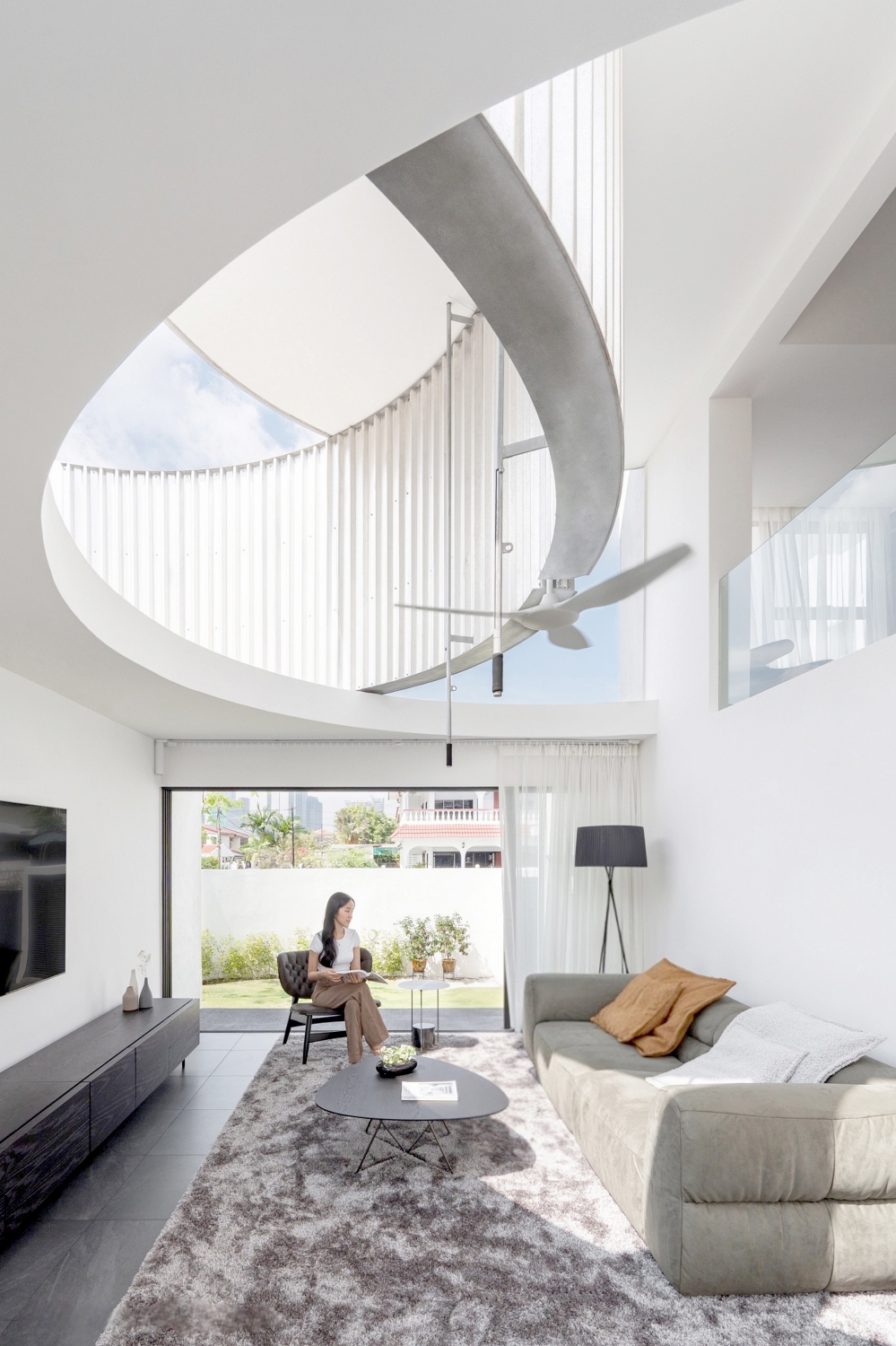
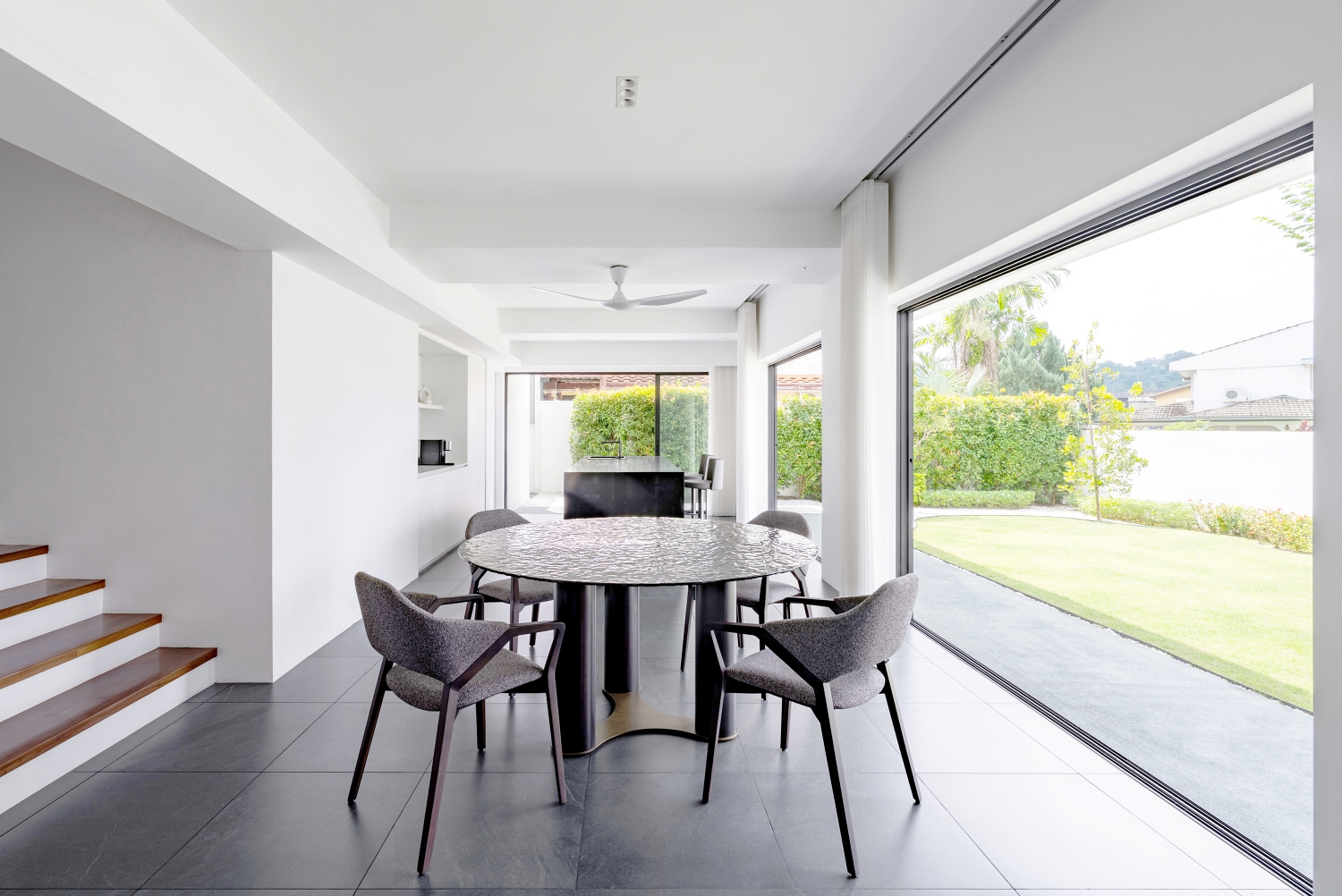
Living room looking out into the garden
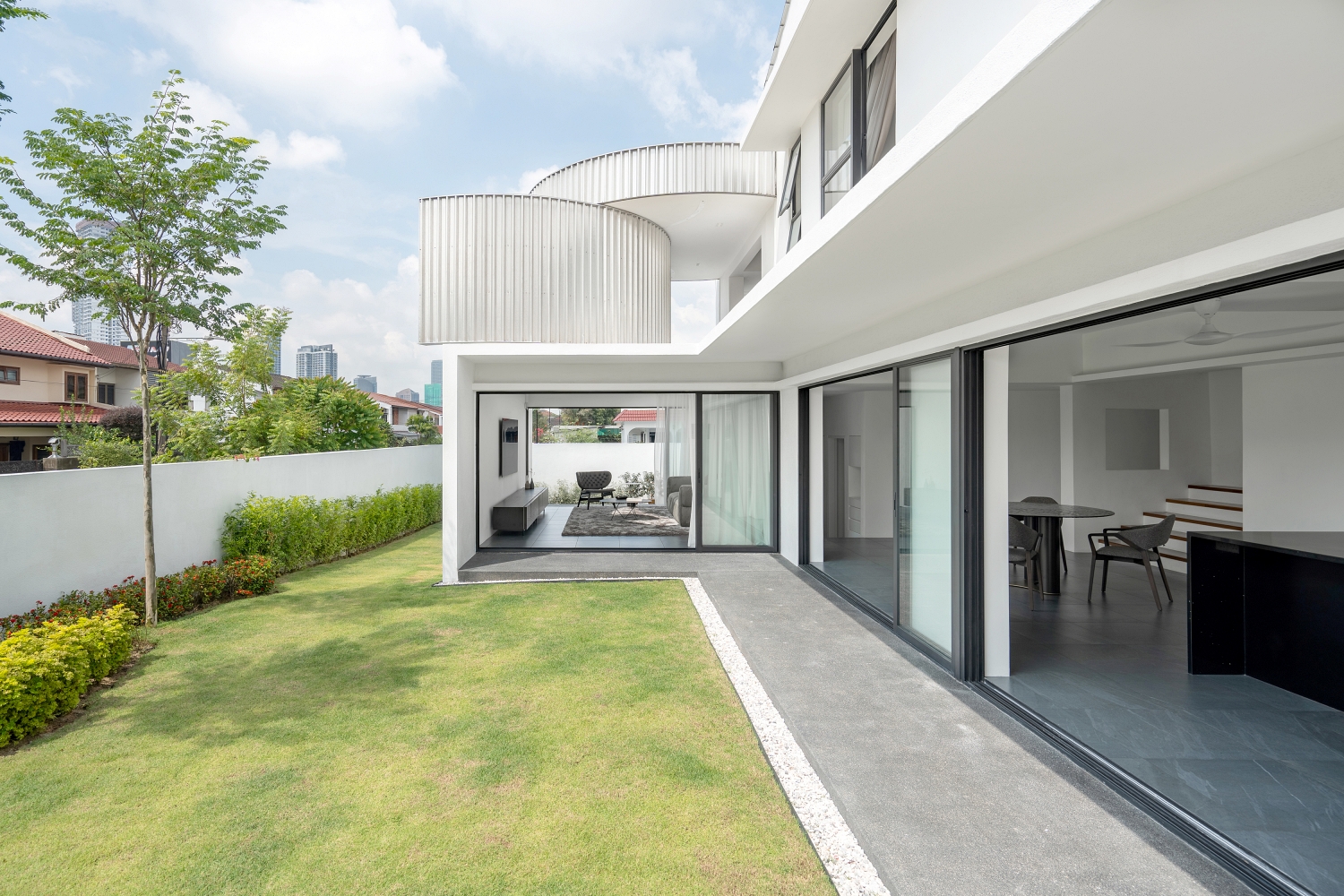
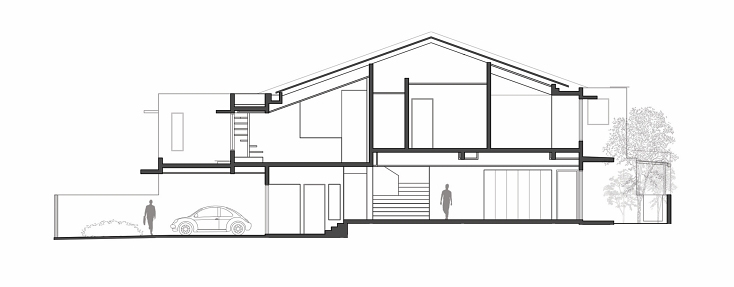
Set in an affluent KL suburb, the CC House is full of surprises.The original structure was first built in the 1970s.Located at a corner, the house has the advantage of a large garden and views from three sides.It also slopes upwards towards the rear, creating a split level in the interior of around 2 feet. These advantages created unique opportunities for the design of the house.
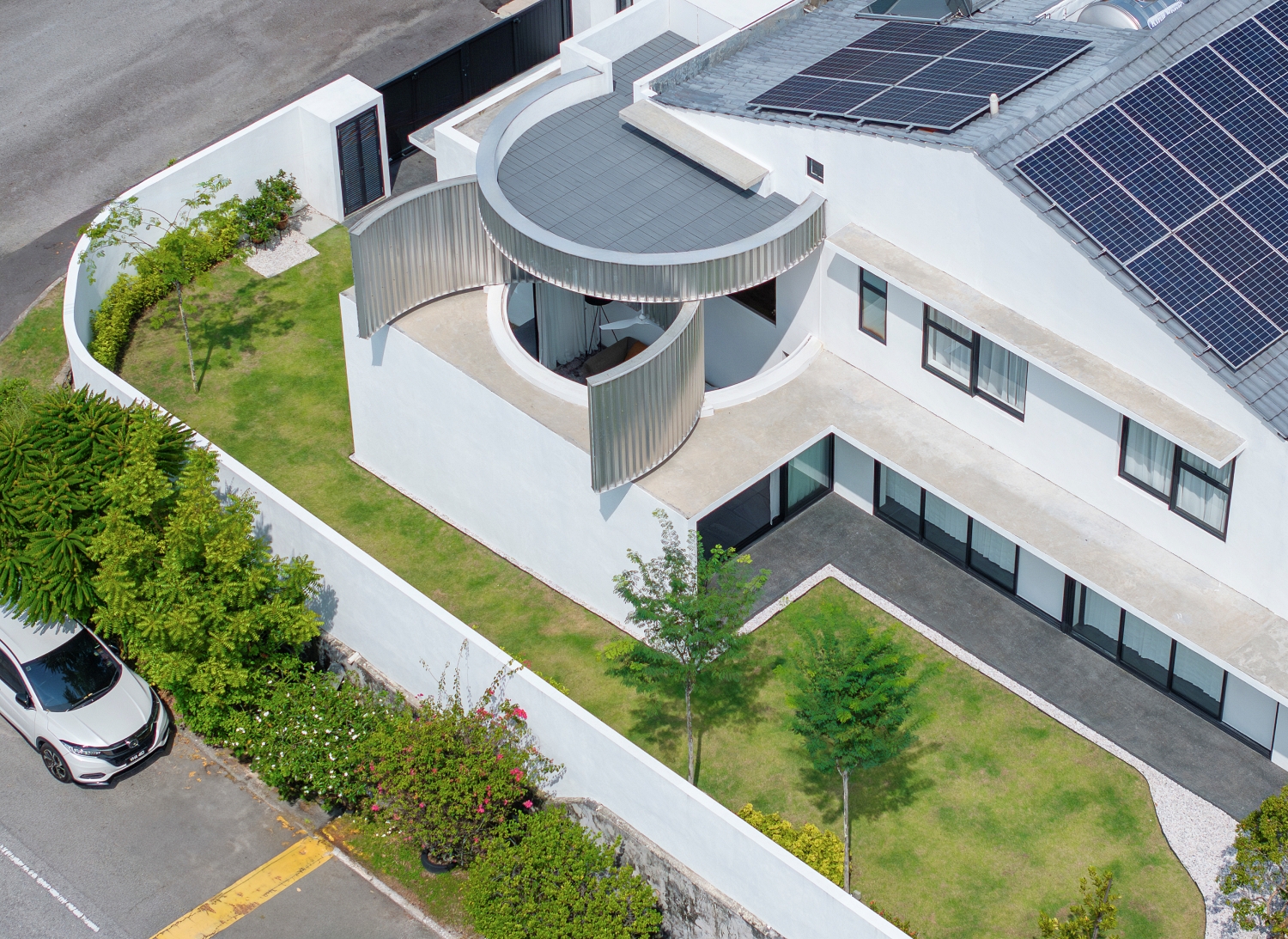
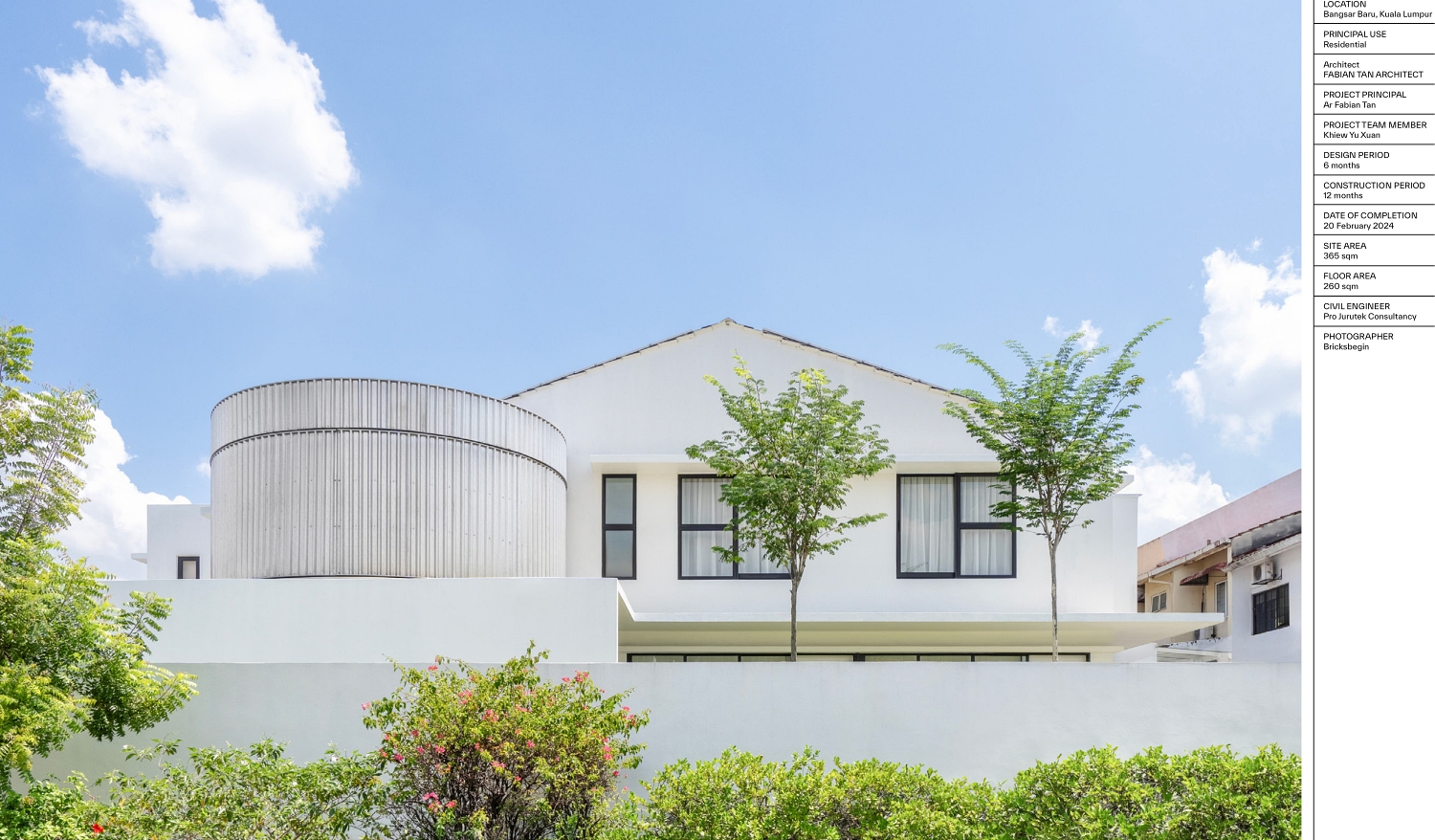
Driving up to the house from the main road, the exterior is unassuming – painted in pristine white, with high garden walls and a curved steel façade rising above the garden wall – hinting that there is more than meets the eye.The brief given by the clients, a young couple, appeared simple with no unusual requirements.
The idea behind the form is explored by Fabian and his team’s relentless reinterpretation of the conventional opening.The corrugated galvanised metal façade of the semi-circular form looks heavy and imposing, yet it hides a surprise.
Aerial view of the house
One key instruction was to maintain the existing structure and roof of the house, keeping the split-level, while reconfiguring the interior to suit their needs.These basic conditions were, somehow, coincidentally pushed beyond the clients’ expectations.The entrance doorway opens into a narrow, dark-coloured pebble-wash walkway, where the guest rooms and shared bath are positioned to the left at the entrance level.The walkway visually and instinctively guides one upwards toward the bright, open living spaces, grounded by almost black floors in contrast with the white interior.
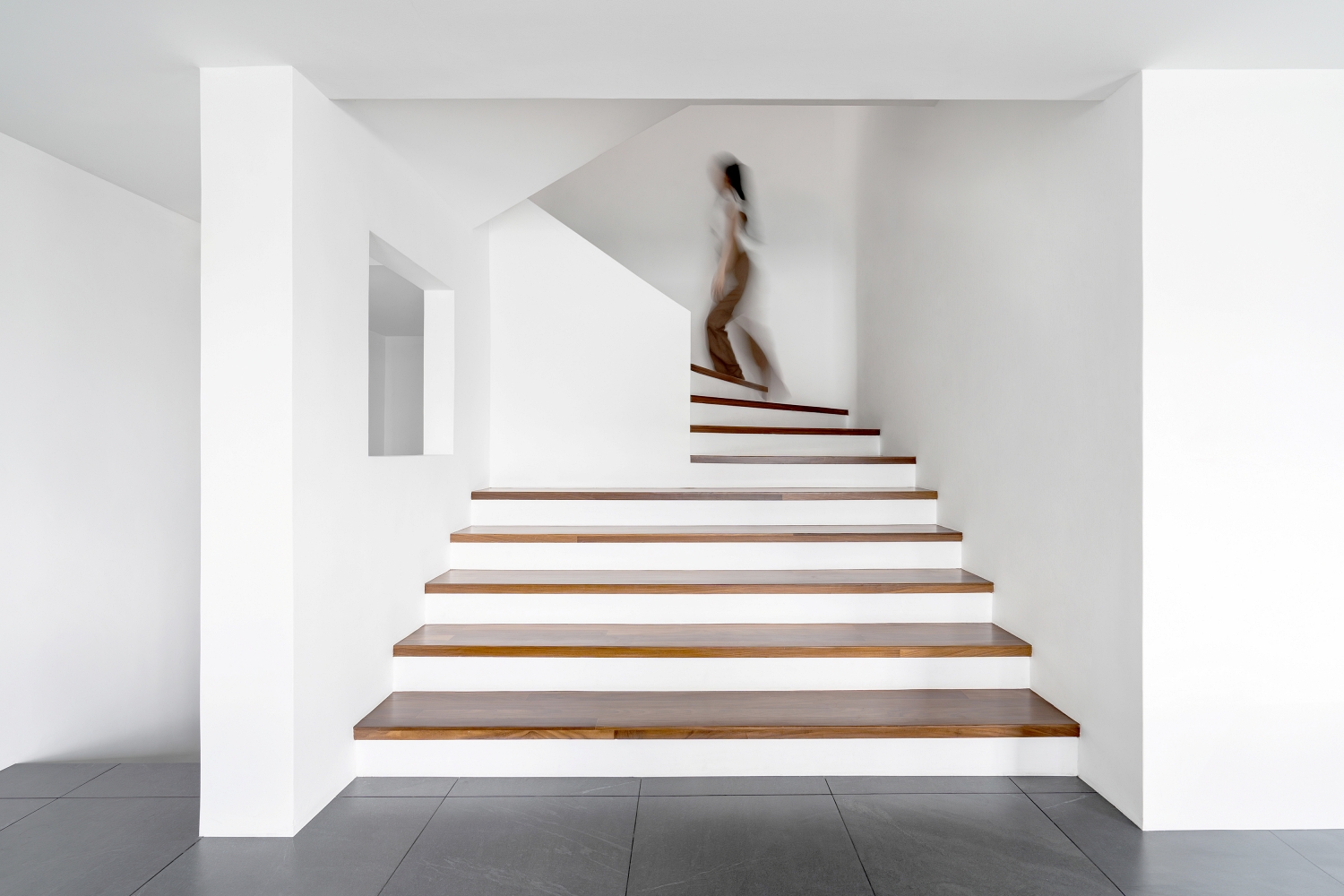
The open dining and dry kitchen area features large floor-to-ceiling glass doors that open up to the garden, seamlessly blending the indoor and outdoor spaces.The wet kitchens and store are tucked behind the open area next to the party wall, out of sight.The existing staircase was then widened into mini ‘amphitheatre’-like steps, creating a sense of expansion between spaces while allowing seating and views to the garden.The space then flows and extends toward the garden, forming a new double-volume space that becomes a room in a garden – with views to the front and rear.
This living room space with a rectangular form on the ground floor topped with a semi-circular crescent form on the first floor
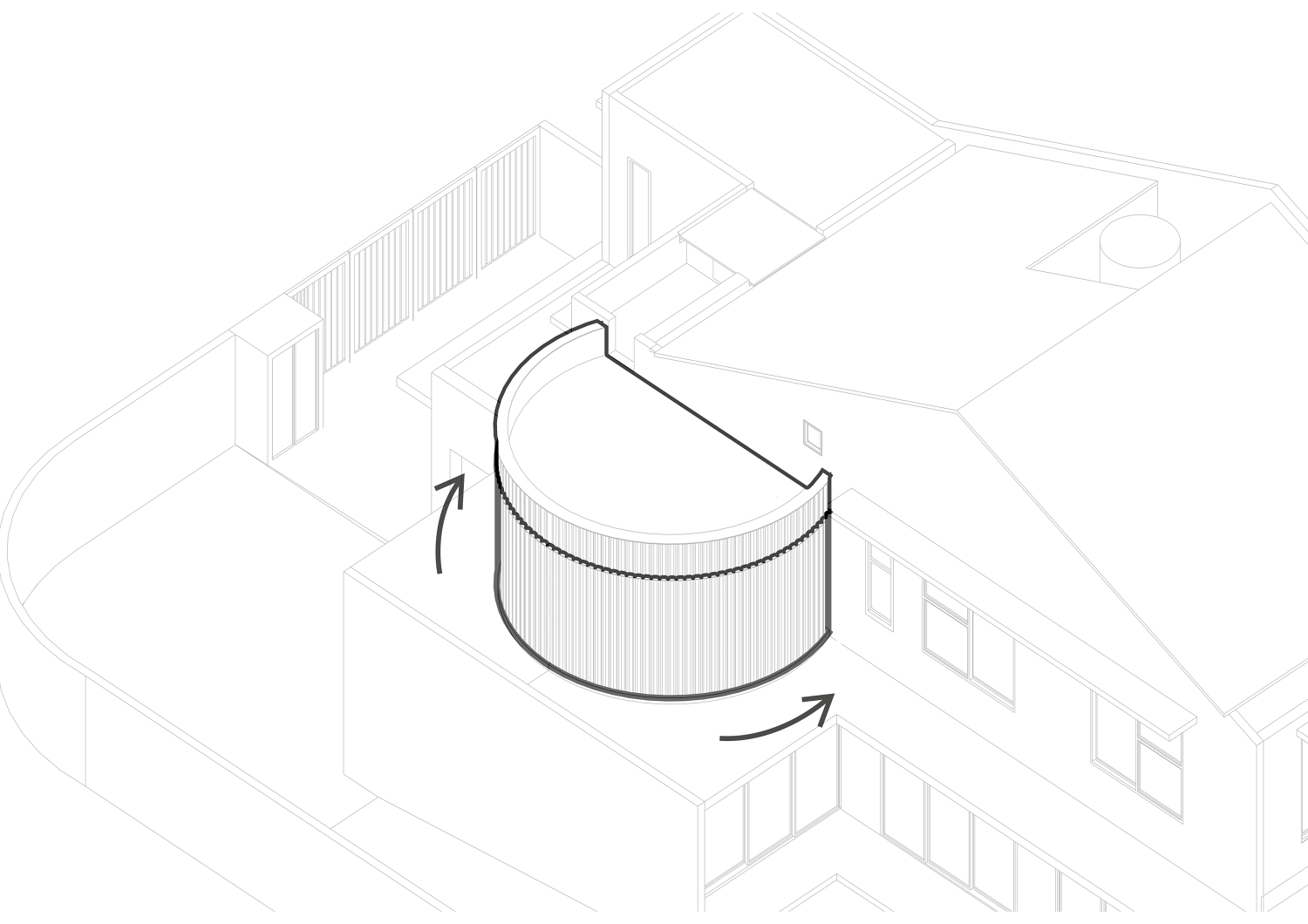
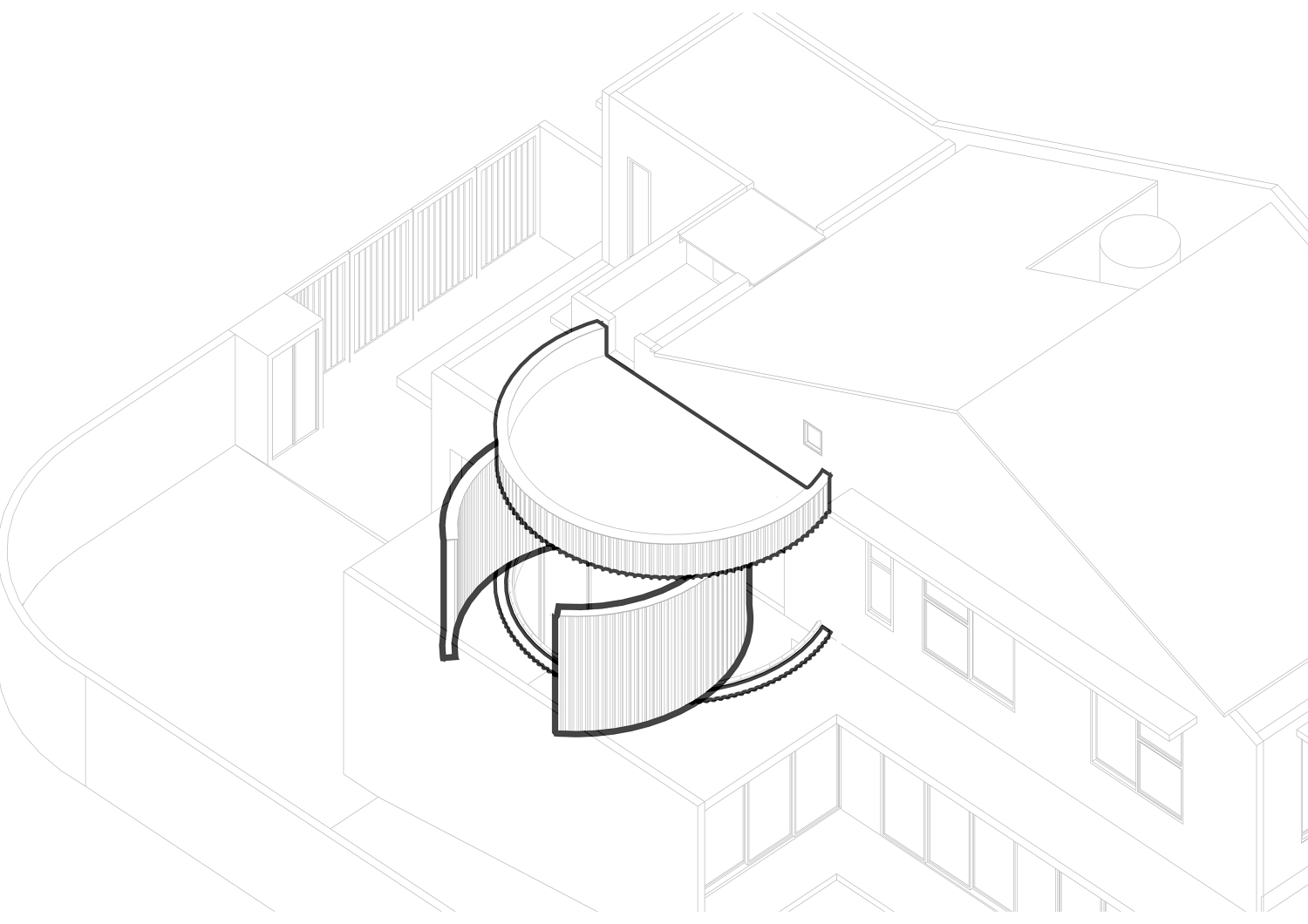
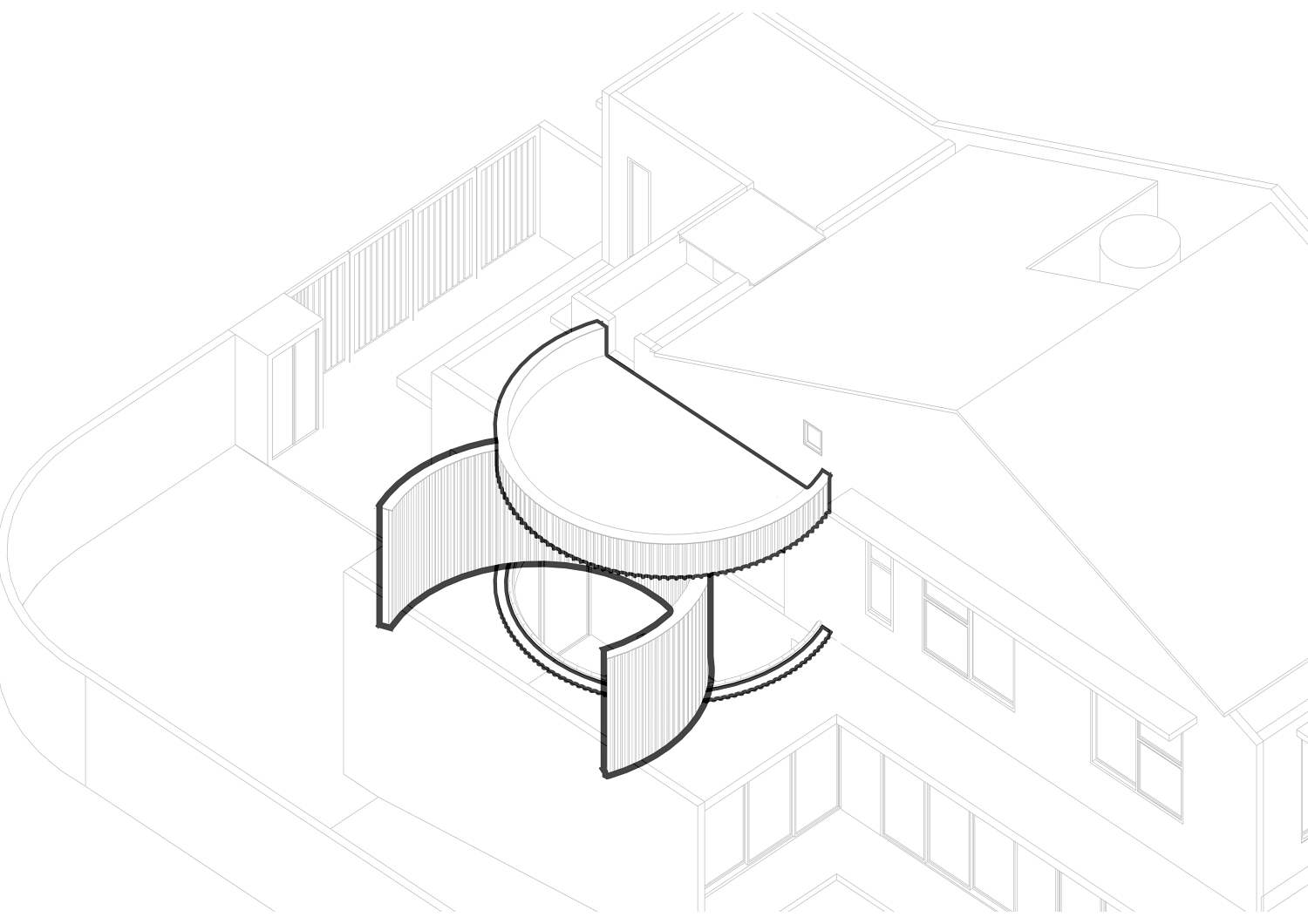
This living room space is the main feature of CC House, with a rectangular form on the ground floor, seemingly floating due to the level difference in the garden, and topped with a semi-circular crescent form on the first floor, visible from the external road.The idea behind the form is explored by Fabian and his team’s relentless reinterpretation of the conventional opening.The corrugated galvanised metal façade of the semi-circular form looks heavy and imposing, yet it hides a surprise.The façade is made up of two quarter-circle “moon doors” set on a pivot, cleverly concealing the structural columns, and controlled by custom-made lever handles.
The intentional choice of material for the façade was to allow the shiny galvanised metal to weather into a matte grey, aging with grace akin to old metal telephone poles in Malaysia.Each part of the interior is planned down to the smallest details and precision, such as the ceiling fan set six inches below the moon door, with its structure acting as a stopper to prevent the doors from swinging beyond their arc.
From the interior, one is able to control the openness and light entering the space, as well as adjust the views to the outside – not just from the ground floor, but also from the first-floor family space that overlooks the living area and out through the moon door.The doors can be fully closed, creating a sealed interior or opened in various degrees according to preference; or fully opened, allowing the ground floor to receive full light, while the upper floor is screened from direct views.
It is interesting to note that the form of the moon doors, in contrast with the structure when opened, intersects to form a unique shape resembling a Venn diagram.The moon doors open a portal to the sky, drastically changing the spatial quality of the double-volume space, and bringing interesting layers and dimensions of form, light, and experience into the room.
Amphitheatre stairs leading to upstairs o!ers a seating area
This space also connects visually to the first-floor family room, and where the main sleeping areas-with their warm, dark timber floors-are located.Three en-suite bedrooms are situated on the first floor, each with views out to the garden or the entrance porch.Small slits are cut into the roof and into the first-floor walkways and the black master bathroom, creating slivers of natural light that softly illuminate the interior.
Tucked in the corner of the family room, a spiral staircase leads up to a hatch that opens to a rooftop deck above the semi-circular living room.This outdoor space offers a panoramic view of the neighbourhood and city beyond.
The CC House plays with the perception of space, where space is not strictly defined or limited by its proportions or structural form, but rather becomes a fluid and dynamic experience that changes, interlinks, and redefines perceptions through the manipulation of openings.Perhaps this is the architect’s intention: to amplify spatial experiences through another way of viewing the sky – one pivot at a time.