
A groundbreaking initiative by Majlis Bandaraya Subang Jaya (MBSJ), in collaboration with Pertubuhan Akitek Malaysia (PAM), aimed at driving innovation in urban development and demonstrating a continued commitment to building a sustainable, dynamic, and economically vibrant environment for the people of Subang Jaya.
The construction of a new market that is more comfortable, clean and neat will benefit the residents around Seri Kembangan town, especially the residents of the Chinese villages in the area. The new market should aspire to offer better facilities to both traders and visitors in terms of pedestrian-friendly design, sustainability, infrastructure, health and safety, brand identity, universal design and wayfinding. Announced on the 1st October 2024, the competition drew 120 registrations. On January 9 2025, a seven-member jury shortlisted 10 finalists and final judging was held at Dewan Kenanga, MBSJ on 17 February 2025. Congratulations to all the winning entries, and thank you to all the other entries for their participation.
1ST
PRIZE MOA ARCHITECTS SDN BHD
Ar. Hung Sing Ing and Tan Ling Rong
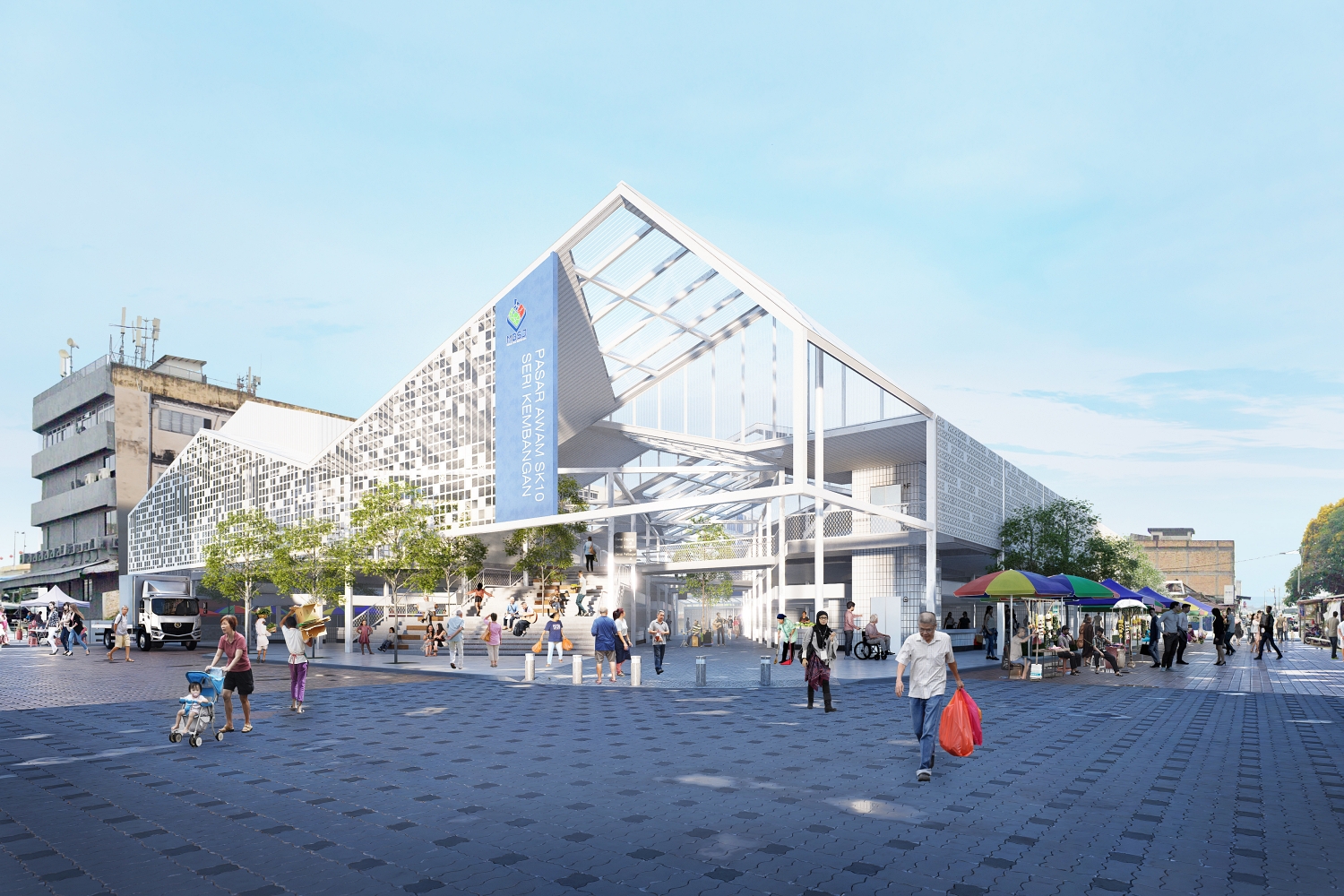
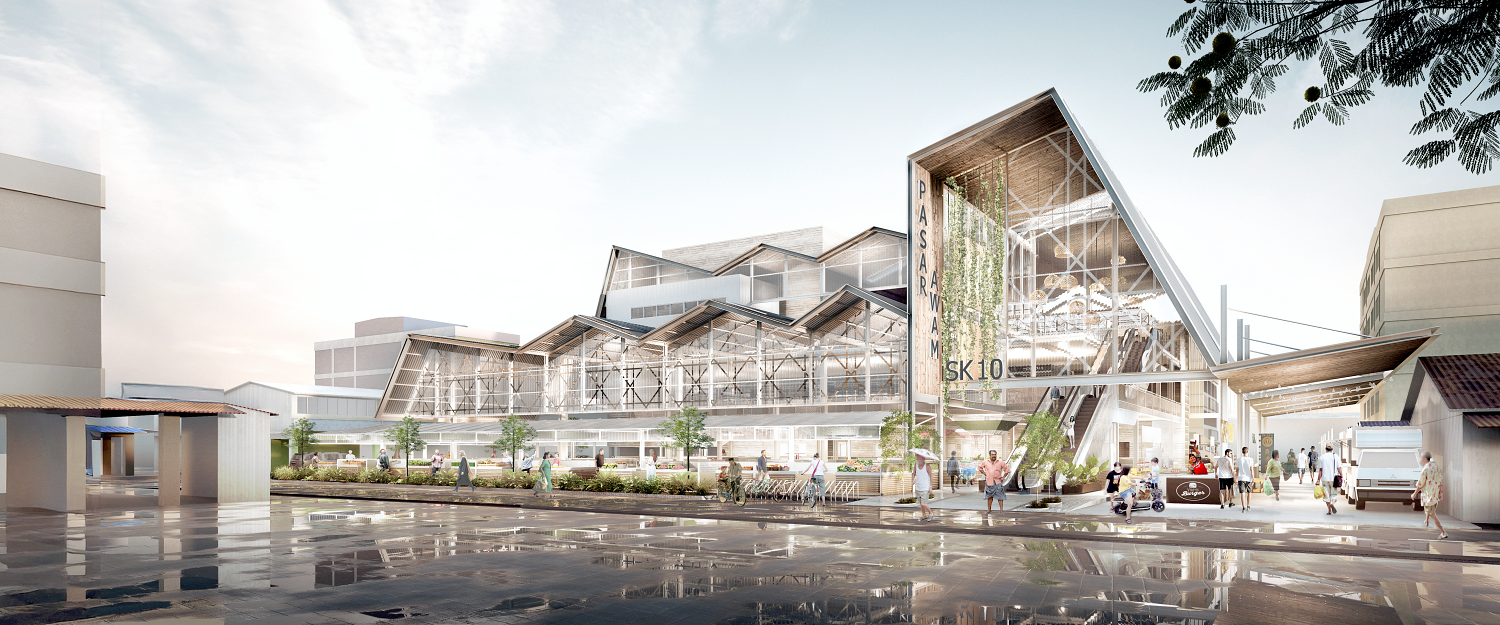
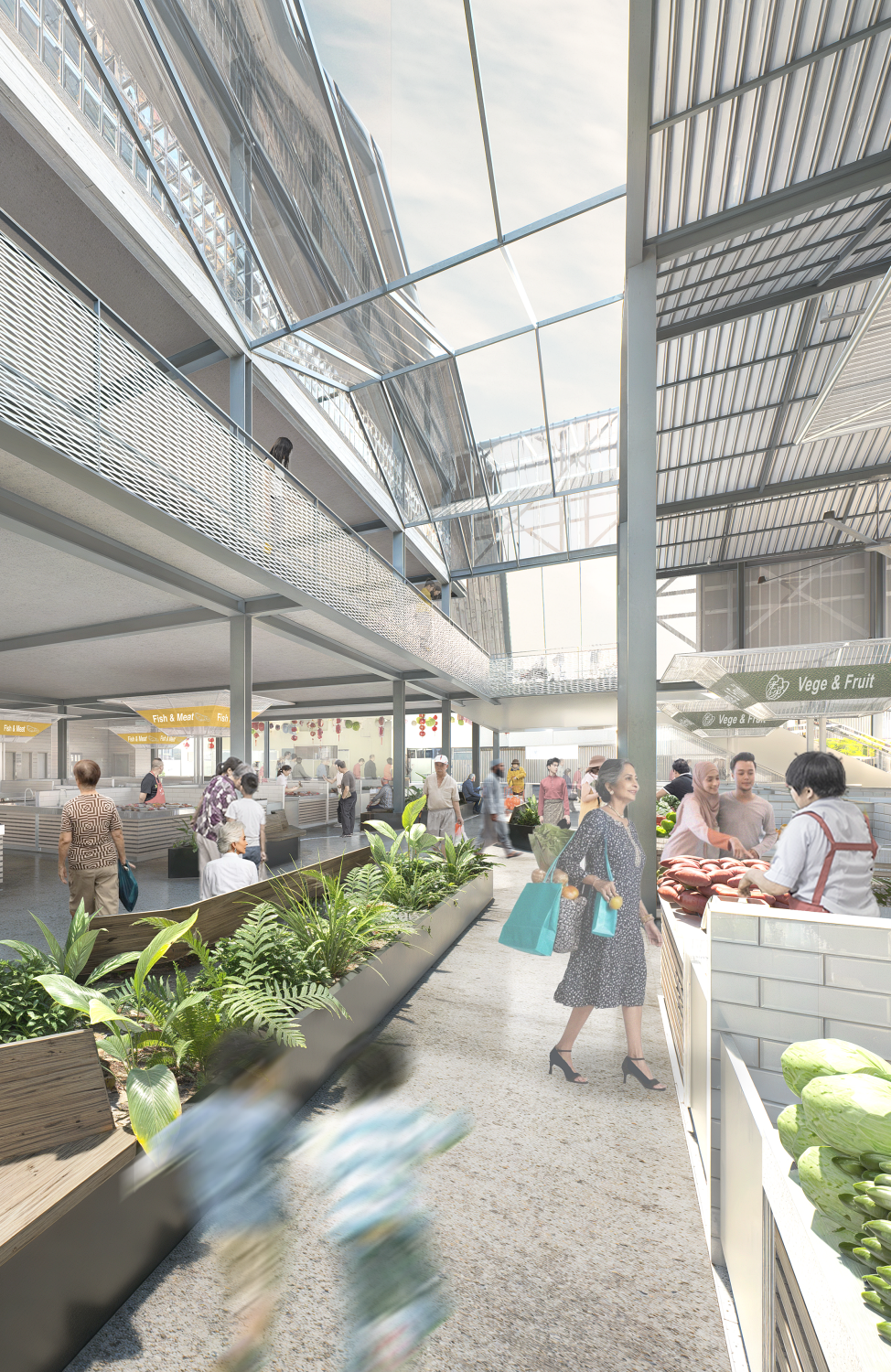
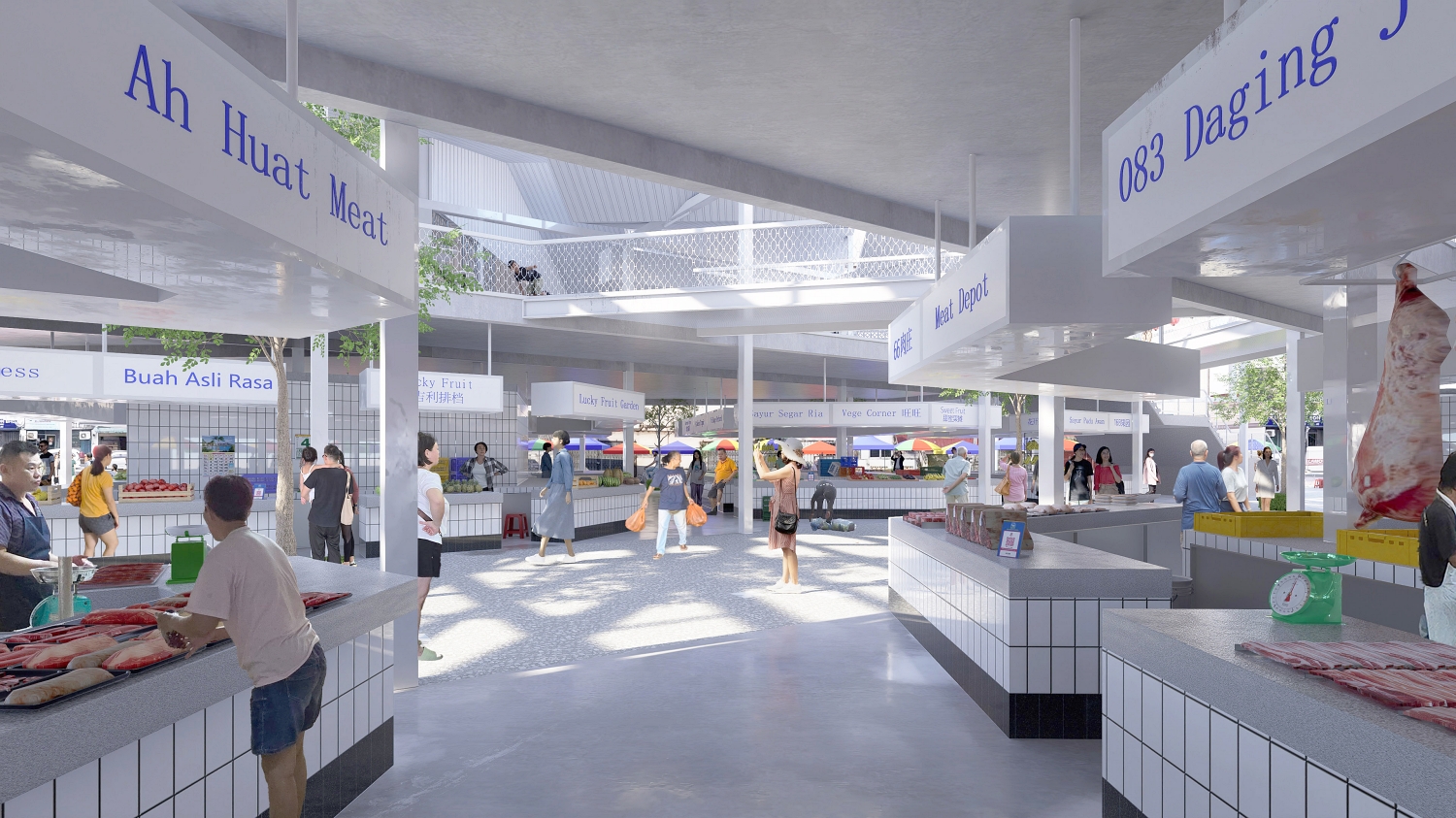
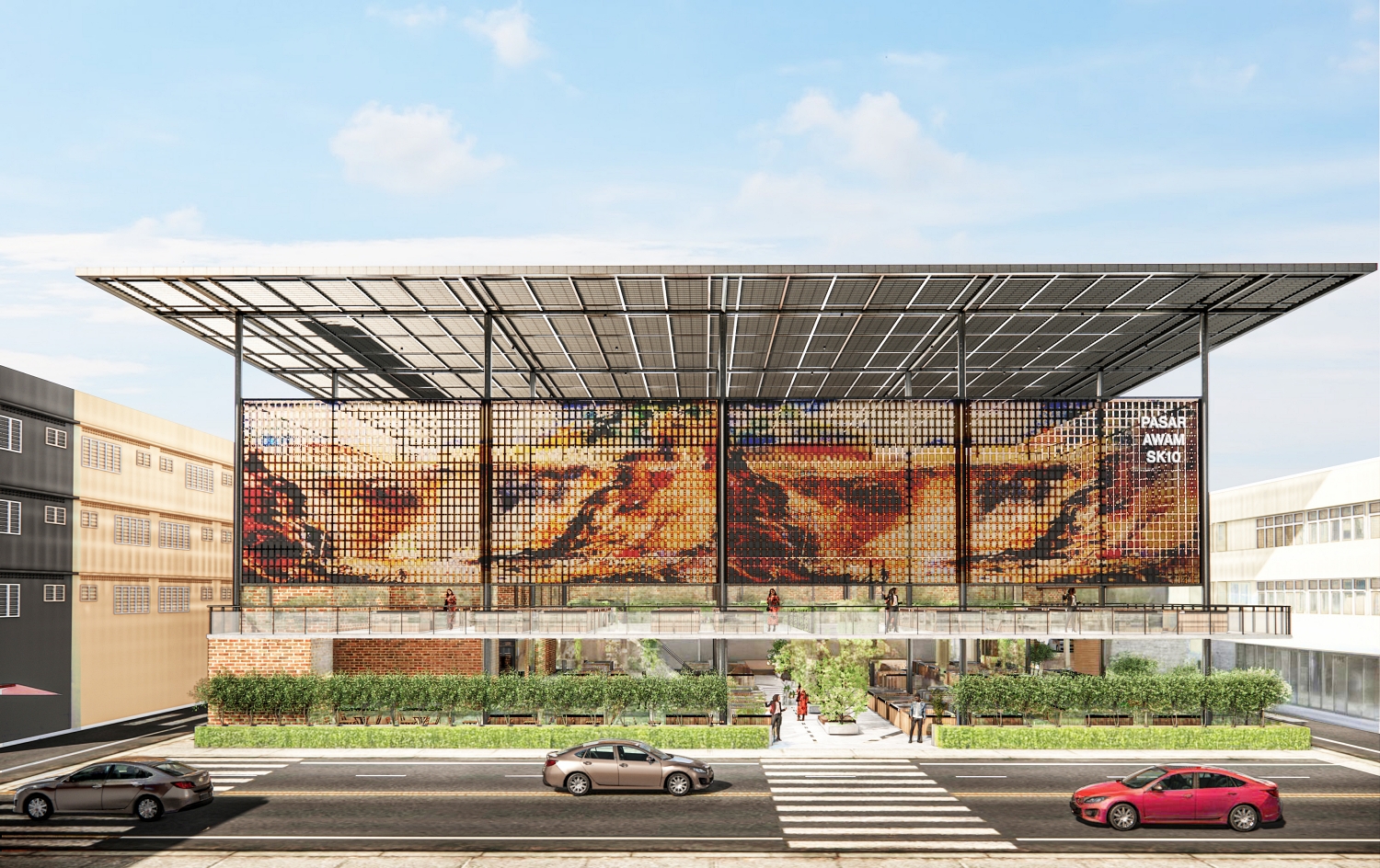
The design concept for the New Pasar Awam SK 10 is inspired by local elements of Seri Kembangan Town, particularly the “Pitched Roof Silhouette” of the town’s traditional shophouses, new village houses, market stall umbrellas & existing market.Beyond providing shade from tropical climate, the roof silhouette symbolizes the town’s cultural heritage and serves as a visual icon of Malaysia’s identity, reflecting the shared history of local community.
Our proposal, “Under One Roof” goes beyond traditional market notion.It aims to create an All-In-One communal marketplace that integrates the Market, the People, and Malaysia’s identity.It combines daily market events, community activities and local heritage within a cohesive entity, offering improved infrastructure, health and safety, pedestrian-friendly design, universal design, wayfinding and sustainability.
“Under One Roof” is a cultural landmark designed to resonate within the local community of Seri Kembangan Town, and a tourist attraction to experience the unique Malaysian lifestyle.It fosters sustainability by promoting eco-friendly practices and supporting local community, while embracing inclusivity by welcoming local cultures into the setting.
3RD
PRIZE SPATIAL FACTORS ARCHITECT
Ar. IDr Chris Yap Seng Chye and Ar. IDr Esmonde Yap Shiwen
Our design proposal reimagines the market as a contemporary civic landmark-one that reflects the character of Seri Kembangan while embracing the evolving role of public spaces in urban Malaysia.
The design draws inspiration from the town’s rich industrial and agricultural history.Its material palette-exposed mild steel, recycled aluminum, and clay brick-honours the honest, utilitarian spirit of the place, while contributing to passive climate control and long-term durability.
A bold, porous façade invites openness and movement, activating the street and framing daily life inside.
Spatially, the market is organised around a grand central volume, soaring 20 metres high, allowing natural light and ventilation to filter across two levels of trading activity.Circulation is clear and intuitive, with wide entrances and generous corridors that enhance accessibility and wayfinding.
These volumes are punctuated by moments of pause: pocket parks, internal courtyards, and gathering platforms that encourage informal interaction and slow the pace of commerce.
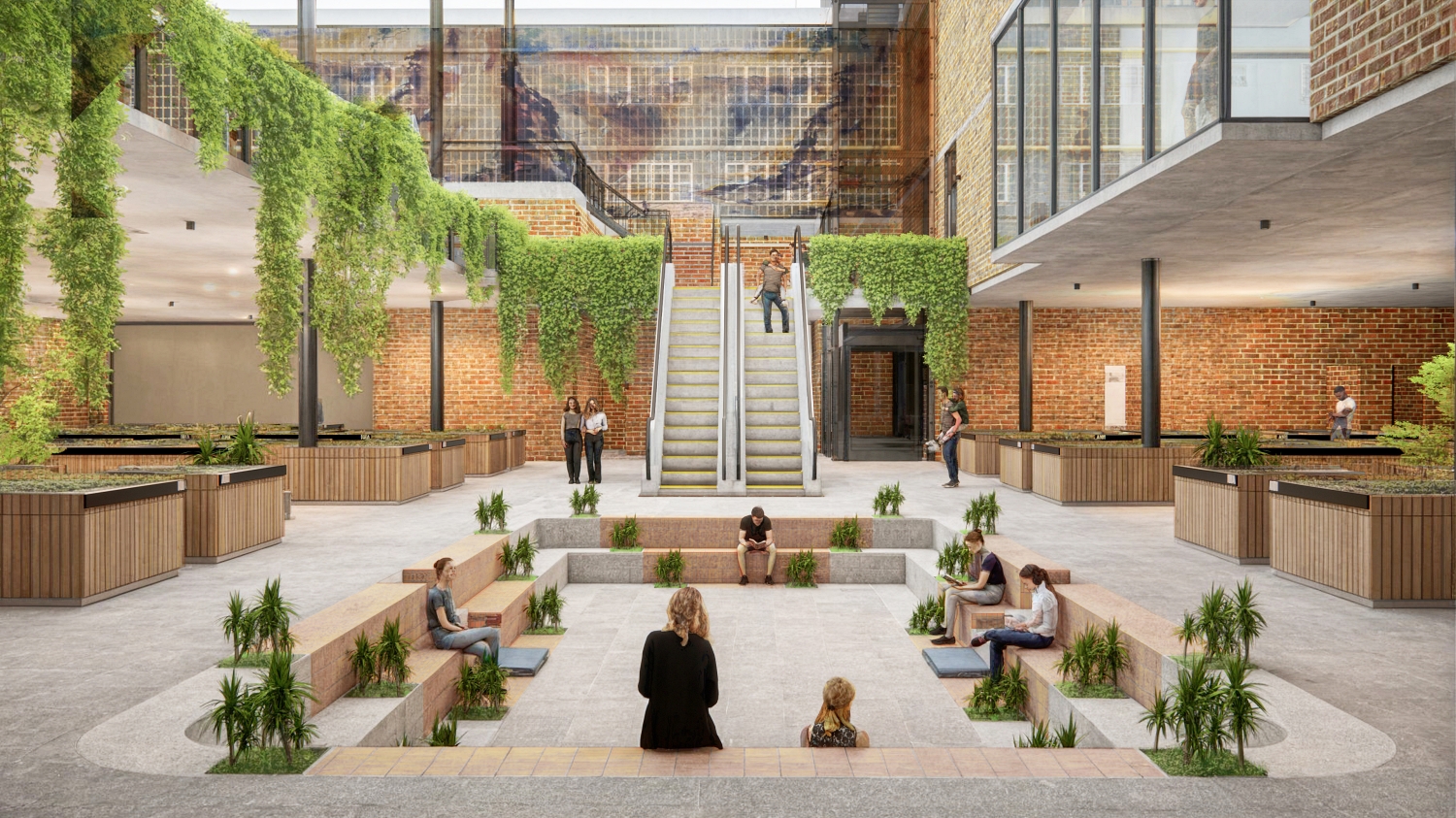
Above, the roofscape transforms into an active terrain -a community badminton hall, forum terraces, and herb gardens provide layers of use that extend the market’s life beyond morning hours.The integration of these civic and recreational programmes ensures that the market functions as a vibrant public node throughout the day and week.
Rather than designing a generic typology, this proposal explores the market as an architecture of belonging-deeply responsive to climate, culture, and community.It reflects a belief that public buildings should not only serve, but uplift; not only endure, but inspire.
In doing so, the SK10 Market becomes more than a place of trade-it becomes a living, breathing part of Seri Kembangan’s identity.
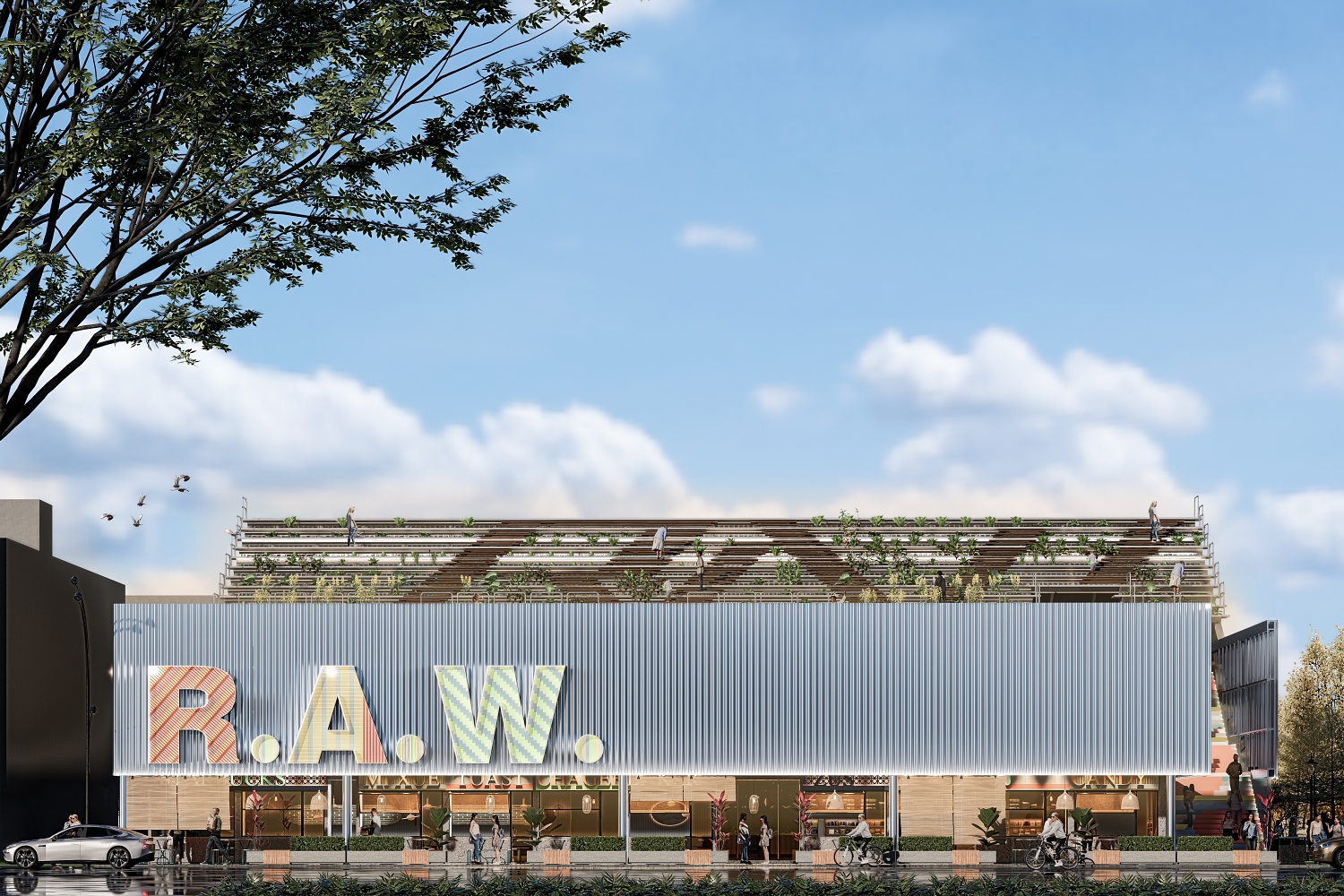
Once the heart of the largest new village in Selangor, Pasar SK10 was more than a place to shop-it was a vital social ecosystem.Mornings began with market runs, where food, culture, and connection flourished under one roof.But that era has faded, overtaken by supermarkets and convenience.
Wet markets became stigmatised: too wet, messy, unhygienic, expensive.
So, the question was: What went wrong? What is the essence of wet markets? And how do we bring it back?The answer lies not in reinventing, but remembering.What made them special wasn’t just the produce-it was the people, rhythms, trust.R.A.W. is our response: a regenerative, affordable, accessible, wellness-driven market that reimagines wet markets for today-without losing their soul.
At its core, R.A.W. is a regenerative ecosystem.It integrates rainwater harvesting, solar panels, composting stations, and a rooftop farm into a closed-loop system.Waste becomes compost.Compost feeds the farm.The farm shades the market, reduces lighting loads, and feeds the community.Every element works together.Affordability and accessibility are built into the design.From intuitive circulation with staggered stalls to service lanes separating wet delivery from public space-the experience is functional, seamless, and inclusive.Visual connections are prioritised, while multilingual signage ensures no one is left behind.
Wellness comes through both food and space.From tai chi mornings at the Fresh & Festive Zone to line-dancing evenings and Social Dapur cooking stories-this is more than a market.It feeds the body, mind, and spirit.
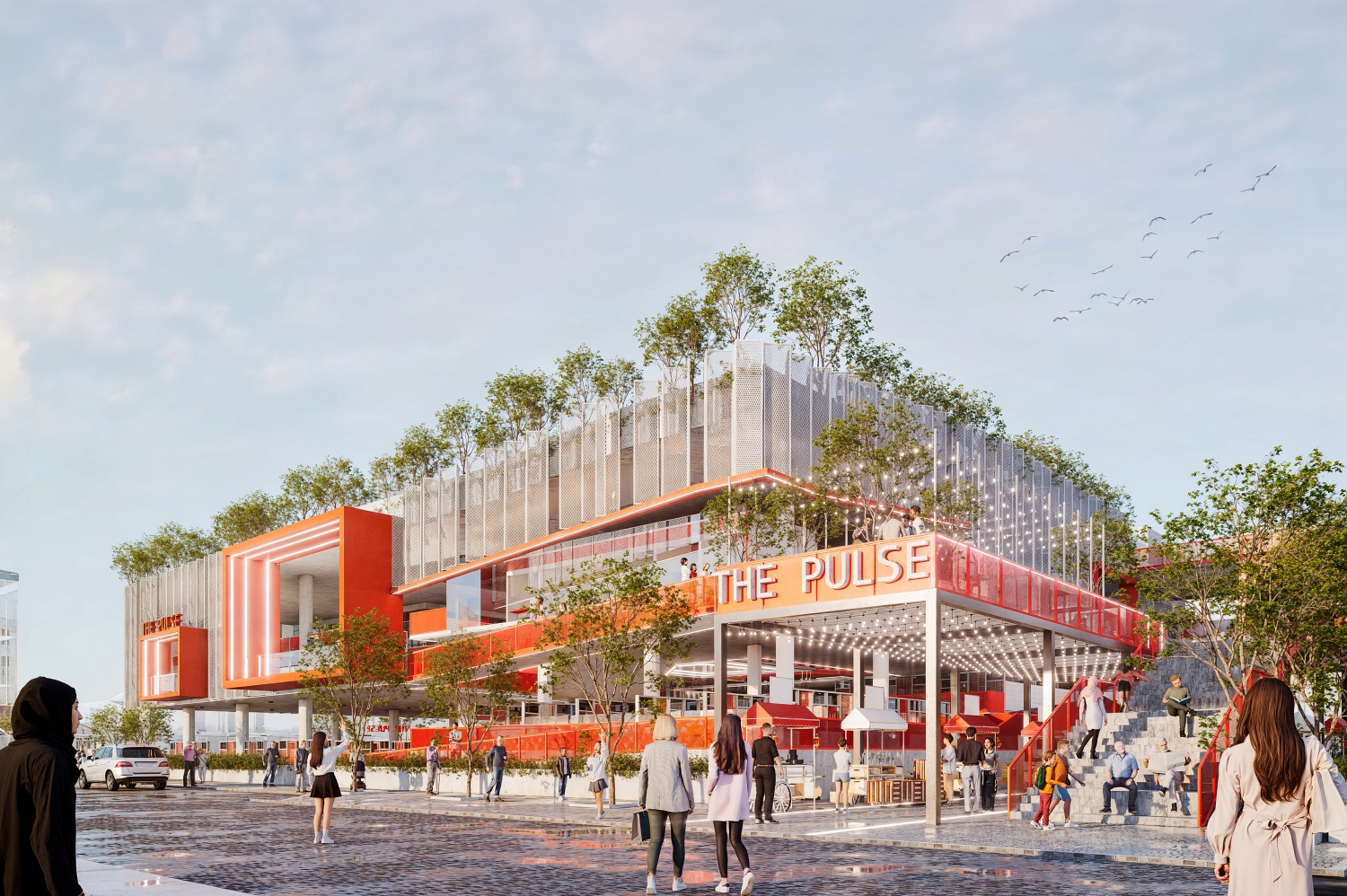
Once Malaysia’s second-largest market, Pasar Seri Kembangan was a vibrant hub linking people, culture, and commerce since 1950.Over time, urbanisation and ageing infrastructure diminished its role.Today, the market remains only in memory-a once-steady heartbeat gone silent.
The Pulse is a bold revival of that rhythm.It reimagines the market as a living organism where space, people, and stories move together.This renewed vision restores the pasar as Seri Kembangan’s cultural and social heart-where tradition meets transformation.Our design follows five principles under P.U.L.S.E.:
• Placemaking – Cultivating lively, inclusive community space.
• Unity – Connecting generations and cultures.
• Local Identity – Reflecting Seri Kembangan’s heritage in form and color.
• Sustainability –Using passive strategies for airflow, daylight, and resilience.
• Experience – Offering immersive discovery, interaction, and engagement.
A key gesture is the playful layering of levels: platforms, ramps, and stairs activate vertical movement and make circulation dynamic.At the core is a central atrium programmed for culture, performance, rest, and socialising.A continuous ramp encircles this space, guiding users through moments that contribute to the market’s pulse.
The white perforated façade serves as both climate screen and “canvas of life.”Its patterns of light and shadow shift, and movable panels reveal silhouettes inside-broadcasting the human heartbeat within.Warm orange accents- symbols of energy and vitality-contrasts the clean façade, while a rejuvenated boulevard and improved access reinvigorate the site’s edges.
Every moment in The Pulse is framed not as a static view, but as a live performance.Whether trading, resting, performing, or passing through, each activity forms part of a shared rhythm and urban narrative.Ultimately, The Pulse embodies urban life’s cycles-stillness and motion, memory and renewal.It’s architecture not just housing people-but connecting them.
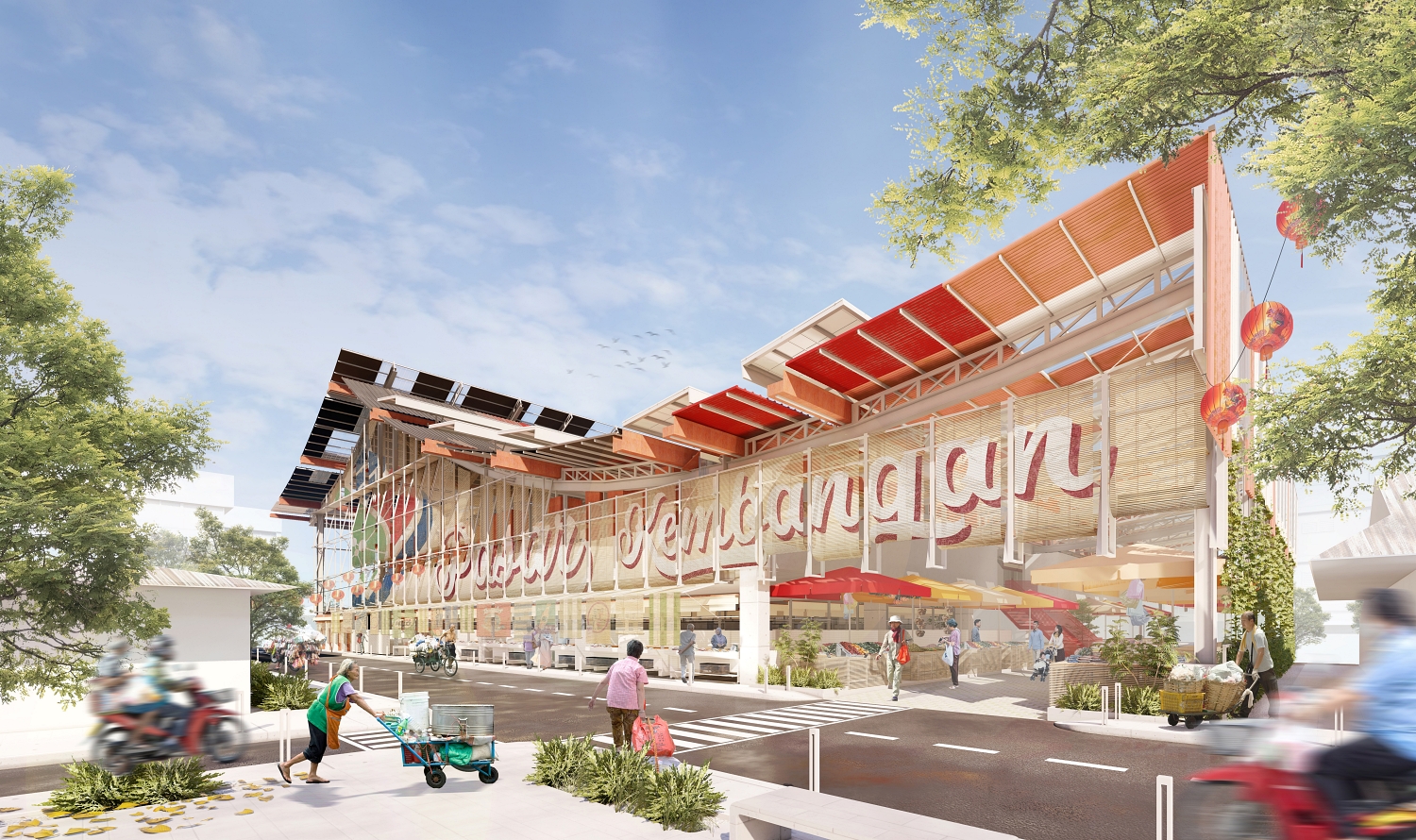
Rows of market stalls resembling miniature shophouses, winding alleyways lit by gentle sunrays, rustic design features that evoke a sense of nostalgia- Pasar Kembangan is more than just a conventional marketplace, it is an embodiment of the heritage of Seri Kembangan, a retelling of the town’s history- all within one building.Revitalising the pulse of the town, the new marketplace aims to bring all on a journey of rediscovery, in experiencing the beauty of Seri Kembangan through a vibrant and lively marketing experience.
Inspired by the traditional architecture and typology of Seri Kembangan, the new marketplace incorporates a fusion of retro elements with modern twists, as an homage to the town’s heritage.Traditional bamboo blinds line the facades of the market, greeting users with its hand-painted advertisement signs inspired by the shaded storefronts of the local coffee shops.Stepping into the market, users are met with vivid rows of market stalls, arranged to mimic the network of shophouses in Seri Kembangan, evoking the experience of taking a stroll downtown.Repurposed materials such as zinc sheets, old signage and timber strips add warmth to the market ambience, keeping the design local and down-to-earth.
Venturing deeper within, the patchwork of opaque and translucent zinc roof panels introduces fragments of light inside, illuminating the pathways with gentle, diffused sunlight.A brilliant red pathway cuts through the axis of the market, serving as a striking spine to the building with its winding paths and steps-inviting users to the first floor of the marketplace, where a melting pot of Malaysian cuisine and leisure activities await.The local food street serves as a point of rest and gathering, whilst the bazaar of shops and multipurpose hall create opportunities for shopping and recreational fun.Elevated prominently from the other market facilities is the Market Hawker Associations and Council Management Office, with its mix of glass and traditional timber architecture- symbolising the fusion of old and new in the marketplace.
Supporting the design are also sustainable strategies in enhancing the efficiency of the marketplace.An integrated rainwater harvesting system allocates water for landscape irrigation, toilet flushing and street cleansing.Solar panels and roof skylights utilise the sun as a renewable energy source to power the building bringing in natural light, whilst reducing energy consumption.The use of repurposed materials in the construction of the roof, façade and interior design of the market also lower waste and carbon footprint on site.
Ultimately, Pasar Kembangan transcends conventions of a typical marketplace with its simple yet significant design.It is a representation of the rich culture and history of the town, and a reflection of the identity of Seri Kembangan.
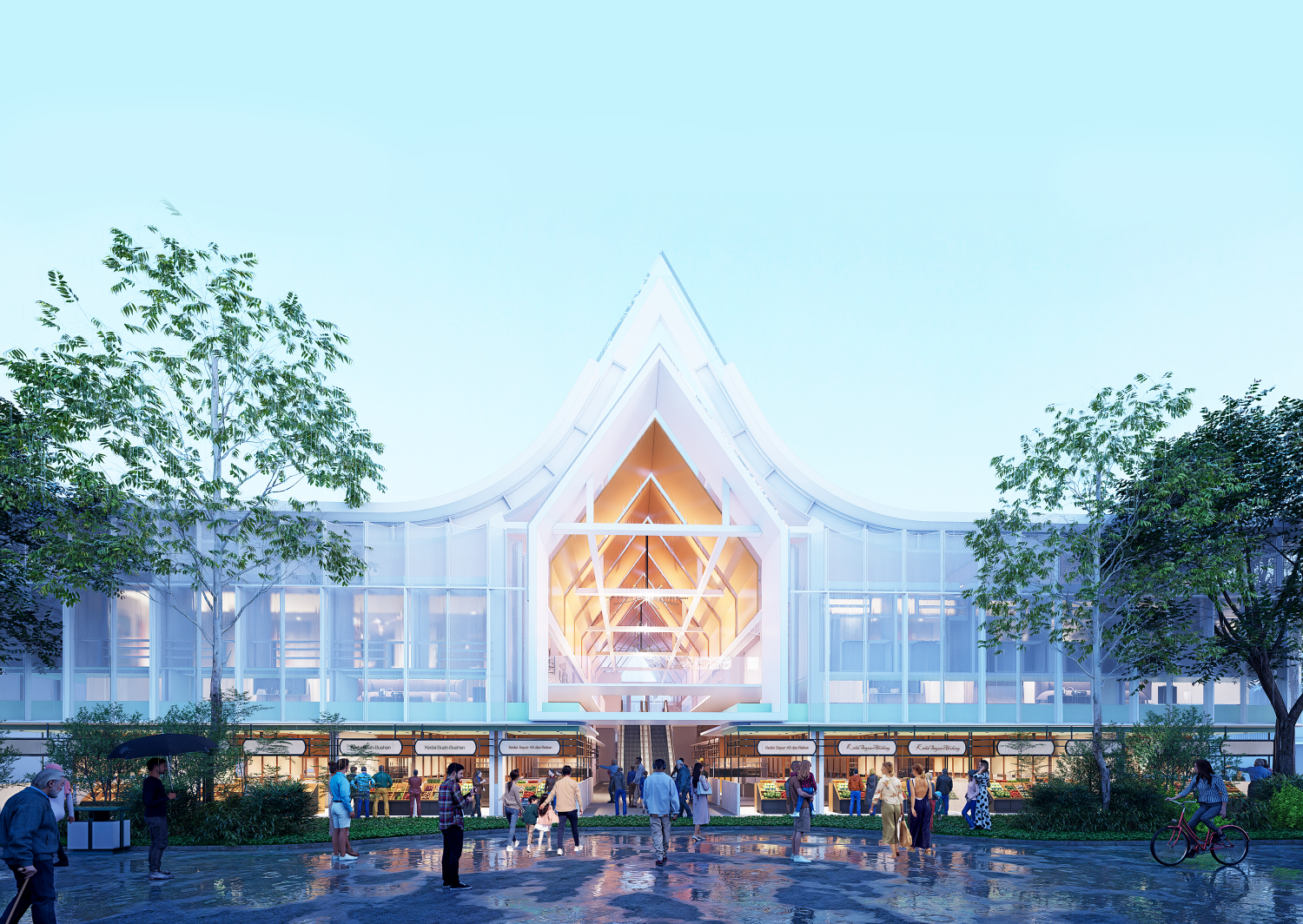
The design of Pasar Awam SK10 Seri Kembangan is rooted in a bold appreciation of what makes Malaysian markets special-the vibrant, colourful chaos that is not a flaw, but a unique cultural signature.At its core, this project seeks to transform that organic energy into a structured yet dynamic public realm, weaving together commerce, community, and culture.
Our guiding concept, “Organised Chaos,” honours the informal rhythm of the traditional pasar.The design embraces spontaneity, human interaction, and sensory richness while introducing thoughtful spatial planning.By organising circulation paths and layered zoning without restricting organic flow, we create a modern market that feels alive-flexible, functional, and intuitive.
The architecture reflects Seri Kembangan’s multicultural identity.Drawing inspiration from Malay, Chinese, and Indian traditions, the design integrates cultural motifs into a contemporary architectural language.These aren’t just aesthetic nods-they are embedded into inclusive spaces that celebrate harmony in diversity, echoing the true spirit of the town’s name: beauty and blooming.
A defining element is the White Veil, a breathable architectural skin that wraps the building, filtering sunlight and enhancing ventilation to create a cool microclimate.The porous building massing blurs the boundary between the street and market, inviting interaction and promoting inclusivity.
Above it all, a sculptural pitched roof-echoing vernacular forms harnesses the stack effect for passive cooling, reducing the need for mechanical systems.
Spatially, the ground floor features a porous outer ring for flexible dry stalls and an inner core housing the wet market under a protective canopy.The upper floor becomes a civic platform-hosting F&B outlets, event spaces, and gathering areas-transforming the market into a vibrant community hub beyond just trade.
The project is aligned with sustainable design principles.It incorporates rainwater harvesting, natural daylighting, passive ventilation, solar energy, and even hydroponic elements, while being infrastructure-ready for future green upgrades.Pasar Awam SK10 Seri Kembangan is more than a market-it is a living ecosystem.It bridges tradition and modernity, serving not only as a place of commerce but as a cultural anchor for the community.Here, architecture becomes an instrument of connection, transformation, and collective identity.
This Project is proudly envisioned and designed by Azlin Jamlus Architect in collaboration with Studio Makal.Together, we have crafted a human-centred, sustainable public space that celebrates cultural diversity and community spirit.Our collective vision and design expertise are reflected in every space and detail of Pasar Awam SK10 Seri Kembangan.
NEW GROUND PLANES
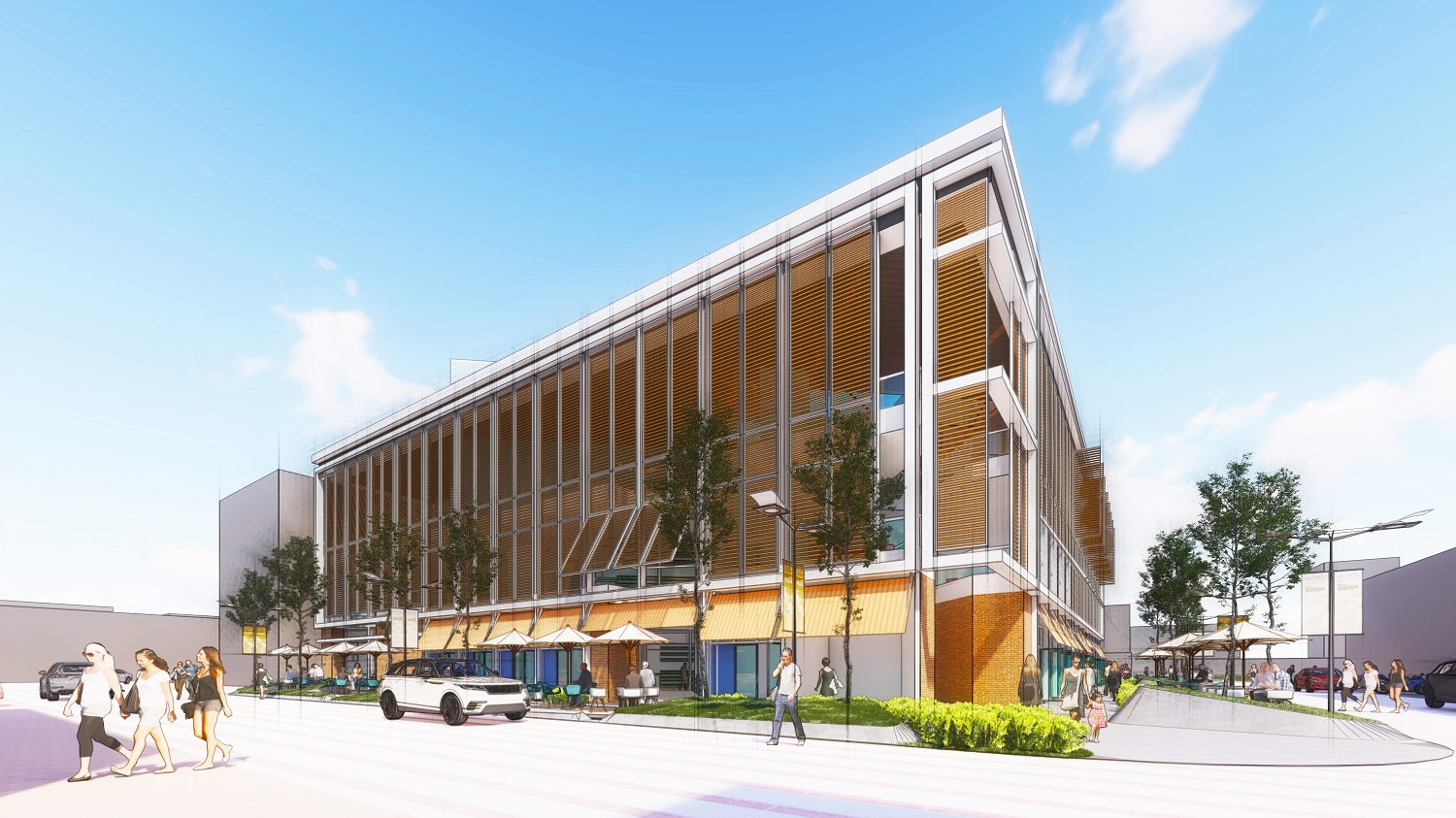
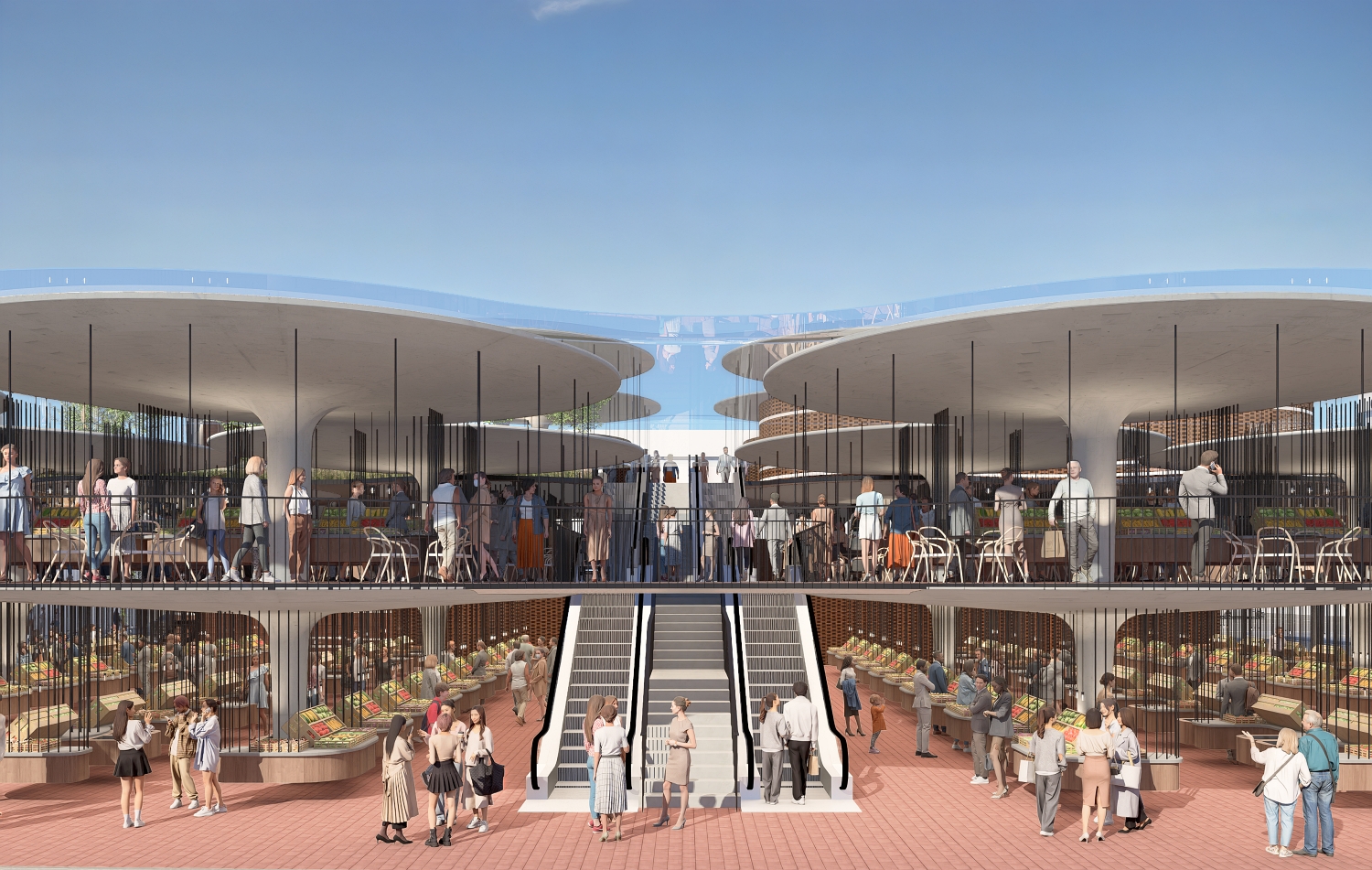
In the heart of Seri Kembangan, a new kind of market emerges -hybridised in form and spirit, were past and future dance in seamless union.This is not simply a market; it is an evolving urban ecosystem, designed to nurture both heritage and innovation, and to connect generations of traders in a shared space of commerce and culture.
At ground level, the market reimagines the traditional wet market.Food and beverages spill onto a dynamic, open-air façade, blurring the lines between architecture and street life.The building becomes an extension of the city, transforming into a 24-hour, sensory alfresco-a space where people from all walks of life gather to taste, trade, and connect.This is no ordinary market; it is a living street, designed to enhance the pedestrian experience, slow traffic, and inject new life into the urban fabric.
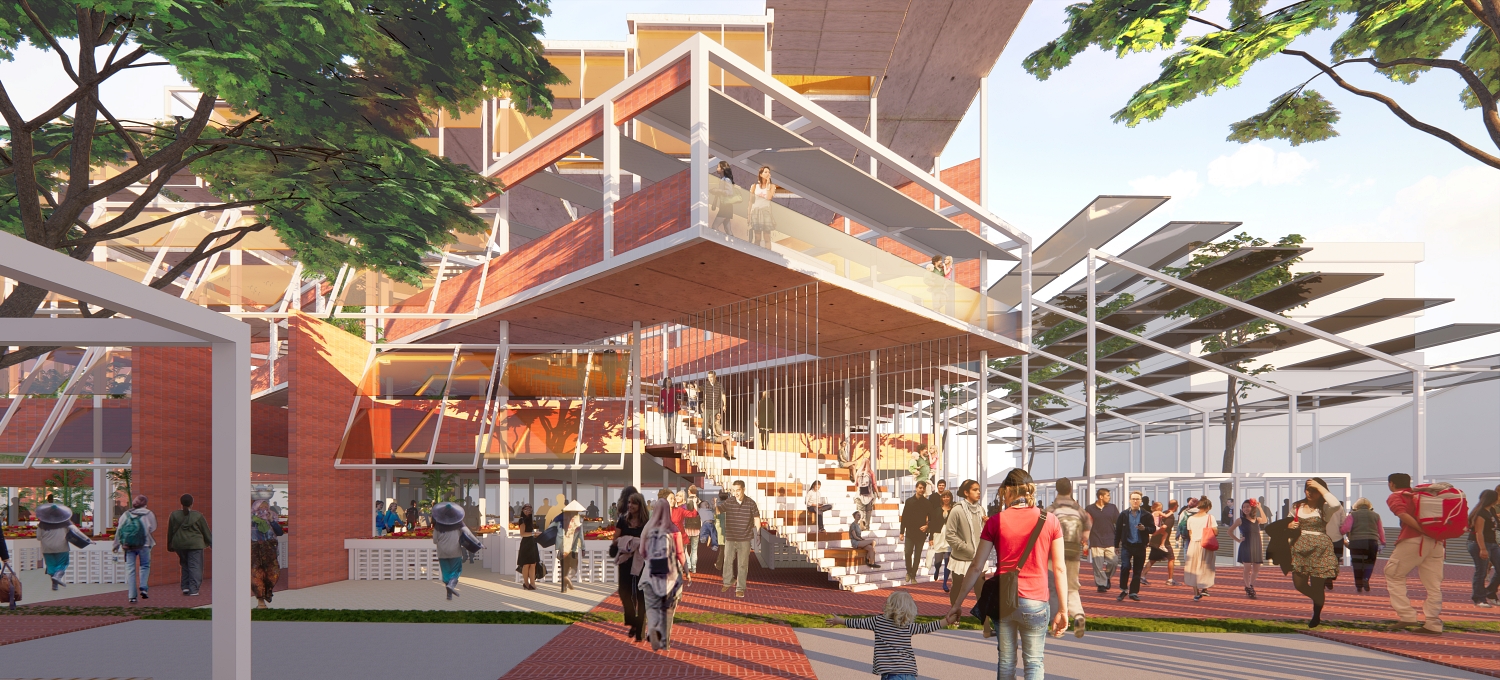
The design eschews the conventional, embracing a diagonal flow that opens multiple entrances and promotes natural cross-ventilation.This layout fosters a fluid exchange, inviting the community into a space that is as much about human interaction as it is about commerce.The market’s heart – a semi-courtyard-creates a shared sanctuary for both vendors and visitors, while terraced upper levels ensure visual connectivity from every angle, making the space feel both intimate and expansive.
A signature pedestrian bridge, gracefully arching from ground to upper floor, serves as a bold symbol of connection -a physical and metaphorical link between generations of traders and the community they serve.The upper levels cascade in terraces, allowing each level to embrace the energy of the street below while creating visual access to the market’s inner rhythm.
Supporting functions-loading bays, refuse areas, and mechanical facilities-are grouped together, hidden from view but integral to the market’s organic flow, allowing it to function with efficiency and elegance.The façade is wrapped in woven sunscreen panels, inspired by the traditional patterns of bamboo baskets, a nod to Malaysia’s cultural heritage.These panels not only provide shading and ventilation, but also tell a story of craftsmanship that connects the past to the present in a modern eco-architectural language.
This design is about more than just preserving a market-it’s about transforming it into a space where businesses evolve, where youth and tradition co-exist, and where culture is celebrated through architecture and interaction.The market becomes a place of continuity and innovation, a vibrant streetscape where the exchange of goods is mirrored by the exchange of ideas.It is a hybrid space, a confluence of commerce, culture, and community that redefines the wet market for a new generation.
In Seri Kembangan, architecture does more than shape space-it weaves it into the fabric of everyday life, creating a marketplace that transcends time, fostering both business and connection, and laying the foundation for a thriving, sustainable future.