
The AIR competition is a nationwide architectural challenge to find the best masterplan for a unique 13.3-acre site opposite Kuching International Airport.This marks the second collaboration between Hock Seng Lee (HSL) and the Malaysian Institute of Architects (PAM), sharing a vision to inspire better living through design.
Announced mid-2024, the competition drew 127 registrations from architects across Malaysia, with 80% of entries from outside Sarawak.On October 17, 2024, a seven-member jury shortlisted 11 finalists at HSL Tower in Kuching, who presented their concepts on November 11 at PAM Centre Kuala Lumpur.Congratulations to all the winning entries, and thank you to all the other entries for their participation.Through AIR, we’ve had the privilege to learn from some of Malaysia’s most accomplished architects and emerging talents alike.
1ST
PRIZE MOA ARCHITECTS SDN BHD
Ar. Hung Sing Ing and Tan Ling Rong
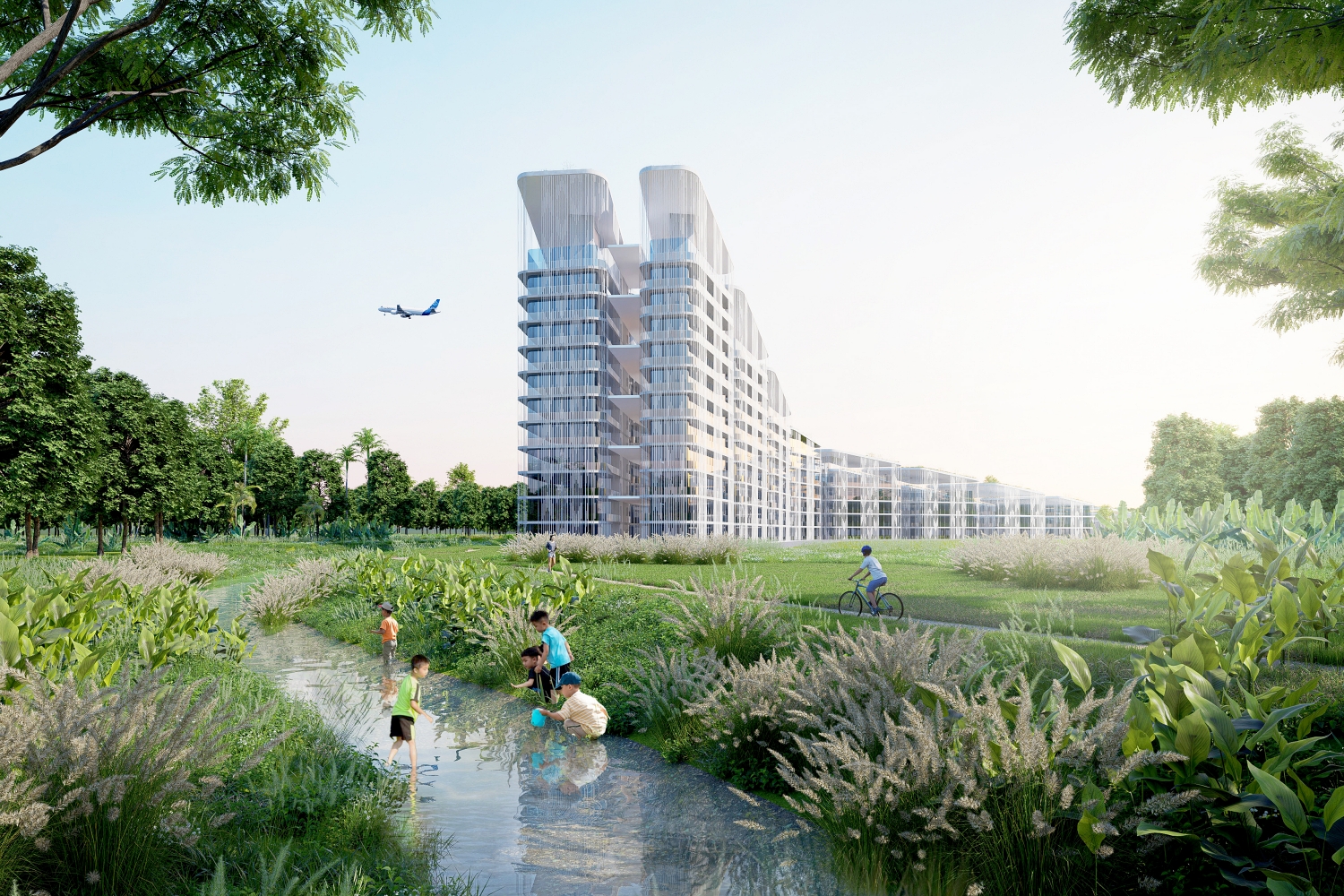
1 This was one of the toughest sites to work on—an oddshaped boundary carved by a river in between.
2 During initial sketches, we felt the plan should organically flow out like water, letting the site’s constraints literally dictate the form.
3 This led to the core idea of “Sculpted by the river, Shaped by the wind.”
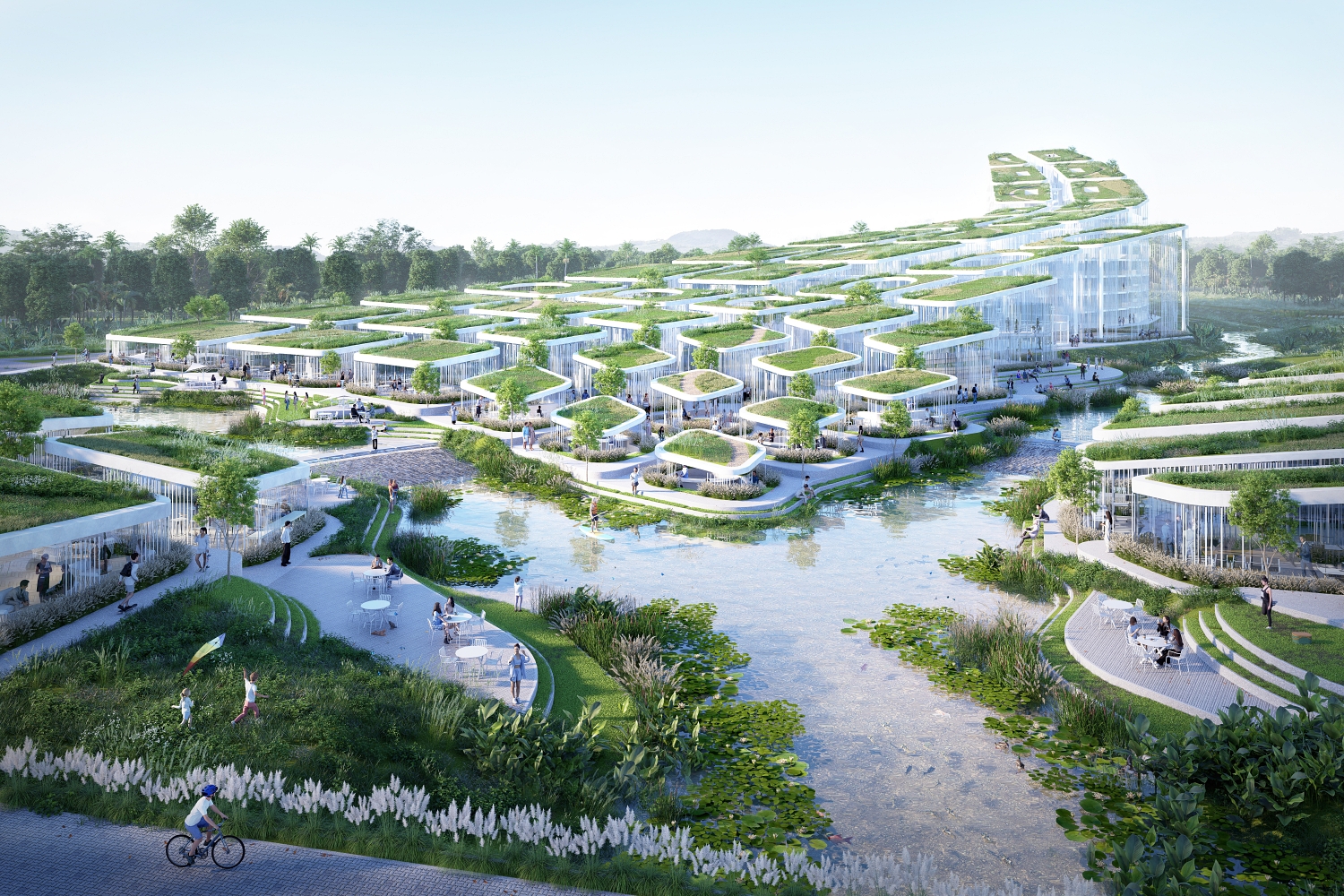
4 nspired by Sarawak’s traditional crafts, our design uses the concept of weaving to connect all pedestrian paths to maximise walkability.
5 The weave is warped and shaped by the flow of the river and the site. This strategy allowed the site’s biggest challenge to become its most iconic feature.
6 This is important because the site is right next to Kuching’s International Airport, so a distinctive visual landmark viewed from the top was important for commercial success, as this would be one of the first impressions for every visitor arriving in Sarawak.
2ND PRIZE
AR. AZWAN OTHMAN
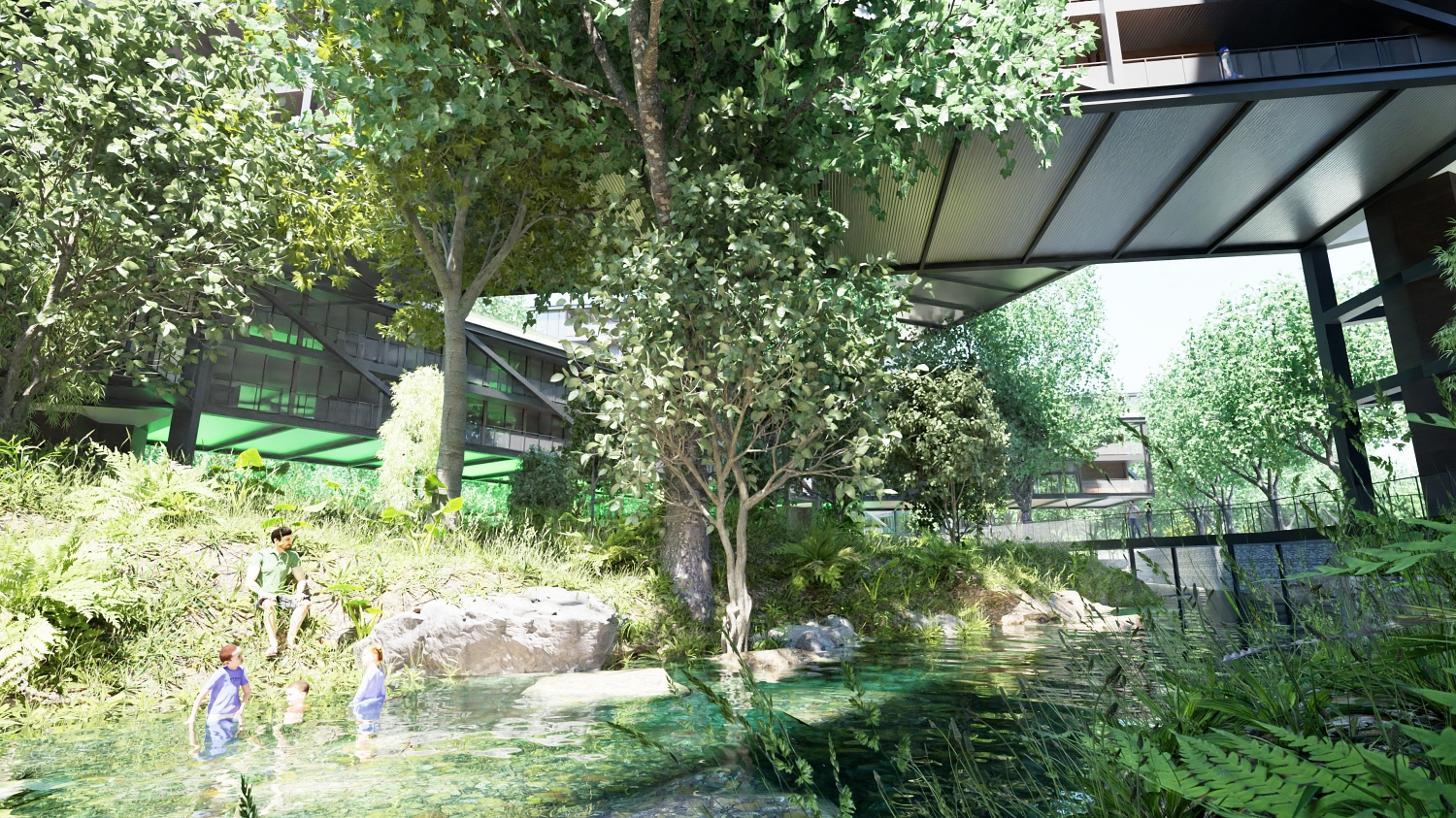
Architecture as a living forest canopy-where nature shapes how we live.The Arboresque is a visionary residential development that redefines the relationship between architecture and the natural world.Rooted in vernacular traditions and driven by ecological sensitivity, the project offers an immersive living experience where homes are elevated above a thriving forest floor and a meandering river continues its path, untouched.
Inspired by the Sarawak longhouse, the design elevates modular residential blocks on stilts, minimising ground disturbance and allowing natural processes to flourish below.These structures span between structural cores-likened to tree trunks-while the dwelling units branch outward, forming a dense, living canopy that echoes the rhythms of the site.Purposeful voids throughout the built form channel sunlight to the forest floor and foster cross-ventilation, while fostering a closer relationship between residents and the surrounding tree canopy.
The architecture’s footprint is light, yet its spatial offering is generous.From Levels 2 to 7, hexagonally arranged residential blocks are layered and offset to form a three-dimensional tessellation, ensuring privacy and optimal solar exposure.The circulation corridor mimics communal longhouse verandas, encouraging neighbourhood interactions at every level.
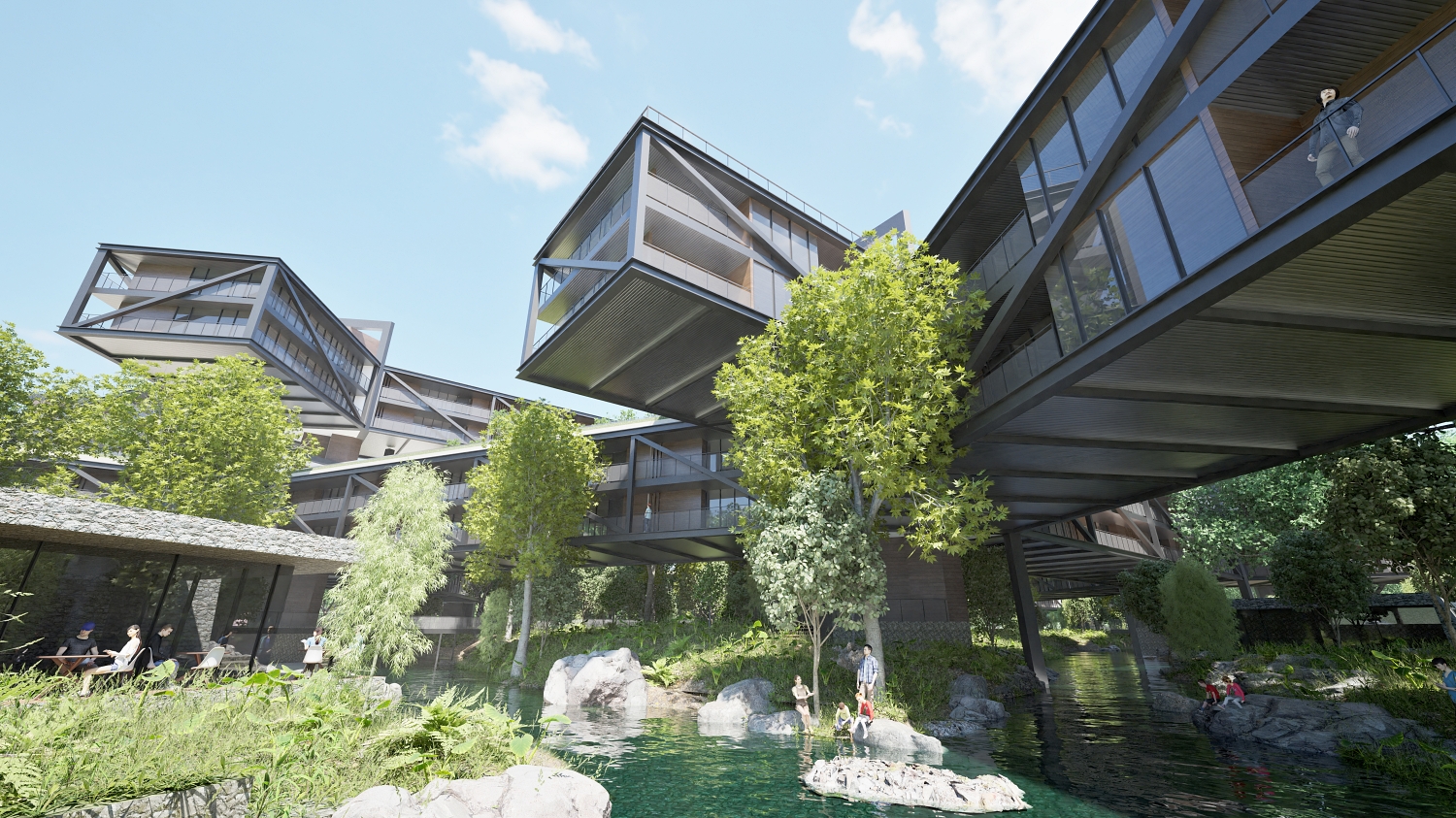
Retail pods at ground level are nestled beside the river and framed by native vegetation, creating a village-like setting for commerce and community.The entire development is accessed through discreet vehicular routes with surface parking, while walkways lightly bridge across terrain and river alike.
Sustainability is not an add-on – it is foundational.The project conserves the site’s natural topography, flora, and hydrology.Apartments are passively cooled, shaded by tree canopies, and cross-ventilated through units.Floor-to-ceiling glazing brings daylight deep into homes, while balconies and corridors temper heat gain.
Extensive rooftop spaces host solar panels and rooftop farms, maintained by residents for personal and community benefit.Level 4 serves as an elevated forest terrace, offering swimming pools, gardens, jogging paths, and gathering areas set within the treetops.The development targets a Platinum Green Building Index rating, reflecting its deep commitment to low-impact, high-quality living.
The Arboresque is designed to unfold in three phases, each anchored by a structural core, ensuring flexibility and continuity.This is not just a place to live – it’s an ecosystem, a community, and a celebration of coexistence where, quite literally, “living with the air above dan di bawahnya air mengalir”.
3RD PRIZE
T.R HAMZAH & YEANG
In Collaboration with AKI MEDIA
In a time when rapid urbanisation continues to edge out natural habitats, the Elevated Hyper Green Eco City by T.R. Hamzah & Yeang and Aki Media proposes an alternative path forward, one that doesn’t consume nature but coexists with it.
Submitted for the Pertubuhan Akitek Malaysia (PAM) HSL Design Competition in 2024, the project’s most defining statement is its bold environmental stance: 76% of the 15.3-acre site is preserved as a forest and wilderness park.Set in the lush landscape of Kuching, Sarawak, along the Sarawak River, the proposal sets a precedent for urban growth that protects rather than destroys ecological assets.
The project is designed not only to be ecologically ethical but also to be immortalised and serve as a lasting legacy for the client, Hock Seng Lee Berhad (HSL).
Rather than building over the land, the design focuses on elevated development, literally.Key features include social decks, a sky promenade, and what is set to be the longest swimming pool in the region.Commercial and residential components are lifted off the ground and connected by green ramps and sky courts, allowing much of the original terrain to remain untouched.
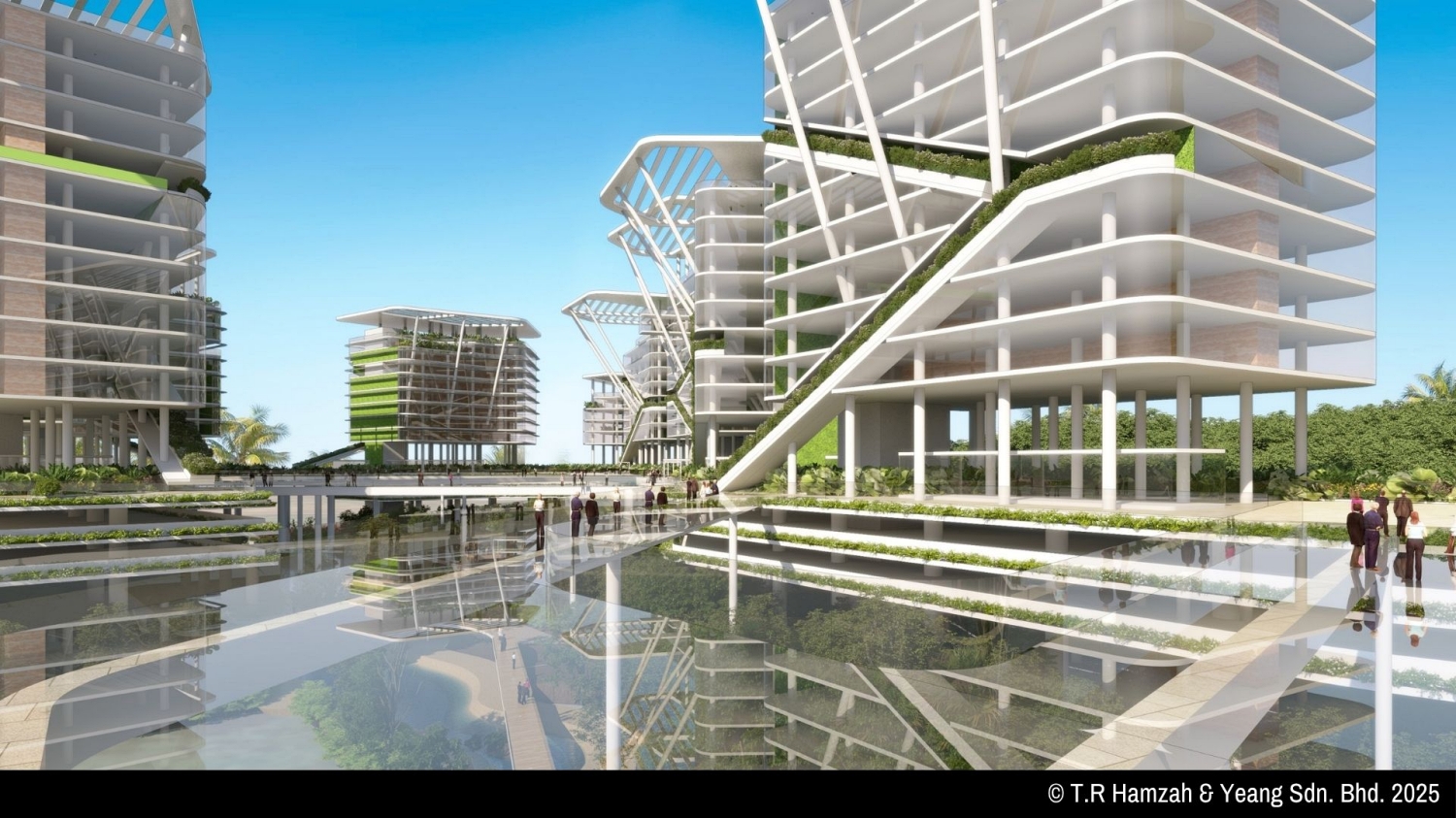
Green infrastructure defines the project’s identity.Vertical gardens, sky courts, and continuous vegetated ramps are more than aesthetic elements; they are integral components of the site’s ecosystem.Combined, these features support passive cooling, promote habitat regeneration, and ensure ecological continuity within a high-density urban context.This approach creates a clear separation between the human footprint and the native ecosystem, offering a new urban model that places nature first while enabling it to coexist harmoniously with urban development.
Designed with a near-net-zero carbon footprint in mind, the ecocity integrates solar panels across more than 30% of its gross floor area.It also incorporates water conservation strategies, including rainwater harvesting systems and bioswales for sustainable water management.
The development’s viability is underscored by strong financial projections.With a gross floor area of 163,897 square meters and a space efficiency of more than 75%, the scheme anticipates a profitability rate above 22%.It is a rare example of a large-scale project that aligns ecological goals with market logic.
The choice of Kuching as the site is significant.Sarawak, with its rich ecological and cultural heritage, is at a crossroads: how to modernise without undermining its natural capital.The Elevated Hyper Green Eco City offers a model for responsible development that respects the integrity of local forests while meeting modern urban needs.
By preserving forest while introducing thoughtful urban infrastructure, the Elevated Hyper Green Eco City suggests that growth in cities like Kuching can be redefined, not by how much land is built over, but by how much nature is allowed to remain.
We have long learned to live with rivers. We’ve settled alongside them, built over them, populated tributaries. Our early co-existence was light and fleeting, structures elevated on stilts, open and porous, never quite permanent. We understood, feared, and respected both faces of the river – its nourishing company and its deadly ferocity.
Our relationship with rivers has been extremely heavyhanded in recent times — we dam, we divert, we fill at a far greater scale and at frenetic pace. Leaving in our wake, heavily damaged waterways and scarred coastlines, irreparable and irreversible. In the last century, we have moved from co-existence to control.
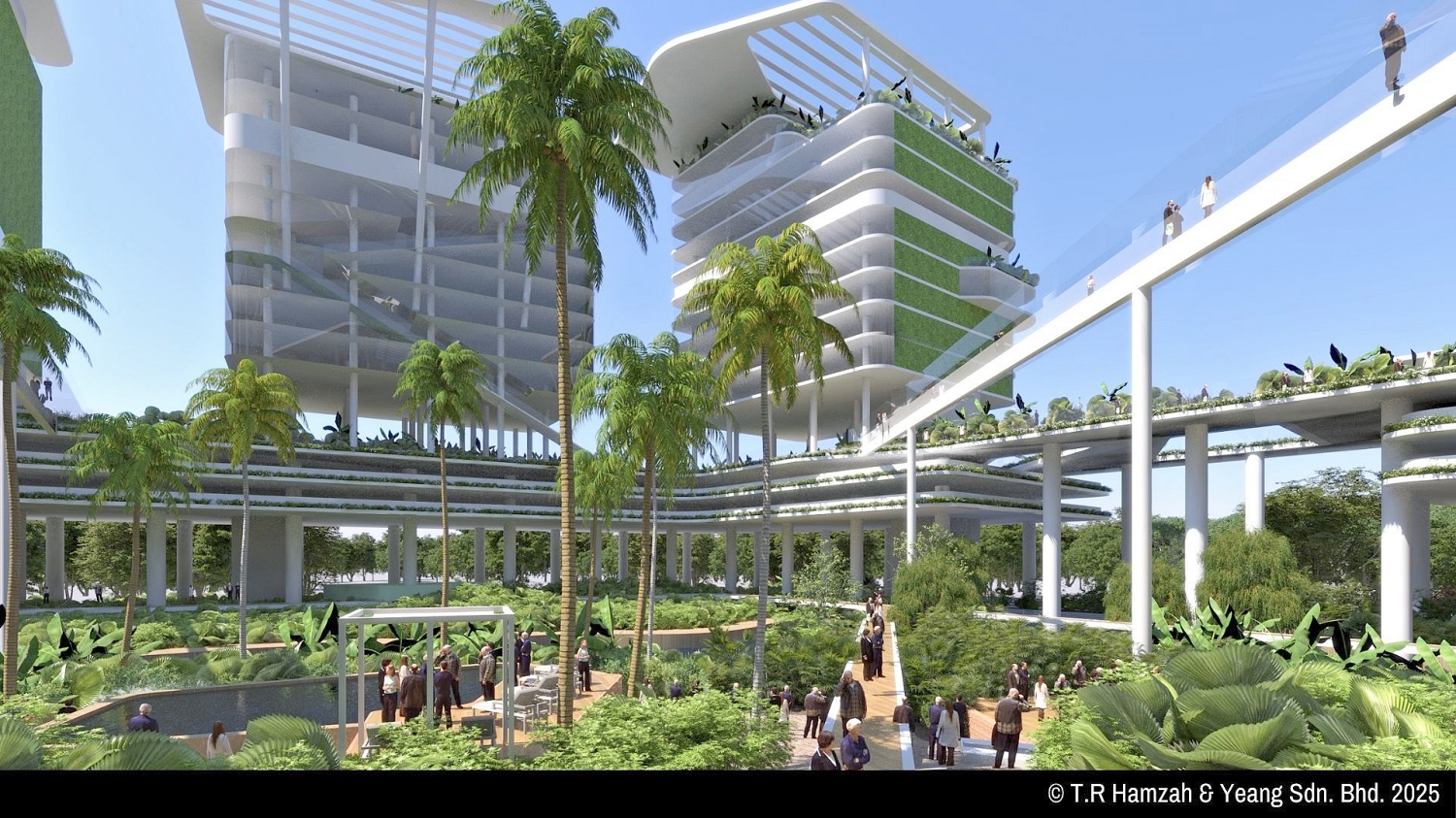
We propose to leave the river and most of the ground plane untouched. Instead of filling or diverting, we propose to bridge over. This is not a new idea. Human beings have been bridging over waterways and rivers for centuries. We have become quite proficient and efficient at doing so.
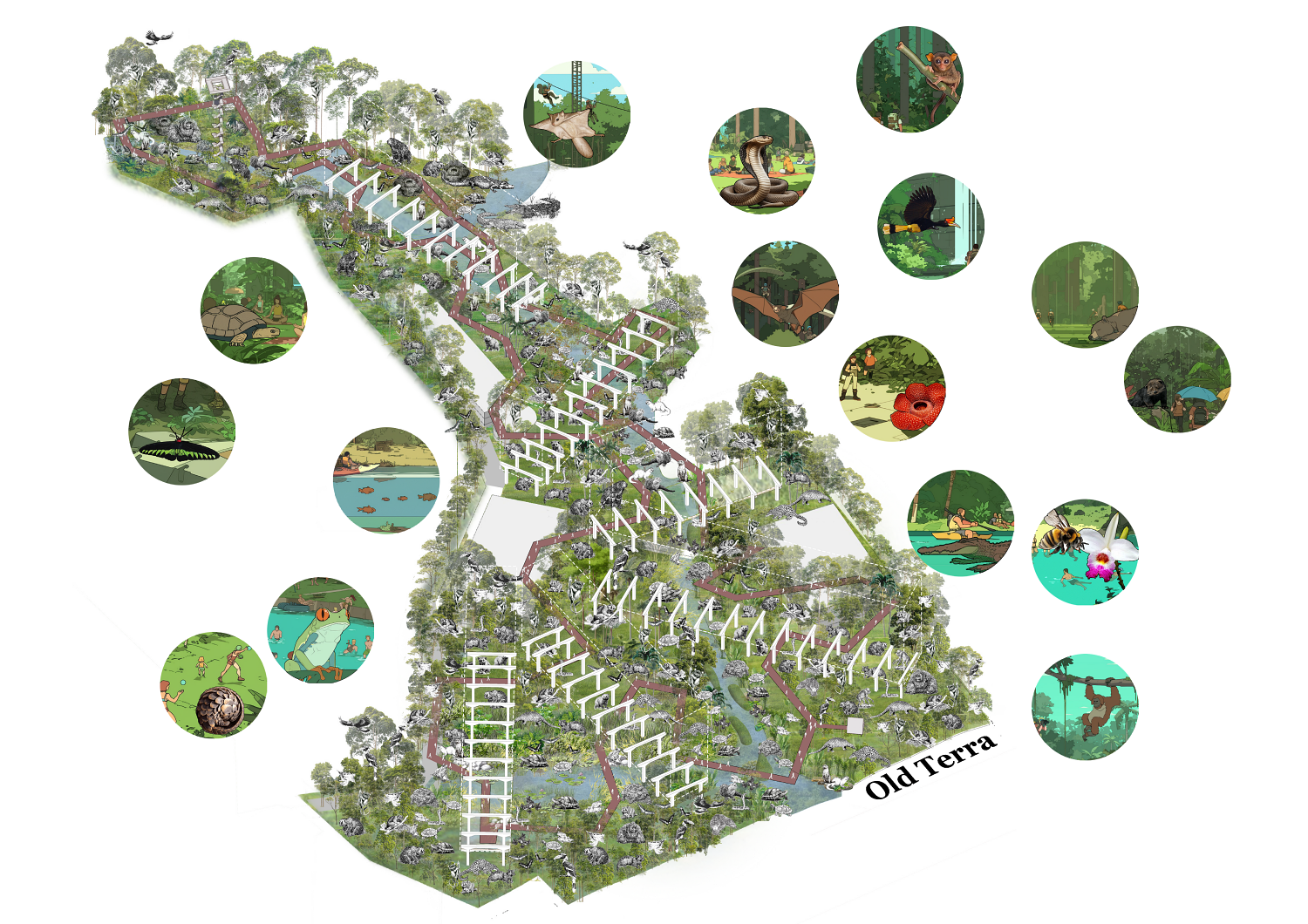
Our scheme is simple; it comprises a series of bridge-like structures sitting on piers. Non-invasive and light-footed, the piers leave the river free, free to expand and contract with the tide, free to overflow its banks, free to roam and reconfigure its flow. Uninterrupted, we envision a realm where living beings thrive – water-life, plant-life, animals, birds, insects.We call this ground plane ‘old terra’, the ground (and river) which was there before and continues to be.
The making of buildings requires land on which to build and ground from which to launch structures (blame gravity). So, we clear forests, fill lakes and rivers, to create ground, so that we can build. The equation and choice are almost always binary – forests / rivers vs buildings, with no room for both to coexist.
What if ‘land’ can be disassociated from ‘ground’? What if we can create new, artificial ‘grounds’ or Land Bridges (we call this New Terra) that take over the burden of carrying buildings from the ground (Old Terra)? Our Land Bridges, sitting on piers, are designed as permanent structures, built once, to last a millennium. On them, buildings are constructed, homes and spaces for people, housing human activity and endeavour – the realm of human beings.
Our project explores 2 main themes. Firstly, building with the river and overcoming the compliance and technical challenges of finding ground to build on (riparian reserve, setbacks, etc). Secondly, it speculates on the possibility and potential of two systems / realms coexisting alongside (on top of) one another: old terra and new terra. It does not have to be a zero-sum game.
Hydrogen Home is Malaysia’s first residential development fully integrated with hydrogen infrastructure, ushering in a new era of sustainable, intelligent, and resilient urban living. Designed as a “Future Home, Resilient Today, Sustainable Forever”, this pioneering project not only reimagines how we live but also how our homes contribute to global climate goals and clean energy transition.
At the heart of the development is the integration of green hydrogen technology. Serving both as a clean domestic energy source and fuel for mobility. Supporting up to 1,600 hydrogen-powered vehicles, this infrastructure is backed by a Hydrogen-as-a-Service (HaaS) model, reducing emissions and offering residents access to an alternative fuel economy. Combined with the project’s architectural simplicity, modular units, compact plinths, and cost-efficient geometry. Hydrogen Home proves that sustainable living can be both practical and accessible.
The development comprises 1,153 smart residential units, selected through an AI Home Selector that analyses household data and lifestyle preferences to curate the perfect living fit. Here, the future is not only imagined, it’s personalised. As an AI-powered 15-minute city, the master plan supports low-carbon living with 6.15 km of micro-mobility lanes, 48 communal lifestyle facilities (including co-working spaces and houses of worship), and 22 commercial lots for groceries, retail, and daily needs—minimising car use while enhancing quality of life.
Nature and resilience are embedded at every level. A 6.23-acre green rooftop park, which doubles as a recreational bicycle lane and urban carbon sink, sequesters 20.8 tonnes of COz annually, while the development’s hydrological spine—a natural river enhanced with sponge city principles—offers climate readiness and ecological integration. These landscape interventions, along with a 4-acre nature-based solution zone, support biodiversity and flood mitigation, and qualify the project for carbon credit certification, unlocking a recurring revenue stream through emissions trading.
More than just homes, Hydrogen Home represents a viable economic model. Through low construction costs, competitive pricing, and revenue generation via hydrogen infrastructure, carbon credits, and maintenance, the project stands as a replicable prototype for Malaysia’s green and digital future.
The viability of Hydrogen Home is closely supported by Sarawak’s hydrogen economy, spearheaded by Premier Datuk Patinggi Tan Sri Abang Johari Tun Openg. Sarawak’s abundant hydropower from large dams and the implementation of floating solar farms have enabled the state to produce green hydrogen at scale, forming the backbone of its clean energy. Through the Sarawak Economic Action Council and the Sarawak Energy Transition Policy, hydrogen is positioned as a pillar of the state’s new economy, aligning perfectly with Hydrogen Home’s ambition to integrate household life into the renewable energy ecosystem. This synergy positions Sarawak not just as an energy exporter, but as a model for local consumption of green hydrogen, directly supporting communities like those within Hydrogen Home.
Hydrogen Home is not just a housing development, it’s a living laboratory of what’s possible when energy, ecology, and intelligent systems converge. It signals that the future is not something to wait for; it is already built.
Air.
The Master Plan enhances the river by integrating features that encourage interaction, forming an educational yet fun focal point serving residents and visitors.
Air.
In response to the airport, components are introduced in the site’s airspace to capture views of flights taking off and landing.These generally take the form of roof gardens, which also provide insulation to spaces below.
Air.
Aerial and water features are integrated using Artificial Intelligence to manage and encourage interaction, forming a unique experience for all.
ARTIFICIAL INTELLIGENCE MEETS NATURE
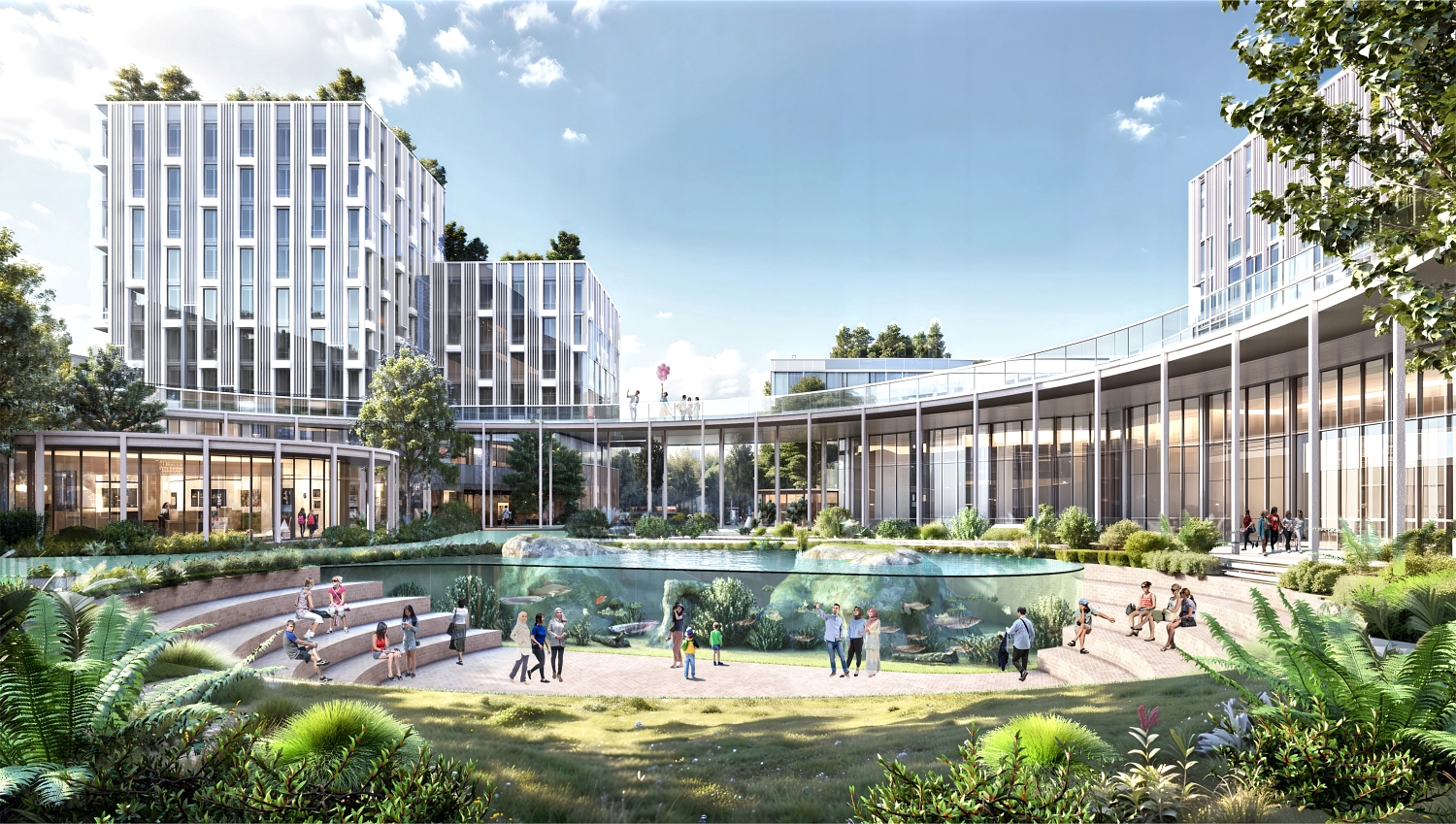
Imagine living in a place where the rhythm of nature isn’t just seen but felt every day.The AIR Masterplan, located in Kuching’s last remaining green pocket, envisions exactly that-a lifestyle shaped by nature, not separated from it.
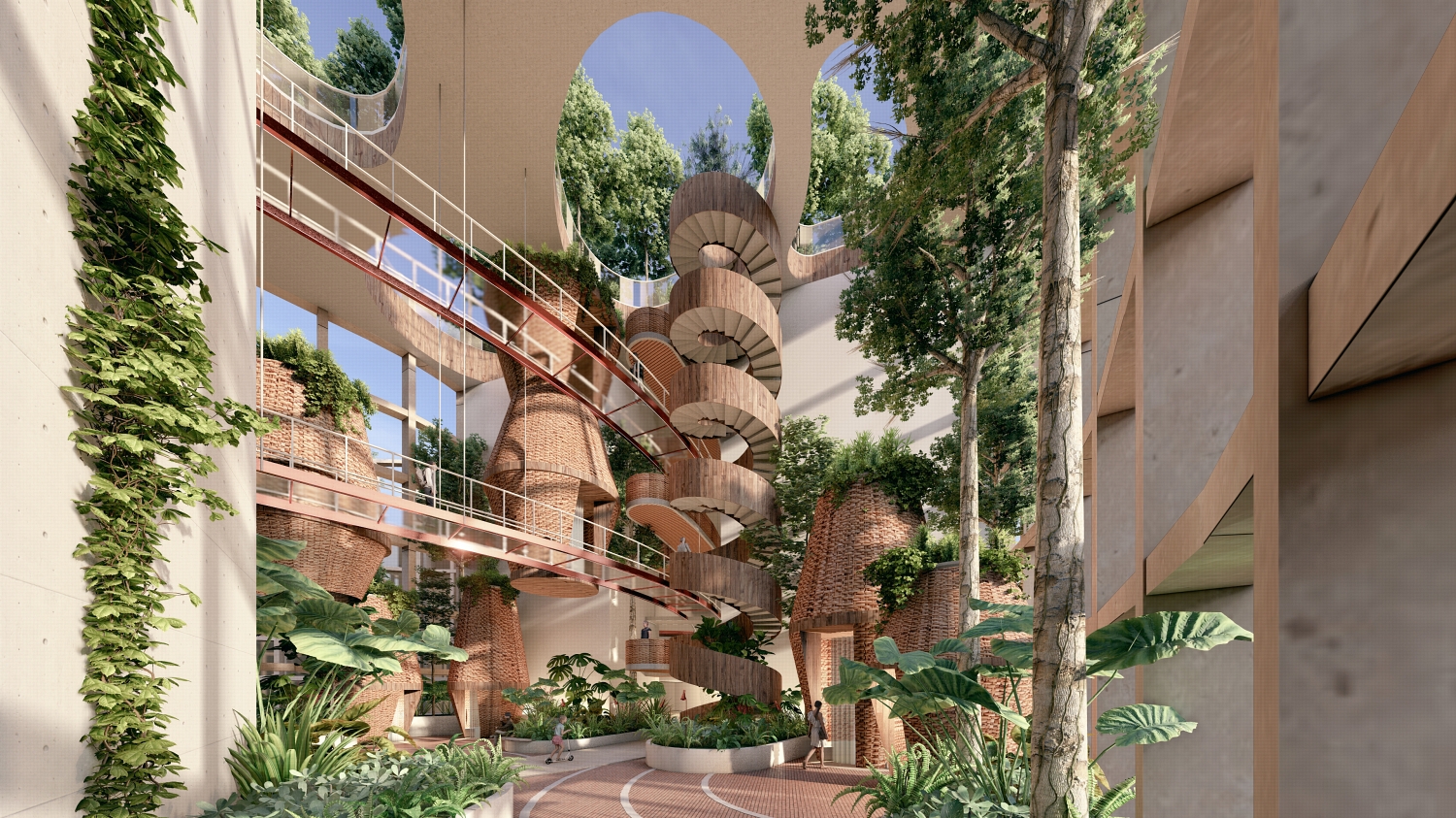
At its core, AIR reimagines how communities interact with their environment.Instead of seeing rain as a nuisance, it is welcomed as a resource.The design uses rainwater to cool, nourish greenery, and support daily needs.Green roofs, permeable walkways, bio-swales, and terraced gardens help manage water naturally, while improving comfort and air quality for residents, even during the city’s haze seasons.
The Masterplan understands Kuching’s deep preference for landed living.Homes here are grounded in greenery, each with layered gardens and rooftop views that bring the forest into daily life.The buildings follow the natural slope of the land and face toward the river, creating shaded facades and capturing stunning views.
Connectivity is central to the plan.Bridges and walkways wind through the development, encouraging residents to walk or cycle.Cars are kept to the edges, so the community core remains peaceful and pedestrian-friendly.A public plaza welcomes visitors and residents alike, hosting markets, performances, and even a prime spot for plane watching, all while flowing naturally with the landscape.
The existing river is the lifeline of this masterplan.It’s preserved, activated, and celebrated.Along its edge, you’ll find cafés, retail walkways, splash pools, and even a forest campsite.Children can play, families can gather, and anyone can find a quiet moment beside the water.
This is not just a residential area, it’s a vibrant ecosystem where leisure, nature, and community blend seamlessly.
Sustainability is built into every layer.With 43% of the site dedicated to open space, biodiversity thrives.Smart zoning allows sunlight and wind to naturally flow through homes, reducing energy needs.Whether you’re in a two-bedroom unit or a multi-generational home with a private studio, every layout supports comfort, flexibility, and a connection to the outdoors.
Our AIR Masterplan design strategy isn’t just about building homes.It’s about creating a place where people live better, closer to nature, to each other, and to the spirit of Kuching itself.It’s a vision of urban living that breathes, grows, and belongs.
COMMENDATION
WSA ARCHITECTS SDN BHD In Collaboration with SUMAIYAH A.AZIZ ARCHITECTS
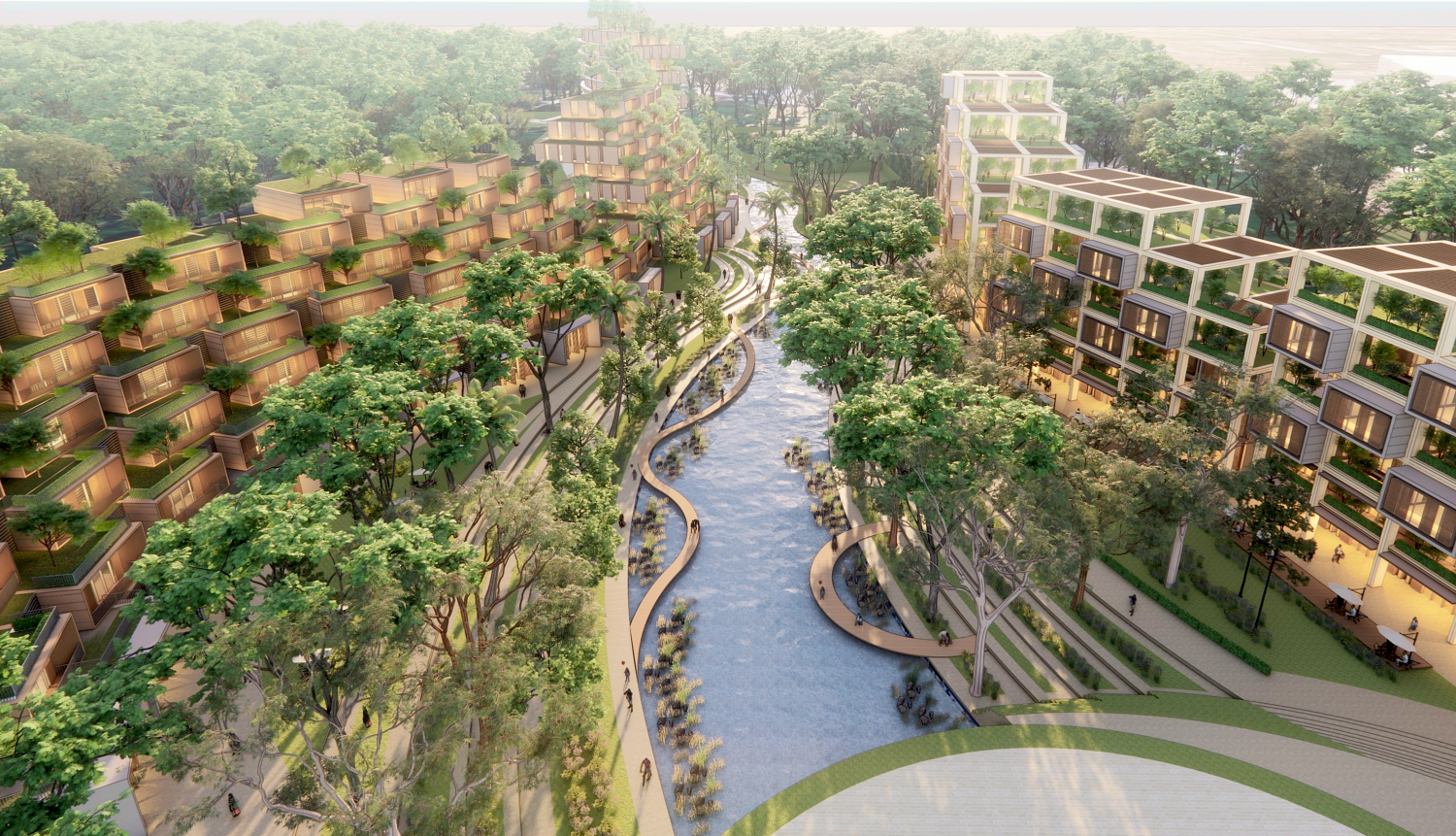
Living with ‘Air’ epitomises HSL’s vision rooted in the site’s nature and topography. It reflects the beauty of connecting our inherent need to embrace nature within the built environment. What could be more profound than thriving in an urban design uniting two essentials of life – Air & ‘Air’?
This is a grand yet back-to-basics design. True to the theory of biophilia—an affiliation with life’s natural rhythm— an identifiable AIR identity emerges, standing at the forefront of socially and environmentally responsible development. Living with ‘Air’ comprises:
• 17 “biophilic architectural concept” apartment blocks with 7 rooftop family farms (“Kebun Kamek”) and swimming pools,
• 5 “Zen concept” blocks,
Intertwined with riverside retail, restaurants, cafes, street performers, artists, an Asian restaurant, and a riverside public park within the dense urban area.‘The Masterplan’ features 400+ residences with sweeping city views and a boulevard blending local herbs, animals, farms, alder and birch trees, tall grasses, and terraced swimming pools. It forms a vibrant neighbourhood combining the intimacy and surprise of historic cities with the ecology, light, and comfort of the modern city—integrated with Kuching City and the nearby airport.
Four principles guide its design: respect for neighbours, daylight access, pinwheel clustering, and 45° facade rotation. Angled walls and carved facades create creative housing while responding to the climate. The star feature is ‘The Library of Streams’—a bundle of paths from the river—hosting:
• A media floor,
• Water turbine,
• Viewing platform and event space,
• Family playground with climbing structures and animal figures,
• A looping water path,
• A cycling station.
The largest riverside building features a unique facade with gold accents and textured tiles. This introduces “maximum volumes, high-density low-rise development”, adapting to neighbours by imitating surrounding heights—suggested as a pilot project.
Ultimately, the area will transform into “a true Cactus Forest,” extending from pavilion-style homes to monumental areas along the Garonne riverside. This is a ‘natural, modern habitat’ for discerning, environmentally conscious dwellers and purveyors of beauty and serenity.
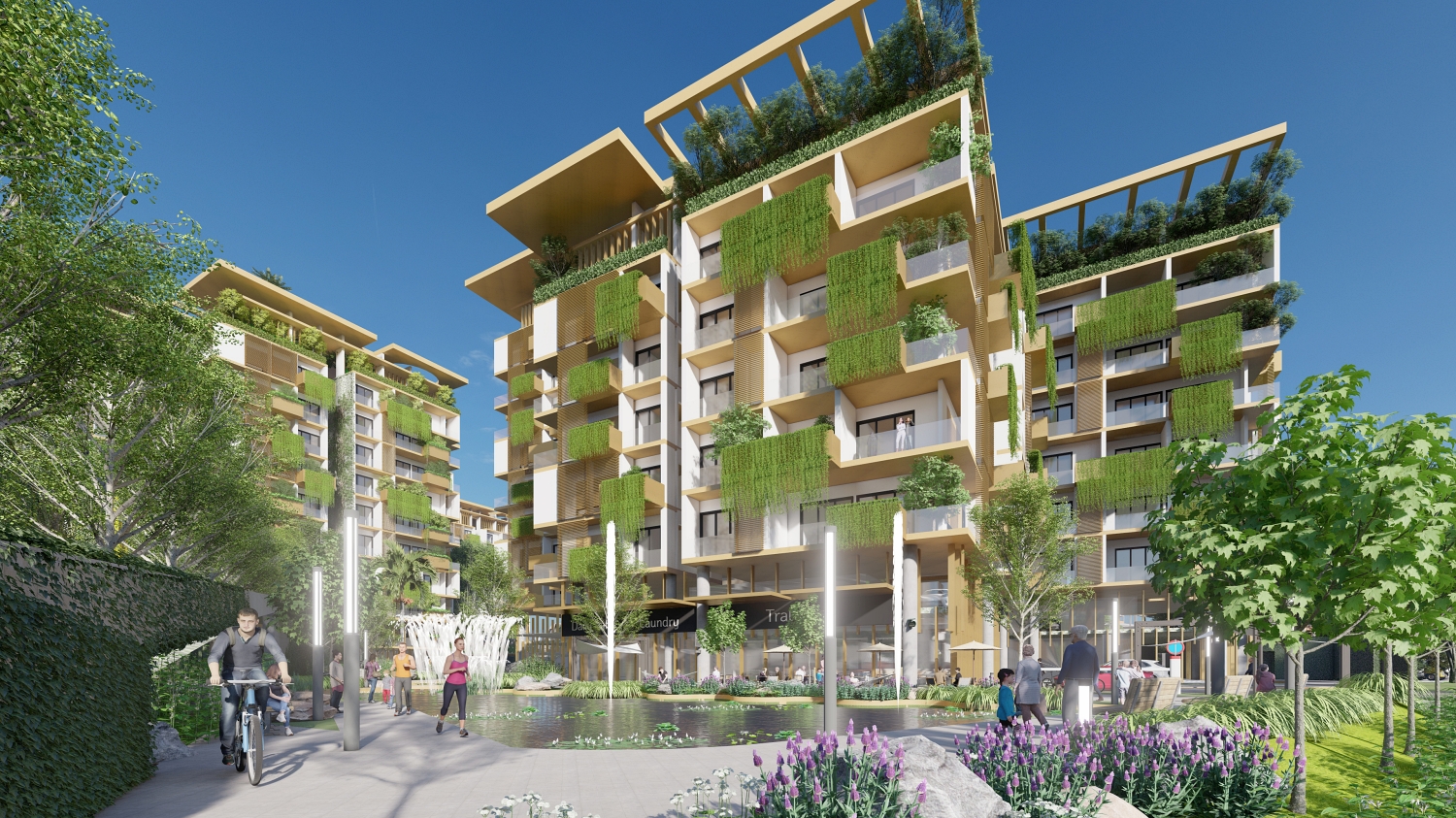
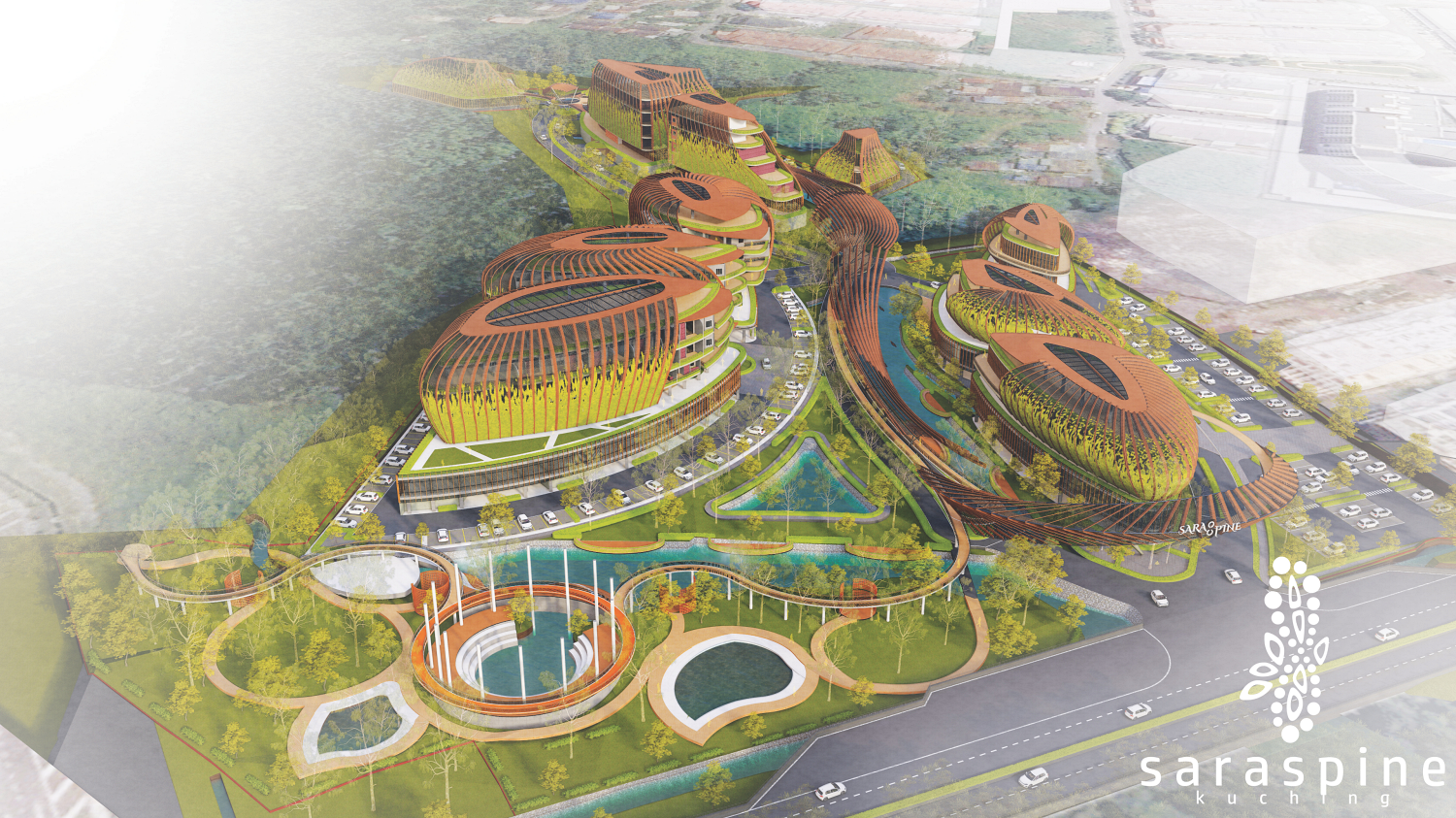
The Saraspine project envisions a transformative masterplan that redefines urban living through a nature-centric spine concept in Sarawak. Inspired by the region’s cultural heritage and rich natural landscape, the project seeks to address issues of community detachment, shallow engagement with nature, and isolated enclaves. By emphasising communal living and deep connections to the environment, Saraspine creates inclusive spaces where residents feel a sense of belonging.
Central to the design is the “Spine,” a dynamic urban framework that integrates cultural elements such as the Jeretak (wooden footbridge), Baruk (traditional Bidayuh roundhouse), and Ruai (long communal veranda), reflecting Sarawak’s identity. This central spine is strategically aligned with the existing river, promoting synergy between built and natural environments. Architectural forms echo tree canopies and local traditions, creating innovative roads, cycling pathways, and communal areas that celebrate Sarawak’s heritage.
The masterplan adopts a bioclimatic approach by leveraging natural forces—water, wind, sun, and soil—through passive design strategies. These include integrated rainwater harvesting, seamless wind tunnelling for cross-ventilation, shading devices to reduce heat gain, and community farming spaces that foster sustainability. The Spine’s lower-density layout enhances openness and social interaction, ensuring the development supports holistic well-being while conserving resources.
Saraspine embodies values of adaptability, sustainability, cultural respect, and inclusivity. It aims to build a resilient, vibrant community where heritage and modernity coexist, connecting lives, aspirations, and futures. By prioritising community engagement and environmental stewardship, this project transforms urban space into a sanctuary that honours Sarawak’s unique stories while creating sustainable and enriching experiences for all residents.
COMMENDATION
TANGU ARCHITECTURE SDN BHD
Air Catcher is strategically positioned between Kuching International Airport and established commercial hubs. It features undulating terrain, with a stream flowing towards the Sarawak River, offering a natural, serene setting. The development’s design harmonises with nature, integrating air and water elements as a holistic approach. The primary entrance connects Jalan Stutong Baru and Jalan Saradise ring road, minimising road surrender while respecting the topography. A central “high street” is established on the higher ground, preserving the flow of air and allowing for a seamless blend between nature and urban life.
The development comprises three key components. “Duo-Air” serves as a landmark, housing a hotel, serviced office suites, and dining options. “Air-Moat” fosters business, art, and cultural exchanges, offering international business hubs and venues for cultural performances. “Air-Valley” provides a tranquil living environment with biophilic design, featuring residences and wellness facilities that incorporate natural water features for a peaceful, nature-immersed lifestyle. Together, these areas offer a dynamic mix of residential, commercial, and cultural experiences, enriched by the surrounding landscape.
Anchoring the site are five crescent-shaped low-rise blocks, designed to capture wind patterns and create community spaces. “Duo-Air” tower rises as a beacon, symbolising innovation and nature, while the “Rainforest Symphony” celebrates culture and the rainforest environment. The “AirWalk” high street and the “Air-Vortex” roundabout enhance the sense of harmony between nature and urban spaces. This development emphasises sustainability, community engagement, and cultural celebration, inviting visitors to enjoy the serene beauty and vibrant energy of the site.
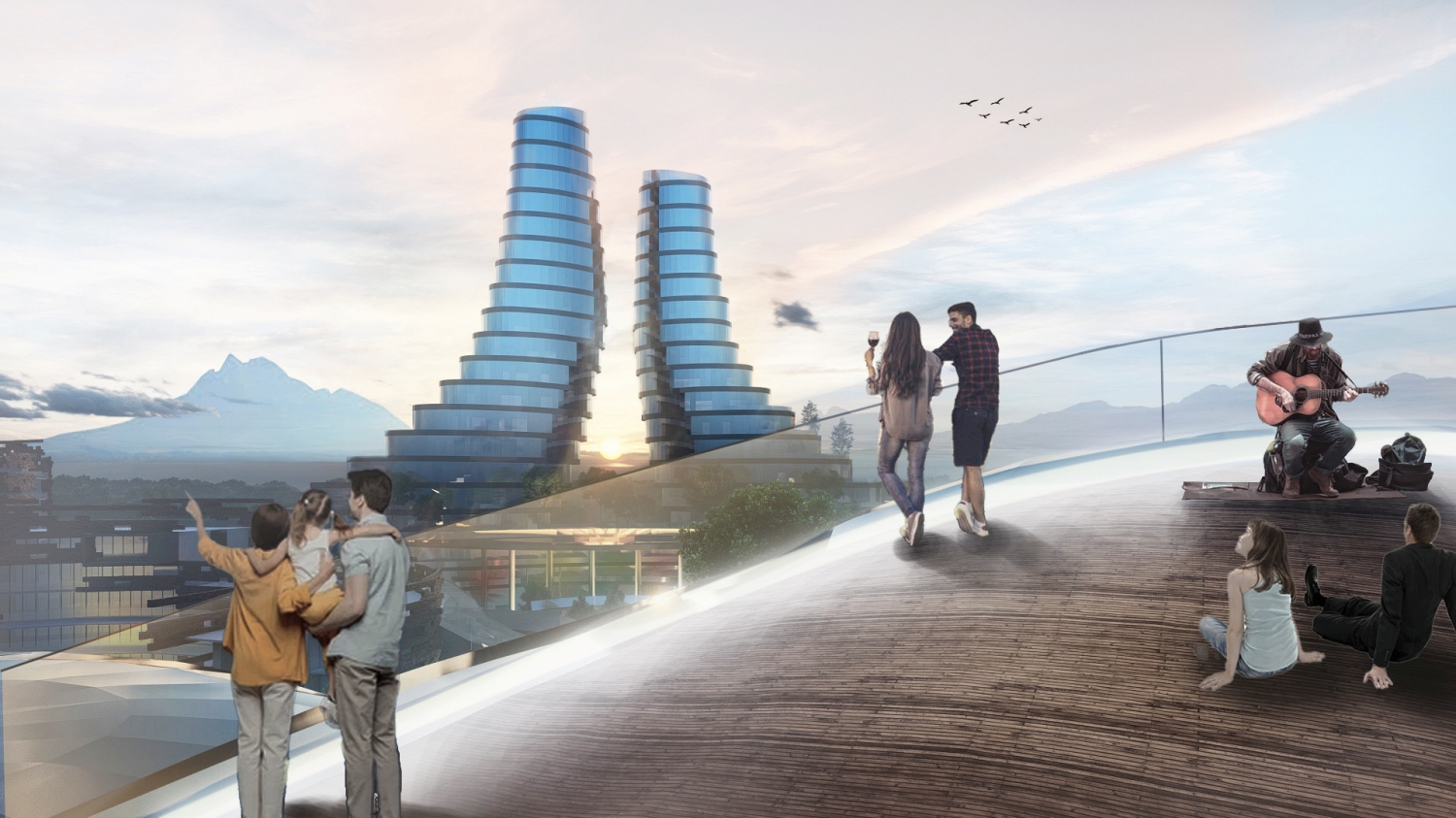
AIRSQUARE –A RIVER RECONNECTED
At the heart of our project lies a simple observation: a stream gently carves through the site—serene, beautiful, full of potential. Yet like many natural boundaries, it divides the land. That division sparked reflection: in a world more connected than ever, why do so many still feel isolated?
In today’s cities, people live closer but connect less. Technology brings constant contact, yet strips away the small interactions that once stitched communities together. So we asked—can this divide (the river) be reimagined as the very thing that reconnects people?
That’s where the Ruai inspired us. In Sarawak’s longhouse tradition, the Ruai is a communal space where families gather, guests are welcomed, and life is shared. We reimagined this long, shared space as a modern riverside park: a linear, elevated promenade flowing with and across the river, uniting rather than dividing.
The site is organised into three zones, echoing longhouse living. Tuai, the commercial hub, is the gateway—like a host, welcoming visitors. It houses the sales gallery and riverfront retail, supporting local entrepreneurs and buffering airport activity.
Next, the Bileks—the work-and-living zone—offers flexible homes and co-working spaces. Modular housing allows units to reconfigure over time, supporting inclusivity from affordable to premium riverside dwellings. Work, life, and community blend seamlessly. Finally, the Ruai—a contemporary social spine—creates shared spaces with ecological parks, playgrounds, cultural venues, and markets. It’s where people meet, play, and create memories.
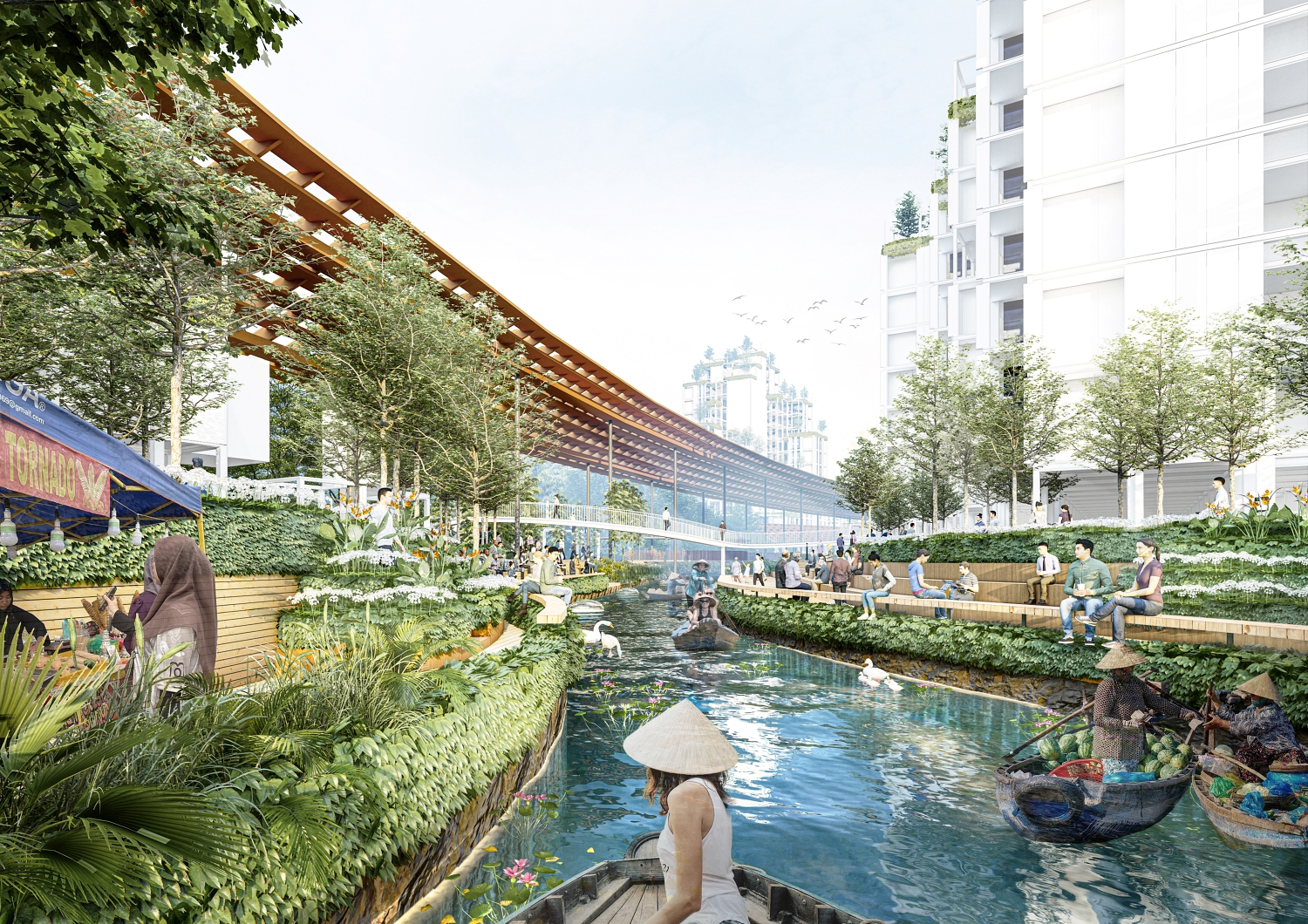
The Ruai’s layered roof floats above the promenade, casting shade while inviting light and views. Solar panels help power the development, while rainwater harvesting and bioswales sustain a regenerative landscape. Underground infrastructure manages waste and stormwater, proving environmental care can coexist with urban life.
By transforming a natural divider into a place of connection, AIRsquare isn’t just where people live—it’s where they belong. Rooted in Sarawak tradition but reimagined for the future, it unites through stories, nature, and purpose. This is AIRsquare—where the river becomes the Ruai, and community flows again.