HOSPITALITY - SILVER
ARCHITECT - M J Kanny Architect
CLIENT - AK Retreat Sdn Bhd
CONTRACTOR - Wai Yap Construction Sdn. Bhd.
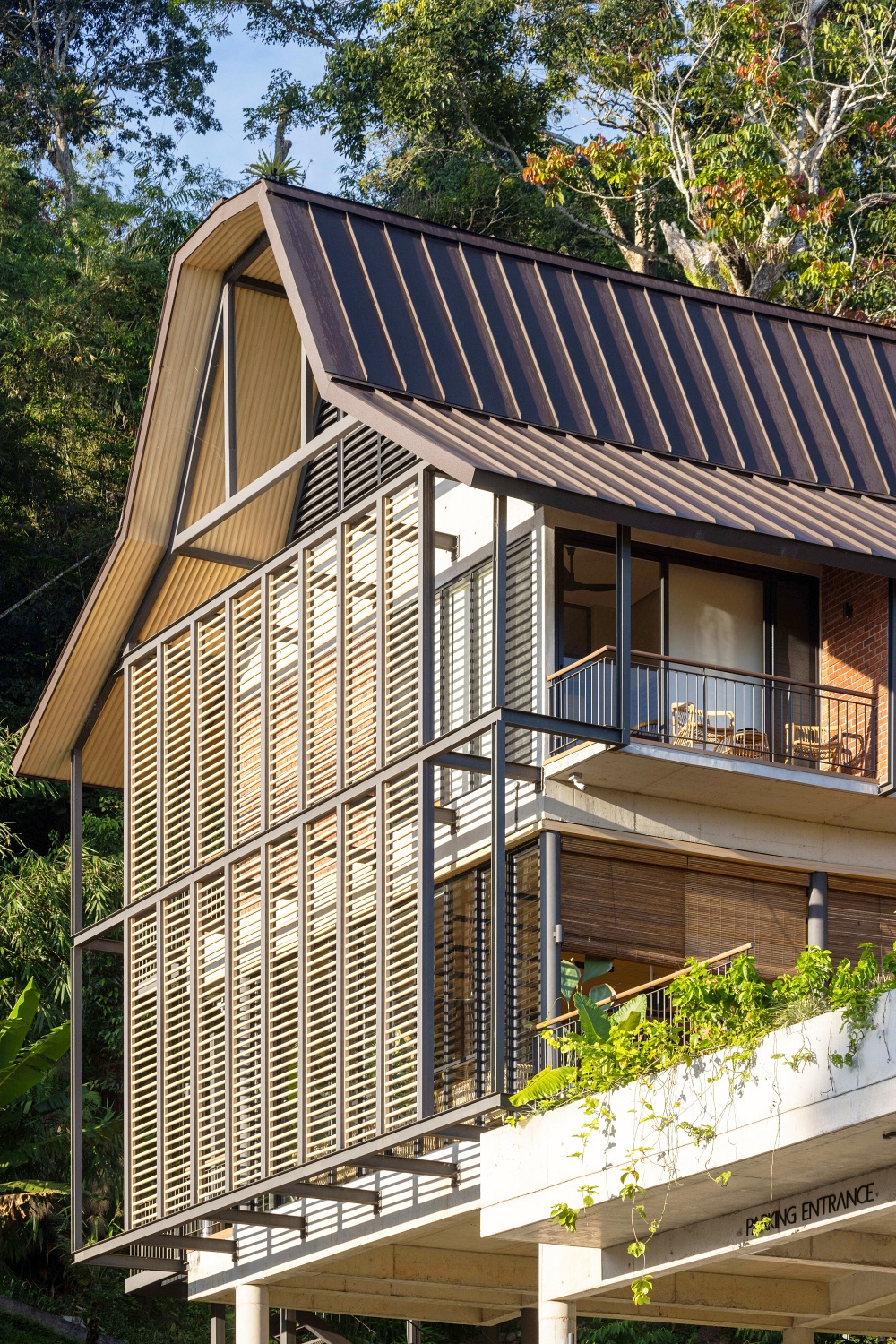
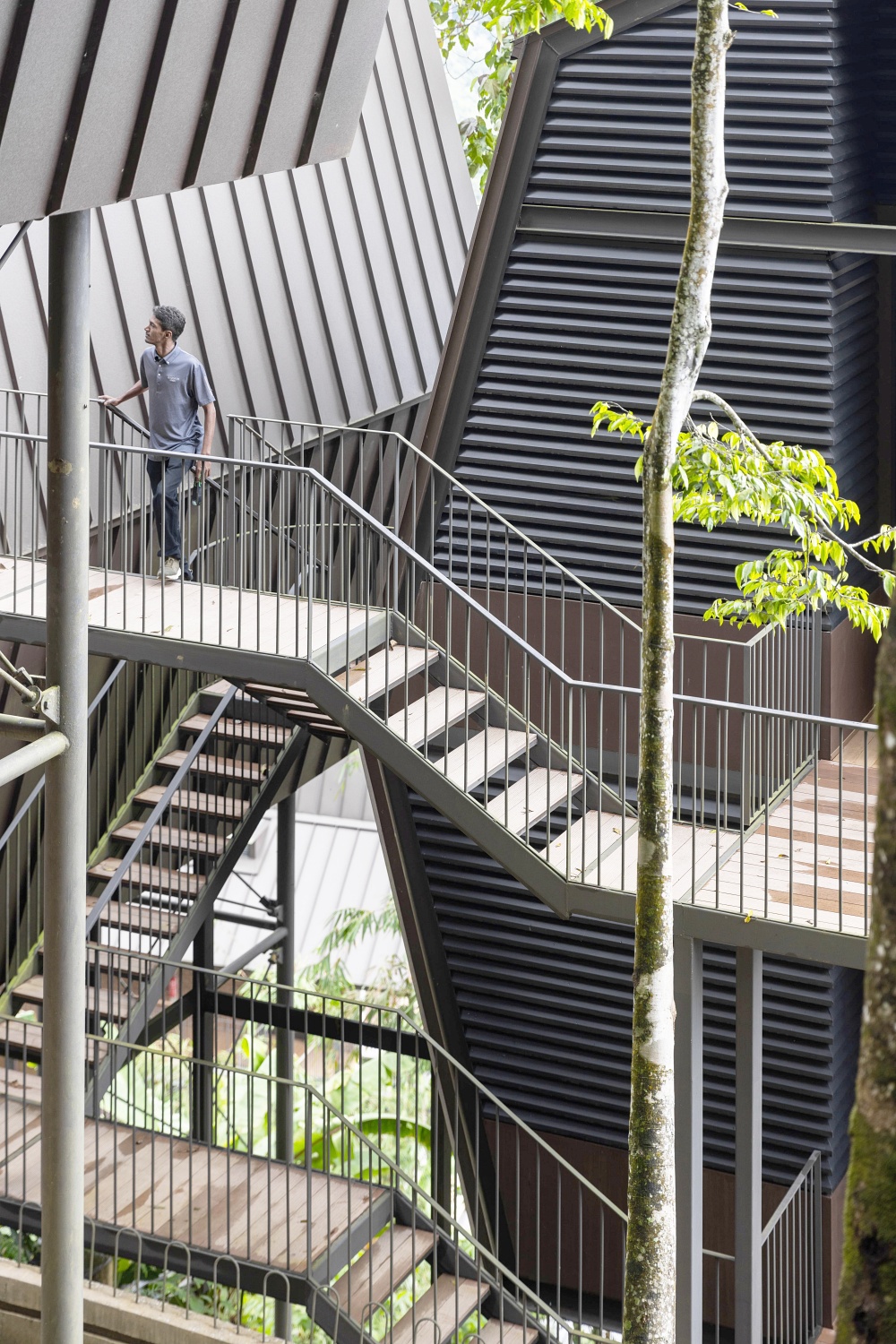
Detail of the main building façade
VanaVasa, which means ‘living in the forest’ in Sanskrit, is a 30-key resort built on a 2-acre site located at Tanarimba, Janda Baik, Pahang. The site is a pristine tropical forested hill on the crest of Tanarimba (approximately 800m above sea level) with spectacular views looking towards Genting Highlands.
The client originally intended the resort as a private resort exclusively for the staff members to use during weekends or company events. This eventually evolved into the idea of creating a full-fledged resort that is now open to the public. The resort consists of a 10-room main building connected to 20-room chalets via a network of buggy tracks. Due to the steep slopes, walking up to the chalets would be challenging for many, hence, the idea of the buggy tracks came into the picture.
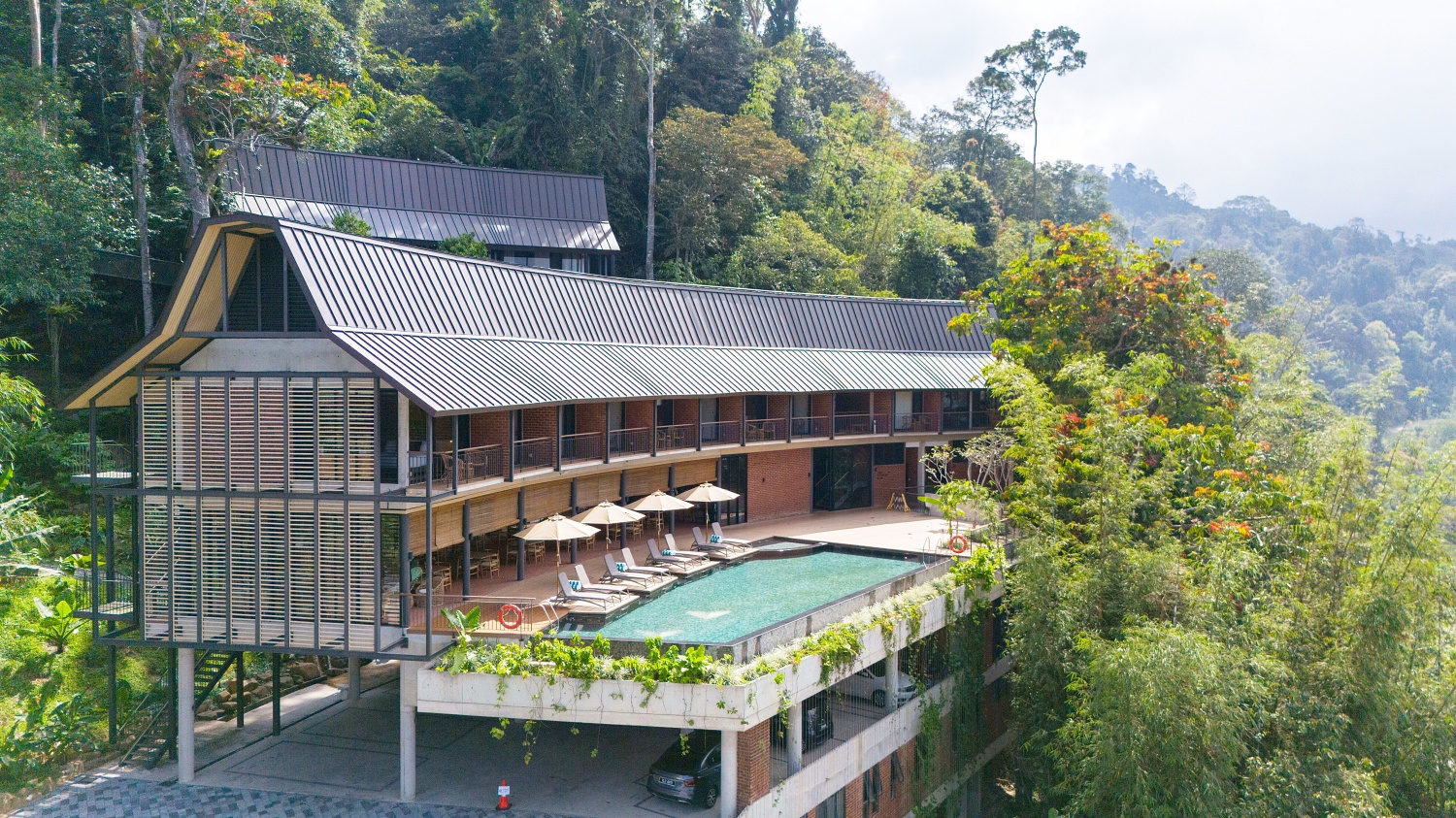
The main building nestled into the slope of the site consists of car parking, reception and a gym at the entry-level. The level above is occupied by the restaurant, kitchen, a heated pool and outdoor decking with changing room and toilet facilities. The upper floor is exclusively for 10 rooms that look out unto the pool and the Genting Highlands Resort in the distance. The building floor plate was curved slightly to ensure all the rooms enjoyed this view.
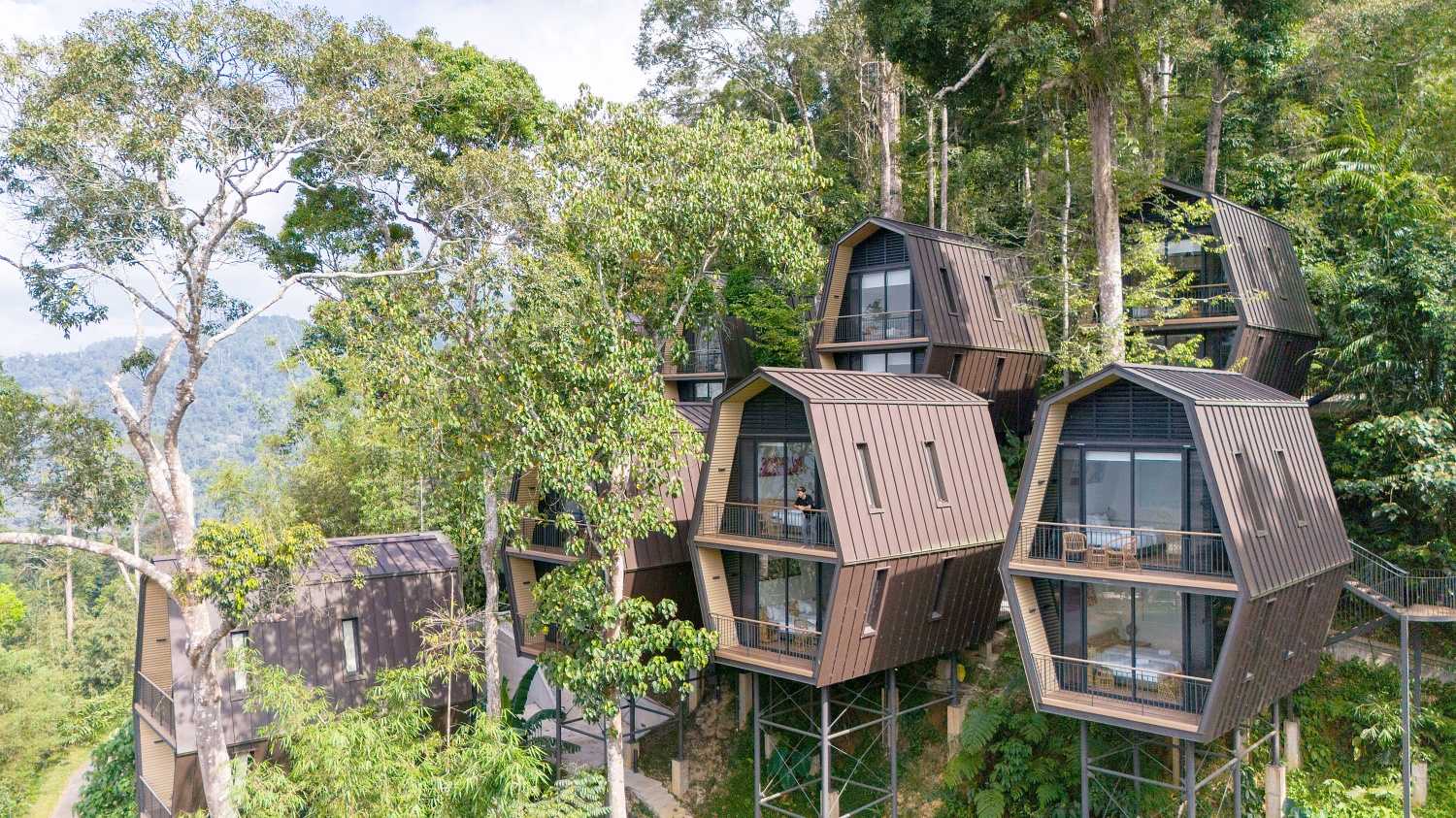
The cluster of chalets perched on the hillside
As the site was on a slope, it was possible to create another floor below the carpark level in which the back of house where the staff living quarters were discreetly tucked in. The main building was constructed in off-form concrete exposed brickwork and unpainted cement walls to create a natural palette of materials that could co-exist with its surroundings.
Dotted along the rest of the hill were 10 units of pod-like chalet structures on stilts each consisting of 2 units (upper and lower level) totaling 20 rooms that were connected to the main building through buggy tracks that snaked along the undulating hill. The pod-like shapes of the chalets that lightly perched on the hills were inspired by the tent-like glamping structures popular in many rest houses in Jandabaik. These, however, were built in steel-framed structures wrapped in a skin of standing seam Colorbond metal roofing. By stacking one room above the other, a narrow floor plate could be achieved, allowing the ‘pods’ to be carefully placed in between the trees. By disallowing any wet works on this part of the site, heavy machinery access was avoided, thus, the natural topography and the flora and fauna were saved. All chalets were oriented to the stunning views of the Genting Highland Mountain range.
The cluster of chalets perched on the hillside
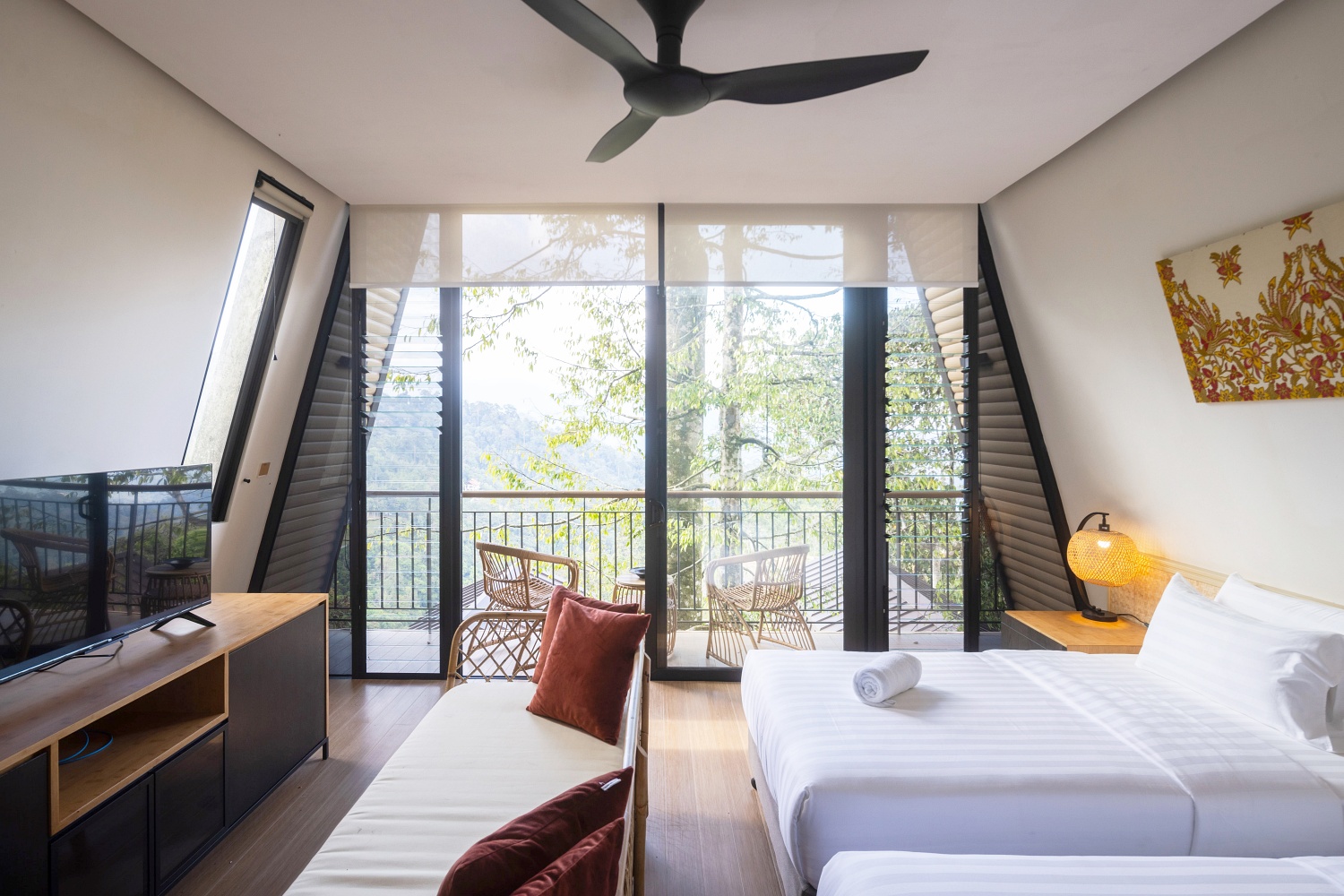
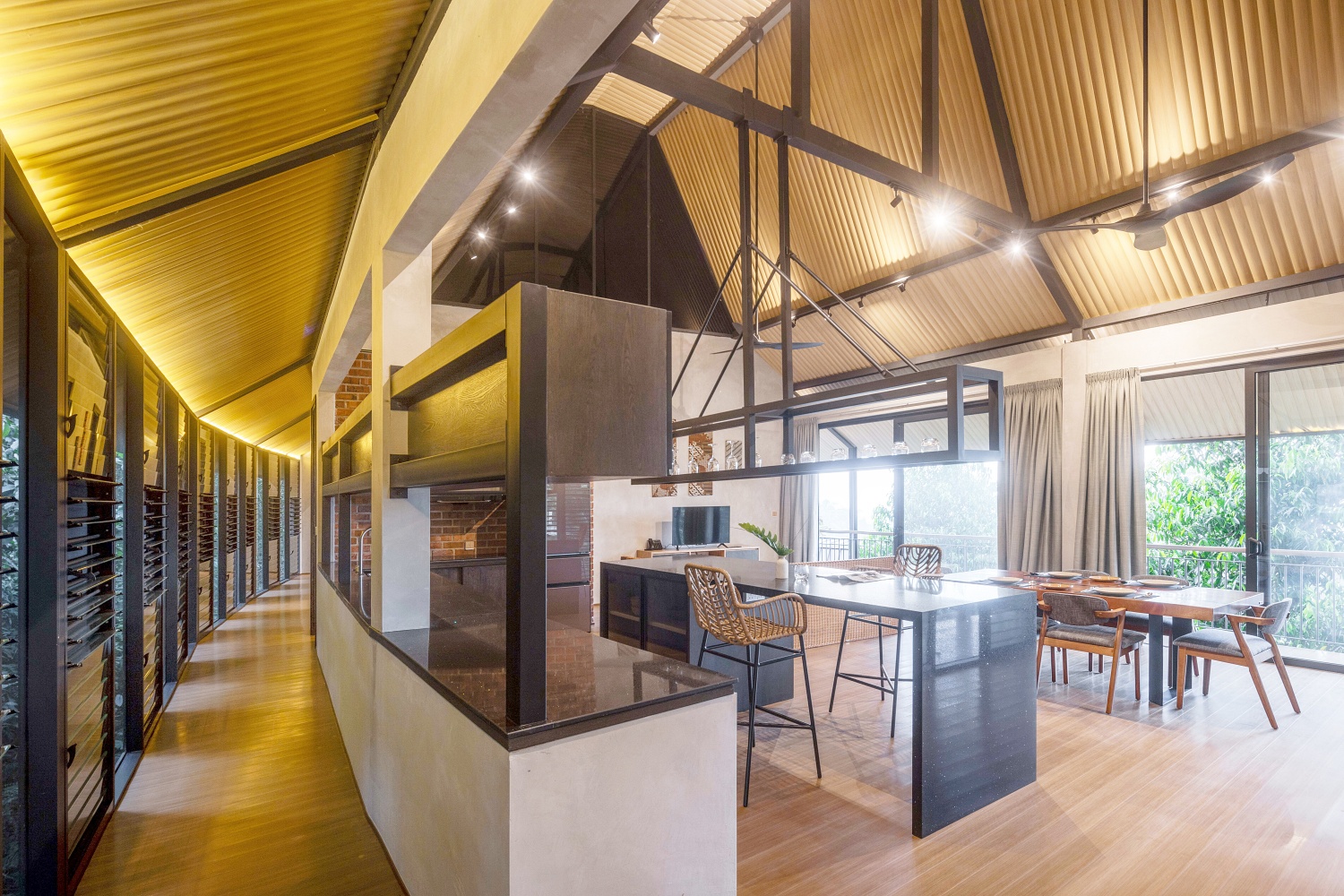
The project managed to achieve a Gold Certification by GreenRE for its efforts in its ecological approach to the project. For example, no air conditioning is provided in the development. To achieve this, careful consideration was taken to orient the building away from the western sun. Insulated roofs wrap the chalets down to the sides, creating additional protection. The restaurant, for example, is open, allowing the breeze to naturally flow in, and bamboo blinds were installed to keep out the elements. Small details like allowing slots of openings just below the ceiling of every room ensure cross ventilation and hot air discharge even if the main doors and windows are closed.
Other green initiatives included rainwater harvesting anks that capture the surface water run-off and reuse it for irrigation. Natural groundwater was also found on the site during construction, and this was later used to build a small fish pond where the natural water from the mountain flowed in. Originally, the main material intended for the roof eaves and sunshade louvres was bamboo. However, this idea was later abandoned as the quality of local bamboo was not good enough and required them to be imported from Indonesia or Thailand. This defeated the purpose of using this green material, as the logistics did not make any ecological sense. In the end, we decided to use composite timber (WPC) with bamboo-like profiles to create the originally intended aesthetics.
Other green initiatives included the use of water-efficient water fittings, sustainable and low VOC materials, LED lighting and very little landscape intervention by leaving the natural trees and vegetation in their natural wild jungle-like state. Not providing any fencing surrounding the resort, meant that animals were not restricted from coming into the resort allowing them to co-exist naturally.
Typical Chalet Room
Interior of VIP Villa
This hillside retreat integrates stilted chalet clusters and a cantilevered main building, harmonising with the terrain through innovative sustainable strategies, immersive panoramic views, and seamless indoor-outdoor connectivity.