SINGLE RESIDENTIAL - GOLD
ARCHITECT - MK Looi Architect
CLIENT - Mr Liew Z Thong
CONTRACTOR - Liang Builders Sdn Bhd
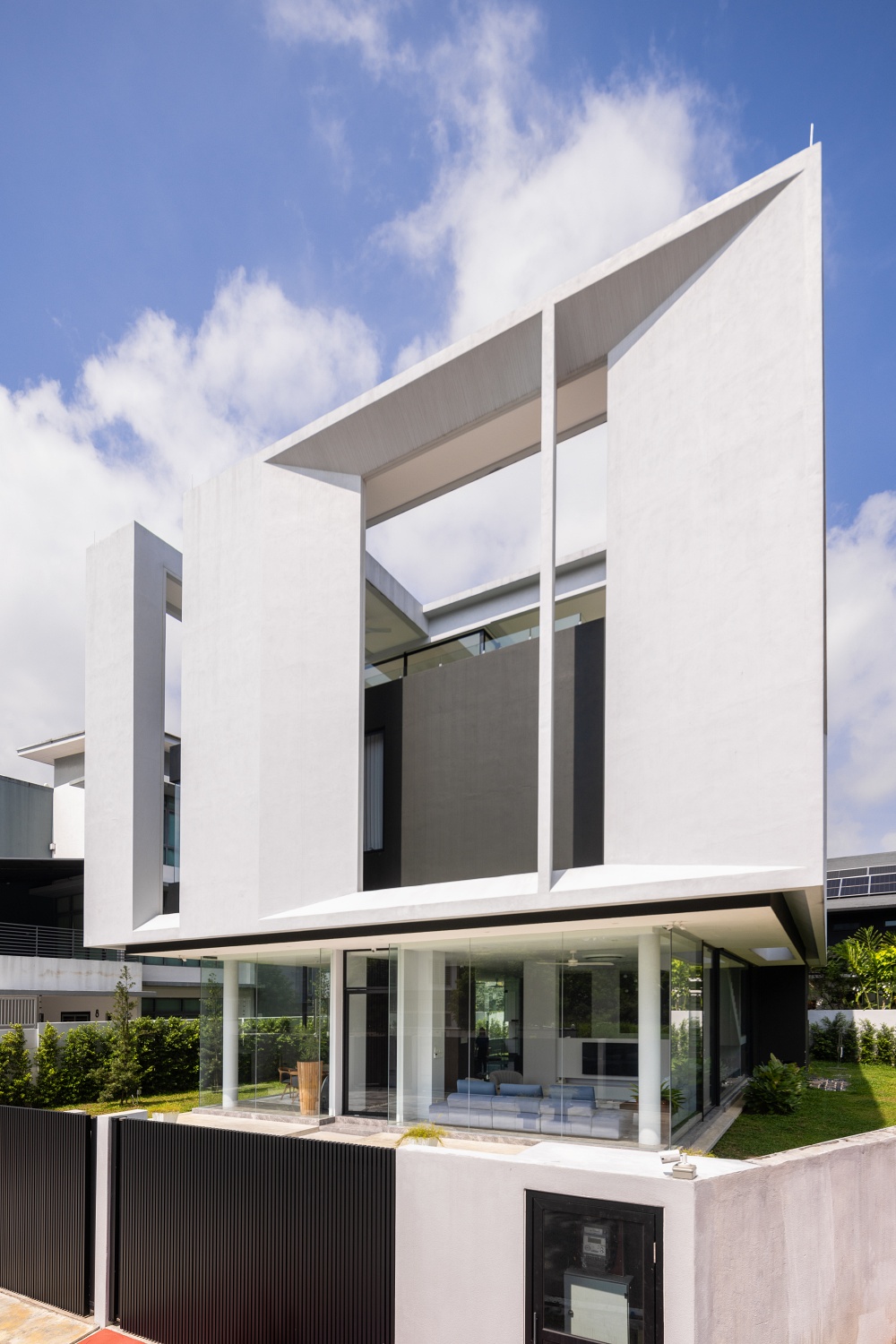
The vertical fins are meticulously arranged to align with the client's most intimate spaces, ensuring privacy and seclusion, while less frequented areas open to the surrounding landscape, inviting natural light and views to flow seamlessly into the interior
Nestled in the vibrant neighbourhood of Kota Damansara, this three-storey residence occupies a distinctive 750 sqm angular plot, surrounded by the lush greenery of the Kota Damansara Reserve Forest. During our site visit, we were immediately captivated by the site’s unique angularity and its proximity to the reserve forest. Despite the modest size of the plot, the irregular shape and the surrounding natural beauty presented both a challenge and an opportunity — the opportunity to design a home that not only responds to its environment but becomes an intrinsic part of it.
THE FLOATING CONCEPT
Given the site’s modest size, our approach was to blur the boundaries at the lower ground, creating a transparent transition between the interior and exterior. This design strategy allowed the space to feel like a seamless extension of the outdoors, strengthening the connection with the surrounding landscape.
This idea led to the emergence of the “floating” structure concept, which responds naturally to the site’s unique geometry while aligning with the client’s vision for a home that facilitates gatherings and offers ample space for their dogs to roam freely outdoors.
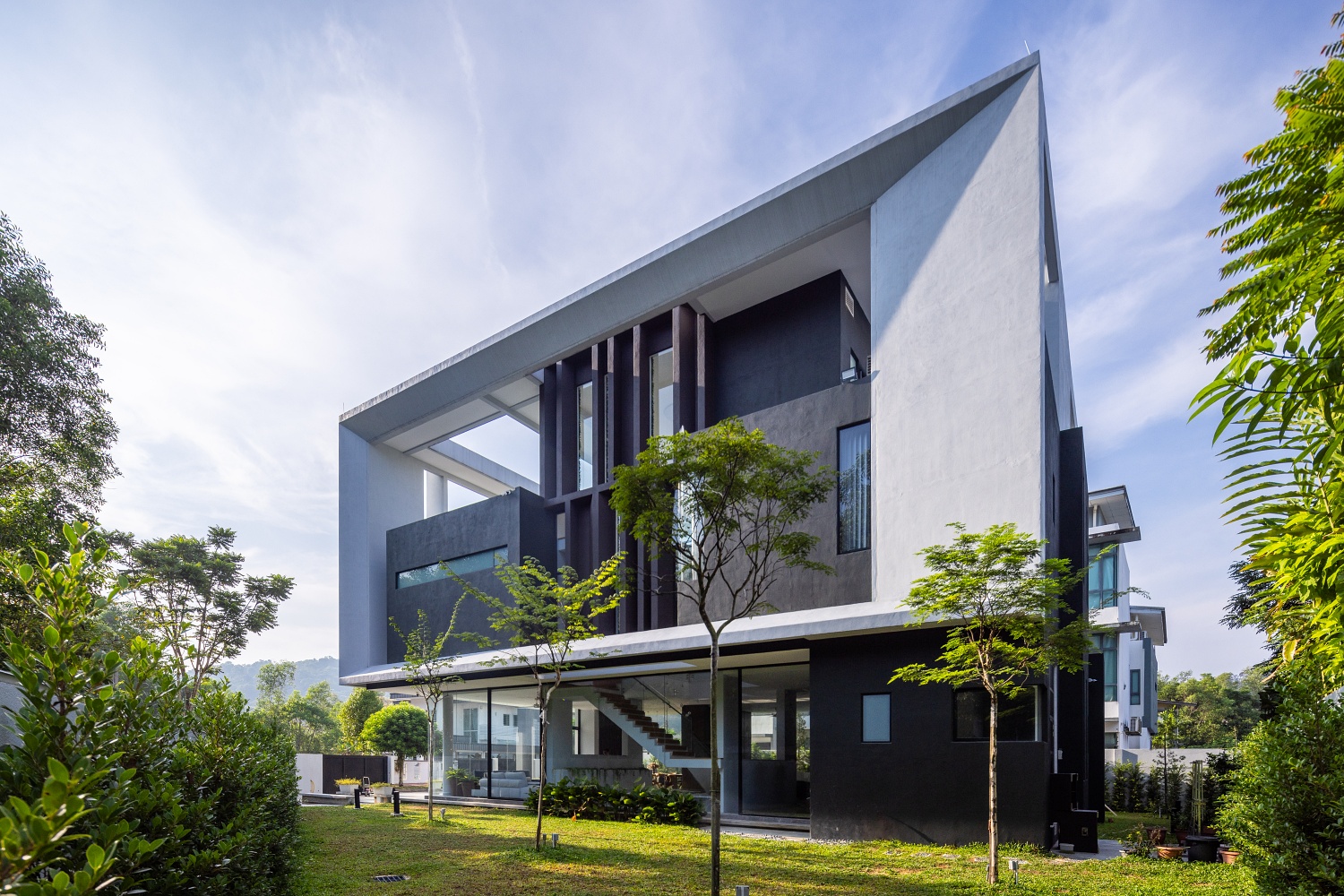
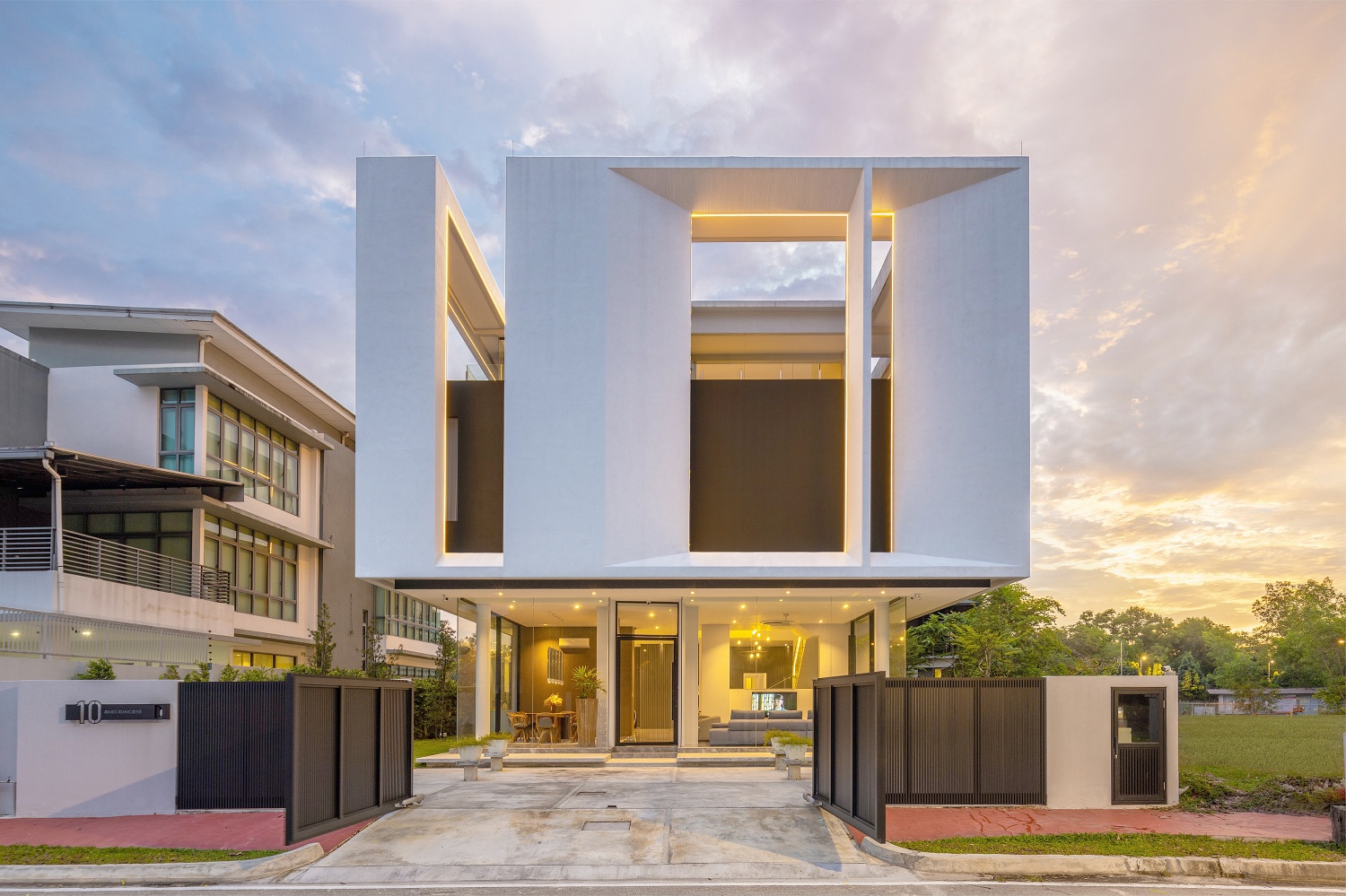
To achieve this, we began with a simple, fundamental box, elevating the main living spaces to create a sense of weightlessness. This makes the building appear to float gently above the terrain, connecting the structure with its natural surroundings. The result is a home that feels light, intimately integrated with nature, and blurs the boundaries between indoors and outdoors, inviting the landscape into every aspect of the living experience.
GROUND FLOOR: A RESPONSE TO SITE AND CLIENT NEEDS
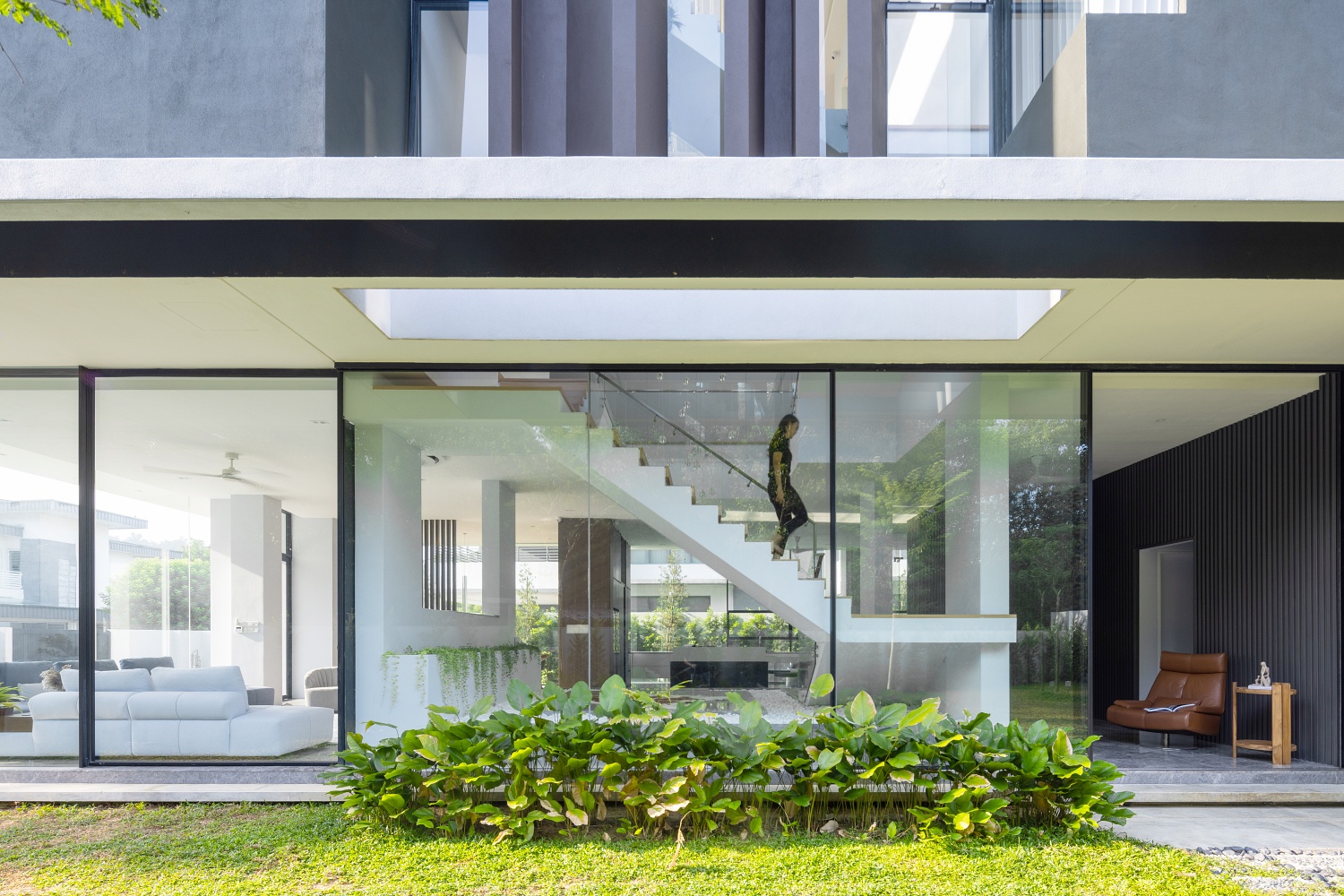
To further complement the floating effect, the ground floor was designed with an open-plan layout that dissolves the boundaries between indoor and outdoor spaces. Expansive glass panels and full-height glazing were strategically incorporated to invite natural light, providing unobstructed views of the surrounding reserve forest while also facilitating cross ventilation.
This design not only fosters a strong connection to the landscape but also meets the client’s need for a versatile space capable of hosting gatherings and entertaining guests. The openness creates a luminous, interconnected environment, elevating the building form and seamlessly blending the interior with nature, reinforcing the floating sensation throughout the space.
The larger white box serves as the unifying form, while the black boxes contain curated spaces within the structure, offering a sense of exploration and individuality
A bold interplay of form and function, this residence redefines urban living with minimalist elegance, volumetric clarity, and seamless integration into its lush natural context.
UPPER VOLUMES: CONTRAST OF SOLIDITY AND LIGHTNESS
To strengthen the floating effect, the upper portion of the house is defined by a robust yet minimalist form, giving rise to the Float-Box House concept. The top volume is designed to appear heavier, establishing a visual balance that emphasises the lighter base. Reinforced concrete was selected for its ability to provide solidity and anchor the design, contrasting with the lighter, elevated ground floor. The upper volumes act as a solid anchor, with voids and extensions allowing light to filter through, creating a dynamic interplay of shadow and light.
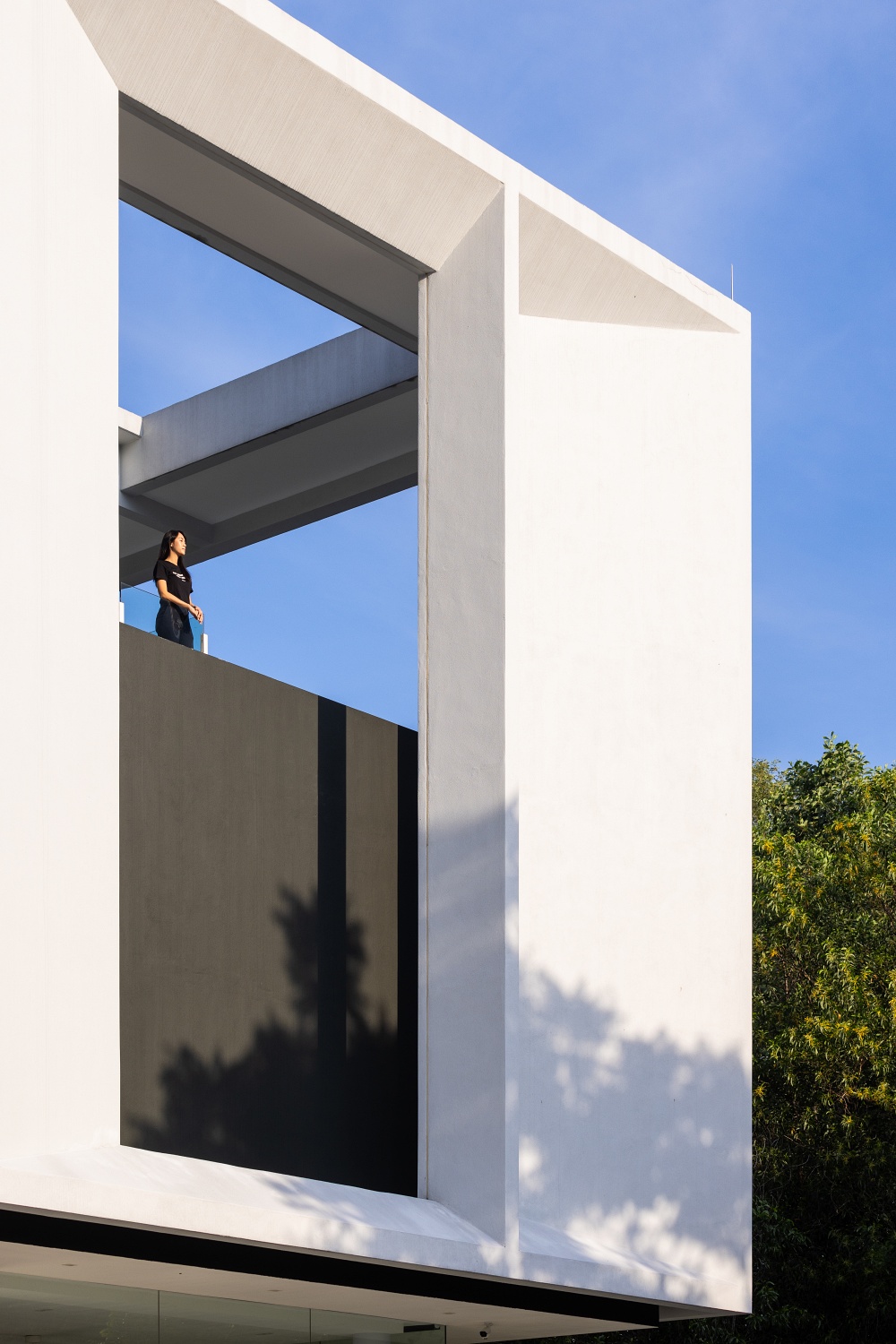
To further enhance the façade’s dynamism, strategically placed voids introduce a balance between openness and privacy. Vertical fins are positioned to shield the client’s most frequently used spaces, while opening up less-frequented areas to frame expansive views of the reserve forest. This thoughtful balance between openness and seclusion fosters a fluid architectural experience, where every angle offers a new perspective on the surrounding environment.
The minimalist façade, with its clean lines and thoughtful voids, embodies the “less is more” principle, amplifying the building’s striking presence against the lush backdrop of the reserve forest. The upper volume defines the overall form of the building, emphasising the purity of its design. The skeletal structure dictates the form, creating a minimalist expression where every element serves both a functional and aesthetic purpose.
THE “BOX WITHIN A BOX” CONCEPT
The right elevation reveals an interesting façade, with the upper portion defined by the “box within a box” concept. A large white box envelops smaller black boxes, each representing distinct spatial experiences. The contrast in scale and colour creates visual interest, highlighting the relationship between solid mass and void. This dynamic composition reinforces the architectural interplay between interior spaces and the surrounding environment. The larger white box serves as the unifying form, while the black boxes contain curated spaces within the structure, offering a sense of exploration and individuality.
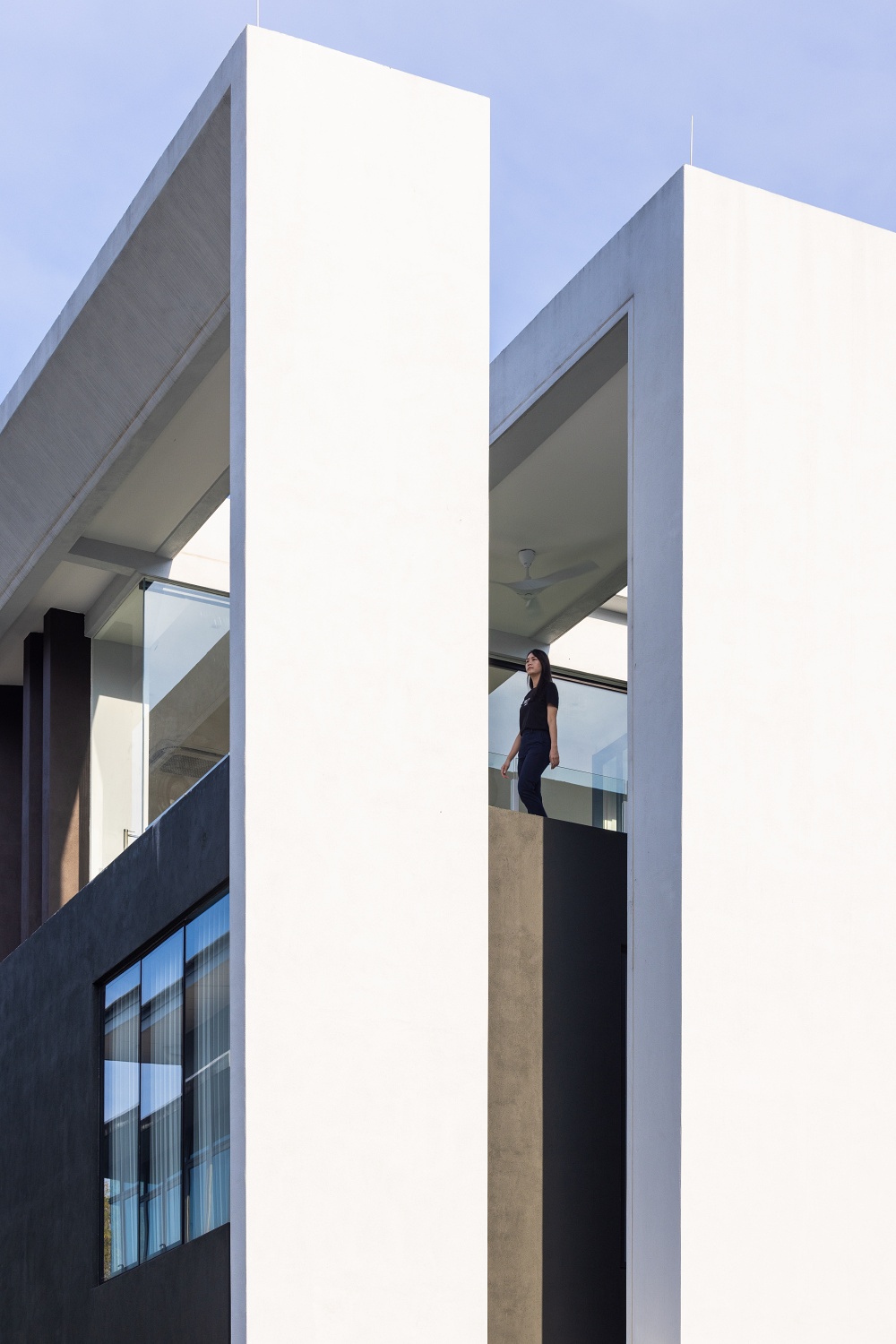
As one ascends, a fluid transition from the upper level unfolds, opening up to expansive green views that seamlessly connect the interior to the natural landscape, enhancing the sense of openness and tranquility
The bold vertical fins make a striking statement, defining the minimalist design by embracing the 'less is more' principle. The simple, elongated form serves both a functional and sculptural role, emphasising the purity of the overall composition
Reinforced concrete serves as the primary material, adding weight that accentuates the floating e!ect with a heavier mass at the top and a lighter form at the bottom
STAIRCASE: VERTICAL MOVEMENT AND INTEGRATION WITH NATURE
The triple-volume staircase serves as a dramatic vertical connection between the various levels of the house, framing uninterrupted views of the surrounding reserve forest.
From the lounge, the interior green walls complement the expansive outdoor vistas, seamlessly merging the built environment with the lush landscape beyond. As one ascends, the natural light and views of the reserve forest transform the journey through the house into an experience that continually reinforces the bond with the landscape.
CONCLUSION: A HARMONIOUS BALANCE
The Float-Box House balances solidity and lightness, openness and privacy, and mass and void. Its sculptural form, thoughtfully designed volumes, and dynamic interplay of materials create a harmonious connection between the home and its natural surroundings. The design not only fulfils the client’s functional needs but also makes a bold architectural statement, offering a living experience that is both expansive and intimate.
The ground floor is fully glazed, providing uninterrupted views and a seamless connection with the landscape, while facilitating cross ventilation. The upper portion is defined by a robust, solid form, giving rise to the "Float-Box House" concept