SINGLE RESIDENTIAL & COLLABORATION - GOLD
ARCHITECT - MOA Architects in collaboration with formzero
CLIENT - Private
CONTRACTOR - Jaya Bintang Sdn Bhd
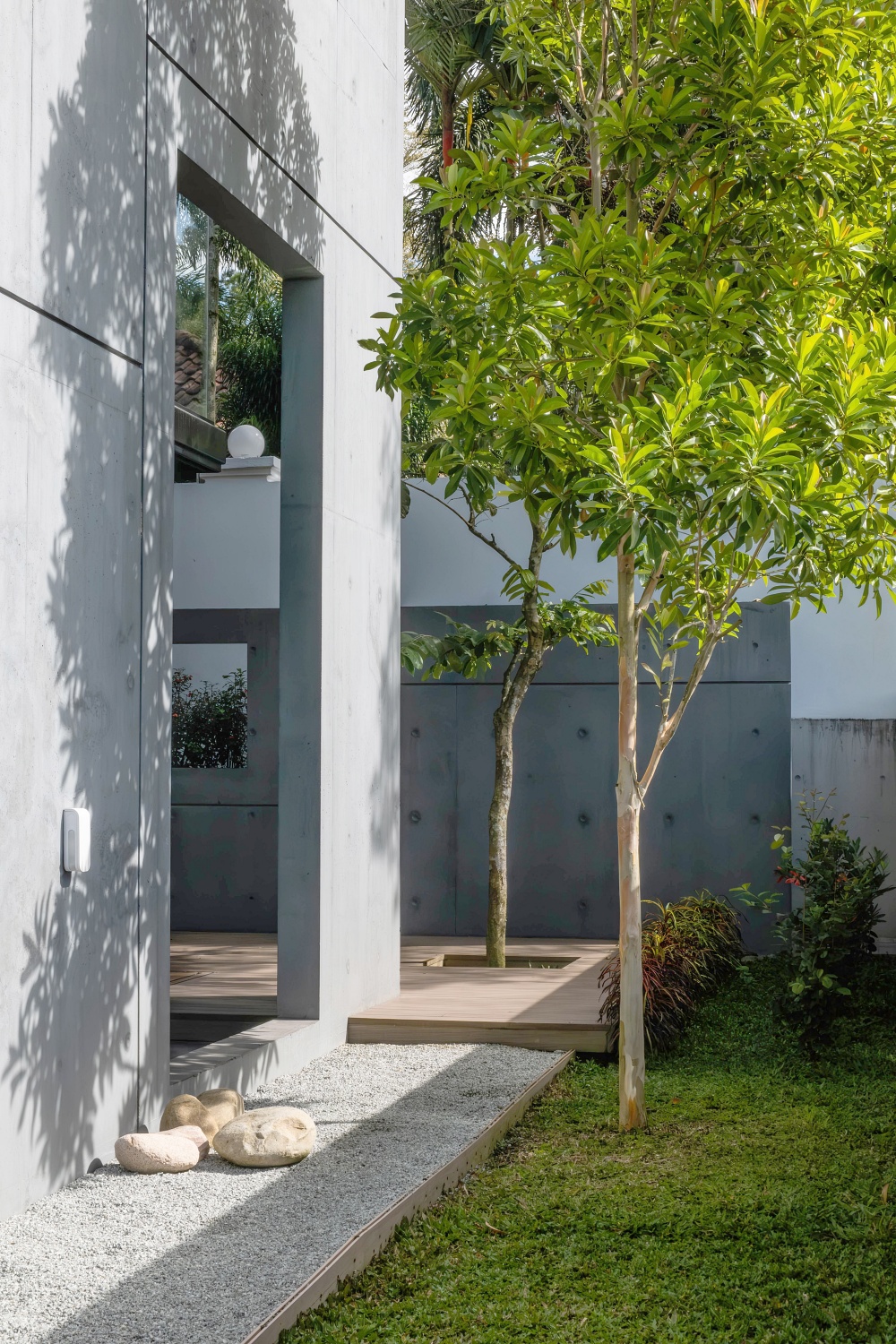
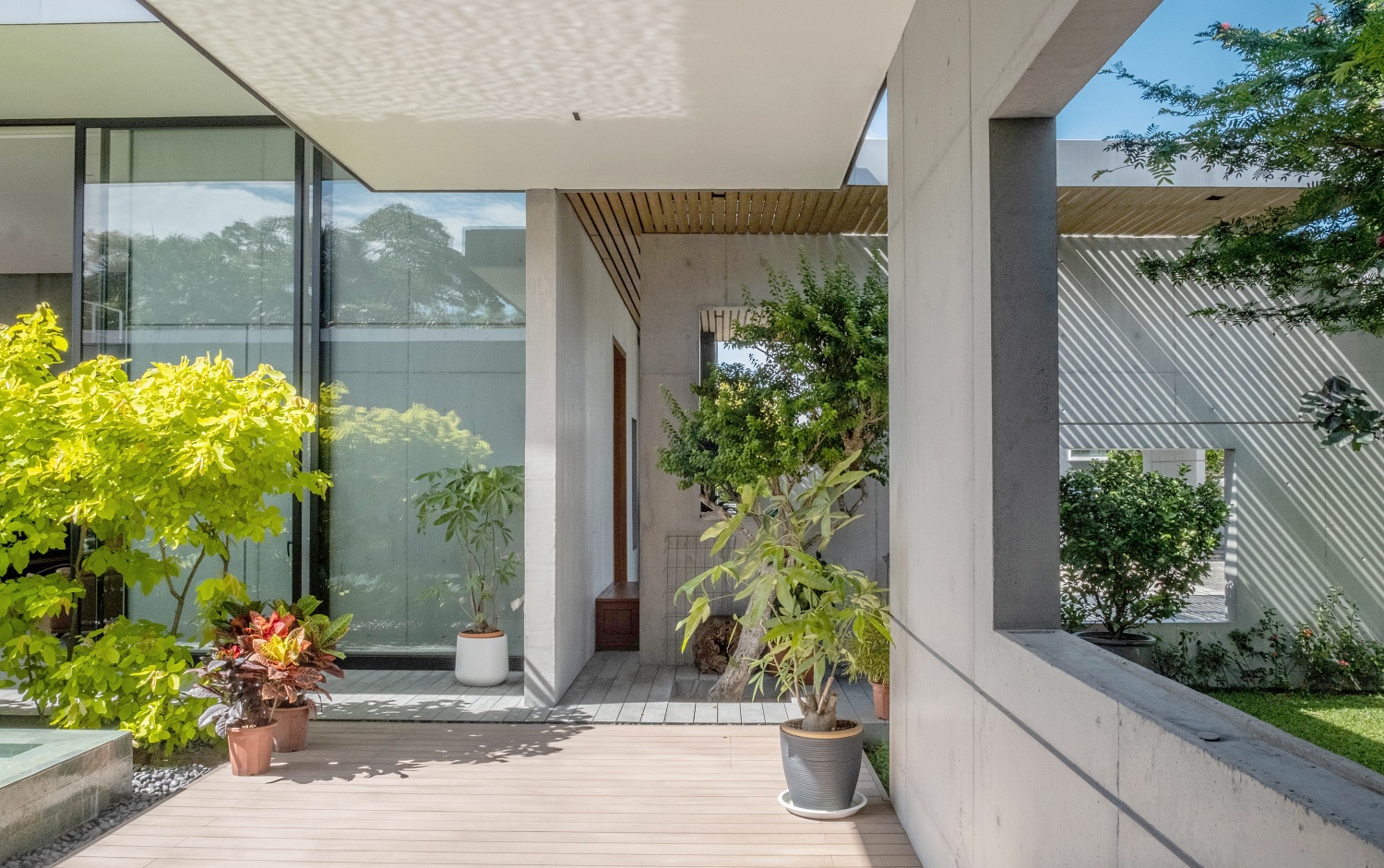
Walls with large openings filter excess sunlight while brightening key areas, while strategically placed trees enhance privacy and frame views
The Borderless House redefines residential architecture by dissolving conventional boundaries between land and building, nature and manmade, homeowners and neighbours, and even among family members. In an increasingly fragmented world, architecture that fosters connection and community is vital.
The Borderless House is designed for an elderly couple who value nature and family connection. To create a house with a garden, traditional Chinese garden design principles are expanded upon to create an all-connected, park-like home. The border and relationships between family members are designed so that each room has privacy and is separated from the rest. Yet, the spaces are all interconnected with each other and nature.
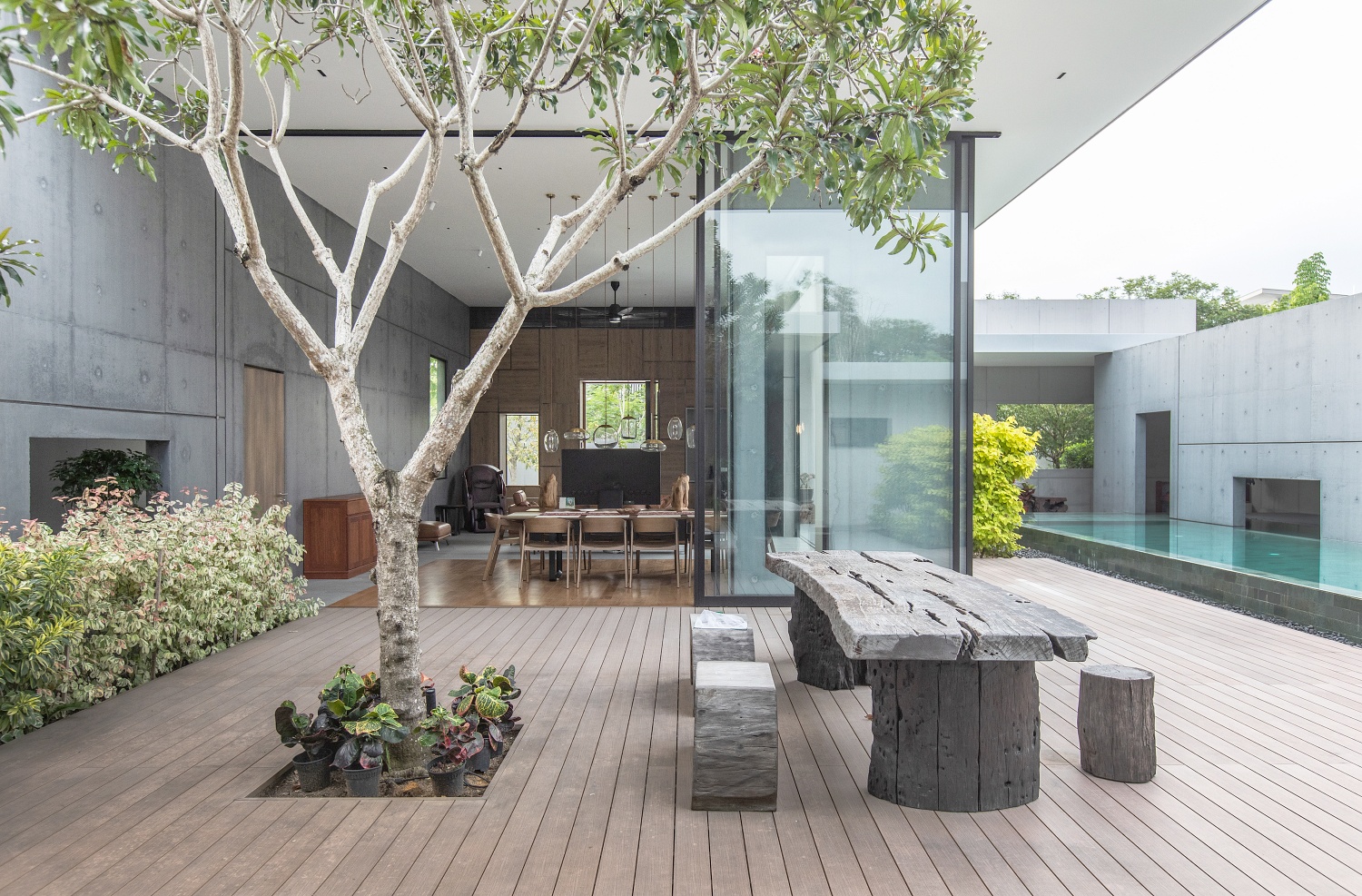
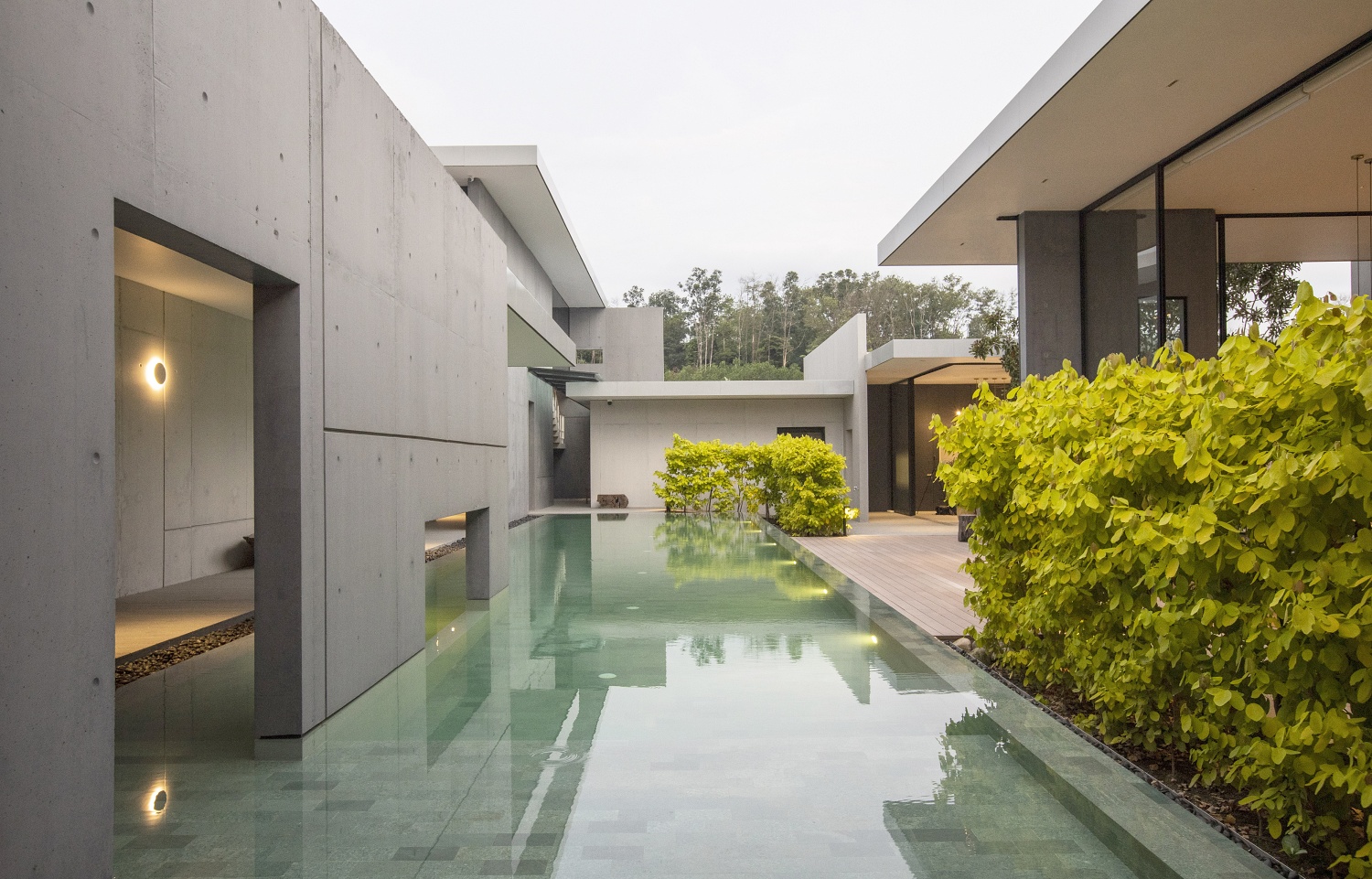
Moreover, the Borderless House references the architectural tectonics of the Barcelona Pavilion. Sixty fragmented, barefaced cast-in-situ concrete walls are configured and integrated around the gardens to form the house. The roof, wall, and floor elements are designed in a similar design language to function as inter-referencing elements, enhancing the sense of unity between the scattered structures. Glass partitions separate interior and exterior spaces, with a continuous ceiling providing shade.
The walls extend and unfold beyond sightlines, blurring boundaries and making the space feel expansive. These expansive spaces can host various gathering events while also serving as a place to take refuge in nature, away from bustling city life.
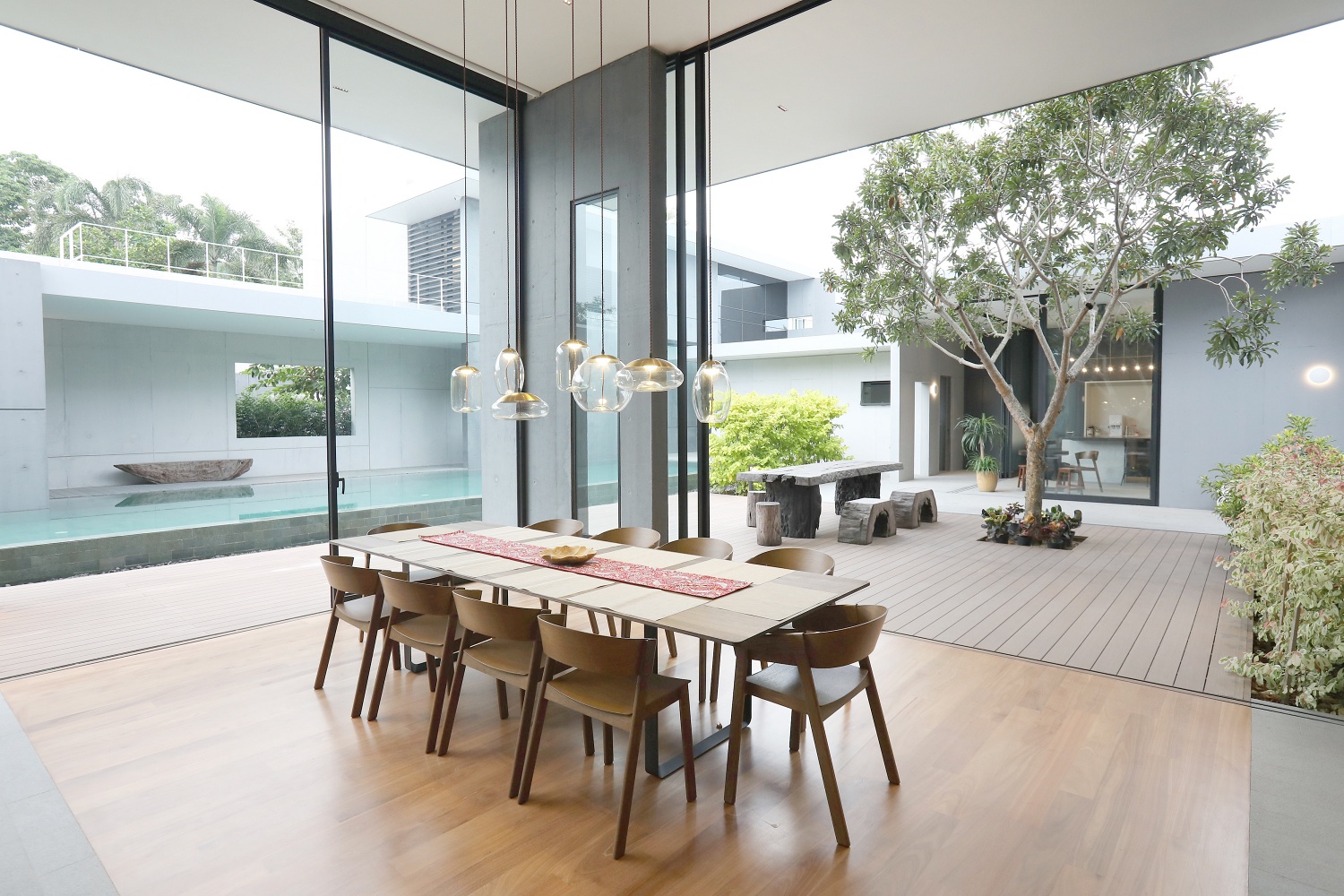
Central Dining and Living Garden
With a built-up area of only 4,360 sqft over 19,050 sqft of land, the Borderless House boasts 77 per cent of outdoor spaces and lush landscapes. The spatial arrangement of the Borderless House is configured to suit the tropical climate. It avoids afternoon sunlight entering the double-volume main living and dining area while allowing multi-directional natural cross-ventilation, reducing reliance on air-conditioning.
Concrete walls are positioned and sized to shade internal spaces from the western sun, with ample open space configured strategically to empower trees and landscapes to flourish. Deep overhangs cantilevering over the areas provide necessary shading, enabling the internal space to be fully opened and experienced as outdoor.
Manoeuvring through the inner space surrounded by lush landscape with multiple choices of entry and exit is like meandering through a garden. The design aims to constantly surprise and unfold spaces, making them interconnected yet open to nature. Every turn and corner is filled with accentuated framed views and adorned landscape features amidst the sounds of calming, flowing pool water, creating a serene and calm atmosphere.
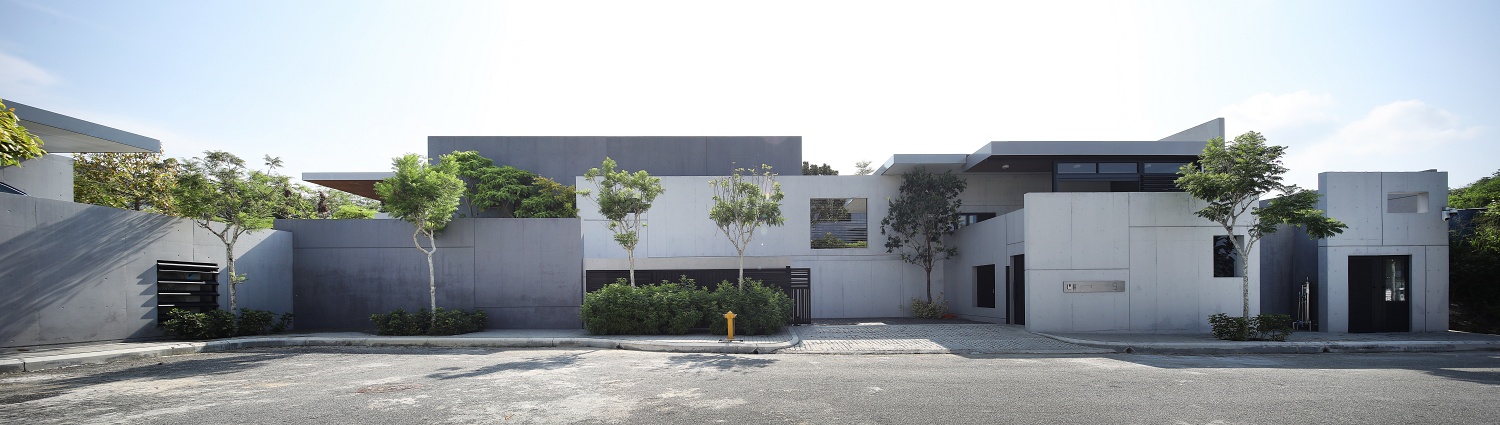
External View – The Borderless House is designed not to be perceived as a single large mansion. The intention is to craft an outdoor dynamic park-like experience
The barefaced concrete walls, cast in three tones of colour, shift in tonality with changing light, creating a dynamic visual experience throughout the day and the walking journey. These dynamics deepen the relationship between the user and Mother Nature. Currently, there are 15 types of feature trees, with more to come amidst the many shrubs and plantings that constantly change in appearance across different times and days of the year.
Borderless House is designed not to be perceived as a single large mansion. The intention is to craft an outdoor, dynamic, park-like experience. The focus on this experience is replicable across the city to reclaim the lost urban landscape, making the city more breathable and closer to a healthy equilibrium between the built and nature.
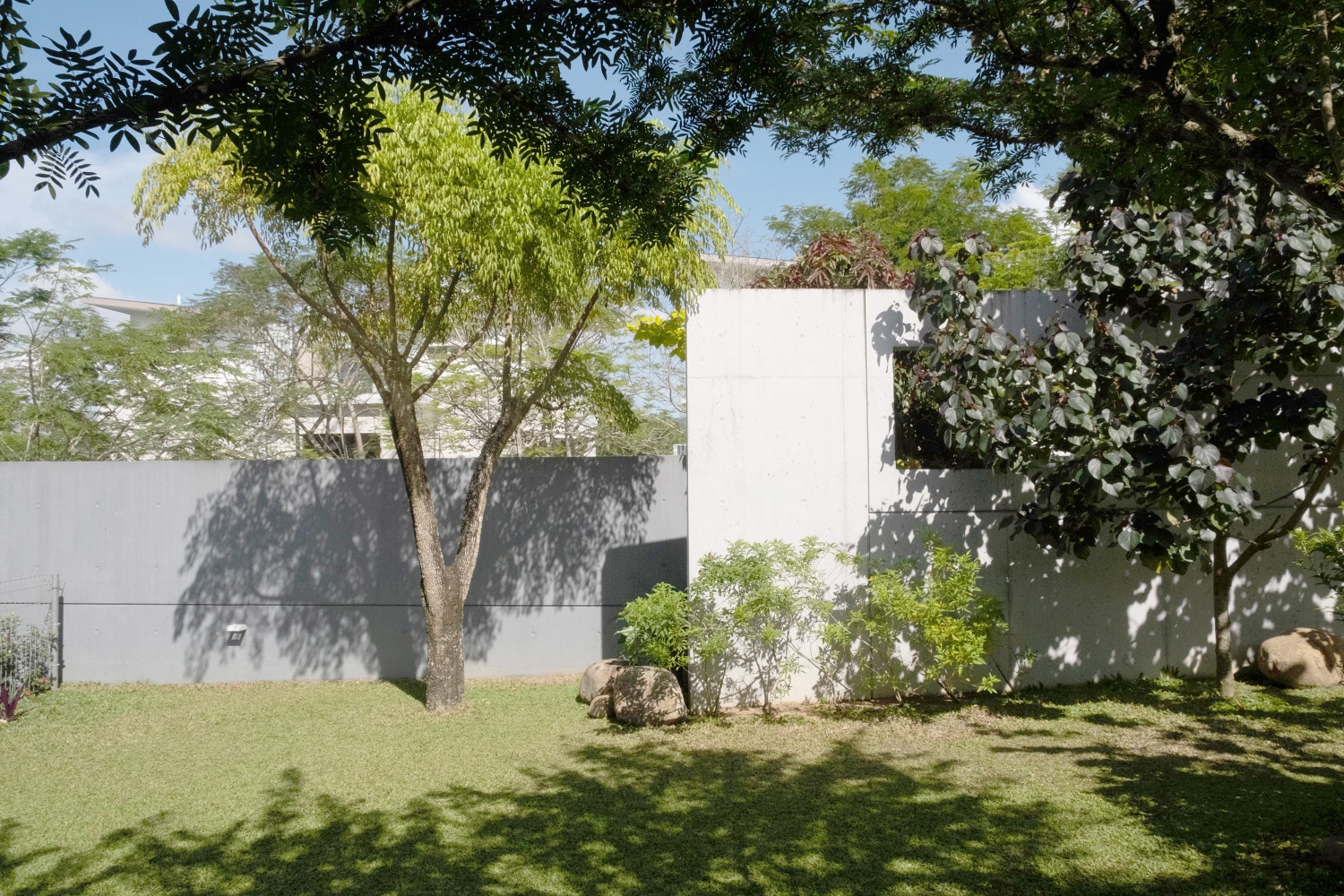
Three offset planters are designed along the perimeter fencing wall to blur the perimeter borders, inviting part of the public external road to become a part of the park. They provide views for passersby on the outside while ffering framed views from the inside. The trees within these planters provide shade to pedestrians and redefine the house as an urban park. These walls fence off a peaceful world for the family, yet serve as a gesture to connect with the outside world.
Borderless House challenges traditional residential typologies, proposing an open, interconnected model that harmonises built form with nature and cultivates social cohesion within and beyond its boundaries.
The central landscape garden offers a sense of separation while remaining seamlessly connected to every space. The building is designed not to be perceived as a whole but to be experienced through movement, revealing its spaces gradually
Borderless House exemplifies spatial innovation through precise layering and architectural cubism, integrating fragmented volumes, passive design strategies, and seamless indoor-outdoor transitions to optimise climate, privacy, and connectivity.
The dining area in the Borderless House with sliding doors that dissolve the boundaries between indoor and outdoor spaces, creating an airy and open environment
Offset planters that transform its perimeter into a shared landscape, redefining the home as an urban park
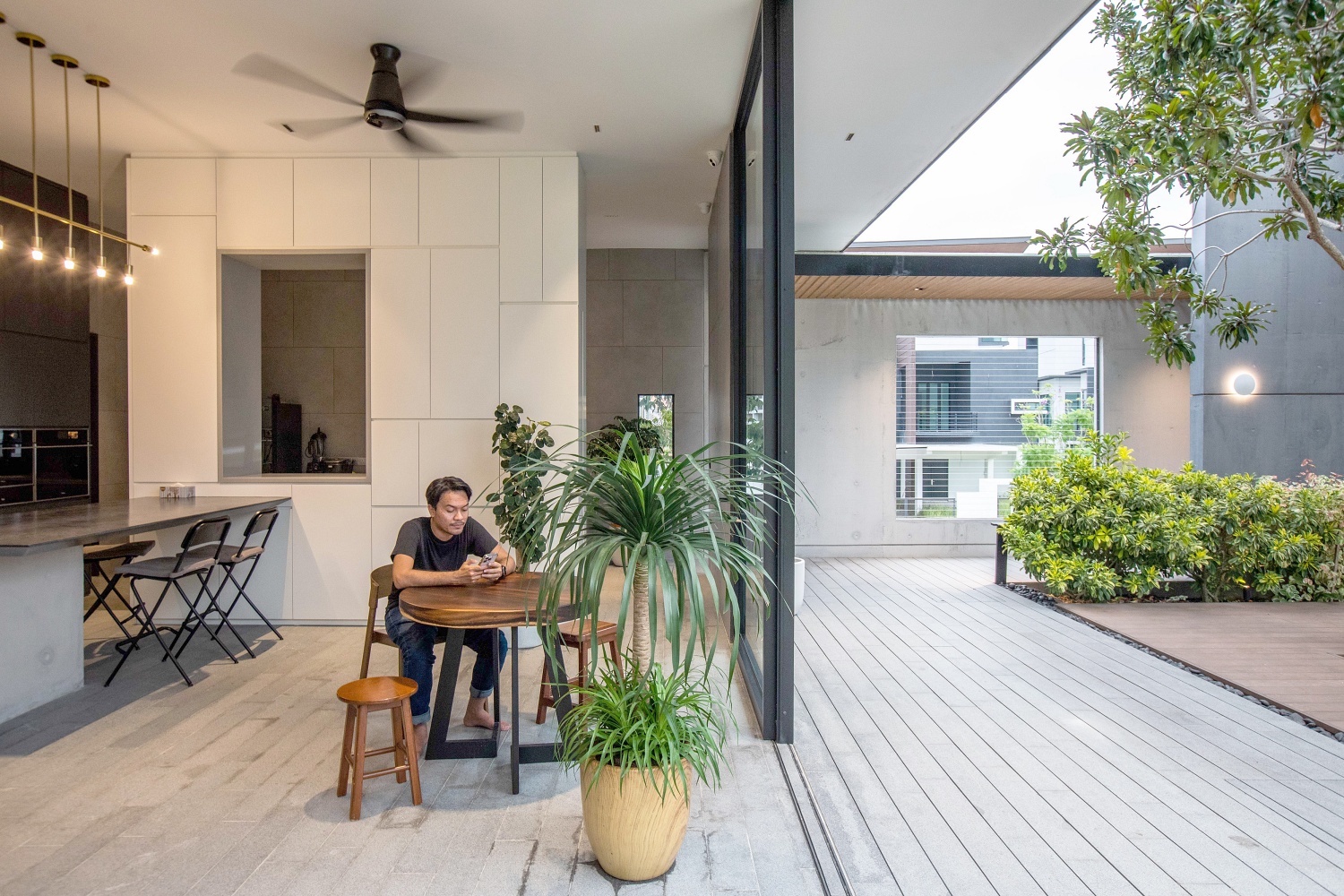
The semi-outdoor kitchen seamlessly connects to the central garden, offering an interconnected cooking experience
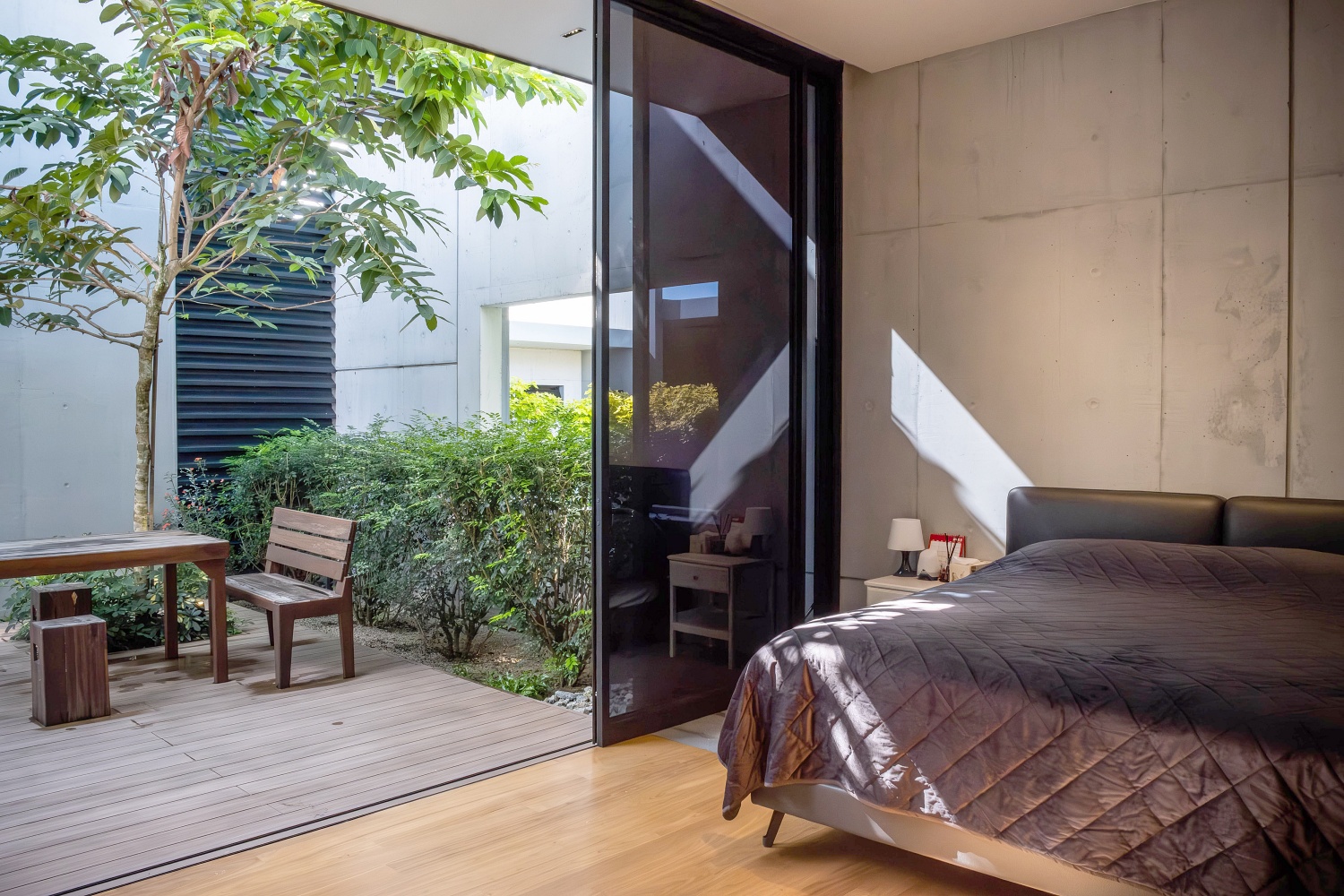
A bedroom with flexible boundaries adapts to privacy needs while maintaining a seamless connection with the surroundings
The interaction of natural elements like sunlight, reflections, and shifting light and shadow creates a dynamic sense of time and deepens the connection to nature