AN INTERNATIONAL UNIVERSITY COLLABORATION IN DESIGN AND BUILT OF THE ROKA CHHMAUL PRIMARY SCHOOL IN CAMBODIA.
Text by Tong Lai Mun Joanne
Introduction
For the past decade, Shih Chien University in Taiwan has improved Cambodia’s rural educational infra-structure by building new school facilities. This year marked the first international collaboration, partnering with UCSI University in Malaysia and the Shizuoka Institute of Science and Technology in Japan. The objective was to build a new school block for Rakachhmol Elementary School in Cambodia, as there is a need for more facilities. Over 20 international student volunteers participated in this year’s construction.
This year, we are challenged to construct a new school block within ten days, emphasising collaboration between local communities and international partners. The block includes a classroom, a health centre, and a library. It was an experience to participate in a live-built project using a rapid approach while collaborating with individuals from different nationalities. As part of the itinerary, all architecture students also participated in a one-day on-site design workshop, contributing designs based on real-life input. This experience fostered a strong sense of participation and encouraged our proposals to reflect the school’s needs closely.
SITE CONTEXT
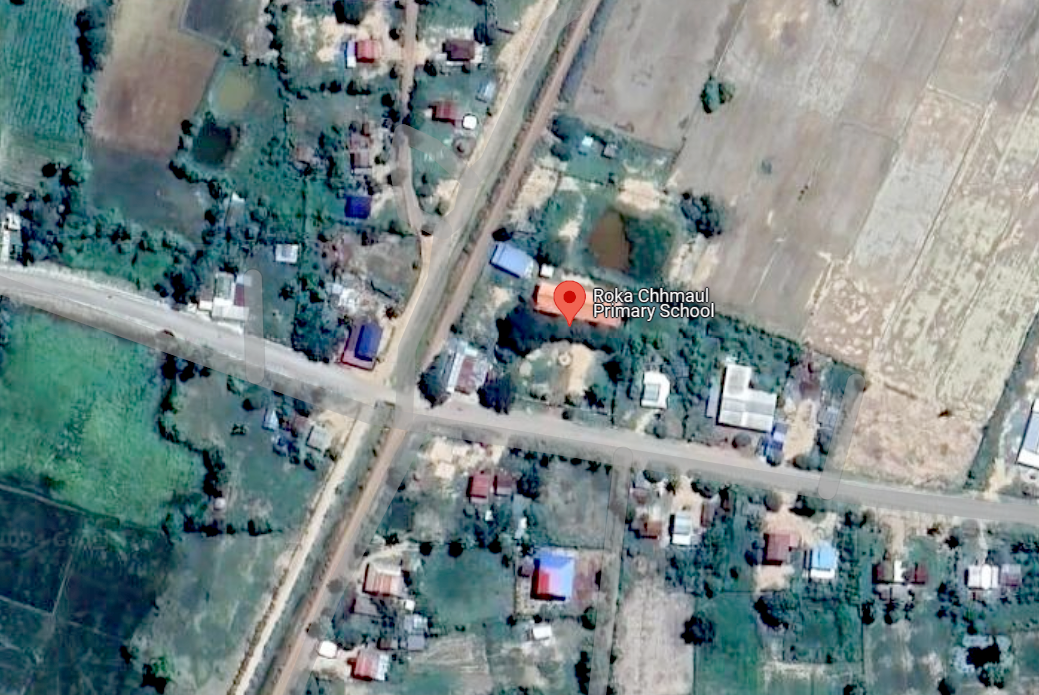
The school is at a crossroads, surrounded by miles of rice paddies fields. Within the compound is an existing single-story classroom block facing a central flagpole, complemented by two toilet buildings and a pond behind the structure. A spacious open area stretches before the school block, providing a welcoming environment. At the same time, a small vendor and shop are conveniently positioned at either end of the entrance, enhancing the community feel.
The aerial view shows Roka Chhmaul Primary School is located at the cross road, the building with orange roof is the existing school block, welcoming visitors with a front open landscape
DESIGN
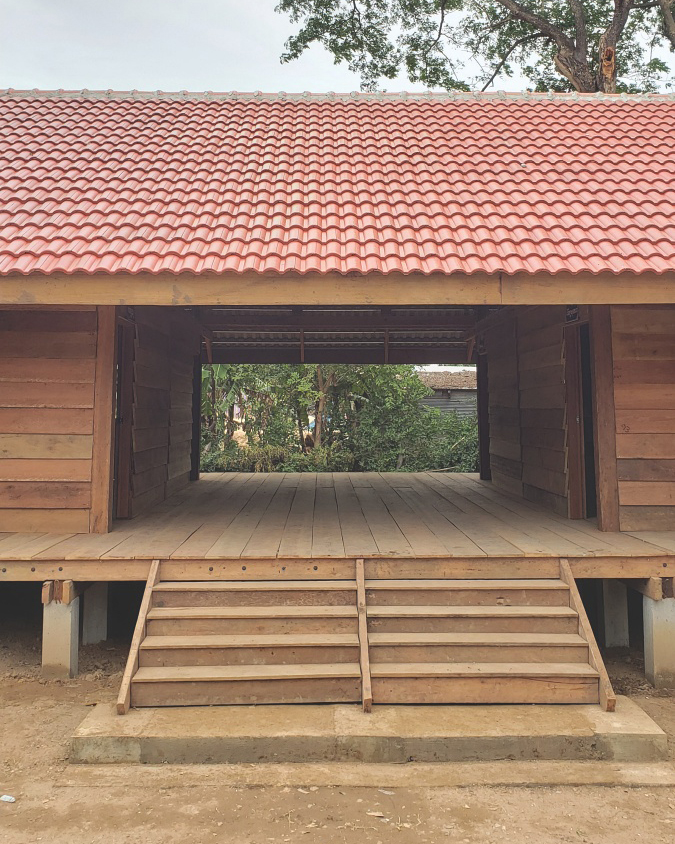
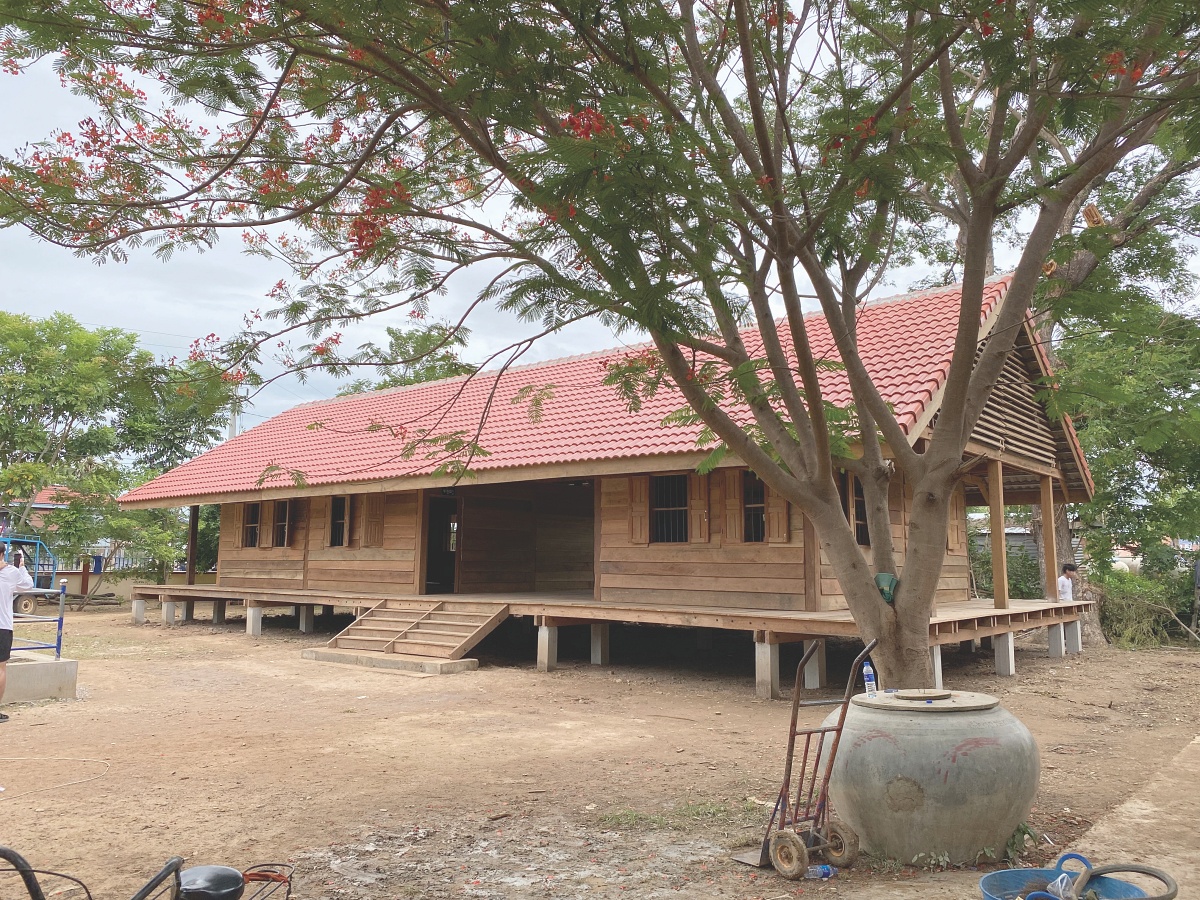
All the spaces in the school block are organised to respond to local site contexts. The classroom is located near the small vendor. At the same time, the health room is positioned closer to the toilets for easier sanitation. A covered open space at the centre facilitates multipurpose activities and provides shaded gathering space. The floor level is raised to 1 meter, as we were inspired by local children’s height, to promote ventilation and create an additional shaded play area for children. Covered corridors provide refuge from the harsh sun, and louvres at the gable end diffuse sunlight while keeping the rain out. Inside, built-in bookshelves in the library enhance functionality and create a welcoming learning environment. The design also incorporates local Cambodian cultural norms, such as including an odd number of steps in staircases and honouring local architectural customs.
Covered open space
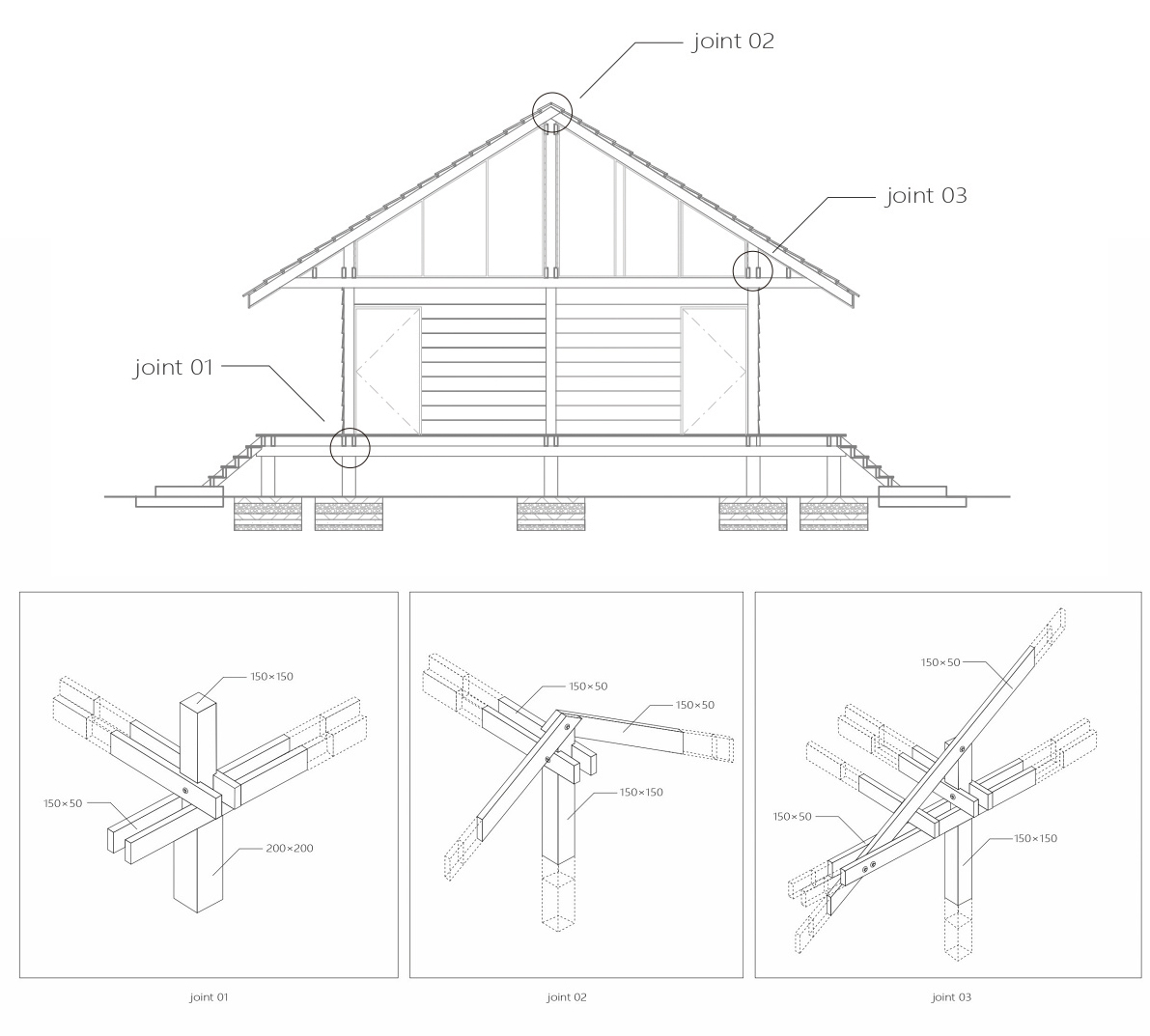
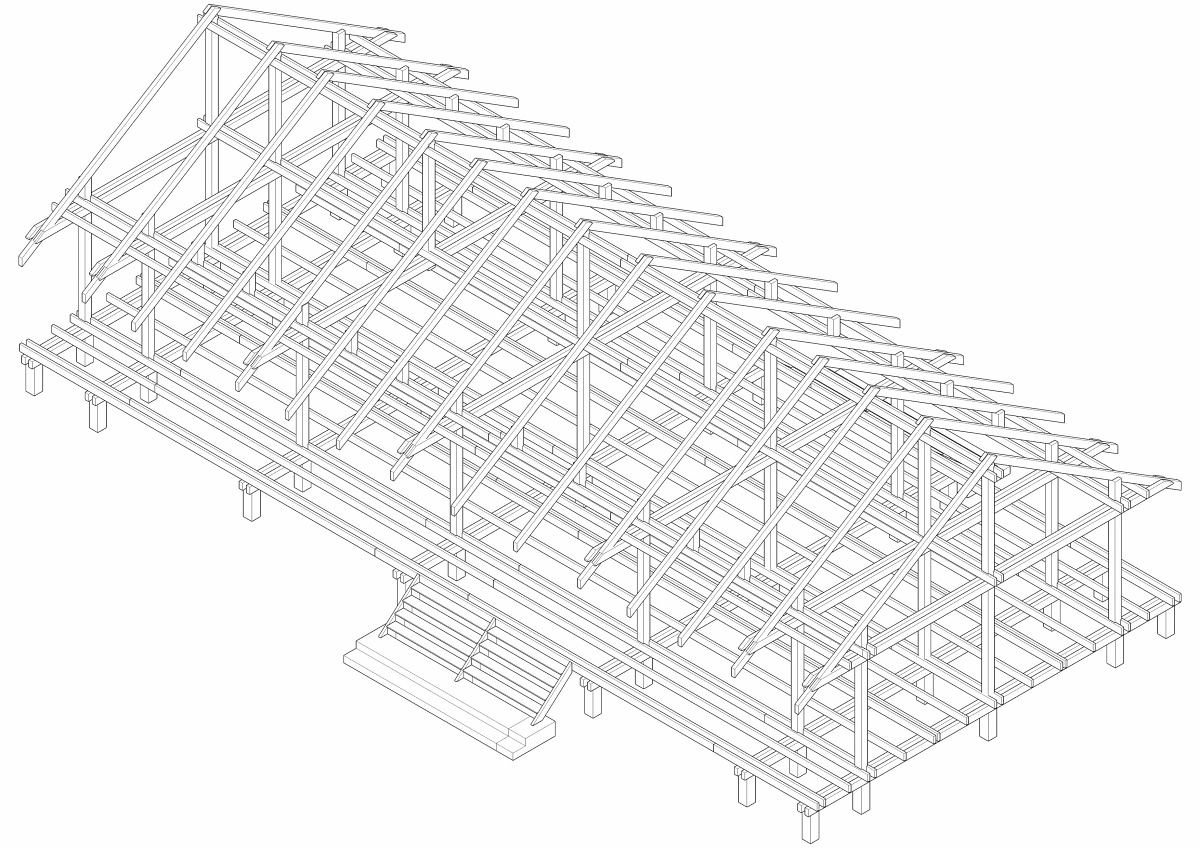
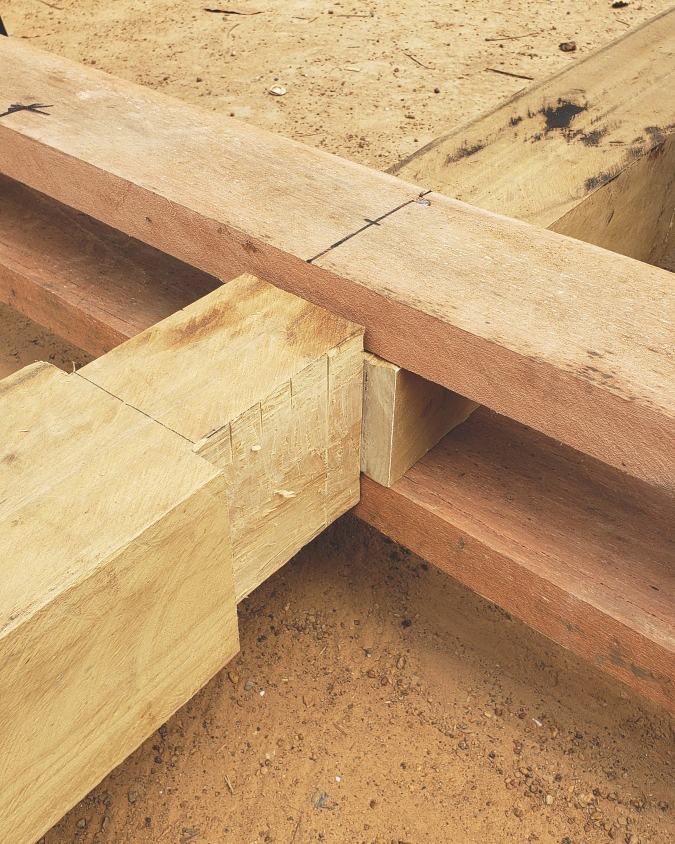
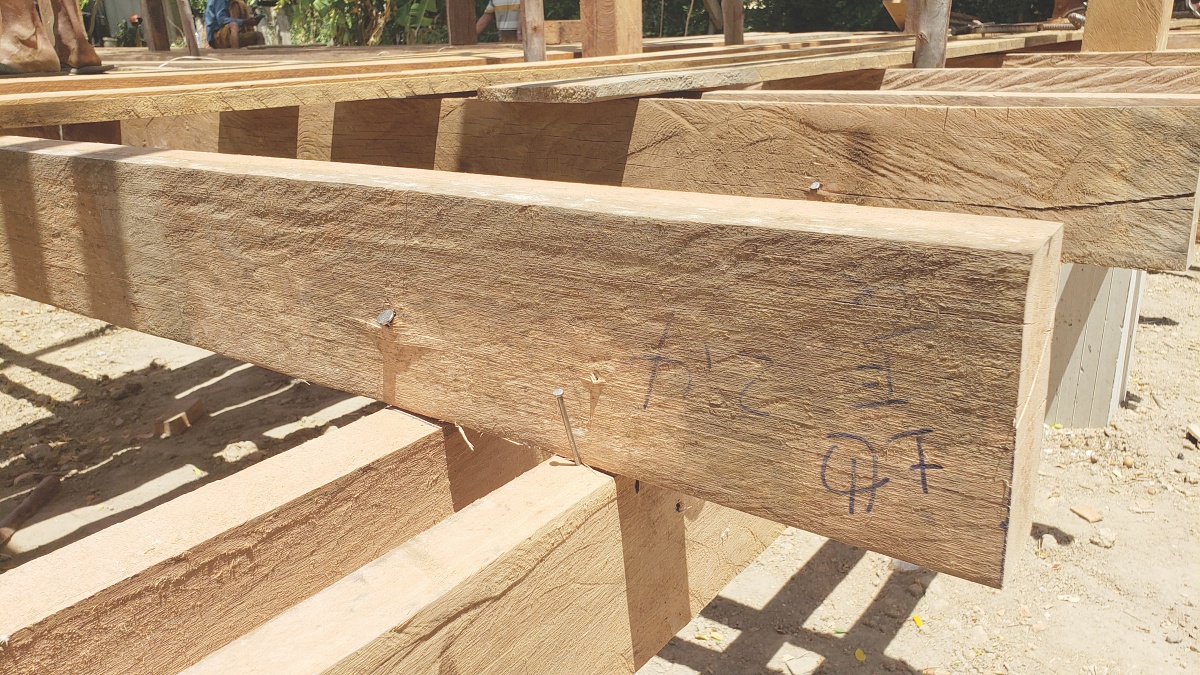
To streamline rapid construction, we drew on the local timber framing method, with strong regional and volunteer participation contributing to the success. Timber lap joints, where pairs of beams sandwich each column, were reinforced with metal fasteners, ensuring speed and stability. We also used locally sourced materials like precast concrete footings, hardwood timber, and prefabricated timber openings due to fast availability, allowing for quick and efficient construction.
3D model of the overall school block showing structural components
CHRONOLOGICAL EVENTS
DAY 1
Teams of students from different international backgrounds collaborated on producing site plans and proposing site-specific dimensions and design layouts. Due to time limitations, each discussion round lasted only minutes, making the process challenging. Language barriers between international students and the continuous need to reassess local needs greatly influenced our experience. The day concluded with the completion of a 3D model to help determine the material quantities based on locally available materials.
DAY 2
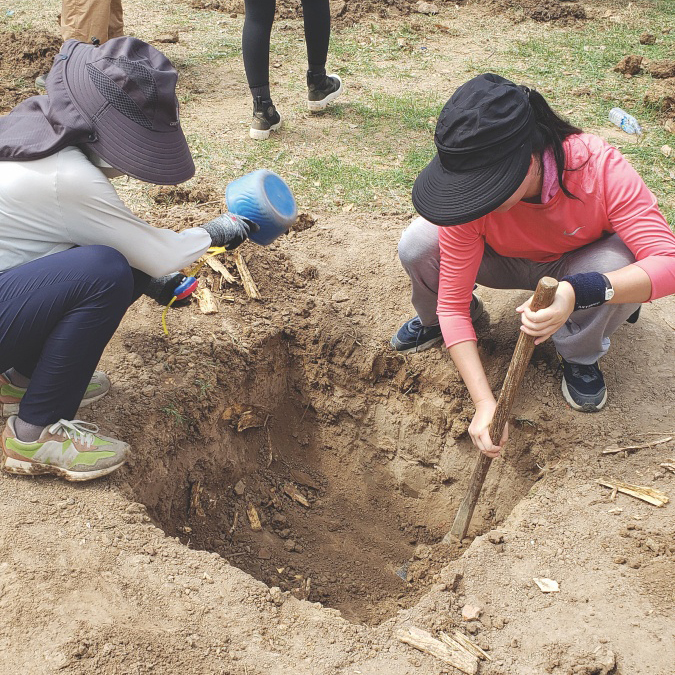
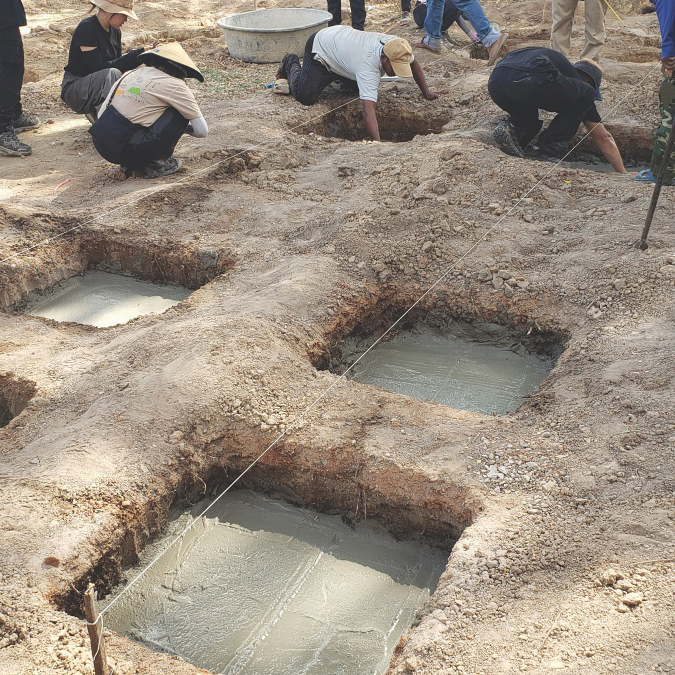
Everyone dug the ground for precast footings, filled the holes with stones and poured concrete. It was one of the most exhausting days, requiring significant physical effort and endurance in the local climate.
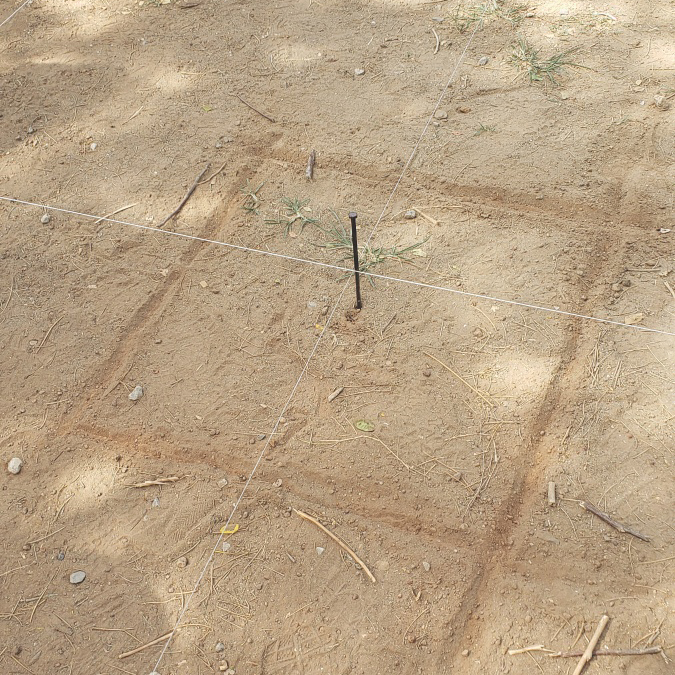
The size of each hole was marked out
The size of each hole was marked out
The site obstacles were removed, the holes were dug
DAY 3
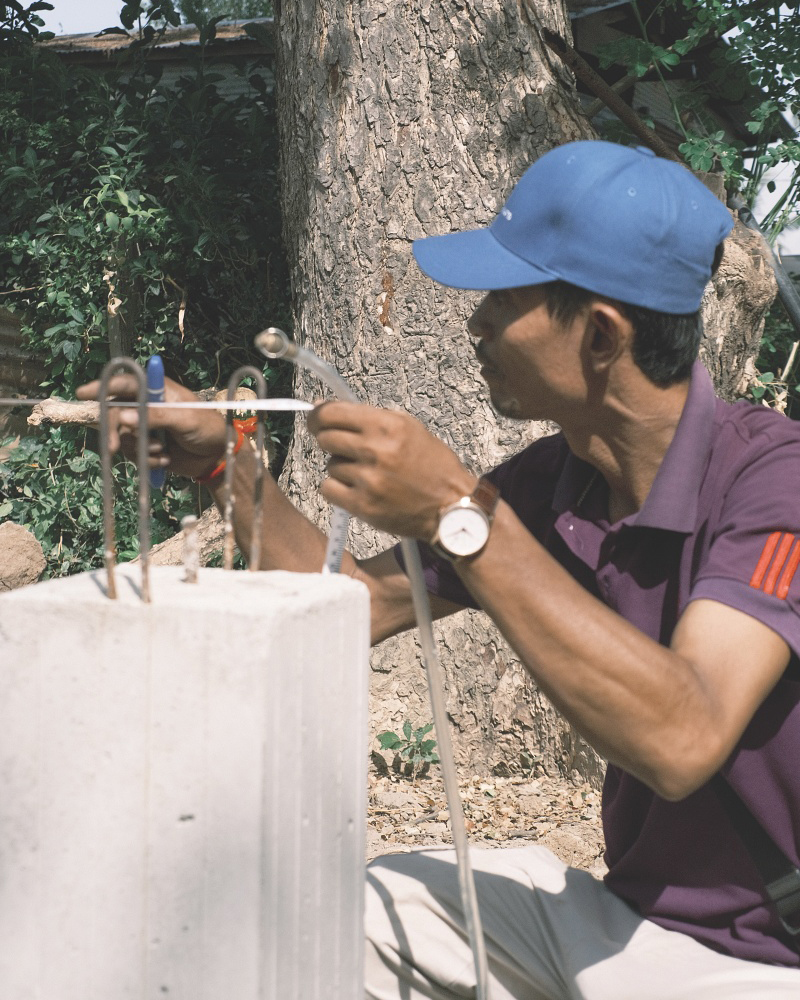
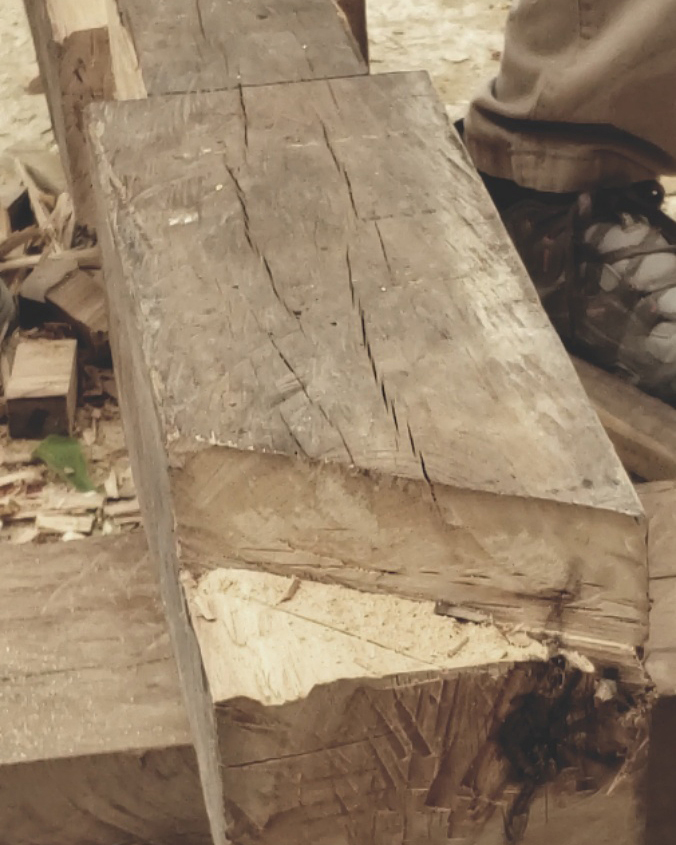
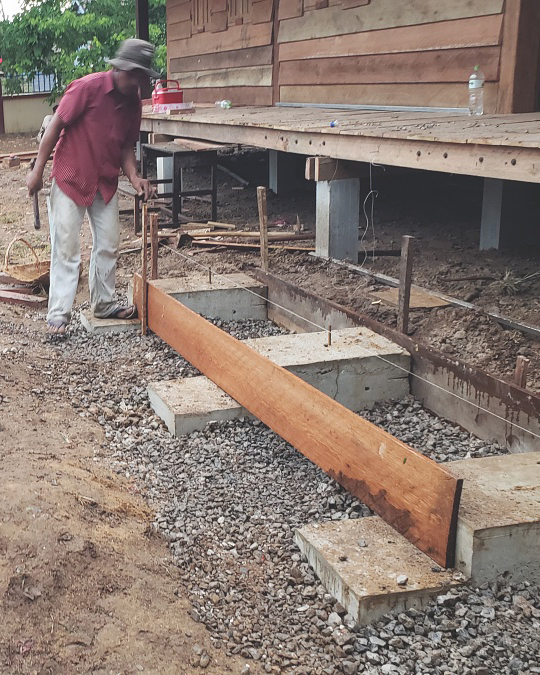
The following day, as the concrete had fully cured, we placed the concrete stumps on a layer of sand and used string level markers to help us align them accordingly. At the same time, we prepped the timber beams for the lap joints, with helpful inputs from the villagers who taught us about their techniques using an axe aleveled.
We leveled each concrete footing using strings and leveler, making such each footing are aligned and floor leveled
Prepping each timber column with lap joints
Day 4
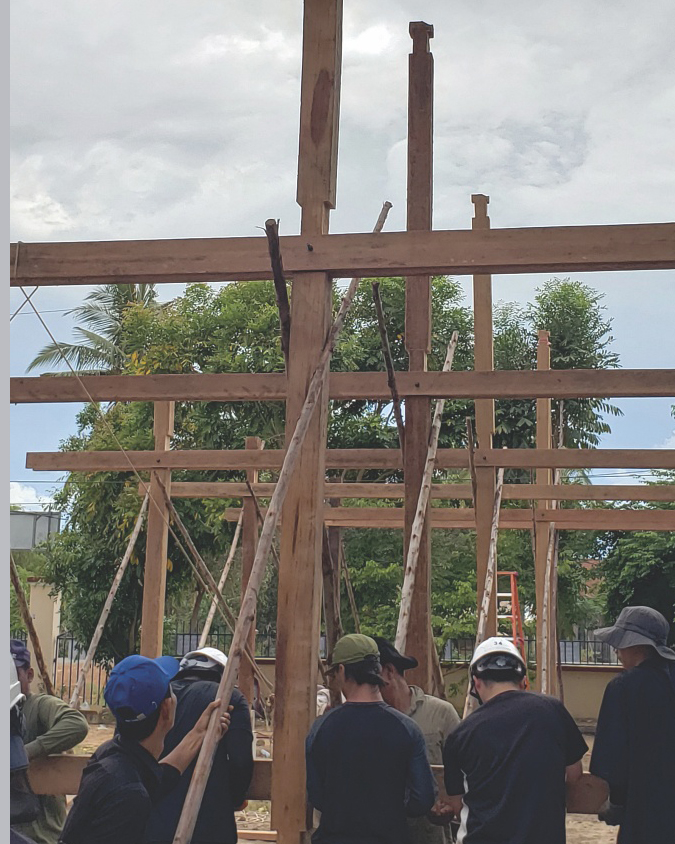
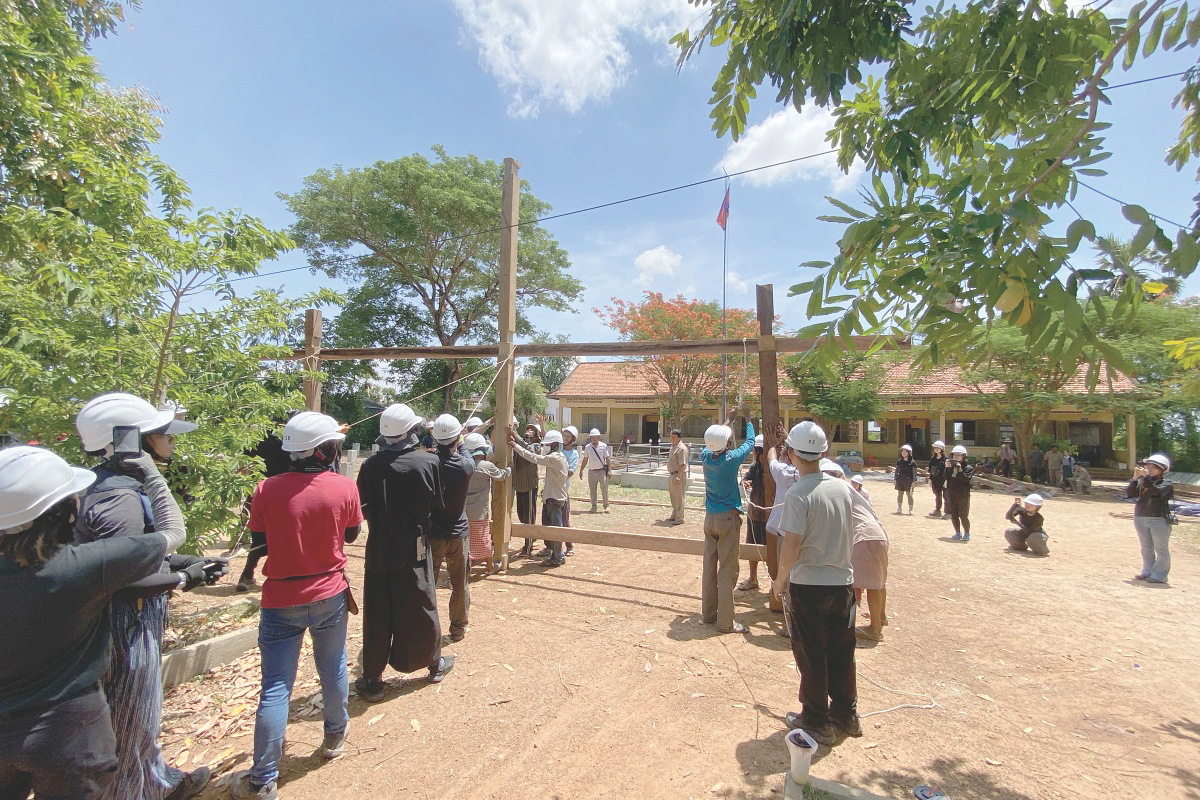
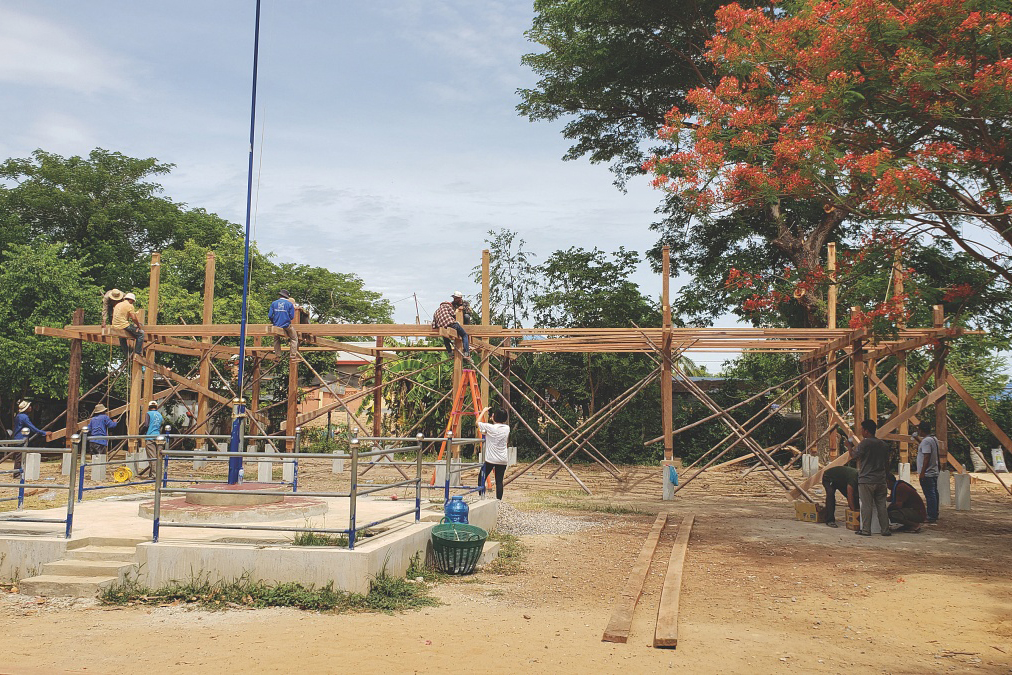
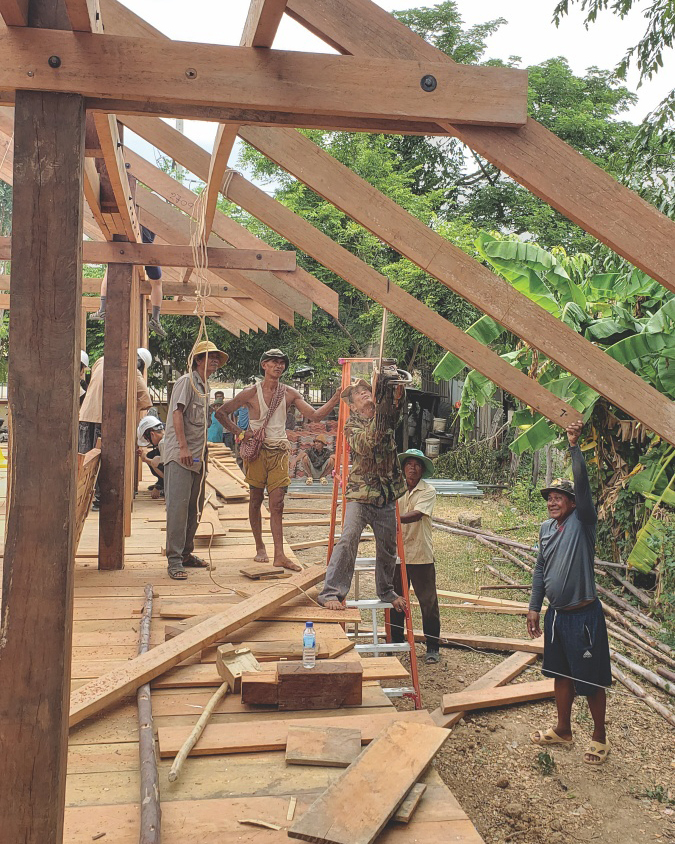
We assembled the structural frame sets, which were raised upright using ropes and a “whole village’s effort” to physically positioned them. It was memorable witnessing a team of diverse background in collaboration together, especially given the substantial weight of each frame and the potential for serious accidents. Once positioned on the concrete stumps, slender tree trunks were nailed to the structure for temporary support and stability.
Each structural frame set consists of a pair of beams sandwiching a column and secured using bolts and nuts
Once each frame set was positioned into place, slender tree trunks were nailed to the structure for temporary support and stability
The moving and transporting each structural frame set involved everyone’s physical effort
The overall look of 7 sets of structural frames positioned into place
Day 5
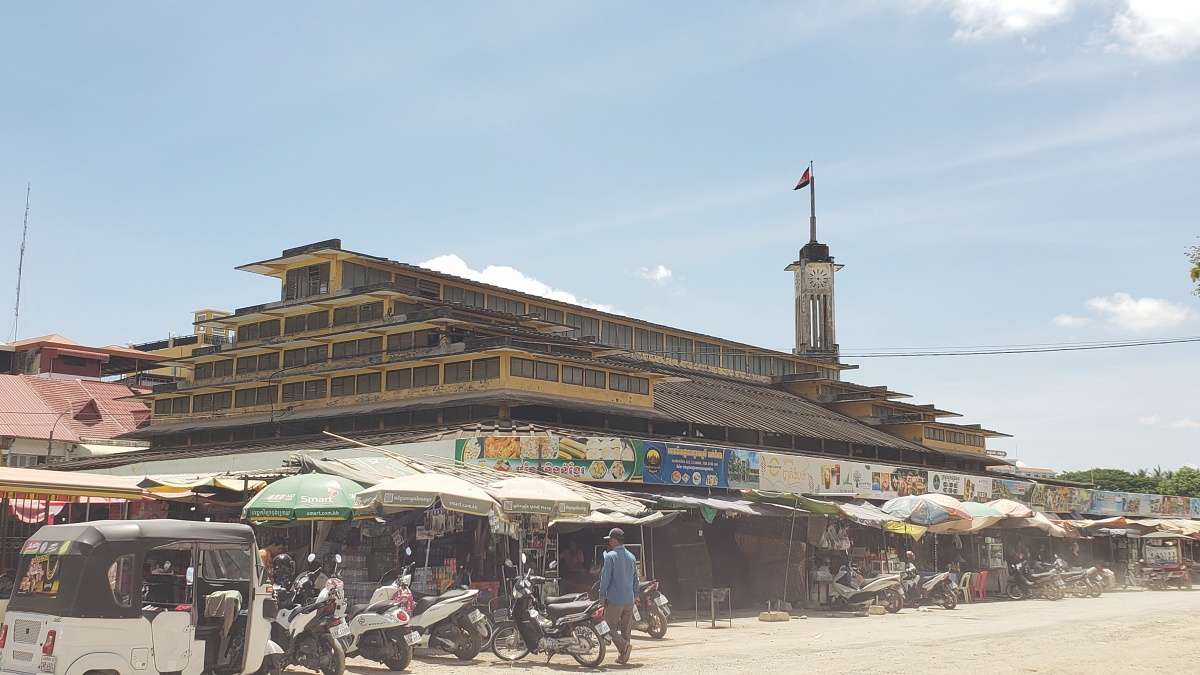
Midway through the project, we had a break-day to visit a nearby town called Battambang. Known for its French colonial architecture, we explored the Psar Nat Market, a famous Brutalist architecture landmark. We also managed to sample their National dish – Fish Amok, which tasted similar to the Malaysian otak-otak but is unique in its own way.
Battambang’s famous brutalist architecture - Psar Nat market
Day 6
Spanning three levels and designed to accommodate up to 3,000 Worshippers, Masjid Al-Sultan Abdullah balances functionality with spiritual experience. Each space within the mosque is meticulously crafted to enhance prayer, contemplation, and community engagement.
Floor joints
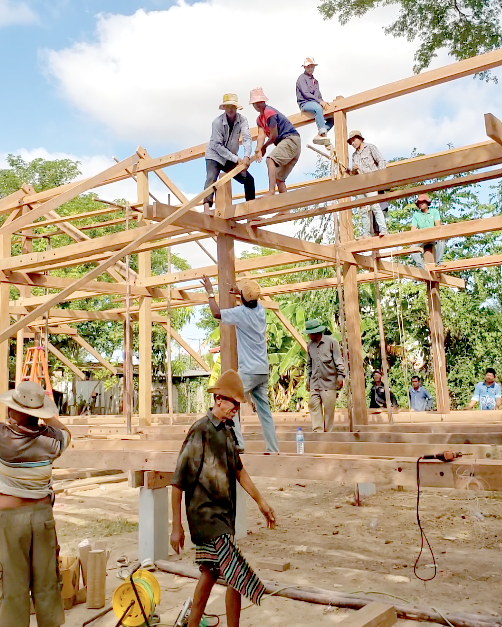
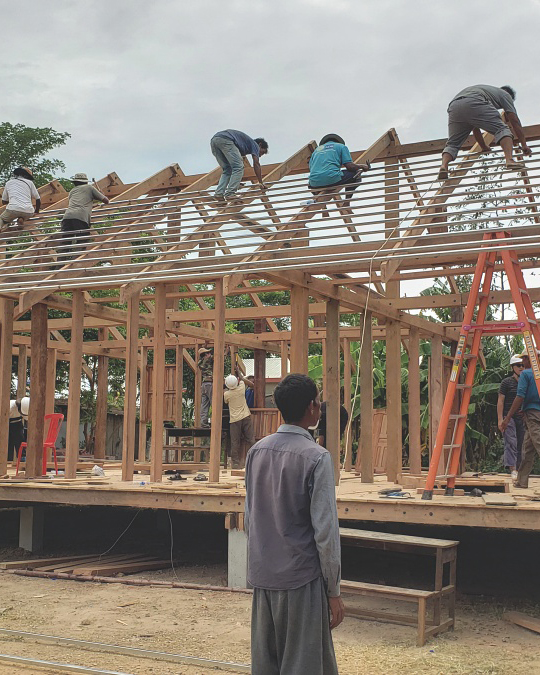
The locals assisting in securing ra#ers onto the structural frame
Day 7
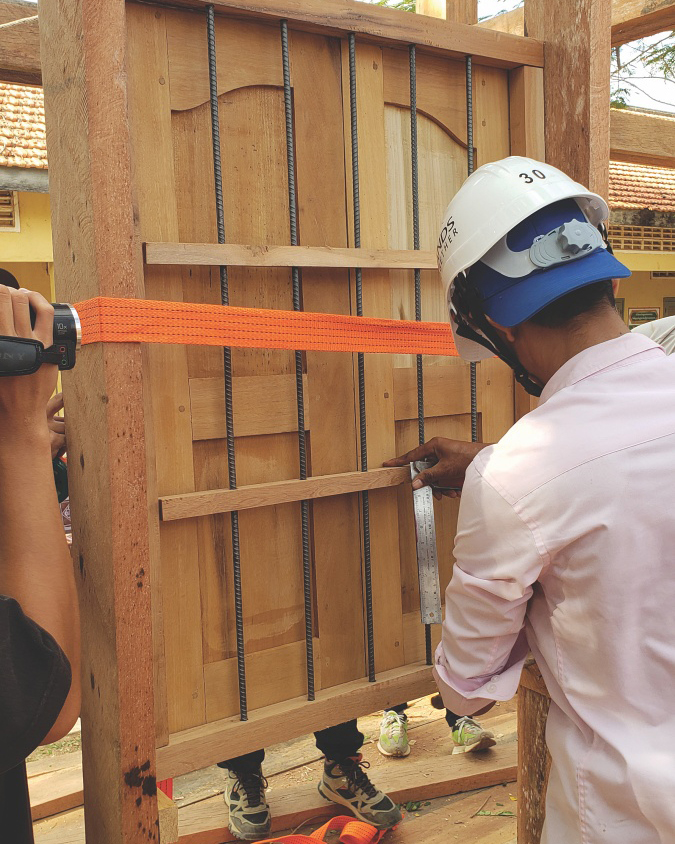
As the project progressed, we assembled wall frames and purlins, measuring and securing wall studs to ensure proper fitting for wall planks, doors, and windows. Locals continued with the roof installation.
A local using chainsaw to cut each ra$er to specific length so that we can fit the fascia board afterwards
The locals assisting continued with nailing metal purlin onto the rafter
The windows and door frames are secured onto wall frame and made sure are flashed to each other using tightening bands
DAY 8
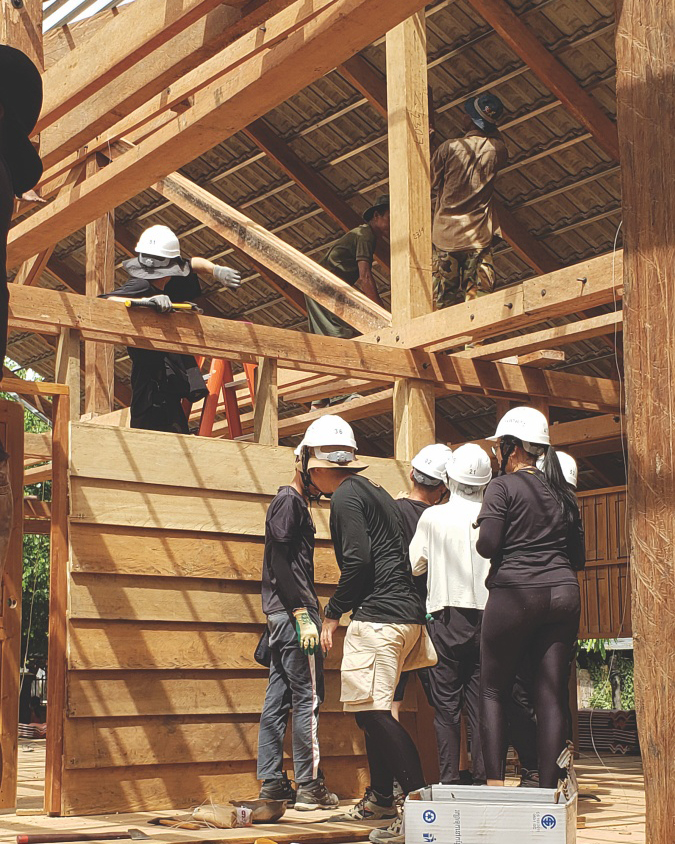
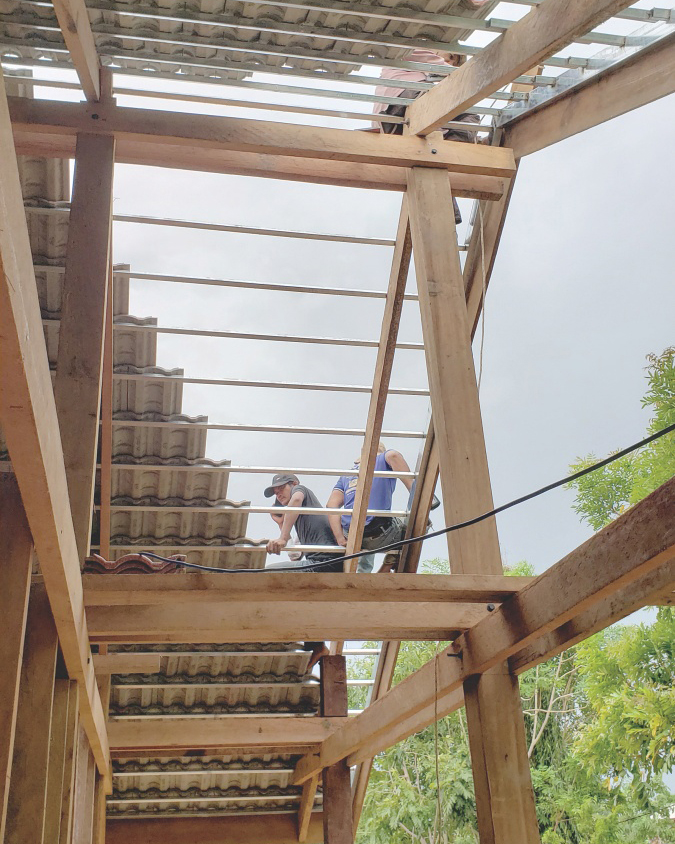
With the wall and roof structures nearly complete, our focus shifted to finalising both elements. Students attached overlapping wall planks for rain resistance, while local laid and nailed overlapping concrete roof tiles to prevent water leakage. A small group also began constructing staircase components, crucial for access.
The students overlapped wall planks with nailing for wall construction
The construction of staircase components using concrete casting and timber formwork
The locals nailed overlapping clay roof tiles to prevent water leakage
DAY 9
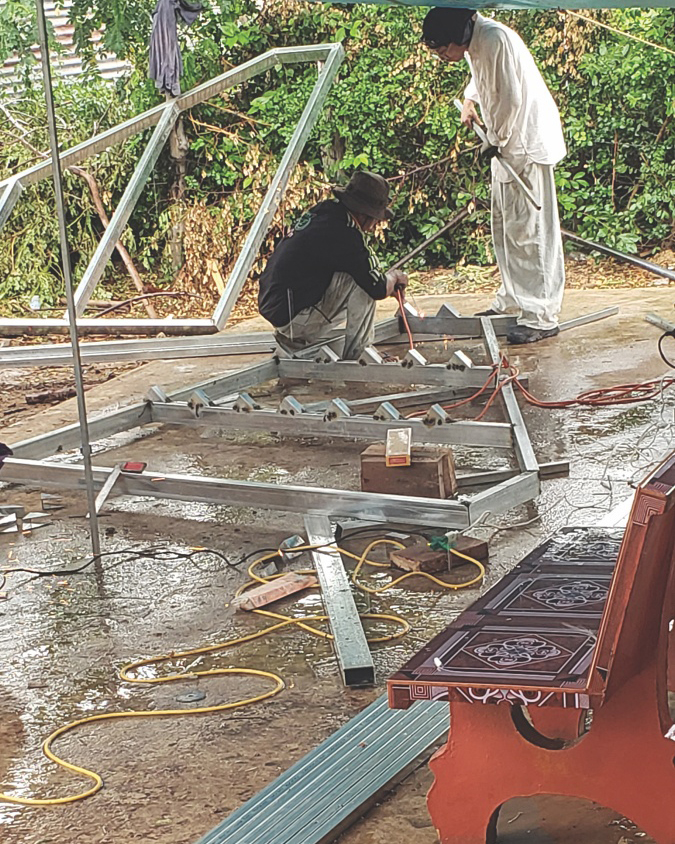
On the final construction day, we visited last year’s school build, noting differences in scale and methods. We also explored a local wet market, gaining insights into the region’s culture. The rest of the day was dedicated to completing the project, focusing on the metal gable-end frame to encourage air circulation.
etal gable end frame cufling and welding by the student and local builders
DAY 10
Filled with excitement in the air, the day concluded with the official launch of the new school building. Despite the stressful last push to install the final gable end louvre, it was concluded with the launching ceremony that included traditional greetings and heartfelt speeches, highlighting the project’s impact. We marked our contributions by signing a logbook and inscribing our names on a roof beam, creating a lasting connection to the school.
CONCLUSION
As architecture students with some basic carpentry experience, one of our key takeaways was learning from the locals. They taught us the versatility of the axe, reducing the need for multiple tools. We also gained hands-on skills in cutting and welding metal for louvres, and learned nailing techniques to conserve strength. Additionally, we focused on working smarter on-site, and site safety.
The ten-day workshop concluded with the successful completion of the new school infrastructure and the formation of new friendships with the international community. We’ll always remember the active involvement of the locals—including the school principal, police, and even the village head-and the excitement of the children to explore their new facilities. As we mark our names on the structure, the project left a lasting legacy not just for the school, but for us as well. We hoped readers reading this will be more receptive that language barriers can be overcome in future construction projects.
CREDITS:
LOCATION
Moung Ruessei, Cambodia
PROJECT RECIPIENT Roka Chhmaul Primary School in Cambodia
DESIGNED BY
HANDS TOGETHER – International University Collaboration
WORKSHOP BY Guo Cho Chen Studio, Shih Chien University + Mikio Tai Laboratory, Shizuoka Institute of Science and Technology + Doris Quek, UCSI University
ARCHITECTURAL DESIGNERS HANDS TOGETHER – International University Collaboration/ Guo Cho Chen Studio in Shih Chien University, Taiwan + Mikio Tai Studio in Shizuoka Institute of Science and Technology, Japan + Colllab, UCSI University, Malaysia
SHIZUOKA INSTITUTE OF SCIENCE AND TECHNOLOGY’S COORDINATOR Mikio Tai
UCSI UNIVERSITY’S COORDINATOR
Doris Quek Shu Han
德丰木業 Lee Wen Shiung
ADMINISTRATION STAFF Teng Ling
TEACHING ASSISTANT Chen Hsin Chung Chiu Hsien Yu
PHOTOGRAPHERS Liao Chung Kai Chang Che Yu
STUDENTS, SHIH CHIEN UNIVERSITY (USC) Chung Yu Chiao Pei Qi Hong Yueh Hua Su Ling Chieh Cho Wang Hong Yi Yi Han Ou Chih Yi Lin Jia Min Tseng Lin Yu Cheng Chen Chi Chung
STUDENTS OF MASTER DEGREE, SHIH CHIEN UNIVERSITY (USC) Hsiao Jung Cheng Liu Yu Chen Wang Bi Ying Chen Hsuan Tung
SOPHOMORE, TAMKANG UNIVERSITY (TKU) LI YUN ROU
STUDENTS OF MASTER DEGREE, SHIZUOKA INSTITUTE OF SCIENCE AND TECHNOLOGY (SIST) Hiroto Inaba Ririka Suzuki Miyu Makita Teruyuki Nakagawa
COLLAB AND STUDENTS OF SCHOOL OF ARCHITECTURE AND BUILT ENVIRONMENT (SABE), UCSI UNIVERSITY, MALAYSIA Oon Wu Han Guma Sylvester Makajil Yew Wei Zen Chan Meng Bin Miao Annan Tong Lai Mun Joanne
2024 new school facilities built for Roka Chhmaul Primary School, Cambodia at Moung Ruessei