INTRODUCTION
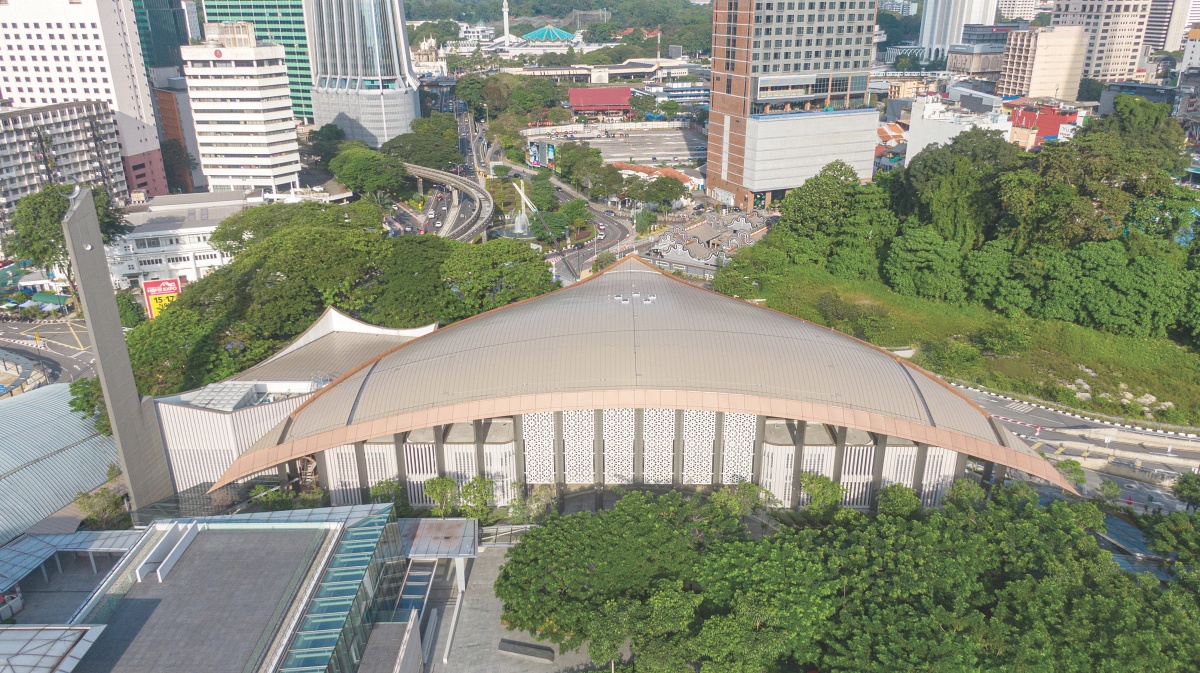
Amid Kuala Lumpur’s rapidly evolving skyline, Masjid Al-Sultan Abdullah is a striking example of contemporary Islamic architec- ture.Located within the Merdeka 118 precinct, the mosque sits between two of Malaysia’s most significant historical landmarks— Stadium Merdeka and Menara Merdeka 118—establishing itself as a cultural and spiritual anchor within the urban fabric. Designed to serve both thelocal community and visitors, the mosque seam- lessly integrates with its surroundings while offering a tranquil sanctuary forworshippers.
Unlike traditional mosque designs that emphasise domes, elaborate ornamentation, and classical Islamic motifs, Masjid Al-Sultan Abdullah introduces a minimalist, modern reinterpreta- tion of Islamic architecture. It blends geometric abstraction, cut- ting-edgematerials, and dynamic spatial organisation to create a spiritual space that resonates with both heritage and modernity.
This delves into the mosque’s architectural significance, exploring its urban context, structural innovation, spatial organi- sation,and symbolic design elements that set it apart as a defining religious institution in Kuala Lumpur.
FAÇADE AND STRUCTURAL INNOVATION
A key characteristic of any urban mosque is its accessibility and relationship with the surrounding publicrealm. Masjid Al-Sultan Abdullah is positioned at the heart of the Merdeka 118 precinct, a historically rich siteundergoing a major transformation into a mixed-use development. The mosque is designed to be highlyaccessible from all directions, with its main entrance at the plat- form level, seamlessly connected to MerdekaBoulevard at 118 Park. This ensures a fluid transition between the mosque and the surrounding urbanfabric, allowing both daily worshippers and visitors to experience its architectural and spiritual ambience
A MODERN INTERPRETATION OF ISLAMIC ARCHITECTURE
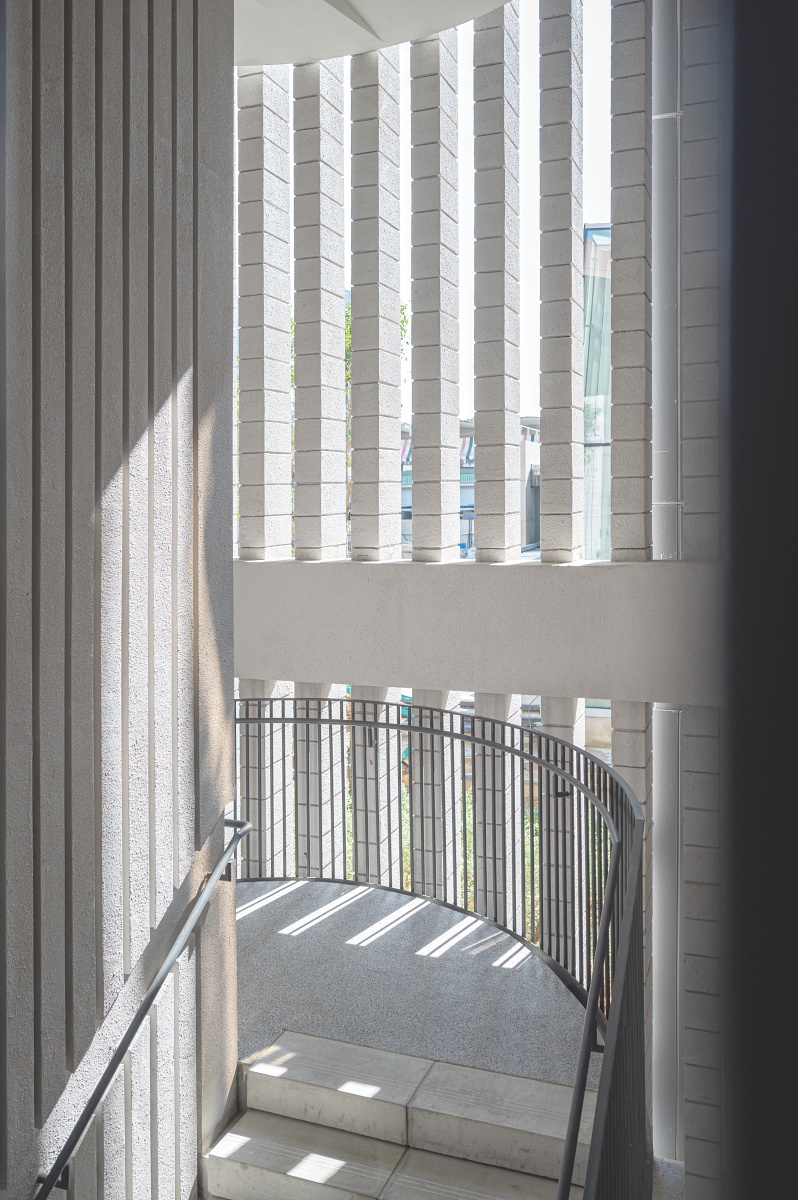
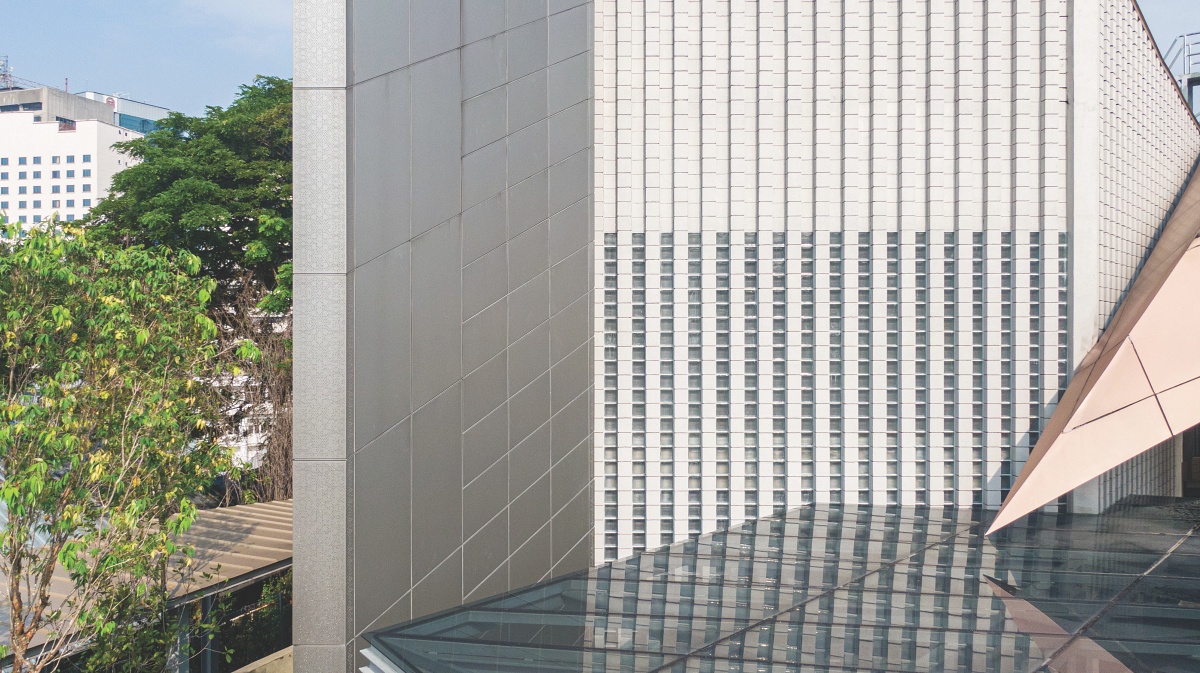
Masjid Al-Sultan Abdullah represents a departure from con- ventional mosque architecture, which typically includes a large centraldome and intricate ornamentation. Instead, the mosque embraces a minimalist approach, utilising concrete blockwork, steel,aluminium and glass to craft a sleek, contemporary aesthetic.
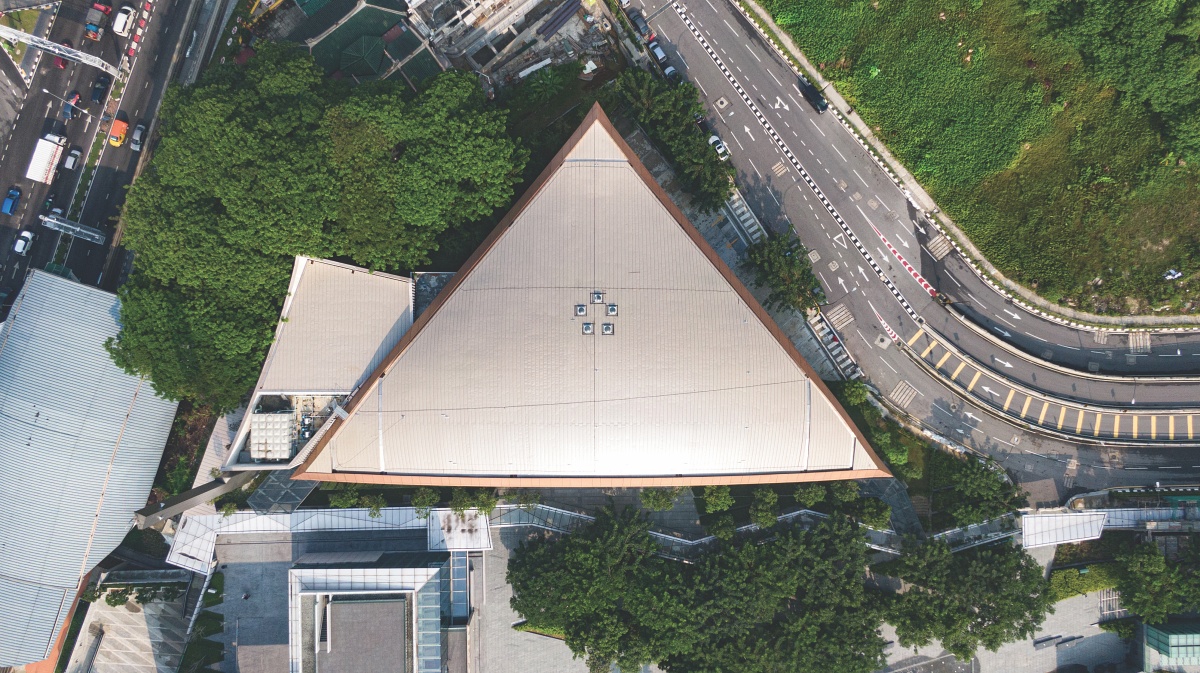
One of the mosque’s defining features is its vaulted roof, whichreinterprets the classical Qubba (dome). Rather than adopting a traditional hemispherical form, the roof is designed as anundulating ribbed canopy that transforms dynamically de- pending on the viewing angle. From the entrance, the canopy appearssemi-circular, but in plan, it follows a triangular con- figuration that aligns with the site’s geometry and ascends to- wards the Qiblat.This bold reimagining of the dome reinforces the mosque’s identity as an architectural symbol of progression and innovation.
URBAN CONTEXT AND ACCESSIBILITY
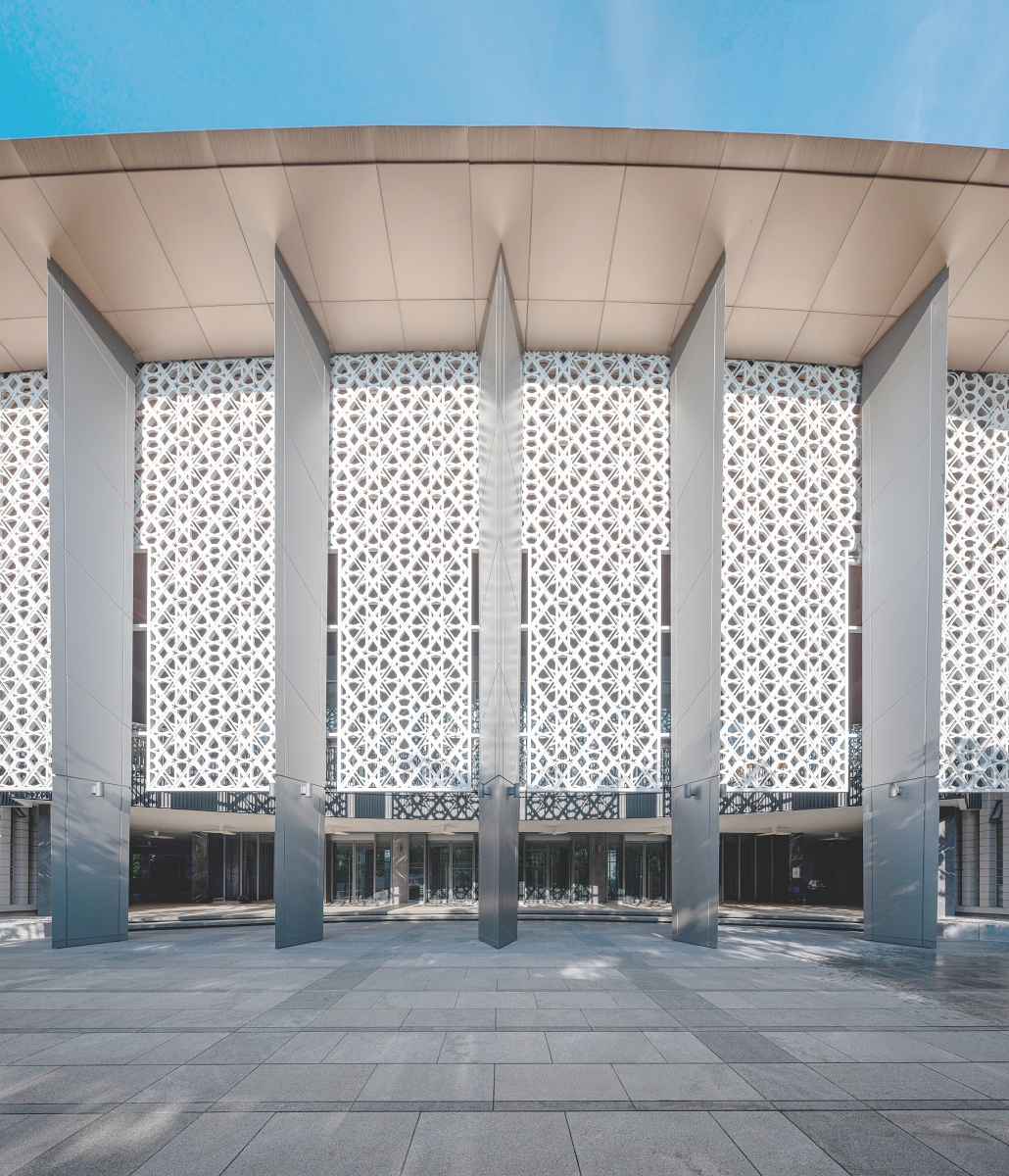
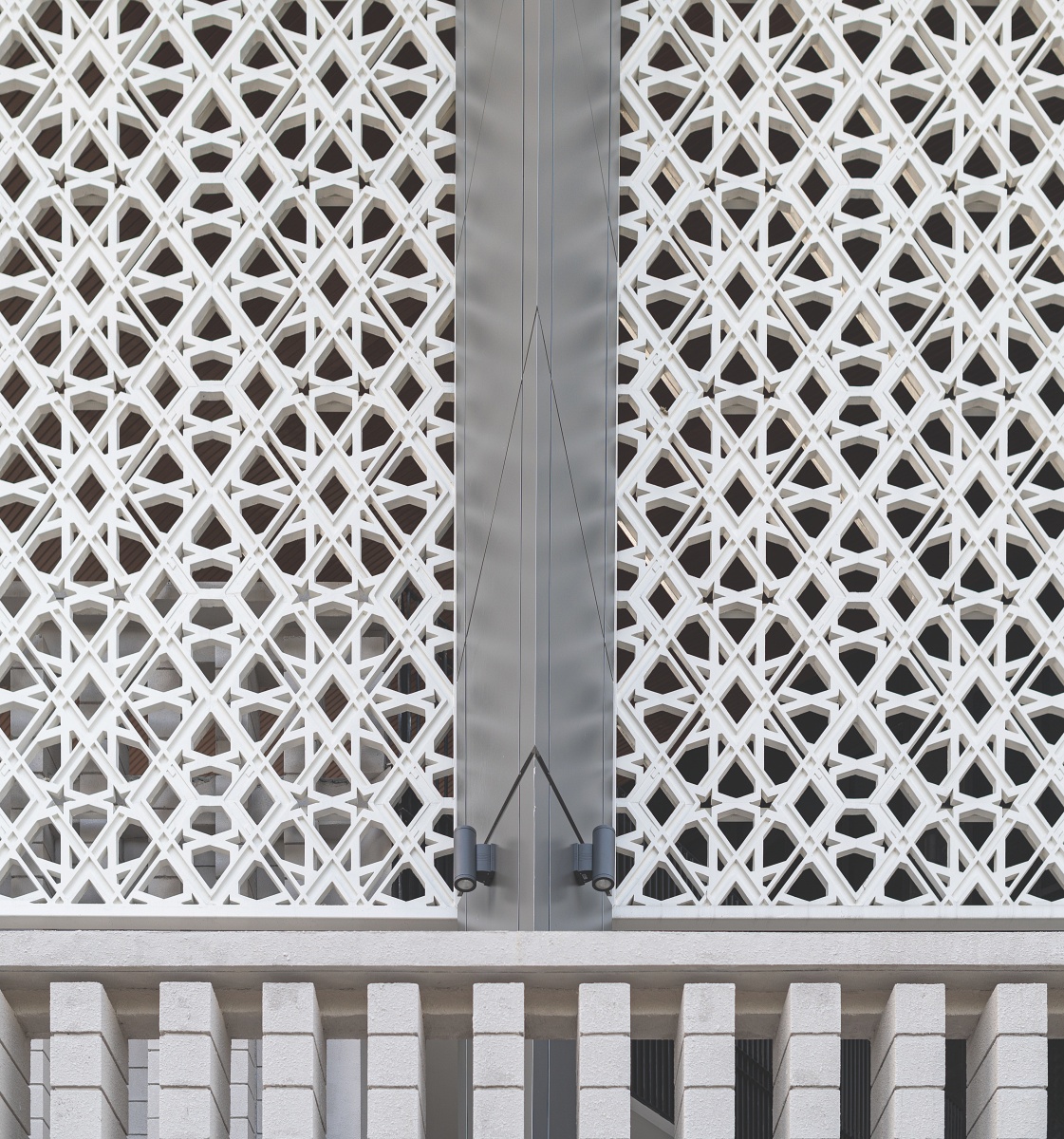
The façade of Masjid Al-Sultan Abdullah is a sophisticated in- terplay of form, materiality, and Islamic symbolism. A GFRC rain-screen, adorned with intricate geometric paflerns, partially envelops the structure, serving both an aesthetic and func- tional purpose. This lightweight, durable panel system enhances the mosque’s visual identity while providing protection from the elements.
Positioned behind dynamically arranged ACP-triangulated columns, the rain screen creates a layered architectural effect, reinforcing the contrast between static and dynamic elements within the design. The repetitive Islamic motifs on the façade pay homage to traditional Islamic artistry, symbolising unity, infinity, and spiritual transcendence.
Structurally, the mosque embodies the five pillars of Islam, symbolised by tall, Kufic-inspired vertical columns that support the vaulted roof. These columns create a rhythmic architectural composition, reinforcing the mosque’s conceptual depth while maintaining structural integrity.
SPATIAL ORGANISATION AND INTERIOR EXPERIENCE
Spanning three levels and designed to accommodate up to 3,000 Worshippers, Masjid Al-Sultan Abdullah balances func- tionality with spiritual experience. Each space within the mosque is meticulously cra!ed to enhance prayer, contemplation, and community engagement.
MAIN PRAYER HALL
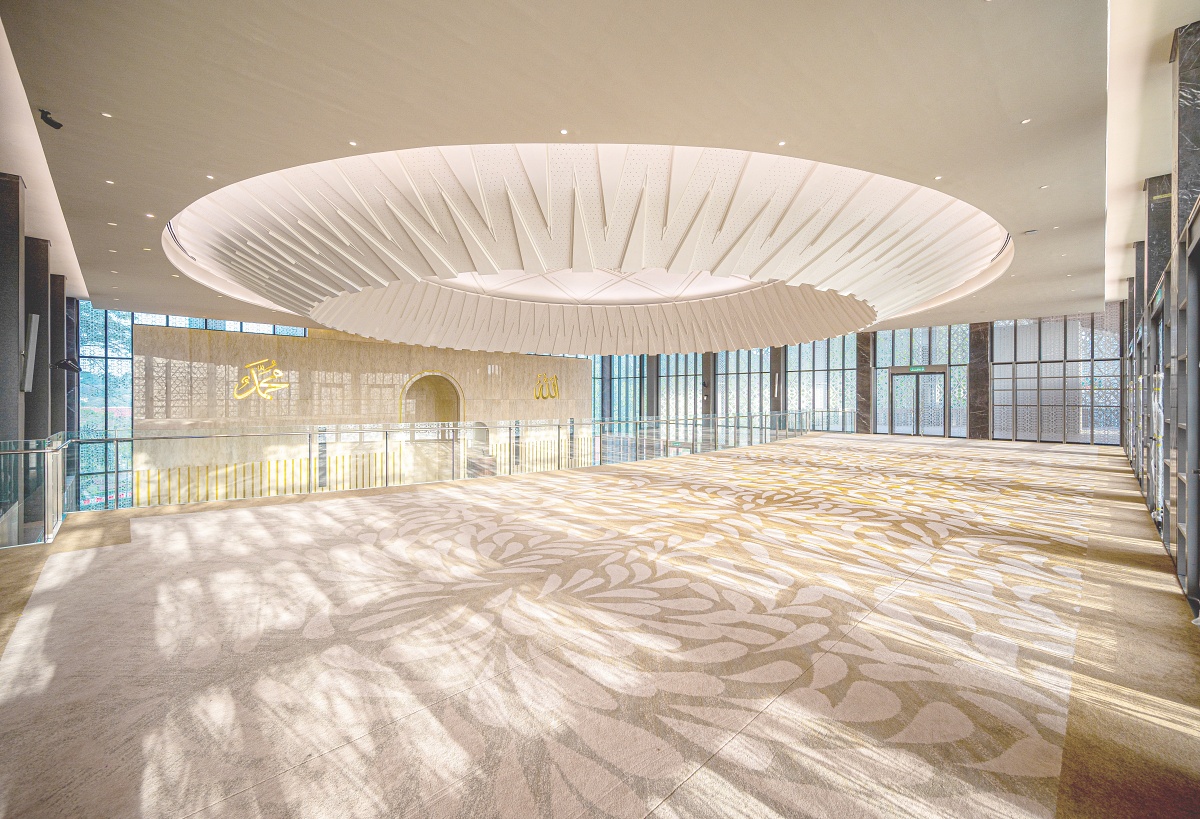
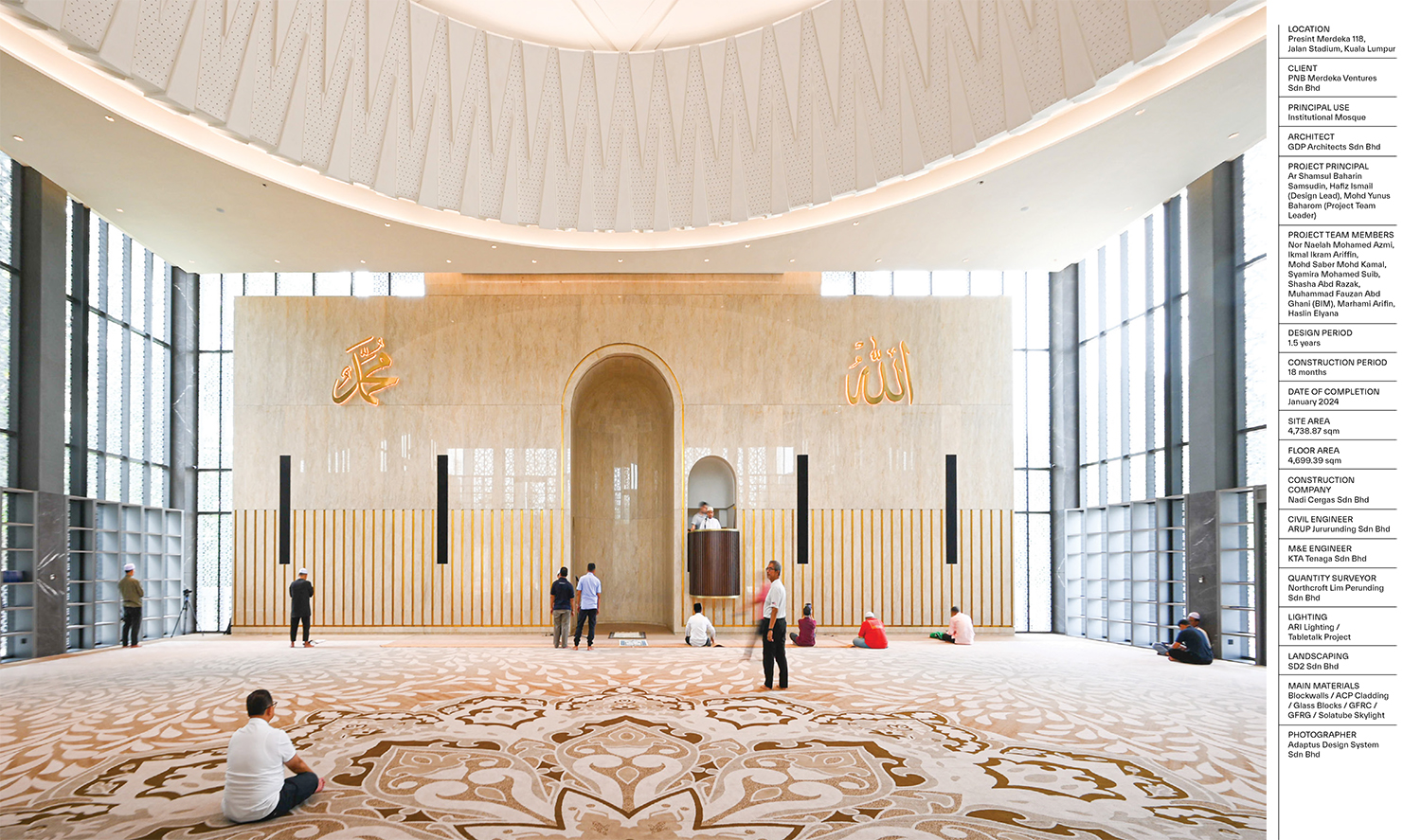
At the heart of the mosque lies the main prayer hall, a high- volume space that exudes both serenity and grandeur. Unlike traditional mosques adorned with intricate ornamentation, this hall embraces spatial purity, allowing its architectural elements to take centre stage. The marble stone-clad feature wall, ac- centuated by brass groove joints, resonates with the elegant curves of the vaulted mihrab and mimbar, creating a harmonious visual language.
Natural light gently filters through floor-to-ceiling seamless frifled glass panels, framed by vertical steel fins that empha- sise height and verticality. The Qibla wall, positioned at the mosque’s triangular tip, serves as the spiritual and visual focal point, reinforcing a direct and intimate connection with Mecca.
A defining feature of the hall is the majestic inverted dome that crowns the soaring ceiling. Adorned with intricate Islamic paflerns made of GFRG, it incorporates five sun tunnel skylights that channel natural daylight into the space, casting an ethereal glow. The design fosters an atmosphere of tranquillity—an im- mersive sanctuary where worshippers feel a profound sense of peace and closeness to their Creator.
MULTIPURPOSE HALL
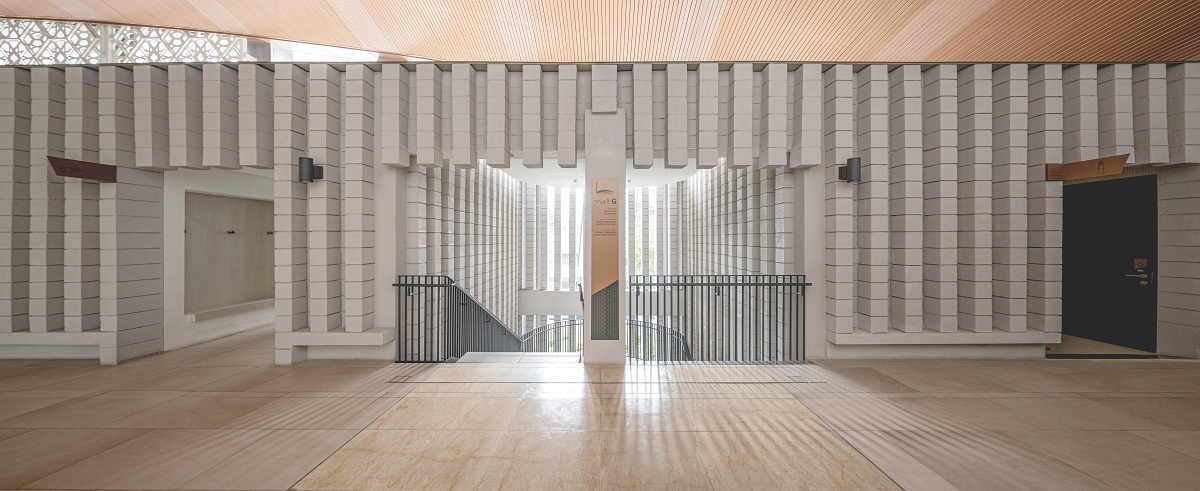
Designed for flexibility, the multipurpose hall functions as a secondary prayer space and a venue for community gatherings, Islamic lectures, and events. Spanning 3,440 square feet, it features a double-height ceiling to enhance spatial fluidity. The hall is adorned with crystallite stone cladding, which interacts with natural light to create an ethereal glow.
Islamic motifs, etched onto seamless glass partitions, es- tablish a visual and symbolic connection between interior and exterior spaces. Carefully placed steel fins further refine the hall’s architectural language, guiding light and reinforcing struc- tural elegance.
ABLUTION AND SUPPORT FACILITIES
Supporting facilities within the mosque include: Centralised external & internal ablution and toilet areas, a library, Imam and Bilal rooms, an administrative office & a lower-ground car park for convenience. These elements are integrated discreetly, en- suring an uninterrupted architectural flow that enhances the overall worship experience.
THE MINARET:
A CONTEMPORARY BEACON
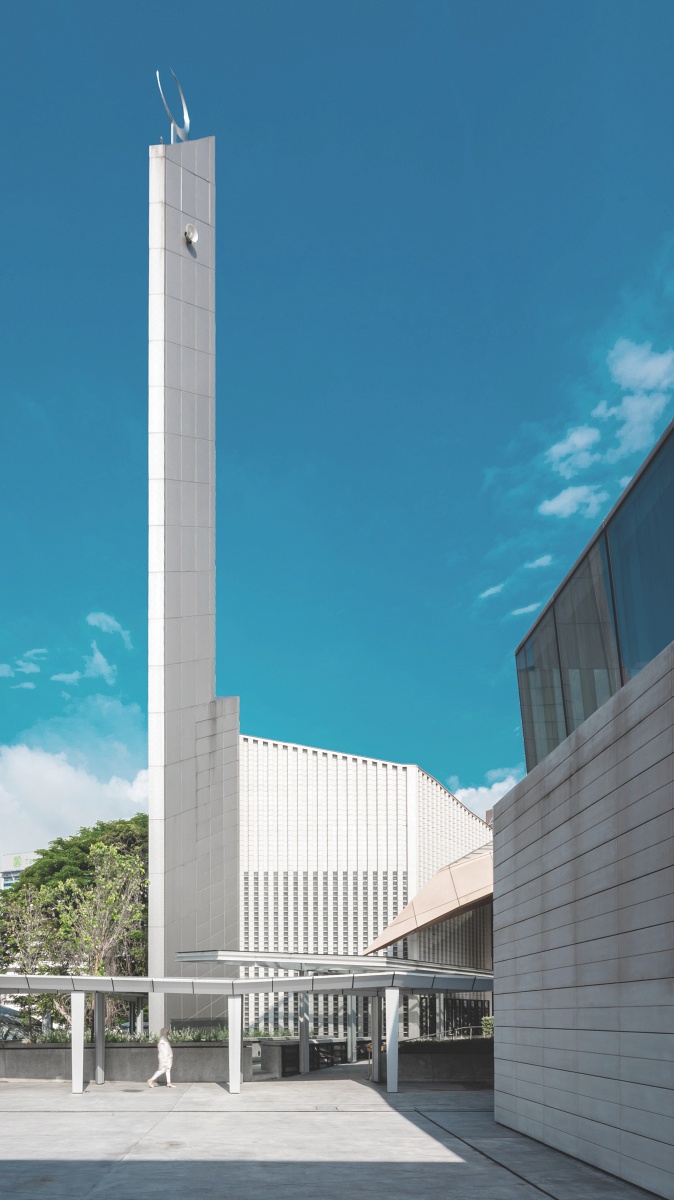
The minaret of Masjid Al-Sultan Abdullah is a contemporary reinterpretation of traditional minaret design. Instead of a stand- alone tower, it is integrated into the multipurpose hall block, creating a cohesive architectural composition.
Constructed from a steel structure encased in perforated and solid aluminium composite panels, the minaret balances elegance with functionality. An internal access system allows for maintenance, while a mild steel crescent at its peak symbolises the mosque’s spiritual and cultural significance. The light and dark grey colour scheme enhances the minaret’s understated yet commanding presence within the urban skyline.
REINTERPRETING THE QUBBA: A ROOF AS A SYMBOL
Masjid Al-Sultan Abdullah’s roof design is a contemporary hom- age to the traditional Islamic dome. Instead of a conventional hemispherical Qubba, the vaulted structure creates a fluid, sculp- tural canopy that merges with the mosque’s surroundings.
From a distance, the roof appears as a semi-circular shell, but in plan, it follows a triangular alignment, reflecting the site’s geometry and its orientation towards the Qiblat. This seamless transition from geometric abstraction to functional design under- scores the mosque’s progressive architectural philosophy.
A LANDMARK OF MODERN ISLAMIC ARCHITECTURE
Masjid Al-Sultan Abdullah stands as a testament to architectural innovation in Islamic design. By rethinking traditional elements, such as the dome, minaret, and decorative motifs, the mosque introduces a new paradigm for urban religious spaces in Kuala Lumpur and beyond.
Through its dynamic roof, intricately designed façade, and thoughfful spatial organisation, the mosque embodies both spi- ritual depth and contemporary elegance. It is not just a place of worship—it is a symbol of Malaysia’s evolving architectural iden- tity, bridging the past and the future while remaining deeply rooted in Islamic tradition.