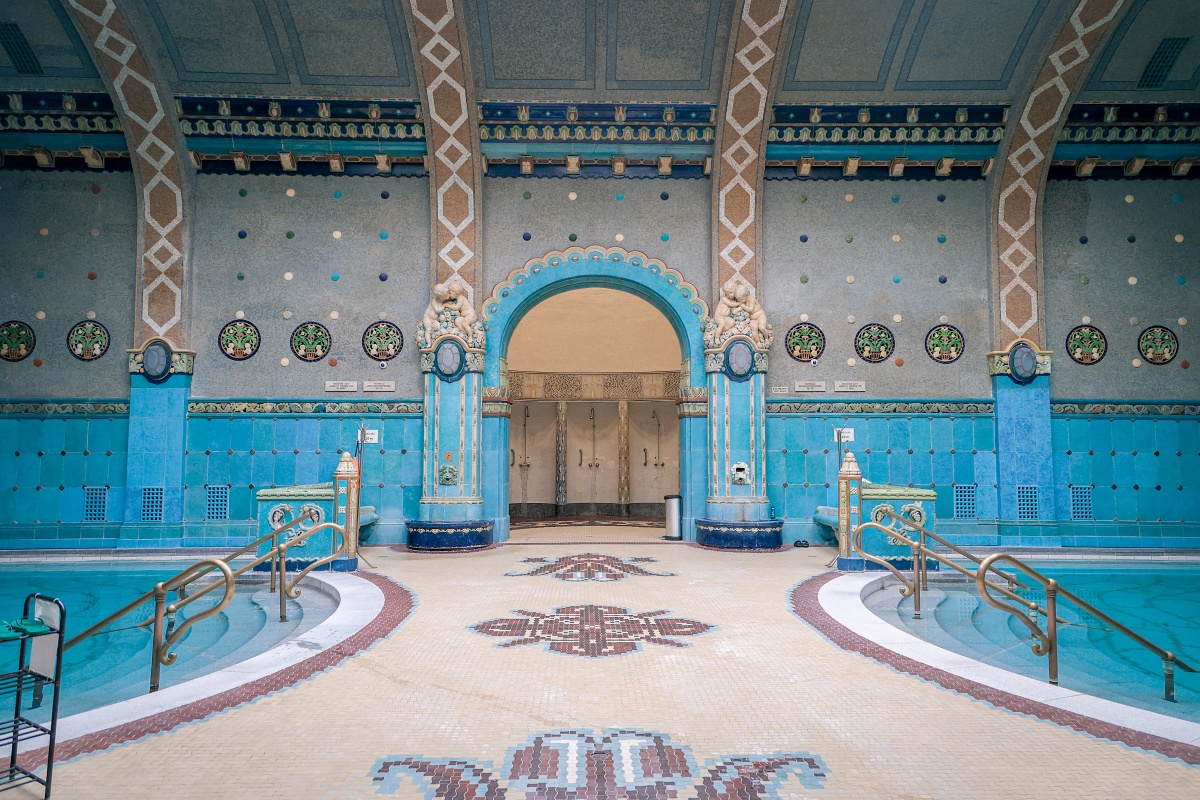
Known as the ‘City of Spas’, Budapest is famous for its numerous natural thermal springs. The destination is dotted with bathing halls, but the Gellert Thermal Baths, known for its mineral-rich, healing waters became a goal for my trip. Built between,1912 and 1918, it’s named after nearby Gellért Hill and is reputably visually stunning. As social bathing is a public practice in Hungary, Gellert allows for cameras in its interiors, and it was a pleasure to explore and capture the architecture of the place.
The baths are part of the larger Hotel Gellért, designed by renowned Hungarian architects Ármin Hegedűs, Artúr Sebestyén, and Izidor Sterk in 1918. The hotel itself is currently closed for renovations since 2021 and is scheduled to reopen in 2027 as Mandarin Oriental Gellert, Budapest. In general, the style of the building is a nod towards Art Nouveau but also contains an amalgamation of influences, including from the Neo-Baroque and Neo-Renaissance periods. Upon entering the thermal baths complex, you’re immediately greeted by an entrance hall flanked with dark maroon columns, stained glass, and intricate mosaics, recalling a grand lobby from a bygone era.
I was there at the earliest morning session possible on a weekday to avoid the crowds. Each patron is given a rubber bracelet which allows access to the lockers. You descend into the large locker area, a labyrinth that seems perfectly made for a Wes Anderson movie, in that it was brightly coloured and symmetrical. The lockers were so identical that numerous tourists have complained about getting lost in its corridors.
Venturing deeper inside, you become more aware of the sound of water. The indoor baths are below ground-floor levels, so skylight often punctures the main spaces, leaving the entryways and corridors darker. The complex has 10 pools of various descriptions and sizes, including 6 thermal pools, 2 12C cool plunge pools, 2 swimming pools for laps, and a wave pool, all spread throughout both indoor and outdoor areas. The complex also has sauna rooms and massage rooms. It’s common practice to spend a few hours just enjoying the various water bodies available, moving from one to another with your social group.
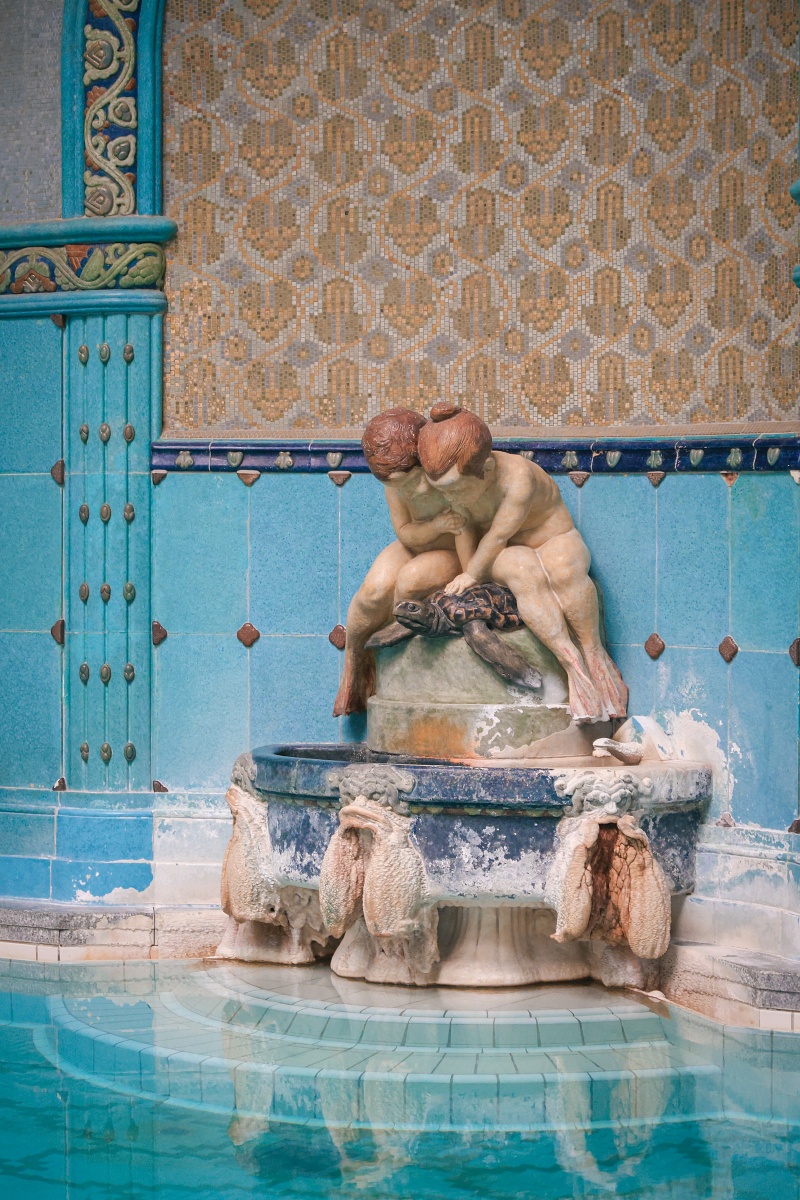
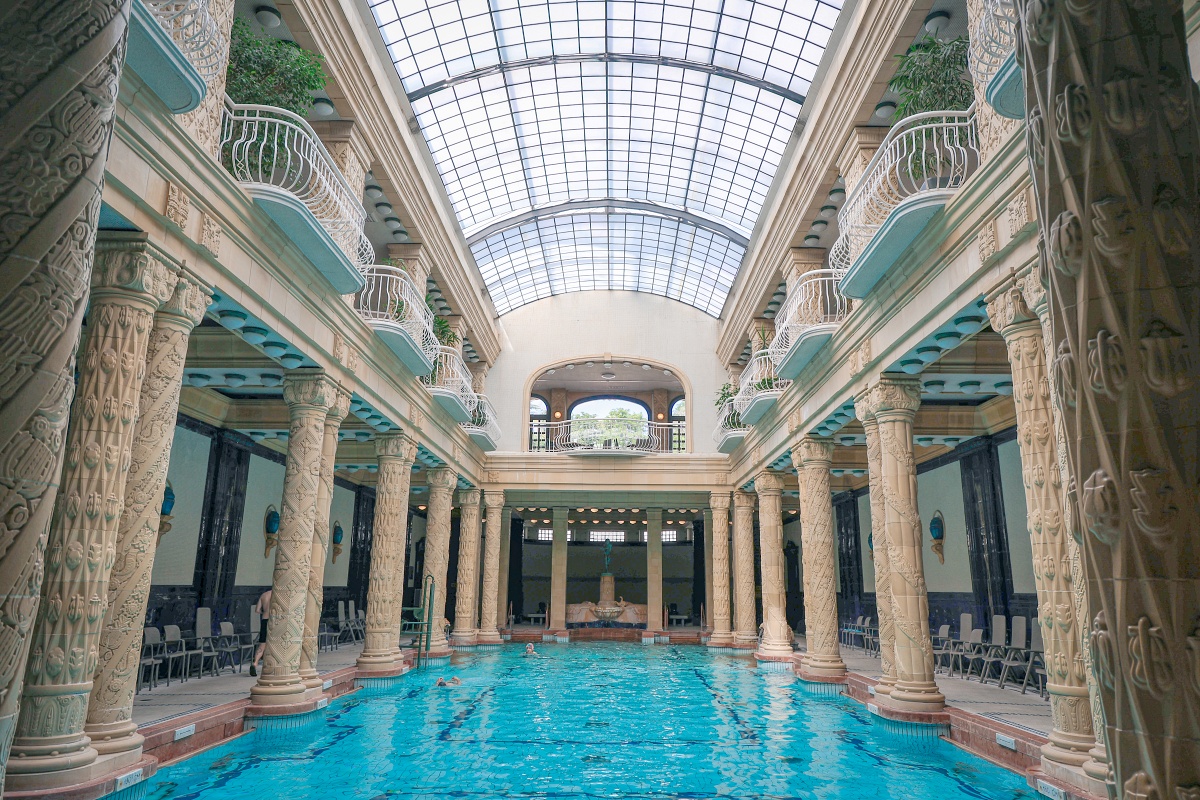
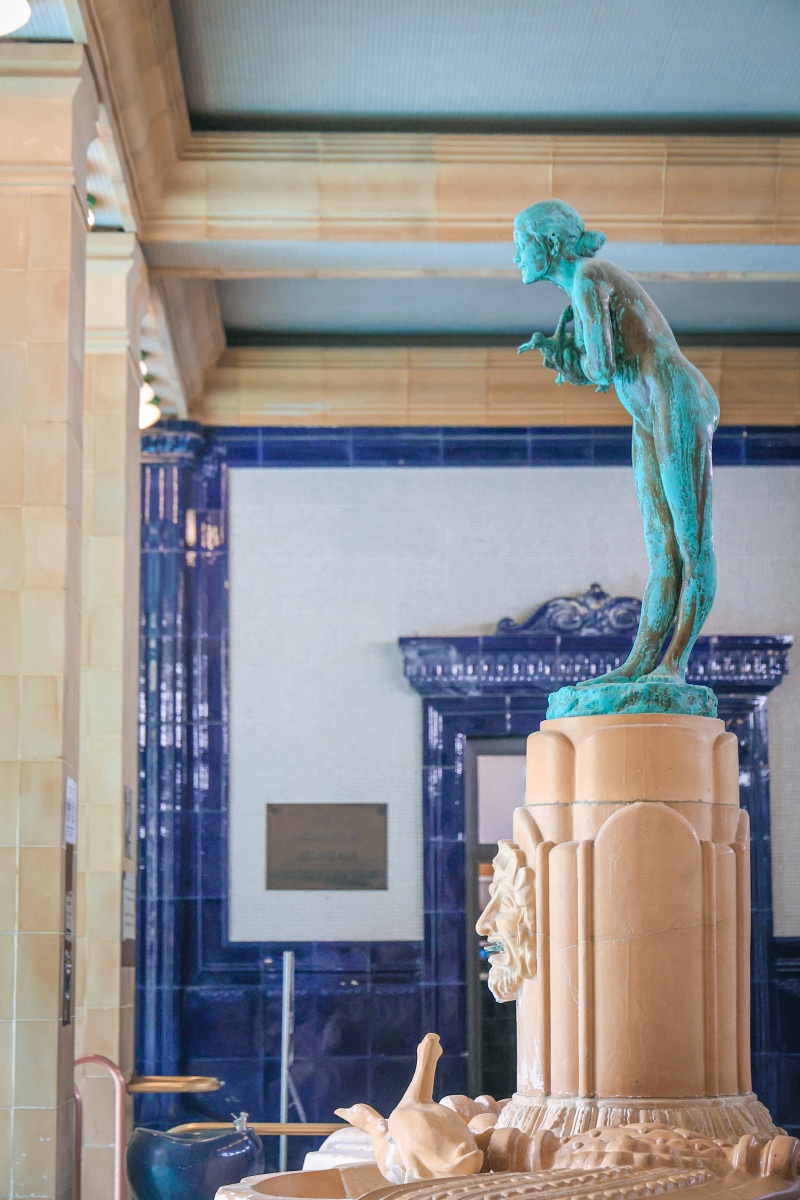
The main indoor pool is arguably the most iconic place within the complex. Framed by two rows of towering columns, with a glass skylight, lifted two storeys above the pool, flooding the hall with brightness. The Art Nouveau style is manifested in the organic curves of the balustrades and the floral motifs etched into the tiles and stonework. The rectangular pool is flanked by ionic and Corinthian columns, carved with botanic and geometric motifs. Water gushes out of sculptures at the corners of the pool. At one end, the sculpture of a lady watches over the bathers. There is a quiet sense of elegance, but the space feels intimate rather than imposing.
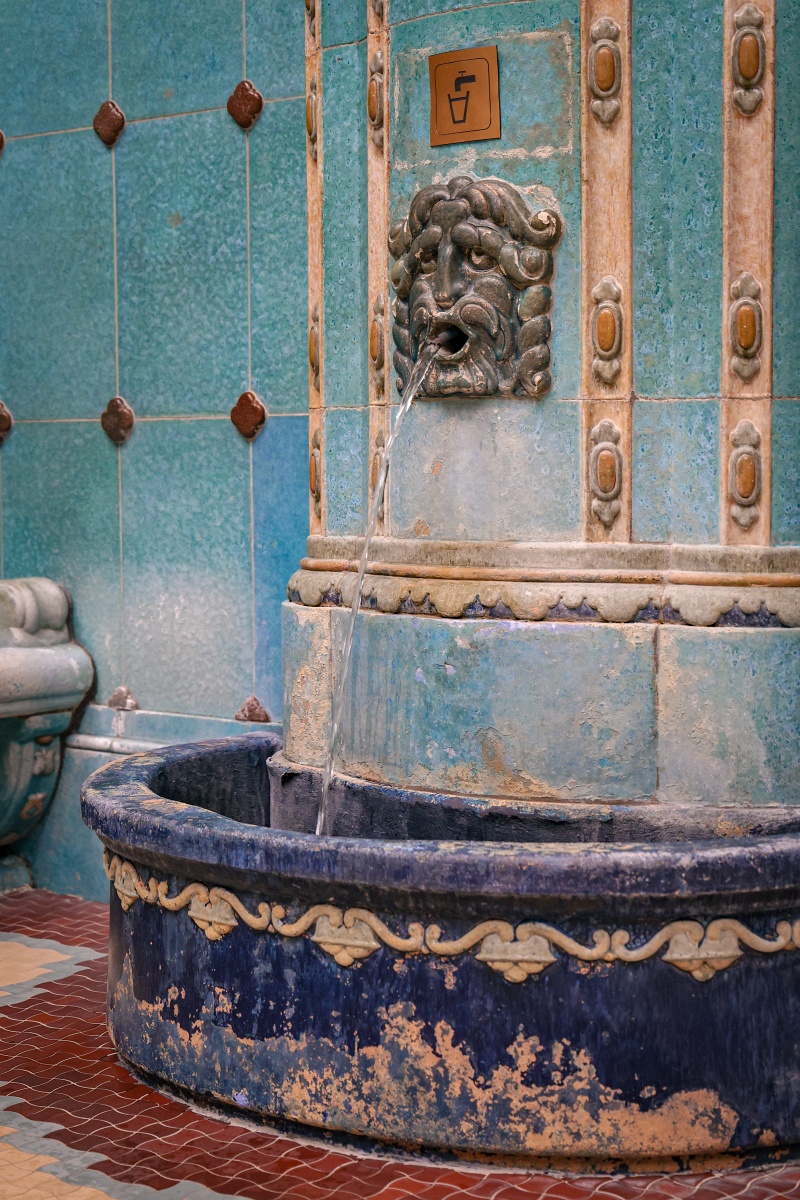
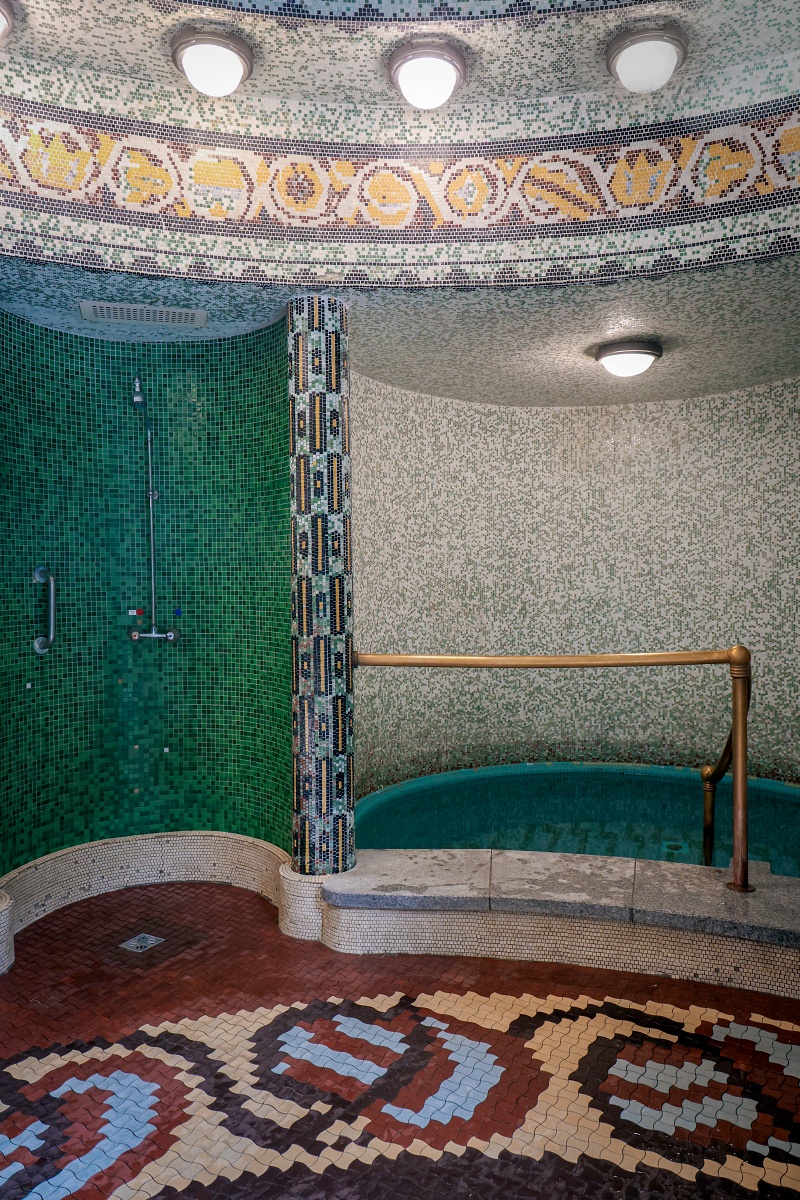
Passing through the main indoor pool, you’ll find yourself at one of the highlights of the complex. The thermal baths, two semi-circular pools at each end of the room, are a work of art. The floor of the pools is decorated in striking blue geometric patterns. There is a feeling of an enchanted enclave, enhanced by the walls, which are clad in bright turquoise Zsolnay porcelain tiles. Sculptural fountain figures watch over you, most of them neo-classical cherubs. They flutter along the walls amidst the ornate balustrades, gold-coloured railings, and mosaic decorations. Each feature is bordered on porcelain floral motifs, and even the signs are inlaid in blue porcelain. The vaults running along the arch of the ceiling are decorated in maroon botanical and arabesque motifs, a nod to the Bath’s Ottoman history. This space is also lit by a skylight, and as the day passes the light changes within the room, and the concept of time becomes more fluid.
Aside from its elegant serenity, there is a contemplative monastic feel to the space. It’s the way the small, narrow and dark corridors open up into the large-scale bathing halls. The spaces invigorate the senses as they are filled with natural light. Your eyes feast on the way the dark, earthy-coloured ornamentations contrast with the bright blue shiny surfaces at almost every angle. The water itself brings these spaces to life, it mirrors and moves, and creates a symphony of sounds even when its bathing occupants are silent.
Outdoors, you’d find yourself in a scene that has stepped out of the Mediterranean or the French riviera. Vibrant sun lounges and cheerful bougainvillaea colour the open-air terrace. There is a large lap pool a storey below, and an elevated wave pool next to it. In 1927, the world’s first wave pool was built as part of the Gellert complex.
In contrast to the meditative vibe of its interior baths, outside, the air is breezy, sunny, and a teleportation to a summer postcard.
The Gellert Thermal Baths was a definitive highlight of my explorations in Budapest. There is an intricate way in which the spaces, elevations, and scales overlap, ushering you to take your time as you encounter them one by one. Through its unique blend of beauty, history, and cultural significance, it welcomes you to be present in the city’s social ritual of bathing.