
ARCHIDEX is one of the largest exhibitions for materials, architecture, interior design, and the building industry in the region. It brings together a wide range of exhibitors showcasing the latest materials, technologies, and innovations in the construction and design industries. It is a significant event for professionals in these fields to network, learn, and explore new products and trends. Year after year, the exhibition will feature awe-inspiring booths that bring materials and brands to life, creating impactful experiences for visitors.
This year, a few young architects, most who have been recognised by PAM (Pertubuhan Arkitek Malaysia) as Emerging Malaysian Architects Under 40 years old, had the opportunity to design curated booths and pavilions at ARCHIDEX. By engaging emerging local talent, the organisers hope to highlight the importance of involving architects in the design of everyday spaces, including impermanent structures. Their designs offer a fresh perspective on how materials and technologies can be showcased, offering firsthand experience of how well-designed spaces can be captivating and impactful, reinforcing the notion that architecture is more than aesthetics; it’s about crafting environments that elevate human experience. This initiative also provides young architects with a platform to showcase their talents to a broader audience, potentially opening up new opportunities for their careers.
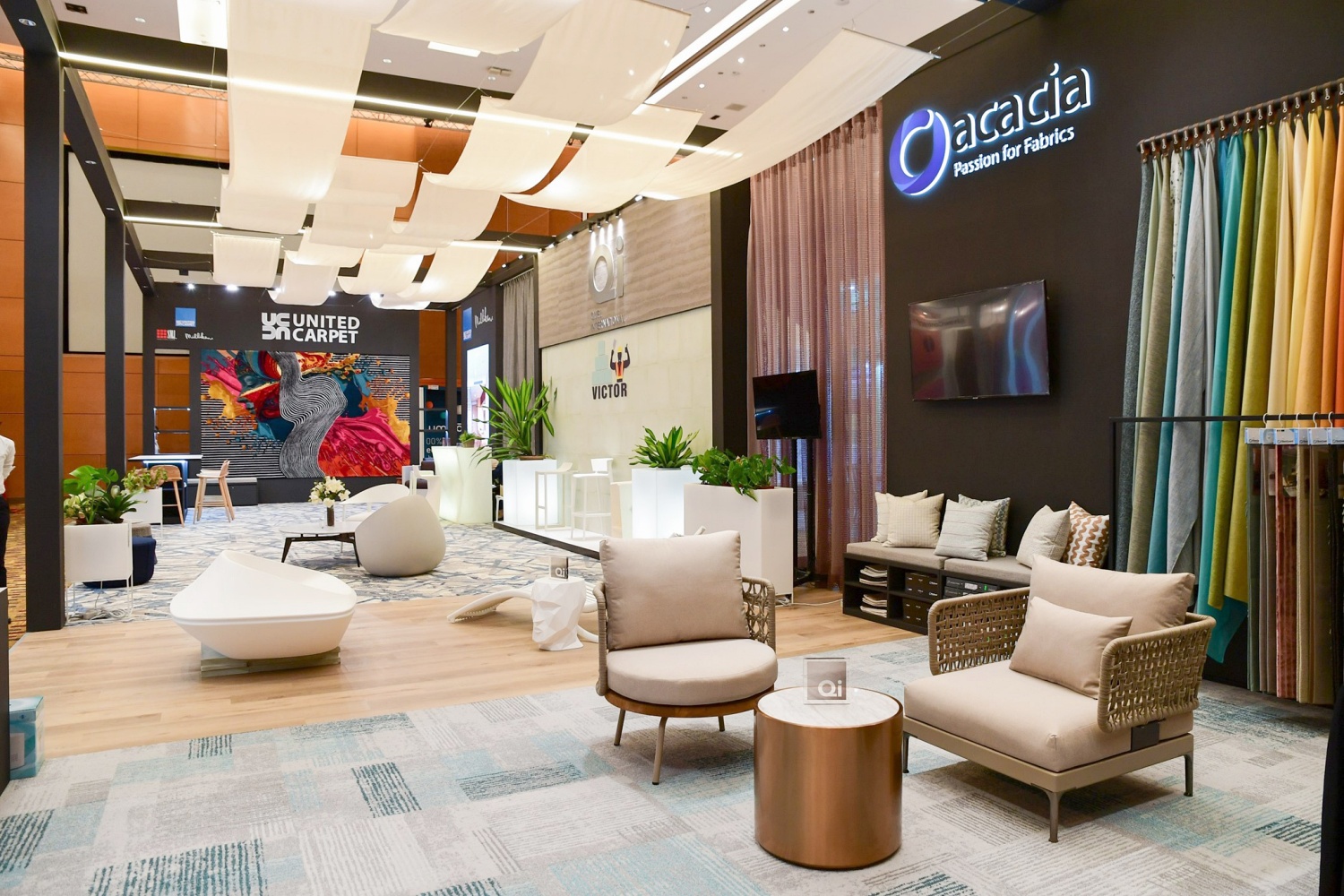
Ar. IDr. Esmonde Yap designed a pavilion for Quel International featuring a blend of sheer white fabric and gypsum blocks to create a harmonious mix of solidity and translucency. Pastelcoloured woven fabrics on the walls enhance the atmosphere, symbolising the diverse human experience. The booth also includes furniture that enhances both aesthetics, an intelligent lighting system that adjusts the interplay of light and shadow, and bold accents from a carpet on the wall. The pavilion showcases the synergy of materiality and technology, offering a functionally superior and visually striking space that celebrates innovation and honest materials.
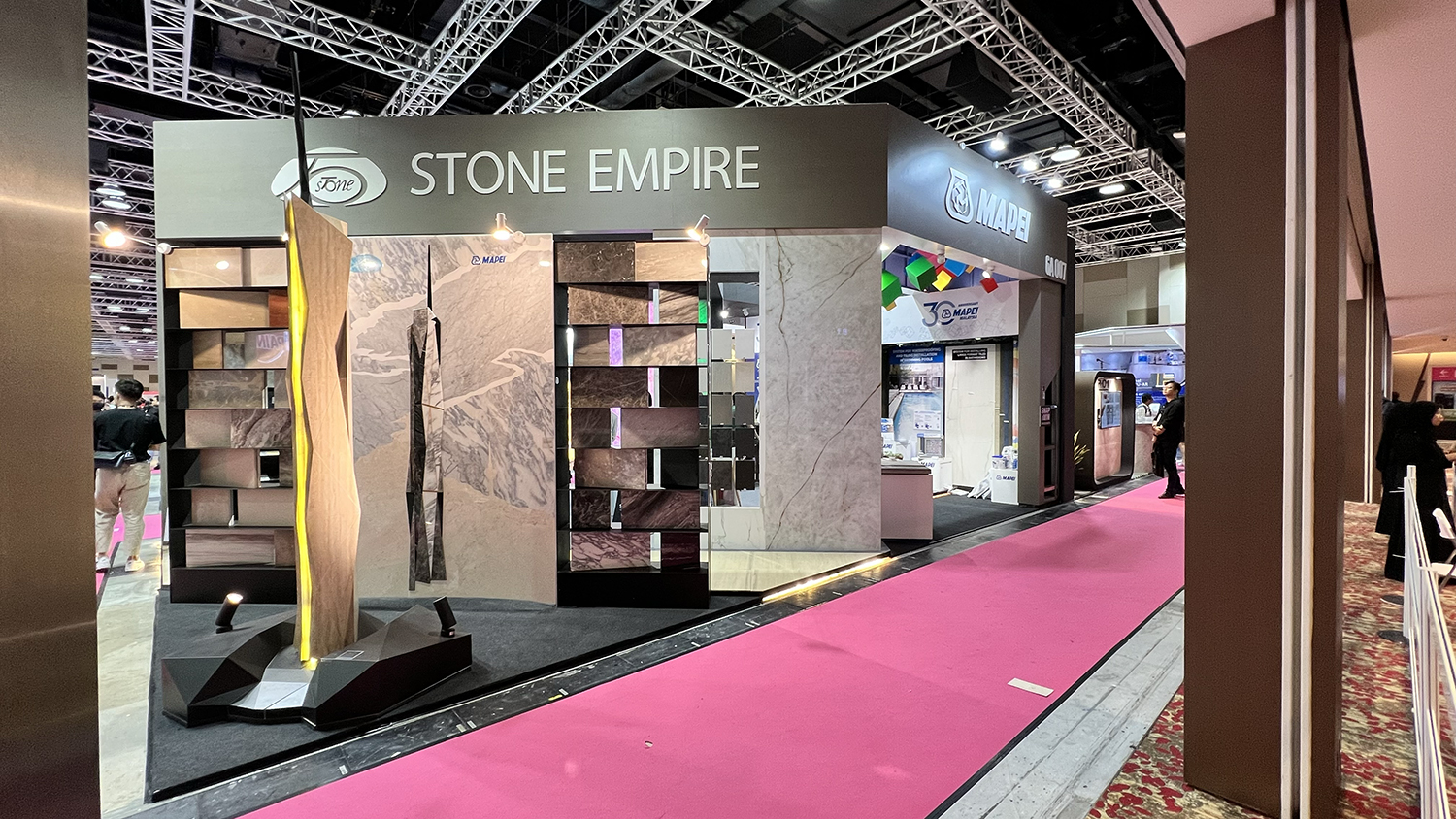
Ar. David Teoh’s design for the Stone Empire & MAPEI Booth at ARCHIDEX 2024 is a masterful celebration of stone in all its forms. The concept aimed to showcase the extensive range of stone products provided by the client, who also supplied stone for the iconic Merdeka 118 tower. The centrepiece of the pavilion honours this landmark, featuring cladding in travertine and a sintered stone material called Neolith. One of the booth’s standout elements is the quartz wall, which is semi-transparent and backlit to create a captivating visual feature. This illuminated wall can display a spectrum of colours, enhancing the pavilion’s dynamic aesthetic and demonstrating the versatile beauty of stone materials. Through this design, Ar. David successfully combined product showcase with architectural artistry, creating an engaging and visually striking exhibition space.
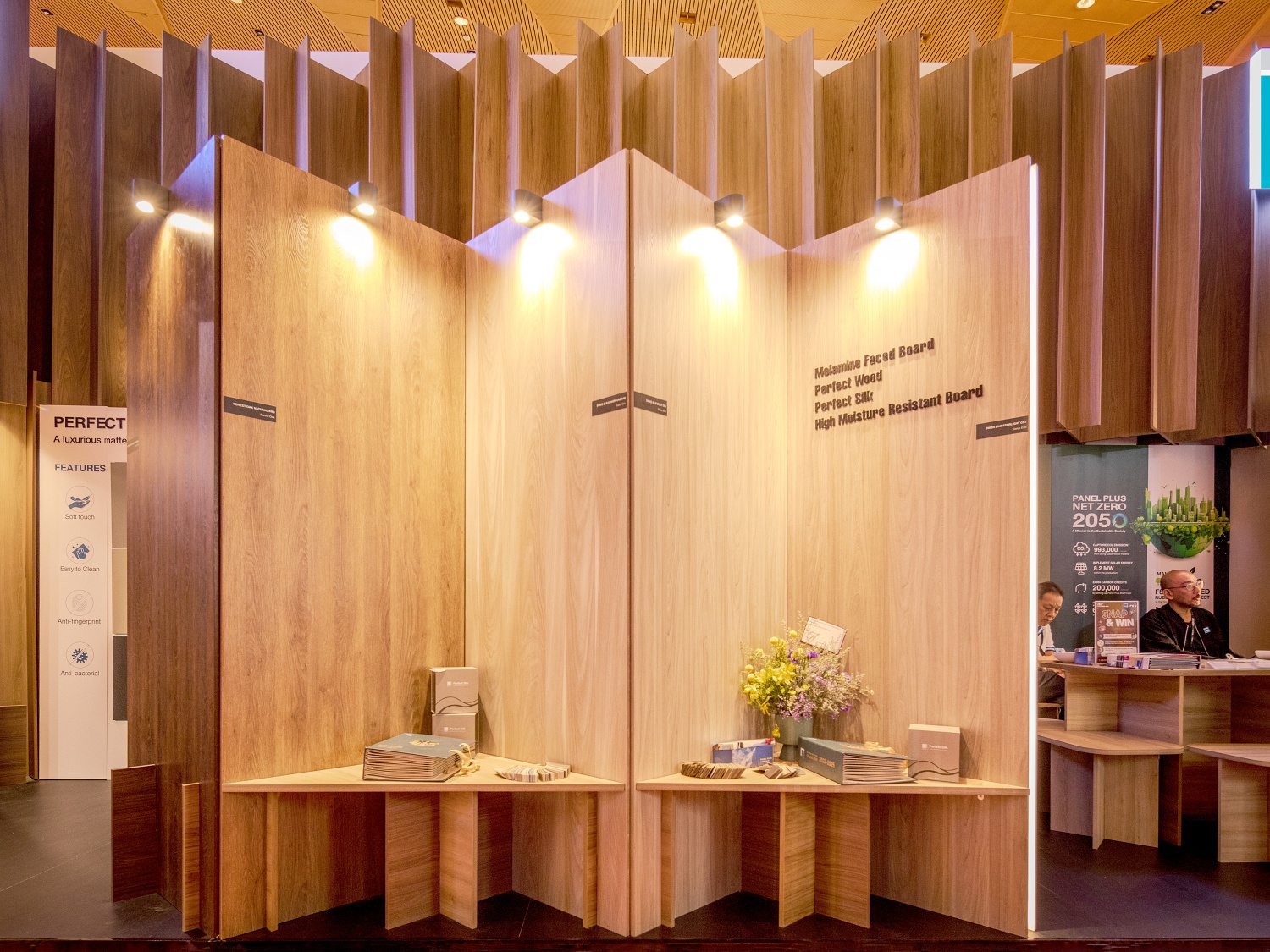
Ar. Firadaus Khazis’s design for the Panel Plus booth exemplifies innovative material usage through simple construction techniques. Tasked with both design and construction, Ar. Firadaus and his team explored the full potential of Panel Plus’s Melamine Faced Chipboard (MFC), resulting in a booth composed of 99% Panel Plus material without relying on steel for structural support. The strength of MFC was harnessed to create structural systems, leading to an intricate and robust installation.
This design not only showcases the versatility and durability of MFC but also emphasises sustainable design practices by minimising and potentially reusing the materials in the future. Ar. Firadaus’s simple and innovative approach highlights the potential of MFC in interior design, setting a precedent for future projects. By using MFC to its full potential, the design underscores the importance of sustainable practices in the industry, promoting the use of durable and versatile materials in place of traditional structural support. This achievement at ARCHIDEX 2024 not only reflects the capabilities of Panel Plus materials but also marks a significant step forward in pushing the boundaries of materials in architectural design, through close collaboration with architects.
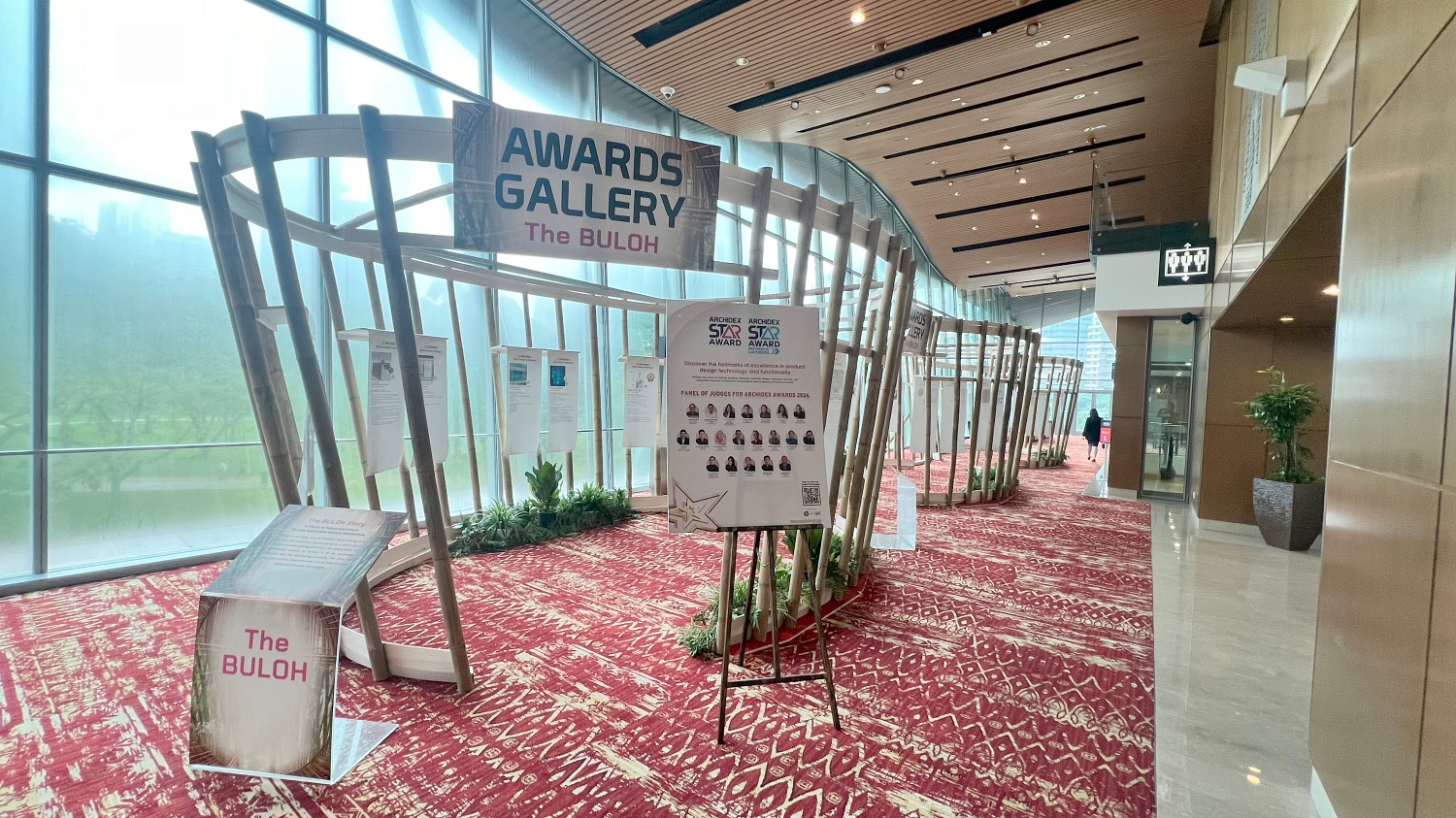
ARCHIDEX Awards Gallery Pavilion, “The Buloh,” designed by Ar. IDr. Ts. Qhawarizmi Norhisham, beautifully captures the essence of cultural heritage and the intricate ecosystems that sustain us. Titled “Dari alam kita datang, Pada alam kita pulang”, the design evokes a profound sense of wonder and gratitude for the natural world. This pavilion pays homage to both tradition and the environment by embodying the cyclical relationship between humans and nature. The pavilion was located at the direct link connecting Traders Hotel and the exhibition Halls on Level 3. The beautiful backdrop of the KLCC Park and the prestigious Petronas Twin Towers graced the Pavilion further by contrasting the humble bamboo material against modern steel and concrete superstructures within a forest-like setting.
Comprising three interconnected ovals that form a cohesive whole, “The Buloh” serves as a symbolic representation of circular economy principles, ecology, and sociology. The form allows the slanting bamboo poles to support each other’s load as the form expands outward as it grows. All the 300 bamboo poles were cut at the same length and after dismantling they will be reused
for other purposes elsewhere. Despite undergoing several revisions due to evolving location and size constraints, the pavilion’s core design remained remarkably adaptable. This flexibility suggests its potential to be adapted into numerous configurations.
The use of Bamboo was a poetic fit for the Archidex Star Awards representing rapid growth, strength and sustainability as it upholds the ethos of the winning entries this year. The product boards of the nominees and winners were on display in the inner space of the pavilion.
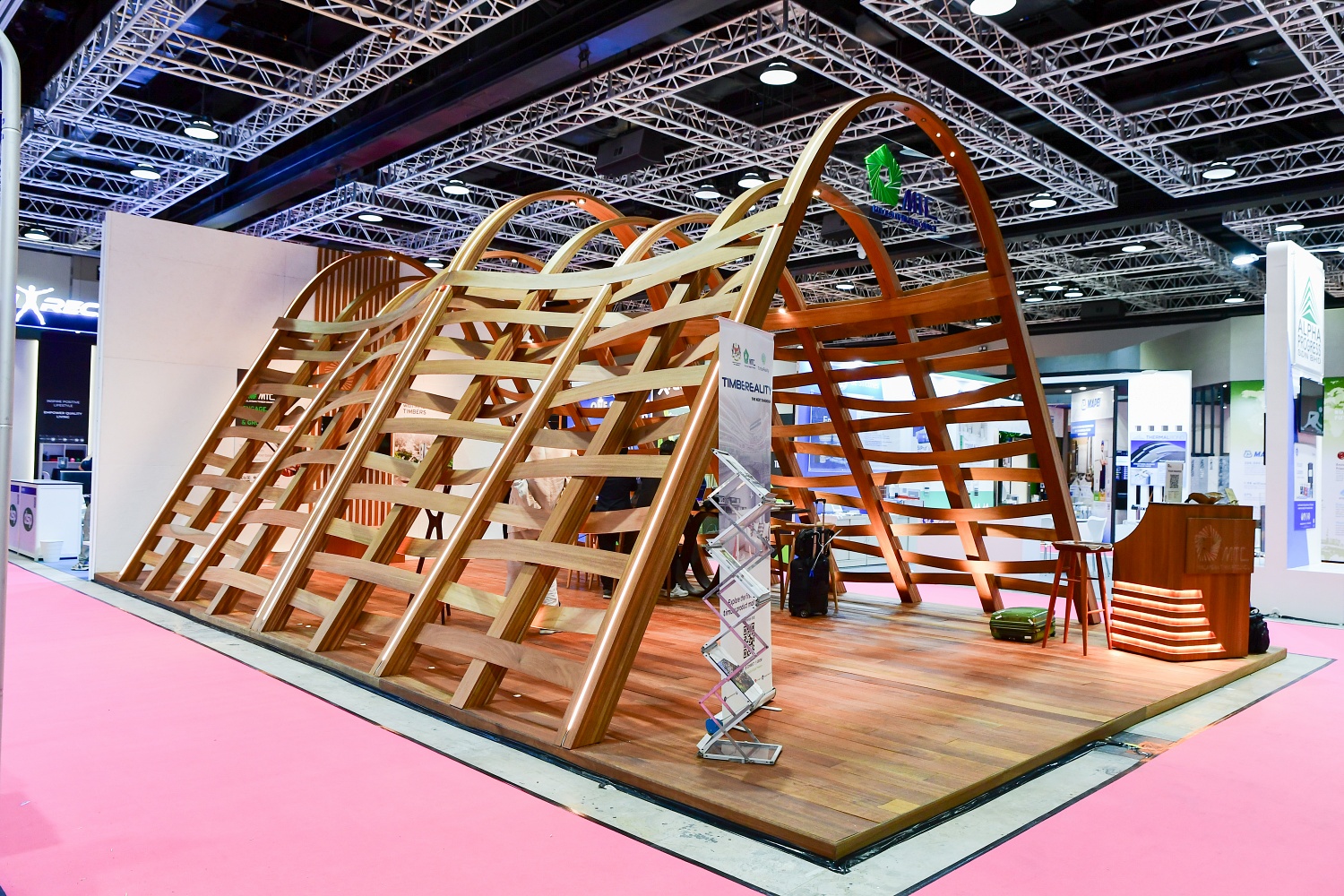
A captivating vision of woven wood, the “Weaving Waves” Pavilion, designed by Ar. IDr. Esmonde Yap for the Malaysian Timber Council, turned heads at the exhibition hall with its profound presence. This 60-square-meter structure celebrates Malaysia’s heritage and showcases the potential of Softened Wood. Featuring 10 elegantly curved ribs ranging from 3600 to 4000 mm in height, the pavilion’s design is inspired by traditional Malay basket weaving techniques. Woven wood interlaces between the ribs, symbolising the intertwining of memories and innovation.
The intricate weaving highlights the strength and versatility of wood, pushing its boundaries to reveal hidden fluidity and elegance. The shell-like structure creates a dynamic interplay of light and shadow, casting intricate patterns that enhance the pavilion’s visual presence. Visitors can appreciate the harmonious relationship between nature and craftsmanship, gaining a fresh perspective on the material’s beauty and transformative power.
“Weaving Waves” stands as a testament to the elegance of Softwood and the innovative spirit of Malaysian craftsmen, celebrating the past and future of Malaysian wood art. The pavilion highlights the importance of sustainable practices, with Softwood sourced from responsibly managed forests. The pavilion stood out for its innovative design and cultural significance, as well as promoting discussions about the future of architectural materials and traditional craftsmanship in contemporary design.
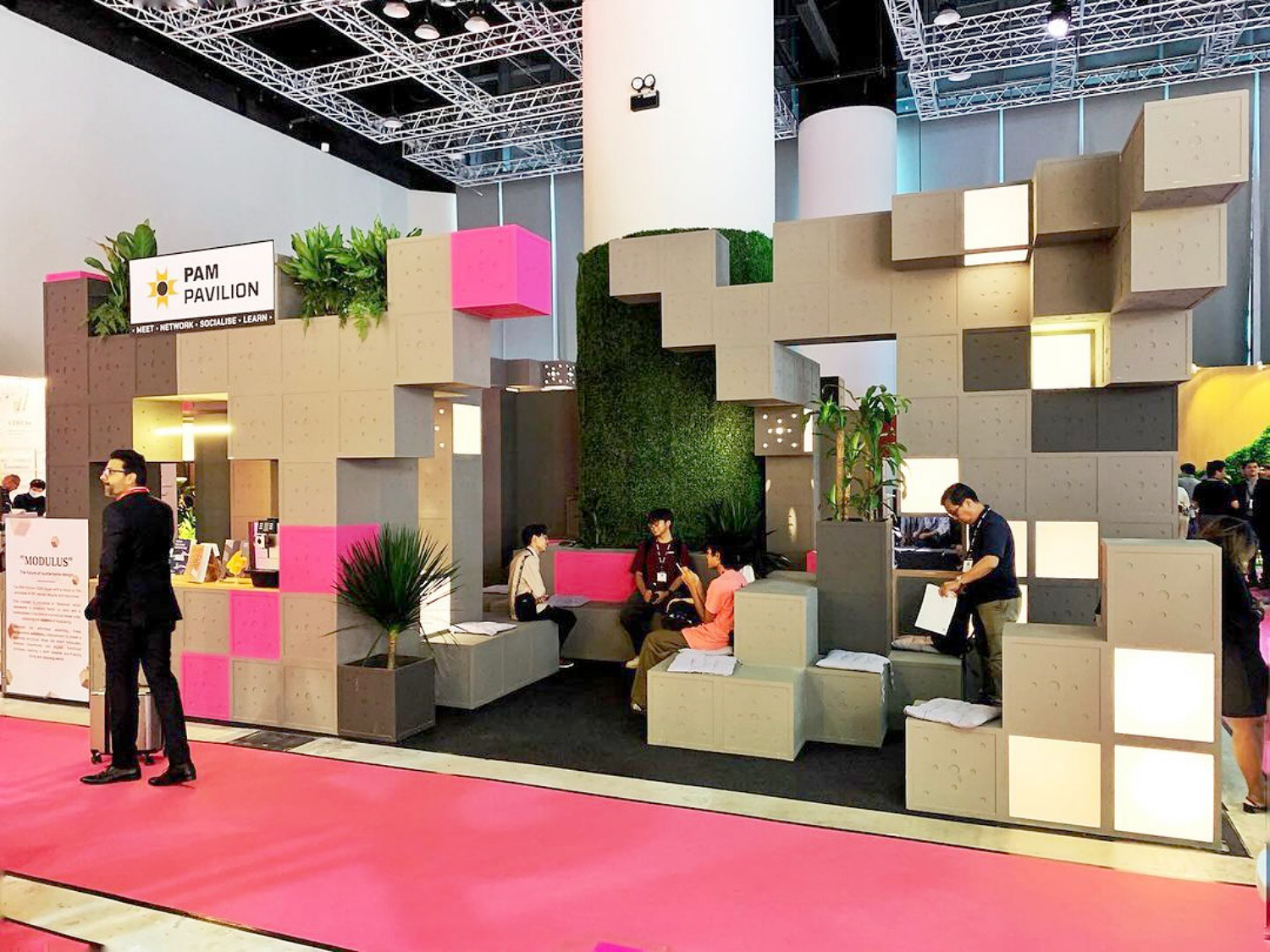
Known for his meticulous crafting of spaces and forms, Ar. Azlan Syarawi was chosen to design The PAM Pavilion 2024, aptly named “Modulus.” This playful pavilion, designed for disassembly and reuse at future events, reflects a commitment to both adaptability and environmental responsibility. Originally conceived as a simple geometric cube, the pavilion transforms into a dynamic space through carved voids, inviting visitors to explore its open layout.
Named after the constant factor or ratio in mathematics, it embodies modularity through a grid of 450mm timber cubes. This 100sqm pavilion in Hall 8 features 623 cubes, each transforming into a seat, table, bookshelf, cocktail bar, planter box, display, stage, lightbox, and more. The colour selection steered away from PAM’s signature orange, and instead, it was accentuated with Pink boxes reflecting ARCHIDEX’s identity, an event that all architects look forward to each year. The pavilion became a vibrant hub, fostering impromptu meetings, business networking, and a variety of activities throughout the four-day event. “The Forum,” hosted within the pavilion, featured an impressive lineup of speakers who delivered their talks against the backdrop of the pavilion’s unique design. Ample seating ensured a comfortable environment for attendees, while passersby could catch snippets of the open forum discussions.
Designed for effortless assembly, the PAM Pavilion’s modular components seamlessly interconnect to form a stunning structure. Upon disassembly, its components will be reused, either in part or as a whole for future applications. This adaptability allows the pavilion to be reconfigured into various space sizes and forms, minimising waste and exemplifying a shift towards eco-friendly living. This strategy serves not only as a captivating exhibition space but also as a practical blueprint for future sustainable structures. By demonstrating how modularity can meet today’s needs while aligning with long-term environmental goals, the pavilion educates industry professionals and encourages them to explore innovative ways of integrating sustainability into their designs.