In summer, Helsinki experiences long days and very short nights. We travelled to Helsinki in June 2024 for a part-work, part-play trip and managed to traverse the port, the waterfront, the city, and the rural towns. There was light rainfall in summer, but we were lucky as most days were at a high of 1618 degrees Celsius and low of 10, with little rain and abundant sunshine. We have never seen nightfall!
Our home away from home was the Grand Marina Hotel, strategically located at the heart of the port. During the summer, this hotel becomes a bustling hub for travellers, with ferries like the Viking Xpress and the Eckerö Line whisking visitors to other places and neighbouring countries such as Tallinn in Estonia. The convenience of this central location made our summer travels a breeze.
A leisurely stroll to the harbourfront treated us to a breathtaking view of the Baltic Sea. The area was alive with social activities, with outdoor cafes serving as the beating heart of the public realm. The bustling bazaar, a treasure trove of souvenirs and local food, was a feast for the senses. The aroma of salmon and vegetables sizzling on the grill filled the air, tantalising our taste buds and awakening our sense of smell.
A walk to the city about 20 minutes away leads towards the plethora of churches, museums and public spaces.
The first building we visited was the Helsinki Cathedral, built in 1852. The building unfolded like a building that had jumped out from a Neoclassicism lecture in architecture history. It is a Finnish Evangelical Lutheran cathedral of the Diocese of Helsinki, located in the neighbourhood of Kruununhaka at Senate Square. The church was built from 1830 to 1852 as a tribute to the Grand Duke of Finland, Emperor Nicholas I of Russia.
The cultural and media hub is a short distance from the cathedral. It is formed by the Helsinki Music Centre, Finlandia Hall, Sanoma House, and the Museum of Contemporary Art Kiasma. Due to the pressing of time, I managed to visit the Oodi and Kiasma.
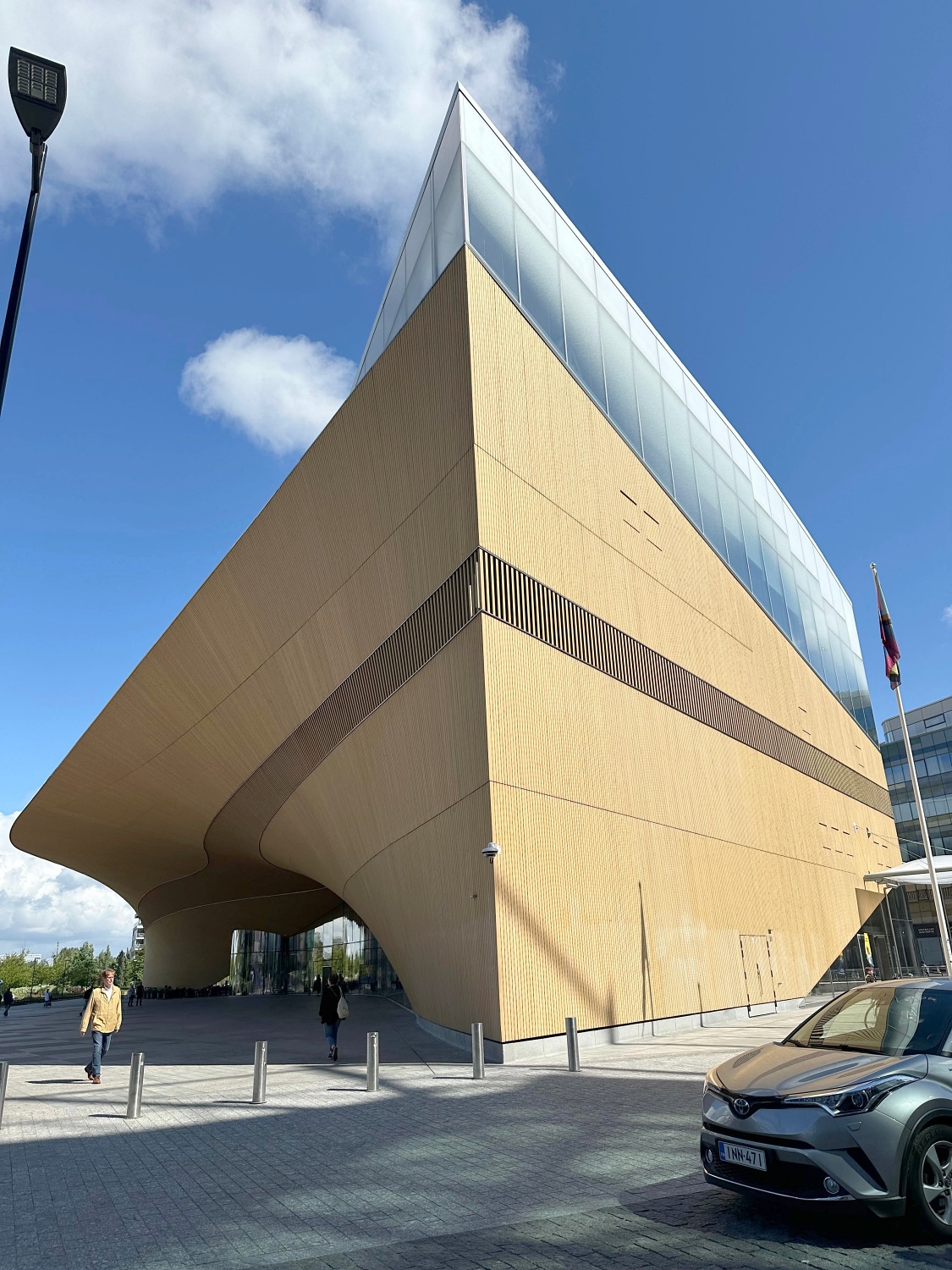
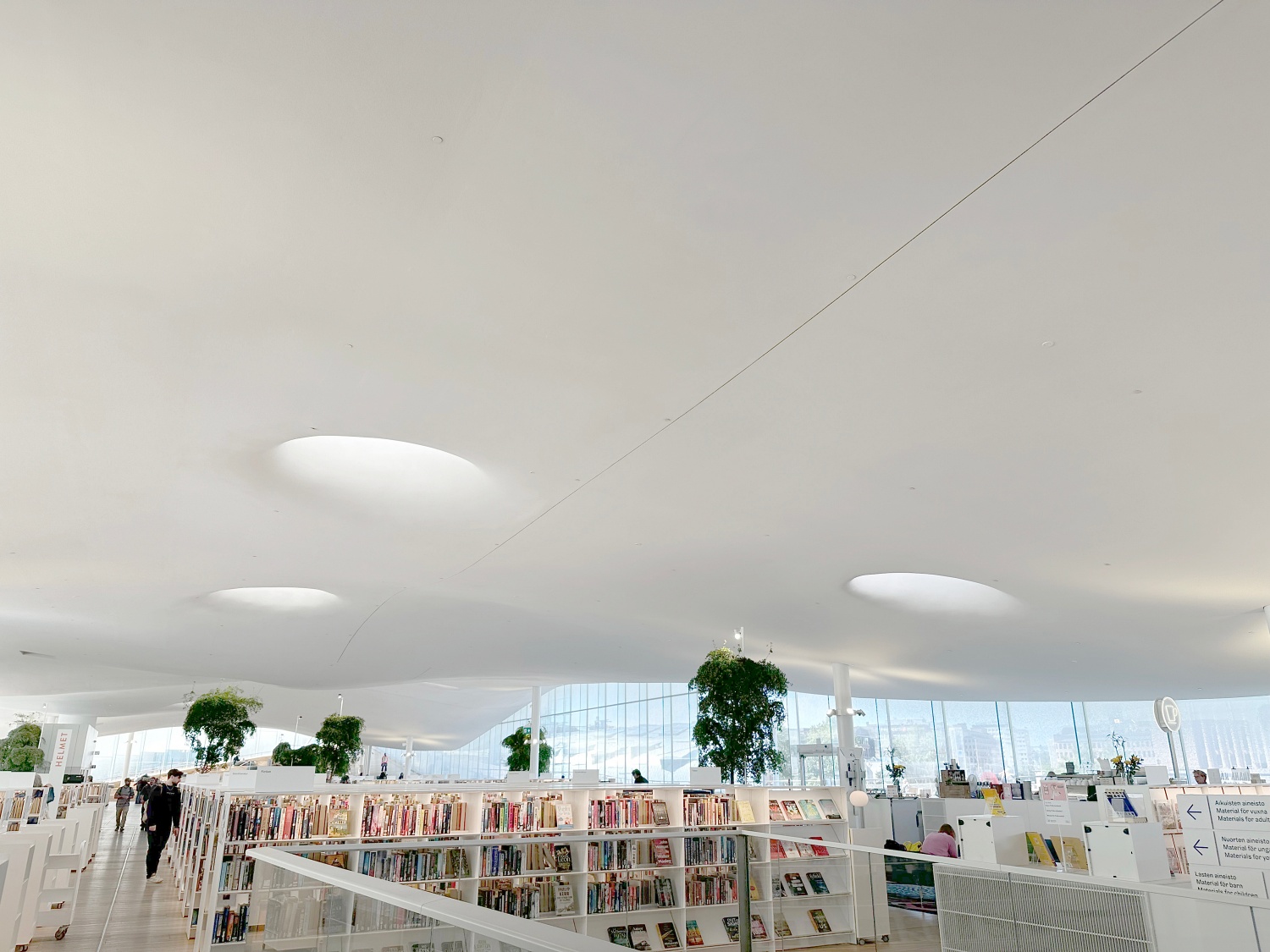
Oodi Library is more than a library! Designed by ALA Architects and completed in 2018, Oodi is a non-commercial urban public space, a living meeting place at Senate (Kansalaistori) Square. In Oodi, you can sew a fashion piece, 3D-print a model, build some furniture, tell a story, cook with your friends, play games on Xbox or Nintendo, or just meet.
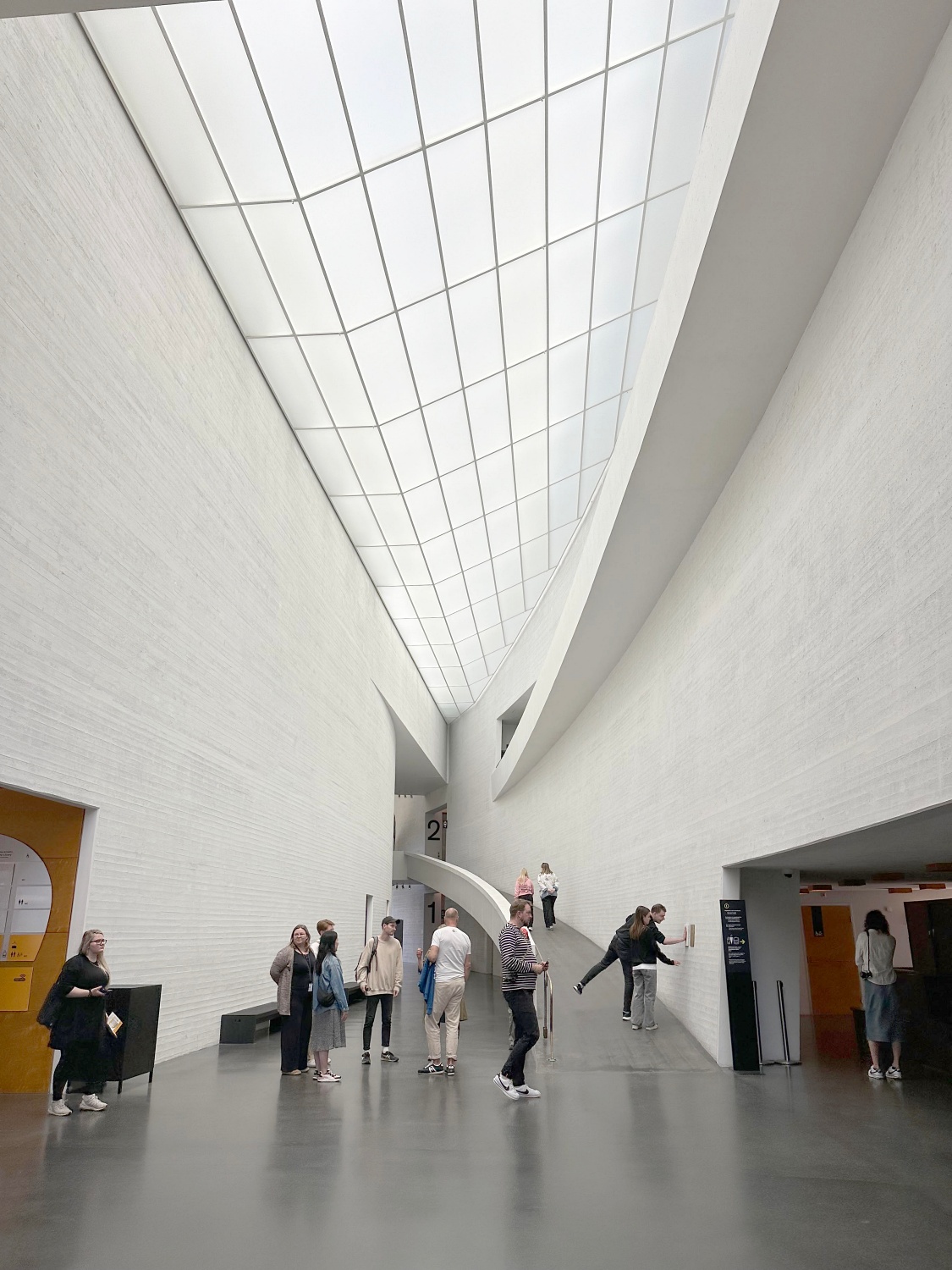
Across the Senate Square, Kiasma by Steven Holl is a must-not-miss! As a fan of Steven Holl, I find the experience of Kiasma to be the same as it was viewed in books. While the contemporary art exhibited was engaging, we dwelled more on Holl’s theory of phenomenology, seeing his notions of enmeshed experience, perspectival space, light and shadow, and so on.
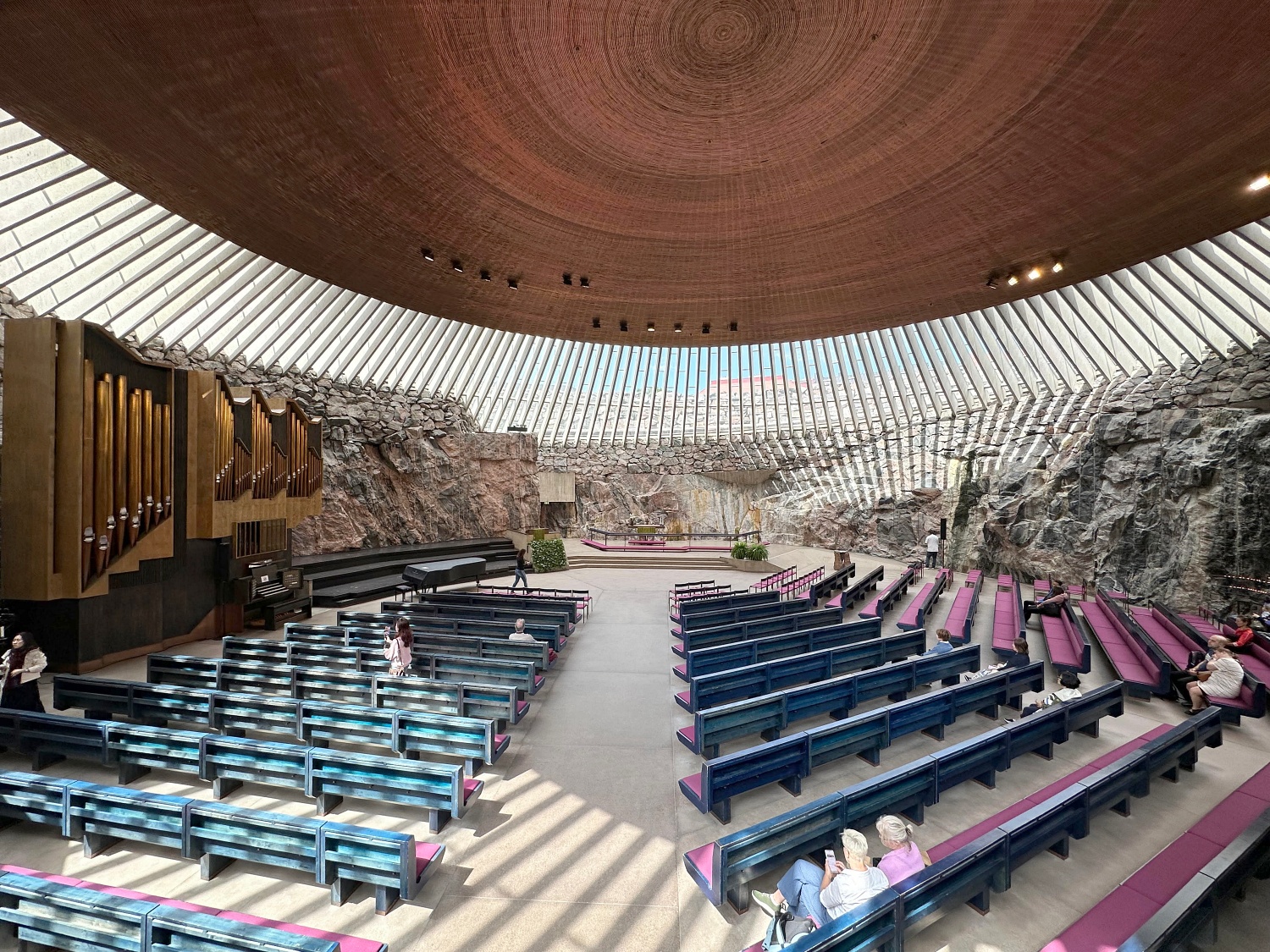
Next, not too far away, is the Church of the Rock, known as Kivikirkko, designed by Timo and Tuomo Suomalainen, brothers who were architects in the 1960s. Amidst an outcrop of rock from the outside, the entry led to a phenomenal church hall embedded in the stone. The elliptic church hall is bathed in daylight, and it passes through the hall from the narrow skylights between the rock wall and the copper ceiling dome of 24-meter diameter. The inner surface of the dome is clad in copper tape, requiring a length of 22km. A chime melody composed by Taneli Kuusisto is played in the church, replacing the bells.
Built between 1888 and 1891, St. John’s Church, the largest stone church in Finland, is a Lutheran church designed by Adolf Melander in the Gothic Revival style. It sits on a hill, and in summer, I saw many people sitting on the slope of the mini hill looking over the harbour view.
Escaping the city, we went on a day trip to Porvoo. The Old Porvoo greets with a picturesque landscape of a dense medieval cobbled street with colourful wooden houses founded in 1346. The city was mainly destroyed by fire in 1760, and current buildings were built afterwards. The Old Porvoo welcomes visitors with a picturesque landscape and dotted cottages. Uphill stood the Porvoo Cathedral, built in the 15th century, although the oldest parts date from the 13th century. Along the river were the red-ochrepainted riverside warehouses built in the 1760s, and we were told that this view is probably the most photographed in Finland.
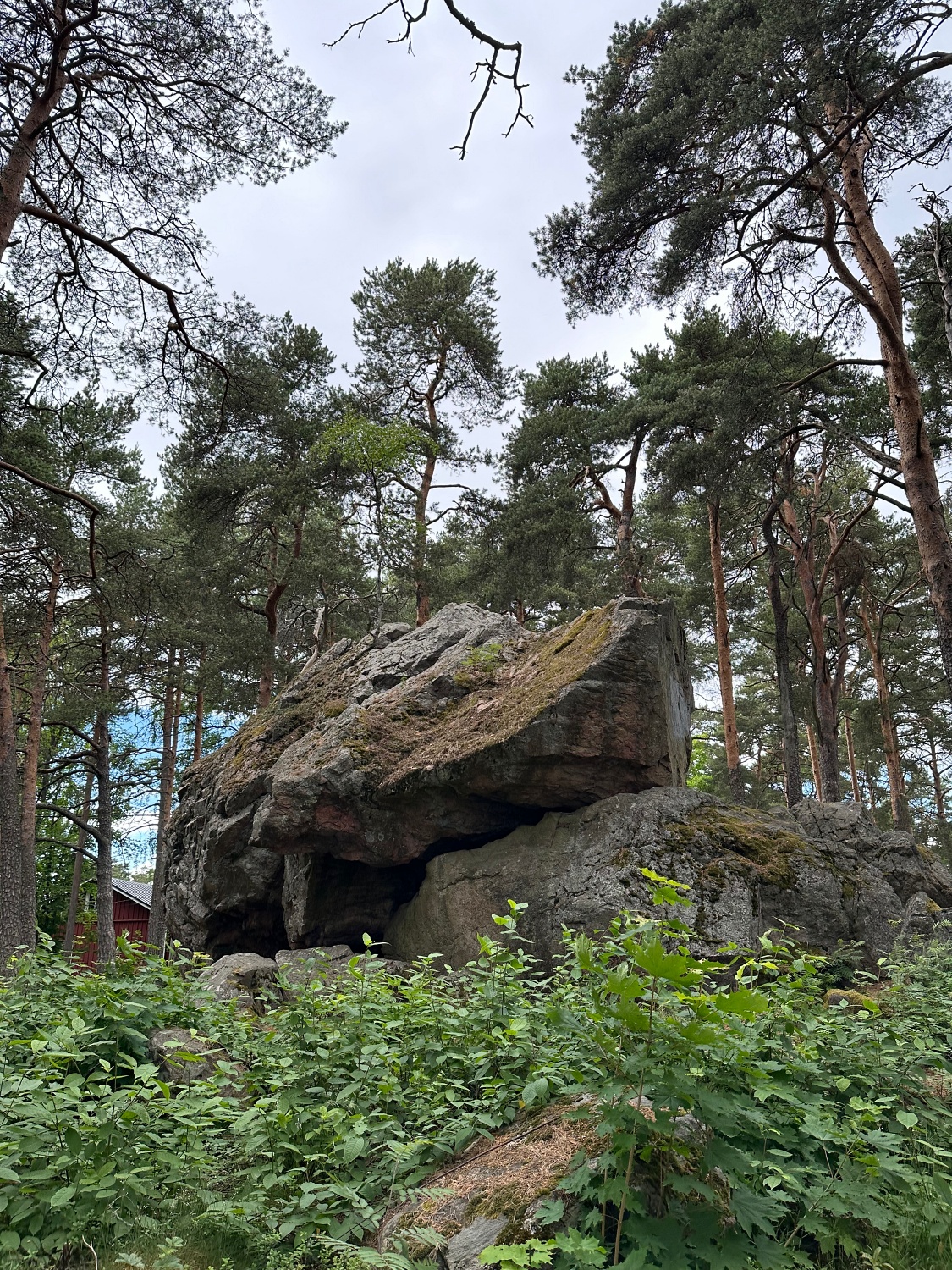
We also visited Castle Hill in the north of Old Porvoo, the site of one of the biggest ancient fortresses in Finland. The hill has no relics or ruins, but you can still see the huge moat that encircled the site.We also stopped by the Näsi Stone, a huge glacial erratic boulder. It was believed that a giant threw the stone there because the construction work of Porvoo Cathedral and especially ringing church bells on a Sunday morning disturbed him.