
ARCHITECTURE MAGAZINE
Can you tell us about the inspiration behind “Visionary Architects of Monsoon Asia” and what motivated you to compile this book? What criteria did you use to select the architects featured in the book, namely Vo Trong Nghia, Rene Tan, Andra Matin, Duangrit Bunnag, and Dr. Tan Loke Mun?
ROBERT POWELL
I’ve always wanted to write an autobiography. You don’t often get the chance to do that. You may be making notes about what you’ve been doing but there is never an occasion to use them. I usually write about other people and their buildings and about architecture. But on this occasion, Dr Tan Loke Mun said why not write an account of your time in Southeast Asia. So that was it! It was as simple as that.
The other part of the book was about visionary architects in Vietnam, Thailand, Indonesia, Singapore, and Malaysia. The subject appealed to me.
And the way of joining the two together was to introduce in my autobiography the various architects I had met when they were just starting their practice or reflecting on their work. I encountered Rene Tan when he was starting the practice of RT&Q. I encountered Andra Matin when he left the practice he was working for and started his own practice. The first project he did was a graphic artist’s studio. I wrote about that in a journal in Singapore. Then I encountered Duangrit while writing about architecture in Thailand and he was employed by A49.
I met Vo Trong Nghia a little bit later. I stumbled on his work in 2016. I was taking a vacation from Taylor’s University, and I met my daughter in Venice. We went to the Venice Biennale and Vo Trong Nghia had an exhibition there on green architecture and bamboo. Then finally I met Dr. Tan in 2018 when I was looking for someone to publish a book.
So, all these people as it were, just happen to fall into place. And I thought, in all five cases, there were some elements of vision about the future. There were some dissenting voices, but they were the right people. For me, they are people I’ve met, and they slotted into my 40 years in Asia!
AM
Each architect brings a unique perspective to their work. How did you see their individual styles contributing to the broader narrative of architecture in Monsoon Asia?
RP
Being visionary is important. They may not be the people you immediately think of, but I believe in each case, they do bring a certain perspective towards their architecture. Vo Trong Nghia was one for example, who wanted to build in bamboo, a locally available material. He is very conscious about designing buildings, which are naturally ventilated, and he was also conscious about trying to rebuild Vietnam after the war, too, because so much was lost.
Then, I saw another man who had a vision, Rene Tan. All his projects in the book are on housing. A small project in Singapore featured in this book is called =DREAMS Campus, designed for young people who are living in small HDB family apartments. They can go to this place to study and stay for a night or a week. Then from a small project up to highrise residential projects that restored Sentul – a precinct that used to be the factory repair yards of the Malayan railway. In its glory days, there used to be about 5000 Indian workers there, but it declined and became not a very pleasant place to go to. Rene’s works in Sentul displayed the vision of how a city can change remarkably because of one designer. There is one quotation in the book which is beautiful. Rene went to university initially to study the piano before pursuing architecture. He notes, “When you play a piece of music by Chopin, a good musician would not drop one note. Every note will be played”, and he brings that same integrity to architecture. The detailing has to be perfect and everything has to be considered.
Andra Matin is another genius! I mean everything he touches; he brings a new perspective to it. I went into his buildings, and I went “Wow! Wow! Wow!”. The Omah Jati villa, and the Tubaba mosque in Sumatra, are brilliant! And then the airport in Banyu wangi on the eastern end of Java is like no other airport you’ve ever been to! It has a green roof, and the departure and arrival lounges don’t have air conditioning.
So, then there is Dr Tan Loke Mun. I thought his initiative in setting up the Green Building Index was inspirational. More recently, his idea that cities can be designed around places for people to meet. Dr Tan gives an example of MoMA in New York. where a single building can help to regenerate part of the city to some extent. That’s what his new place Toffee aims to do. This was what Oldenburger talked about – the third-place theory.
Duangrit! Some of his buildings, I don’t think have anything to do with climate. They don’t obey the rules, but his office based on the Chao Phraya River is thrilling. The Jam Factory is inspirational! His vision was to transform old factories and turn them into a multiple multicultural stage – a library, a gallery, an upmarket food & beverage place, and an office, all grouped around three beautiful old trees in a green space.
Each of them brings something visionary. With each of the five selected architects, it delighted me that I could find two or three projects that are about sustainability and resilience.
AM
In this book project what do you feel most accomplished this book in this way?
RP
I hope this book will engage more young architects to understand that architecture is more than just producing a building. There must be a higher aim of sustainability and response to climate change. Resilience! I think it has to be at the basis of what every young architect does. And I hope by publishing the book, it gives some indication of areas they can go into. The book is about Monsoon Asia. For me, it was an enormous pleasure recounting and recollecting all the people I’ve met through- out my years in Monsoon Asia. The first 41 years of my life I don’t recount, the second 41 years are the subject of this book!
QUESTIONS FOR DR. TAN LOKE MUN (DTLM), RENE TAN (RT),
DUANGRIT BUNNAG (DB) AND ANDRA MATIN (MATIN):
AM
Good architecture often reflects a deep understanding of cultural context and heritage. How do you balance modernity with tradition in your architectural designs? Can you tell us about any specific cultural influences that have shaped your approach to architecture?
DTLM
I think culture has a lot to do with location. We are in Asia; we are in the tropics! As the old saying of ‘genius loci’ or the spirit of place, our buildings have to be contextually right, and definitely climatically right. If you look back to when I was doing the Green Building Index (GBI), it was very interesting. I met a few Japanese people. They say they came to Malaysia 15 years ago because Malaysia has the ultimate tropical house, and they went to Terengganu, and they looked at the Terengganu house called the Rumah Panggung. And I thought, “Wow!”. And I remember listening to a lecture by Troppo Architects from Australia, where they said that all those tropical houses in Darby, Queensland originated from the Malay traditional house, which was from the Terengganu house.
So, culture has a lot to do with climatic contexts and the location that you’re at, and the availability of materials. If we look at just the very notion of the issue of availability of materials and local skills, unfortunately, as materials disappear off our palette, and we move more and more towards industrialised products, it becomes harder and harder to reflect back on some of these old stylistic cultural styles. It just doesn’t fit in. There are no real replacements for timber columns, timber trusses, and timber joists. And so you must use the spirit of the idea and find new expressions for it. But the Rumah Panggung, The Terengganu House is an absolute structural gem. Everything is exposed. It’s clear, very little embellishments. And maybe that’s what the future of culturally sensitive buildings is, using modernity to address the right proportions and cross ventilation to deal with the climate.
RT
I think, like many of the arts, it’s always a balance between the old and the new. I believe modern architecture, whether in Europe, Asia, or anywhere else on the globe for that matter, has learned from its past. The balance is not necessarily 50/50; it might be 20% history and 80% incorporating new materials and modes of life. However, I think the best examples of modern architecture have their roots in more traditional forms. Personally, in my practice, I’ve always looked back towards baroque architecture because I believe baroque architecture is a forgotten style of the past. People tend to dismiss baroque architecture for its flamboyance and excessiveness, but that’s not necessarily true. I think there are many things that traditional architecture, particularly baroque architecture, has given us that we ought to explore further. If modern architecture with its reduced clean lines is not interpreted well, it can strip architecture of its richness.
I think it’s an important relationship between the old and new that we need to acknowledge and learn from. That’s precisely why, in Singapore, we teach architecture. At our architecture schools, such as SUTD, we organize studios that often pair a renowned architect from history with a contemporary global city. For example, we’ve studied Le Corbusier and Venice, Schinkel and Berlin, Brunelleschi and Florence, and also Haussmann and Paris. We’ve delved into Bernini and Borromini in Rome as well. The aim is for students, including myself because learning never stops, to glean insights from the past, reinterpret them, and apply the lessons to our current design challenges. For instance, when studying Palladio, we’re not replicating his classical motifs, but rather focusing on his understanding of proportions. As long as architecture remains rooted in humanism, proportions are crucial. We encourage students to grasp these principles and apply them to urban interventions, whether in Italy or anywhere else in the world today. We consistently strive to do the same in our own architectural practice, whether in Singapore or Southeast Asia, wherever our projects take us.
DB
I might redirect your question in another direction. The way I approach my work involves creating possibilities from the context, and that’s a central theme. When you thoroughly consider the context you want to engage with, sometimes you’ll incorporate elements from the past, other times you’ll consider the future. You might also consider the city or nature. Each project varies; sometimes we lean towards one aspect of the context more than others. However, the more we can encompass these contexts, the greater the diversity of possibilities. It’s a skill for architects to contemplate all these contexts simultaneously. It’s not so much about balancing them but about generating possibilities from the context. The more contexts you embrace, the more diverse and potentially interesting the architecture becomes.
Each project is different from one another, and each requires a unique approach. I don’t have a fixed method for designing any type of project; it all changes depending on the context. However, when working in urban settings, the tendency is to focus more on the urbanistic aspects of the context, potentially overshadowing other factors. This is how I, and many architects like myself, perceive possibilities. Embracing more contexts requires more mental effort as you need to consider numerous factors simultaneously. However, this process ultimately leads to endless possibilities, which I believe is the source of creativity.
MATIN (INDONESIAN)
Sejak awal saya sangat menghormati heritage (warisan) dan bagaimana menyenangkan sekali untuk menggabungkan antara lama dan baru, karena menurut saya, itu akan lebih sulit jika membuat baru saja atau sebaliknya (lama saja), seperti merestorasi yang lama. Jadi saya sangat berhati-hati untuk menggabungkan itu dan membuat sesuatu yang tidak terduga.
Jadi kalau lama saja direstorasi atau jika baru saja itu mungkin untuk dilakukan, tetapi kalau bisa menggabungkan keduanya kemudian dapat menghasilkan hal-hal yang tidak bisa diperkirakan sebelumnya, menjadi hasil yang tidak terduga (unexpected). Itu yang sebenarnya saya suka. Seperti itu mungkin jawaban saya.
Secara umum, tentunya arsitektur Indonesia. Namun untuk lebih khususnya mungkin arsitektur Bali dan Jawa yang lebih mempengaruhi saya, kemudian mungkin arsitektur dari Jepang. Yang terlihat sederhana (simple). Saya menyukai sesuatu yang memiliki kekakuan (tension) atau kontradiksi. Sebetulnya saya agak iri dengan orang Jepang, dimana mereka dapat membuat arsitektur yang sangat baru tetapi masih terasa nilai nilai Jepang.
Itu sebenarnya yang saya inginkan untuk membuat arsitektur Indonesia lebih baru tetapi tetap terasa bahwa ini khas Indonesia. Dan saya tau itu tidak mudah, tetapi saya berusaha untuk membuat desain saya seperti itu.
(Translated to English) From the beginning, I had a lot of respect for heritage and how nice it was to combine old and new. In my opinion, it would be more difficult to create something new or to restore the old separately. So, I was very careful to combine the two and create something unexpected.
If it takes a long time to restore or if it’s only possible to do so now, but if you can combine the two, then you can produce results that couldn’t be predicted before, resulting in unexpected outcomes. That’s what I actually like. That would be my answer.
In general, of course, Indonesian architecture. But to be more specific, maybe Balinese and Javanese architecture influenced me more, then maybe architecture from Japan, which looks simpler. I like something that has tension or contradiction. I am a bit envious of Japanese people, who can create architecture that is very new but still embodies Japanese values.
That’s actually what I wanted to make– new Indonesian architecture that still feels distinctively Indonesian. And I know it’s not easy, but I try to make my designs like that.
AM
Collaboration is a significant aspect of architecture. How do you collaborate with clients, communities, and other professionals to realize your projects?
DTLM
The world is increasingly connected, and we have always moved in a circle of collaborators or friends. We might not collaborate on a particular project …. let’s say, but we share ideas. We share inspirations. We mix with the best. And if I find that I’m lacking something, I will find the person who is the best in it, and we slowly get to be good at it. You’ll find out that it’s not as complex as what it looks like. A lot of things look very complex. But after a while you realise you learn the principles and then from the principles you take your own direction from it. Take landscaping for example, I’ve worked with some of the best people who opened my eyes to not just the shape of the plant or the colour of the plant, but the shadows cast by the plant.
In terms of our collaboration with clients, we have been very fortunate. We have had people who respected us, and ongoing clients kept coming back to us because they want to build that next good design. Or they just like the way we innovate and experiment. Nobody loves you forever. One day they love you. The next day they will hate you some years later, they will come back to you.
RT
Yes, if there is a unique angle, it’s probably in a funny way, no angle at all. And I mean, it’s rather serious because in terms of collaboration, everyone listens to each other, and so on a certain project the architect may contribute a certain aspect on another project, it may be yet another angle. So I think the importance of collaboration is the thing. People should just listen to each other and architects should I think be so versatile in their ability to be able to contribute in terms of lighting, in terms of making a good plan for the creation of a nice space. Yeah, so there are so many aspects and in terms of even if collaboration is the issue, I think we should be able to just contribute in ways that sometimes we may not even suspect and whether it’s related to this question or not, I’ve told myself and my office, the biggest gift the architect can give to himself is not to think like an architect because if you think like an architect, you are trapped to all the prejudices that perhaps even school may have taught you so I think whether it’s collaborating with other designers or collaborating with a community, come home or a community centre, one should just be free to listen to issues and just try to solve them not from the point of view as an architect, but someone who really truly tries to understand the problem and contribute.
DB
If you view the client as your enemy, your reaction to them changes. Sometimes, they may seem foolish because they lack architectural training, but they often express common desires because they believe they are paying for architecture that aligns with those common desires. It can be frustrating, as even if 90% of the time they’re clever, the remaining 10% can be quite challenging. However, it’s important to also consider your client as part of the context. So, if your client seems foolish, you acknowledge it as part of the context and then consider your next steps accordingly. Everything revolves around embracing the context. If you perceive your client as the sole source of the project, you’re mistaken. They’re just one element of the context. In reality, the creation of each project doesn’t have a single source; it emerges from various contextual factors. I believe that’s the key point to consider, viewing your data in a different light.
We were trained to think that there is only one rational creative way to approach architecture. We were taught that accuracy is a crucial part of the design process. Unfortunately, that is not entirely true. There will inevitably be errors or side processes involved. I mean, if you want to climb a mountain by building it up, that would be foolish. You simply need to envision the top of the mountain and find a way to reach it. So, I believe that’s very important. This is why many architecture students have had a very challenging time. Because academic institutions often train them in a flawed manner.
You have to act naturally, which means sitting, putting yourself in the context, eliminating all barriers. Sometimes you have to react to certain layers of context and open your mind, embracing it, and the answers will come easily. You don’t have to think about programmatic diagrams; it just comes out naturally. You see the picture of the project in your head, and then you start rationalizing that image. If you do that, I mean, architecture will be so fun, relaxing, and enjoyable. You have to act naturally with them. They may not like to work on intuition, but it’s very important. It’s crucial because intuition is the only method of thinking that can lead you to endless possibilities. But you know, humans are skeptical about intuition; they are trained in the domain of rationality, which limits them from thinking naturally. But if you think in a reasoned manner, you limit yourself laterally.
MATIN
Ya, kolaborasi menurut saya semacam kesimbangan kalau mendesain terlalu dominan saya, atau istilahnya kalau di arsitektur seolah olah meninggalkan jiwa dari klien atau nyawa dari konteks. Tetapi, lebih kepada bagaimana menggabungkan jadi satu, itu yang menurut saya sangat menyenangkan. Tentunya terkadang ada yang lebih menonjol kliennya, terkadang juga arsiteknya, atau terkadang sitenya. Namun menurut saya penting untuk di kolaborasikan ketiganya.
Jadi ebenarnya saya pernah jua berkolaborasi dengan arsitek lain di Indonesia, menurut saya itu hal yang menyenangkan karena kami sama sama harus menurunkan ego. Jadi kita menurunkan ego masing masing, kemudian kita dapat berdiskusi dan menggabungkannya. Saya pernah berkolaborasi dengan Antony Liu, Supie Yolodi, Yori Antar.
Saya juga pernah berkolaborasi dengan komunitas atau masyarakat setempat, Di Tulang Bawang Barat (Provinsi Lampung). Saya dan tim bekerjasama dengan pemerintah setempat supaya kami dapat mendengar aspirasi dari pemerintah tersebut untuk bisa mewujudkan desain masjidnya. Saya juga pernah berkolaborasi dengan pemerintah Banyuwangi, dimana saya diminta untuk mendesain airportnya karena setelah saya desain kemudian saya harus presentasi ke seluruh lurah, camat untuk bisa dapat masukan kembali. Untuk bisa lebih diolah jika kemungkinan ada kekurangan atau tambahan yang diperlukan.
Saya juga pernah berkolaborasi dengan arsitek muda, untuk proyek di Taman Ismail Marzuki (TIM), dalam proses mendesain saya rasa, saya butuh beberapa masukan dan sudut pandang dari anak muda. Kemudian saya mengundang salah satu arsitek muda yaitu Wiyoga Nurdiansyah untuk berkolaborasi dengan saya di proyek TIM.
(Translated to English) Yes, collaboration seems to be a kind of balance if the design is dominantly from me, or in architecture term, to omit the personality of the client or context. But, (it should be) more about how to combine them into one, that’s what I think is very fun. Of course, sometimes it maybe more client-centric, or architect, or sometimes the site. But I think it’s important to collaborate with all three.
So, I have actually collaborated with other architects in Indonesia, I think it’s a fun thing because we both have to lower our egos. So, we lower each other’s egos, then we can discuss and combine them. I have collaborated with Antony Liu, Supie Yolodi, and Yori Antar.
I have also collaborated with the community or local community, in West Tulang Bawang (Lampung Province). My team and I worked with the local government so that we could hear the aspirations of the government to be able to realize the design of the mosque. I have also collaborated with the Banyuwangi government, where I was asked to design the airport because after I designed it then I had to present it to all subdistricts, and subdistricts to be able to get input again. To be more processed if there may be deficiencies or additions needed.
I have also collaborated with young architects, for projects in Taman Ismail Marzuki (TIM). In the process of designing, I think, I need some input and perspectives from young people. Then I invited one of the young architects, Wiyoga Nurdiansyah, to collaborate with me on the TIM project.
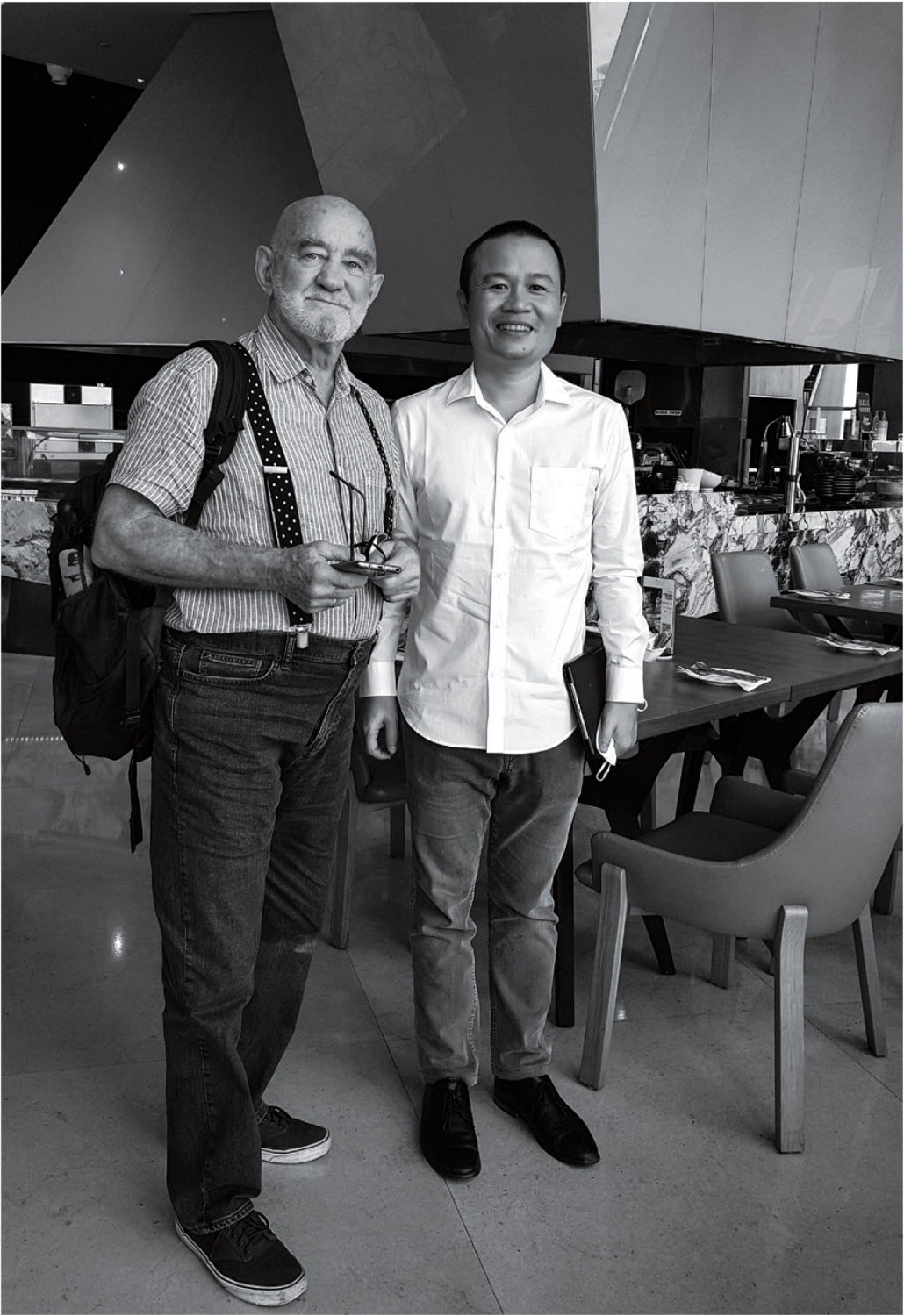
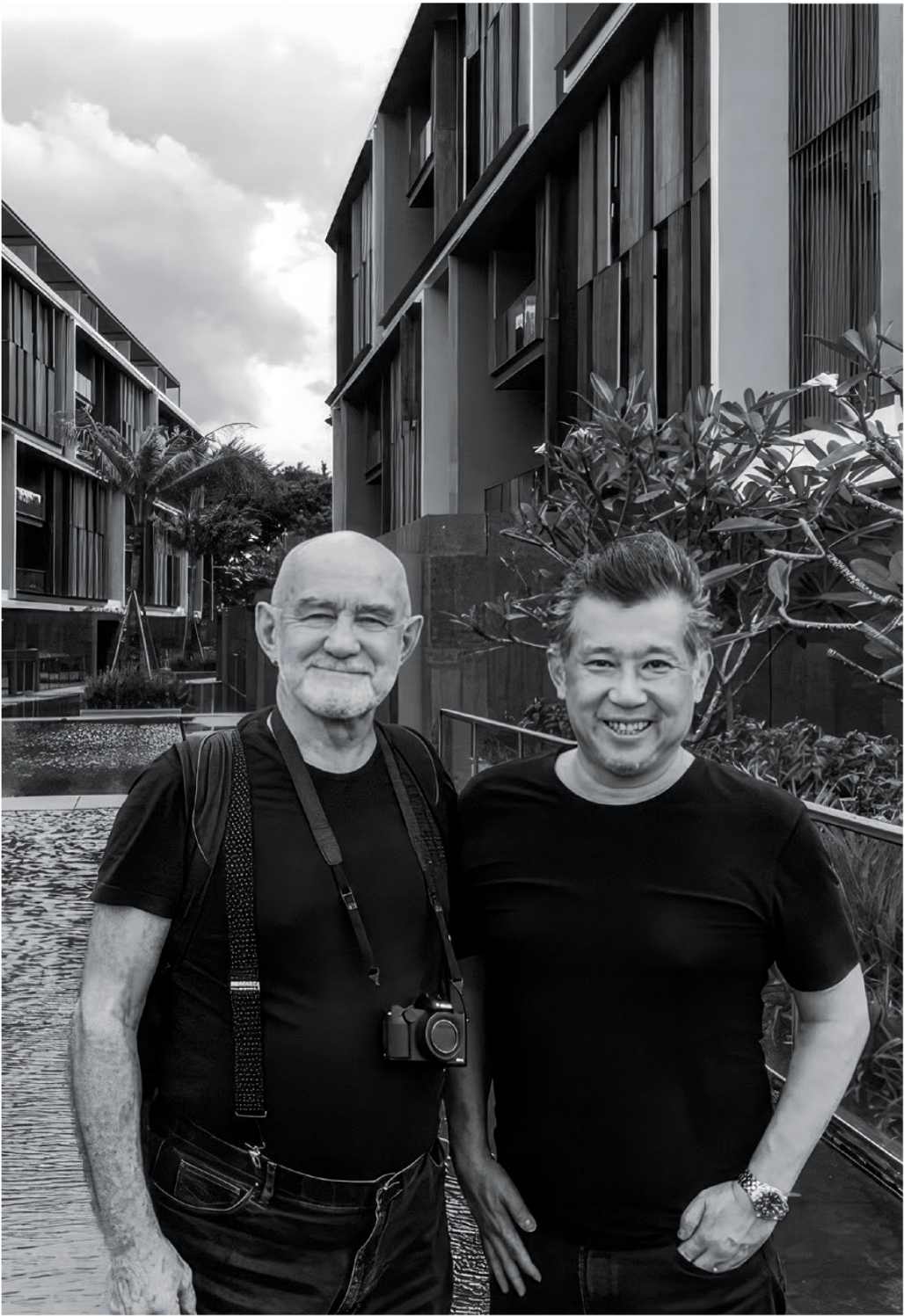
AM
Sustainability is increasingly important in architecture. How do you integrate sustainable principles into your designs, particularly in urban environments?
DTLM
Buildings are machines for living, and it is increasingly expensive if you design them wrongly to operate and live in. So, you need to design for sustainability and even now you have to be one step further than that. It has to be resilient as the costs of utilities are not going to come down. Water, electricity, and power are getting more and more costly, especially with population growth and ruralurban migration. As most of our work is in the tropics, we need to address the climate. Heat, I think, can be addressed easier than humidity. The greatest problem in living and working in the tropics is humidity, as compared to drier tropical areas, where there’s a clear dry season or even in Northern Australia, it’s pretty dry!
The challenge in a wet humid environment is greater. That’s where cross-ventilation and air movement are very important. Hence, sustainability and resilience are very important to our design concepts.
RT
I think sustainability is a concept that must appear in everything we do. It’s common sense that we should design not only to sustain the building itself but also the community and the building’s users. Sustainability can manifest in various forms, whether through weather considerations, materials usage, or waste recycling. The concept of sustainability is crucial, and we strive to incorporate it in our work. What we aim for in terms of sustainability is what we like to call ‘phenomenal sustainability’ – not just the sustainability of materials, but a form of sustainability that maintains the interest of the building’s users. Often, users become bored with a building after a few years. So, part of our task is to design in a way that allows for freedom, particularly with the open plan, which is one of the greatest gifts of modern architecture. When the architecture and spaces are free, people are free to interpret and enter the building as they wish, sustaining their interaction and interest in the building. Otherwise, there’s no point in a building standing for 300 years if it fails to maintain the interest of its users.
We visit cities as tourists; we travel,see things, and go back repeatedly, especially to older sites, but we never ask why. So, in a strange yet positive way, I believe classical architecture is inherently sustain able, though not in the literal sense we think of sustainability today. If you were to delve into the writings of Vitruvius from 2000 years ago, particularly in his ‘Ten Books of Architecture,’ you’d be surprised to find that, if one reads carefully, Palladio was already discussing sustainability. He talked about how buildings should be sited, how they should catch the wind, avoid the smells of the streets, and be positioned relative to weather and sun. It’s all there. The issue is that people, perhaps including myself— the biggest culprit of all—don’t read hard enough. We tend to dismiss 2000-year-old books as boring and irrelevant, but I think there are valuable lessons to be learned from them.
DB
In the context of designing a building, if you claim you’re prioritizing sustainability alone, that’s nonsense. It’s never going to happen. Buildings must be economically viable. So, you have to… and if you try to balance everything, you’ll go crazy. It seems like you have to embrace sustainability, you have to embrace the economy, you have to consider your client, costs, lighting, structure, and all those things, and then work with them. The answer will come if you do that. You don’t even have to think… you just have to actually embrace everything, put everything in your head.
It has to be done all at once, and to be honest, sustainability should be like breathing. You may not realize that you’re breathing, but you are. It should work like that. People who try to talk about sustainability are trying to brand architecture to have something to say about their world, which is also nonsense. Oxygen is oxygen. You need it. If you stopped breathing, you’re dead. But if you keep saying, ‘I’m breathing in and breathing out,’ then you don’t have anything to say to other people. So, I think for me and people who are actually talking about sustainability, discussing it is absurd
MATIN
Ya mungkin nomer satu ya, dari awal sebelum popular istilah sustainability, saya ingin jika mendesain rumah itu tipis saja. Supaya tetap ada cross ventilation dan cahaya matahari bisa masuk ke dalam rumah. Sehingga ketika istilah itu populer di zaman sekarang saya sudah memulainya terlebih dahulu dan saya usahakan desain saya sebisa mungkin tidak perlu sampai membeli marmer dari Italia. Tetapi saya juga tidak mau memaksakan sehingga sangat ekstrim, jika desain tersebut dibutuhkan air conditioning ya akan digunakan. Tetapi justru bagaimana arsitektur kita dibuat sedemikian sehingga kalo orang datang, orang merasa “ah sepertinya tidak usah menggunakan AC ya, seperti ini saja sudah enak ya”.
(Translated to English) Yes, maybe it is the number one, from the beginning before the popularity of sustainability, I wanted to design a house that was narrow. So that there is still cross ventilation and sunlight can enter the middle of the house. So, when the term is popular today, I started it first and I tried as much as possible not to buy marble from Italy. But I also don’t want to force it so it is very extreme, if the design needs air conditioning yes it will be used. But it is precisely how our architec ture is made, so that when people come, people feel “Ah it seems that you don’t have to use air conditioning, yes, just like this is enough.”
Jadi
ebenarnya saya pernah jua berkolaborasi dengan arsitek lain di Indonesia, menurut saya itu hal yang menyenangkan karena kami sama sama harus menurunkan ego. Jadi kita menurunkan ego masing masing, kemudian kita dapat berdiskusi dan menggabungkannya. Saya pernah berkolaborasi dengan Antony Liu, Supie Yolodi, Yori Antar.
Saya juga pernah berkolaborasi dengan komunitas atau masyarakat setempat, Di Tulang Bawang Barat (Provinsi Lampung). Saya dan tim bekerjasama dengan pemerintah setempat supaya kami dapat mendengar aspirasi dari pemerintah tersebut untuk bisa mewujudkan desain masjidnya. Saya juga pernah berkolaborasi dengan pemerintah Banyuwangi, dimana saya diminta untuk mendesain airportnya karena setelah saya desain kemudian saya harus presentasi ke seluruh lurah, camat untuk bisa dapat masukan kembali. Untuk bisa lebih diolah jika kemungkinan ada kekurangan atau tambahan yang diperlukan.
Saya juga pernah berkolaborasi dengan arsitek muda, untuk proyek di Taman Ismail Marzuki (TIM), dalam proses mendesain saya rasa, saya butuh beberapa masukan dan sudut pandang dari anak muda. Kemudian saya mengundang salah satu arsitek muda yaitu Wiyoga Nurdiansyah untuk berkolaborasi dengan saya di proyek TIM.
(Translated to English) Yes, collaboration seems to be a kind of balance if the design is dominantly from me, or in architecture term, to omit the personality of the client or context. But, (it should be) more about how to combine them into one, that’s what I think is very fun. Of course, sometimes it maybe more client-centric, or architect, or sometimes the site. But I think it’s important to collaborate with all three.
So, I have actually collaborated with other architects in Indonesia, I think it’s a fun thing because we both have to lower our egos. So, we lower each other’s egos, then we can discuss and combine them. I have collaborated with Antony Liu, Supie Yolodi, and Yori Antar.
I have also collaborated with the community or local community, in West Tulang Bawang (Lampung Province). My team and I worked with the local government so that we could hear the aspirations of the government to be able to realize the design of the mosque. I have also collaborated with the Banyuwangi government, where I was asked to design the airport because after I designed it then I had to present it to all subdistricts, and subdistricts to be able to get input again. To be more processed if there may be deficiencies or additions needed.
I have also collaborated with young architects, for projects in Taman Ismail Marzuki (TIM). In the process of designing, I think, I need some input and perspectives from young people. Then I invited one of the young architects, Wiyoga Nurdiansyah, to collaborate with me on the TIM project.
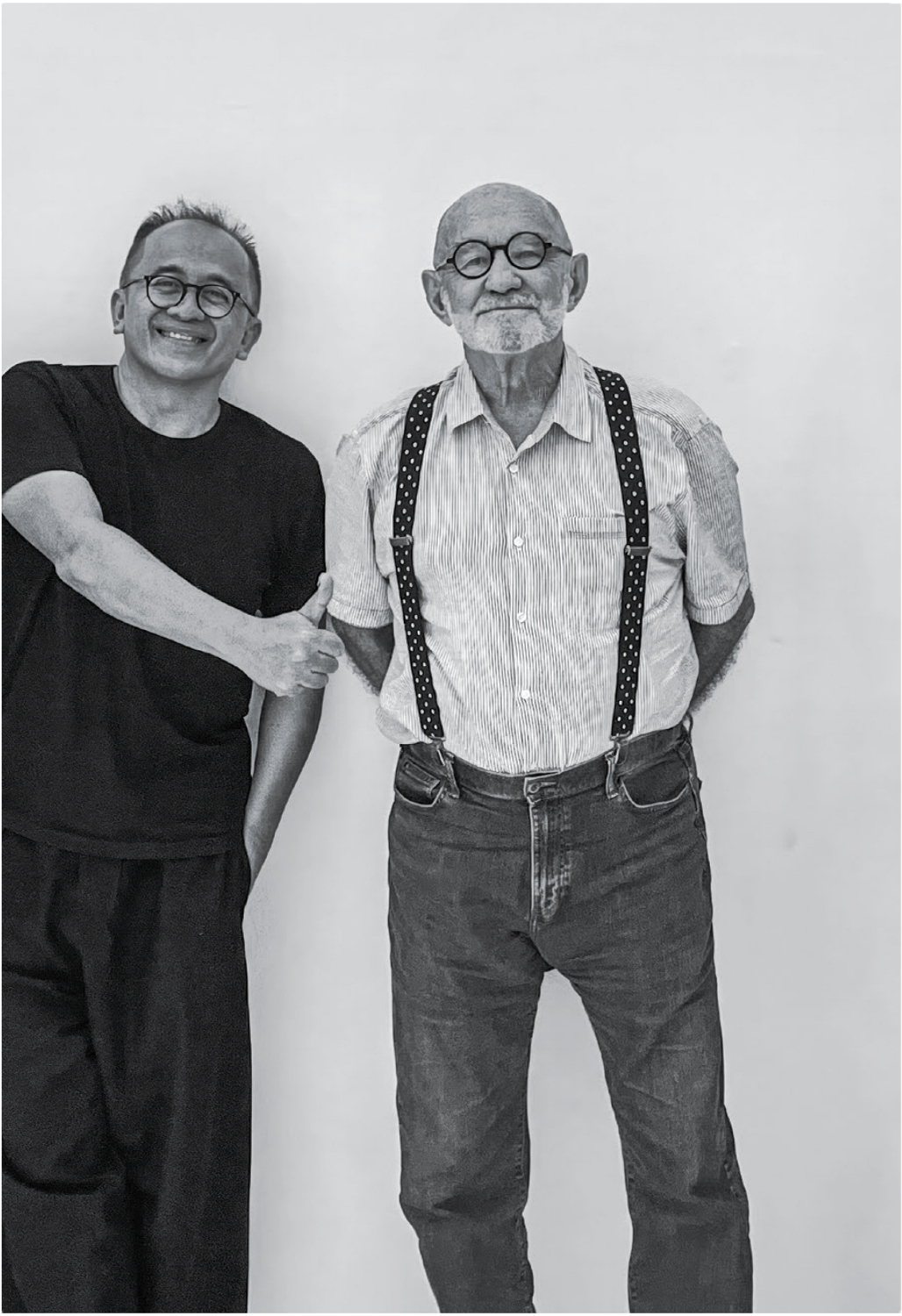
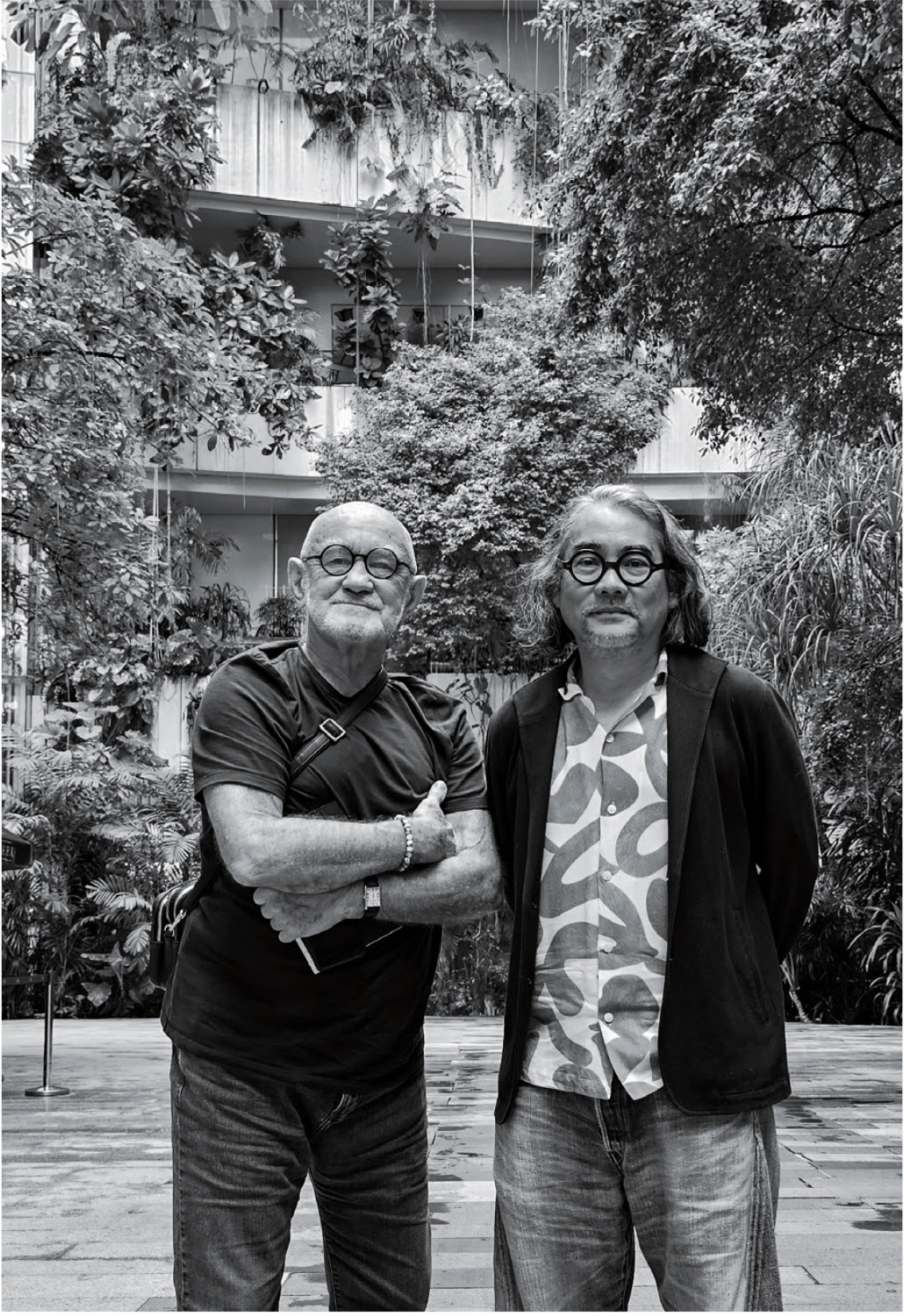
AM
What do you see as the biggest challenges and opportunities for architects working in Southeast Asia today?
DTLM
I think ‘shelter’ will be one of the biggest challenges for the next in the near future. When we talk about shelter, it is being confused today with affordability. Even in the richest countries in the world, you’d find refugees and illegal immigrants and you’d find homelessness in New York City which is the richest city in the world and no one really knows how to deal with it.
So, the politician takes the role toaddress the issue of shelter and he’s got no solutions. The only person or the profession that understands shelter the best is not even a planner but is probably an architect. And architects need to address this issue because it is no longer a third-world problem anymore. It’s a problem in every one of our cities. I think that’s going to be one of the challenges of the future.
And it will come to lawlessness if you don’t address it. Because we’re desperate people and there are no laws, we do things that we need to do. And already you’ll see the breakdown of rule of law and order. It will start to affect the lives of everybody.
The other challenge of course is artificial intelligence (AI). We have to learn to address that and how to use it as a toolharness it, control it, manage it and use it for the benefit of mankind. So, you are either looking at AI as a tool that will improve life and cities, and benefit mankind or he (the AI) will certainly conclude that it’ll be better off without us. So, I think those are the challenges.
RT
That’s a good question. Only because I’ve never really thought about it in Southeast Asia per se, but I think in any kind of environment, the biggest challenge for designers, particularly architects, is to think about creating beautiful spaces where human beings can inhabit and enjoy. I believe one of the main tasks for architects, whether in Southeast Asia, Europe, or the North Pole or South, is to bring joy to people. What do we need to do to bring joy? We are so dogmatic in our teaching, so scientific in our research, that we sometimes forget the simplest things—architecture must bring joy. We try to do that, as you will see in the lecture. I think architecture has to be fun. It’s been written about and lectured upon to the point where even the most basic things are discussed. For instance, in a bar, everyone is having a great time, but no one stops to ask why. Perhaps it’s the wine, but it’s also the lighting, the mood, and the space that liberates our soul. So, I believe, regardless of where we practice architecture, we should try to achieve that. But of course, in Southeast Asia, the weather is important, and a small detail on our part—only because this is a book launch for Monsoon Architects—we have developed a Monsoon Ventilator where we put windows on the floors in cantilever portions of buildings so that even when it rains like hell in Southeast Asia, we can still enjoy the breezes and be aware of what’s happening outside.
DB
Money and politics. I’m going to emphasize politics a little bit, because we normally skip over it and pretend that it doesn’t exist. You might be pretending that corruption in Malaysia doesn’t exist. People in my country pretend that the corruption in Thailand doesn’t exist? That’s a lie. And actually, those layers of corruption control architecture in a certain way. I’ve encountered that very hard. I know that. Now, what are you going to do with it? Are you going to surrender to it? Are you going to fight against it? Are you going to change things around you by using your expertise as an architect? I wish to address the ex-Prime Minister. So that’s a big deal. And believe it or not, I’ll use all my expertise as an architect to do that. It’s crazy, isn’t it? So you can imagine, it’s more than just about the building, yeah?
You know, in Asian architecture, there is so much talent but never properly recognised. Why? You have to think about that mental block, that political barrier. It’s not about your capacity, but it’s because of this barrier that we create. So once you start to challenge that, you make a lot of differences. Architecture is a political space. I mean, if a lot of people are saying a lot of things about it, and it seems to be a big deal. So, you can’t say anything negative about it. If you do, you’ll look bad but it’s supposed to be a free space. Isn’t that the whole idea of architecture? Why did you get involved in it? Why did you become an architect if you don’t have that freedom? I think if you’re bound to create and you don’t have the freedom to do so, you’ll go crazy. That’s why you became an architect in the first place, right?
MT
ecara pribadi saya percaya pada konteks dan bahwa kita semua punya heritage dan sebetulnya nilai dari heritage itu sangat kuat, dimana itu menjadi identitas Asia. Sehingga bagaimana kita bisa mempertahankan karakter itu, walaupun sudah terpengaruh nilai barat tetapi karakter itu harus tetap ada, dan justru kita harus bangga karena mereka tidak punya hal hal yang kita punya.
(Translated to English) Personally, I believe in context and that we all have heritage and the value of heritage is very strong, which is the identity of Asia. So how can we maintain that character, even though it has been influenced by Western values but the character must still exist, and instead, we should be proud because they don’t have things that we have.
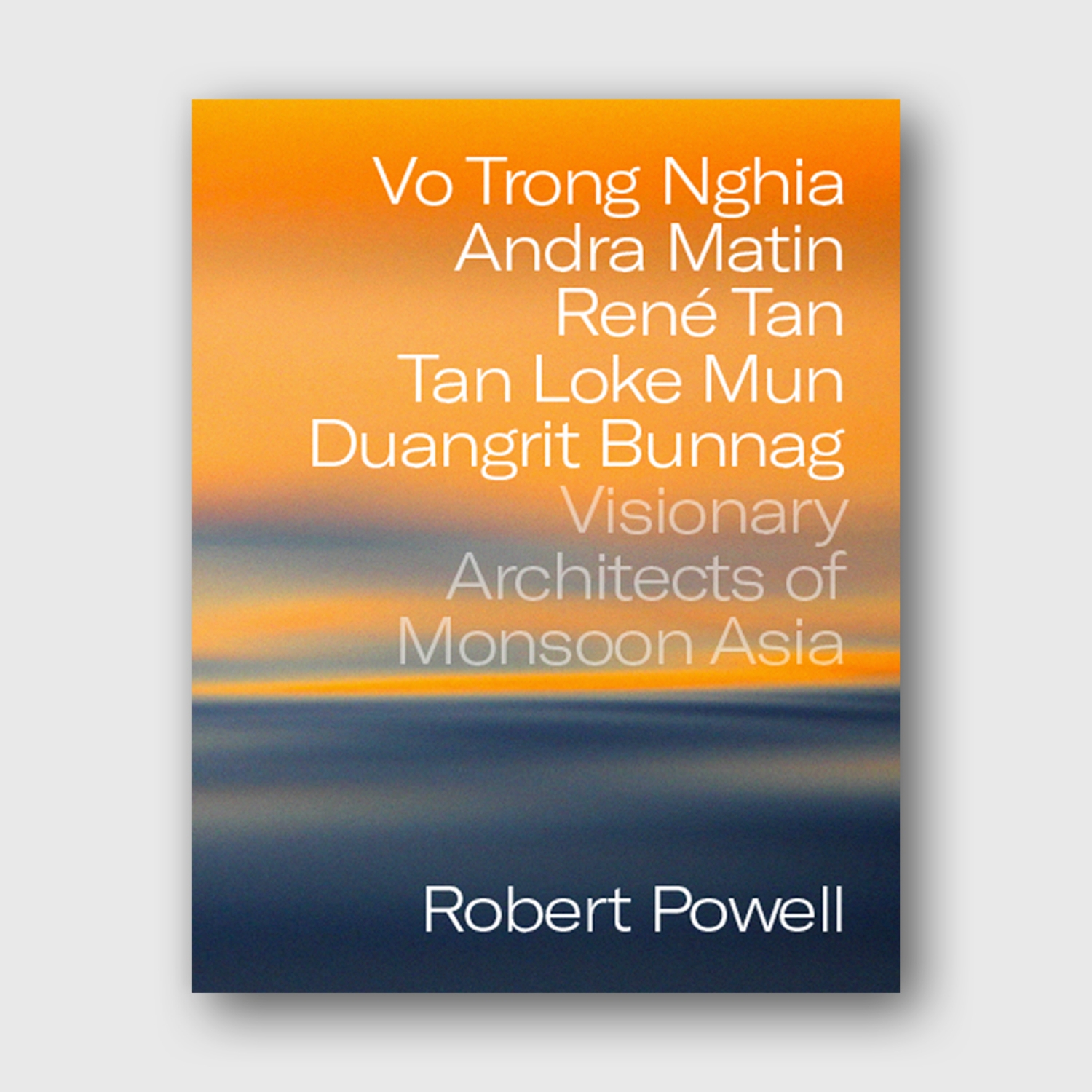
In this semi-autobiographical book, Architect / Academic / Artist /Writer Robert Powell recounts his 40-year Odyssey in Monsoon Asia, culminating in essays on five Visionary Architects from Vietnam, Indonesia, Singapore, Malaysia and Thailand who, collectively, can be said to exhibit the path towards a resilient future.
Scan the QR code to purchase the book: