ARCHITECT : VERITAS Architects
CLIENT : PETRONAS Leadership Centre
CONTRACTOR : Sunway Construction
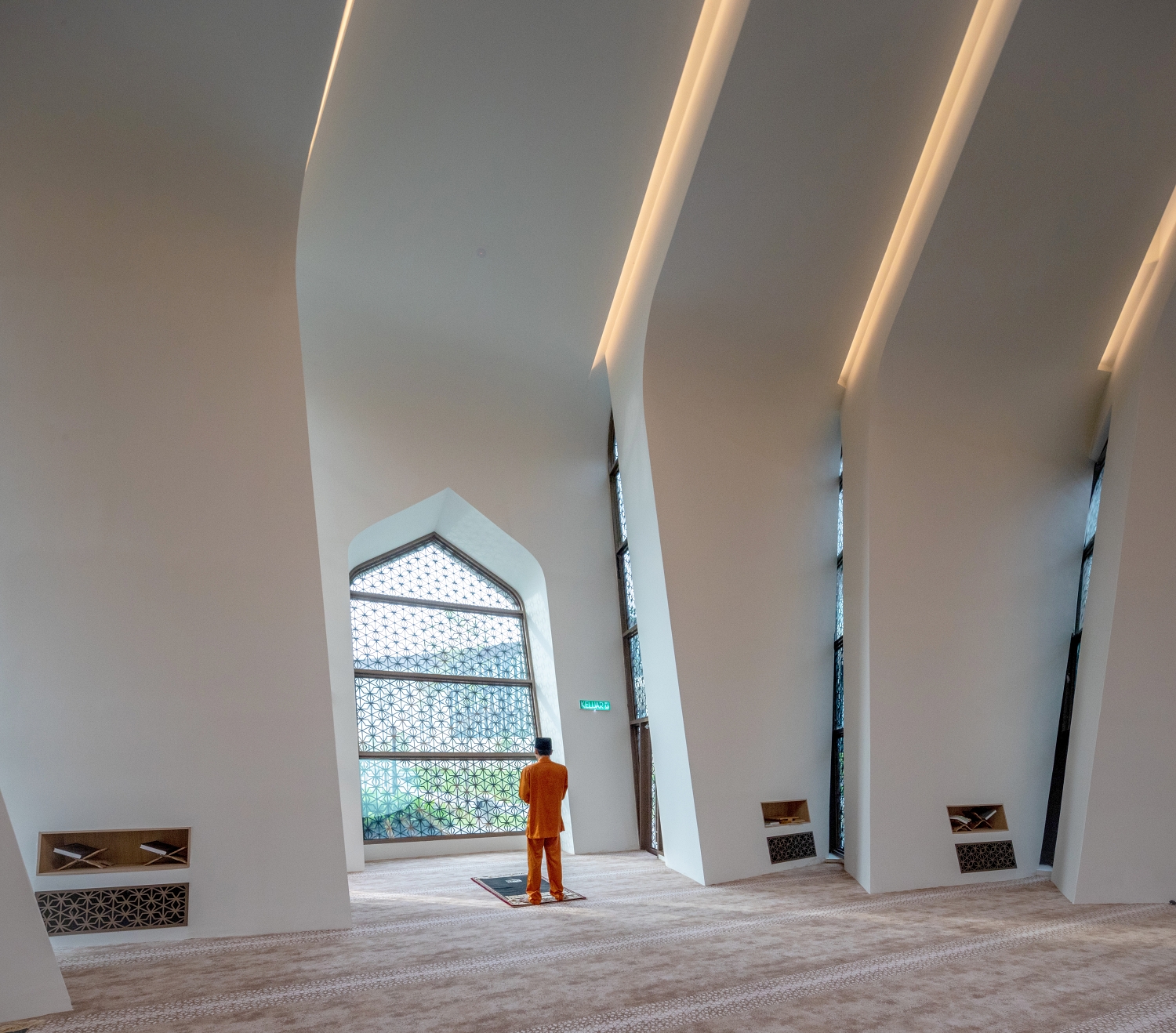
The "Surau Ar Rahman" is designed to provide a protective cocoon that offers serenity and shelter. The diffused lighting creates a soft and soothing environment that is perfect for quiet contemplation and reflection
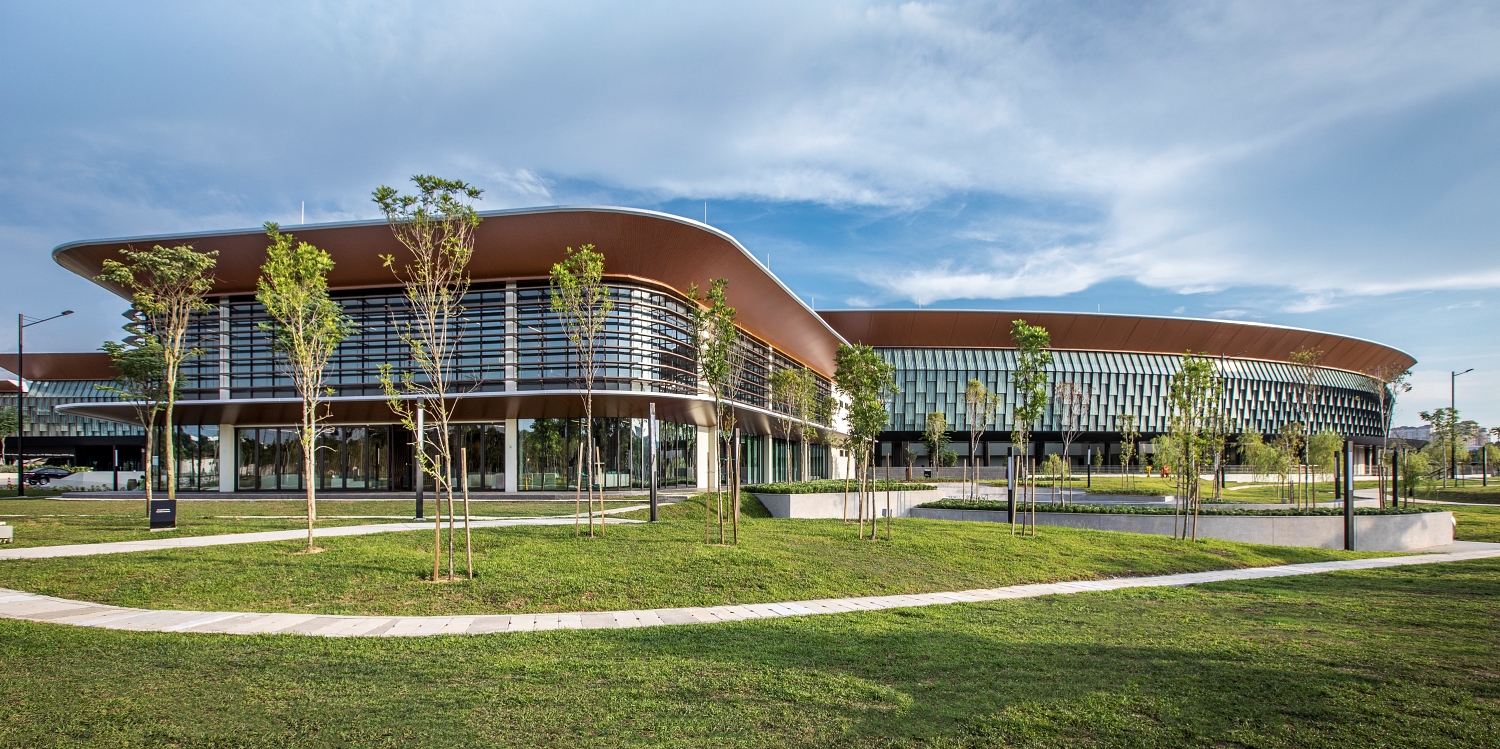
Designed to nestle among the heavily landscaped estate to create an oasis for PETRONAS, the new Petronas Leadership Centre is a sprawling campus in its current site in Bangi. The campus is designed to encourage social collaboration and enhance future learning experiences through innovative learning spaces in support of PETRONAS’s work culture.
The design objective is to distil the essence of an experiential journey into a sanctuary as a respite for the participants and maximum collaborative encounters across all employees, transporting the relaxed learning environment that retains the integrity of the corporate culture. This translates to a focus on creating a legacy that transcends imitation or pastiche. At the same time, there was an impetus to break away from traditional campus planning, to innovate and to adapt the design to the locality whilst celebrating the root of the organisation.
The form of the campus is a curved central pedestrian spine that becomes a main infrastructure focus and links all building components where classes and accommodation blocks are interweaved closely to create space cohesion, and spaces that are physically connected via crossing pedestrian bridges adjoining classrooms, guest rooms and public spaces, to allow seamless visual interaction and connectedness to all these spaces.
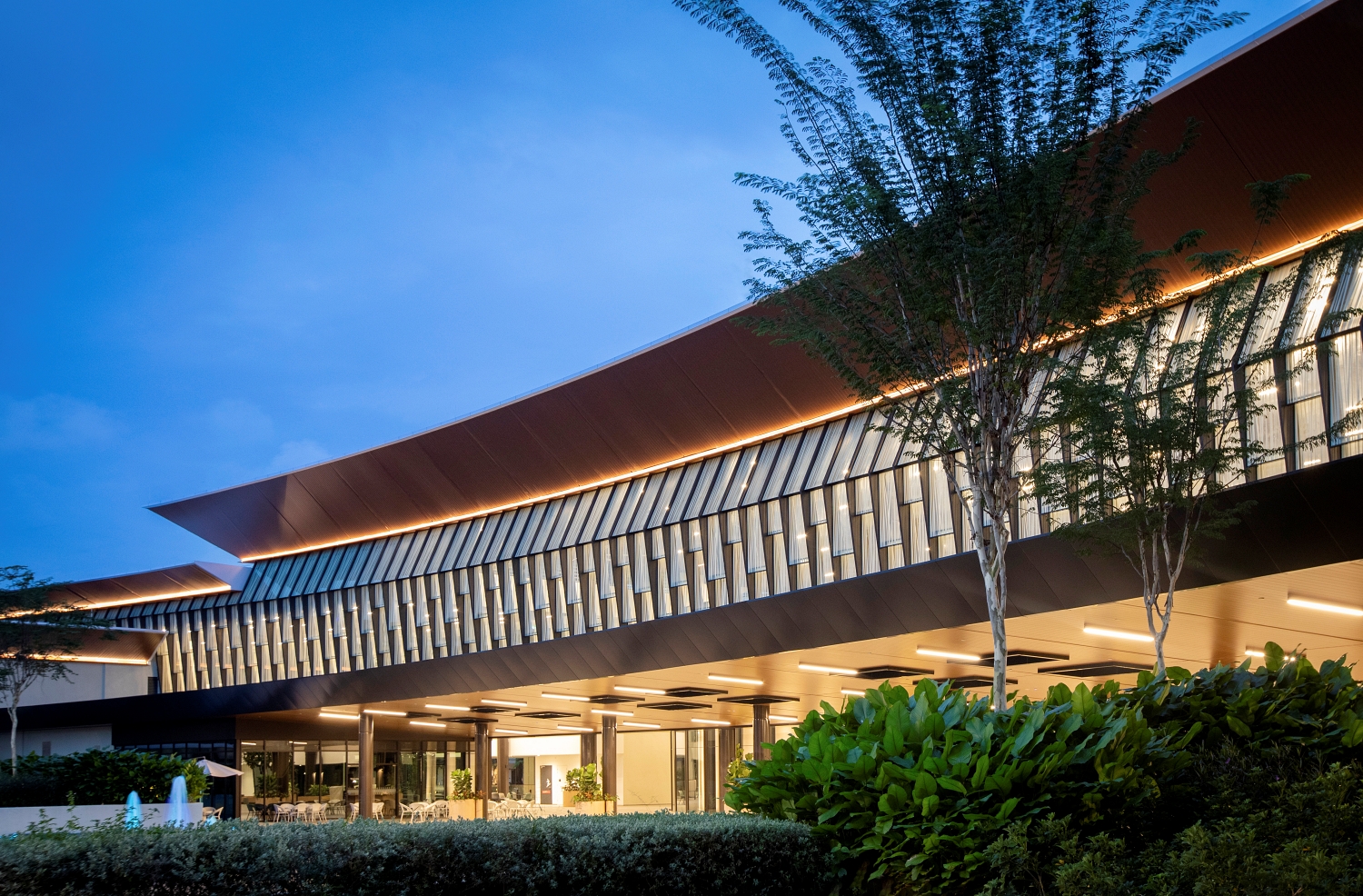
The breathable façade design is a modern interpretation of traditional “tingkap sisir angin” that promotes cross ventilation, whilst protecting the interior from the rain
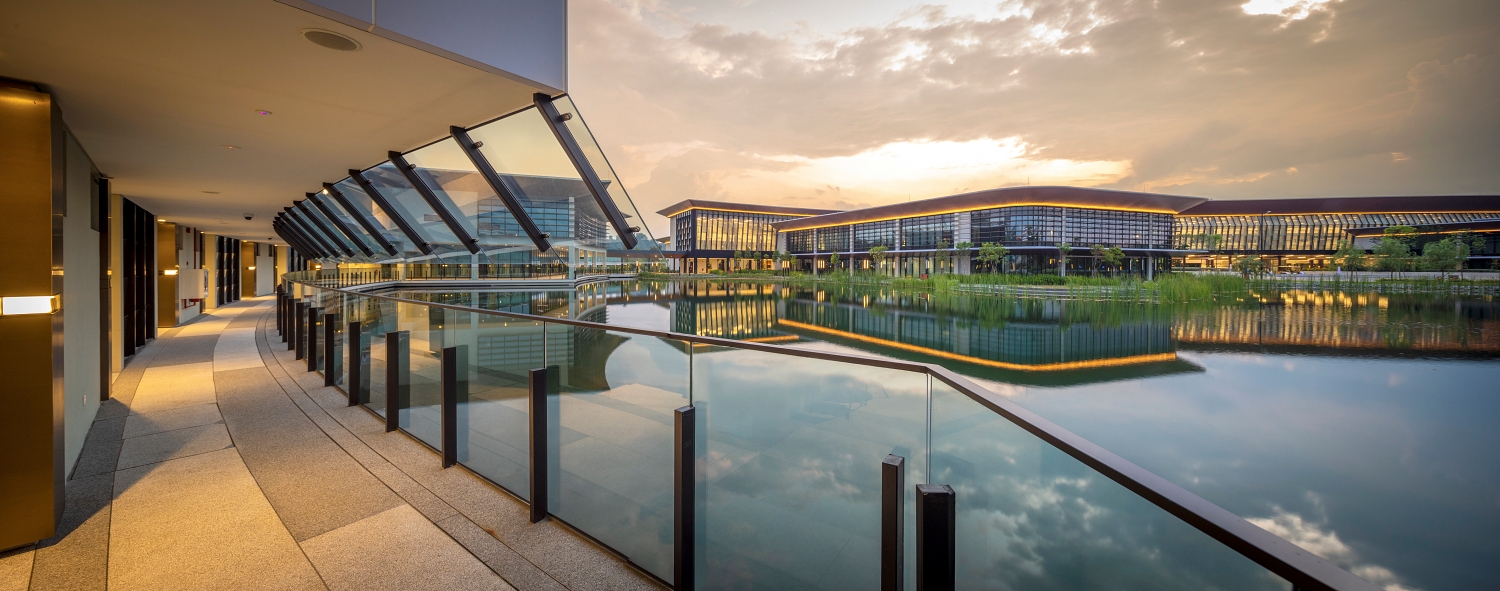
The cascading building form introduces a new skyline in the existing flat greenfield site that responds directly to the space’s physical demands. The physical campus is designed to nestle in thick forests and a vast manmade lake to create acoustic and visual buffers.
The overall building form is almost poetic but is derived from the logical physical needs of the campus programs, with its form sculpted around landscape areas that allow face-to-face interaction and the central spine curved to create meandering visual perspectives and transformational journeys. This also allows for various flexibilities to space planning which is important to the campus operation, whilst encouraging the external landscape to permeate into the indoor spaces.
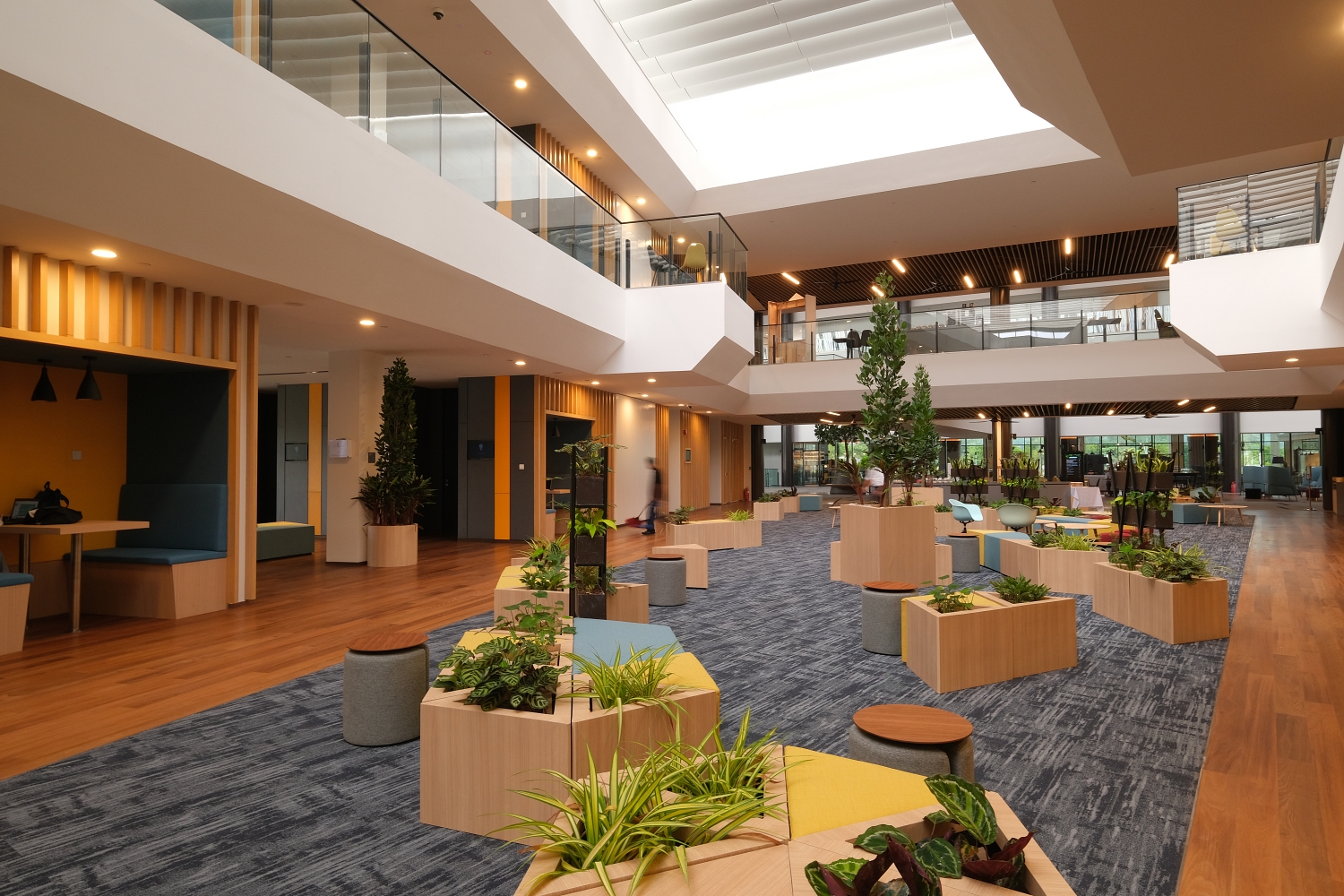
The building adopts an open and flexible concept in the design approach that blurs the boundary between internal and external. In addition to the functional objectives to coexist with the surroundings, this openness encourages users to be psychologically more open in knowledge transfer and more transparent in interacting with their colleagues.
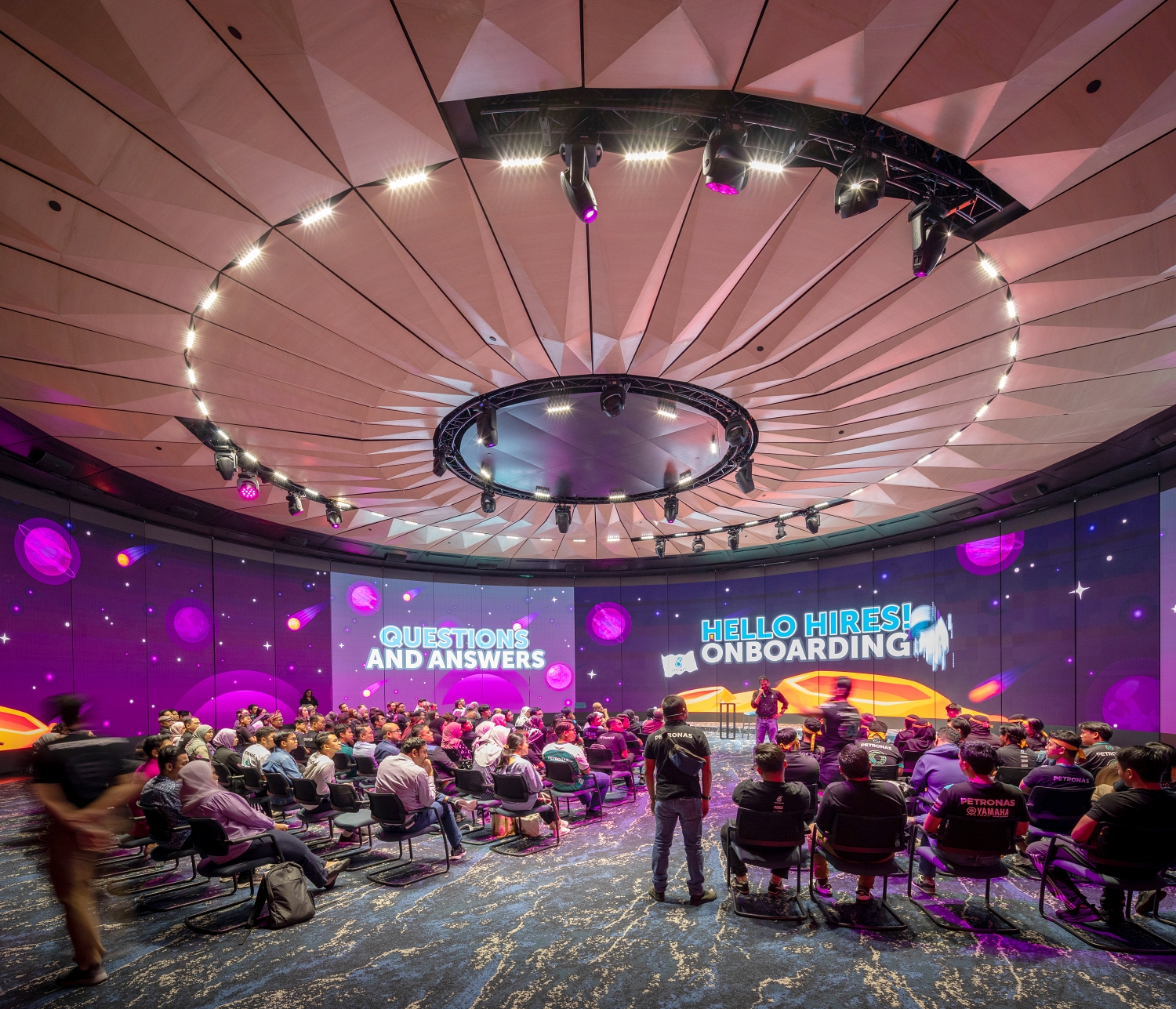
The “360“is a circular flat-bottomed multi-purpose hall and considered to be the first of its kind in the world. With its state-of-the-art technology, the 360 creates a fully integrated environment providing users with an unprecedented immersive learning experience
“A comprehensive design for conducive learning, working, and accommodation that integrates with all functional spaces as well as the environment.”
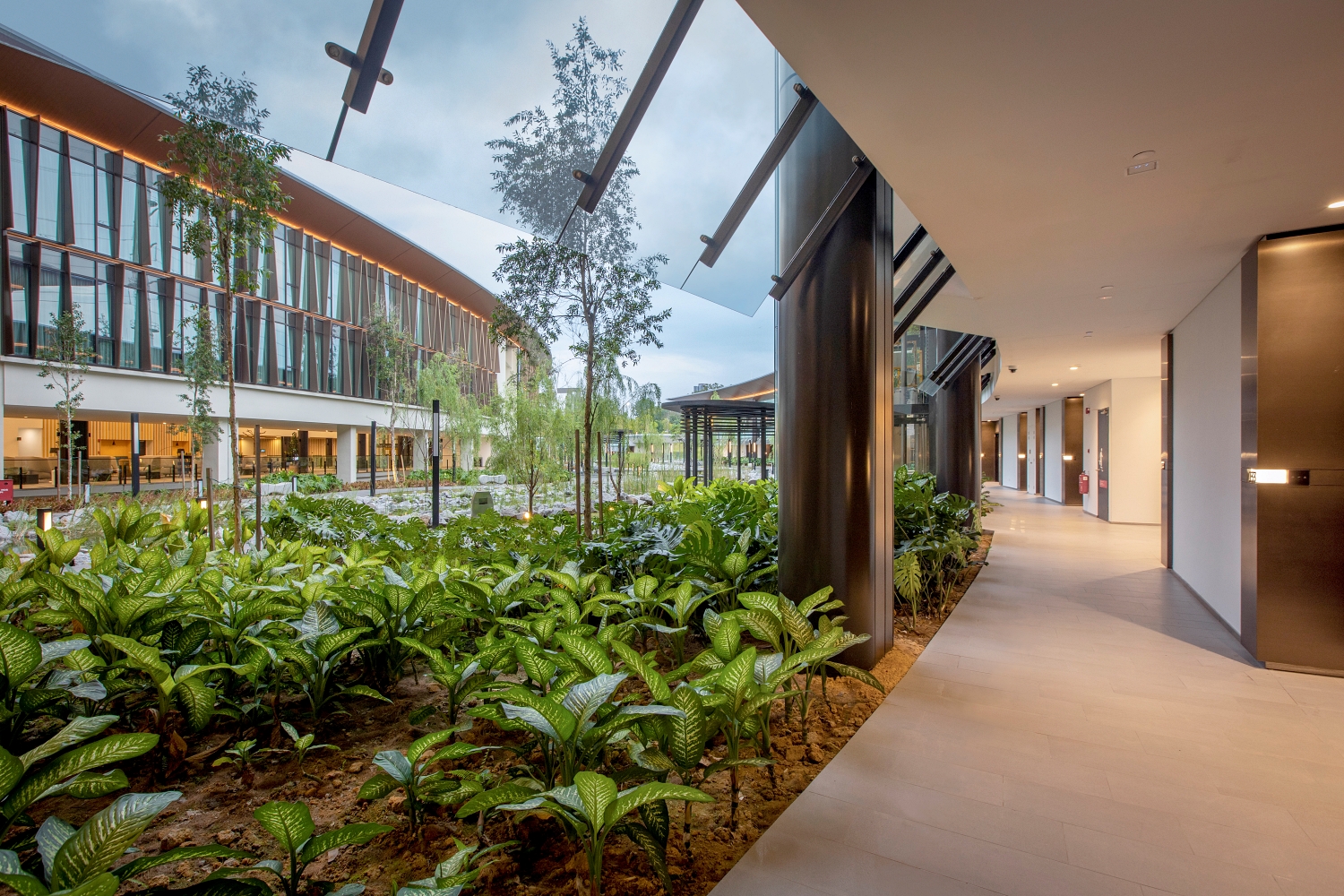
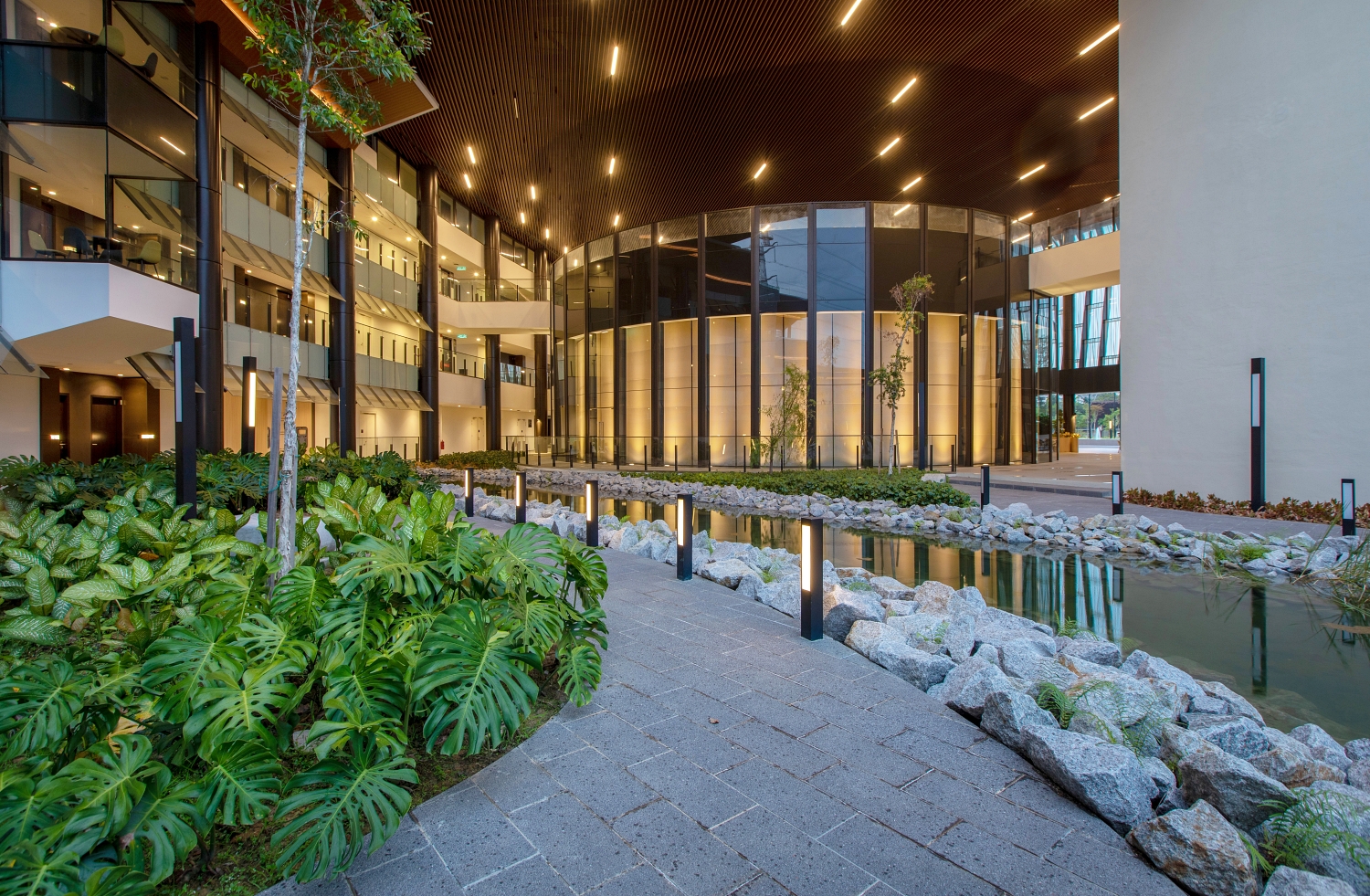
The naturally ventilated corridors blur the boundaries between interior and exterior landscape, providing a seamless connection with nature.
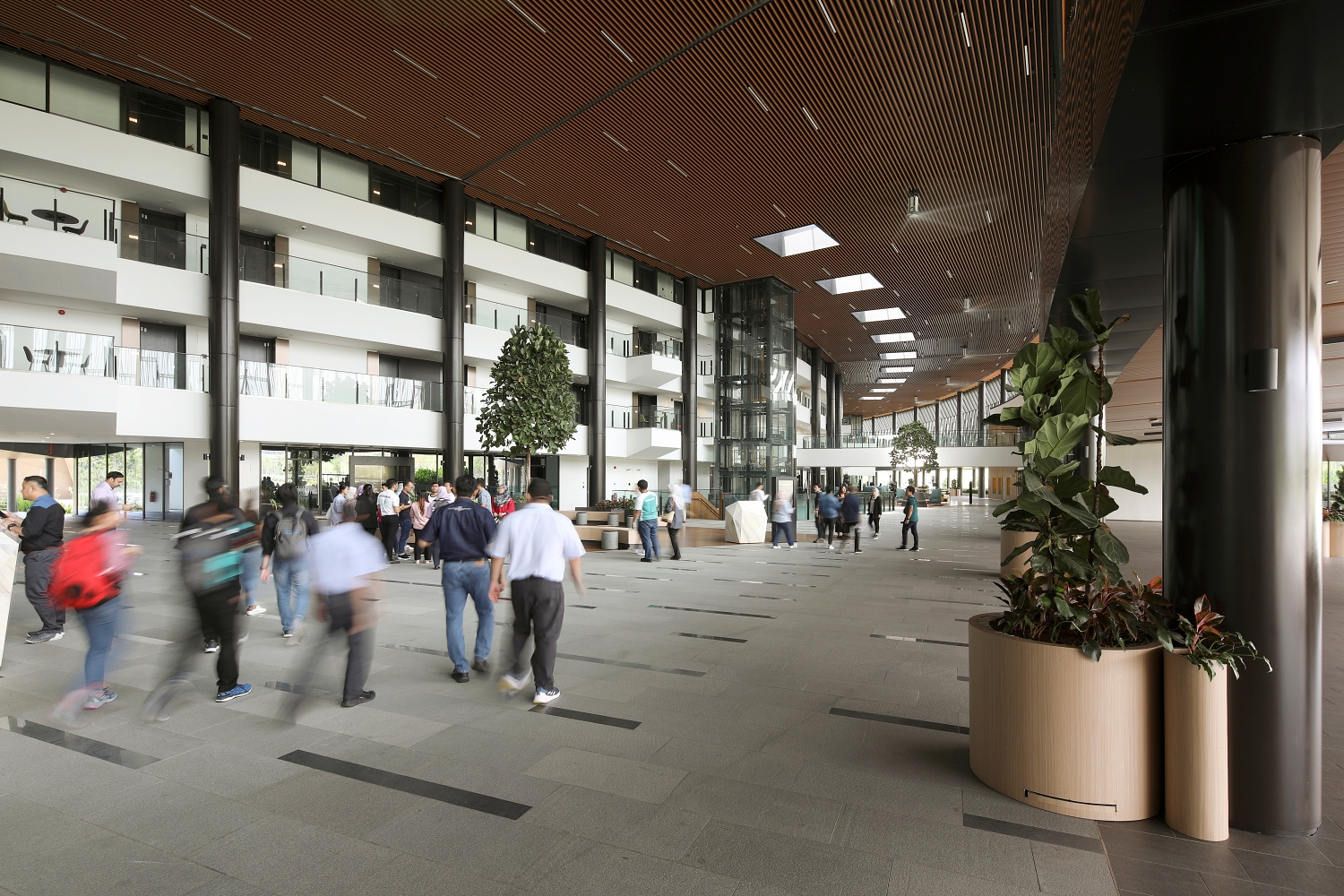
This emphasises a ‘democratic institution’ notion, where there are no obvious barriers to movement and no hierarchy of on-job status. The spine learning street has also served as a unifying element that bonds camaraderie further.
Inspired by the micro climatic condition of the traditional tropical village environment, the master planning of the campus is organised to integrate with the landscape elements as a way to lower the surrounding ambient temperature. The curved forms encourage a wind tunnel effect that cools the building naturally. The building skin is designed to optimise natural ventilation without compromising rain penetration.
Building envelopes are also crafted to shade the façades from extreme sun lights whilst allowing natural light into the space. A roof with a large overhang is also proposed to optimise the renewal energy from PV panels. The centre’s innovative design incorporates 17 SDG’s, green building principles, renewable energy sources, and efficient water management systems. Its eco-friendly features, combined with state-of-the-art learning spaces, promote sustainability awareness and education, making it a beacon of environmental stewardship in the region.
Diffused daylighting reduces glare; allows even distribution of the light and minimises heat gain
The new campus is designed with a 4-acre man-made lake and stream that interweaves through and around the building lowering the surrounding ambient temperature
The circular form of the hall is inspired from the “Oil Barrel”, signifying the origin of PETRONAS' existence whilst its function charts future direction of the company
The street atrium is at the heart of the building; and acts as a social corridor allowing people to mingle and have informal interactions
“The centre’s innovative design incorporates 17 SDG’s, green building principles, renewable energy sources, and efficient water management systems. Its eco-friendly features, combined with state-of-the-art learning spaces, promote sustainability awareness and education, making it a beacon of environmental stewardship in the region.”
The rhythm of the glass louvres is showcased through the extensive curved façade, whilst the building becomes a backdrop that nestles between the landscape