ARCHITECT : ARCAlliance Sdn Bhd
CLIENT : KL-Kepong Country Homes Sdn Bhd
CONTRACTOR : Kitacon Sendirian Berhad
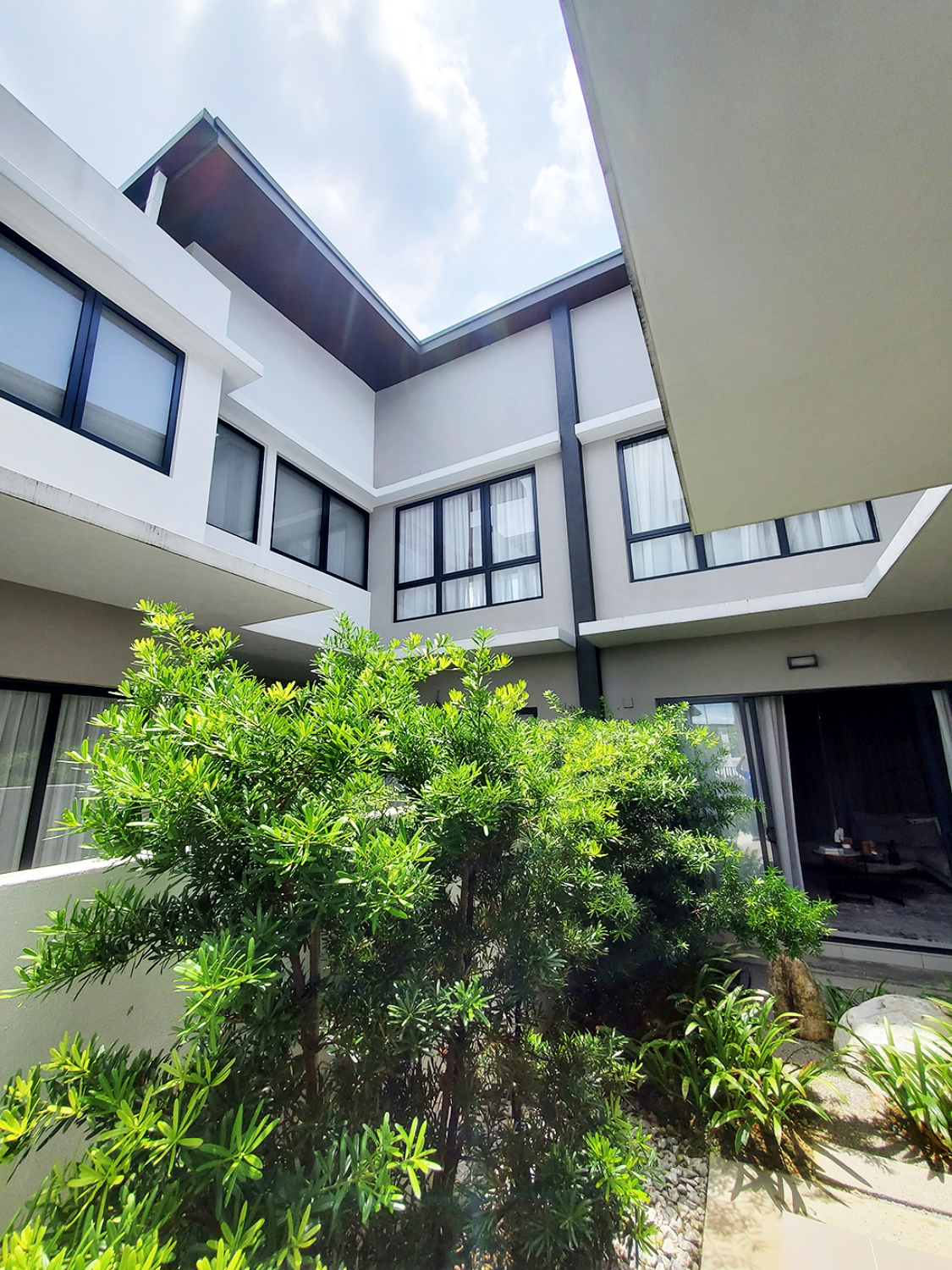
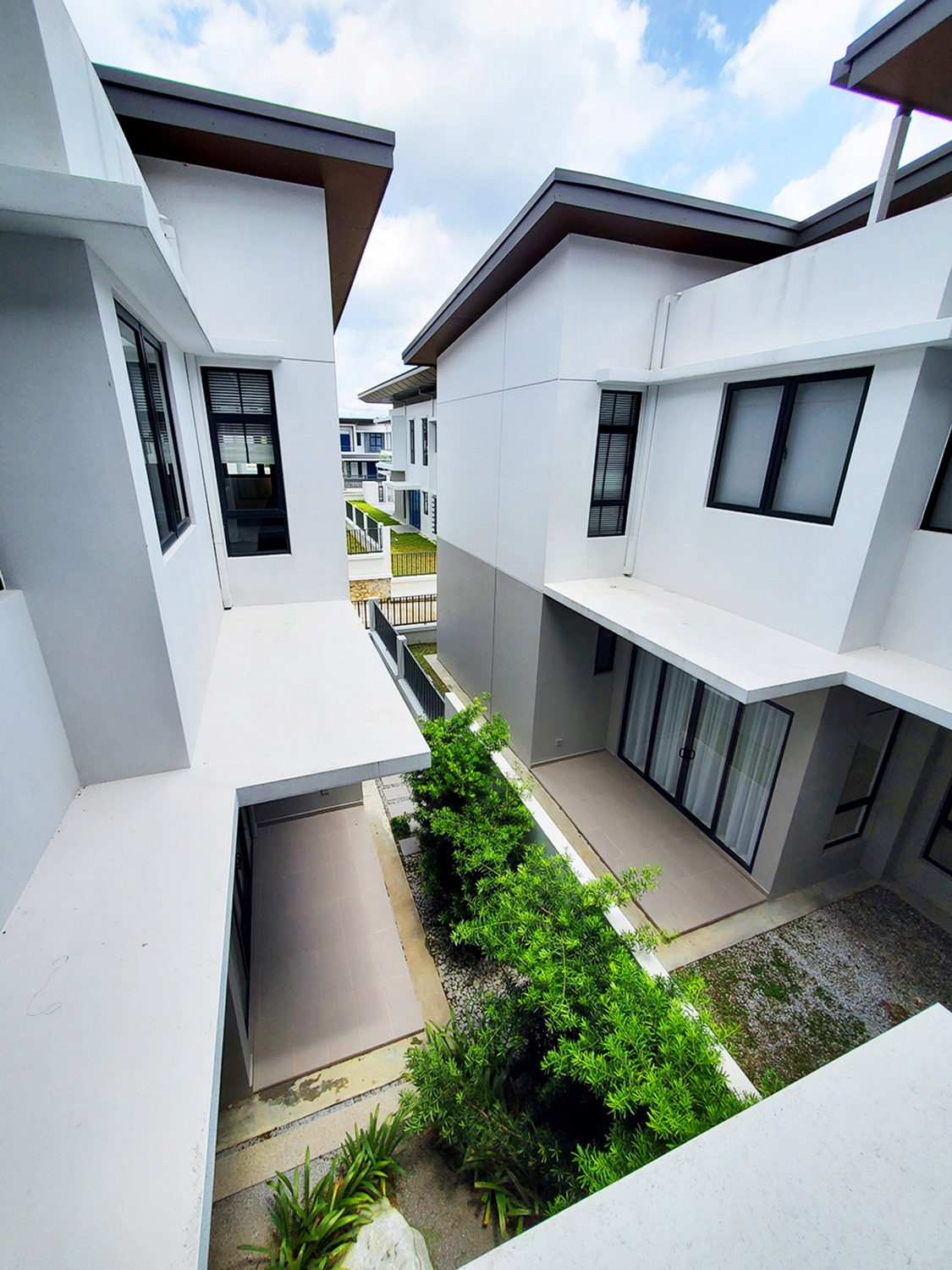
The interior garden in the link house
The Coalfields township was envisioned to showcase romantic living with clear intent to capture modern low-density lifestyles in a suburban setting.
The Hampton Enclave was planned with mixed housing typologies (link, semi-D and villas), each in a zone, but the greater whole within a gated community. This was to represent the pinnacle of residential home design on offer in the township.
Planned with larger land plots, this gives opportunities to revolutionise landed housing typologies, while retaining the nostalgic and incorporating the sought-after modern practical features, sustainability and eco-sensitivities.
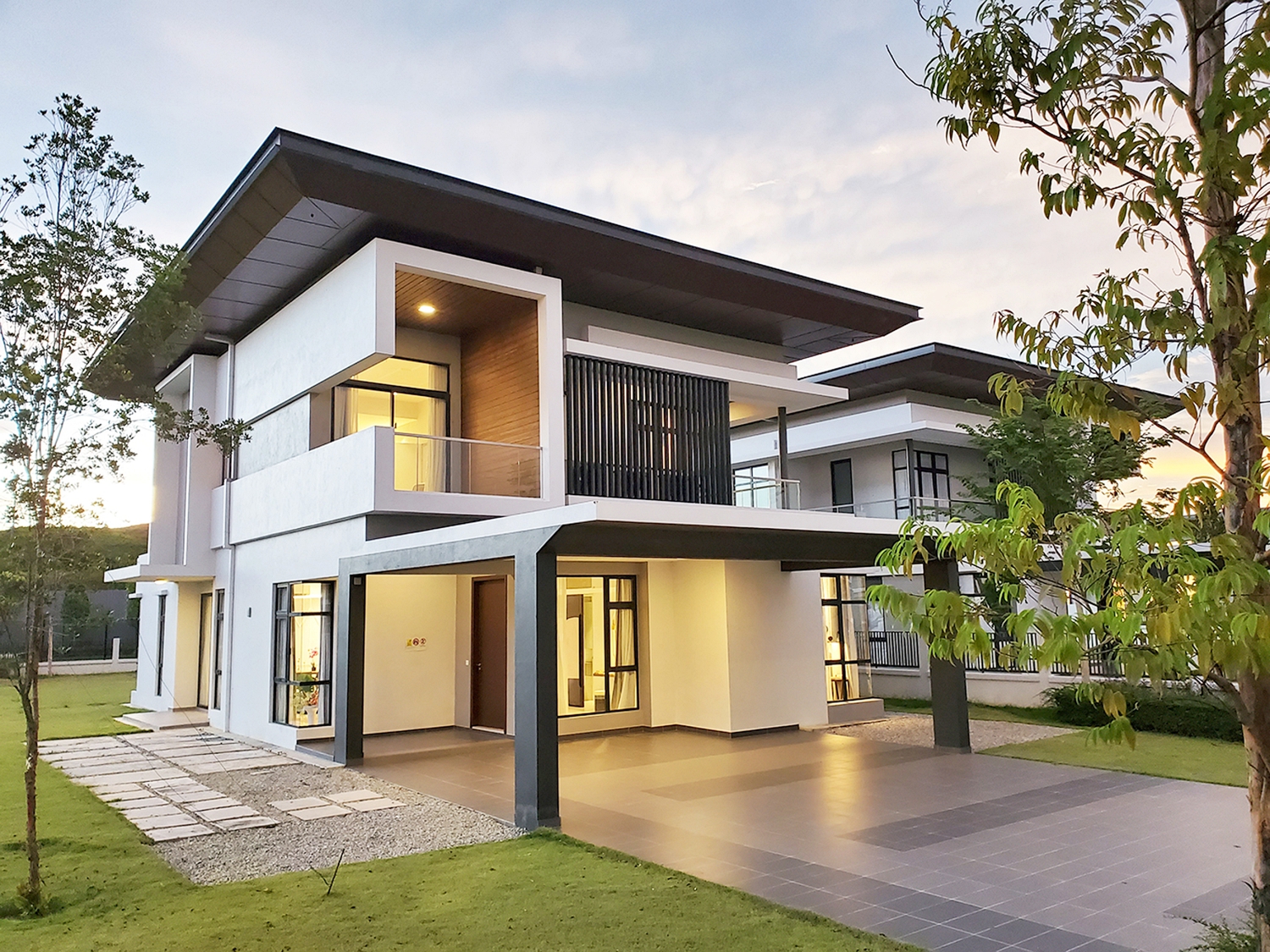
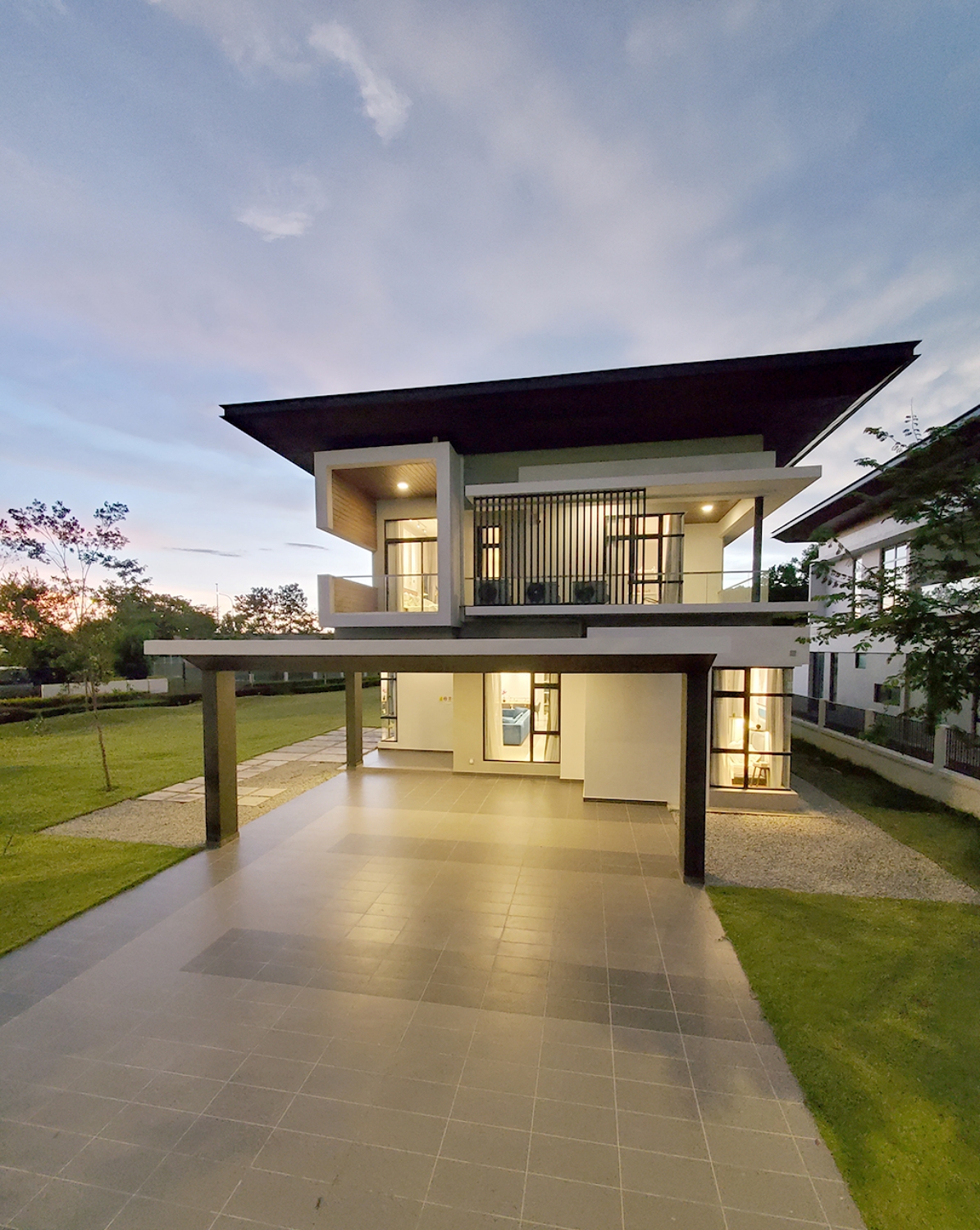
In Project: Hampton, we relooked traditional longing for comfort, space, nature, privacy and practical building features by enhancing these design demands more at the collective family spaces with more light (bigger fenestrations), volume (promoting air stack movement), space flexibility (co-joining volumes) relationship with the natural world (elevated patios, courtyards and terraces). Deeper roof eaves protected oversized fenestrations, patios and interior spaces while dropped eaves ceiling hide the long-span structures and allowed texturing to cut off glare. Roof-ventilated ensuite bathrooms allowed more viewports from rooms.
View of villa with framed fenestration and unifying architectural elements across different typologies
Conceptually, the design approach followed a rational network of considerations and offered surprises where opportunities arise.
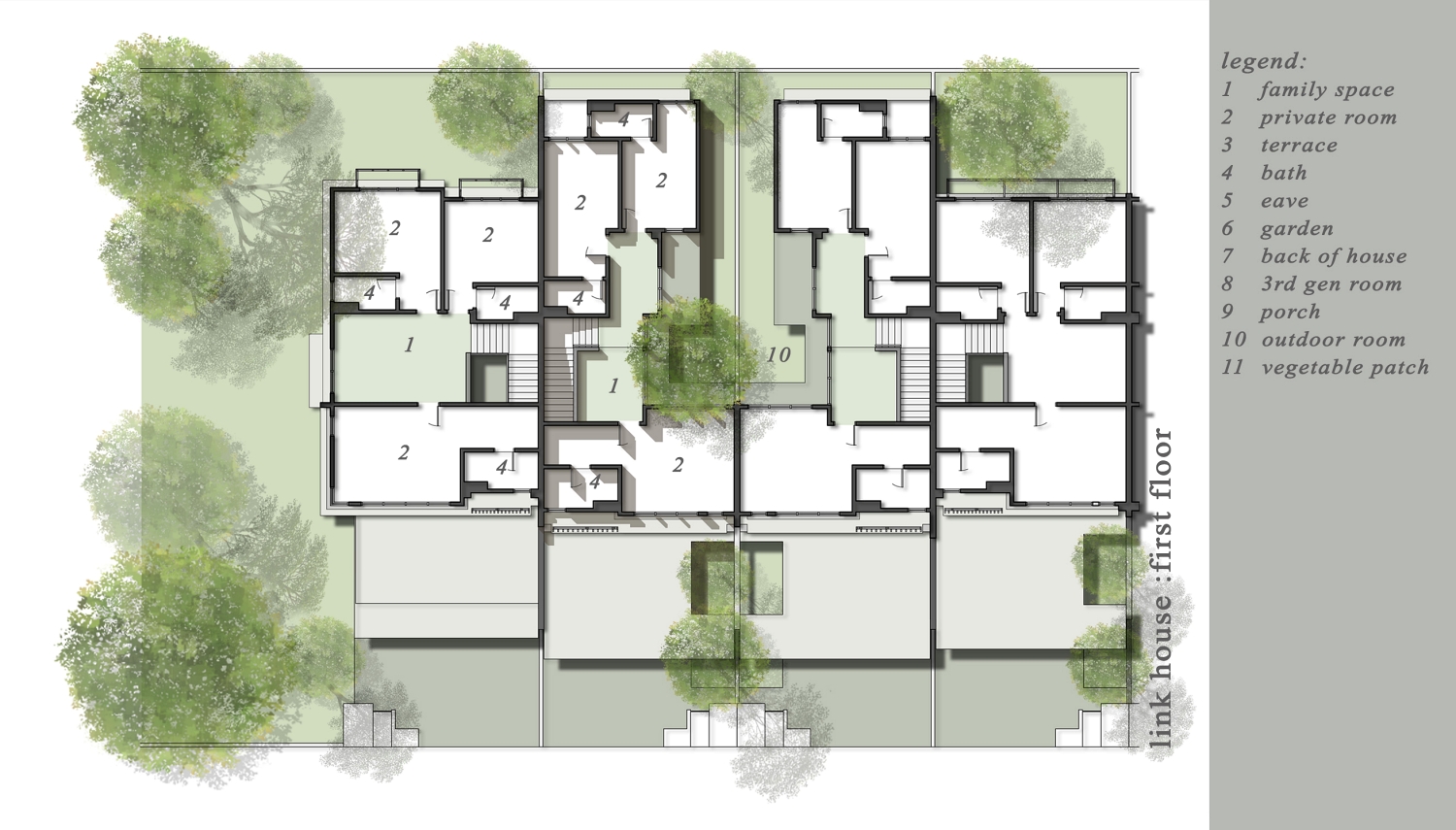
The design block of the unit is intentionally kept basic, confined to the rectangular form in respect of practical buildability and cost control. Sections dedicated to family gatherings and activities are resized to improve airflow and reflect the increase of users and the need for external links. Large third-generation rooms on access levels are introduced to respect the need for mobility ease where the family gathers while dedicated garden/vegetable patches were designed for casual garden work to enhance these spaces, especially for the link houses where frontage garden space was a premium. These spaces are mostly designed with the need for wheelchair movement requiring larger doorways, friendlier level differences and layout.
Third generation spaces are dedicated at family space levels to respect the need for mobility ease and cultivate family interaction ideals. Fenestrations and terraces are introduced to these spaces in the extreme to promote the relationship with nature and increase light and ventilation.
“Comprehensive design by integrating with passive design strategies, social needs of space and especially considering the needs of people with disabilities.”
Weather copings and common architectural features were employed to bring aesthetic unity in design language for the mixed building typologies while extended roof eaves beyond the norm helps to protect the inner spaces from the elements and bring the external spaces closer, making gardens more usable and appreciated. These eaves were specially treated to reduce glare and to create a cool shaded feel in the interior and terraced spaces. Where units face or are back to the common parks, the design of these special units is revamped to respect the need to address the relationship of the green to these units. Physical gateways are introduced. A special typology of link house design was introduced, offering a fresh approach to how link houses are experienced. In unifying the various typologies, certain common themes and aesthetics are maintained throughout.