EXPLORING SUSTAINABILITY
CHALLENGES AND CRAFT
ACTIVISM IN COMMUNITIES
ACROSS BORNEO.
TEXT BY AR. IVY JONG
SERUMPUN: “Crafts Across Borders” exhibition is part of the ‘Cultural Assets and Vernacular Material’ programme co-organised by The Glasgow School of Arts and THINK & TINK, supported by The British Council International Collaboration grants. It is part of a yearlong programme and research that explores sustainability challenges and craft activism in communities across Borneo.
Under SERUMPUN, there are eleven projects in various forms of grass root activism corresponding to their respective contexts in relation to craft categorised into five themes: namely, Changing Landscapes, Artisanal Trades, Documentation, Innovations and Youth Education. The groups are from various parts of Borneo Island.
Ranee invited Ar. Ivy Jong and architect Johnson Tan to collaborate on this. Their project “3-Bark” is one of the eleven projects featured under Innovation.
The traditional tree bark, an intrinsic part of Sarawak’s indigenous people’s material culture, was selected by the collaboration team as the material for exploration in view that it faces limitations in its usage these days and the art of bark-making is rapidly diminishing among the local indigenous communities.
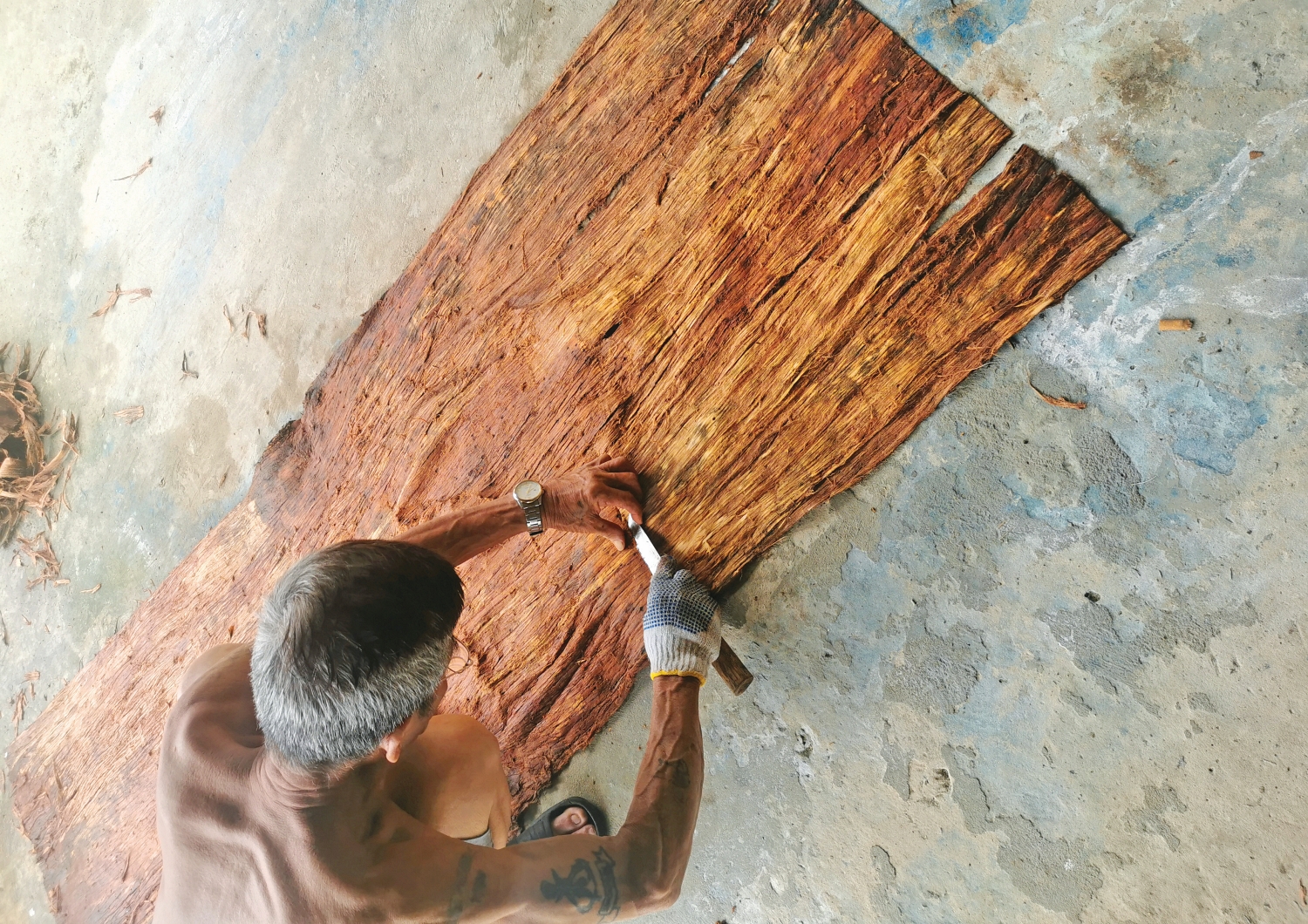
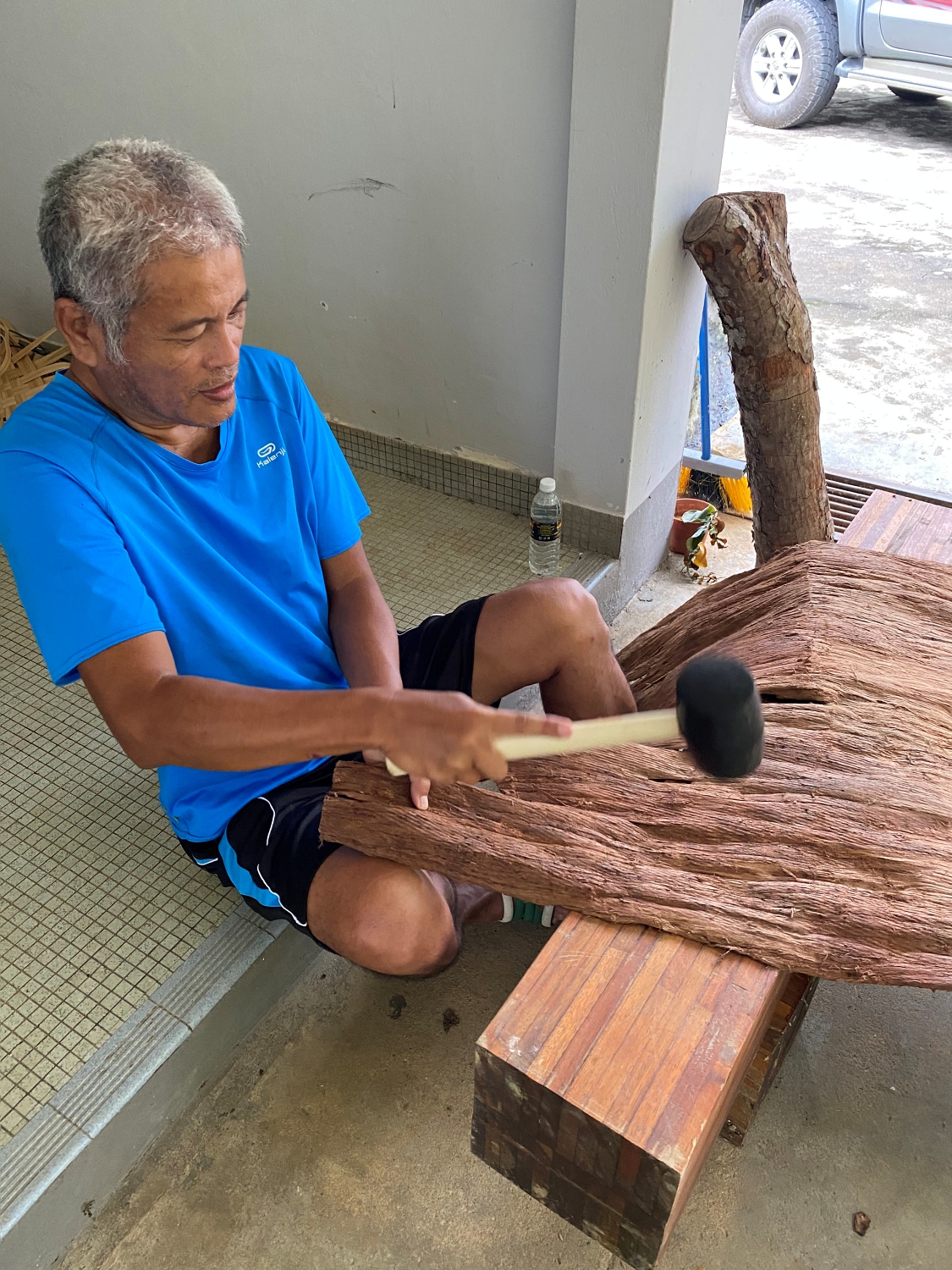
Tree bark is beaten and softened
Traditionally the inner fibre of the tree bark is beaten and softened to use as clothing and as a strong fastening material for farming baskets and mats. The unbeaten bark pieces were used as external and internal wall panelling in traditional longhouses.
The renowned artist Mr Ramsay Ong uses the bark cloth as his canvas to paint on. Without economic benefits, the art of bark-making has become a dying art. To revive the skill of tree bark making, there must be viable usage of this material.
The challenge for the design team was to change the conventional perception of this traditional material. The objective was to explore the potential of bark cloth as a contemporary craft material. Working with the Betong women weavers, the team looked at the tree bark material as an alternative craft material for weaving.
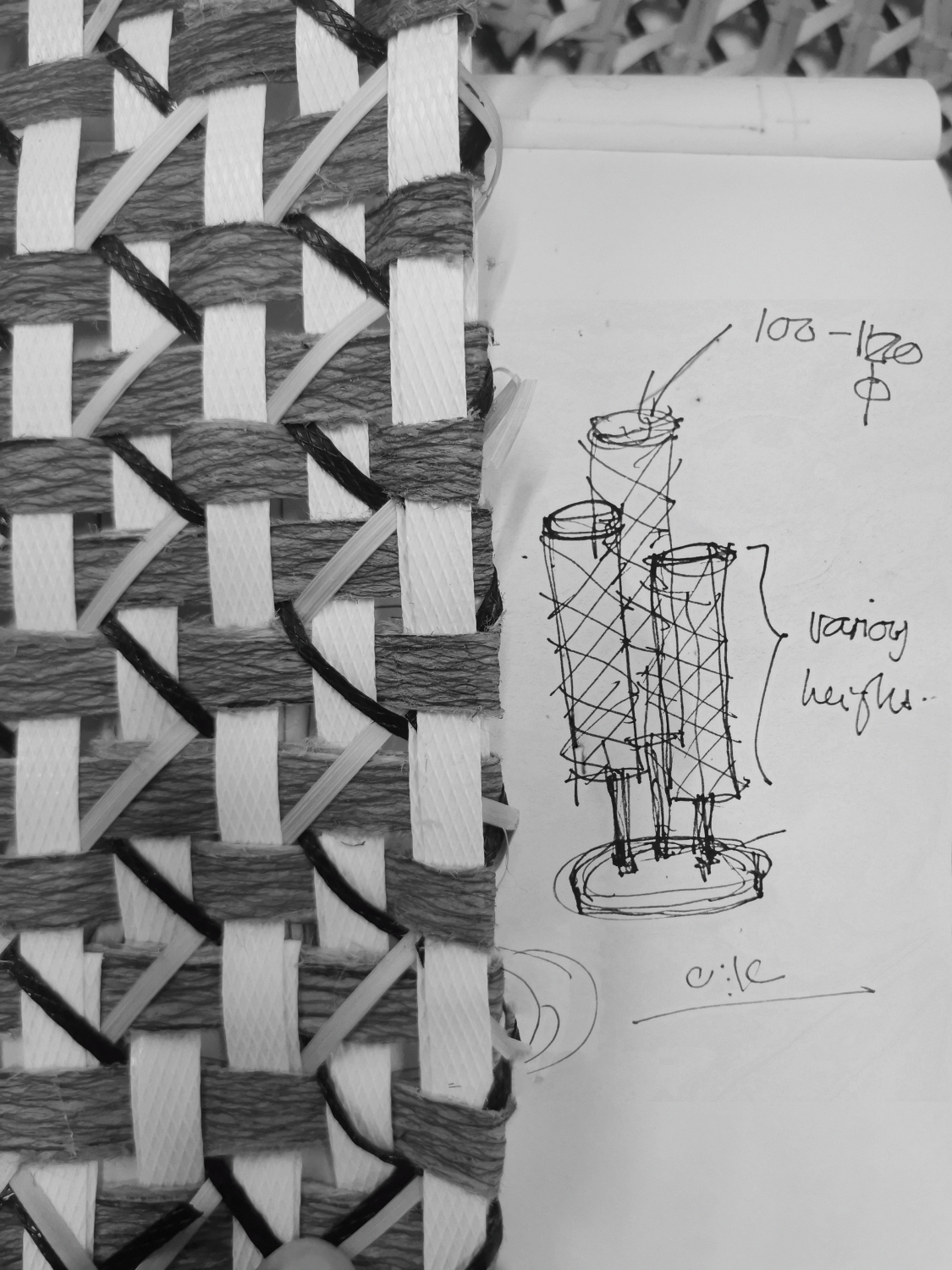
The bark cloth was introduced to several skilled weavers from two longhouses, Rh. Merunjau Padeh and Rh. Mujau Spak in a weaving workshop held at Jawatankuasa AgrokraftBorneo to experiment with different combinations of natural fabrics, a task which was new to them.
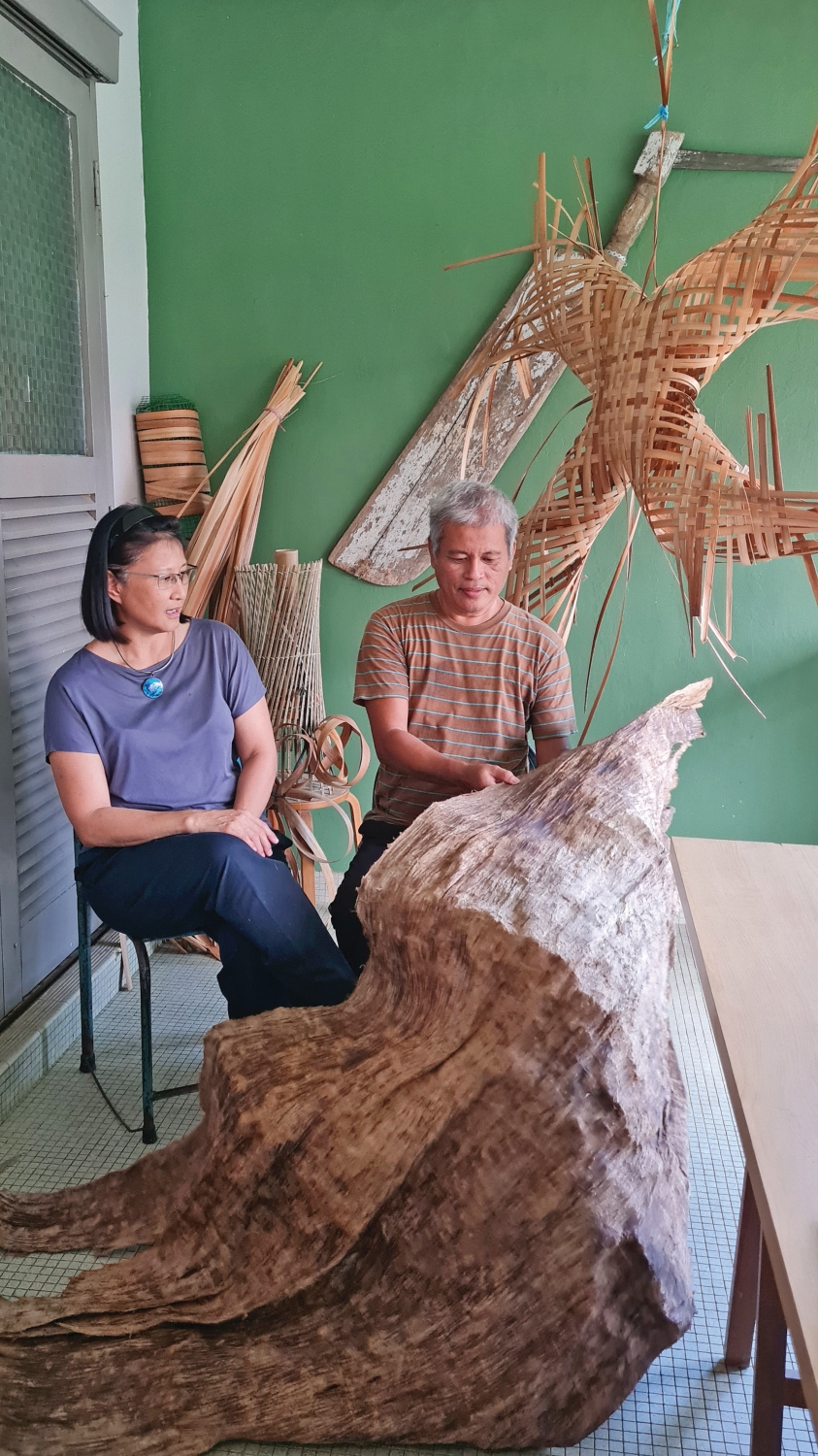
Ar Ivy Jong and Johnson Tan scrutinising the textural bark cloth
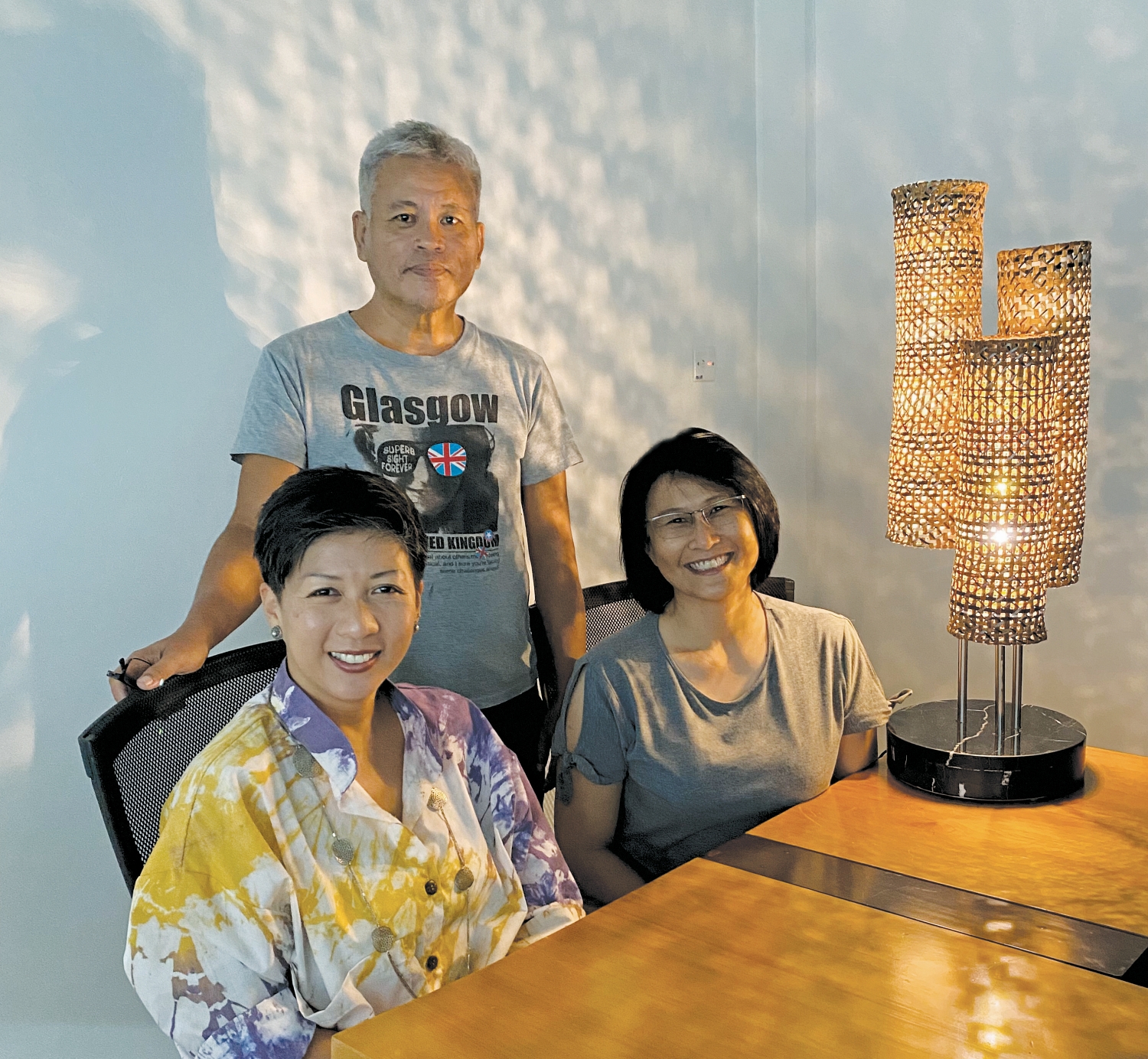
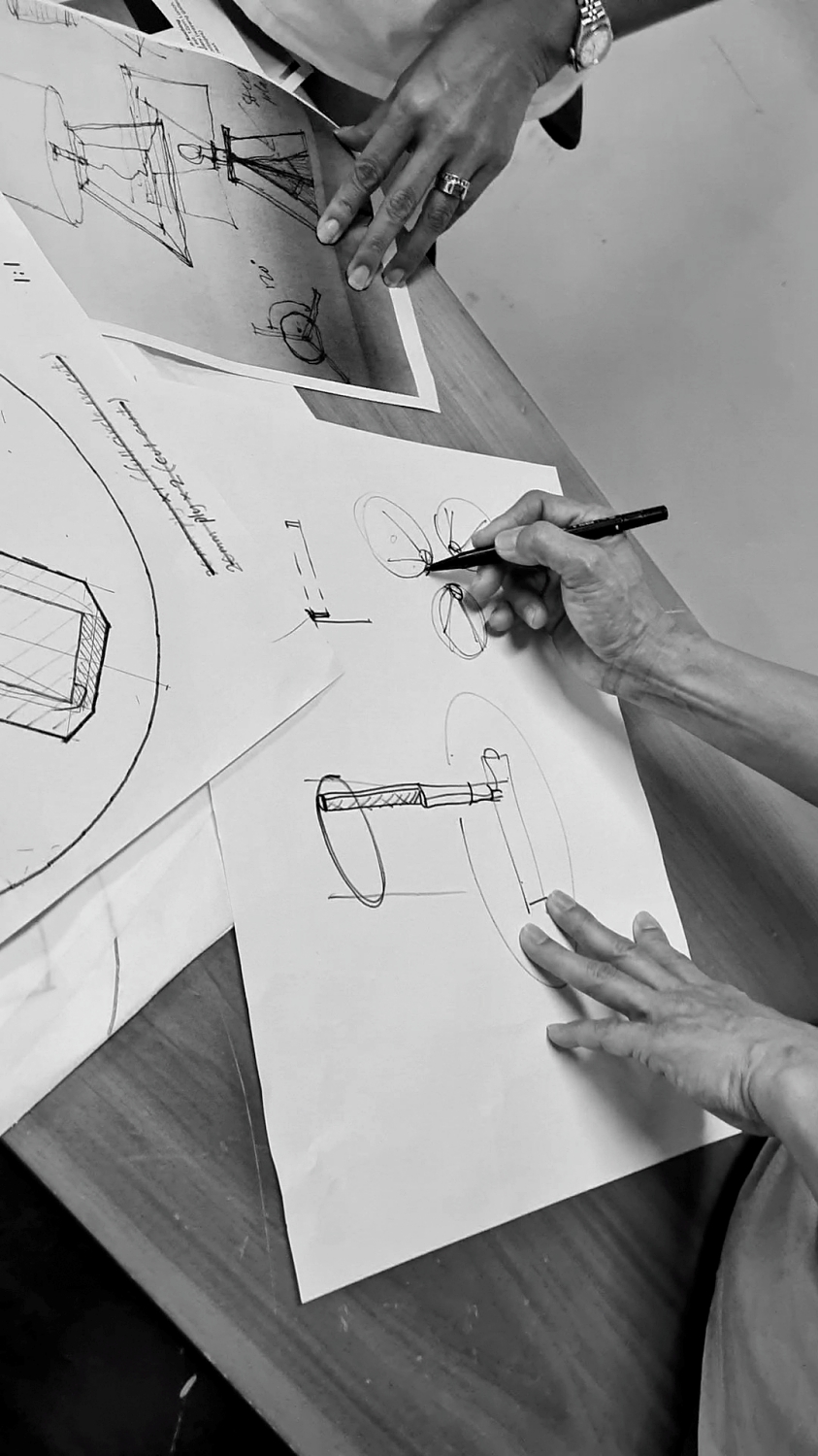
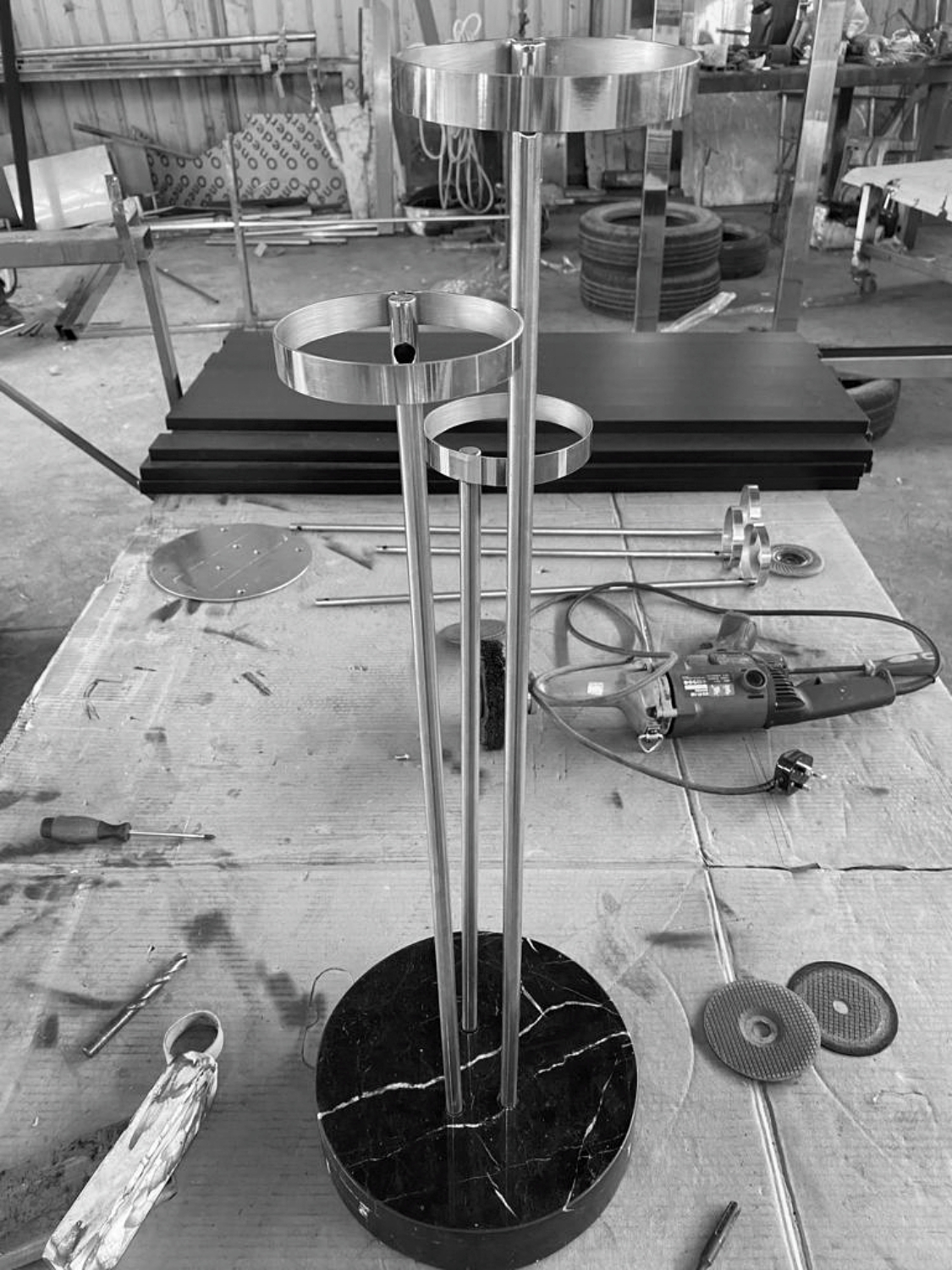
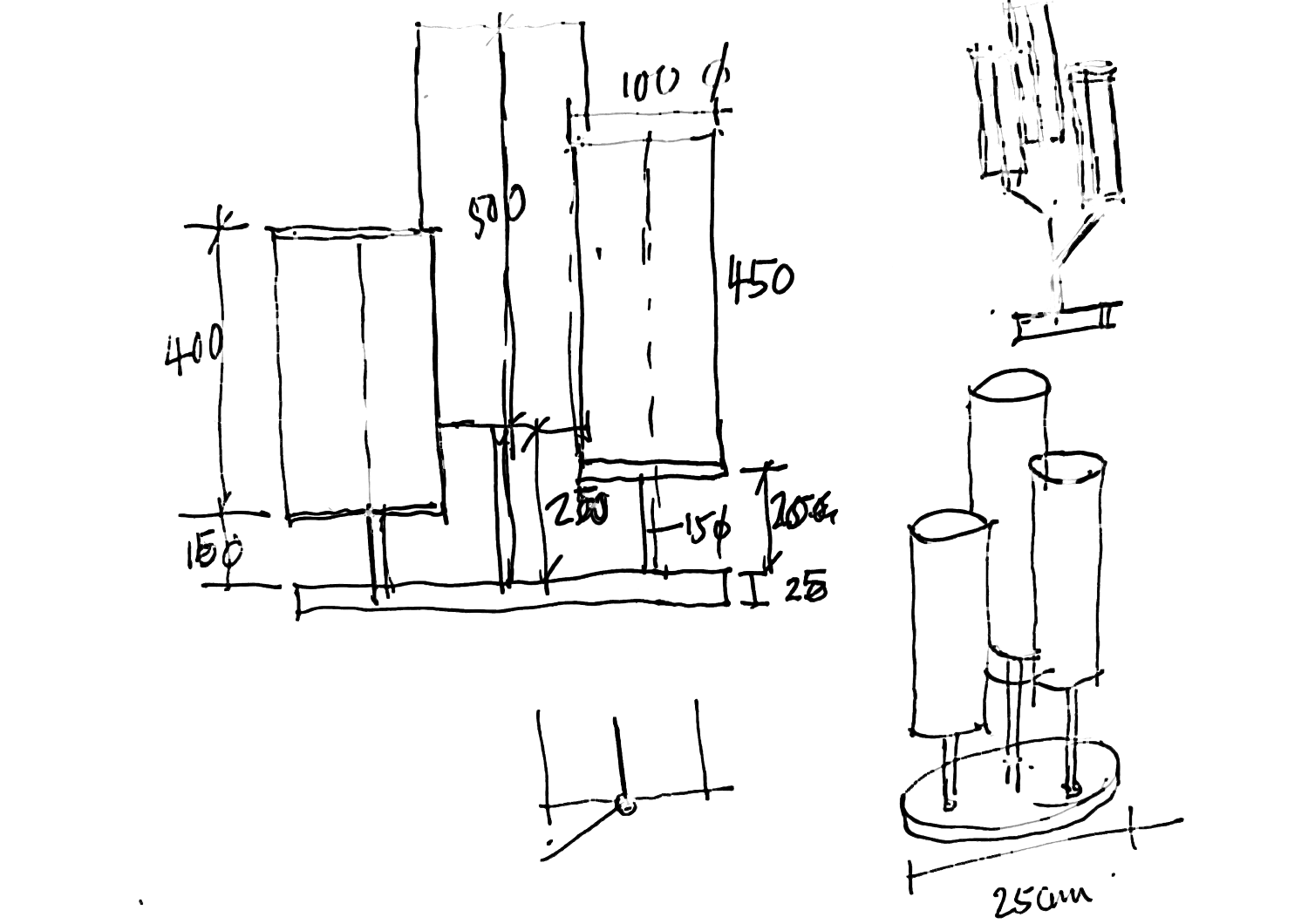
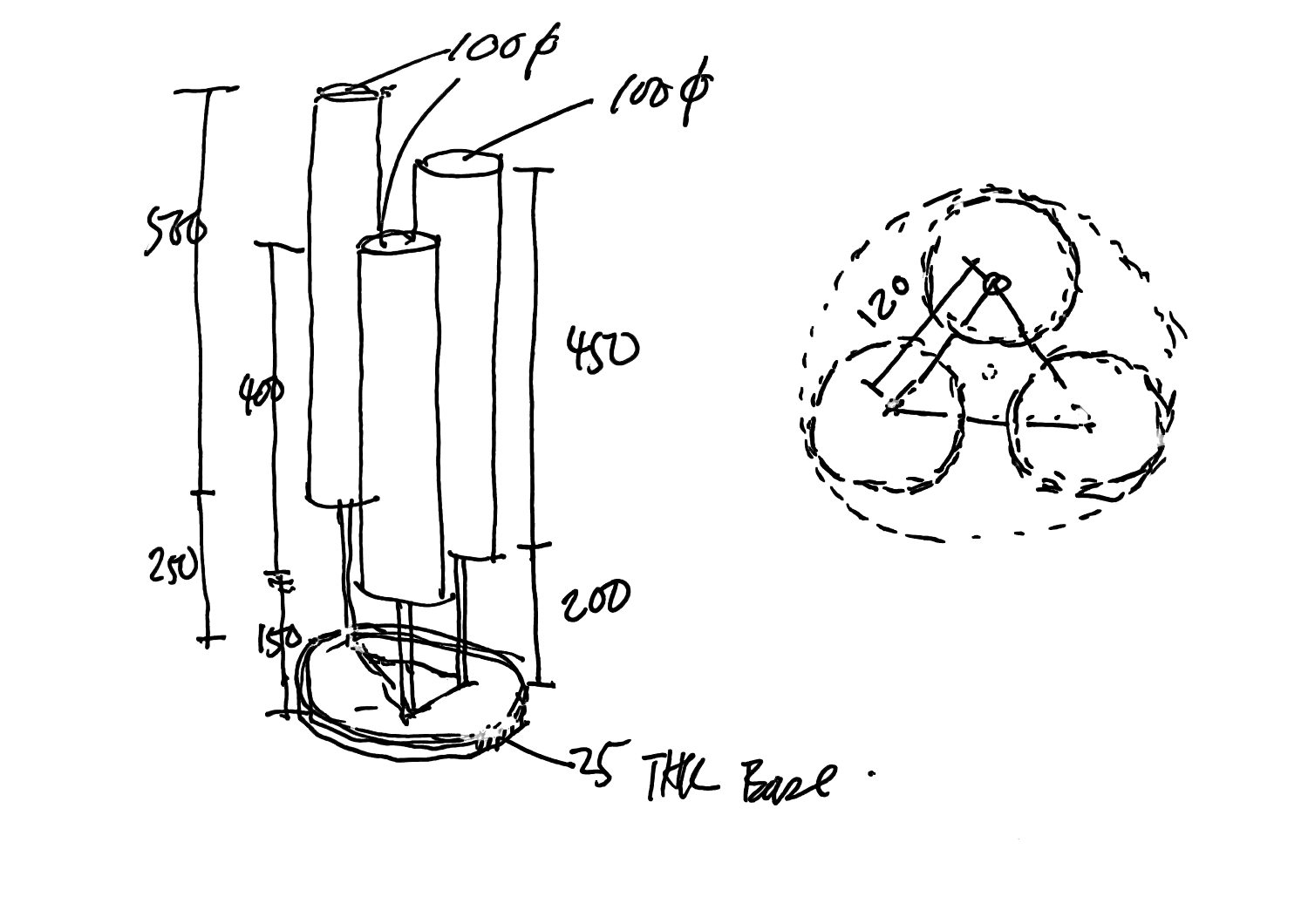
The result of this experiment became the inspiration for the design of the ‘3-bark’ table lamp. As the name suggested, it is a composition of 3 woven lampshades with a tight circumference, set at various heights on an elegant marble base. The decision for a long slender elongated form is to showcase the unique pliability of the bark cloth material.
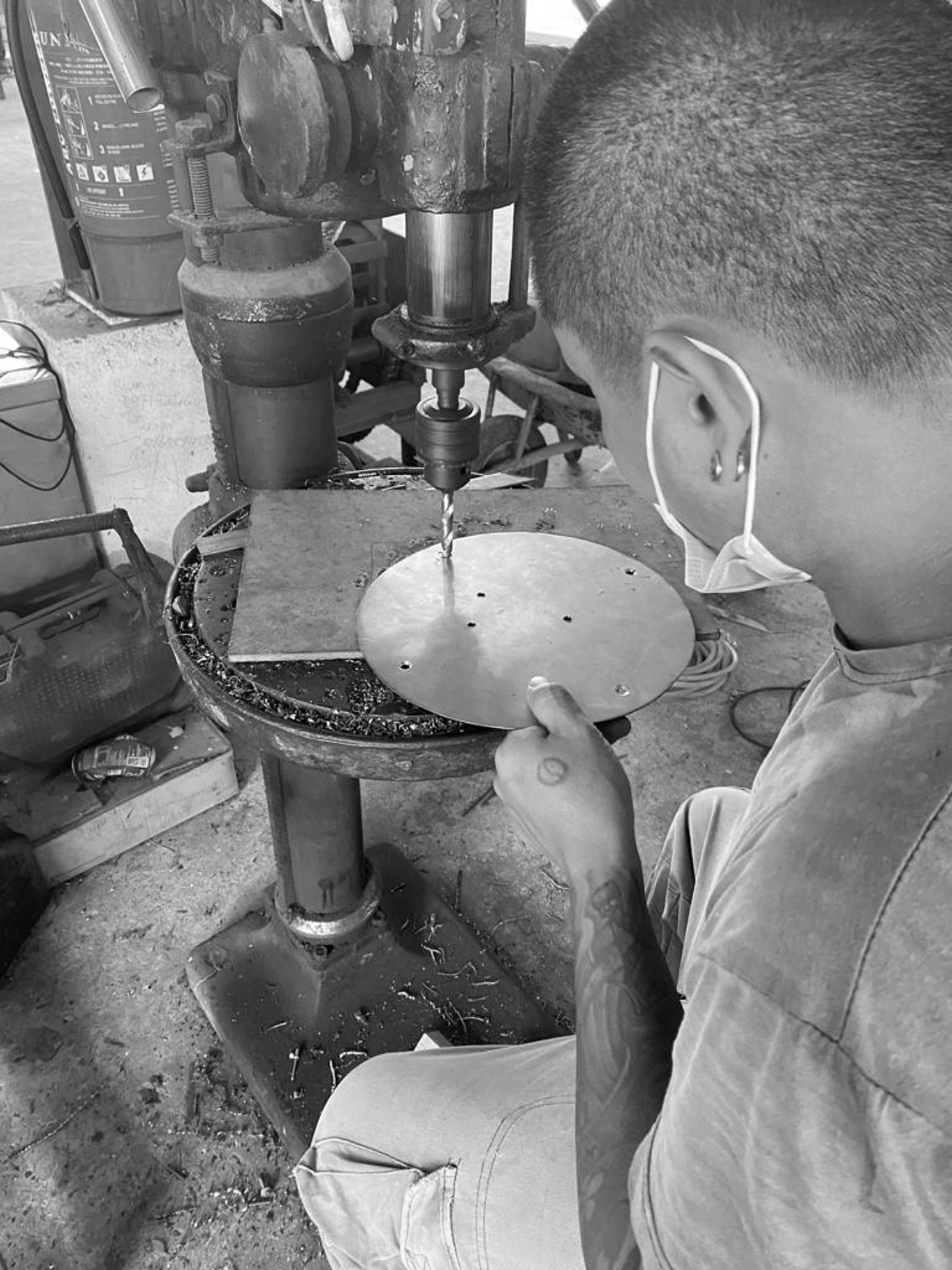
The veined marble base and polished stainless-steel stands provideda strong textural contrast to the rustic weave. The lampshade is a composite woven piece of bark strips and box straps. This is overlaid with even finer strips to create a delicate lattice pattern.
This resulted in a lamp that spreads a warm, intimate glow. The open weave allows the light to filter through and create interesting patterned light and shadows. The bark tree cloth has always been an understated material, an ancient technique that predates the invention of weaving. With this exercise, the team hopes to showcase its beauty, potential and viability as a craft material.
The project team (from left): Rosemarie Wong, Ar. Ivy Jong and Johnson Tan with a prototype of the 3-Bark lamp
The main reason for the two architects to accept a ‘non-architectural’ project, and to Collaborate with Datin Rosemarie Wong of The Ranee and their team of weavers was to find ways to revive the dying skill of tree bark making. Finding alternative uses for this traditional material is a good start.
For Johnson Tan, it is a more personal journey, as tree bark making was part of his childhood memory from his days growing up in Kg. Abok, Sri Aman.
Ar. Ivy Jong and architect Johnson Tan see the value of exploring craftfrom an architectural perspective. They want to look at ways to experiment with this material further for architectural and interior uses.
The SERUMPUN: “Crafts AcrossBorders” exhibition was held at the Borneo Cultural Museum until 7th Dec and thereafter at THINK & TINK (former Ting and Ting supermarket) until the end of Dec 2022. end of Dec 2022.
This exercise was made possible in collaboration with Datin Rosemarie Wong of The Ranee, Jawatankuasa Agrokrat Borneo and the women weavers of Rh. Merunjau Padeh. and Rh. Mujau Spak. And with the assistance from: Yak Ipin (Kg Abok) for harvesting and Yak Jinggut (Kg Sengai) for processing the bark cloth Alvin Kho and Aaron Tang of Justlight Enterprise Sdn. Bhd. Justin Kho of Umehiko (M) Sdn. Bhd. Lin Yuk Chin of Evershine Stainless Steel Enterprise Liew Jew Cheung of Renobuilt Intergrated Sdn. Bhd.