Principles of scale and proportion in architecture and the common
threads in vernacular architecture typologies.
Text by Ar Edric Choo
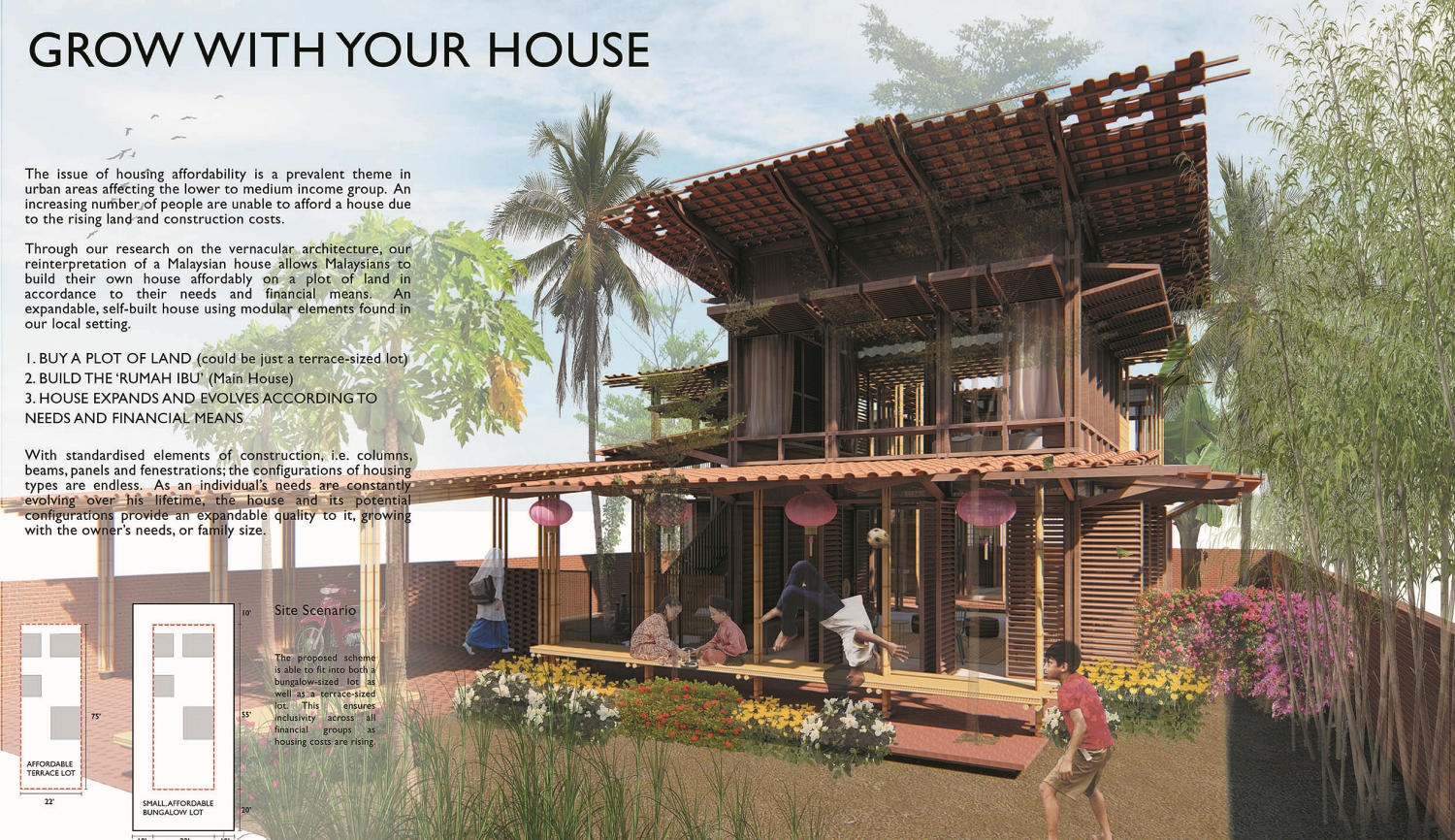
Grow with your house - a reinterpretation of a Malaysian house allowing Malaysians to build their own house affordably on a plot of land in accordance to their needs and financial means
Great architecture is always well-designed with harmonies of a sense of scale and a command of proportion. While they are related, they have distinctly different meanings.
The Taj Mahal, a grand and symmetrical structure
SCALE
Scale is a relative factor. In architecture, it refers to the size of the building in relation to its surrounding environment as well as the size of each part in relation to the other. It refers to the size of the object in relation to another object or more, one that is a commonly known size. In most cases, is compared to our human scale. A single object has no scale until it’s seen in comparison with something.
In architecture, these principles are used to create harmonious and aesthetically pleasing designs by taking into consideration the human scale and the surrounding context.
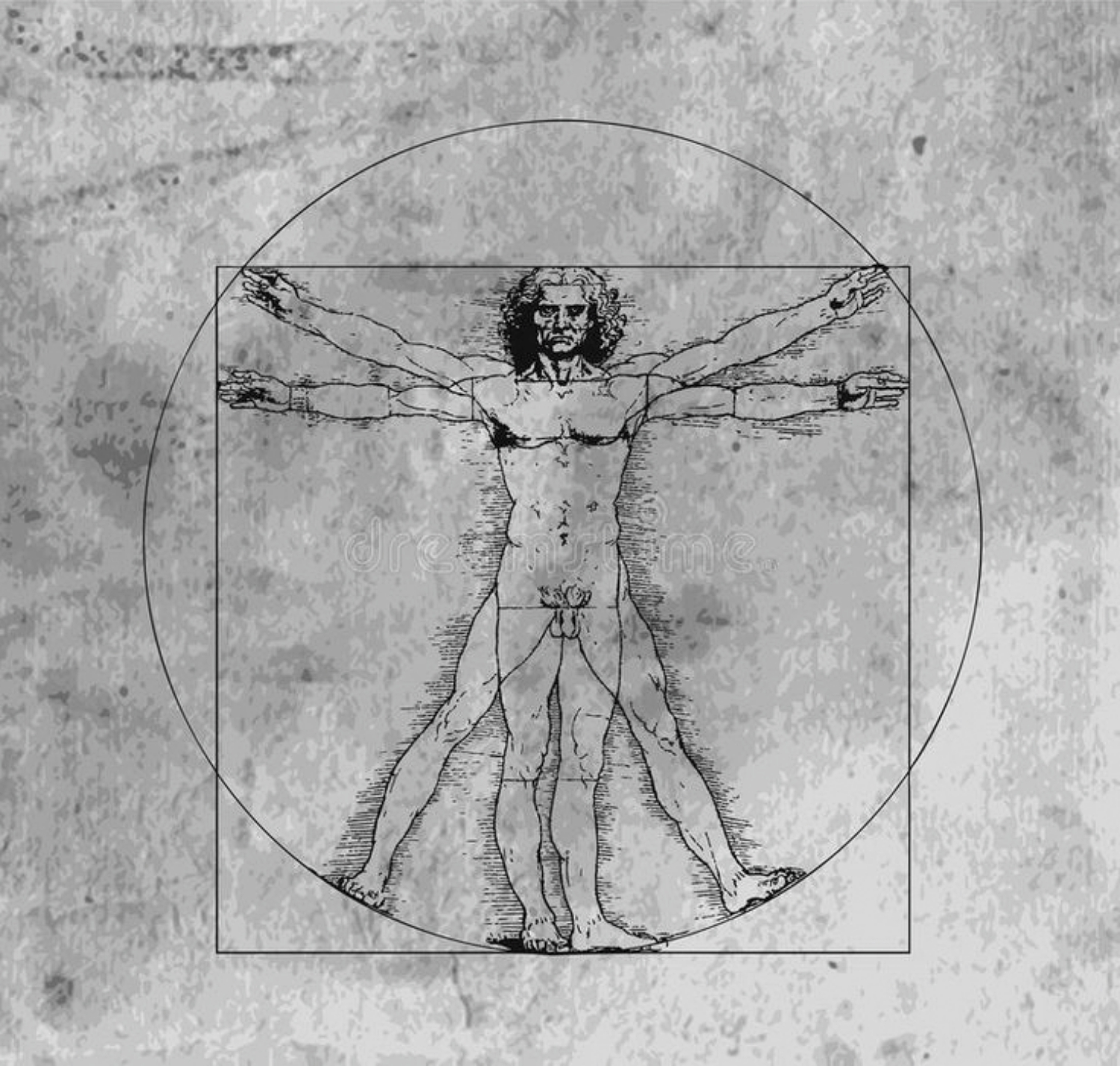
In architecture there are 3 primary scales to be considered: Human Scale – Refers to the size and proportion of buildings, spaces, and objects in relation to the human body. It considers the average height and size of the user to ensure it is comfortable and functional. The human scale is important as it will affect their sense of well-being which suits all ages, sizes, and abilities.
Human Scale - the Vitruvian man by Leonardo da Vinci
Intimate scales – Refer to small and cozy spaces, with low ceiling height and enclosed feels. It is characterised by space that is smaller and more personal. These spaces include residential bedrooms, private offices, a small courtyard, and small pocket spaces. The purpose is to create a sense of cosiness, comfort, and personality. For example, in Malay House, serambi space will be more intermate for informal discussion and engagement with the neighbourhood.
Monumental scales – Refer to large and grand structures, often emphasising symmetry, proportion, and grandeur. Monumental scale can create a sense of Awe and inspire feelings of awe, wonder, and pride. Mostly public buildings, museums, and landmarks for important events and people.
Hierarchical Scale – Normally used for exaggeration comparison. It is to create a sense of visual hierarchy and emphasis. This method will make one appear more important or dominant in comparison to others. In a building, normally the entrance will be more grandiose than the surrounding spaces and create a clear hierarchy within the building. For Example, in the Malay House, Rumah Ibu will have a larger space verse anjung and serambi as in containing a major part of the house and catering for various types of activity for the house.
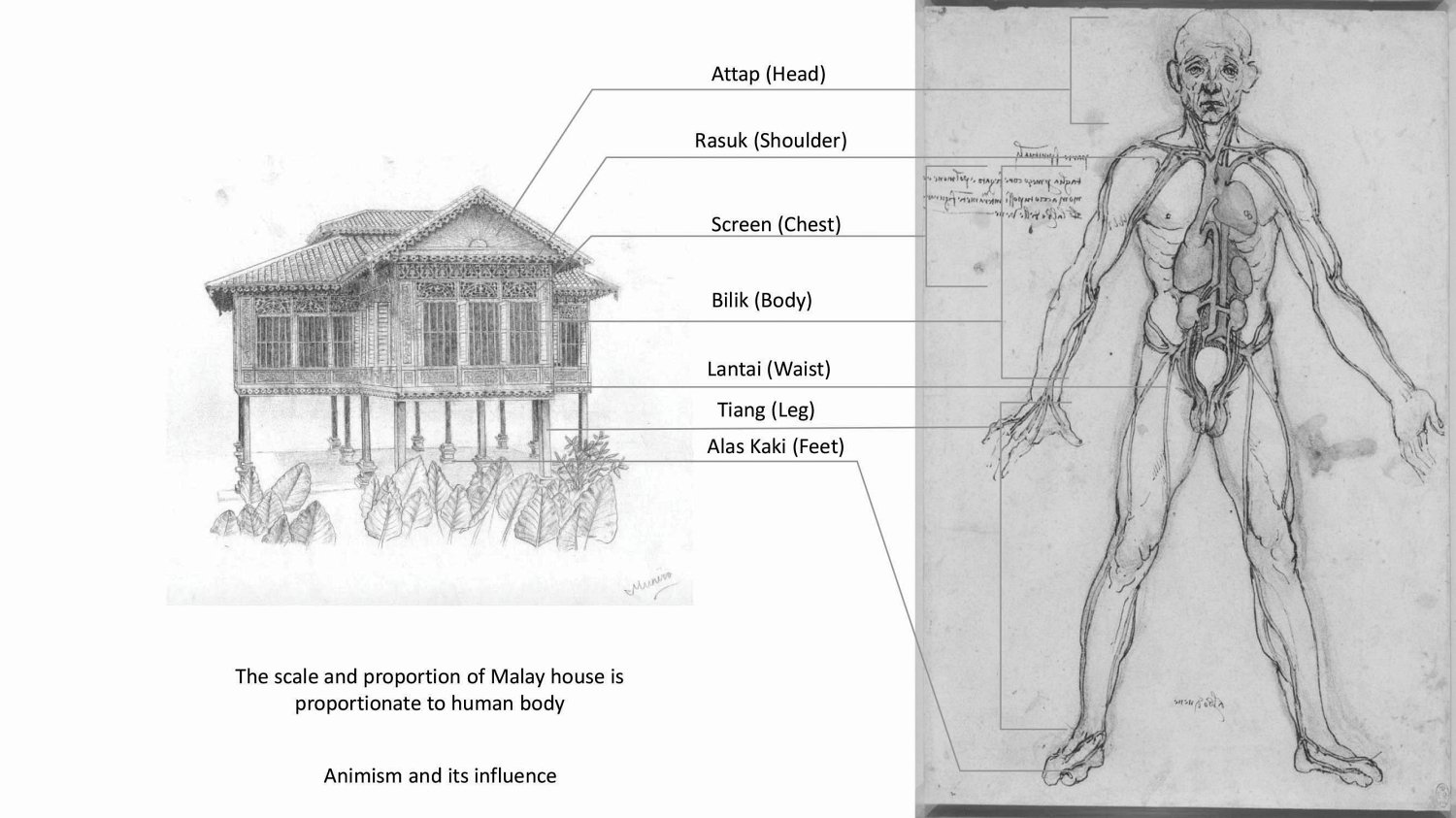
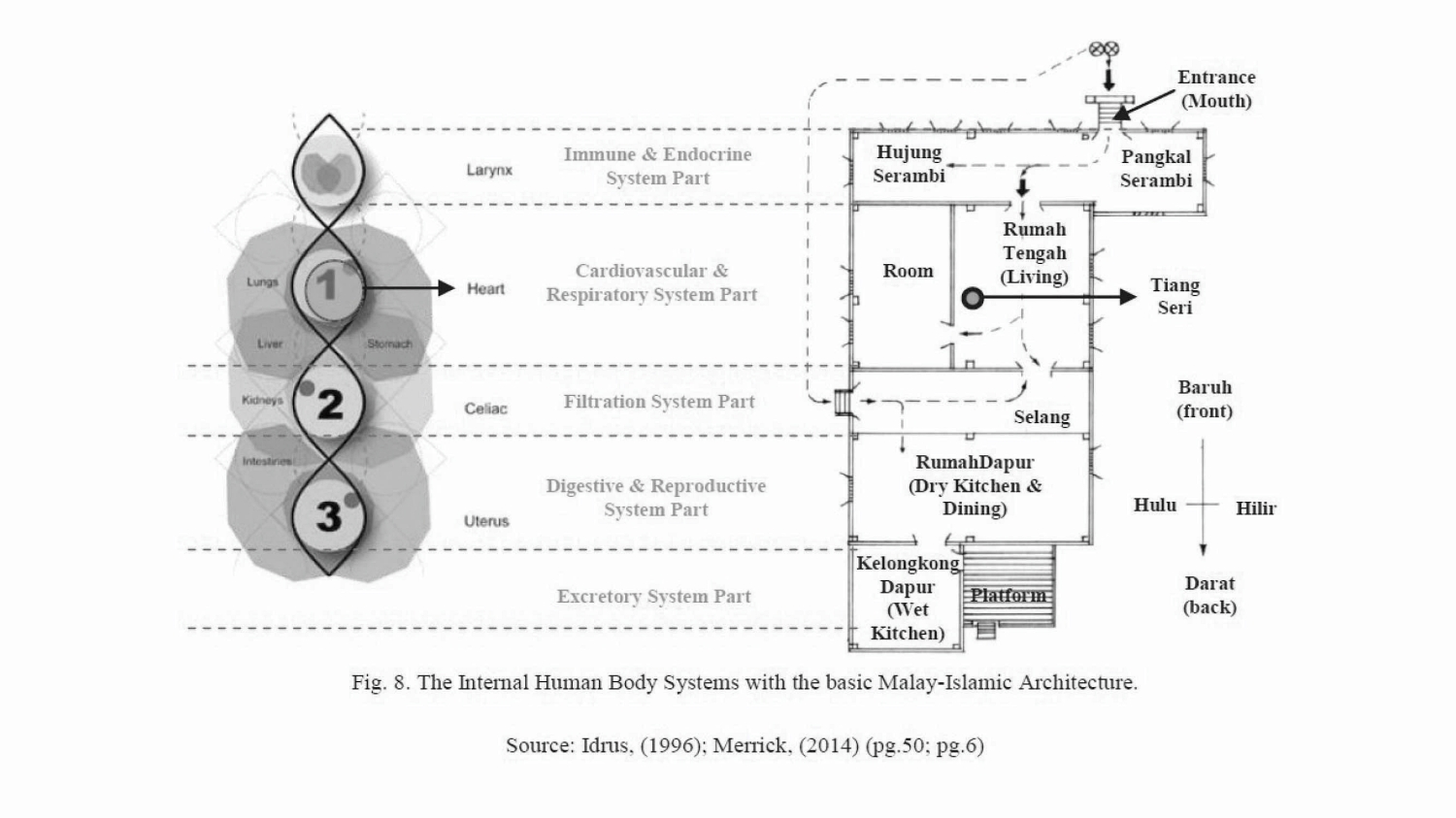
In traditional Malay houses, the formation of the house is also a reference to the human body.
The scale and proportion of a Malay house is proportionate to the human body; Animism and its influence
The internal human body systems with the basic Malay Islamic Architecture
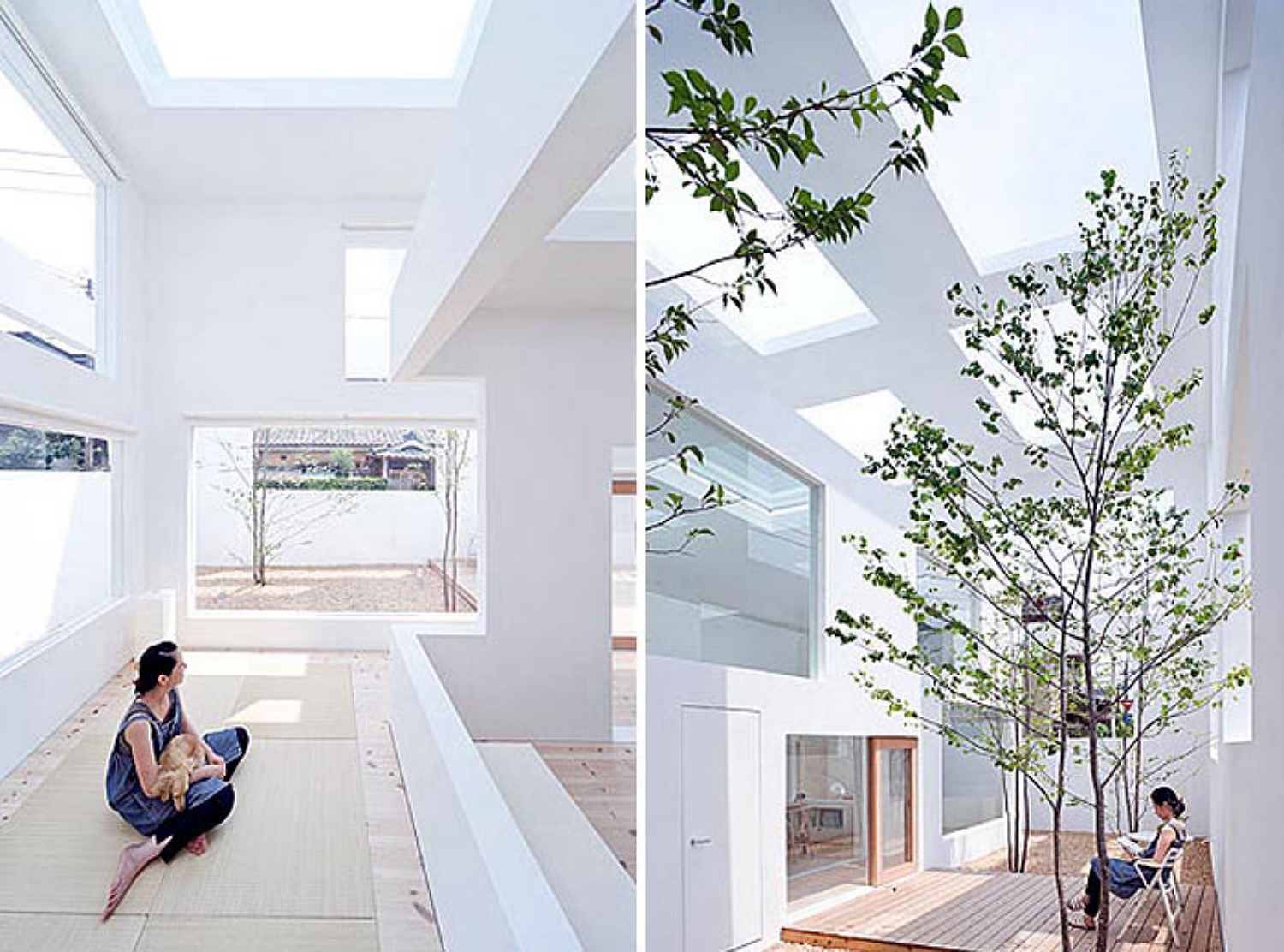
House N by Sou Fujimoto
PROPORTION
Proportion refers to the balance of different parts in relation to each other and to the whole composition. It refers to the relationship between the different elements of the building in terms of size, scale, and visual balance. Proportion is an important design principle that helps to create harmonious and aesthetically pleasing compositions.
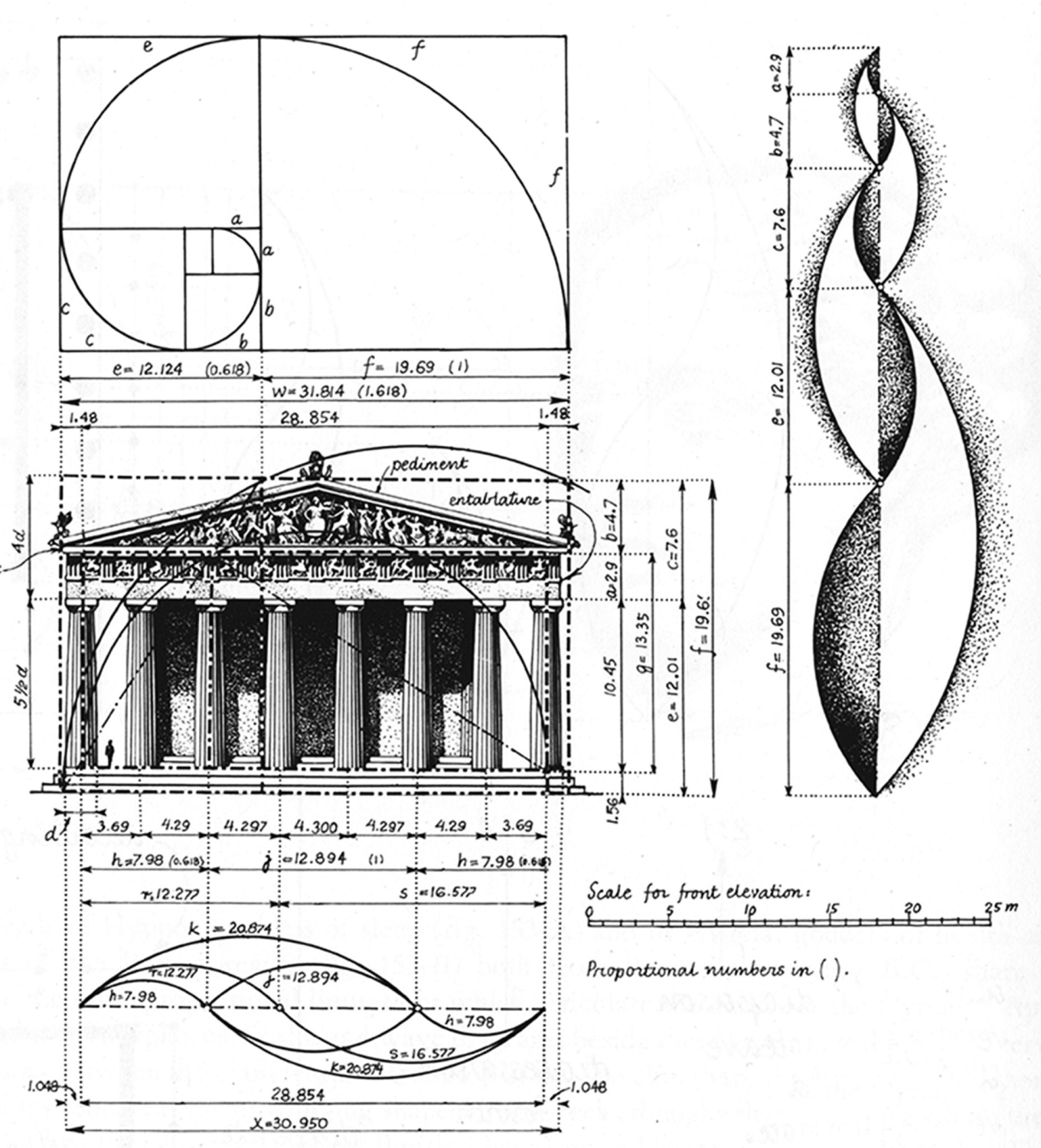
It involves the calculation of ratios, and the use of mathematical ratios and geometric forms to determine the size and placement of architectural elements. For example, the golden ratio 1:1.618, is often used in architectural design to create proportion and balance in buildings. Classical Greek and Roman architecture was obsessed with getting all the parts into prescribed proportions, in the belief that using these naturally occurring ratios would harmonise the design with universal, divine Truth.
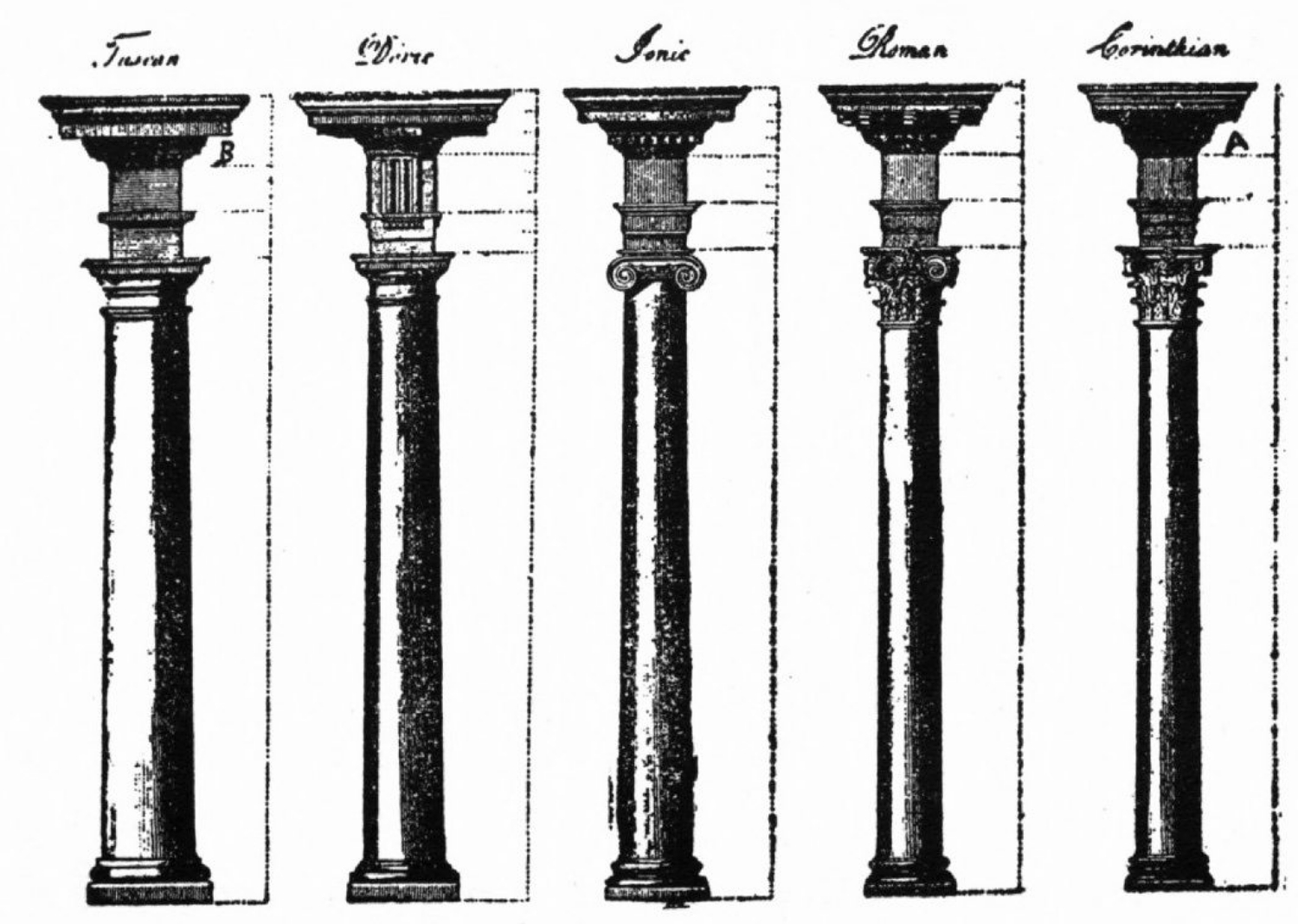
This can be seen in the relationship between the height, width, or placement of windows, doors, and columns. The use of proportion can be seen in classical orders like Doric, Ionic, and Corinthian columns, which have specific ratios between the height, width, and base of the columns.
Proportion refers to the harmonious relationship of one part to another or the whole in Magnitude, Quantity, and Degree. It refers to equality between two ratios in which the first of the four terms divided by the second equals the third divided by the fourth. A proportioning system is based on a basic ratio that is continued in certain multiplies.
The Golden Ratio
PROPORTIONING SYSTEM
A proportioning system in Architecture refers to a set of rules that dictate the relationship between various elements and components of a building in terms of size, scale, and visual balance. By following this guide, it creates harmonies and aesthetically pleasing compositions.
There are several different proportioning systems used in architecture, including the golden ratio, Fibonacci Sequence and Vitruvian System, and modular systems.
The Golden Ratio – a mathematical ratio of 1:1.618 that is often used in architectural Design to create proportion and balance in a building. It has been used widely in Art, Graphic, and Music. This ratio has been found in our natural world, plants, and the human body.
The Classical order – a proportionating system developed by ancient Greeks and Romans involved the use of mathematical ratios to determine the size and placement of architectural elements. It is not based on the fixed unit measurements, but rather on proportioning the parts to the wholes. The five classical orders from less ornate to most ornate: Tuscan, Doric, Ionic, Corinthian, Composite.
The Classical Order
Renaissance Theories – deeply rooted in Greek mathematical systems of proportions. Pythagoras discovered based on the Greek musical systems, that there was a simple numerical progression 1,2,3,4 that could be expressed in ratios 1:2, 1:3, 2:3, 3:4 to create the harmony of the composition. Andrea Palladio in The Four Books on Architecture laid out a system of proportioning to make rooms beautiful and harmonious.
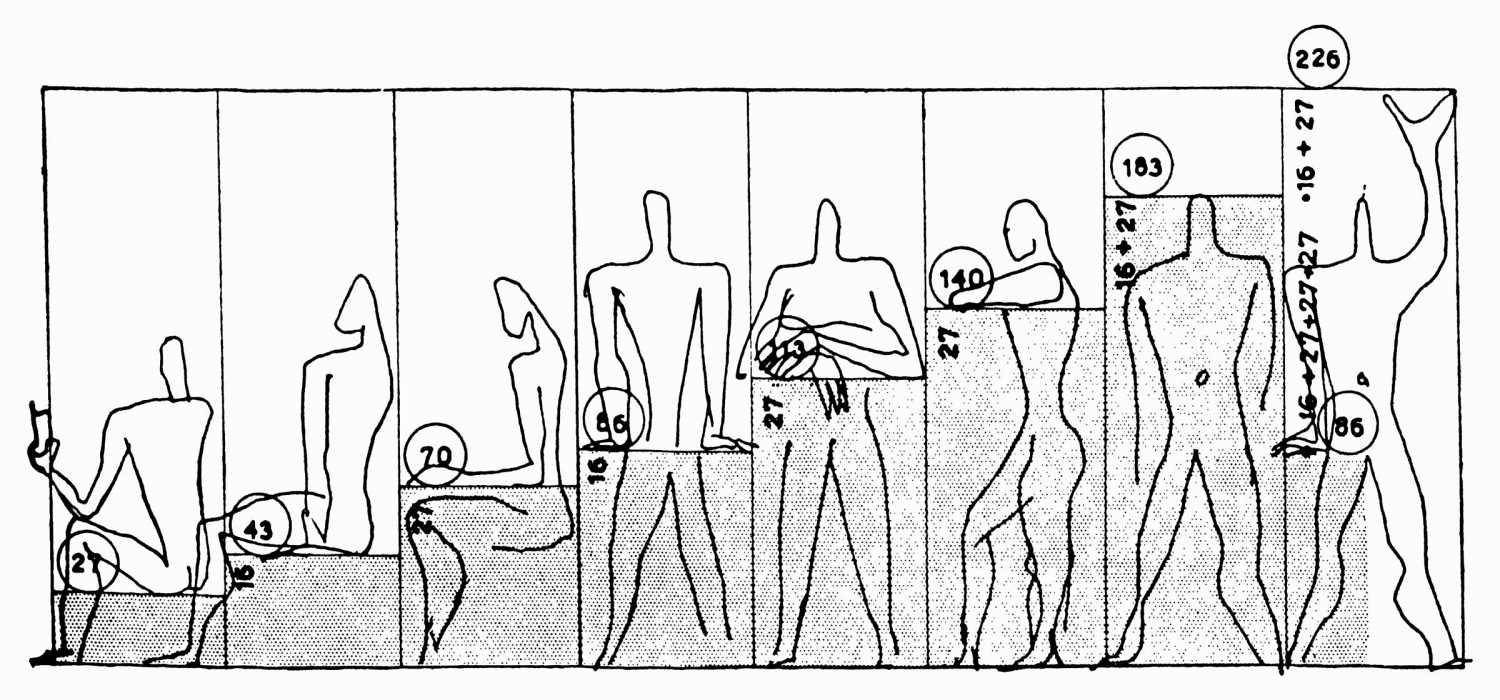
The Modular – Proportioning system was developed by French architect Le Corbusier. It involves the unit of measurement based on the human body known as The Modular. It combines the Golden ratio and Fibonacci numerical series with the scale of the human body. To Le Corb, this system of measurement could determine the volumes and surface through human scale.
The Modular
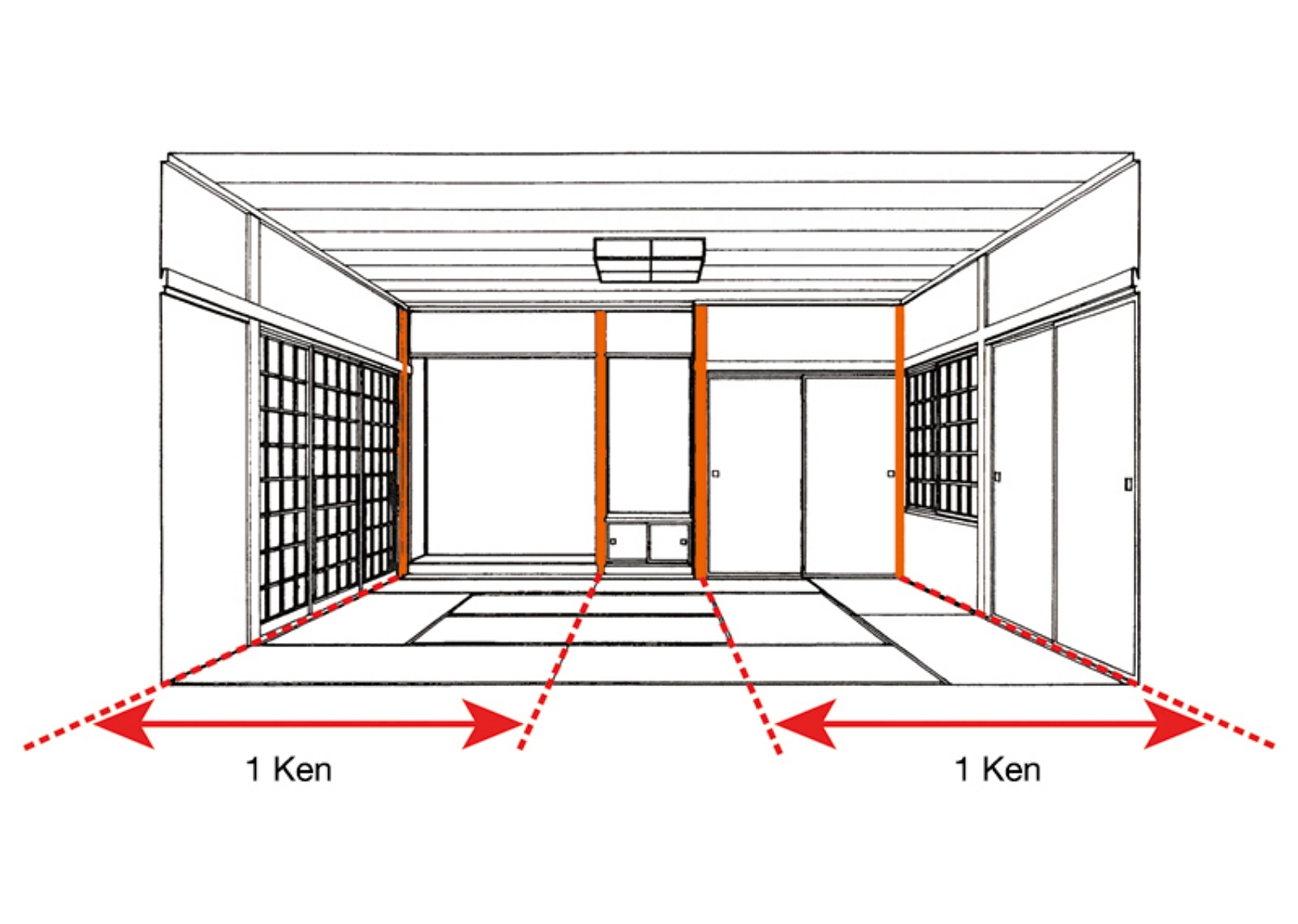
Ken System – Initially used to designate spacing between columns and varies in size. However, eventually, it became the standard measurement for residential architecture. The based unit 1:2 modular floor mat can have various configurations. The size is based on seating of 2 people and one person to lie on. The size of the room is based on the number of ken used. The ceiling height is derived from the number of mats x 0.3.
TRADITIONAL MALAY HOUSE SYSTEM
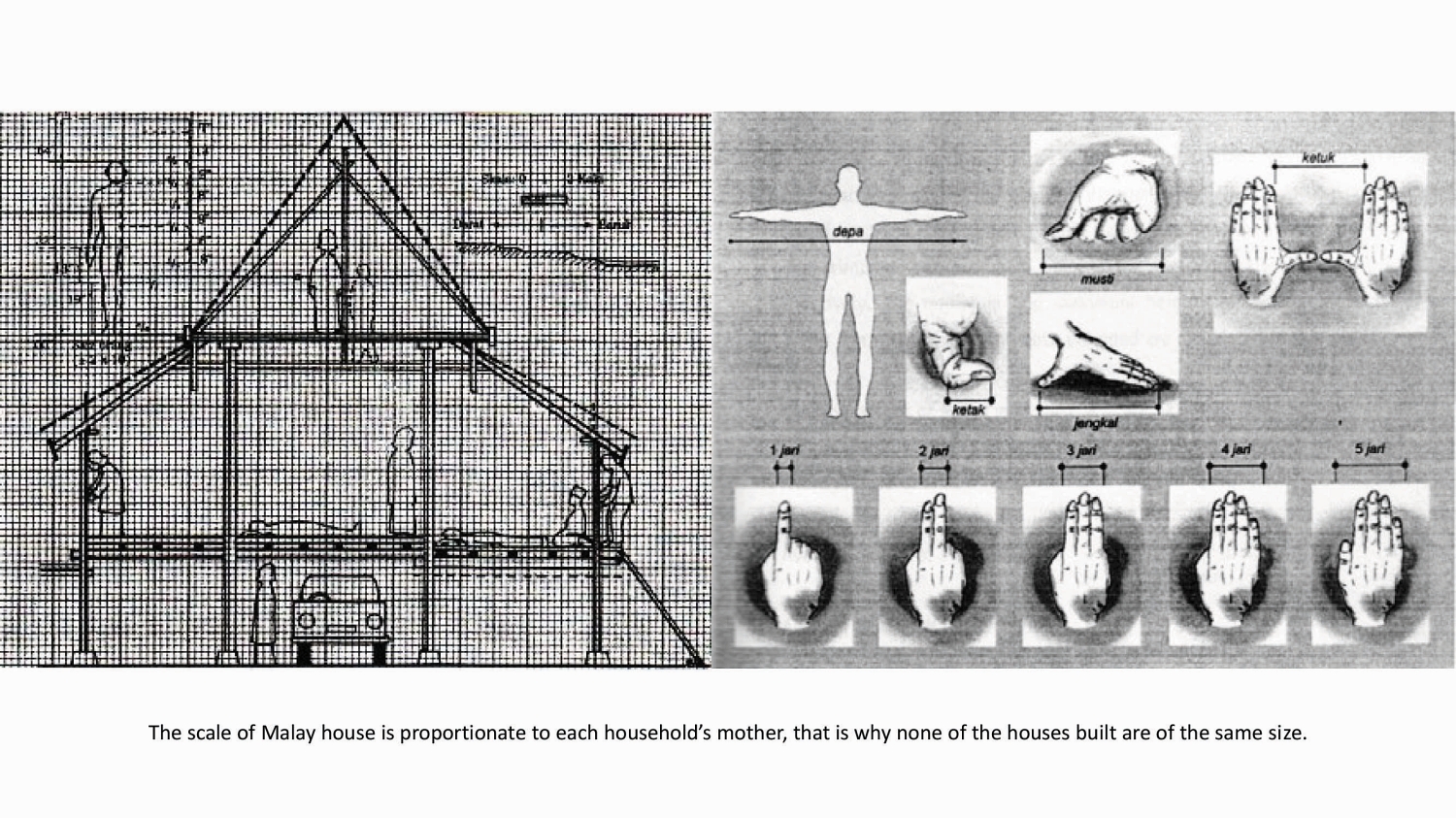
Measurement is based on the human body; usually, the hands and arms of the carpenters are also used by the Malays. The longest unit of measurement in the human body is depa – the dimension between the tips of the fingers of the horizontally out-stretch arms often used to measure lengthy objects and wide spaces. The smallest unit is one jari or the width of a finger. One jari or more is often used to measure smaller elements.
Each Proportioning System has a unique set of rules and guidelines. It is always to create harmonies and aesthetically pleasing compositions using mathematical ratios and geometric forms.
Referring to history, a well-designed building by the master has been applying the propositioning systems to keep the Architecture Order.
Getting the scale right during the design phase is arguably more difficult and takes keen experience because it requires projecting oneself into the imagined building to know how big it is going to feel once it is built. But when managed with mastery, balanced proportions, and consistent scale can create an enduringly beautiful building.
Ken System
KLAF COMPETITION 2020 GROW WITH YOUR HOUSE – A PROJECT BY O2DA+CPLA
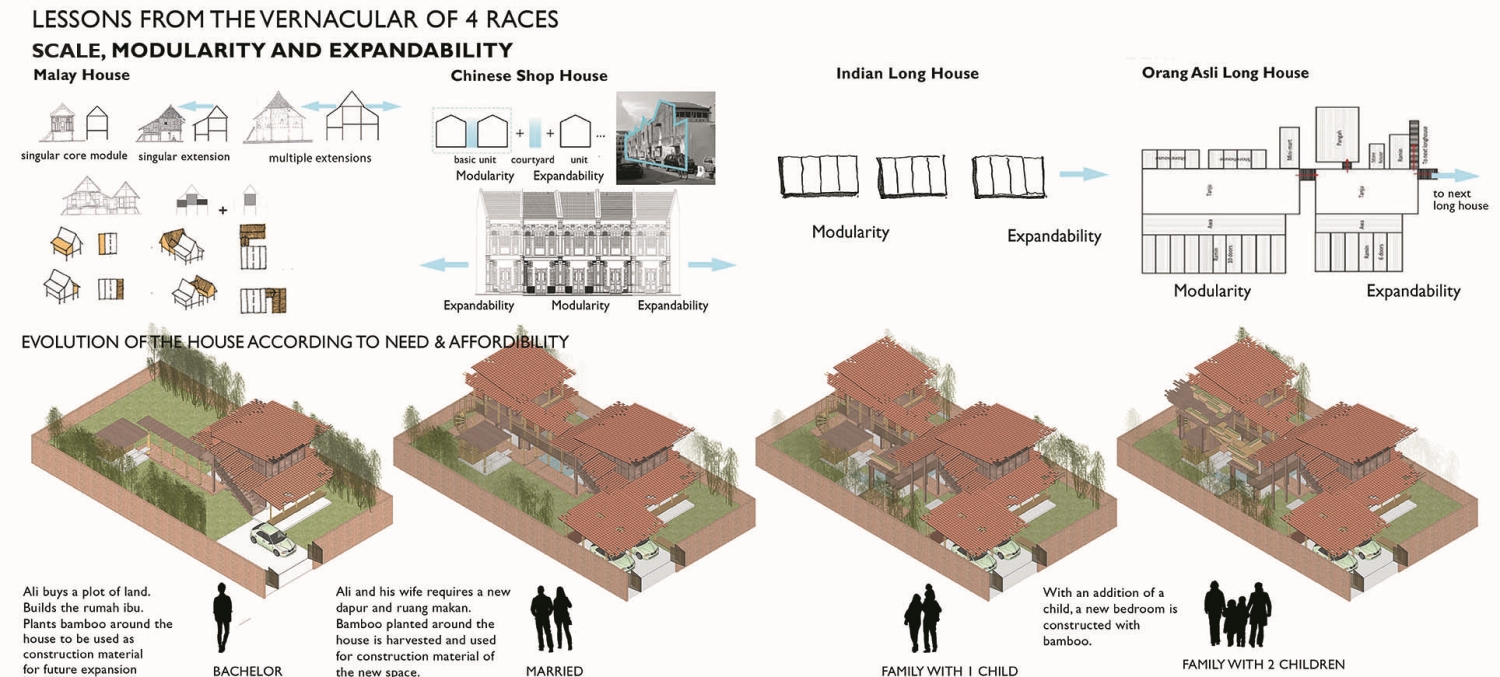
Our thorough research extends to all ethnic vernacular architecture typologies found in our country, this being the Malay House, Chinese Shophouse, Indian Long House as well and the Indigenous Long House. The common thread that we discovered whilst looking into these vernacular typologies was the modularity and expandability of the house, which allowed it to grow and adapt over time. This approach to house designing seemed to us a good fit, as it is a sustainable approach and adds character to the house. We wanted to reinterpret the allure of vernacular architecture by expressing the beauty of tectonic construction by using locally sourced and traditionally used materials across all ethnic vernacular architecture. This includes a material palette of timber, bamboo, and terracotta tiles.
The scale of Malay house is proportionate to each household's mother, that is why none of the houses built are of the same size
The house has been designed according to scale and proportion in reference to Malay house dimensioning systems. System Depa – the dimension between the tips of the fingers of the horizontally out-stretch arms often used to measure lengthy objects and wide spaces. The smallest unit is one jari or the width of a finger. One jari or more is often used to measure smaller elements. It is essential to use local measurements to allow the architecture to have harmony with its users.
With standardised elements of construction, i.e. columns, beams, panels, and fenestrations, the configurations of housing types are endless. As an individual’s needs are constantly evolving over his lifetime, the house and its potential configurations provide an expandable quality to it, growing with the owner’s needs, or family size.
Each of the modular small-scale spaces keeps expanding when needed. The modularity allows an intermate space room by room, unit by unit. The house also has been placed in a different hierarchy ranging from the main house to small rooms.