A SCHOOL COMMUNITY PROJECT BY PDC DESIGN GROUP WITH INTODESIGN LAB
TEXT BY TAY TZE YONG, INTODESIGN LAB
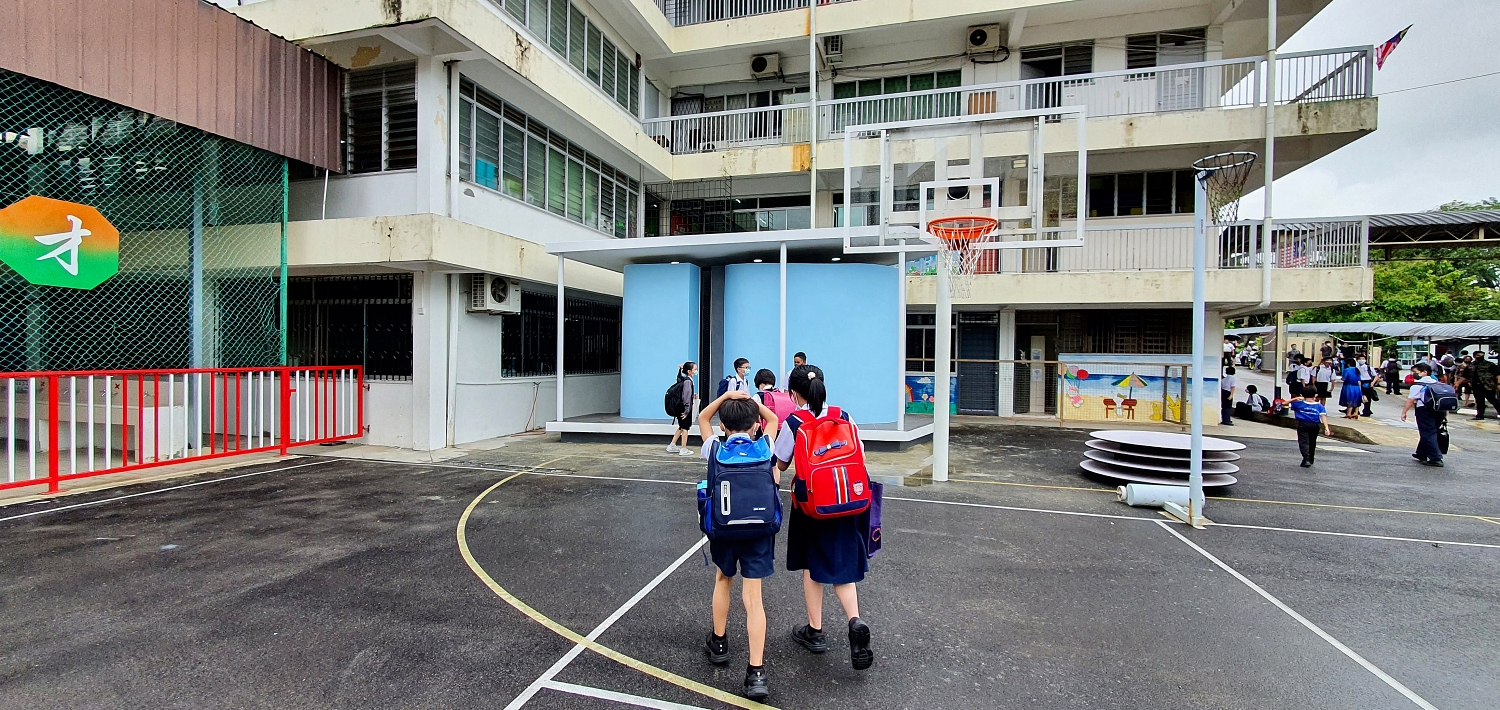
This little blue corner has become a gathering point and a pick-up point for parents since its completion
Cleanliness is important within the school compound, aside from common areas like the classrooms, canteen, corridor, etc. The toilets with high usage are equally important. In our numerous visits to urban schools, we observed there are common problems with the toilets, which are due to a lack of cleanliness, maintenance problems, and vandalism committed by students.
On average, students spend around one-third of their time at school and they need to use the toilet rather frequently. Hygienic toilets provide a healthy environment by minimising transmissible diseases, encouraging good habits and cultivating a sense of responsibility to the students. On the contrary, dirty toilets will cause sickness, disgust and a bad impression or memory for young children. This is because school is the first public space they step into away from home. A clean and well-designed toilet can cultivate good habits and social responsibilities from a young age.
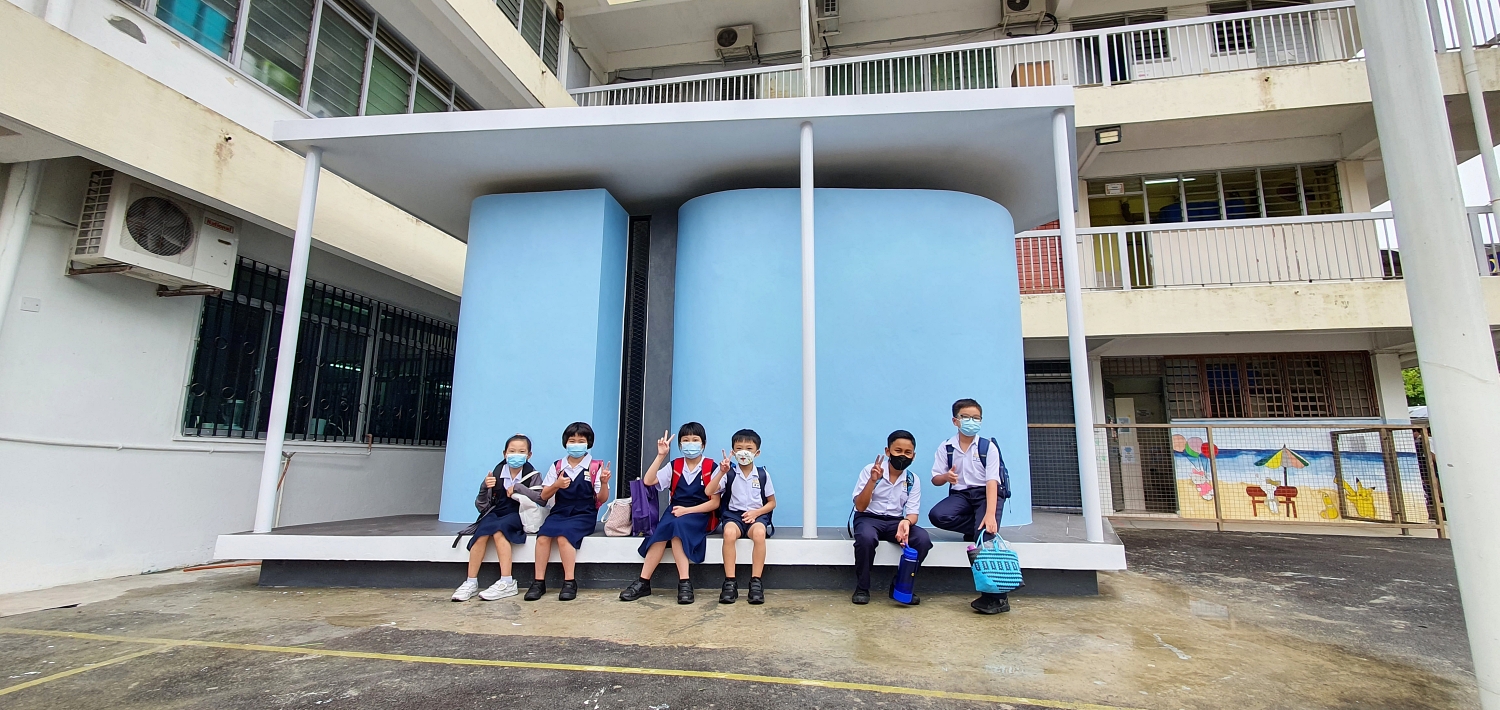
After school, students happily converge at this pick-up point, their smiles lighting up the area
Our firm was invited to look at the feasibility of the site and what we can propose to enhance its tourism potential. We were privileged that our client’s project management team was open-minded and supported the less ‘conventional approach’ to how they would normally develop their facilities in their parks.
The Fairy Cave nature reserve site is constrained by the limitation of available building land; as much of the gazetted area was only within the base of the cave cliff-face.
The existing structures on site consist of a concrete staircase tower structure which was the only access to the cave entrance at about 23m from the ground. There were a 2-door toilet hut and a portable cabin that functions as the ticketing and control booth at the bottom of the staircase. It was intended as an accessory parcel to the bigger Wind Cave Site. As such the building programme for this site was limited.
I came across an interesting news article in China Daily News where students at a primary school in Fuzhou, East China’s Fujian province, were reportedly required to take the responsibility to clean the school toilets to help them nurture healthy habits. Some parents opposed the idea, but others believed that the kids who were instructed to clean the school toilets would thank the school later for instilling the spirit of rules and teamwork in them.In recent local news, Prime Minister Datuk Seri Anwar Ibrahim believes that getting students to clean the toilets they use at school would help instill values in them too.
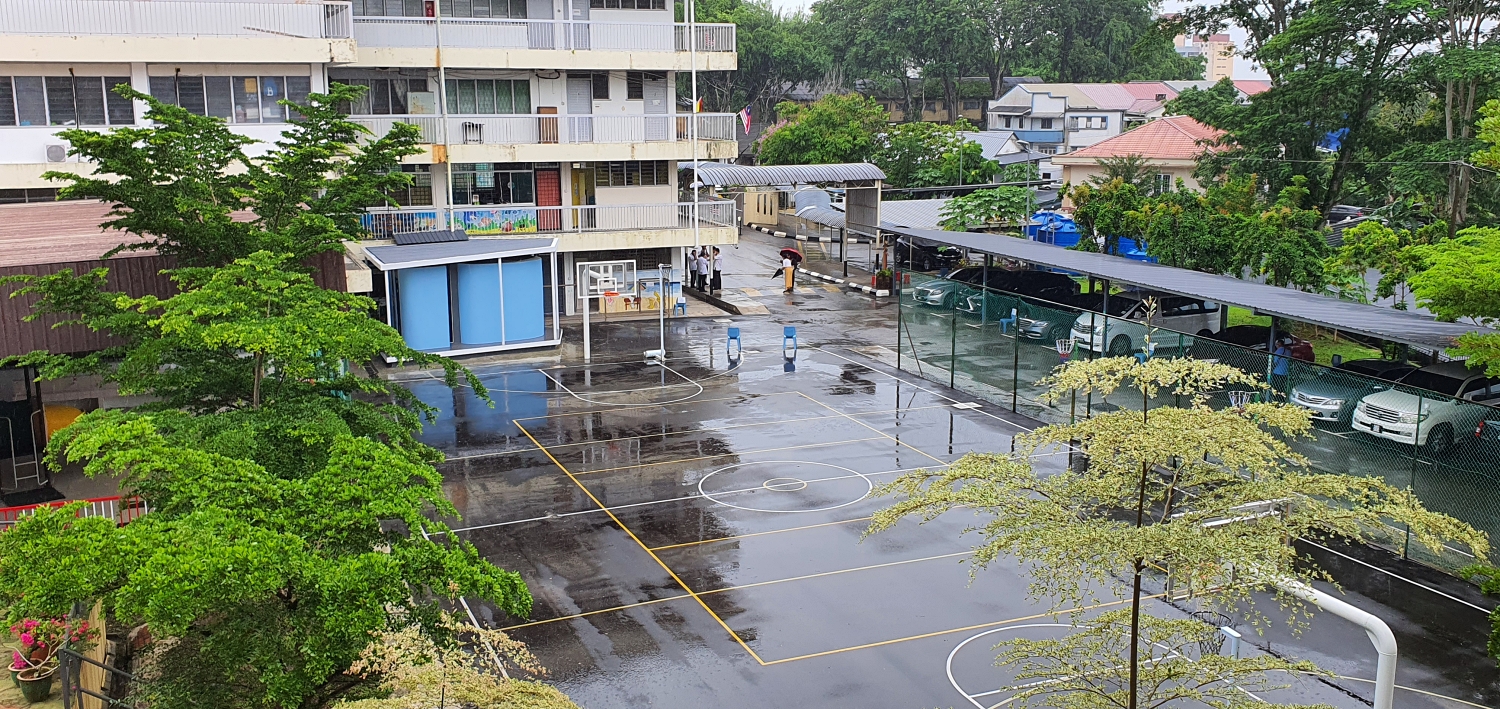
The connections of main entrance, waiting area, sports ground and school blocks can be clearly seen from the aerial view
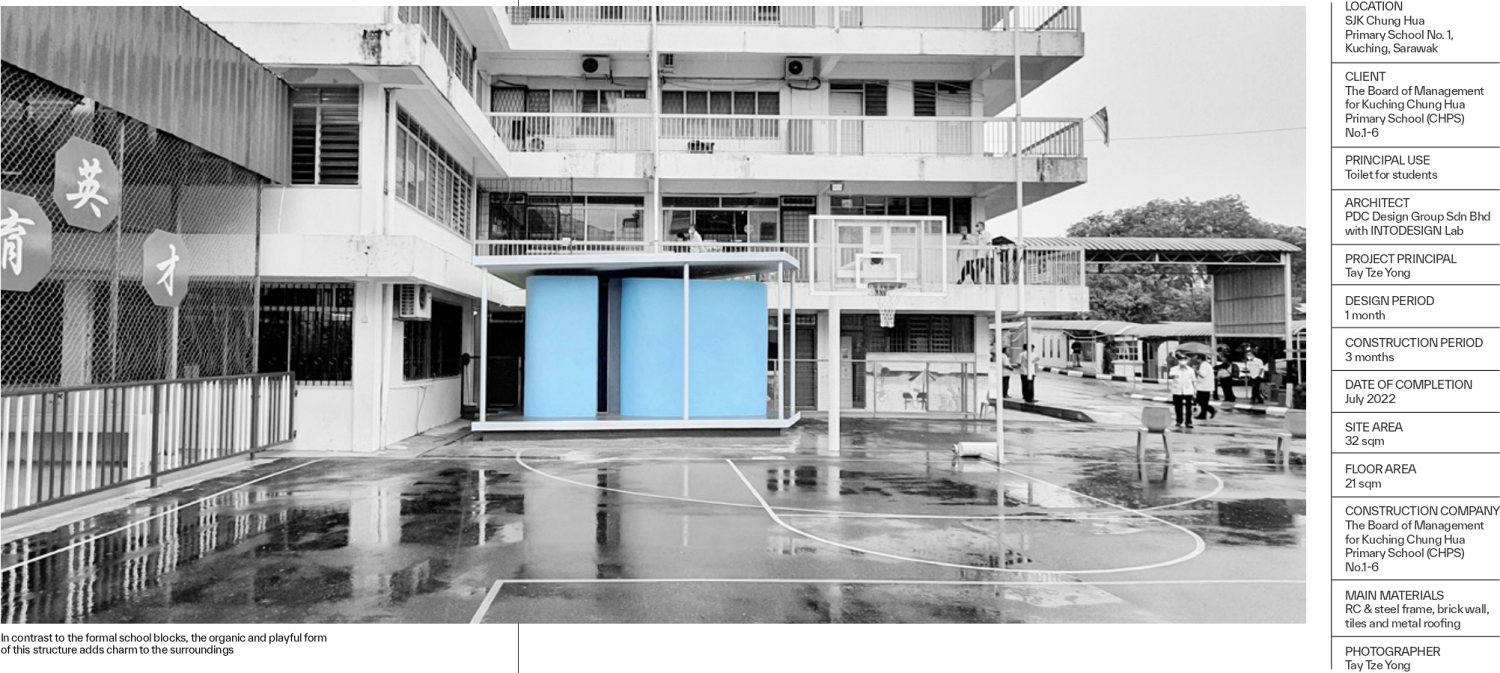
In this little toilet project at SJK Chung Hua Primary School No.1, Kuching, I took a chance to redefine the toilet cubicles at a local primary school with natural ventilation, brighten the interior spaces with natural lighting, and utilise rainwater collection for cleaning, gardening, and outdoor activities. Contrasting to most toilets in urban schools, the toilet corners are fillet to create a softer form. There is a certain playful manner in the space planning, thus resulting in a non-ordinary appearance. I choose to use the pastel blue colour as a tribute to the school’s colour theme. Since its completion, it has drawn the attention of the teachers and parents, students are happy to gather there as a pick-up point after school.
I hope this Little Blue Project will inspire other schools to promote healthy toilets and encourage students to develop healthy habits. For me, even a small voluntary project is worth attempting to make it as impactful as possible.
Some parents opposed the idea, but others believed that the kids who were instructed to clean the school toilets would thank the school later for instilling the spirit of rules and teamwork in them.