A BRIEF LOOK INTO THE PAST, PRESENT & MUSING OF ITS FUTURE
OLD PHOTOS
FROM THIEN FAMILY ARCHIVE
TEXT AND PRESENT DAY PHOTOS
BY AR. IRVING THIEN
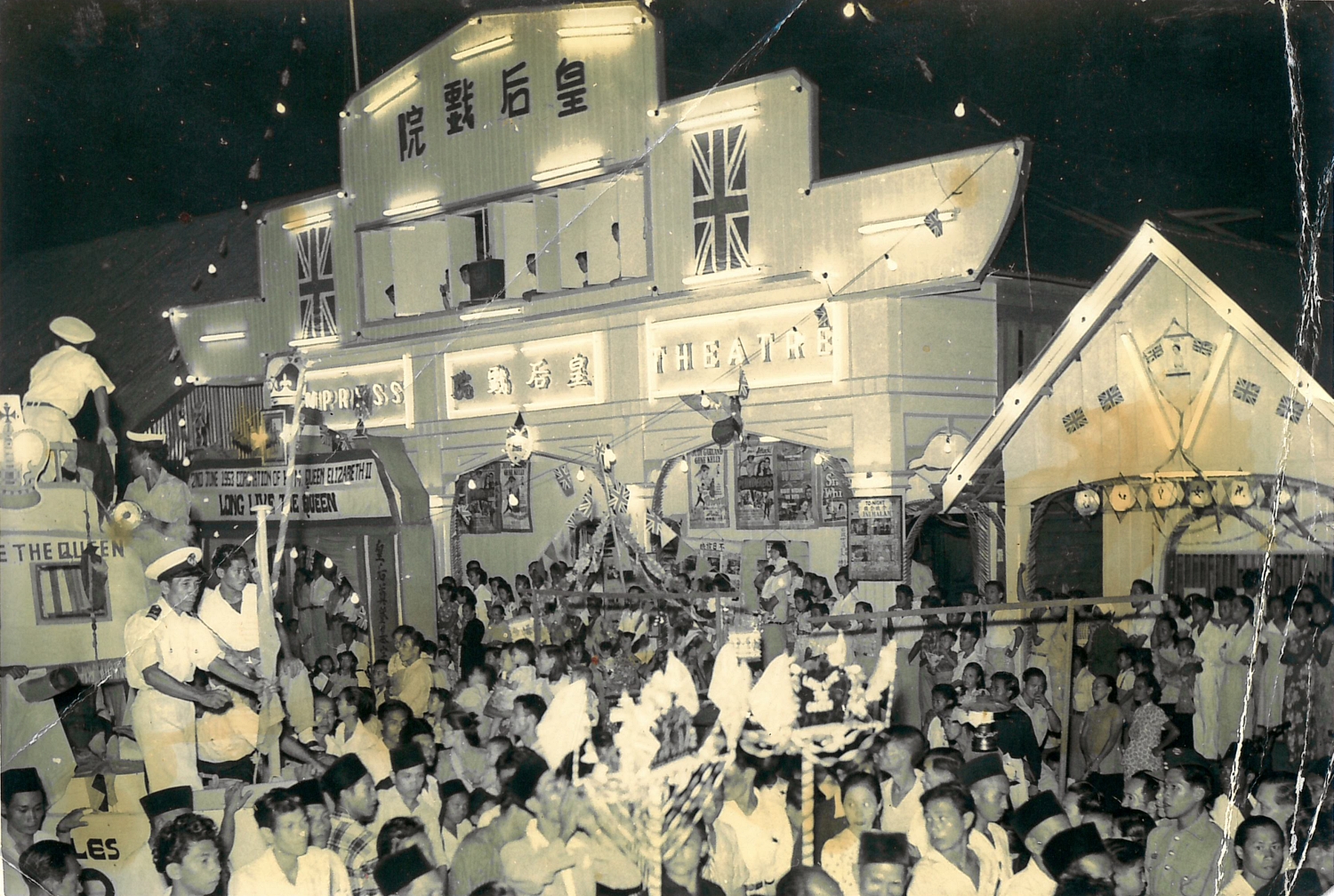
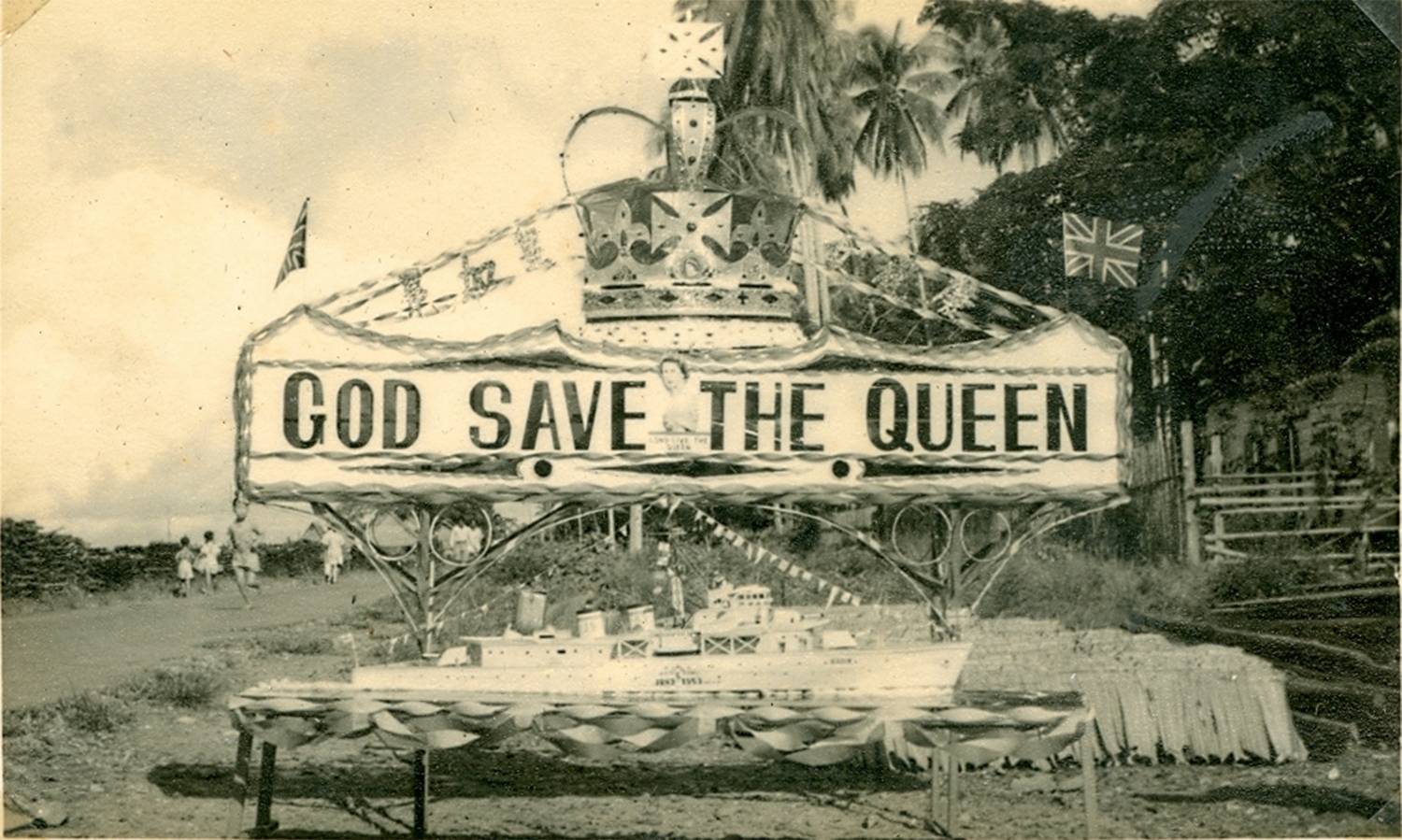
Evening celebration of Queen Elizabeth II’s coronation in Tawau town in 1953
PART 1: TAWAU’S PAST
Tawau is a coastal town located on the southeast corner of Sabah overlooking Cowie Bay and flanked on the other side of the sea by the Kalimantan (Borneo) part of Indonesia.
Blessed with fertile soil from volcanic activities millions of years ago, Tawau became an agricultural and seaport town from the 1890s onwards under British administration. Coconut plantations emerged in the 1890s, followed by rubber around 1905, abaca (hemp) in the 1920s, and cocoa in the 1960s. Oil palm was also introduced in the 1960s but it was only in the 1990s that oil palm became the staple crop of Tawau. Coal extraction from nearby Silimpopon from the 1920s to 1930s and timber extraction up until the 1980s also contributed greatly to Tawau’s rapid growth.
Today, a typical day in Tawau town would be like an uneventful day in a small town. Developments occur at a much slower rate and the pace of daily life is significantly slower than in bigger cities. Excruciatingly, Semporna which is a much smaller town located approximately 100 kilometres away has enjoyed better prospects in recent years due to the boom in the tourism industry while Tawau quietly goes about its agriculture industry. Nevertheless, a look into Tawau’s history paints a compelling picture of a frontier town enduring ups and downs.
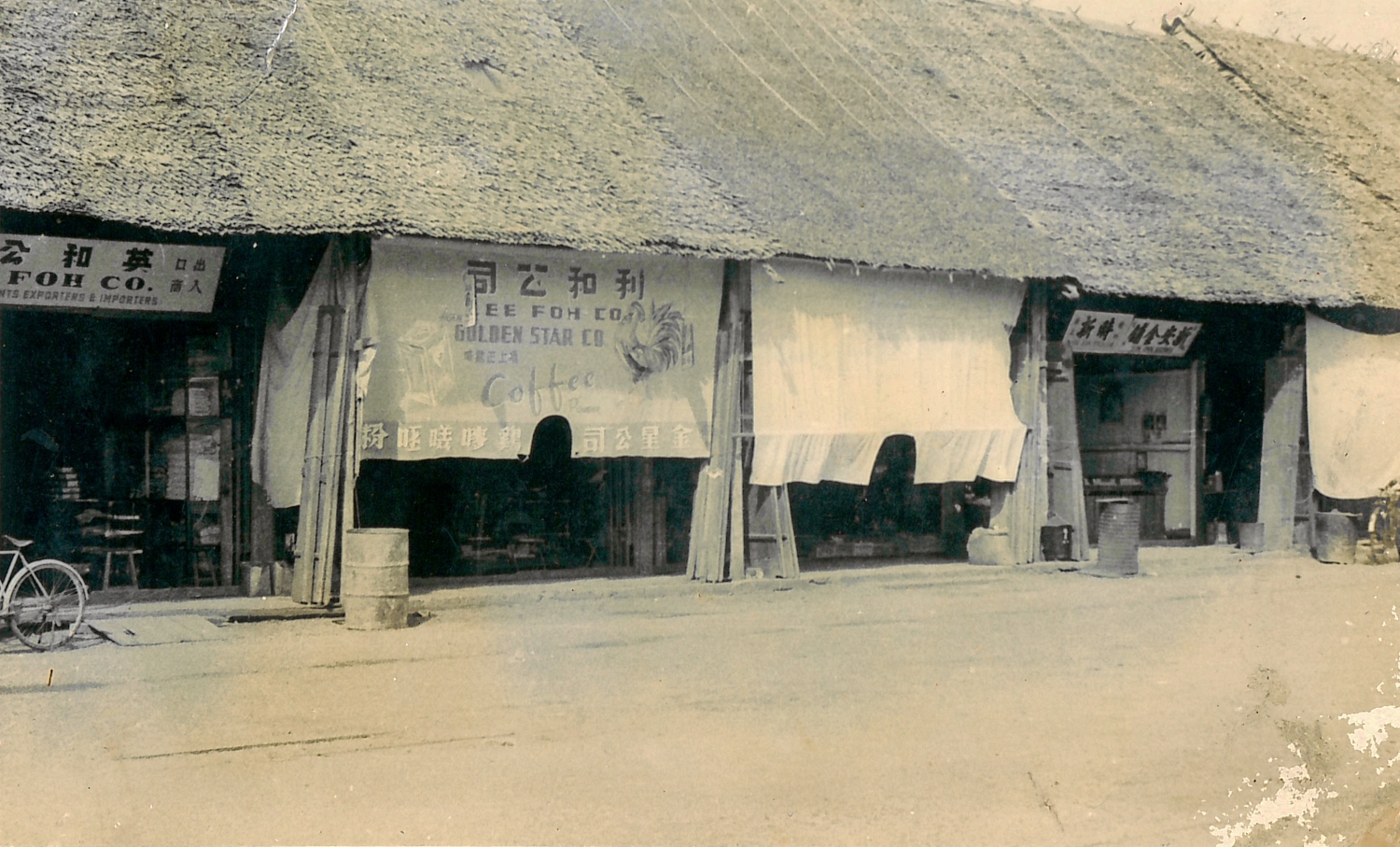
Early wooden shops with thatch roofs of Tawau before the Great Fire of 1953
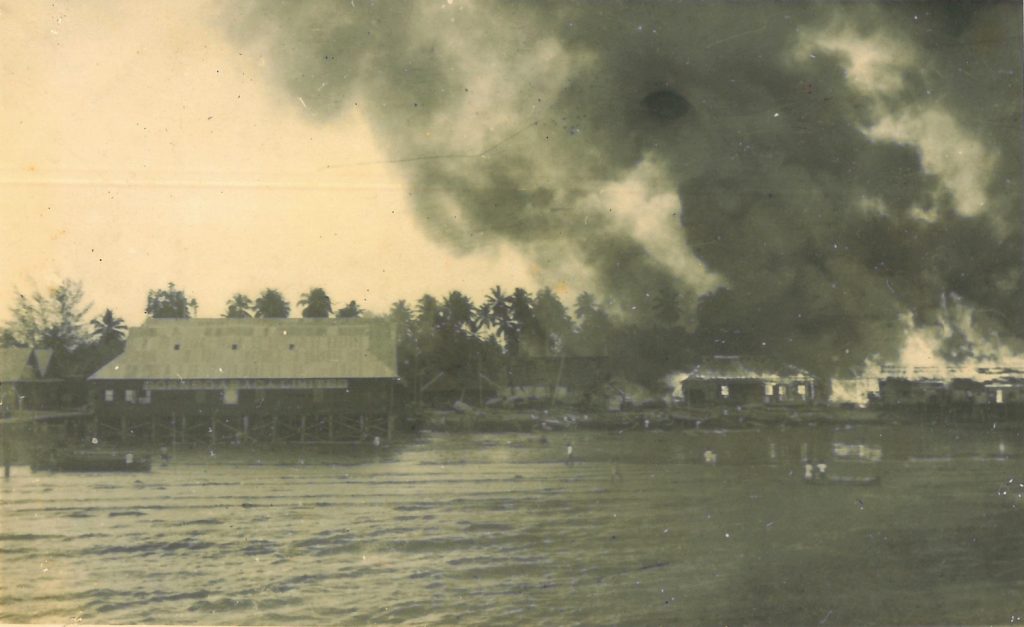
The Great Fire of 1953 viewed from the sea
THE GREAT FIRE OF 1953
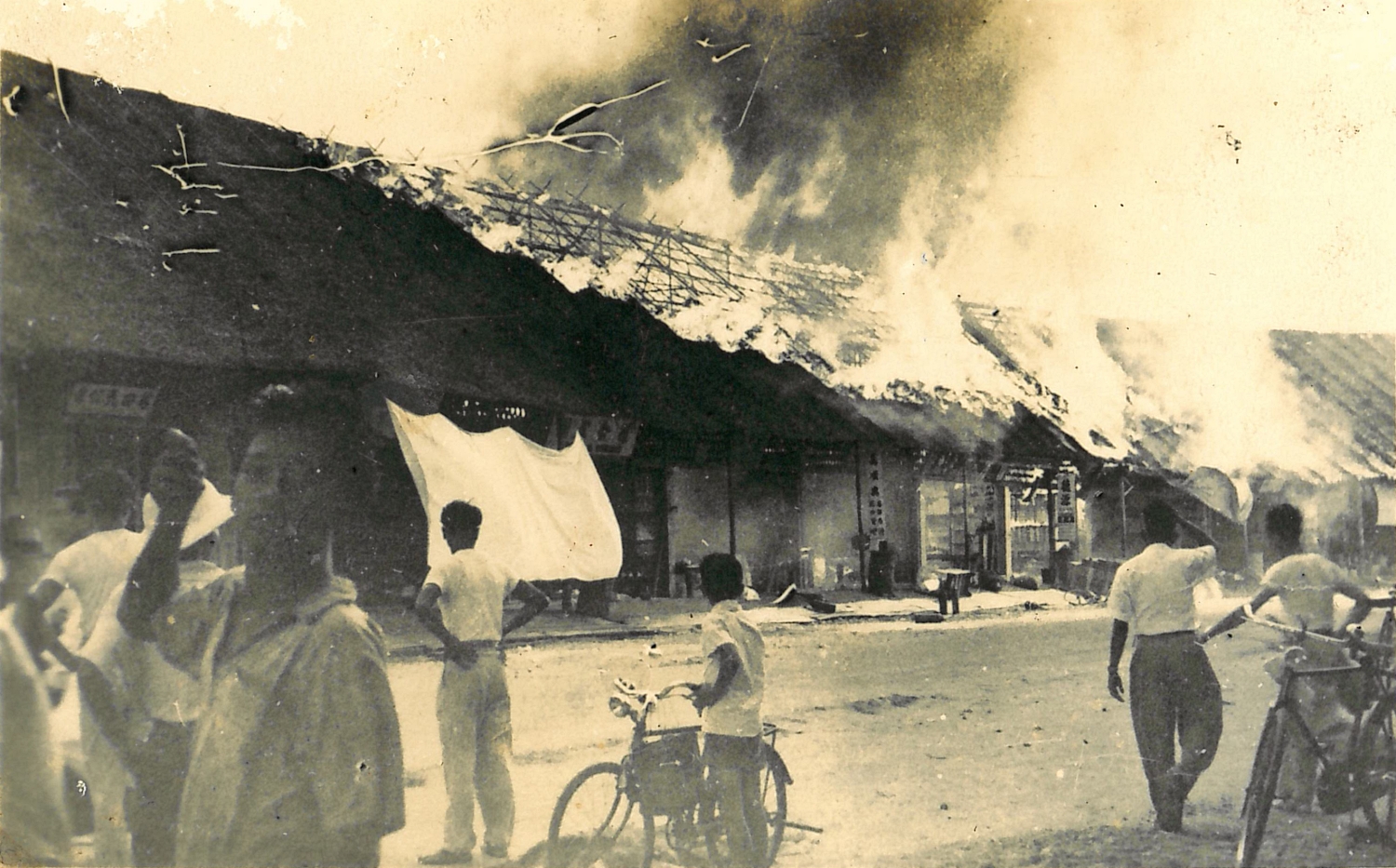
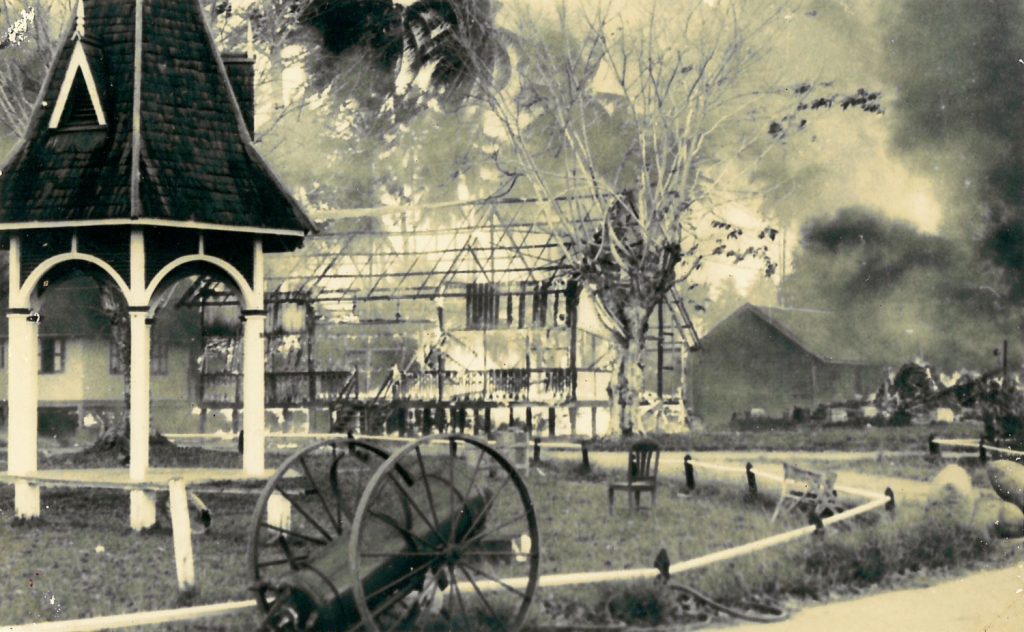
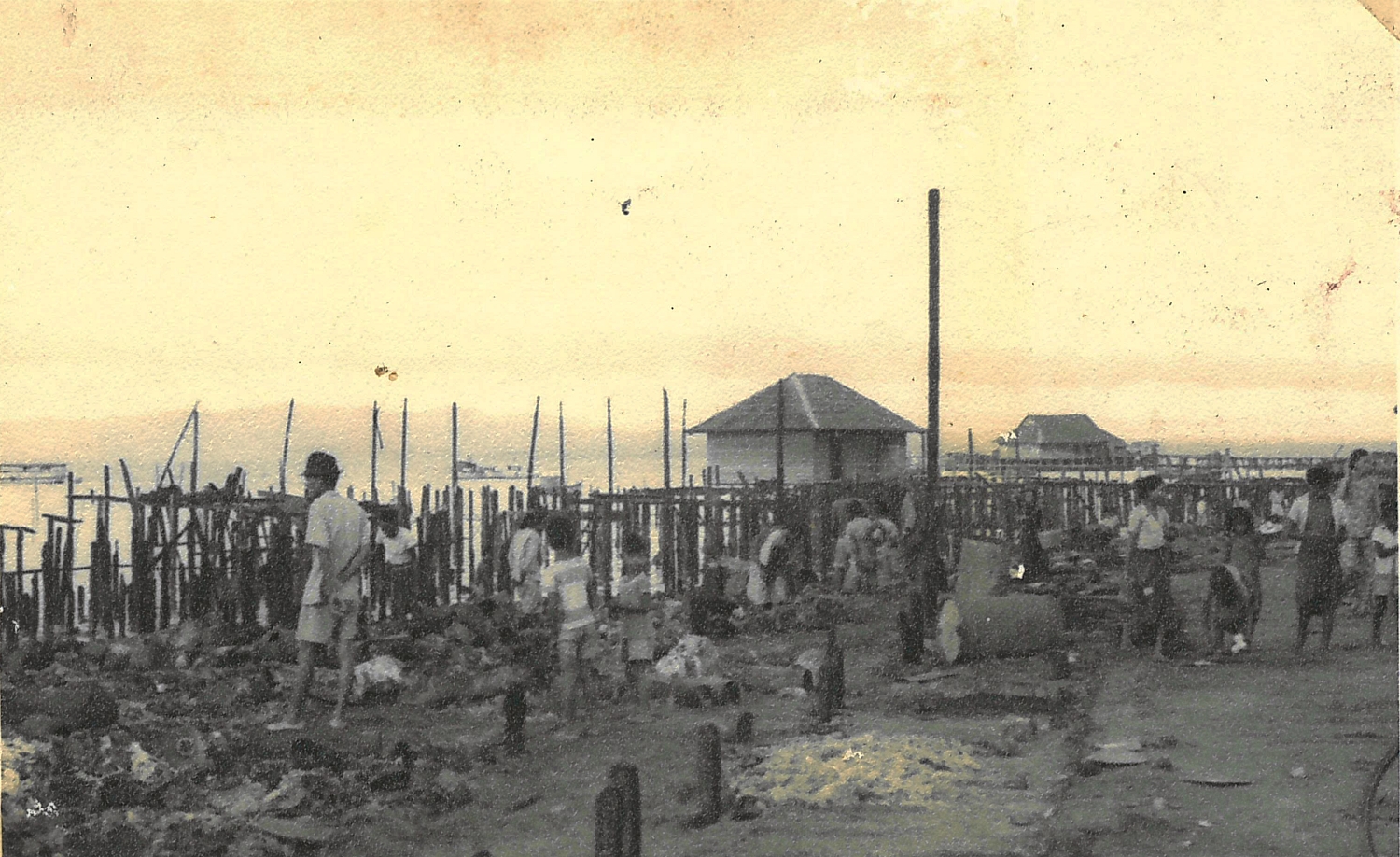
Having recovered from the Allied bombings during the Japanese occupation in the second World War, Tawau was then on course to continue its course from the pre-war colonial years and prosper from its agricultural produce. The town centre at that time, however, still consisted of timber shops with Nipah roofs. Disaster would strike on the 7th of March 1953, when a fire broke out in one of the shops and proceeded to raze about 149 out of 170 shops. It was reported that the Fish Market, St John’s Ambulance Headquarters, and homes of about 1,200 people were lost. Oral accounts from past generations recalled having to flee Tawau while the fire raged on and sought shelter in Sandakan town.
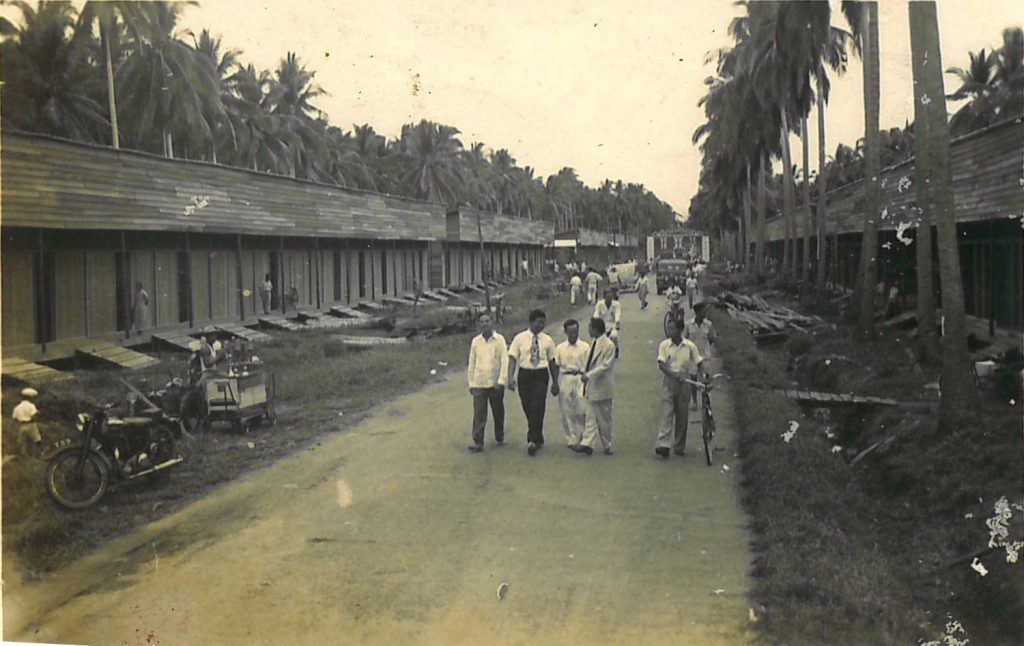
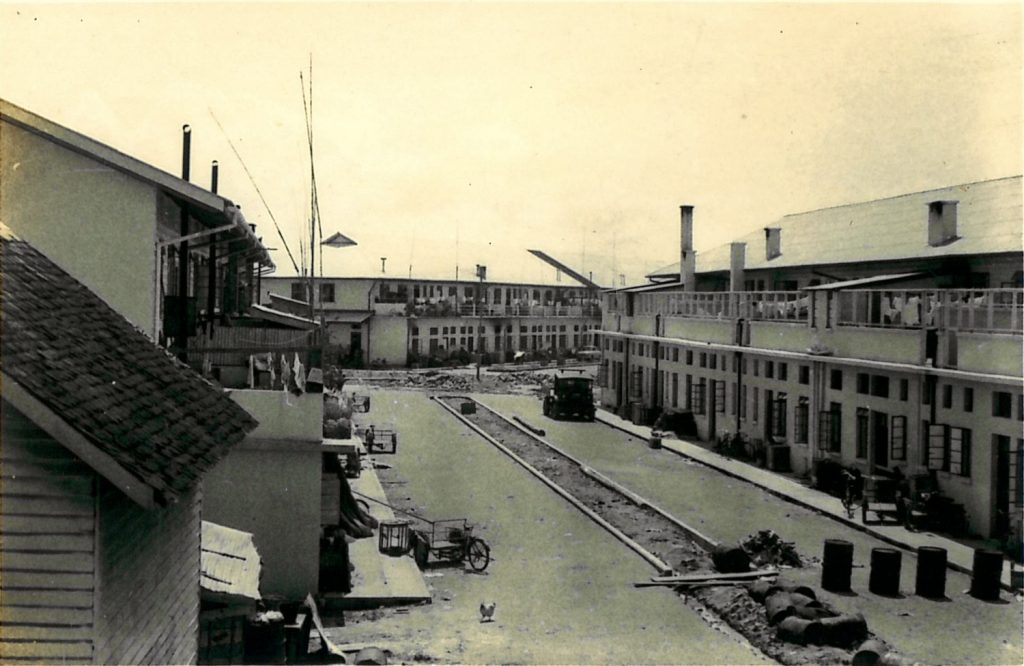
Temporary shops were built within two months of the fire to allow businesses to resume trade. It would take another three years for concrete shops to be built, and by 1956 the reconstruction of Tawau was deemed to be completed. Today, in the older part of Tawau along Jalan Chester and Jalan Dunlop the concrete shop lots from the reconstruction remain.
Shops in Tawau Town burning during the Great Fire of 1953
The Great Fire of 1953 razing through shops in the town. The Tawau Bell Tower and Town Padang which still exist today are located on the foreground
The aftermath of the fire
The temporary shops erected for businesses to continue a!er the fire of 1953
KONFRONTASI YEARS
When Sabah gained independence from the British and formed Malaysia in 1963, it was expected for Tawau to march onwards and continue its trajectory for growth. The wind was in the sail, Tawau had yet to peak at that time and there was still much more to be achieved. However, Indonesia has opposed the formation of Malaysia and declared confrontation.
A military skirmish occurred on the 29th of December 1963 in Kalabakan, 55 kilometres from Tawau. Eight Malaysian military personnel perished. There were reports of Indonesian military aircraft flying over Tawau, and explosive packages placed in a local cinema. Soldiers were also garrisoned in Tawau town to ensure security and safety. Being close to the border and having a significant Indonesian population, one can imagine what it would have been like living in Tawau back then -living with the cloud of conflict brewing in the vicinity. Thankfully, the confrontation ended in 1966 without any armed conflict. Today, a memorial sculpture near the Town Padang serves as a reminder of how close Tawau came to being in the crossfire.
A parade float being readied for the celebration of the coronation of Queen Elizabeth II in 1953. Tawau was a crown colony of the United Kingdom a!er World War II until Sabah (then North Borneo) formed the Federation of Malaysia in 1963
Tawau reconstructed with concrete shops a!er destruction of the timber shops during the Great Fire of 1953. Date of photo unknown.
PART II: OBSERVATIONS OF THE
PRESENT TIME TAWAU’S MARKETS
DURING THE DAYTIME
To witness what the local folks get up to every day, there is no better place than the Tawau Tanjung Market, namely the food court on the third floor. A high-volume space, airy and abundant natural light with friendly food stall operators touting for business, it is the place where gather in the morning over a plate of noodles and coffee. The food court located at a higher level provides an escape from the heavy traffic of the main road and allows views towards the pedestrian activities of the shop lots across the road. The entire first floor of the market is dedicated to dried preserved seafood such as anchovies, shrimps, seaweed, squid and many more. Such a variety and volume of dried preserved seafood cannot be found in any other markets in Sabah. It is said that visitors who are familiar with Tawau leave with packed boxes of dried preserved seafood to be checked in at the airport.
Hawkers starts loading their goods onto Jalan Chester around 5.30pm for the Chester Night Market
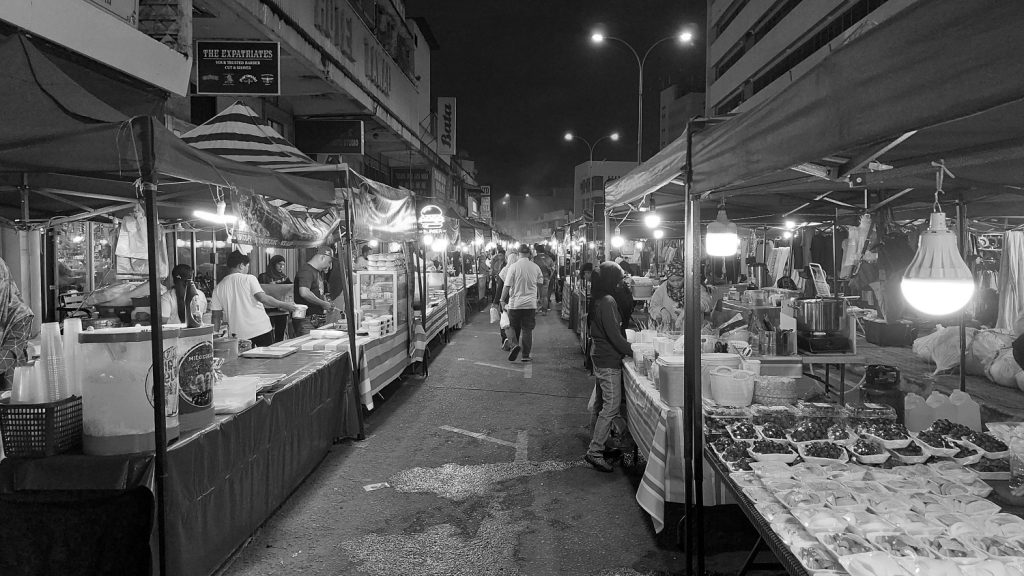
The night market fully up and running
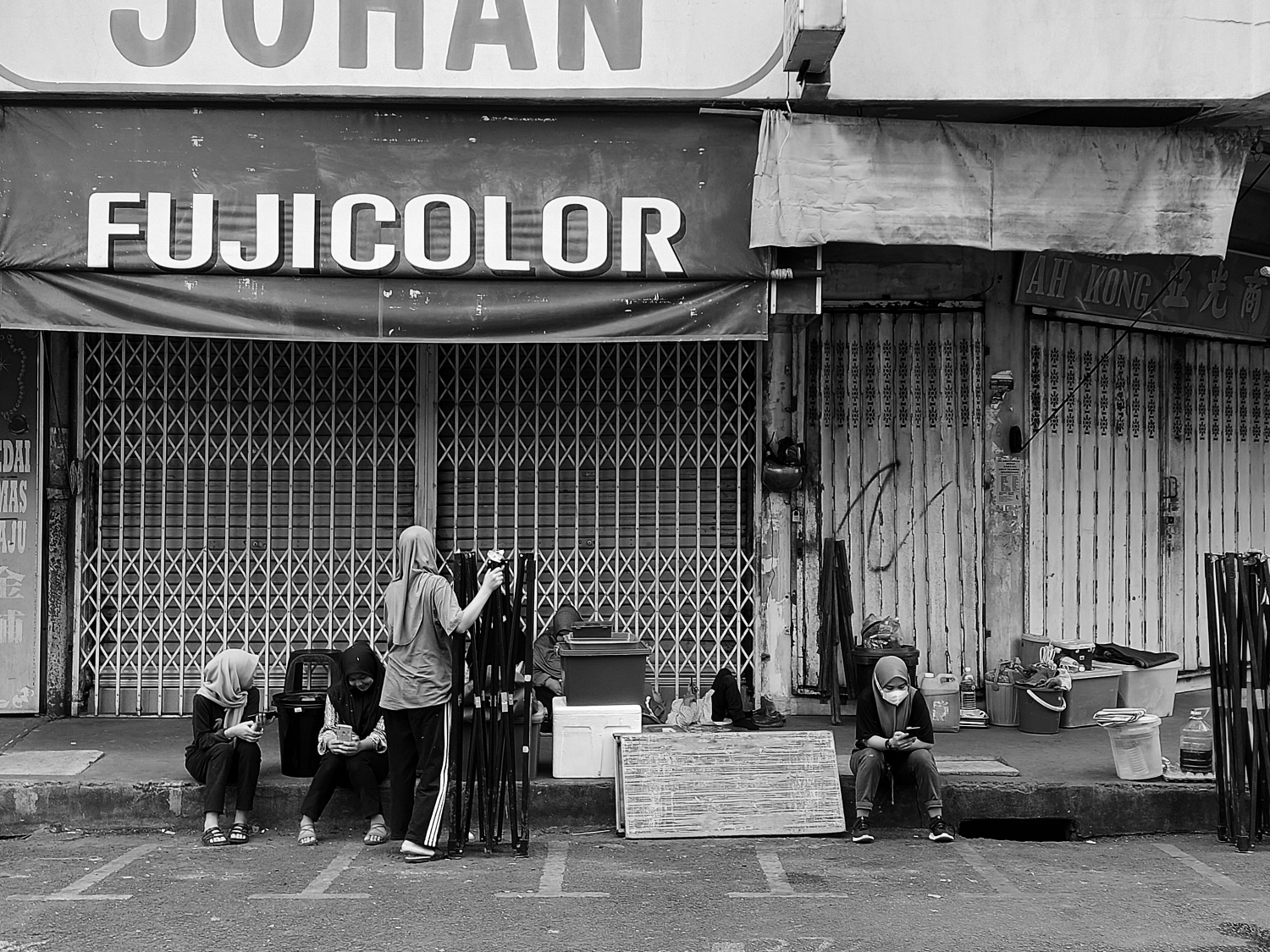
As the shops close for the day, the night market hawkers slowly take over Jalan Chester. Here, the five footway becomes a waiting and social place for the hawkers
CHESTER STREET NIGHT MARKET ON FRIDAYS AND SATURDAYS
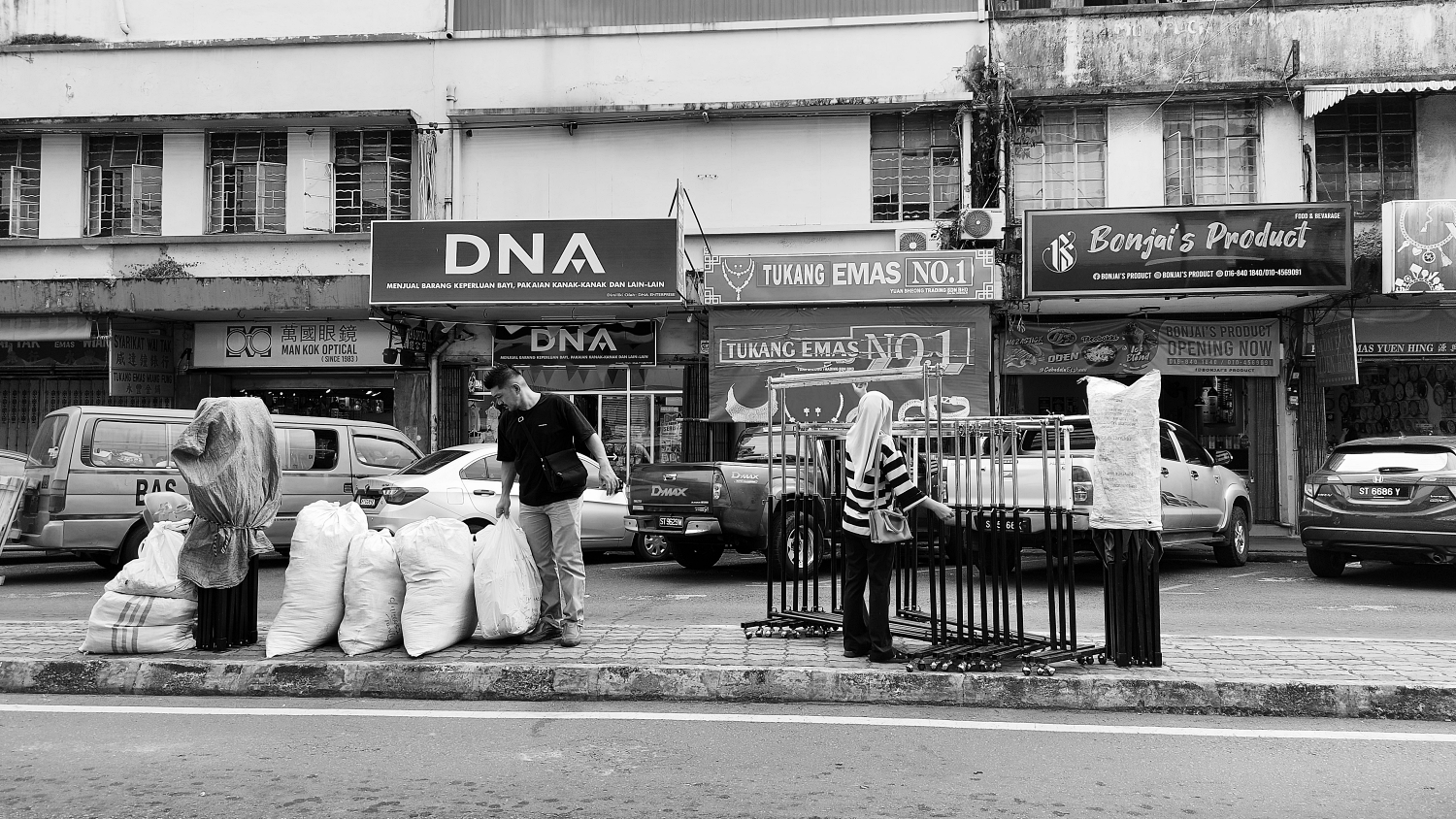
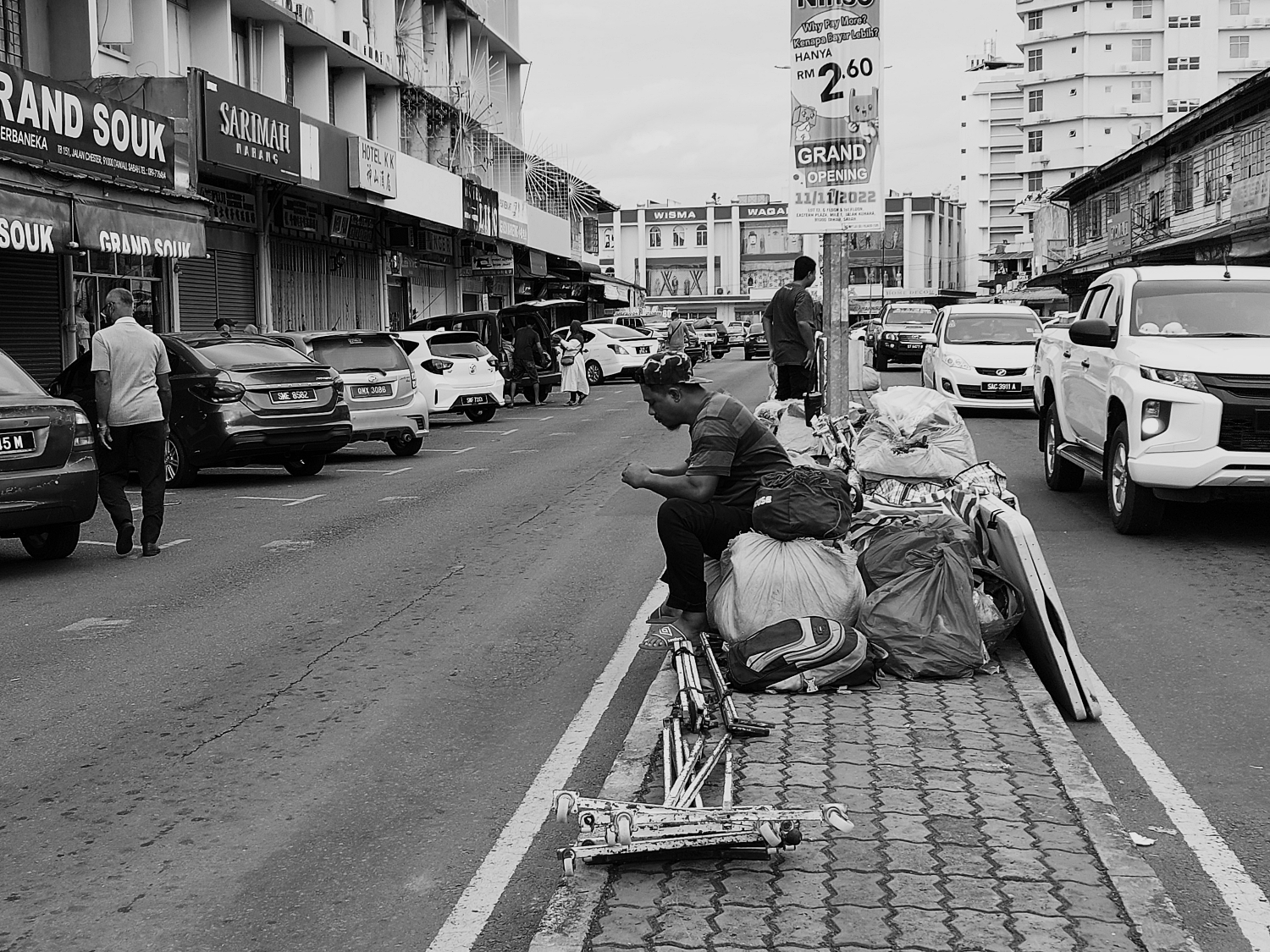
Jalan Chester of the old part of the town, lively during the day time with fabric, electrical goods, clothing, and jewellery shops, but lifeless during the night time before 2019. The old part of Tawau had been written off, and businesses and nightlife moved away. Yet despite the pandemic hitting the Tawau populace and businesses hard, the night market that started in 2019 (interrupted by the pandemic and resumed in 2021) has brought life back to the once barren evenings of the old part of the town. By 5 pm on Fridays and Saturdays, hawkers would start loading their goods in large packs onto the road islands.
When the traffic slowly dissipates and the pace slows down, the street briefly becomes a vast outdoor veranda where hawkers sit on the five-footways waiting for their spot to become available. By 6.30 pm, the canopies, display tables, and children’s bouncing castles would have been set up and ready to come to life.
The smoke of the stalls fills the night air with the smell of food, the array of colourful desserts on display, children enjoying their fun rides and families out and about enjoying their time together, the night market has created a world of its own where visitors are invited to escape the real world, to forget about deadlines, troubles in life and work and just enjoy their time.
A hawker waits with his goods on the traffic island at the centre of the road for the tra$c to clear away to set up his stall for the Chester Night Market
PART III:
CONTEMPLATION OF THE FUTURE
Like any non-capital town, Tawau has seen an outflux of youths moving to bigger cities for work opportunities. Oil palm plantations, aquaculture, developments, and a barter trade with Indonesia are still able to provide sufficient economic drive. Unlike the exponential growth from the early 1910s to the 1980s, the rate of development and growth has lost momentum in recent years.
The state government has announced its intention to intensify developments in Tawau in response to Indonesia’s plan to relocate its capital city to East Kalimantan to capitalise on spin-offs from increased economic activities. It remains to be seen what future challenges lie ahead given Indonesia’s increasing economic prowess.
hough historical events of Tawau, such as the Great Fire of 1953, Konfrontasi, recent downturn and revival are unrelated to each other, common traits in the people of Tawau are their enduring toughness and tenacity mixed with calmness in the face of these challenges. Perhaps, there would be much hope after all in facing the challenges of the future.
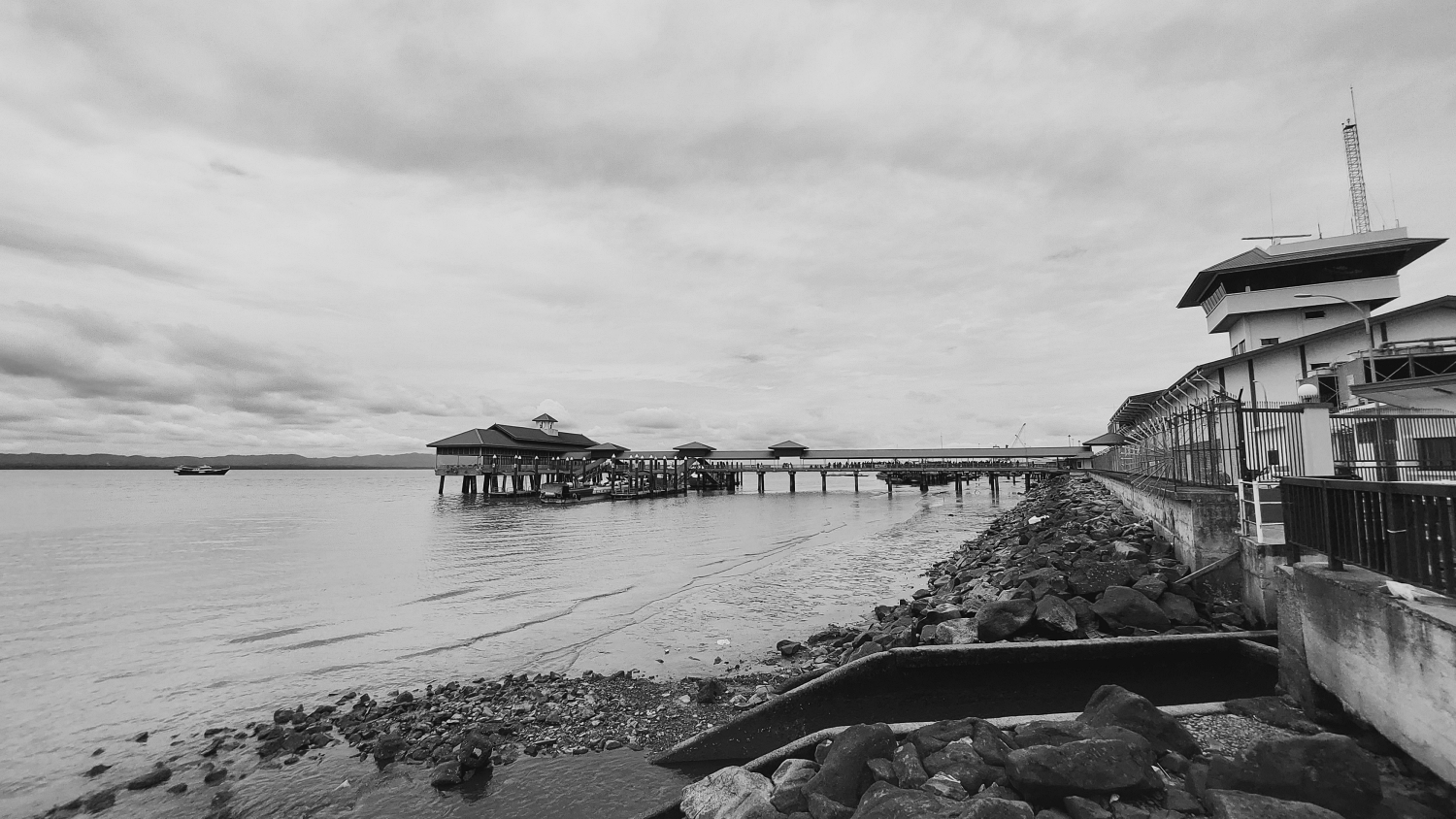
The jetty of the Ferry Terminal stares out towards Cowie Bay, on the other side of the water being Indonesia. With new capital city looming into the horizon, one wonders what challenges and opportunities lie ahead for Tawau.
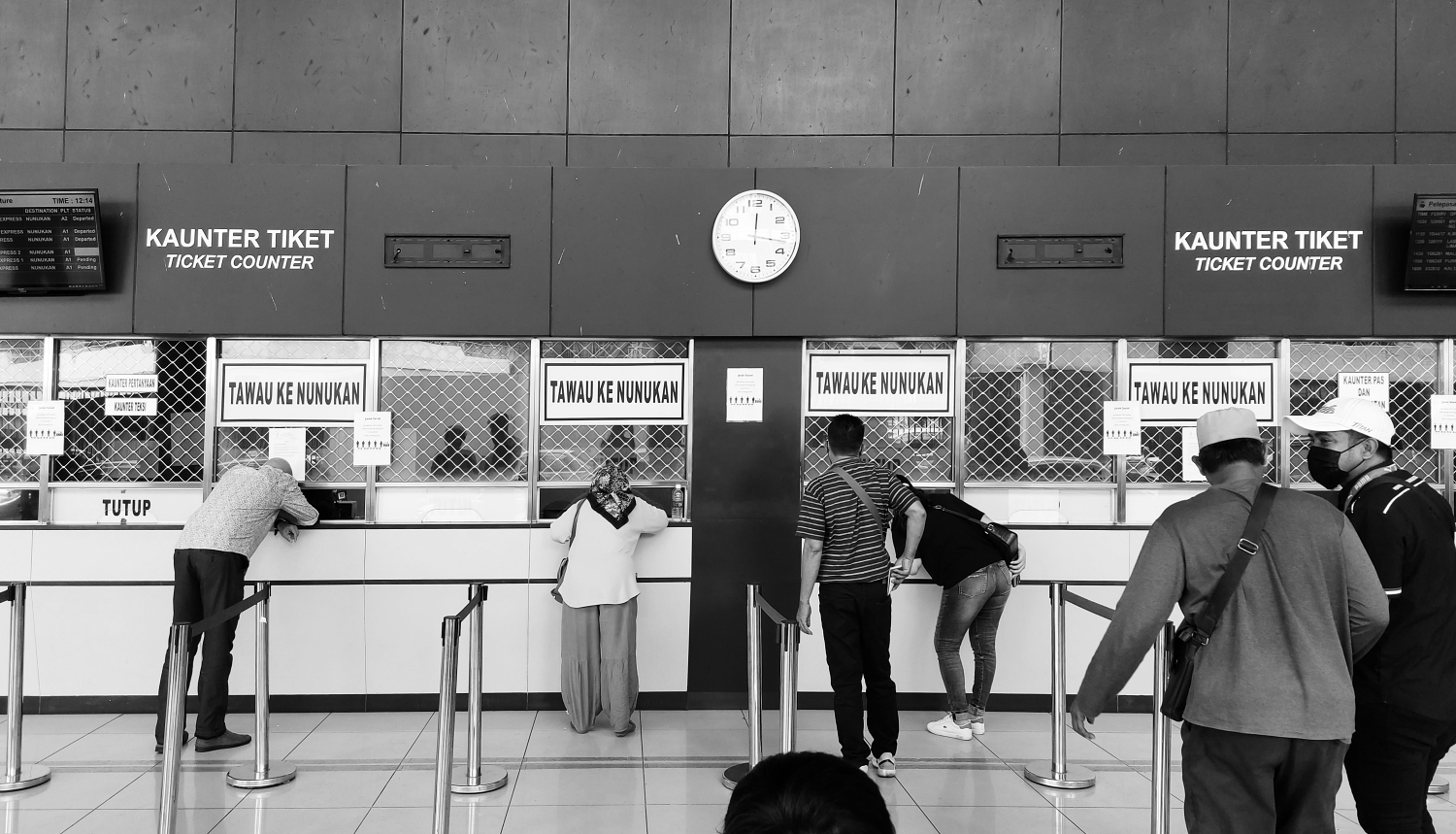
Passengers purchasing tickets to Indonesian island town of Nunukan at the ticketing counter of the Tawau Ferry Terminal. The Ferry Terminal is the gateway to Kalimantan (Borneo) part of Indonesia