
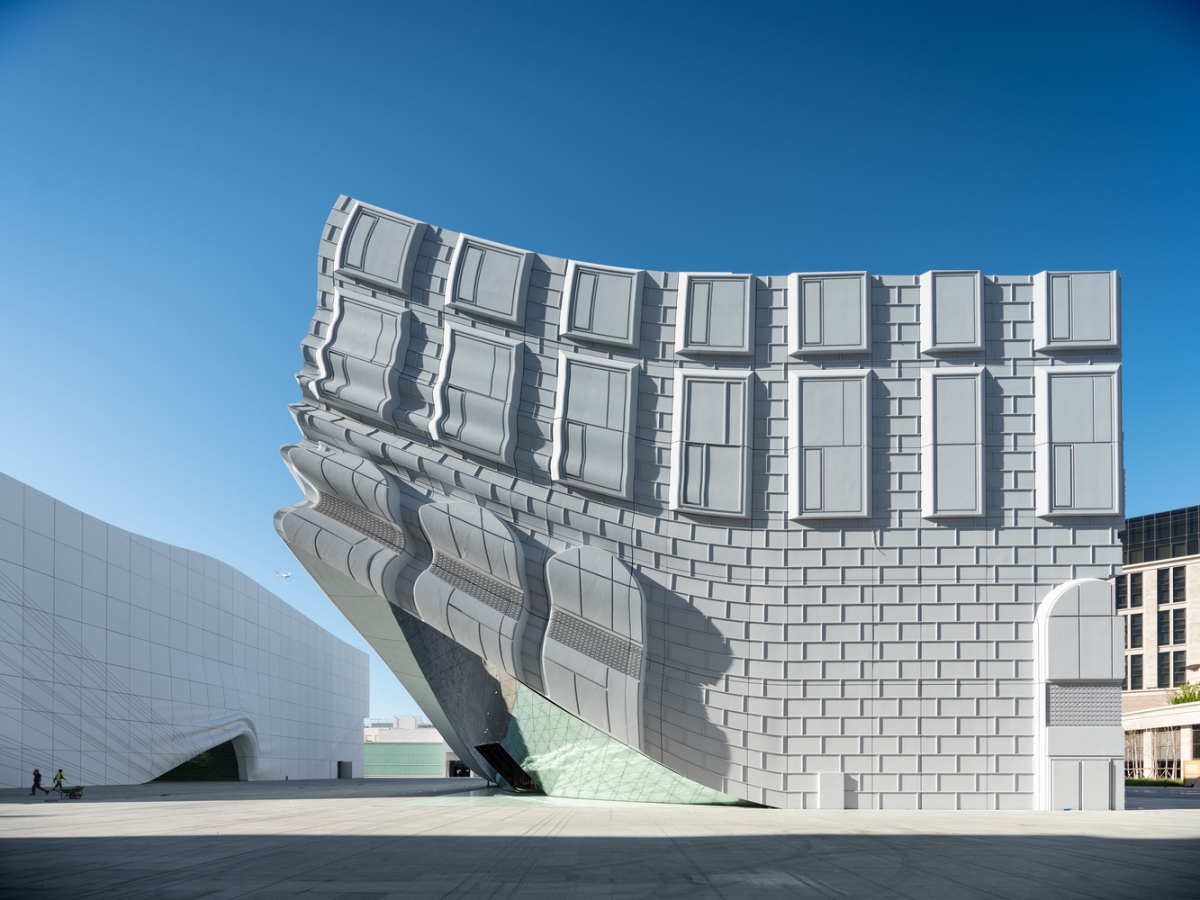
Architecture has often been associated with Art and Science.It is one of the classical forms of fine art and has always had a strong association with the art world.The practice of architectural design is used to meet both functional and artistic needs, therefore serving both practical and creative goals.
To create architecture, one must have an artistic sense.Architecture without artistic input is purely engineering and utilitarian.Is architecture an artistic pursuit, or are architects pursuing an artistic dream?Is architecture an art form, and does anyone studying architecture become an artist?Or are artistic people drawn to architecture to create art on a gigantic scale?Is architecture art?
The definition of beauty and ugliness is a human thought, a way of defining everything as good or not good.Art is slippery and hard to grasp; it can be beautiful, ugly, awe-inspiring, or hated – like architecture.
The word “architecture” originally derives from the Greek word “arkhitekton”, meaning “chief creator” or “master builder.”
Architecture has a function and a purpose.It has a reason to be other than art.You live in it, work in it, and move around in it.The meaning and importance of architecture do not depend on its artistic merit.
“You employ stone, wood, and concrete; you build houses and palaces with these materials. That is construction. Ingenuity is at work. But suddenly you touch my heart, you do me good, I am happy, and I say: This is beautiful. That is Architecture. Art enters in.” – from the book “Vers une architecture” (1923) by Le Corbusier.
“While artists work from the real to the abstract, architects must work from the abstract to the real. While art may legitimize itself as an object or an event, architecture dissolves into a blur of buildings. Architecture, under all its constraints of engineering safety, function, climate responsibility, and economy, sometimes transcends to inspire us with ideas in space and light-qualities achieved in the abstract.” – from “What is Architecture? (Art?)” (Sept 2013 issue of The Brooklyn Rail) by Steven Holl.
The definition of art is a human creation, such as a painting or sculpture others value because it is beautiful or emotional.Art is not confined to painting pictures or producing sculpture but includes music, dance, literature, tattoos, textiles, and cars.Something does not need an art label to be artistic.
Art, as we know, is very subjective.Still, it is broadly agreed to include creative activity that consists of the expression of technical competency, beauty, emotional strength, or conceptual concepts through creative or inventive talent.There is no common, universally accepted definition of art, and perceptions about what constitutes art have evolved and are eternally up for debate.
Creation from human imagination, prooking human reaction – love, hate, and everything in between. A flower is beautiful, but no one classes it as art. Cut that flower and arrange it with twigs and fruit,and the resulting display may be an exquisite example of Ikebana (the Japanese art of flower arranging) or the subject of a stilllife masterpiece in oils.
When it comes to differences, people usually suggest that visual artists work from the real to the abstract, whereas architects work from the abstract to the real.The basic idea is that buildings and constructions have practical and useful applications, while artworks (paintings, prints, sculptures, etc.) have no particular purpose except appeal.
Art and architecture have both similarities and differences.Art is a creative endeavour that does not stem from necessity.Art can take numerous forms, from musical creativity to sculpting forms or painting a photorealist artwork.
Art and architecture are interrelated; both require an artistic sense and emotion when approaching the works.However, architecture has more design considerations that need to factor in, which include function and usage, site, climate, engineering, construction, legal and statutory requirements, practicality, cost, and professionalism.Therefore, Architecture is more complex and involves much consideration from the start of the design to completion.
“A work of architecture has an idea- an organic link between concept and form. This idea is a hidden thread connecting disparate parts with exact intentions. Pieces cannot be subtracted or added without upsetting fundamental properties. The phenomena of space, light, and material/detail-as understood by others- convey the art, whether the organizing ideas are fully grasped.” – from “What is Architecture? (Art?)” (Sept 2013 issue of The Brooklyn Rail) by Steven Holl.
Architecture has a close connection to sculptures, paintings, calligraphy, and other art forms.Western architecture has therefore been dubbed the “mother of the arts.”Without architecture, there is nowhere to display other artworks, and many classical artworks were designed and created in tandem with the building to be viewed as a whole.
The Parthenon, Acropolis, Vatican, Notre Dame, and other classical and historical buildings are examples of sites where architecture, sculpture, and relief are observed as a single experience.
FORMAL ANALYSIS OF ART AND
ARCHITECTURE
Formal analysis is an integrated study of all the formal qualities of an art object to see how they all work together.We can then see how they add to the overall meaning of that piece of art.Formal qualities add to artworks because they are aesthetically satisfying.Looking at art is a different experience from looking at the general environment, which is visually disjointed and disorganized.The formal qualities of artworks make them satisfying visual experiences, which adds considerable power to art.Size, scale, texture, and value are all formal elements in art that contribute to the works’ meanings.Size, scale, and value are formal elements in architecture that enhance the meaning of a building.
Formalist criticism, popular in the mid-20th century, emphasized the importance of formal qualities in art and architecture.
Ideological criticism, popular in the late 20th century, was rooted in the writings of Karl Marx and dealt with the political implications of art.Structuralist-based criticism, also known as structuralism, studied a work’s social and cultural structure.Deconstruction holds that there is a multitude of meanings in any text, image, or structure.Psychoanalytic criticism looks at art as the product of individuals who have been influenced by their pasts, unconscious urges, and social histories.
Feminist criticism focused on the oppression of groups of people in each society.
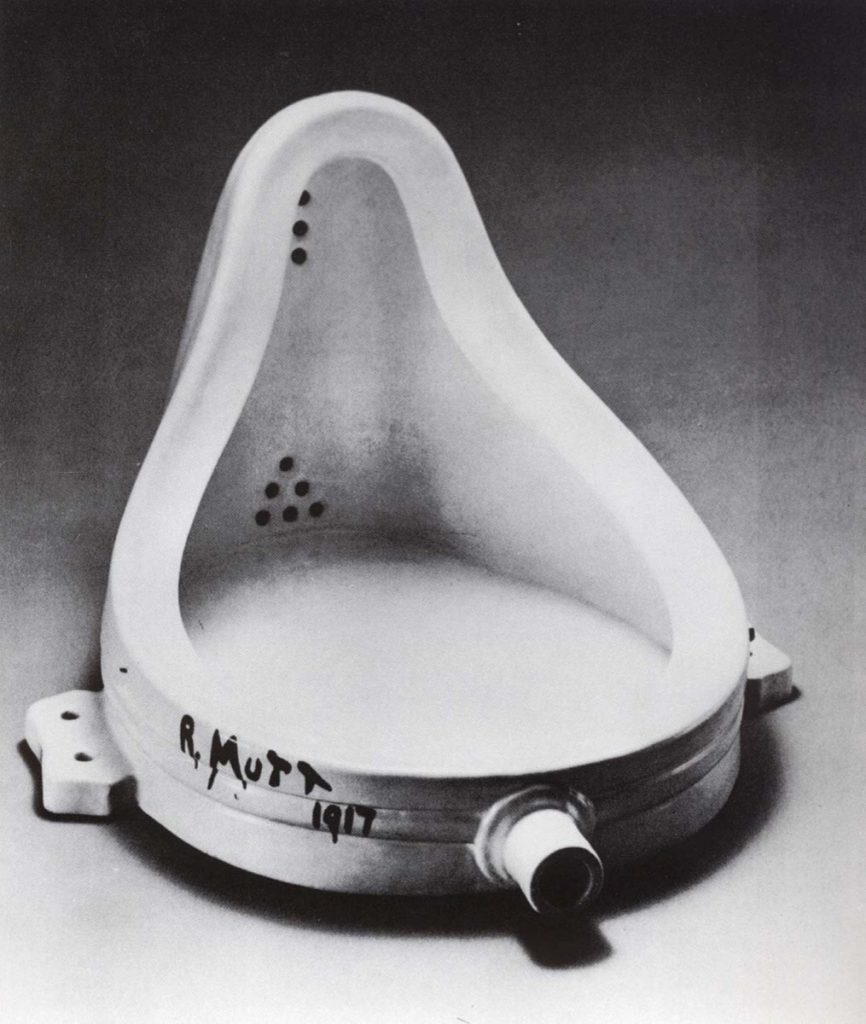
The fountain 1917 by Machel Duchamp, Kunsthaus Graz Art Museum, Autris by Peter Cook.
Dadaism or Dada is a post-World War I cultural movement in visual art as well as literature (mainly poetry), theatre, and graphic design.“Dada” was coined in Zurich in 1916.A nonsense word, it means “Yes-Yes” in Russian, “There-There” in German (baby talk), and “Hobby horse” in French.
Dadaism Philosophy is “The idea is more important than the work itself” and “Art can be made of anything”.They rejected the modernist conception of the autonomy of art or “art for the art’s sake.
The Glass Pavilion in Cologne designed by Bruno Taut was unlike any design that had been witnessed before.Antonio Gaudi’s organic forms and sculptural designs fascinate people even today.Erich Mendelsohn’s Einstein Tower in Potsdam – this astrophysics observatory is covered in white stucco and its organic design was unique for its time.
In the late 20th century, architects like Frank Gehry, Rem Koolhaas, and Daniel Libeskind took even more liberty with their design approach which gave birth to styles like Deconstructivism and Blobitecture.At the core of the Dada art movement was the impulse to challenge the ‘normal’ and create unpredictable art.
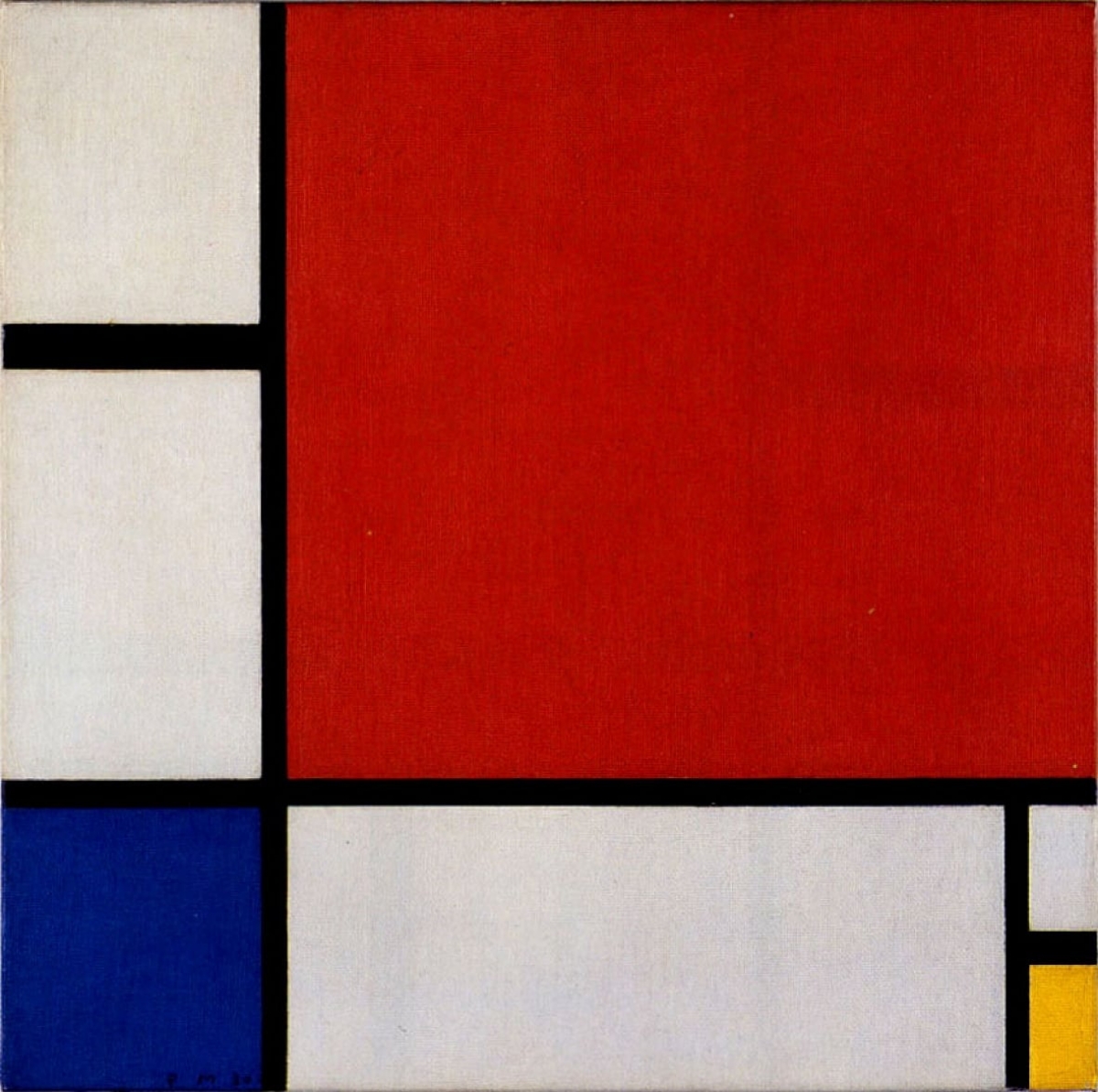
The name De Stijl is supposedly derived from Gotfried Semper’s Der Stil in den technischen und tektonischen Künsten oder Praktische Ästhetik (1861–3), which Curl suggests was mistakenly believed to advocate materialism and functionalism.
De Stijl promoted Mondrian’s artistic concept of Neo-Plasticism, but from 1921 onwards Van Doesburg also promoted Dada ideas and a revised form of Neo-Plasticism known as Elementalism.This led to Mondrian’s departure from the group.
In general, De Stijl proposed ultimate simplicity and abstraction, both in architecture and painting, by using only straight horizontal and vertical lines and rectangular forms.Furthermore, their formal vocabulary was limited to the primary colours, red, yellow, and blue, and the three primary values, black, white, and grey.The works avoided symmetry and attained aesthetic balance using opposition.This element of the movement embodies the second meaning of stijl: “a post, jamb or support”; this is best exemplified by the construction of crossing joints, most commonly seen in carpentry.
De Stijl’s influences on architecture remained considerable long after its inception; Mies van der Rohe was among the most important proponents of its ideas.Between 1923 and 1924, Rietveld designed the Rietveld Schröder House, the only building to have been created completely according to De Stijl principles.Other examples include the Eames House by Charles and Ray Eames.

Campbell’s soup Andy Warhol / Santa Monica Residence by Frank Gehry
Pop art, which was born in the middle of the 20th century, is the product of a specific historical period.The popular, grotesque, and playful art form shown by pop art has a far-reaching impact on the development of modern architectural forms.To a certain extent, pop art breaks the boundary between art and life in a relaxed and playful, popular way.
Commercialization.With great emphasis on flexibility and consumption and the pursuit of popular interest, design has further become an integral part of the modern market economy and business management.With the rise of humanistic thought, artists began to think about how to better serve the public, which also makes art and goods more integrated and more responsive to the needs of the public.Pop art takes an optimistic attitude towards the culture of the consumption age and the information age and shortens the distance between art and the public through realistic images, making art break away from the original elegant coat and the exclusive characteristics of the aristocracy.
Soon enough, American artists such as Andy Warhol and Roy Lichtenstein joined in on the movement and became pioneers, replacing historic art with a vibrant mass-produced, media-oriented visual realm.
Gehry seems to have always regarded “architectural creation embodies the contradictory values of contemporary society” as the ultimate ideal of his architectural design.His deep concern for contemporary art has determined the source of inspiration for the fragmented form design language in his design works.Introducing pop art into the building, Gehry designed the “Santa Monica House for his own use” and has been famous ever since.
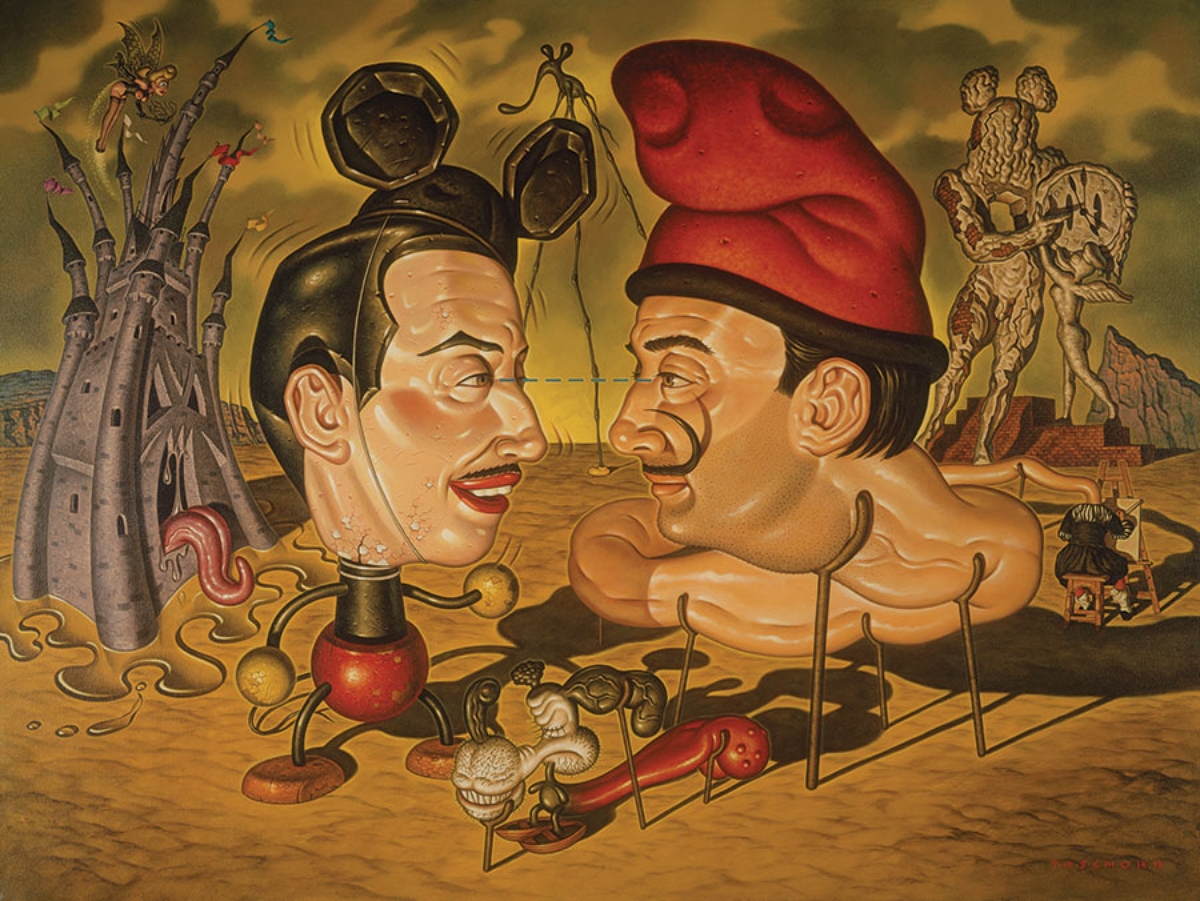
Surreal art: Five O’clock Shadows in Disney-Dali Land by Todd Schorr / Paradise City by MDRDV
Surrealism is a European cultural movement following the aftermath of World War I in which artists depicted unnerving, illogical scenes and developed techniques to allow the unconscious mind to express itself.It aimed to “resolve the previously contradictory conditions of dream and reality into an absolute reality, a super-reality”, or “surreality”.
According to prominent surrealists like Dali and Breton, architecture was inevitably associated with order, constraint, and bureaucracy – things they essentially meant to undermine.In the words of Breton, “modern architecture was the most unhappy dream of the collective unconscious.”
Paradise City by MDRDV expresses surrealist art in architecture.‘This is an art piece.’ What is interesting about that is that they are looking for that momentum – that entertainment can become art that the building can become artistic in that way.What, then, is the difference between architecture and art?! says Winy Maas.
In today’s world where form follows function is the norm, surrealism is a gentle reminder that maybe, the form can follow just about anything you want it to, even your dreams!
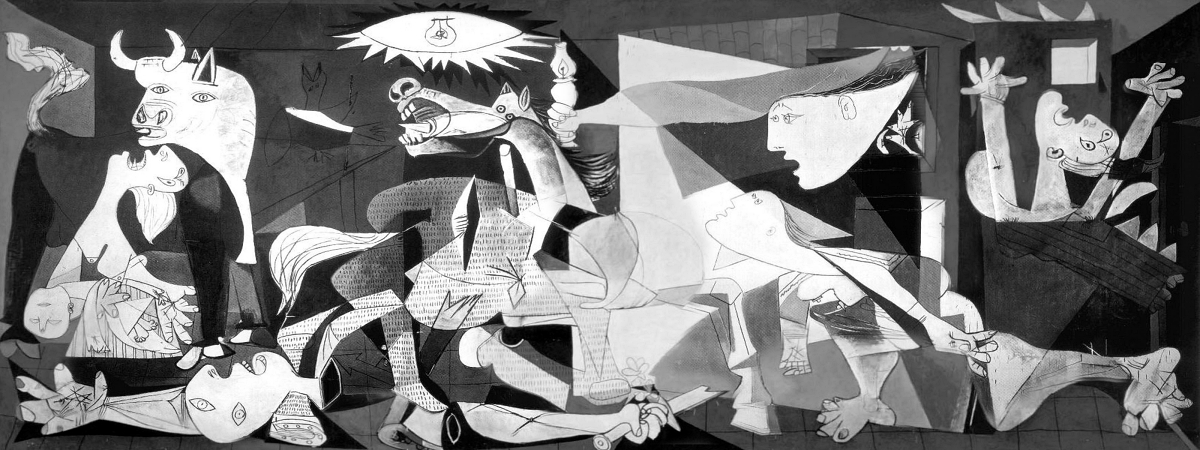
Pablo Picasso, 1937, Guernica / parliament, Chandigarh by le Corbusier
Cubism is an Avant-Garde Art movement, which was distinct in comparison to every other art style that was three-dimensional; this was two-dimensional.
In Cubist artwork, objects are analyzed, broken up and reassembled in an abstract form-instead of depicting objects from a single viewpoint, the artist depicts the subject from a multitude of viewpoints to represent the subject in a greater context.
Perspective involves making closer objects bigger and clearer while objects which are away are smaller and less clear.This approach helps in creating the illusion of space.The other method employed in three-dimensional painting was tones or shadows: by gradually changing the darkness of the shadow, you can make something look solid.
From 1912, Cubism had become an influential factor in terms of architecture and the architects of the movement borrowed heavily from cubist art regarding geometric forms and shapes, diverse elements could be superimposed, made transparent, or penetrate one another.The common characteristics of the buildings of this movement were transparency, spatial ambiguity, form-faceting, and multiplicity.It also brought out conceptions like abstraction, geometrization, symbolism, distortion, fragmentation, and illusion.The use of reinforced concrete structures gave cubism an edge in the building industry.
The pioneering architect of this movement was Le Corbusier and one can find traits and characteristics of the movement in his designs such as the Assembly building, Chandigarh, and Notre Dame du Haut, Ronchamp which had distinctive details from Pablo Picassos’ 1930s masterpiece ‘Guernica’.
CONCLUSION
Architecture is a hybrid of art, science, technology, and building, and art is a form of human expression that may be shared and interpreted.
The association between architecture and art has often been a complementary collaboration.With the Input of artistic skill and sense it transforms engineering into architecture.Either the architecture slants more toward art form, space or expression depend on the nature of the project and approach of the designer, or it can also be a purely science and engineering approach that leans toward data and analytics.
Of course with the artist’s input or drive, architecture will be more inspiring and magnificent