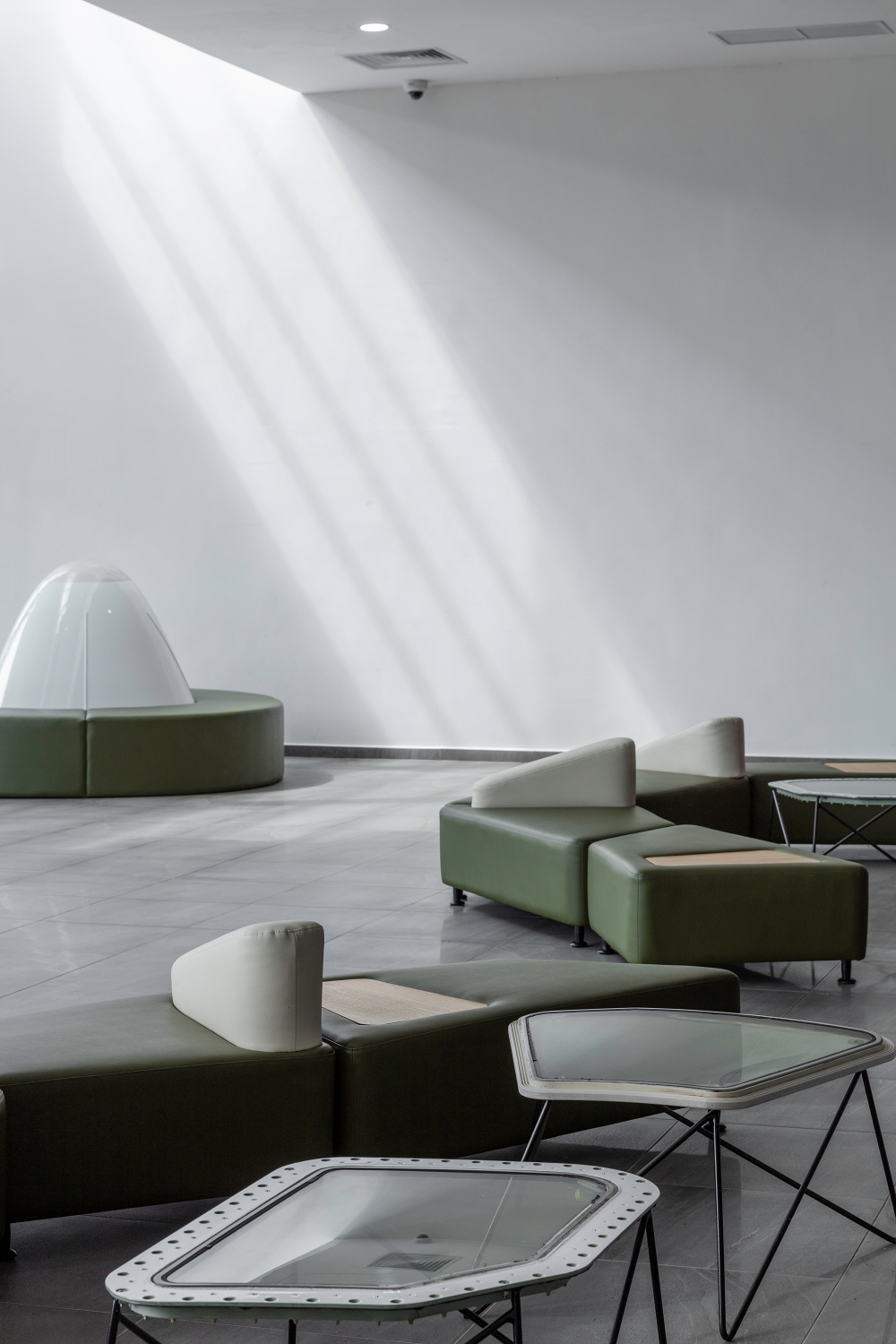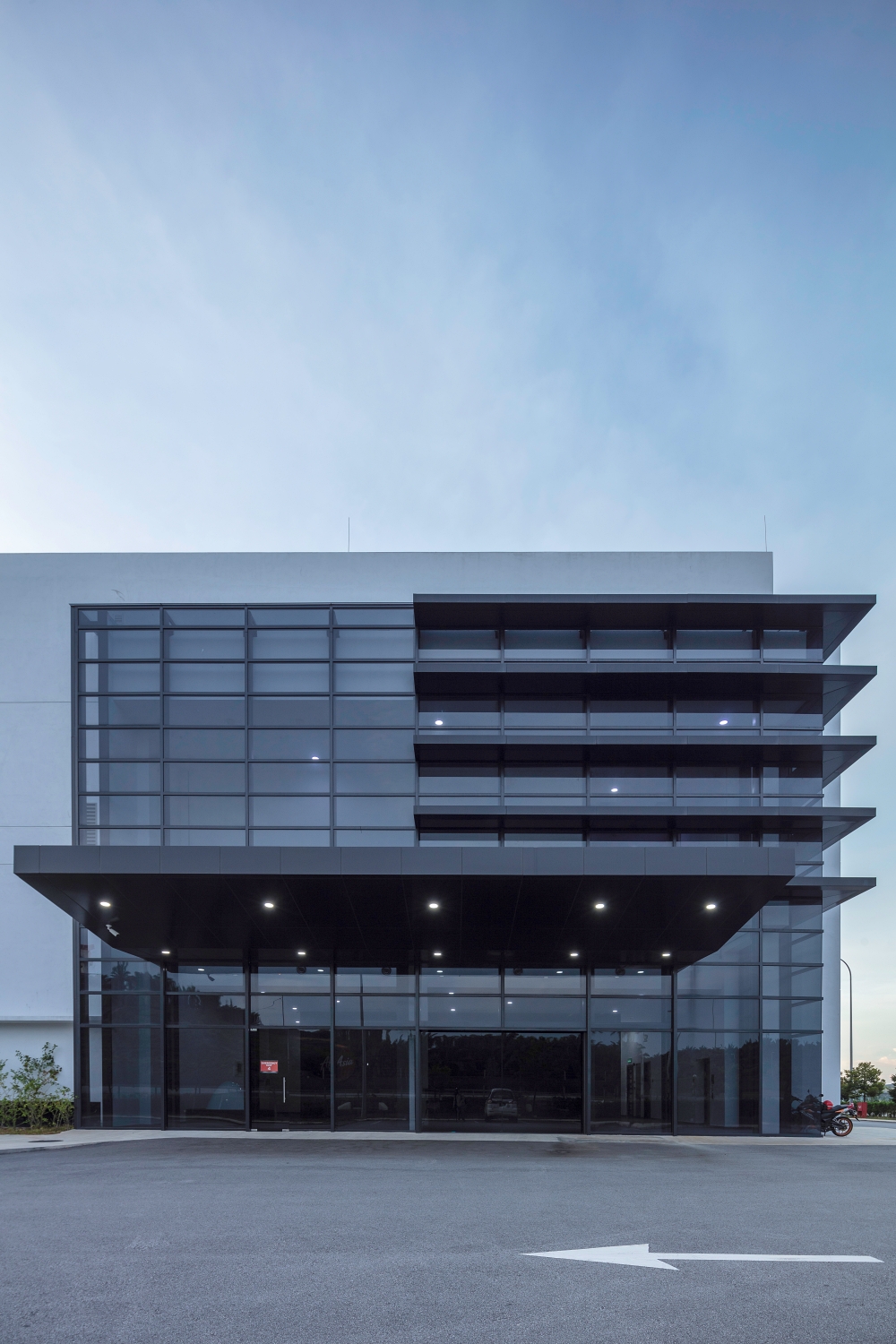
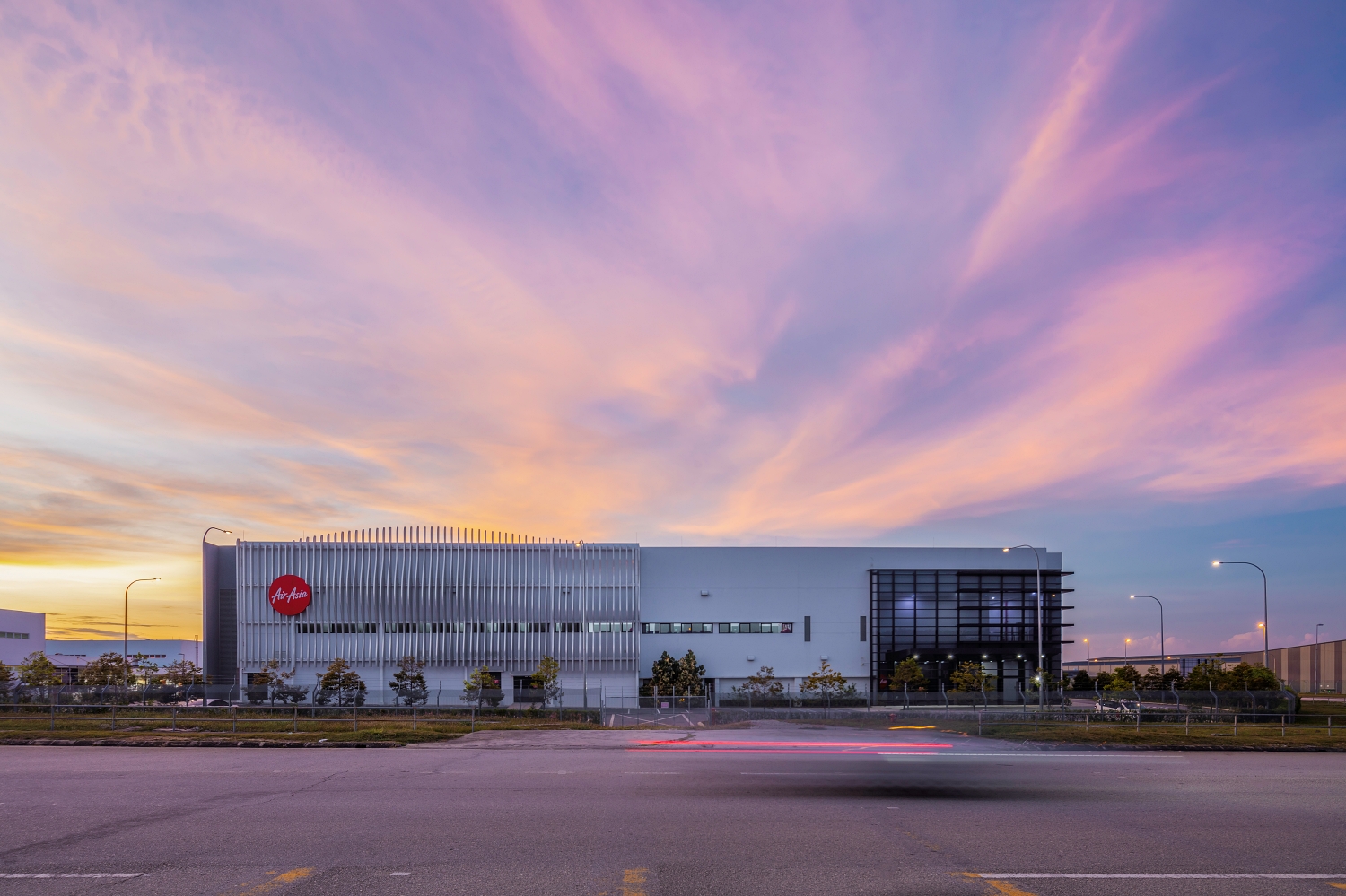
Exquisitely designed façade and clearly defined space planning elevates the ambience and outlook of the scheme above its industrial functionality.
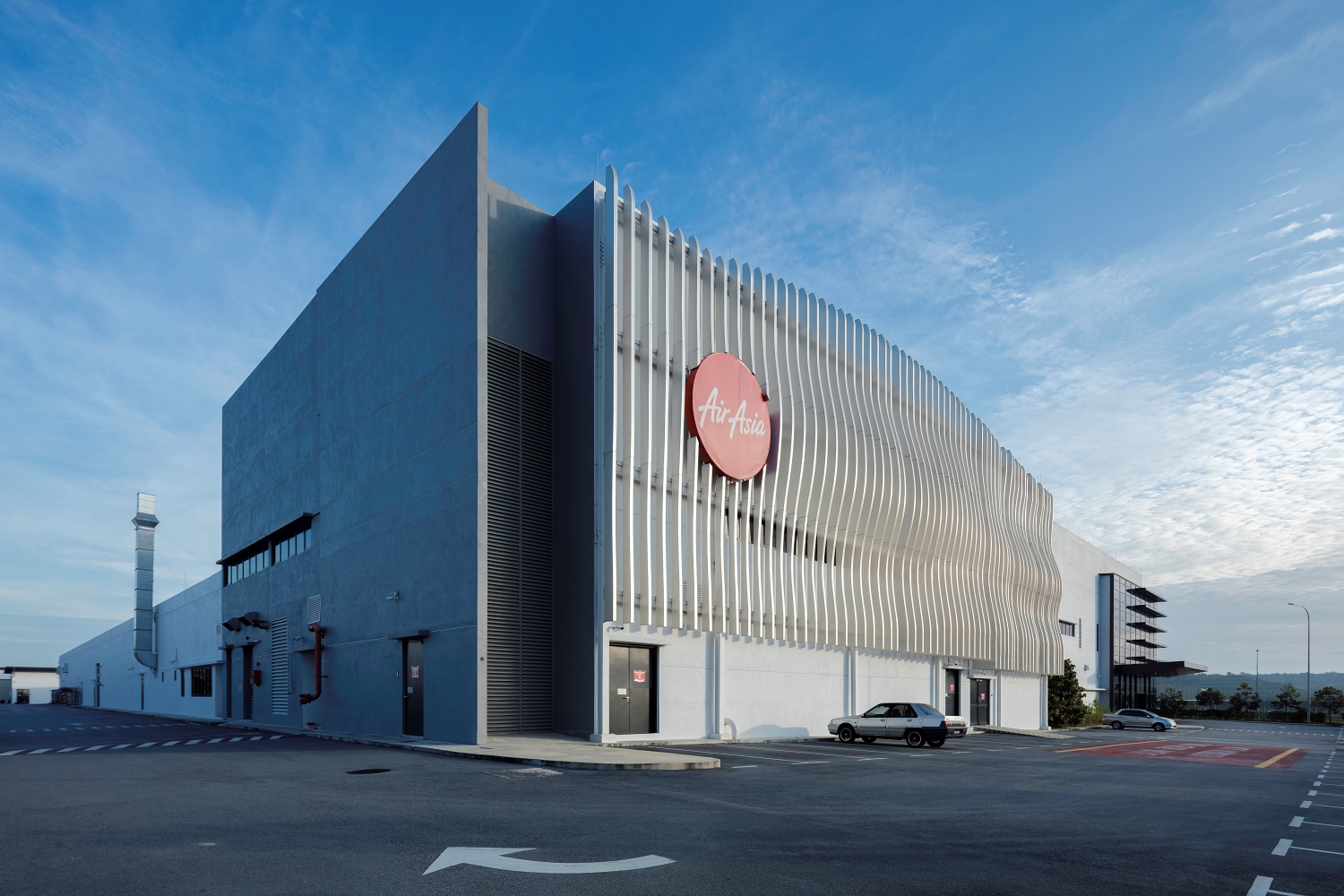
The building is strategically located 15 minutes from KLIA for easier movement of aircraft parts.It is next to the training centre; CAE Kuala Lumpur where initial and recurrent training for airline pilots on Airbus and Boeing platforms as well as cabin crew training takes place while neighbouring the central management kitchen of SANTAN – Air Asia’s F&B arm where a shared canteen is located.In general, the complex is within the KLIA and cargo district of Sepang which makes mobility easy.
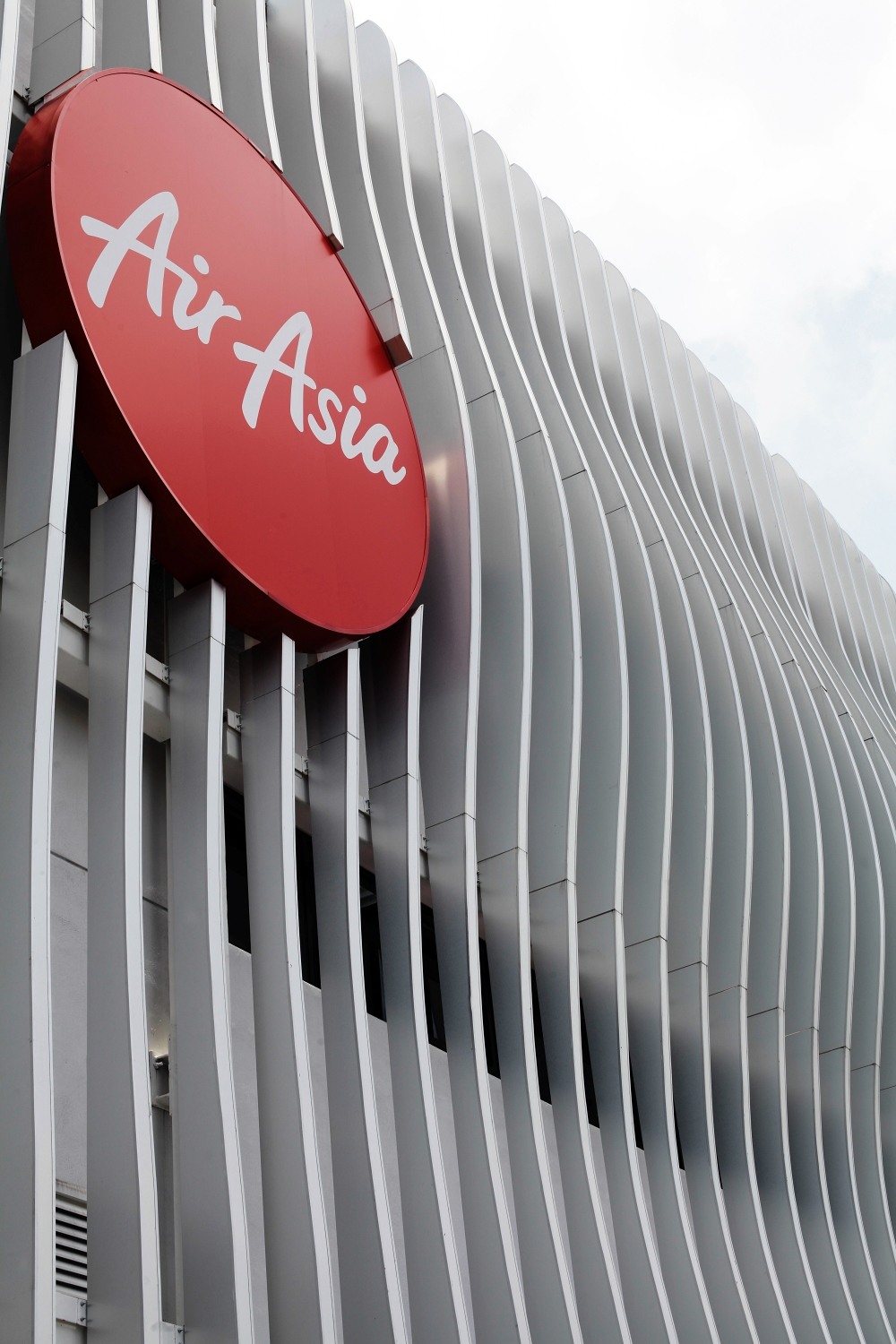
The form of REDCHAIN consists of various sizes of joint cuboids to suit its utilitarian usage.The programming of spaces is based entirely on functionality that included staff, goods and vehicle movements, appropriation for various storage and strategic office spaces.Nonetheless, with the efforts of Air Asia branding in mind, design initiatives were implemented to add architectural fins to the building façade.This façade is not merely decorative but functions as a marque as well as for identification purposes.With such design, the building is made noticeable and engaging from a distance, hardly to be missed as one enters the cargo district in Sepang.The design of the façade is inspired by the ‘aero-dynamism’ of an aerofoil in aviation as a tribute to the industry.It was chosen due to its significance in the field of aeronautical engineering.
The main module of the building architecture is the central warehouse to provide storage as well as space for distribution works.This warehouse is accessible from receiving and serviceable areas and reachable or connected to the peripheral supporting rooms, i.e. mainly active spaces – Wheel Shop Room, Engine Storage Room, Bulk Storage Room, Carpet Shop Room and secondary or passive spaces – Administrative and Archival offices.
Despite the building’s industrial role, aesthetics were not compromised and slightly elaborated designs were incorporated onto the outer shell of the building’s façade.They are strategically installed on two sides of the building; one facing the entrance with the marque of ‘Redchain’ and the second facing Jalan KLIA S8 with the marque of ‘Air Asia’.These placements are effective as they are visible to vehicles coming from Kuala Lumpur via Jalan KLIA S3 and turning to pass Jalan KLIA S8.