The Monument to the People of Malaya in World War II
Text by the architects
The Japanese occupation of Malaya began on 8 December 1941, it lasted for 3 years and 8 months and caused countless civilian casualties and tremendous suffering.The WWII Memorial Peace Park commemorates the atrocities and honours the many who lost their lives.
The project was led and funded by the Kwong Tong Cemetery Board of Directors.The Malaysian Chinese Society was asked to participate in the project to highlight the cruelty of the war, the price of peace, and to remember the Malayans and the patriots who were killed during the occupation.
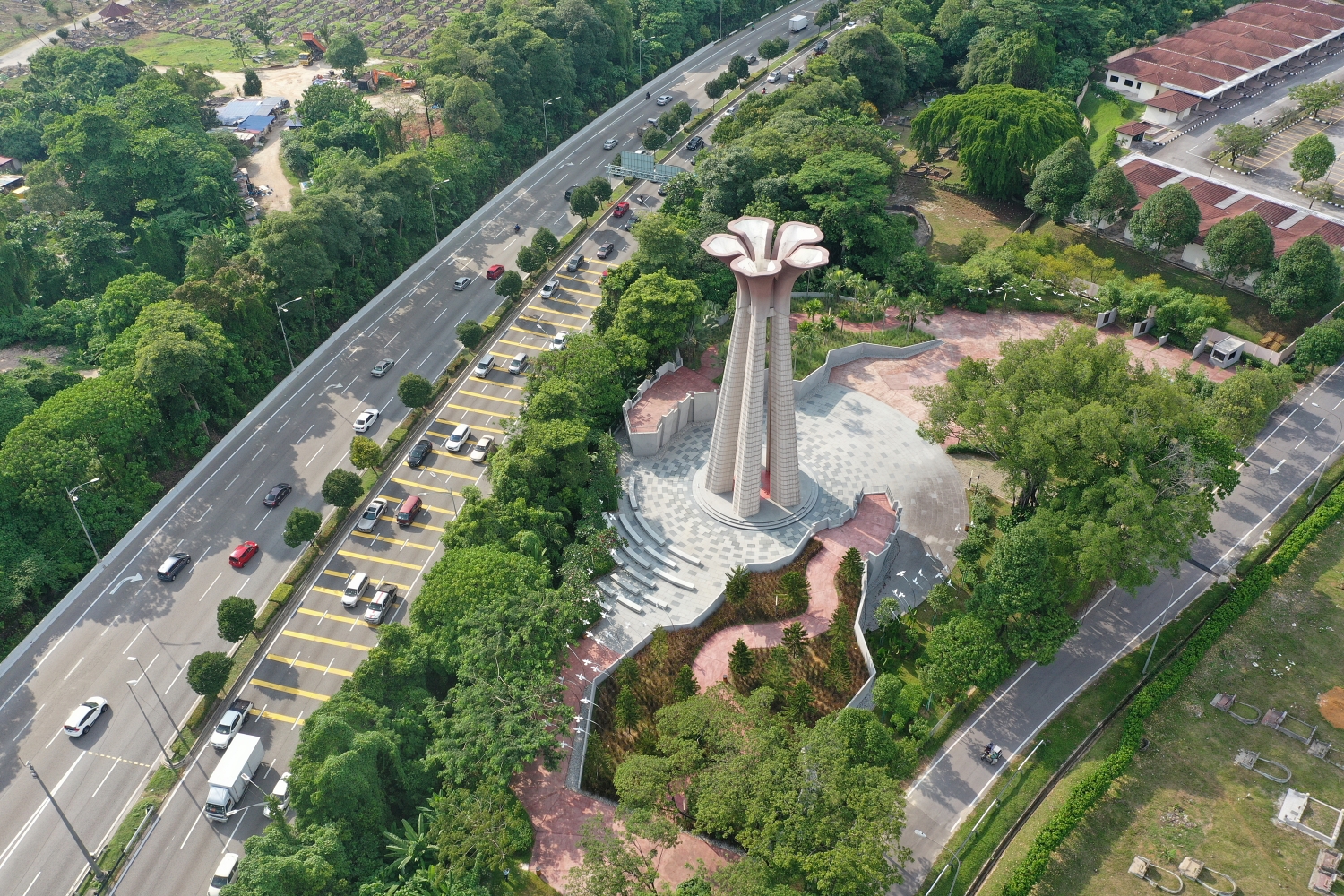
The design concept represents the chaotic atmosphere of war.Explosions result in fragmented and shattered lives, and disunity of communities, landscapes and the entire country.Proliferated energy from the centre gives rise to the monumental tower, splintered walls and raised platforms and seating.The site consists of two major elements, The Hibiscus Memorial Tower and The Park.
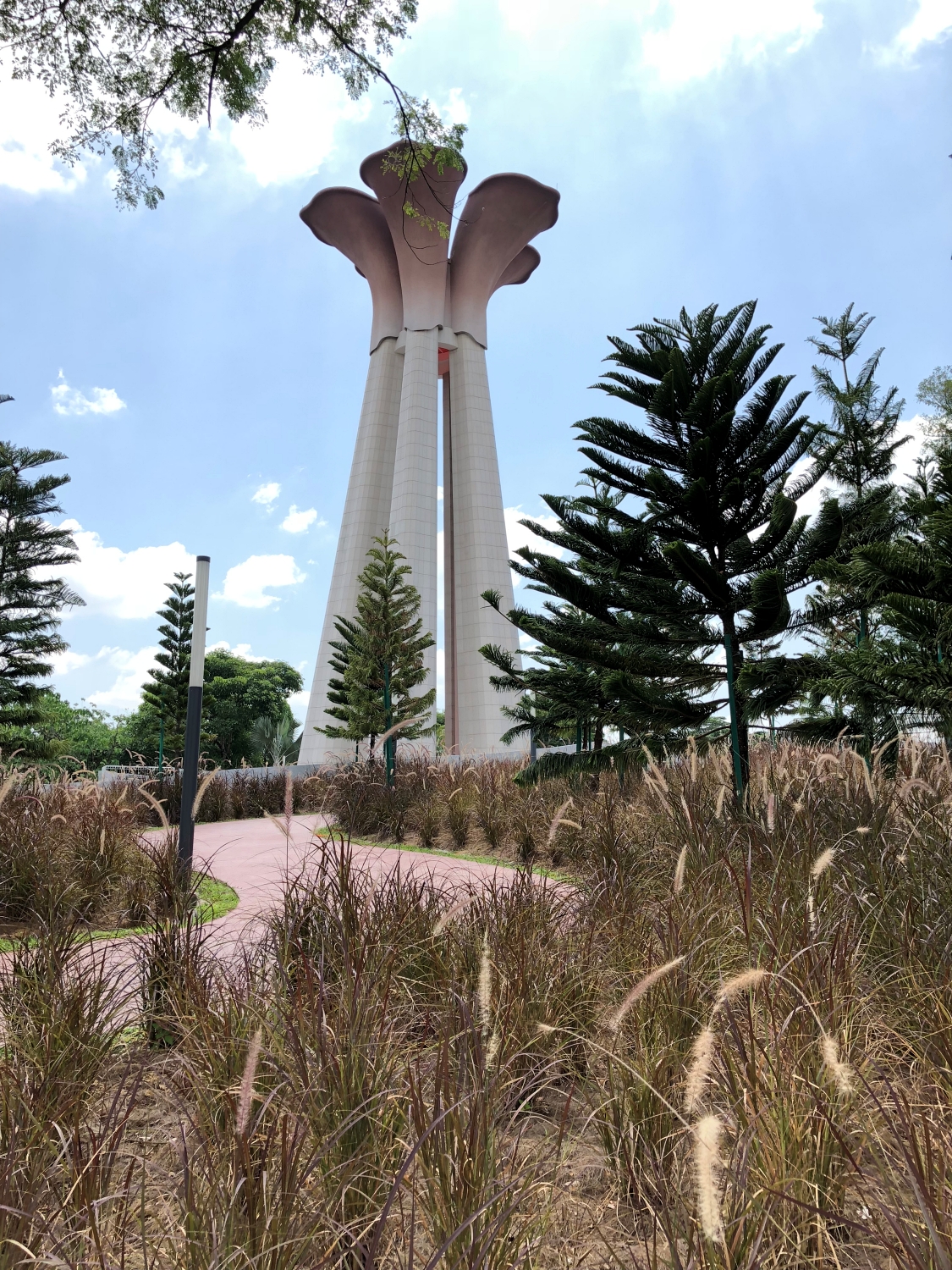
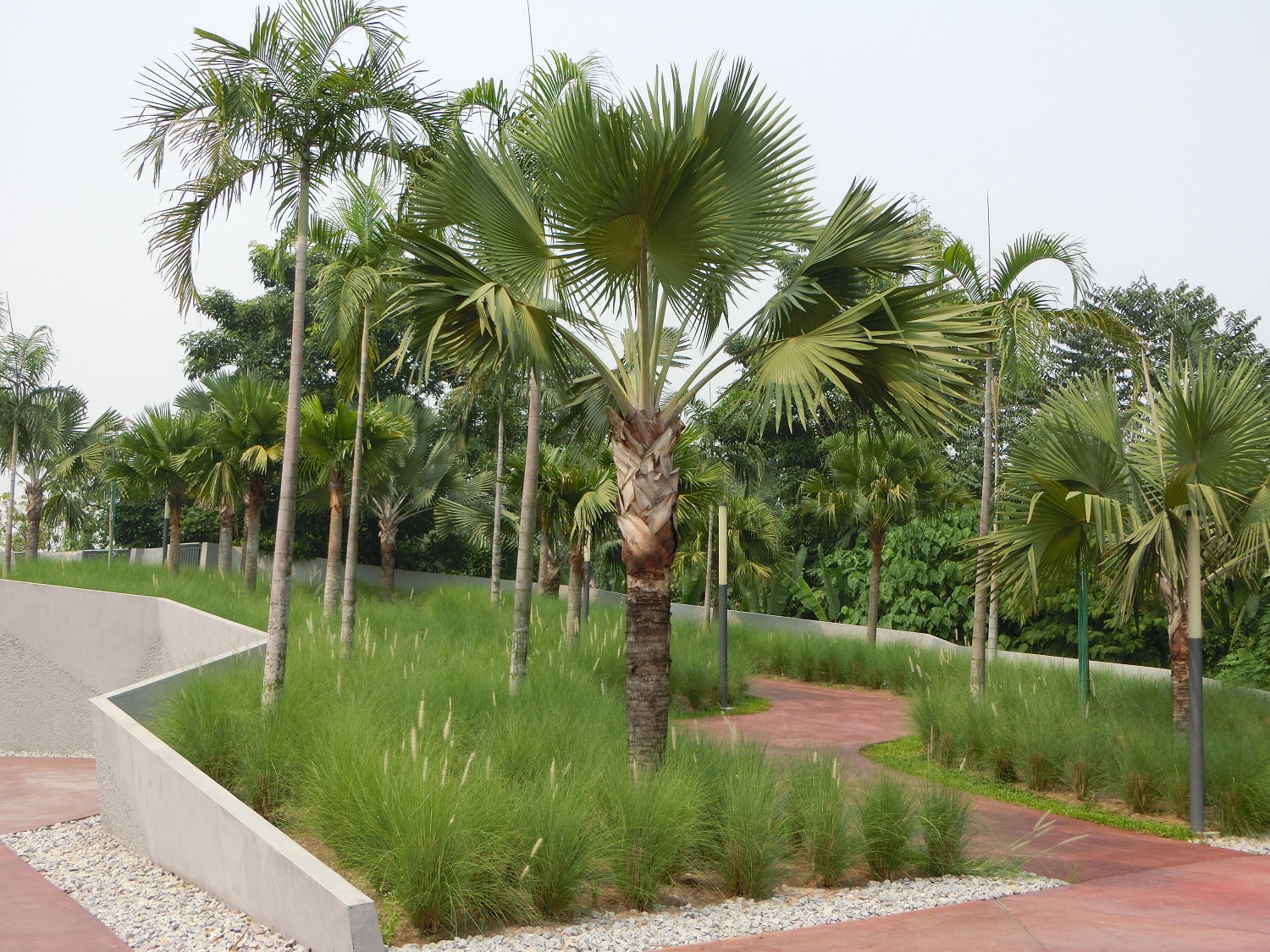
Araucaria heterophylla and Pennisetum setaceum rubrum (red) are planted on the East of the Raised Garden representing the Japanese Imperial and the red flag of Japan and the aggression of the attack.
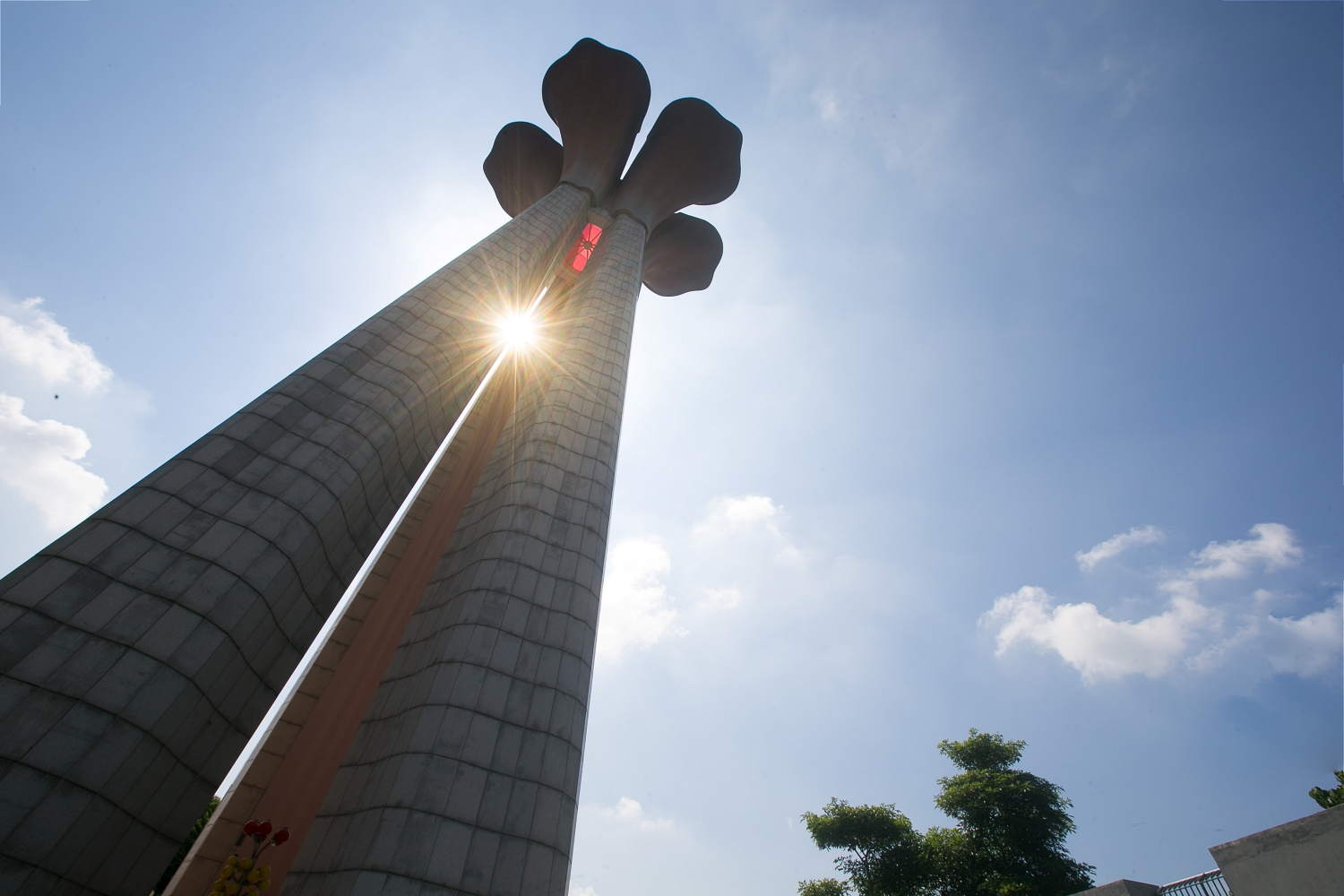
The Hibiscus Memorial Tower. Inspired by Malaysia’s national flower, the 30.8m tower celebrates the patriotism of Malaysians and their appreciation of peace since the country’s independence in 1957.The Hibiscus represents the Five National Principles of Malaysia.
The flowering Hibiscus at the top of the tower highlights the unity of all races and their collective hard work to achieve harmony.At the base of the tower, the flower pistil with water feature conveys new energy of life.The centralized location of the Tower in the park is an analogy of the impact of a bomb, whose energy radiates outward giving rise to the Hibiscus Memorial Peace Tower.
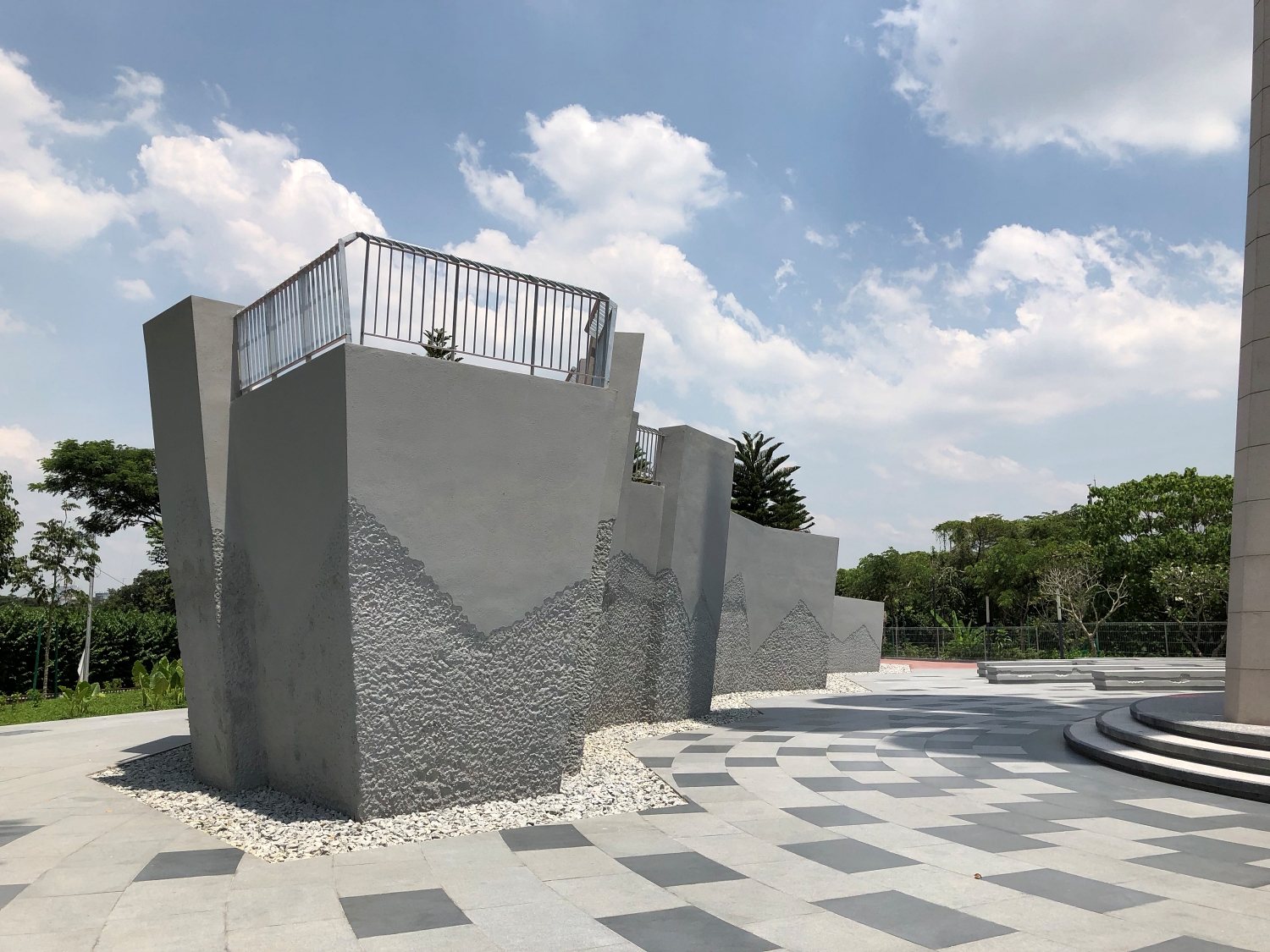
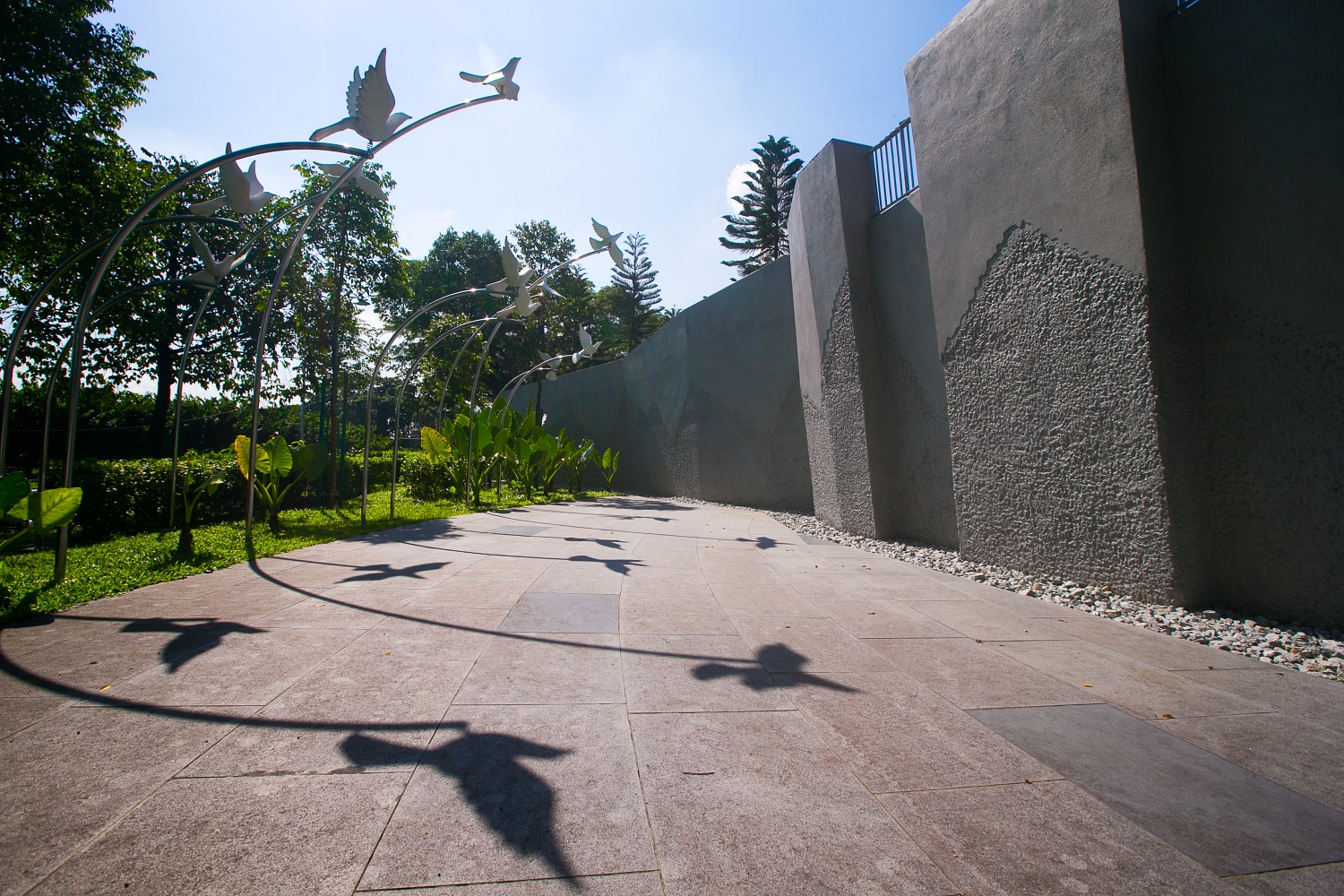
The Park. The conflict and collision of The Japanese and Malayan armies are represented by the two ascending raised gardens.Specially selected flora contrasts against a backdrop of bullet fractured walls.Stone aggregate coloured concrete walkways meander in the raised gardens of the park.The fragmented entrance challenges visitors to comprehend the events of 1941.88 pigeon sculptures flying freely throughout the park symbolise Malaysia’s quest for continued peace.
Fragmented and splintered walls are inspired by the effect of explosion and bullet shots during the conflicts.
Plant selections and planting arrangements are focused on their colours, symbolic meanings and their implication for the duration of the war.Araucaria heterophylla, Norfolk Island pine and Pennisetum setaceum`rubrum’ represent Japanese imperialism at the East Garden.Bismarckia Nobilis, Carpentaria acuminata, Livistonia rotundifolia (Serdang) and Pennisetum setaceum`white’ encapsulate the tropical theme of the Malaysian landscape.
The development of the WWII Memorial Peace Park, and its distinctive structures and landscape treatment, is a fitting statement on the cruel impact of the war and the high price of peace.The Park and its iconic tower recognise this terrible period in our history, and the symbolic design shall be a constant reminder of the value of peace to future generations.
The Memorial Tower is honoured by Malaysia Book of Records for having the Tallest World War II Memorial Monument, at a height of 30.85m, on July 20, 2019.
Moving shadows of the white doves, a harbinger of peace.
The fragmented entrance challenges visitors to comprehend the events of 1941. 88 pigeon sculptures flying freely throughout the park symbolise Malaysia’s quest for continued peace.
Proliferated energy from the centre gives rise to the monumental tower, splintered walls and raised platforms and seating.
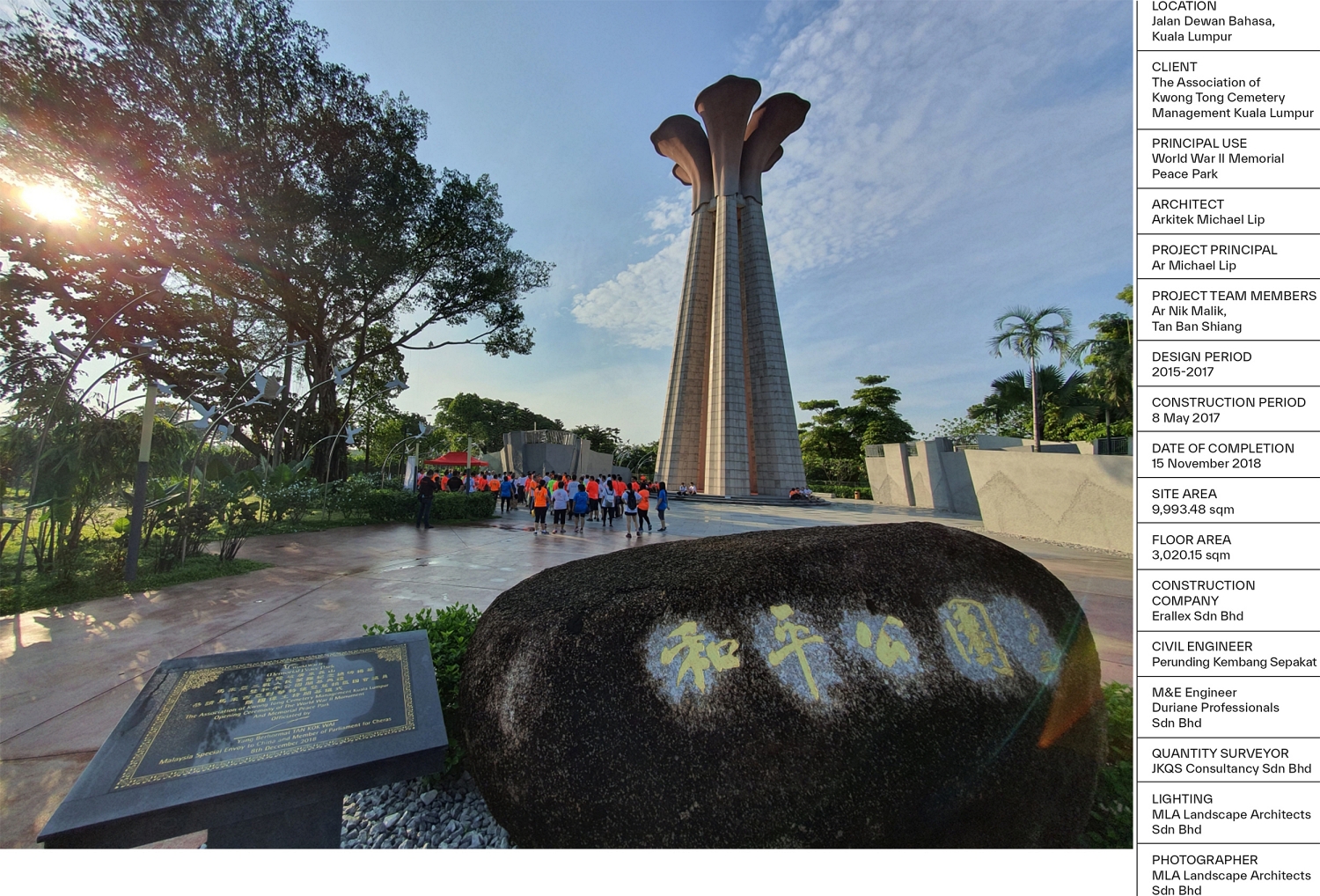
Peace Park Plaza with main signage engraved on the rock.
Peace Park Plaza with main signage engraved on the rock.