If you plan to drop by Oslo, make sure that you spare plenty of days, even weeks to discover its architecture.The city is filled with too many awe-inspiring Norwegian architectural gems from Neo-classical, Functionalism to the latest sleek contemporary designs.
The new style can be characterised by simple forms, almost poetic but with very delicate streamlined detailing.And the amazing fact is that, these contemporary Norwegian-style buildings intertwine perfectly with the older buildings.
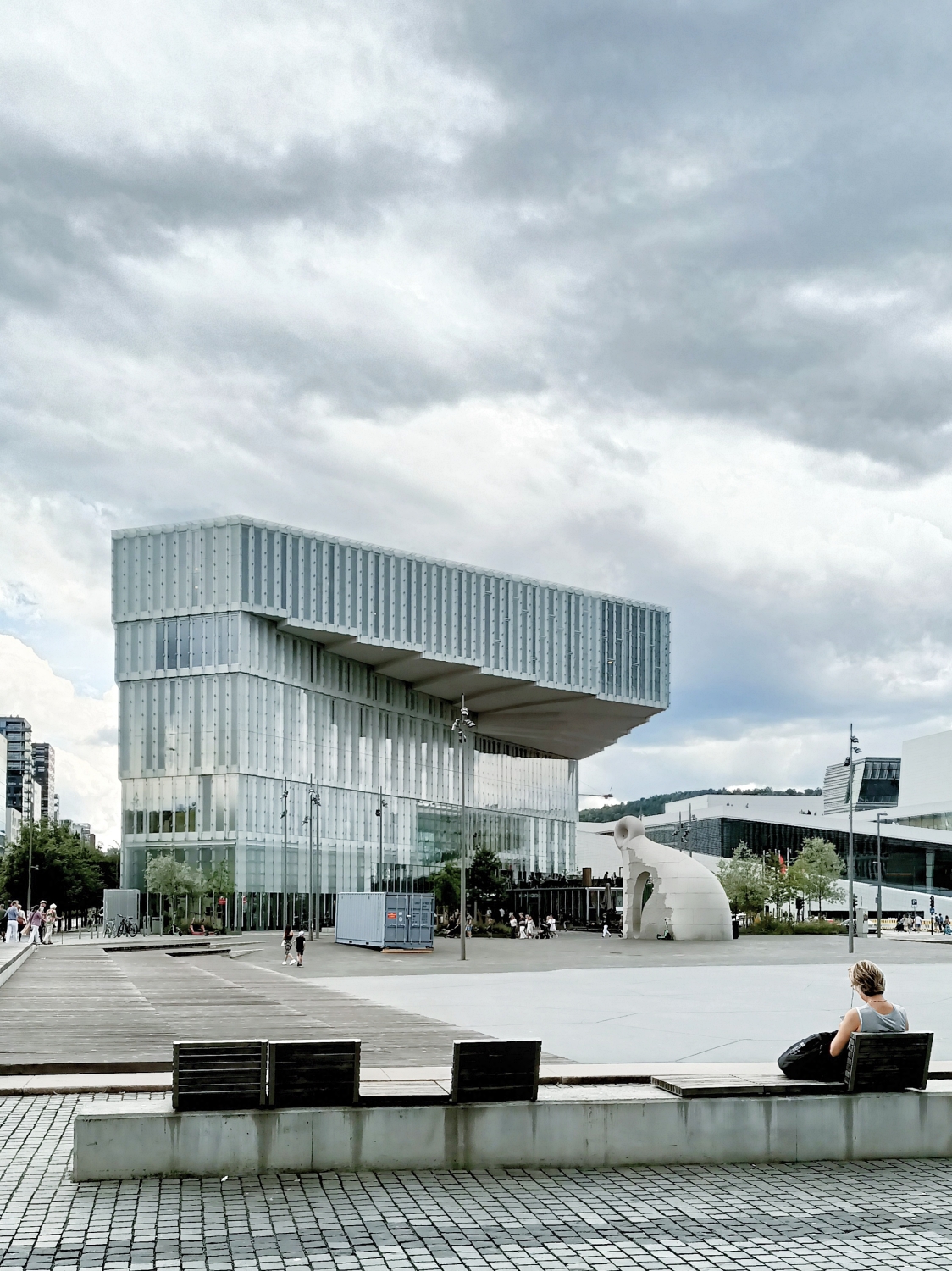
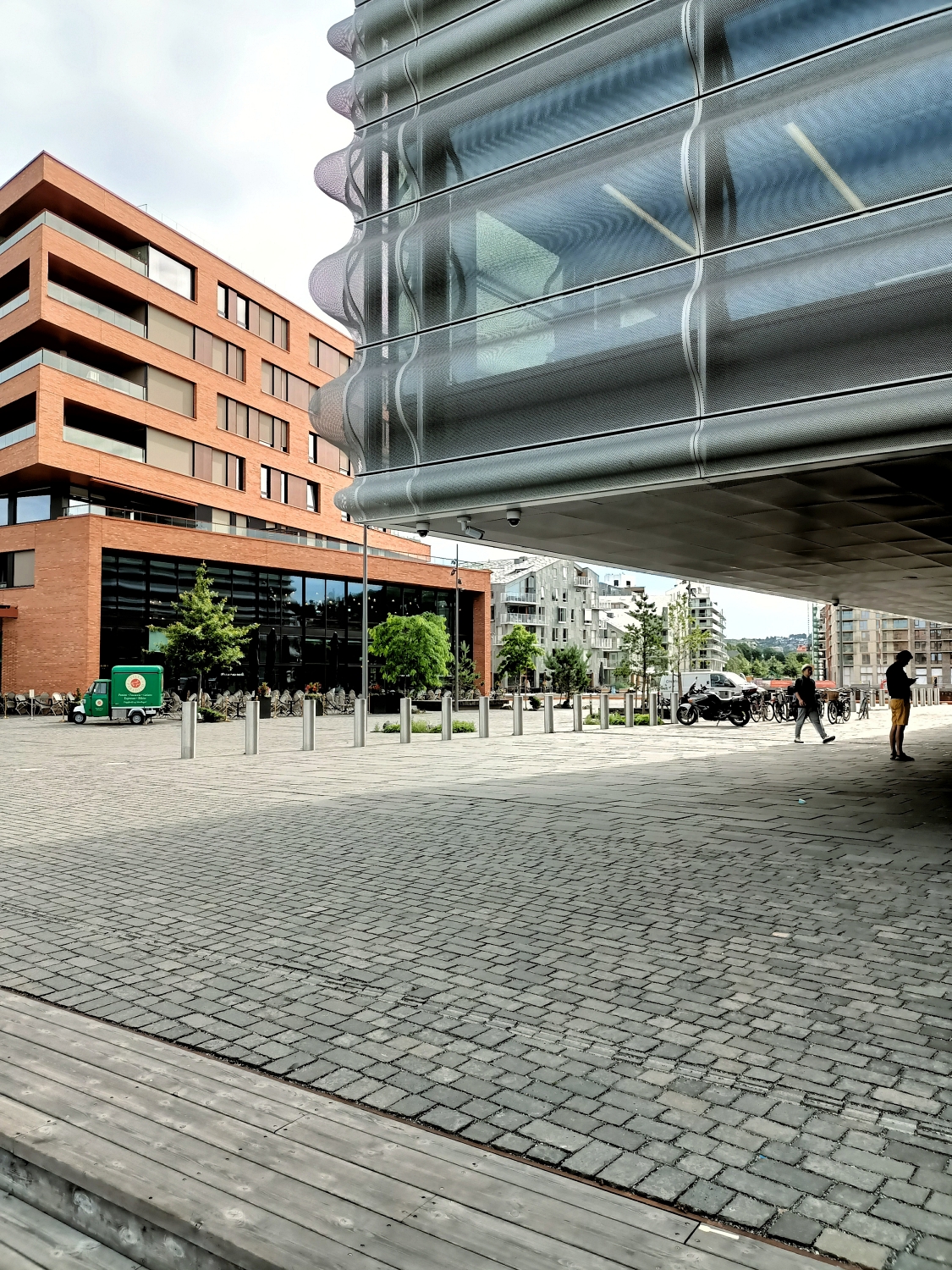
Recently opened in 2020 is the Deichman Bjorvika, Oslo’s new main library.The exterior form is skewed and dynamic but could be easily misunderstood at first glance.It is hard to make up what it tries to achieve, or if there is any message behind it.But after some time of observing, one would start to see the cantilevered floor that hovers over the entrance and a public plaza that also acts as an entrance statement from the piers, the Fjord to the city.
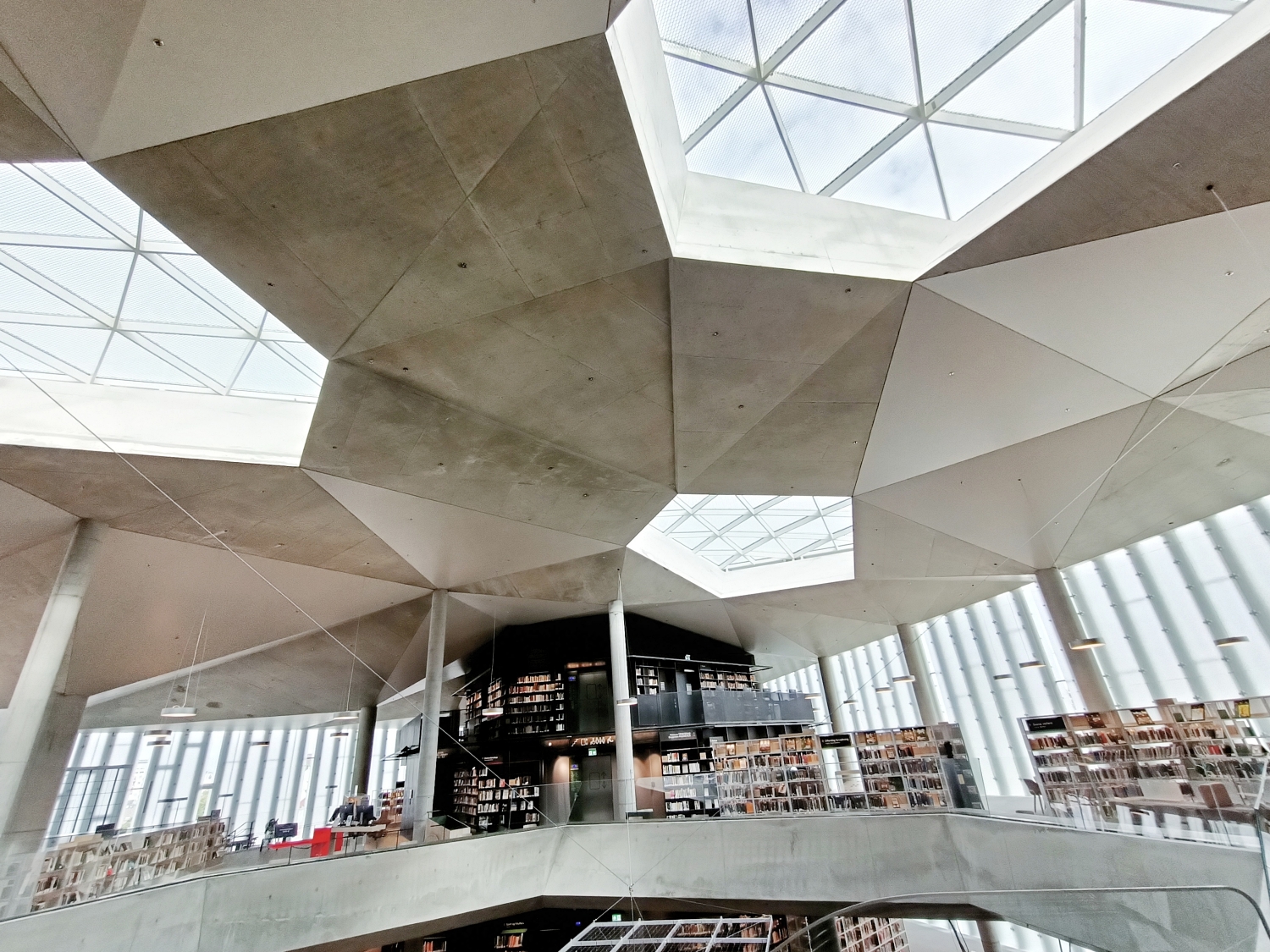
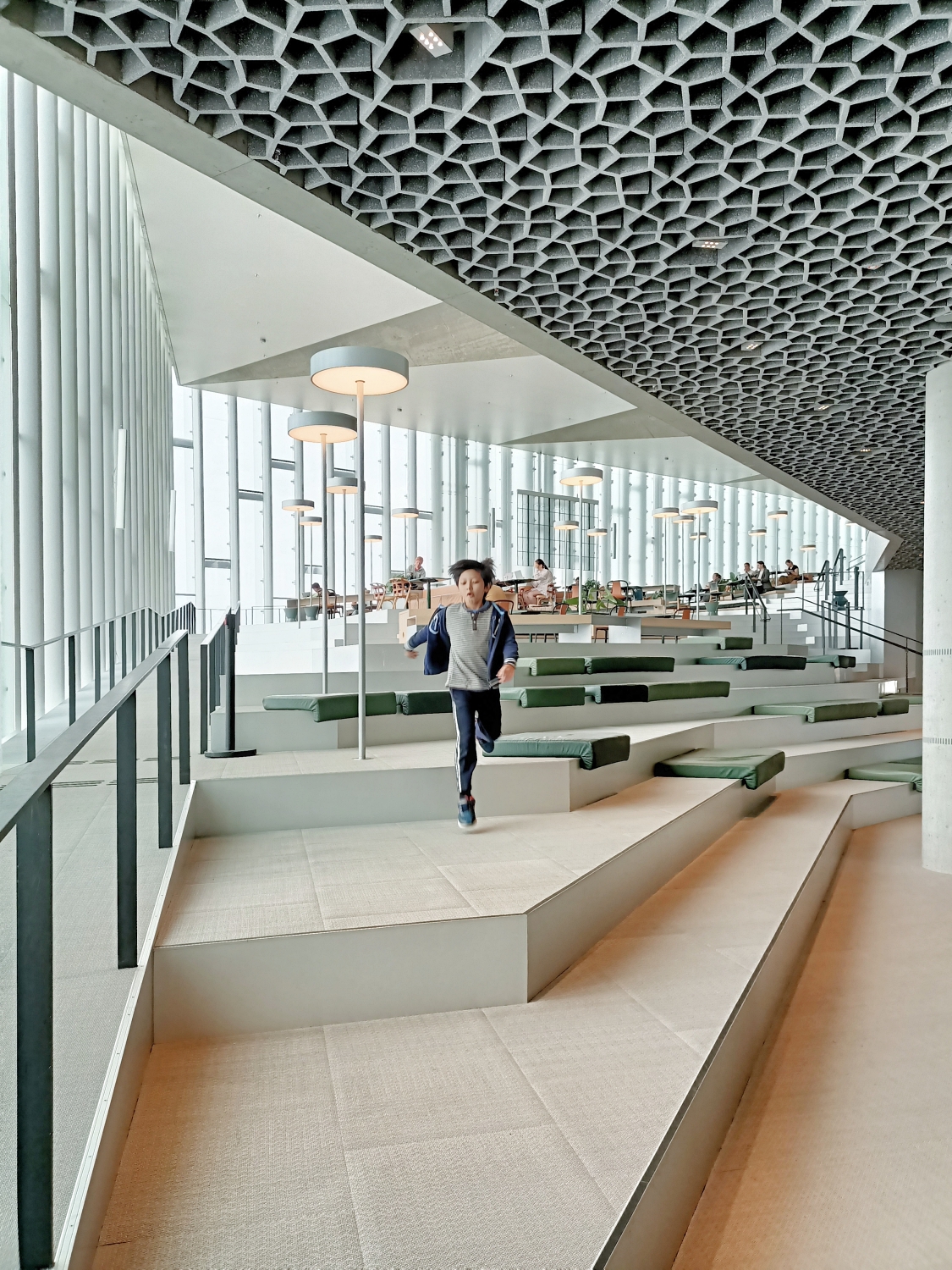
The inside reveals the next level of what the building is.There is just so much natural light, so comforting that no artificial light is needed on sunny days.The atrium is a massive 7 storey-high voluminous space with large span skylights and off-form concrete.The fully glazed walls are mostly frosted to filter in the light, with some clear glass panels to allow viewing out.
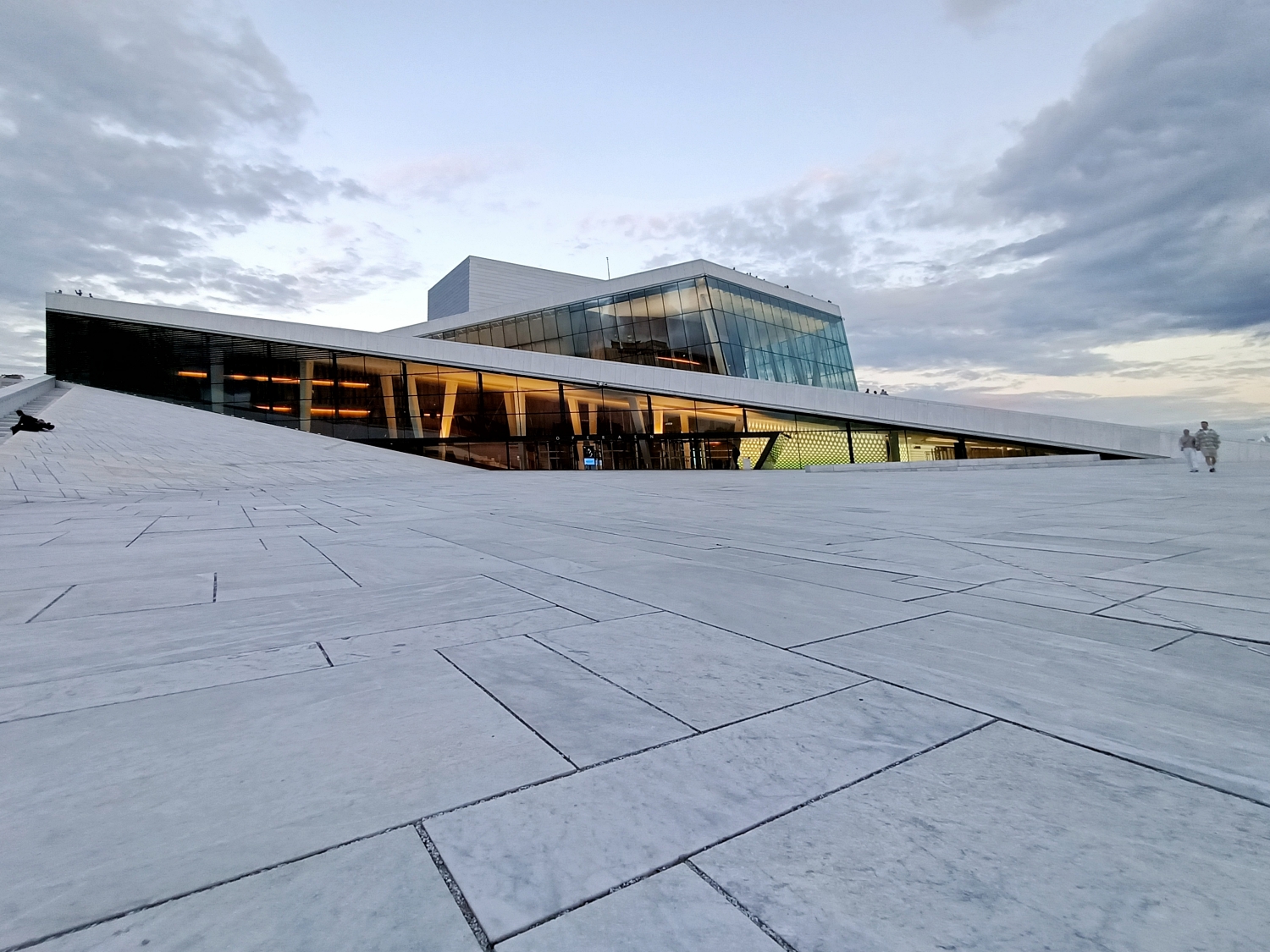
Next to the library is the iconic ice-berg-shaped building, the Oslo Opera House.It’s a stunning landmark piece that epitomises modern Norwegian style in a simple form.From a distance, the form is so simple that you can sketch it with less than ten straight lines.But as you get closer, you see the most precise detailing from the plaza, all the way to the inside of the building.The building is covered with white granite and Carrara marble, and a stunning naturally stained solid oak wall on the interior.
The sloping roof invites visitors to walk up and enjoy the view of the city.But not only that: as it is now summer, we see people sitting down, having picnics and sunbathing on that slope.Come to think of it, I don’t think we can see that in other opera houses in the world.A truly original piece.
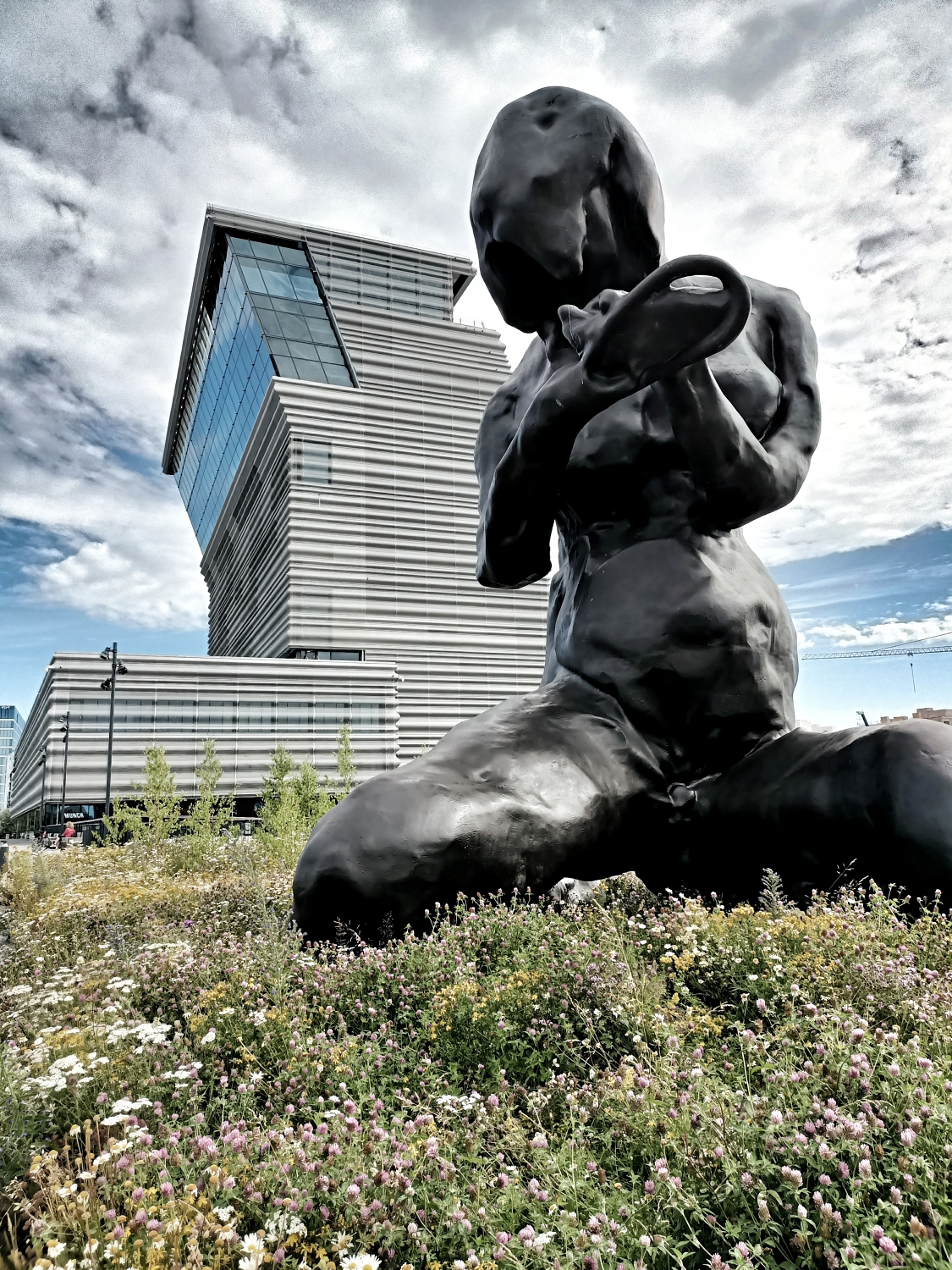
A few steps away from the Opera House is the ‘Munch’, a museum dedicated to the famous Norwegian artist, Edvard Munch, best known for his work, The Scream.Another simple skewed form building may be a poetic representation of his paintings which he painted based on his own emotional and psychological state.
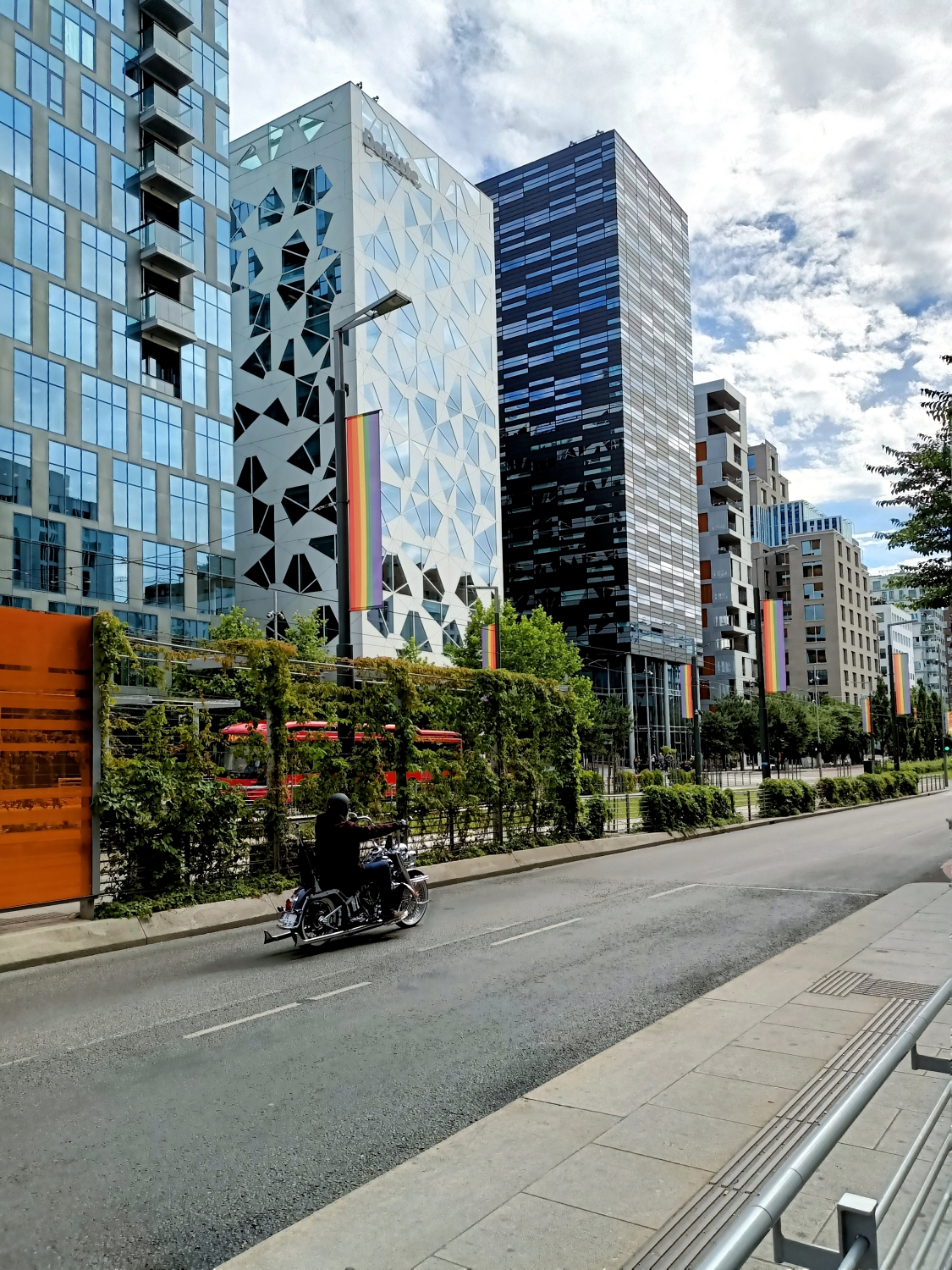
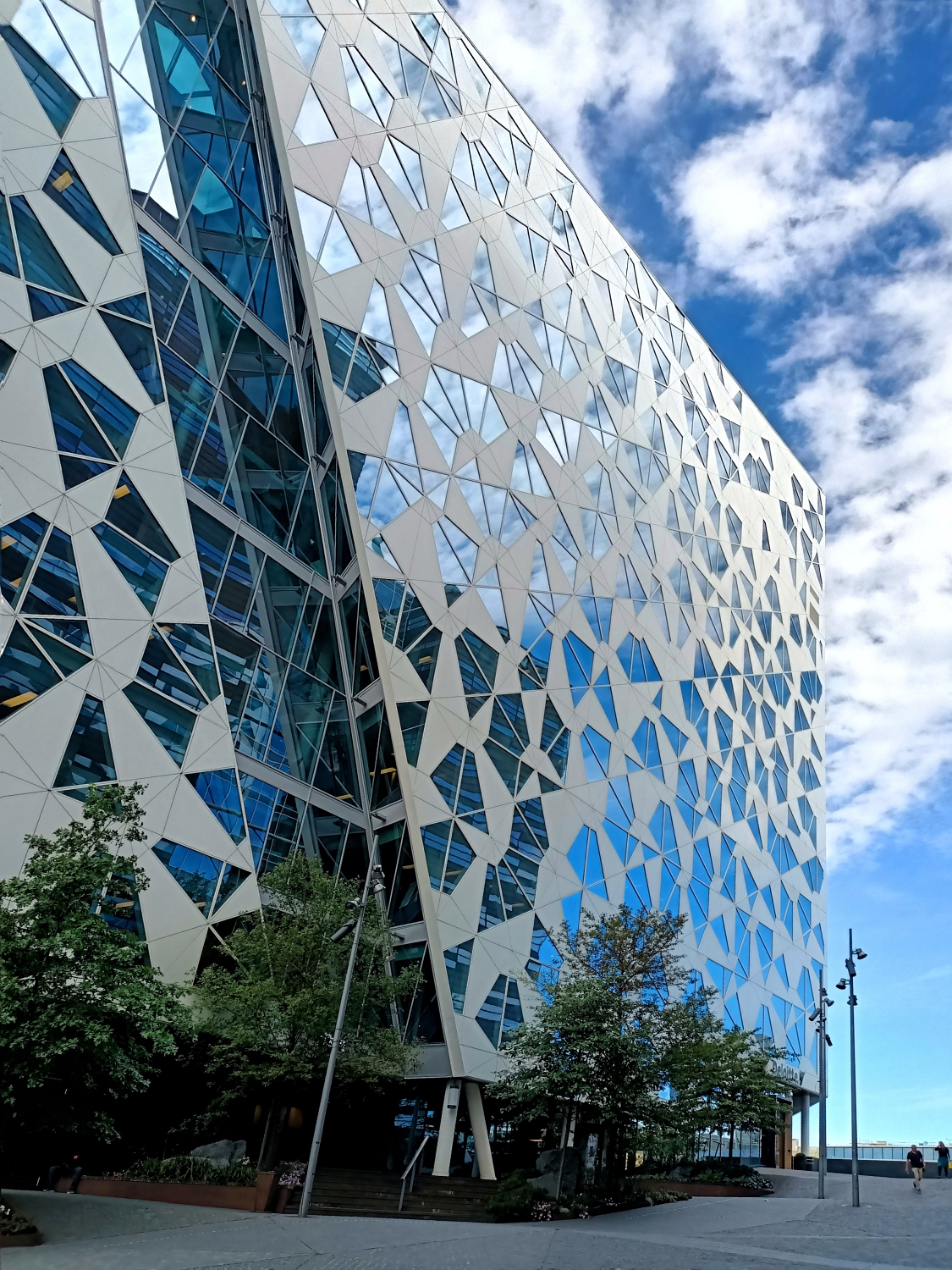
Next to the Central Station is a redevelopment project over an old dock and industrial zone called the Barcode Project.Housing international firms including PWC, Deloitte and others, the towers were designed to be rectilinear and skinny, like a barcode.And with the open plazas in between, the development facilitates views from the inland towards the Fjord.We can understand the controversial debate over the sophisticated, ultra-sleek display of this new, corporate architectural style of these towers.Personally, it creates a rather eclectic and better progressive mix for the city.And the composition of materials, details and high-performance building products, with automated systems and sensors are just insane!
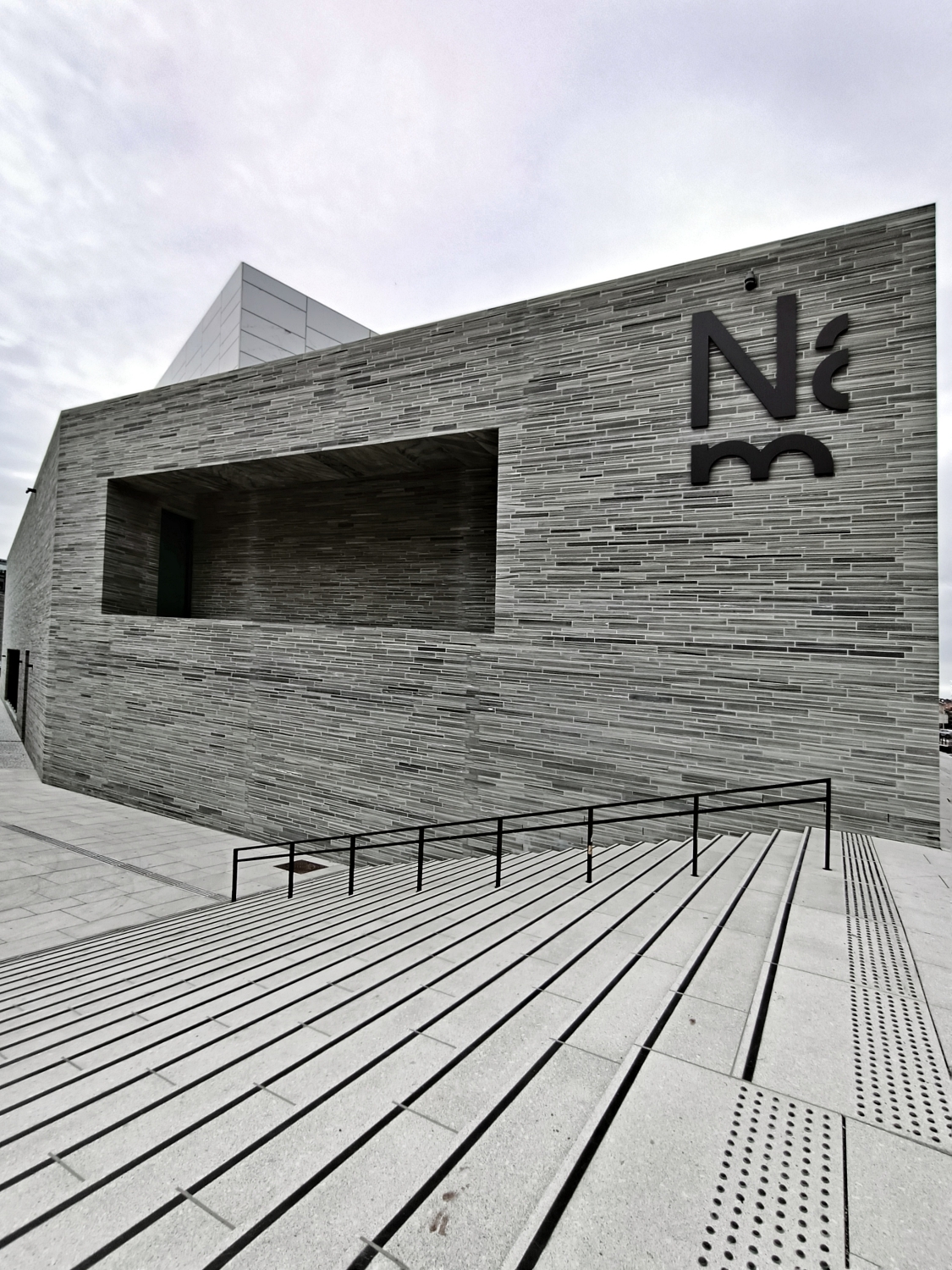
The National Museum of Art is another beautiful piece of minimalist, monolithic, temple-like structure.It is the largest art museum in the Nordic region.And yet, the massive volume of the museum intertwines nicely with the existing older buildings.The rectilinear form is kept low but horizontal to correspond to the existing 19th century building that forms part of the museum.
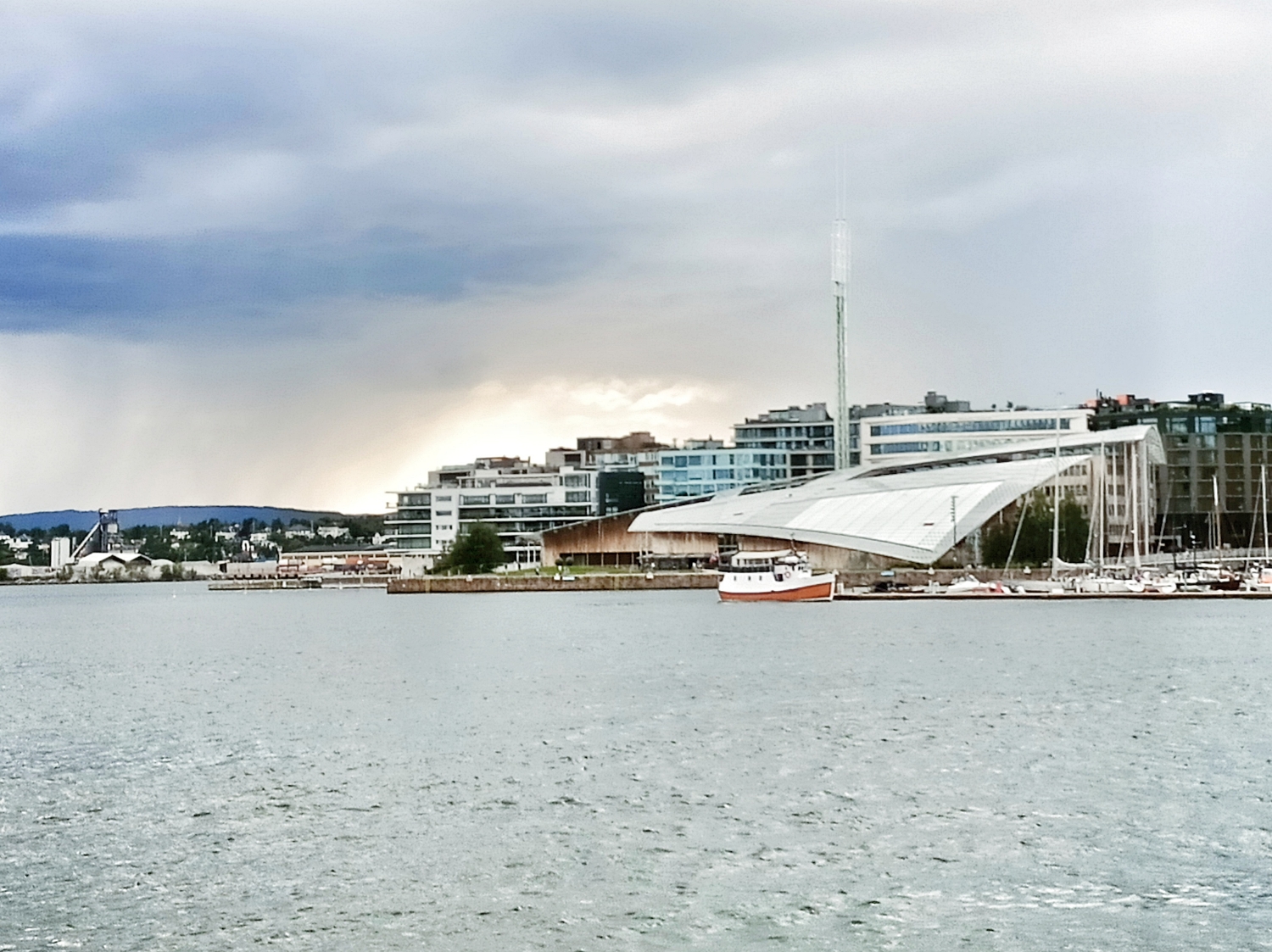
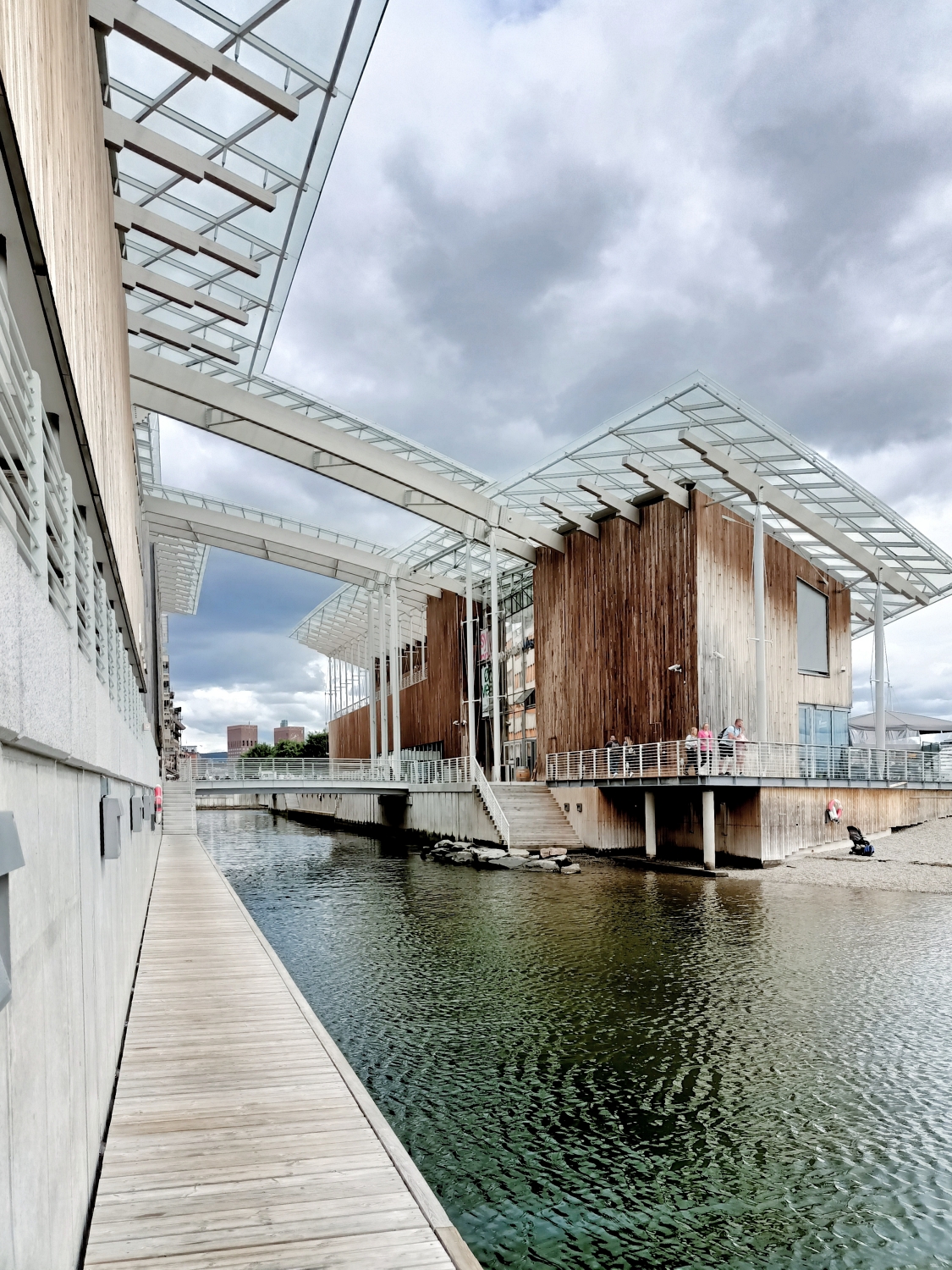
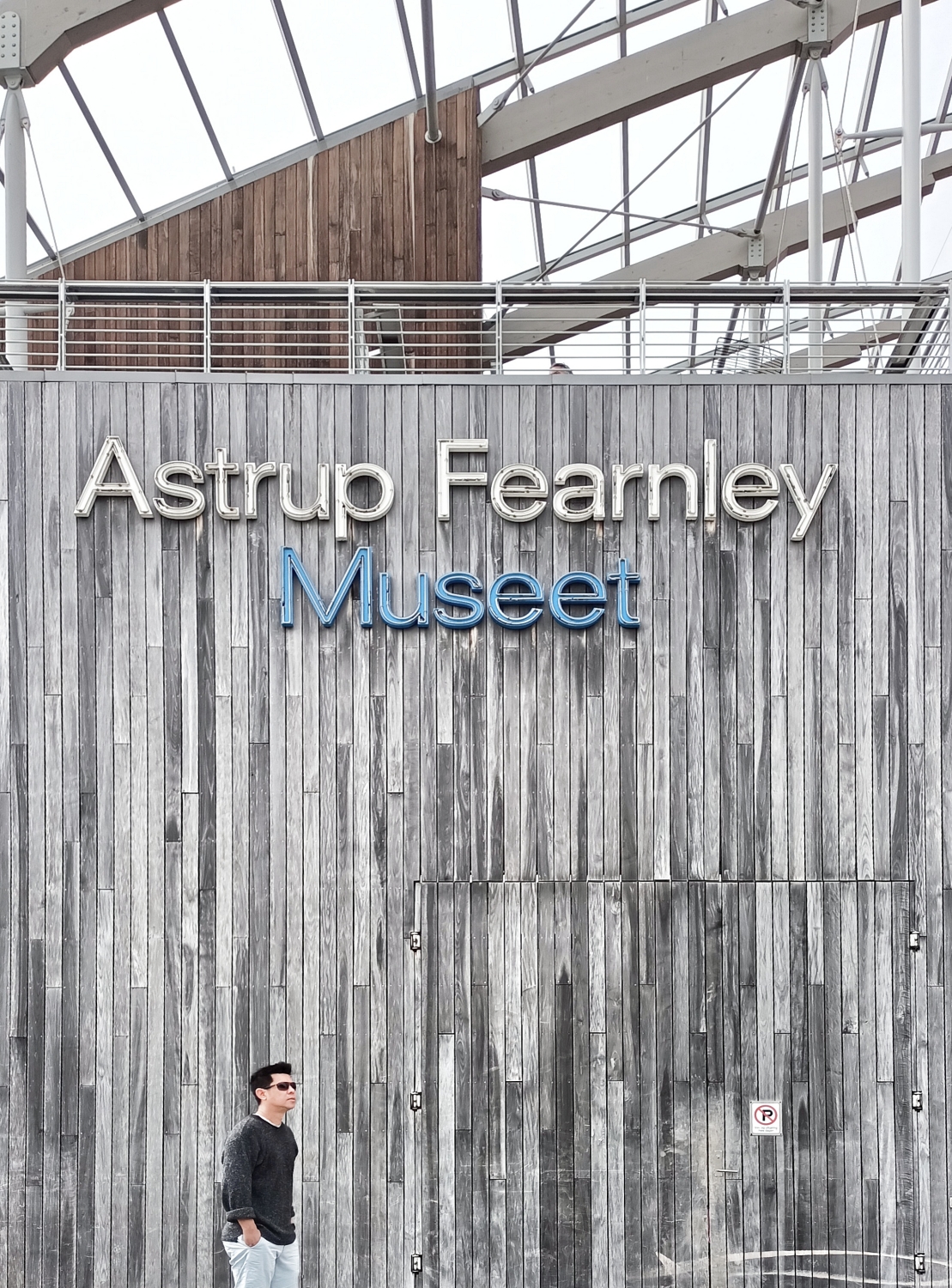
Another iconic piece is the Astrup Fearnley Museum.A piece that has the signature of none other than Renzo Piano.It sits at the outmost point of the Fjord.The sail-like curved roof building nestles nicely in respect to the low city skyline.