AM talks fashion and architecture with TasBijoux, Fuzana Mokhtaza, Ruzzgahara and batikTEKTURA.
Text by Ilinaz Mior and Cheah Ee Von ; Photos by respective designers
Despite being very different disciplines, there are many parallels between architec ture and fashion. From conceptualisation, construction and functionality to the ex pression of identity, both practices help form the envelope that becomes a person ification of the individual lifestyle. Some of the most notable fashion designers had their early beginnings in architecture, such as Virgil Abloh, Pierre Balmain, Tom Ford, and many more. AM decided to seek these following Malaysians who have dabbled in the realm of architecture and eventually pursued their passion in the world of fashion.
Tell us briefly about yourself and your brand.
ZA
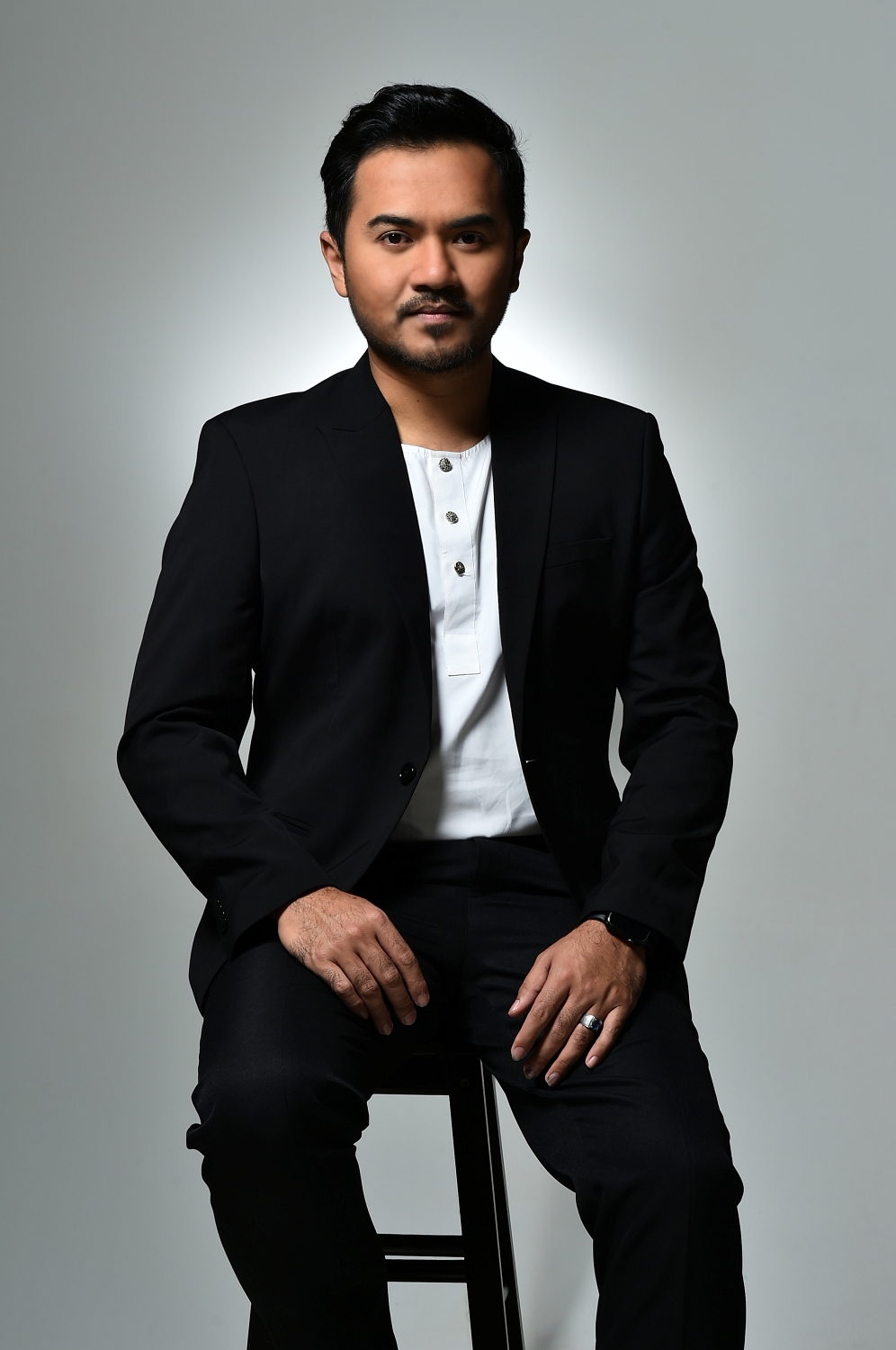
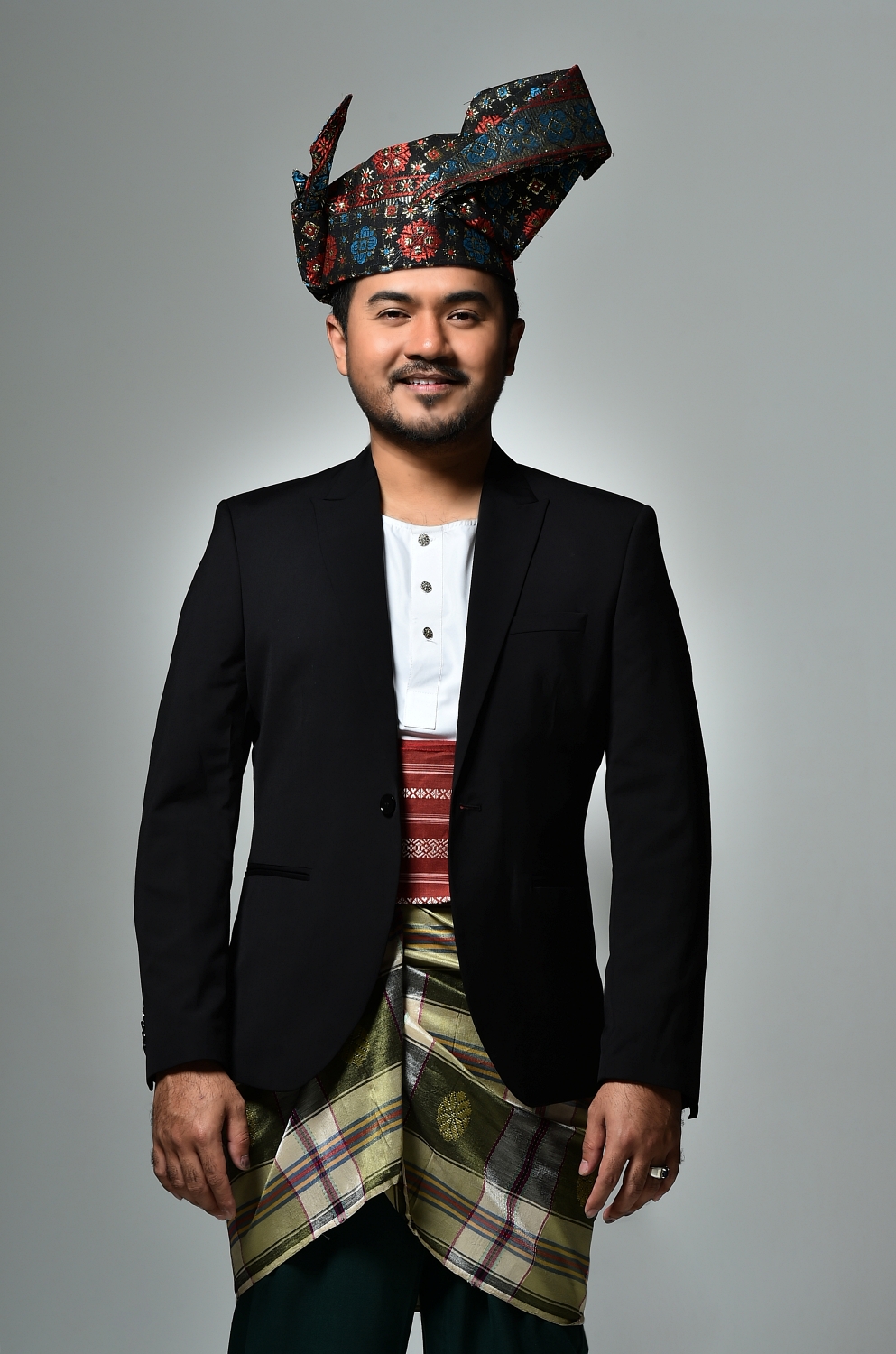
A Graduate Architect (2014) trained at the University of Malaya, I ventured into retail industry by starting my own enterprise Tasbijoux Sdn Bhd in 2016 after doing it as a side business since 2013 whilst I was still an Architecture student.
The company started out with a small office in Damansara as a home-grown apparel brand.Since then, we have expanded to our permanent headquarters in Bukit Jelutong, Shah Alam with our team of Executives, housing a few other businesses.As of 2022, Tasbijoux Sdn Bhd is a retailer of multiple brands, with (1) TASBIJOUX being the most well-known RTW label, (2) TASBIJOUX COUTURE, an artisanal leather goods bespoke service, (3) BARYA, an artisanal clothing brand focusing on traditional heritage prints like Batik, Songket and Tekad Emas, and (4) BARYA CAFE, our first venture into the F&B business set to begin operating in October 2022.
Some of our projects have won awards and received media coverage, especially the Songket Medley collection by BARYA, featuring artisanal pieces with poetic nuances of Nusantara’s most well-known heritage textile, the Terengganu Songket.Another project worth mentioning is the Warisan Emas collection, which received the attention of royalty and international patrons who fell for the unique romantic pieces – a result of the combination of Italian leather and the rare Tekad Perak textile.
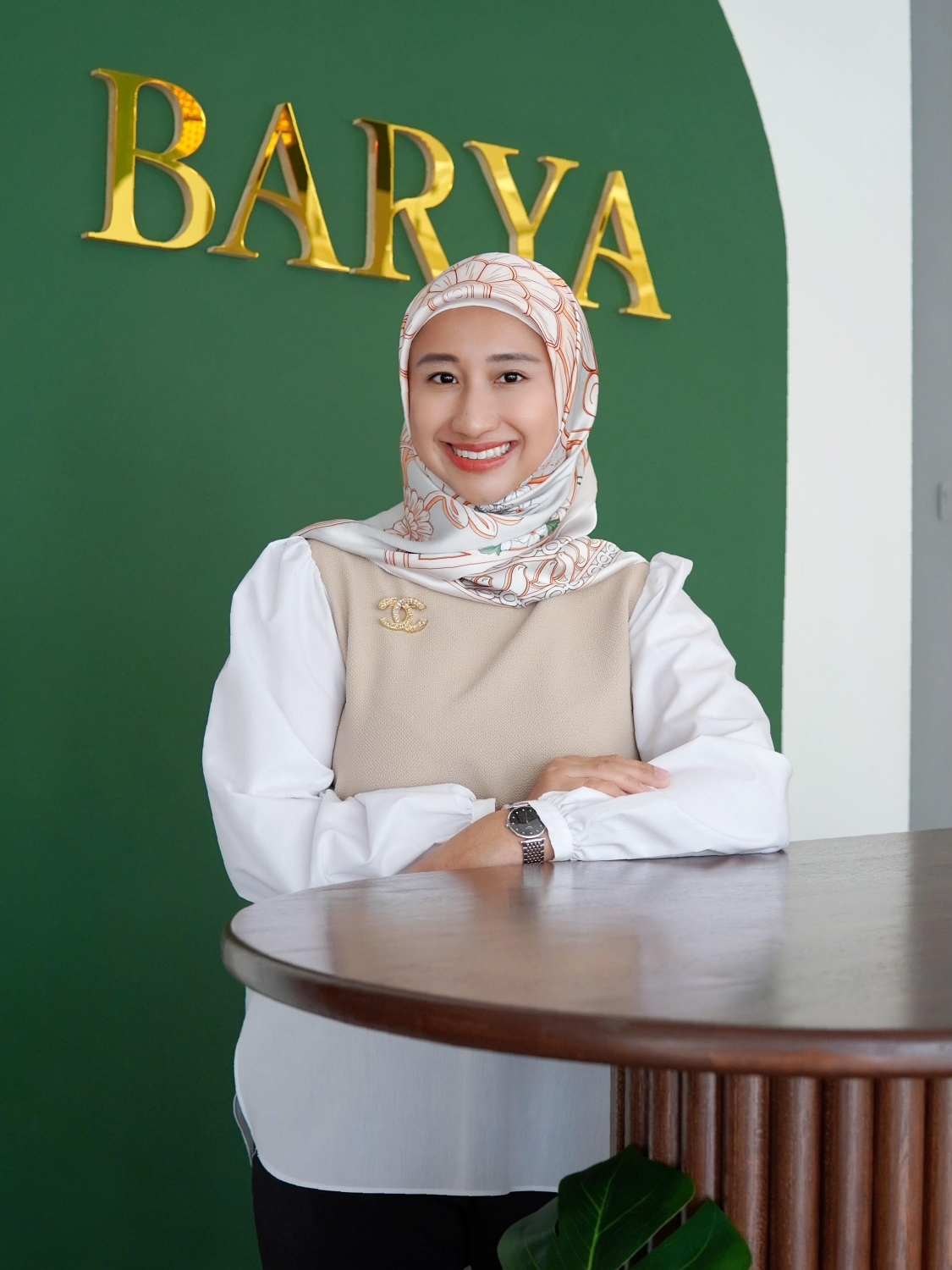
Nur Zalikha, Marketing Director and Founder of Tasbijoux
Did your architectural education help to prepare you for this role or did you start from scratch after studying architecture?
ZA
My architectural education has indeed helped me in many creative designer aspects of the work such as photography, product design, and most importantly, project management.However, I was handicapped when it came to matters relating to corporate management for instance; logistics and human resource management, best practices and company policies.I was heavily reliant on my partner who has corporate experience to manage those aspects of the business.
Other skills and knowledge that I eventually went on to take classes for professional certifications includes personal image coaching, marketing and others related to brand management.Over the years, I developed a deep interest in these skill-sets and knowledge and found them to be my forte.
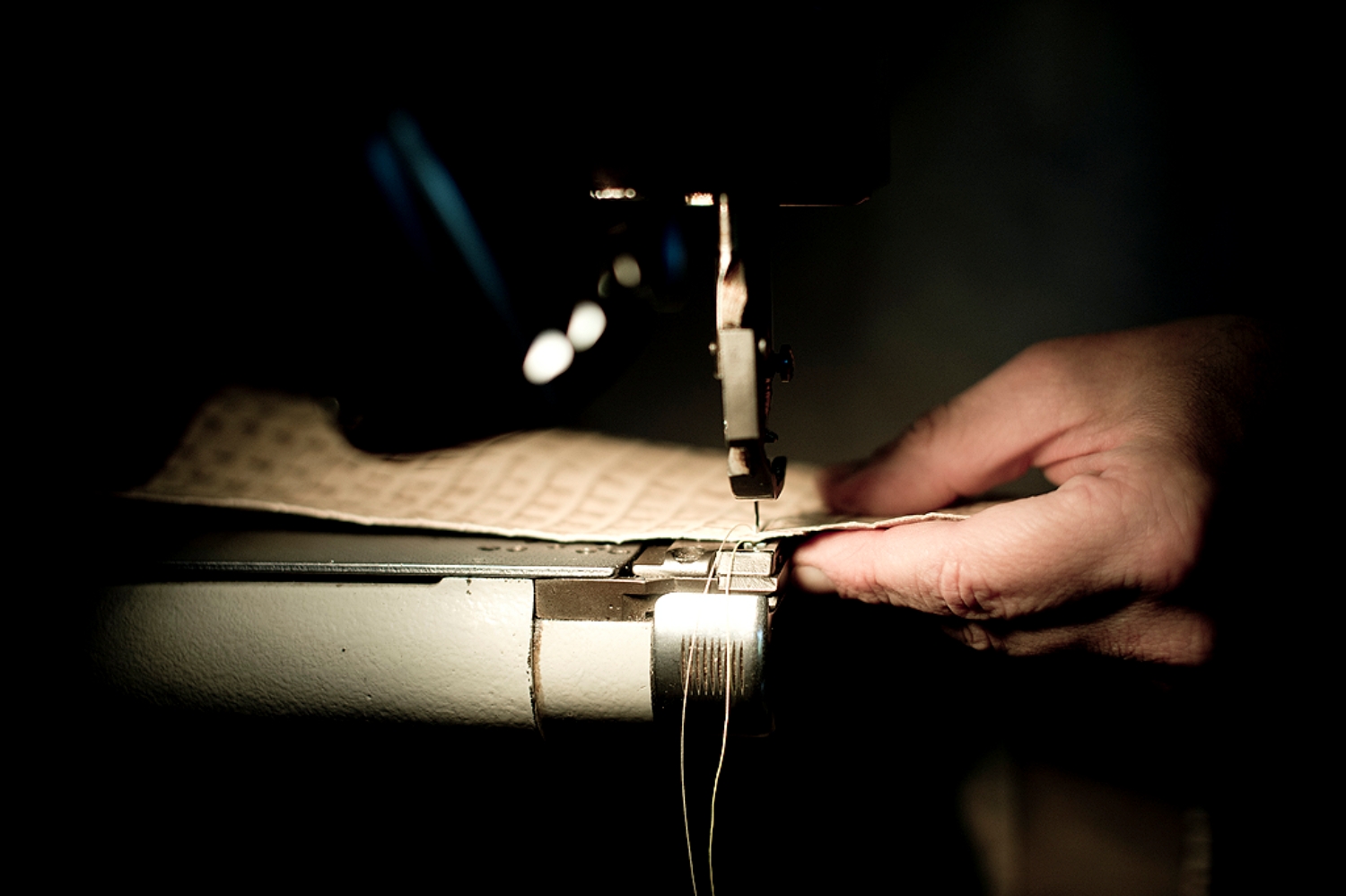
The making of a handbag by one of Tasbijoux’s Master craftsman, Mr Marton in Budapest
Who are your design influences and how did it shape your design philosophy?
ZA
The marketing and branding for the brands under the company are all different and unique; each with its own brief and objectives.Here are two of them.
For the artisanal brand BARYA, the label focuses on deriving inspirations from the traditional arts and heritage of the Malay/Nusantara region.I received guidance and knowledge from the Masters (or Tokoh) who have been practising the arts for decades.For instance, to understand Tekad Perak, I sought out Adiguru Hajah Azizah Yusof (82 years old) for her insights, and for Terengganu Songket, I consulted Yayasan Tuanku Nur Zahirah.
With their influence and guidance, I developed unique resort-wear products and branding for BARYA, often fusing traditional Nusantara styles with 19th century Romanticism of William Morris and Charles Voysey.This influence echoes in other products and services from BARYA, including the curation of the BARYA Cafe, where we care for the artisanal and sustainable process behind mak ing a cup of coffee.
For TASBIJOUX, the label is more of a mainstream pop-culture, moving consistently with the current trends.The branding has gone through at least 2-3 changes in the past nine years, and we are currently at a point where we are satisfied with the maturity of the branding work.As a RTW accessories brand, we refer to Hermes and Chanel as the archetypical industry standards.We also take inspiration and receive guidance from lesser-known master artisans in the industry like the Carbotti family from Puglia, Italy and GION in Budapest, Hungary.They are also our main partners in Europe.
We combine these experiences with influences from social-media famous designers like Polina Oshu of @oshupatterns and Jess Miller of @jessmillerdraws to draw out the colourful world of TASBIJOUX.
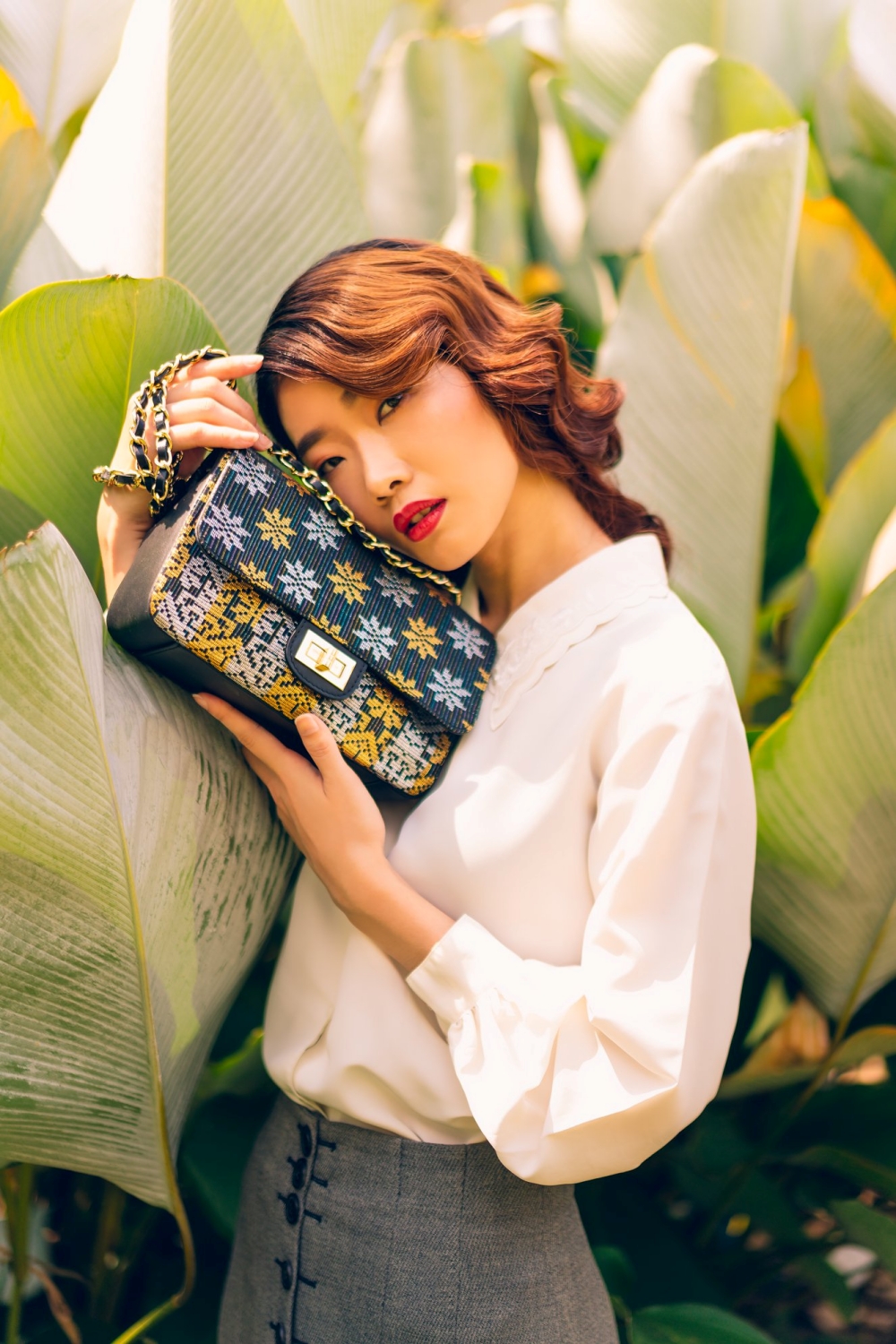
Songket Medley Campaign, 2018
What’s your favourite or least favourite part about being a fashion designer? Are there any similarities with practising architecture?
ZA
There are many similarities between being in fashion and in architecture, aside from the fact that Architects don’t sew! Haha!
The subject of focus when it comes to design practices/businesses remains to be the inhabitant/consumer and how we create value for them.
The most obvious difference would be the scale of projects. Apparel designs are of smaller scale compared to architecture but apparels can be produced in large quantities, and every collection requires a marketing campaign to follow suit’ unless the design house is focused on Couture projects, which are often small in number and exclusive.
The least favourite thing would be the amount of wastage either industry produces.For Tasbijoux and Barya, we have tried to reduce the amount of waste from the branding and packaging by informing and educating our customers, and allowing for some form of transparency and mutual understanding.
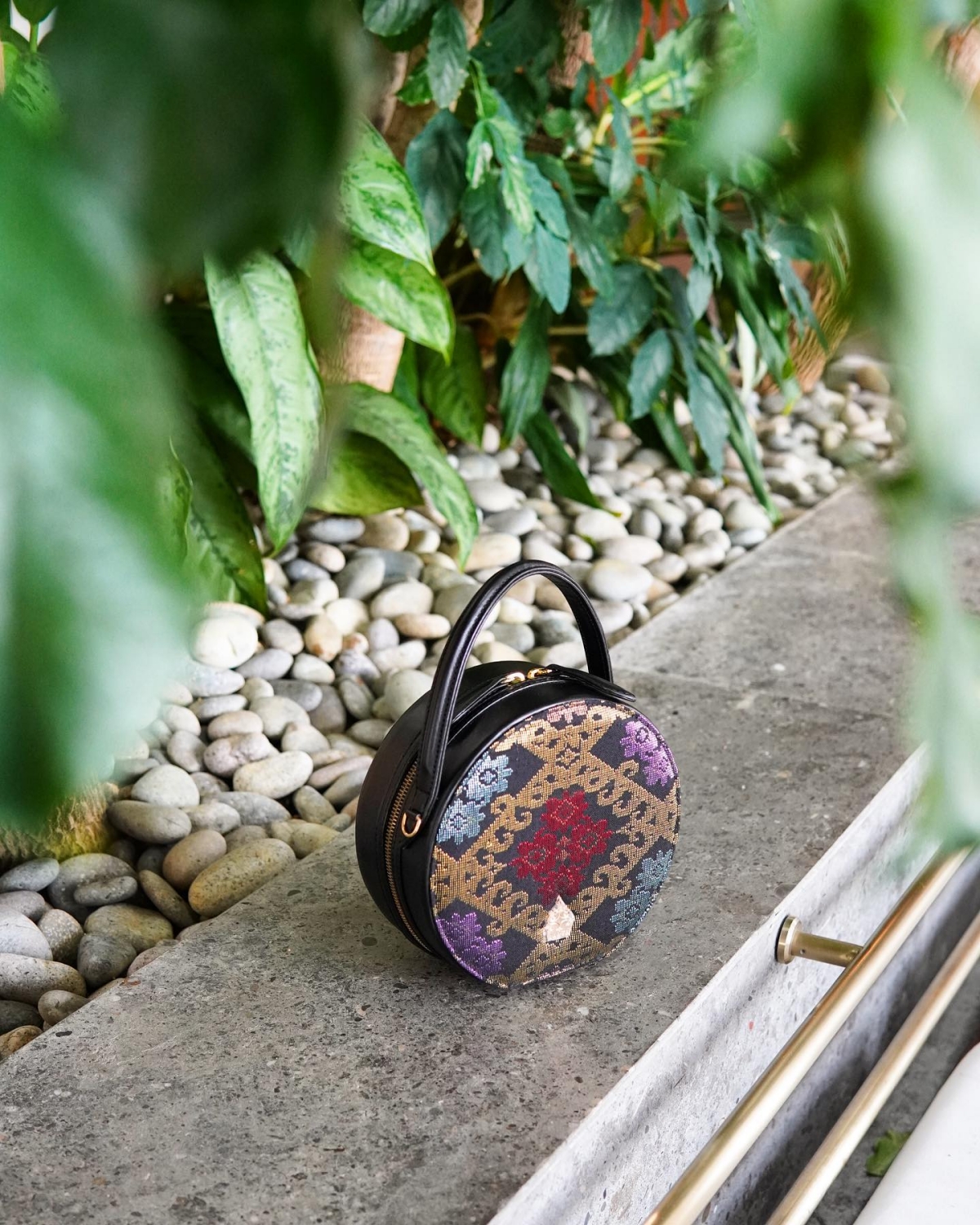
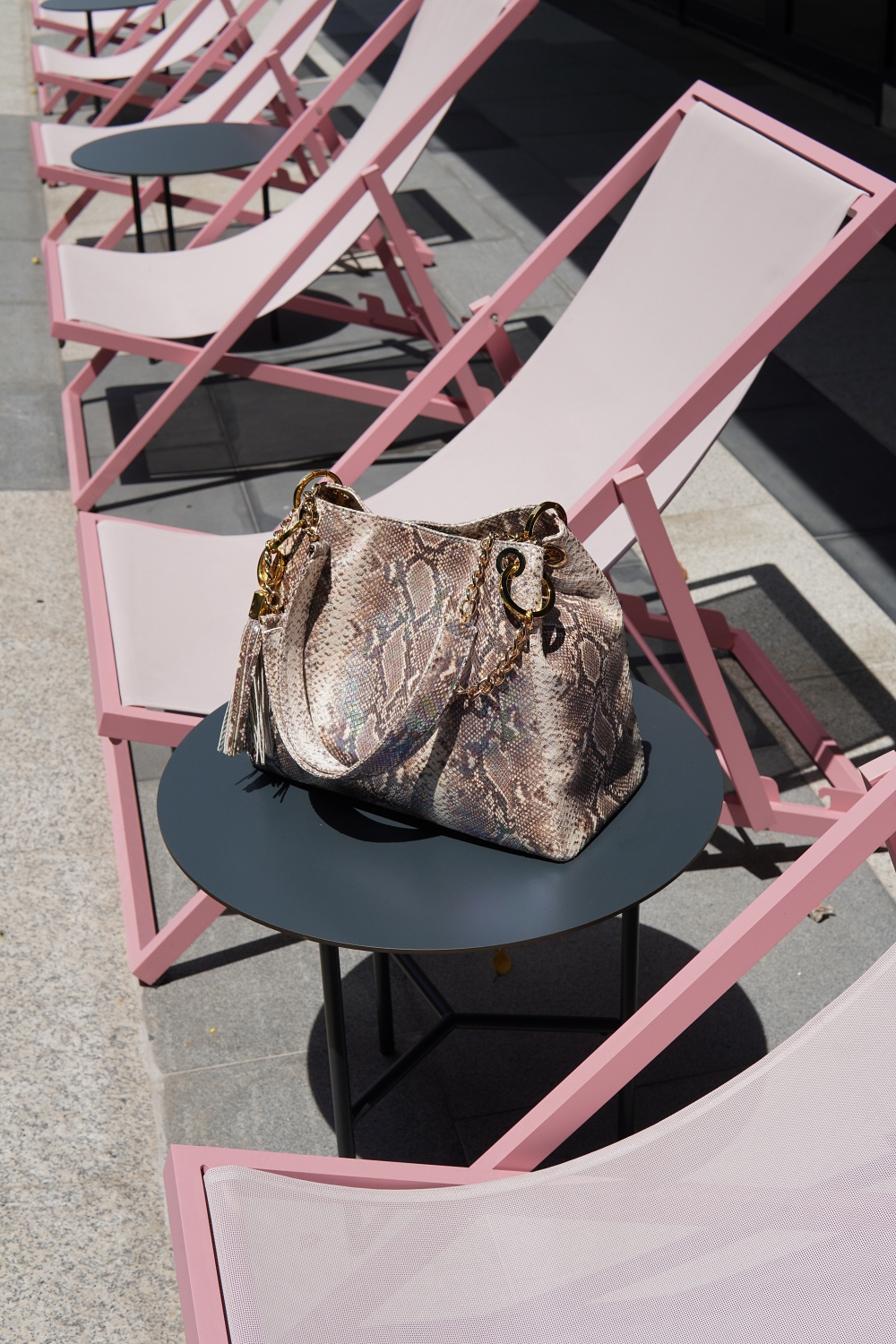
Bespoke Gitta in Python Printed Calf Leather. Leather and Hardware from Italy. Handmade in Budapest Designed by Zalikha
What do you think is lacking in the industry, be it architecture or fashion design that can
be improved?
ZA
Fashion and apparel business is not monotonous. We are able to collaborate more fluidly across the board with experts from other industries as there are no Bye-Law restrictions.Hence, there’s a wide set of expertise in the team.
For instance, at TasBijoux Sdn Bhd, the Managing Director is an Engineer with extensive corporate experience while the Lead Executives in the team are Business School graduates, some having worked in O&G’s and financial institutions.This diversity brings about a different set of thoughts and skill set to the company which contributes to shaping the corporate framework.
This is possibly the strength of practices/corporations other than architecture, which is more specialised and often skewed towards having the same professionals within one firm.Perhaps for larger architecture firms, they should consider investing on acquiring talents from other disciplines or industry to help improve their process, e.g. marketing should be delegated to a marketing graduate instead of an architecture graduate. Specialisation is important.
Lastly, what is your advice for students in architecture wanting to venture into thefashion industry in the future?
ZA
In any venture at all, you have to first ask yourself, how big is your appetite and hunger for success?You can define your own success, be it financial wealth or a balanced-lifestyle but you should never settle for mediocrity and don’t be reluctant to see things through.
Live up to the name of a professional graduate and extend your experiences in handling high-pressure situations into entrepreneurship, aspire to build enterprises that are not only profitable for you, but also benefits the well-being of your local community and followers.
Lastly, patience is a virtue. It will take a while before you even see the results of your business strategies.Have faith and keep improving yourself. Be comfortable consulting with experts in the field.It is best to adopt a continuous learning habit for personal and business growth.
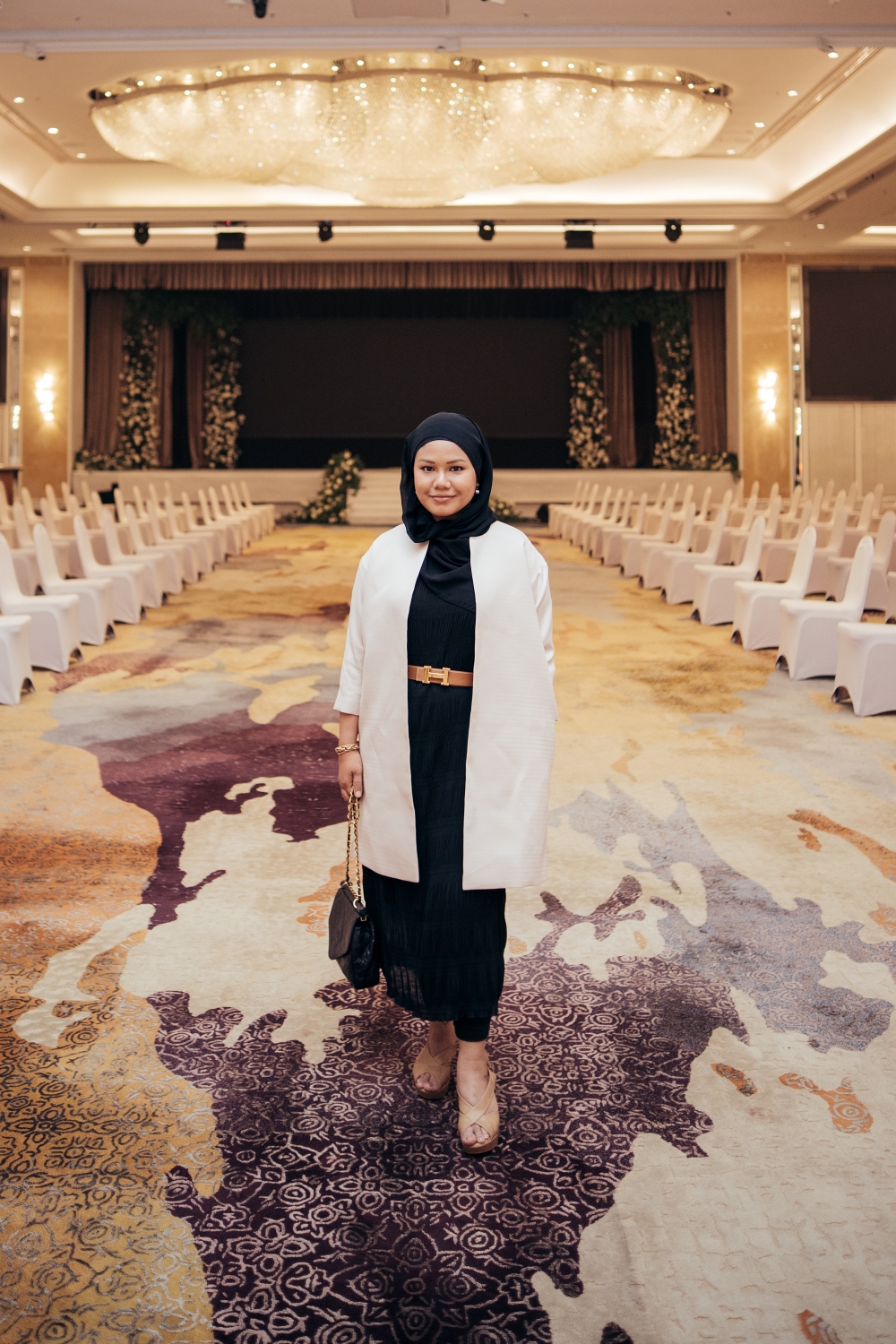
FuzanaMokhtaza donning a piece from her ready-to wear line, Fuzana M for the show.
Tell us briefly about yourself and your brand.
FM
I graduated with Part II in Architecture from the International Islamic University Malaysia.I began formal sewing classes when I was 15 years old and later on enrolled in the International Academy of Fashion & Design (IFTC) specialising in pattern making.I also attended a course in London Embroidery School specialising in Goldwork & Tambour.I have been based in Kuala Lumpur since 2012.
Customers of FuzanaMokhtaza are not only based in Malaysia, but it also holds a strong market presence in Brunei, Singapore and Indonesia.Our dresses have been featured in a lot of notable magazines and TV shows such as Say Yes to the Dress on the TLC Channel.We also collaborate with international partners such as The Runway, a luxury boutique in Brunei and Singapore.Recently, FuzanaMokhtaza debuted the 2022 Bridal Collection at The Wedding KL 2022 Fashion Show at Mandarin Oriental and it has been receiving compliments from the media as well.
From ornate detailing to strong silhouettes, FuzanaMokhtaza has a variety of styles and lengths to suit all.Photo: Lin Ho
What made you decide to make a career switch to fashion?
FM
From the moment I enrolled myself in architecture studies back then, I’ve always known that architecture, like any other form of art, shared the same reciprocal principles and is interchangeable, which could benefit one another.
I have never limited myself solely to architecture and I enjoyed exploring other fields while pursuing it.I started my business while I was studying for Part II out of passion and the idea of elevating the way women dressed every single day.
Eventually, I discovered how I could apply the knowledge and skills I learned through architecture and translate it into designing garments.I believe my knowledge, skills and competency in architecture helped define and shape the fashion designer I am now.
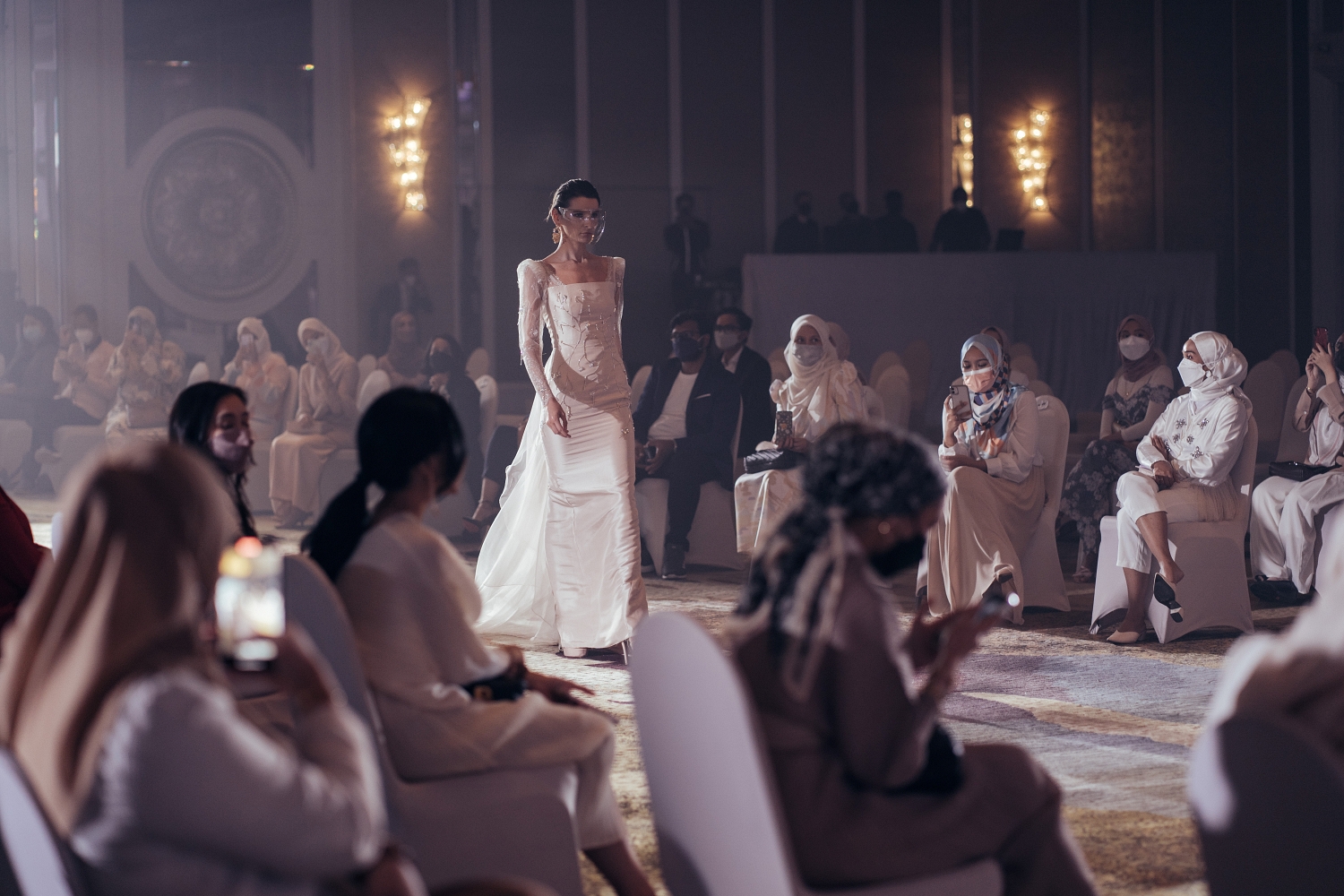
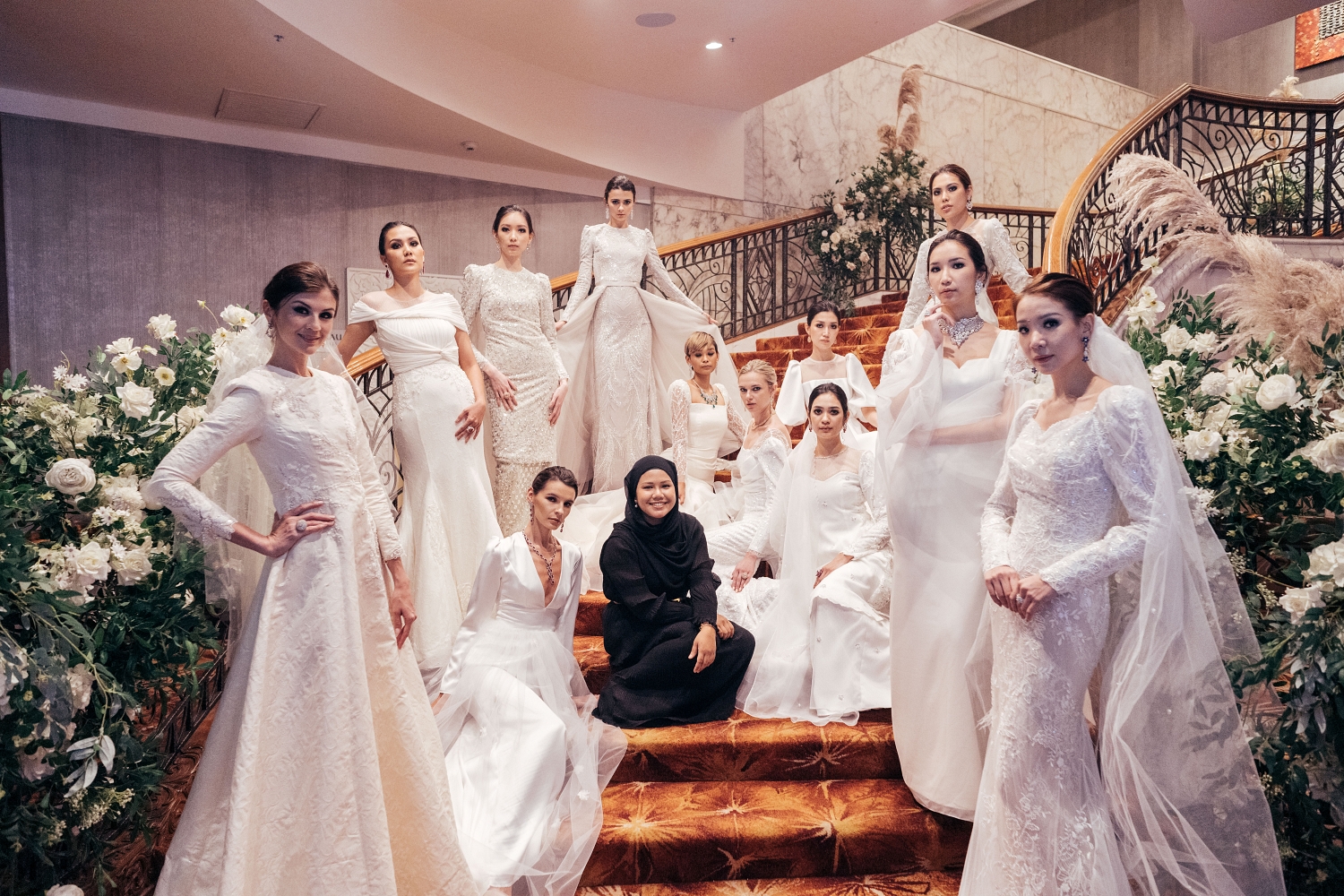
The romantic setting sets the mood for FuzanaMokhtaza Bridal Show 2022 at Shangri-La Hotel.
Did your architectural education help to prepare you for this role or did you start from
scratch after studying architecture?
FM
I wholeheartedly believe that any idea is only as good as its execution.5 years of studying architecture prepared me to realise that for you to translate an idea in your mind into an actual form of art requires creativity, determination, problem-solving skills, clear vision and a high level of workmanship.
The ability to bring an intangible idea to life and breathe soul into that creation is what sets one designer apart from another.Not a single day of my career have I regretted my decision of pursuing my studies in architecture as it has embedded those qualities in me.
Who are your design influences and how did they shape your design philosophy?
FM
I remembered when I was a girl, I’ve always wondered, why have I not seen a prominent women figure in the industry of architecture.Until I discovered the late Zaha Hadid, who in my opinion, is one of the best architects to ever exist.Zaha Hadid is not just a female figure in the industry, but also a radical deconstructivist award-winning architect who happened to be a woman.I am sure she was and still is an inspiration for many, myself included.
Her works show a profound balance that is difficult to attain, especially in projects which push the envelope.They are radical in form and movement but radiate fluidity and subtle femininity.It is not only technologically advanced but practical and sensible.She was a master of her craft.
Those qualities also apply to fashion.I strive to perfect the notion of creating harmony whilst pushing the boundaries.I try to introduce an unaccustomed way of creating fashion, whilst still being aesthetically pleasing to the eye.
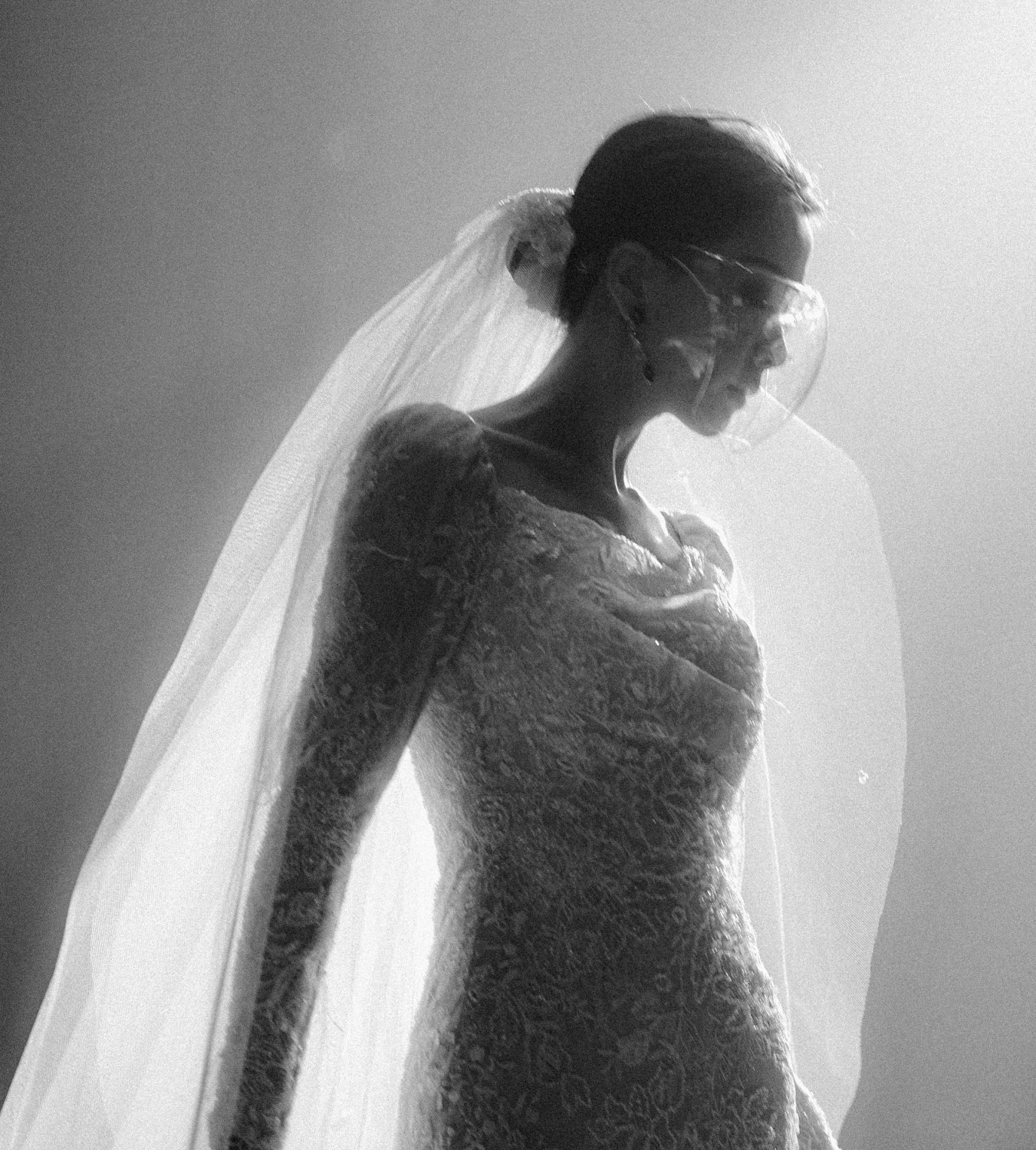
Exhibiting sensual details throughout the collection - slits in the soft chiffon skirt and lace inserts - FuzanaMokhtaza has offered a variety of styles. Using bateau, plunging necklines and embroidery, the dresses command attention as it accentuates a bride figure.
What is your favourite part and least favourite part about being a fashion designer?
FM
Nothing beats the feeling of seeing your customers getting giddy and feeling their best in one of your creations.After more than a decade in the business, small stuff like that is still very rewarding and a pat on the back after long hours of cutting, sewing and artisanal works that went into creating a garment.
In fashion, there’s a saying ‘you are only as good as your collection’.In fashion or any similar field, sometimes we are expected to perform and produce our best work under time-crunching and challenging circumstances.In addition to that, our work is very much under the scrutiny and judgement of others which made it taxing to some.
When you can handle this situation, that is usually what sets one apart from others.Proper time management, exemplary planning and a good team behind the brand are very much needed.And thank God, I have them.
What do you think is lacking in the industry, be it architecture or fashion design that you think could be improved?
FM
Fashion is the second most polluting industry on the planet.The growth of fast fashion, the contaminating approach of manufacturing and the consumption of textiles are among the main causes of the problem.
As a designer myself, it is my responsibility to be mindful and conscious of the approach I am taking in my business.In a world where more is better, I still believe good craftsmanship and classic well-made pieces will survive the test of time and stay in everyone’s wardrobe.And that is the direction I’m taking in my business.
Lastly, what is your advice for students in architecture wanting to venture into the fashion industry in the future?
FM
This might be shocking to some, but one misconception about being in the fashion industry is it will all be glitz and glamour.In reality, it’s 70% hard work, and merely 30% fun.
As someone who has already ventured a decade in the industry, I welcome anyone who wants to dive into the fashion industry and I believe, there will always be a place for everyone.
Nonetheless, you need to keep in mind that it will not always be sunshine and rainbows.You should never stop dreaming and working on your dream.Be resilient, decisive and innovative in whatever you are doing, while keeping your originality and identity.
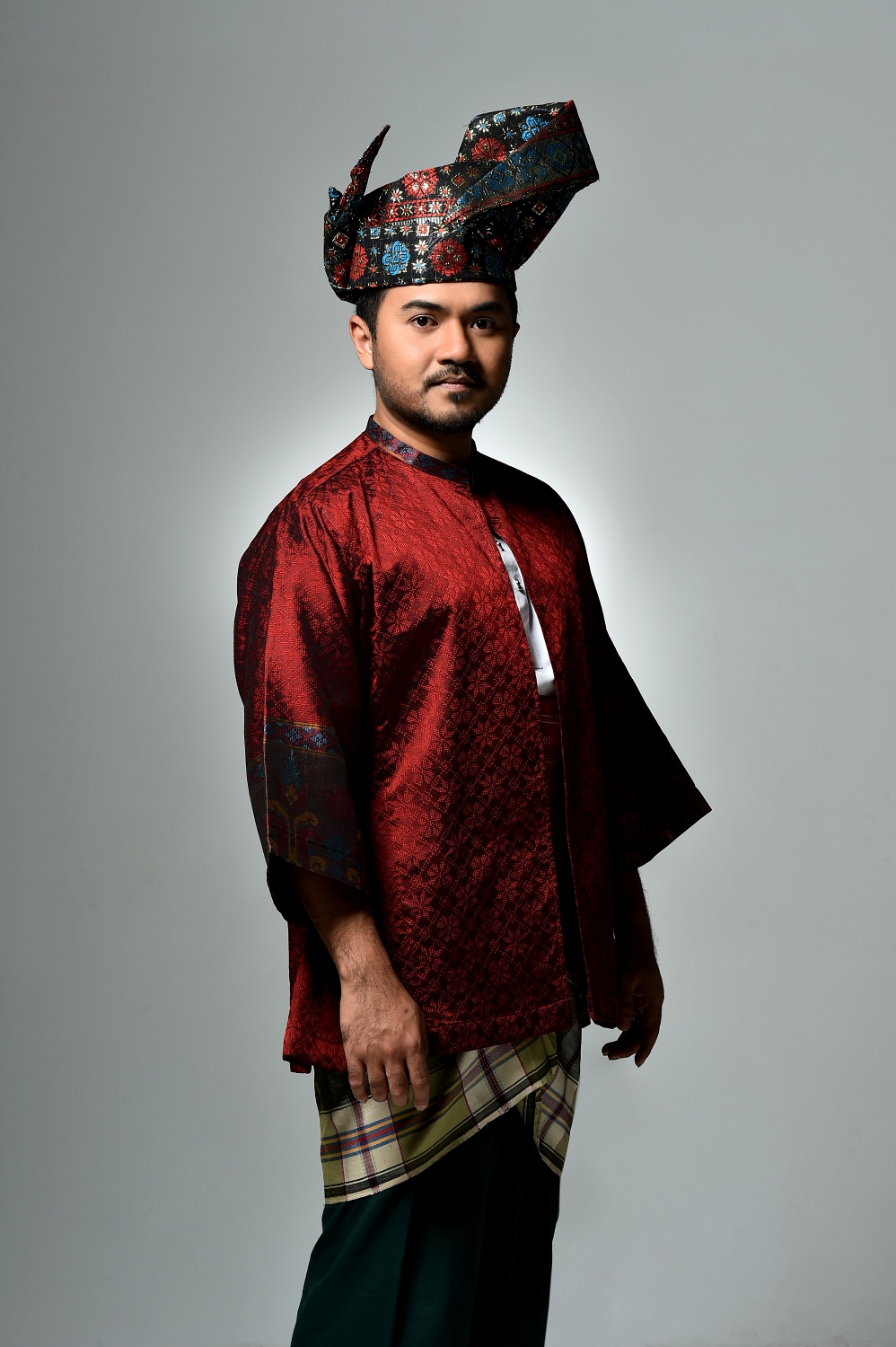
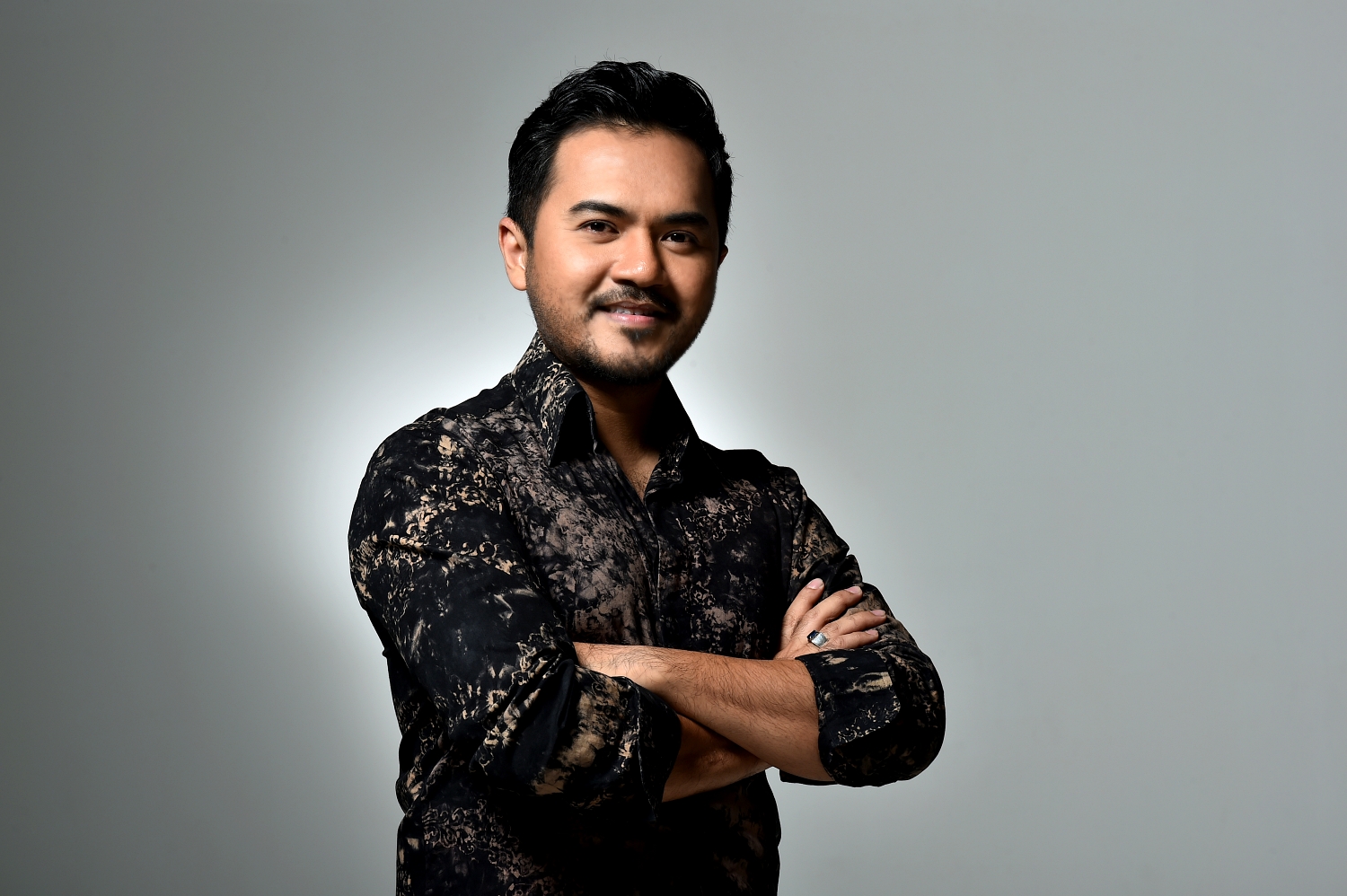
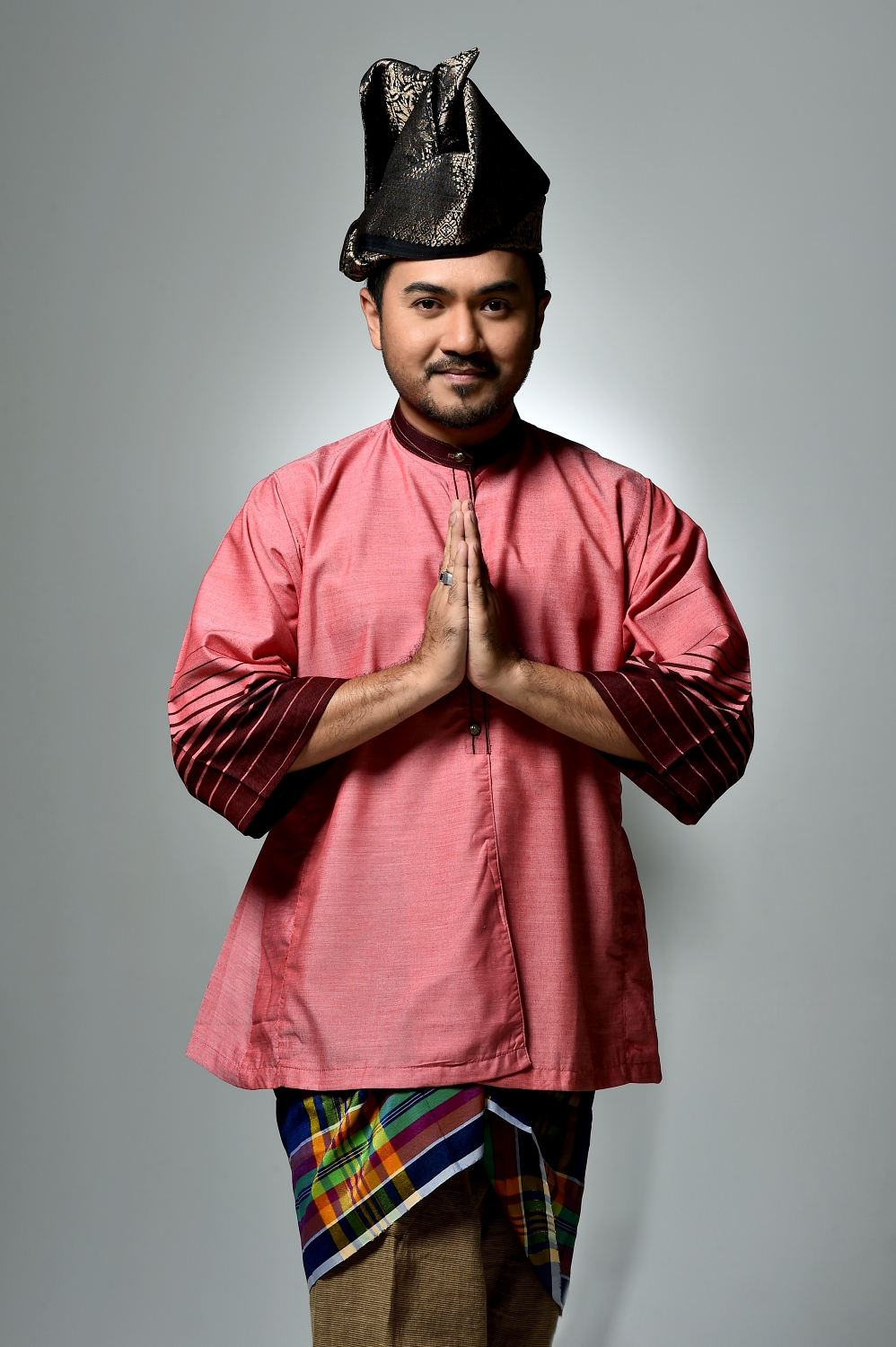
Nik Faiz Nik Amin of Ruzzgahara
Insert caption here
Tell us briefly about yourself and your brand.
NF
I am the third generation of a family of batik artisans and makers based in Penambang, Kelantan.I have staked my claim in the industry by starting Ruzzgahara, an exclusive batik brand with distinctive, traditionally inspired Malay motifs.I am currently the president of the Malaysian Craft Council (MCC), and the founder as well as Creative Director for Gahara Galore Sdn Bhd.
Ruzzgahara is a brand that incorporates rare artisanal batik-making skills in its collections.All designs are birthed from their very own production house called The Rumah Gahara.Reviving ancient batik techniques and showcasing the raw talent of the next generation of future artisans; Ruzzgahara aims to promote ethical, sustainable, and eco-friendly production approaches.
Since its first presentation to the international audience at Who’s Next Paris in 2013, Ruzzgahara has grown to earn its place within appointed retail partners globally.The brand was featured in international publications including BRITISH VOGUE and TATLER UK MAGAZINE and was especially highlighted in the documentary Passage to Malaysia by Travel & Living Channel (TLC).
Insert caption
What made you decide to make a career switch to fashion?
NF
First of all, I do not consider myself to be in the fashion world but more in our heritage arts and crafts industry.I see myself as a textile designer specialising in contemporising Malaysian Batik.
I saw my grandfather’s and my uncles’ batik versions.From years of observing them, I felt a great need to close the gap, especially in the design elements if we want to make Batik timeless and appealing to the current generation.The principles that I gained from my architecture degree have enabled me to approach Batik from a fresh and unique perspective.It wasn’t a decision I needed to make, but rather a knowingness and a calling.It’s my destiny.
Insert caption
Did your architectural education help to prepare you for this role or did you start from scratch after studying architecture?
NF
There are elements and techniques used in Ruzzgahara batik taken from my childhood experience of helping, as well as observing my grandfather or uncles at work.Of course, studying architecture has helped me refine the whole process, and be more structured and methodical while not killing creativity.If you were to look closely at Ruzzgahara’s batik, there is a signature design element heavily influenced by my architectural background, very much backed by research while still preserving our heritage.
Who are your design influences and how did they shape your design philosophy?
NF
In architecture, Zaha Hadid taught me a lot about design fluidity and this influenced my exploration ability, helping me reach a new height of dimension.While Frank L. Wright brought me back to the ground with strong design principles, especially in the aspect of basic elements and design foundation.Another strong personality who inspires me in the scope of industrial design is Steve Jobs. He has brought a new dimension of technology beyond numerical perspective and made it sensational.
Insert caption
What’s your favourite or least favourite part about being a fashion designer? Are there any similarities with practising architecture?
NF
In fashion, there is no limitation, and the field of exploration is far greater than architecture which is compounded by structural disciplines and space limitations.However, both possess a similar orientation approach, which is to create a functional design.Being in this industry, I’m often looked down upon and many felt I have gone down to the level of non-professional.But since this is my passion, it’s my responsibility to manage others’ perspectives and expectations as well as educate them on my very own definition of what I do.
Insert caption
What do you think is lacking in the industry, be it architecture or fashion design that you think could be improved?
NF
I feel that regardless of industry, especially in the creative space – we still lack awareness and integrity on intellectual property rights, design ethics and exploration of skills or knowledge.
Lastly, what is your advice for students in architecture wanting to venture into the fashion industry in the future?
NF
Again, no matter which industry you choose to pursue and not just limited to fashion, please identify and understand your passion, follow your calling, and always have persistence and resilience.
Ar. Yez Yusof & Azrina Lassa of batikTEKTURA
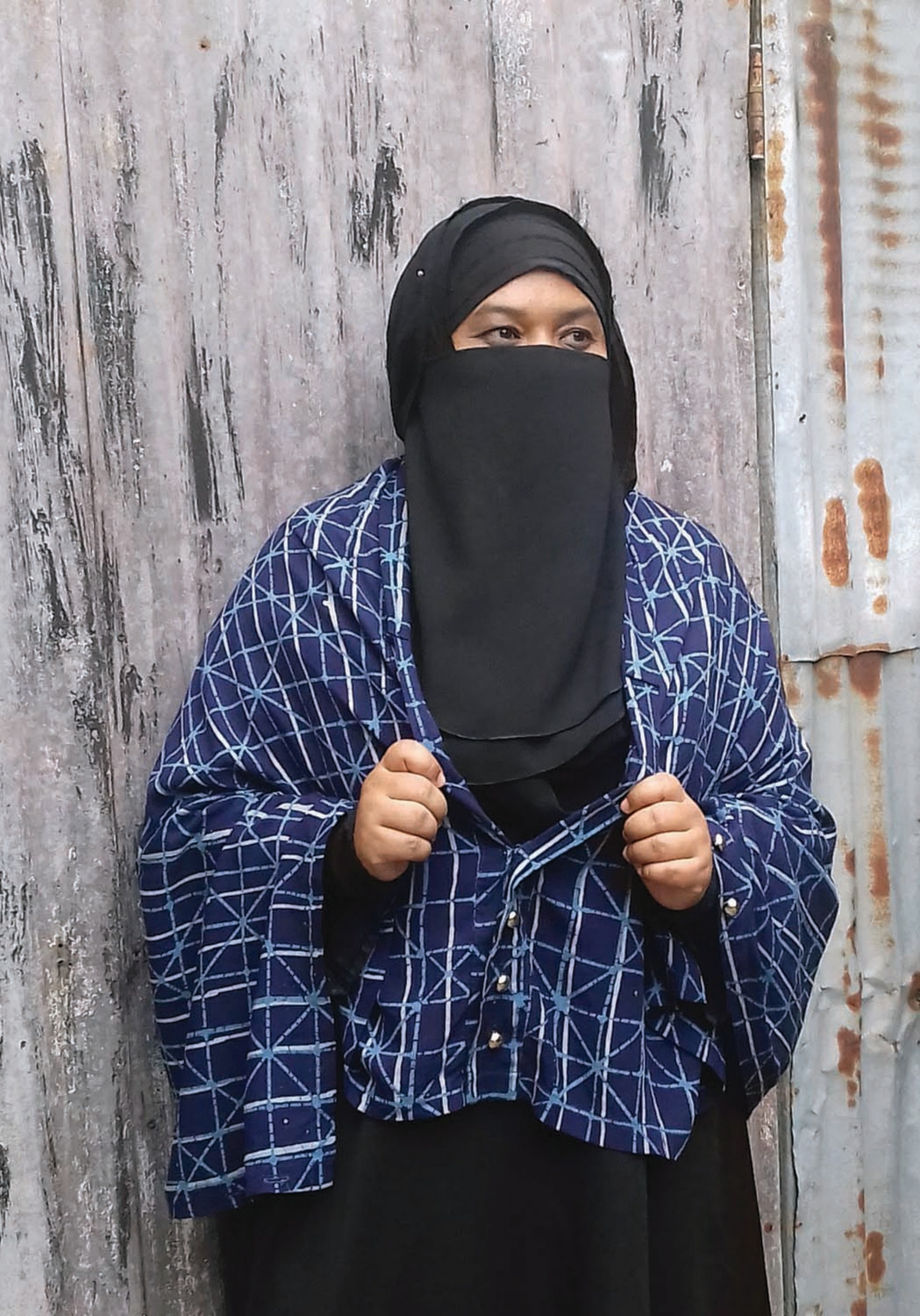
Ar.Yez Yusof – Co founder Batiktektura in Silang Shawl
Tell us briefly about yourself and your brand.
BT
AR. YEZ YUSOF runs a Small-Office-Home-Office based in Kuala Terengganu, after 14 years of working in both private and government sectors.She tutors part-time and gives talks at local and international architectural schools.Recently, she has been appointed as one of the curriculum advisory panels for an architectural school in Malaysia.Besides architecture, she finds time to indulge in other creative fields –photography, children’s book/content illustrations, creative camps and batik design and making.
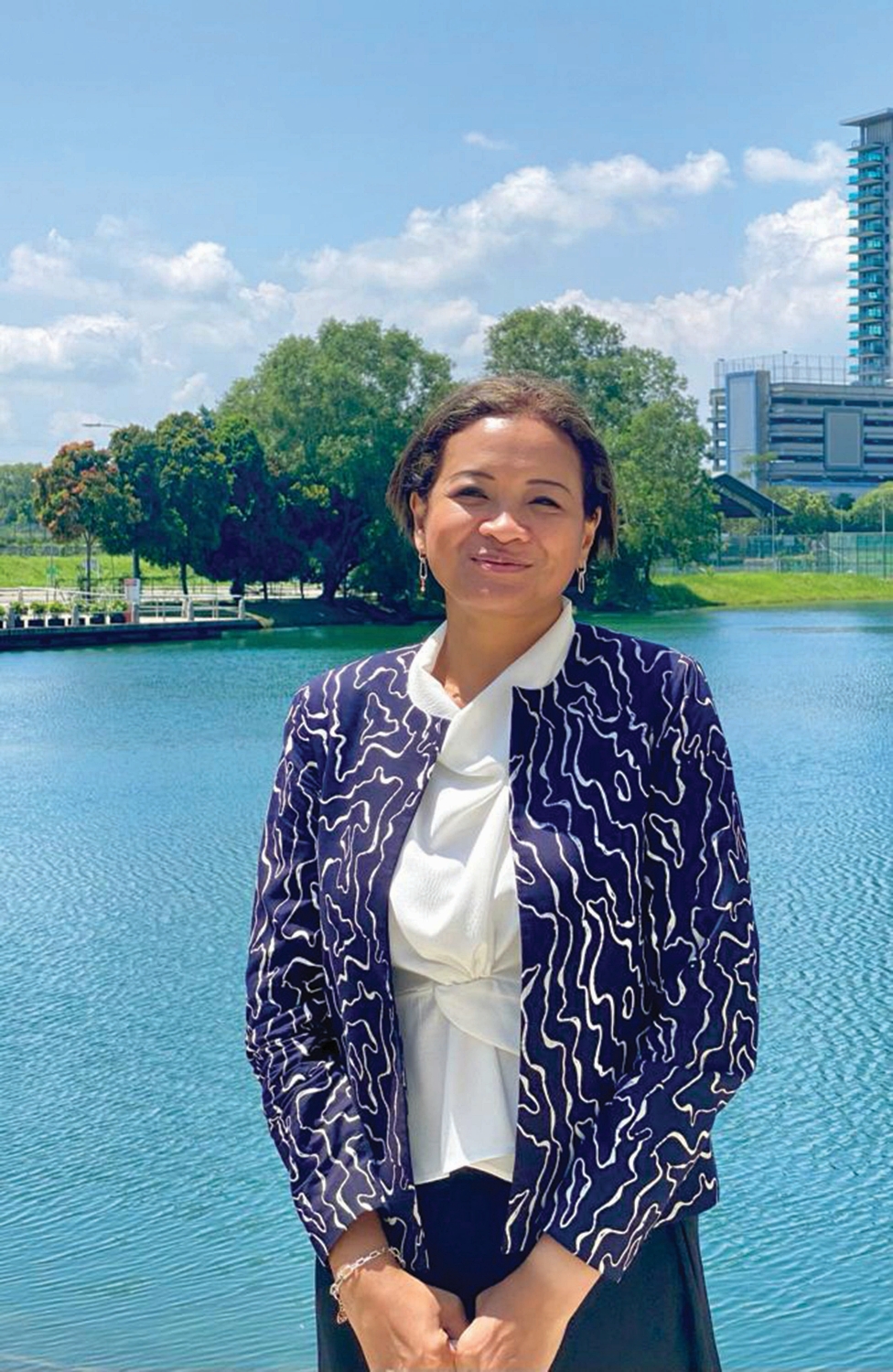
AZRINA LASA is a seasoned former banker with extensive experience in public policy and communication. After over 20 years in the financial industry, she decided to explore fashion and textiles, an area she has had an affinity with since childhood. Azrina also holds a Master’s degree in Business Administration from Taylor’s University (2021) and a Bachelor (Hons) in Accounting and Finance from De Montfort University, UK.
BATIKTEKTURA is a design house which infuses architectural elements and concepts into its batik designs.The company is helmed by female duo Ar. Yez Yusof and Azrina Lasa, who have been friends since their high school years.
In 2017, Yez and Azrina began experimenting to produce batik that was different from what was already on the market.A vision was formed to create batik with non-conventional patterns that are not too heavy and appeal to the taste and lifestyle of modern consumers.They also envisioned batik that is suitable for everyday wear, and not just for weddings, festive or formal occasions.Together, the duo combined their skills and experiences to crystallise their batik visions into a formal establishment in 2018.Leveraging on her background as an architect, Yez became the creative brain behind batikTEKTURA’s fabric designs.Azrina applies her background and experience in finance and communication to manage the company’s finances, sales and marketing, and e-commerce sites and conducts product development for turning their batik into fashion wear and accessories.To this day, batikTEKTURA continues to make designs that enable individuality, and inspire confidence, all while staying rooted in the Malaysian cultural heritage.batikTEKTURA’s fabrics are all hand-blocked by veteran artisans in Terengganu.However, the number of skilled artisans in hand-blocked batik has severely dwindled, resulting in the craft being under the threat of extinction.To some extent, batikTEKTURA’s interest in hand-blocked batik and in modernising the designs has helped to keep the demands for the craft alive and support the livelihood of a small group of hand-blocked artisans.Nevertheless, their efforts alone are not enough and more concerted efforts between the government, relevant agencies and traders are needed to promote the appreciation and interest in the hand-blocked batik.
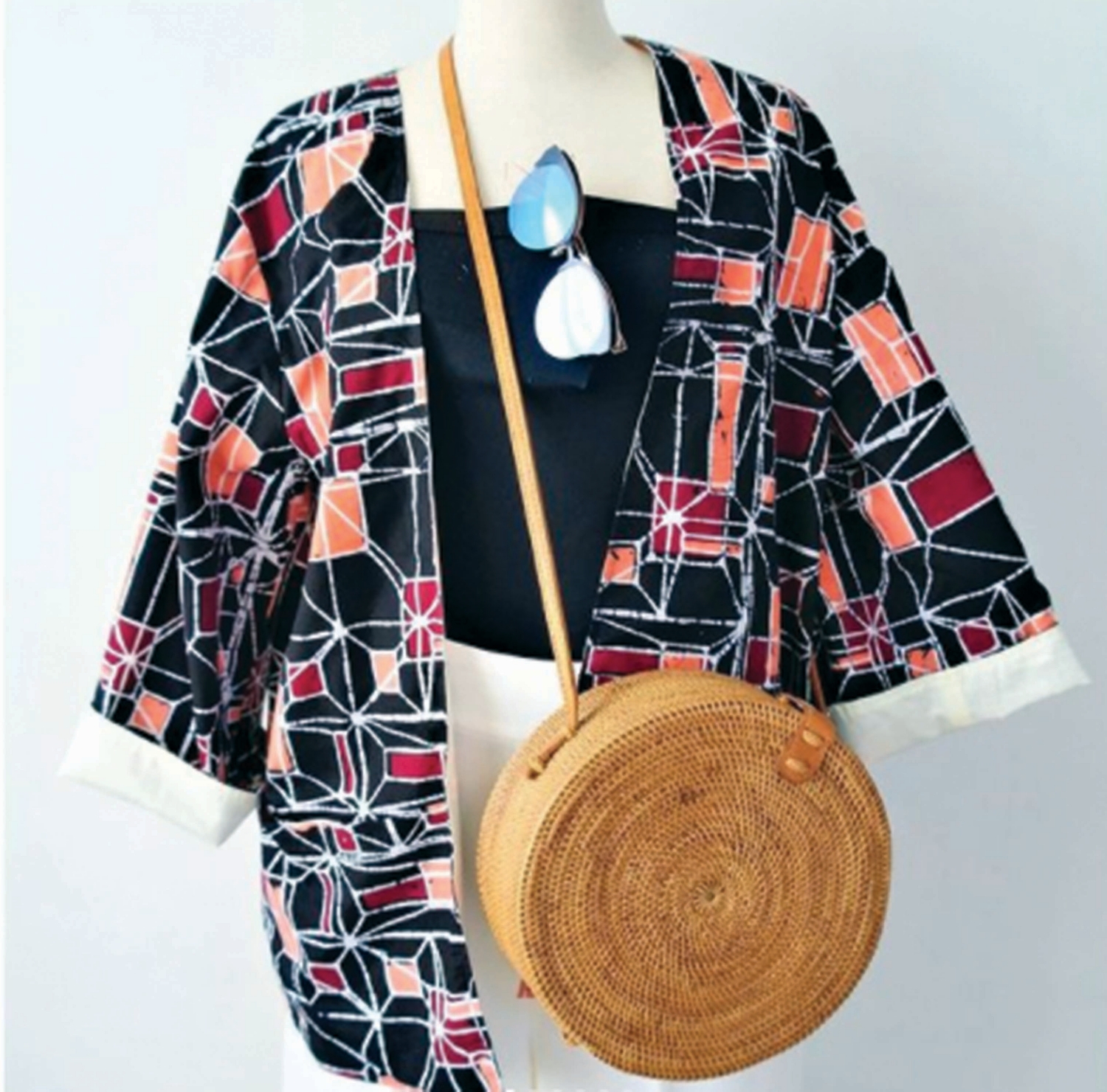
The Azrina Lasa – Co founder Batiktektura in Like Jacket
What made you decide to make a career switch to fashion?
YY
At the moment I am still balancing architecture and batik as my design inspirations for batik are strongly anchored to my day-to-day architectural practice.Instead of leaving one for the other, it is better to marry the two.I am hoping that one day I will have the opportunity to incorporate my Batik design into an architectural project.
AL
Switching career is part of my soul-searching journey at this stage of life.Instead of being trapped in the rat race, I wanted the freedom to indulge in my passion and enjoy life by doing something meaningful in the things I love.
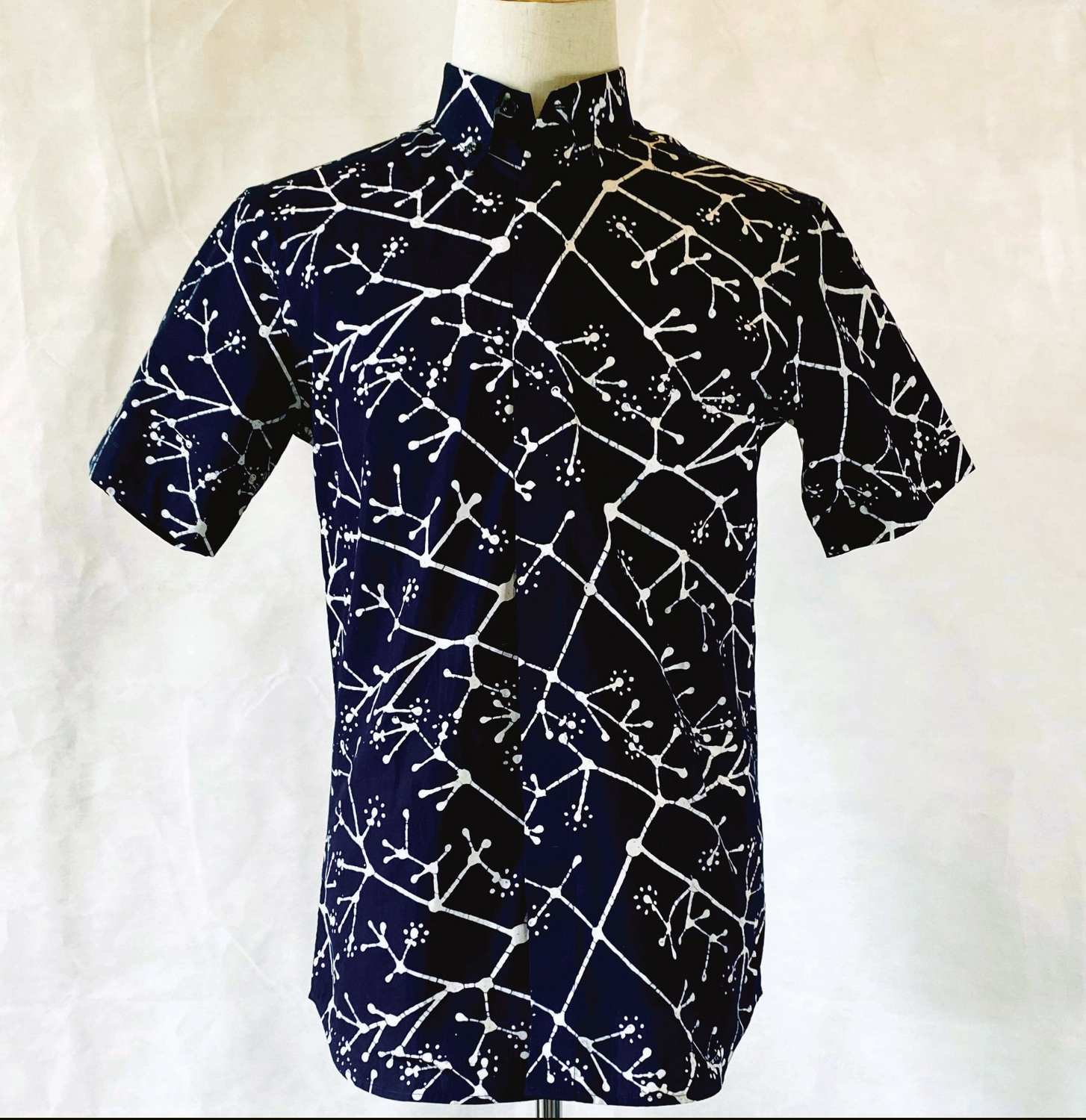
Fraktal – fractal concept in nature and geometry
Did your architectural education help to prepare you for this role or did you start from scratch after studying architecture?
YY
Most definitely especially in the design process.
Who are your design influences and how did they shape your design philosophy?
YY
I love Minimalism. The simplicity and sincerity. What you see and feel is what it is. No fancy “cover-ups”. My influences are John Pawson and Claudio Silvestrin.
AL
When it comes to fashion influences, many of the product designs reflect my stages in life.While in my previous life as a banker I wore sharp suits and blouses, I now prefer loose dresses, cardigans and baggy pants, reflecting my more laidback style as a full-time entrepreneur.
Bayang – inspired by Le Corbusier’s architecture
What’s your favourite or least favourite part about being a fashion designer, are there any similarities with practising architecture?
YY
Fashion and architecture are almost similar, in the sense that it takes quite a huge amount of time on the drawing board, redoing, rejections and errors in production before you can yield the final product.However, in fashion i.e. designing & making batik, there is more room for expressing and experimenting with creativity and unprecedented ideas.At the end of it, we get to wear our design. That’s the best part.
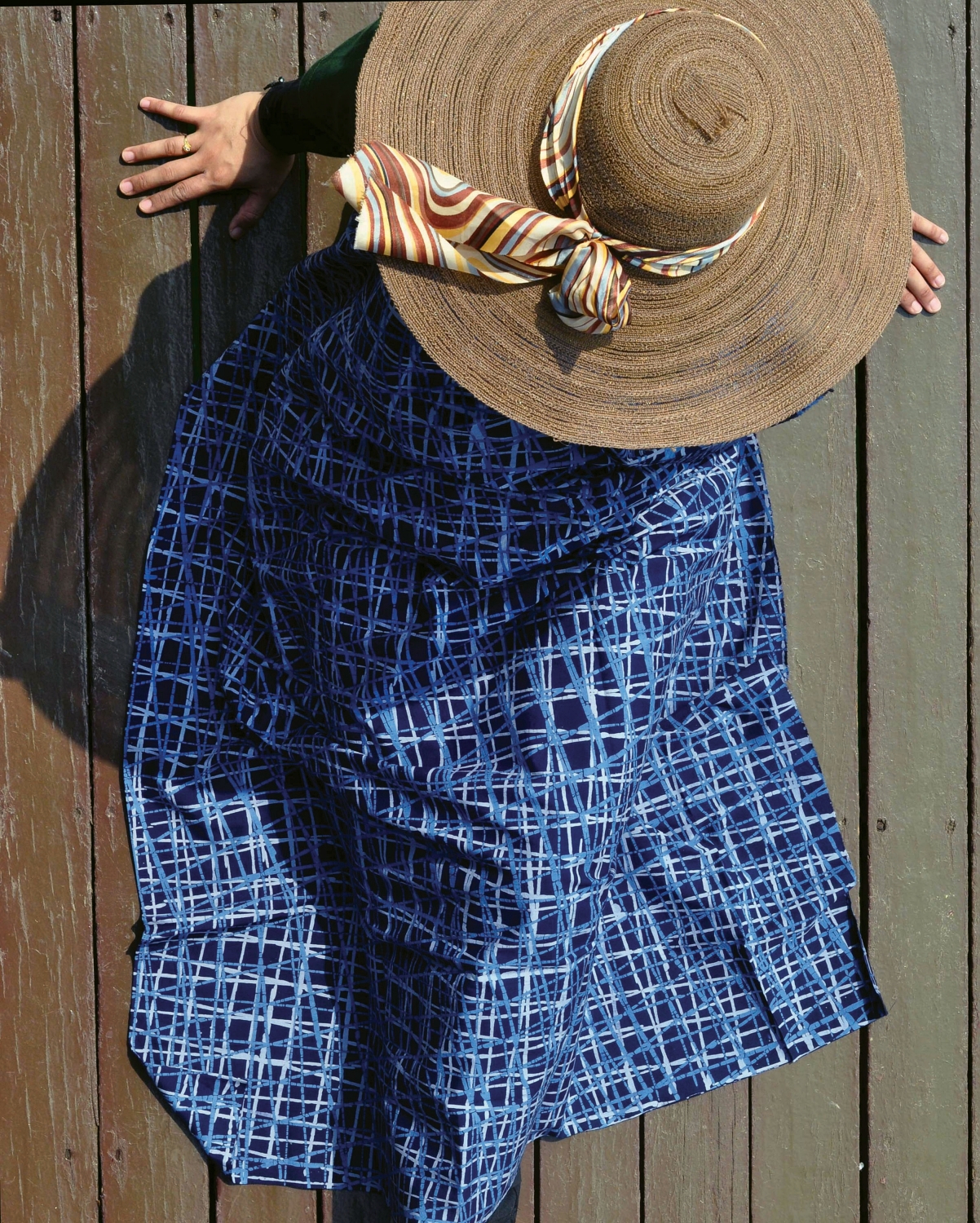
Silang – juxtaposition of lines
What do you think is lacking in the industry, be it architecture or fashion design that you think could be improved?
YY
Clients need to trust the designer. This is an issue as some clients tend to over-dictate and limit the designer’s freedom and potential in design.
AL
Architects can be overly technical in explaining things to a business client who is not an architect or designer (haha!).Hence, architecture and fashion designers should also be proficient in business communication, especially in simplifying and communicating complex ideas.
Lastly, what is your advice for students in architecture wanting to venture into the fashion industry in the future?
YY
Finish your architectural study. It is a unique body of knowledge and not everyone has the privilege of gaining such knowledge.Your architectural training will be an advantage for you.If you ever decide to pursue your passion (which is not working in an architectural firm) after graduating, plan things out thoughtfully and have a clear vision of it.Find yourself a good mentor from the fashion industry as you need to learn the tricks of the trade.Most important of all, get the blessings from your parents first.
AL
Design students must be proficient not only in designing but also in marketing and branding.To be able to distinguish yourself from all the other competitors in the market, you must be able to tell a compelling story, visually, verbally and in written form.You must develop an intriguing story for your brand that will allow your target audiences to be attracted to you, relate to you and rally for you.
You should also try to find a niche area within the fashion industry where you will want to develop your core skills and knowledge, rather than explore the entire spectrum of fashion.