

Oftentimes in this age where six of the world’s richest people hail from the tech industry, it is hard not to think of adopting technology i.e. computing-related advancement as something inherently superior.Architecturally, we almost mindlessly accept smart cities, building information modelling, green buildings, etc., as the ultimate way forward.However, it is also important to remember that for us as a society as a whole to acquiesce to technological progress was also not fortuitous.As early as the 19th century, the Luddites in England fought against the advent of textile machines which caused massive unemployment and outrage.The protest was later suppressed by aggressive legal and military force to ensure that the rebellion never recovers momentum.
For this issue, we have Sonia, who contemplated the speed and even the way we are progressing; Kylie attempted the notion of progress philosophically; lastly, Kok Liang and Min Zhao considered progress from a collective point of view with empathy.
Sonia Mancxia ruminates that we don’t need more. On the contrary, we need to slow down; we need less. Progress is humanising spaces and reimagining the urban context for the people… While one would criticise that physical experiences are subjective, it is indeed true that there is no one-size-fits-all solution. However, the multitude of experiences is what enriches the social inclusion in the cities to become more humane, domestic and diverse.George Simmel’s 1905 publication of “The Metropolis and Mental Life” highlights how the behavioural patterns, values and relationships between people are very much dependent on their environment; a symbiotic notion that urban spaces make us human and we who inhabit them humanise these spaces.It is time to instigate an argument for planning urban spaces around the issue they affect the most: people.It is us who decide who our cities are for.
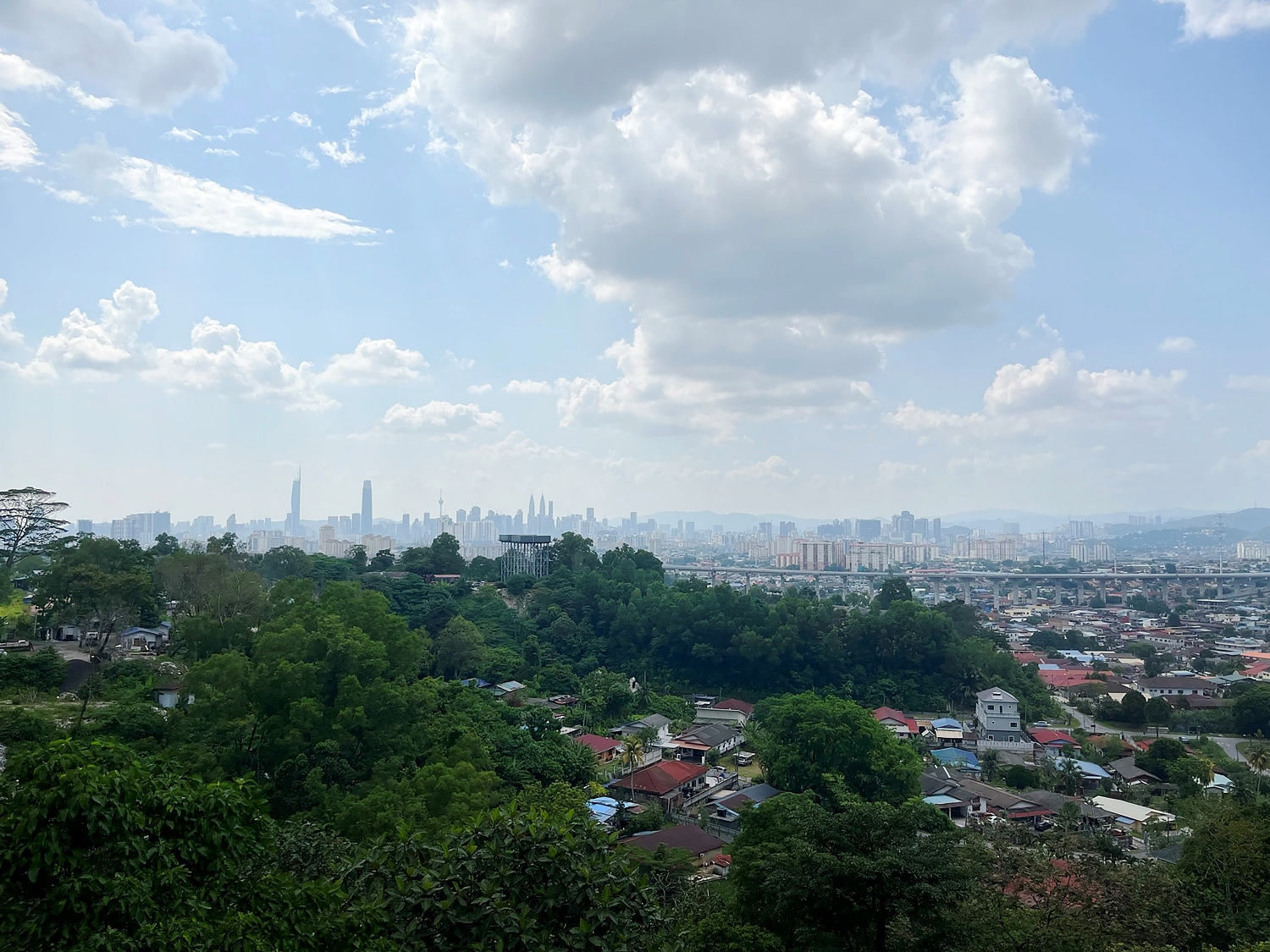
From Kylie Shiak’s point of view, being in a constant state of ‘awareness’ of one’s environment will allow one to progress without fail.It is because taking either a leap forward, remaining stagnant or even leaping backwards are all forms of actions taken by being aware, regardless of it being conspicuous or inconspicuous.
In short, to be aware is progress.
In Lam Kok Liang’s opinion, to many architects, building an iconic, magazine-worthy, Instagrammable, high-spec, graceful tall building would be a mark of progress.To the average Malaysian (with a median household income RM7,901), moving into a house enough for a family of four at an affordable price (after car loan, children’s nursery, milk and pampers, parents’ upkeep, credit cards, etc.), and within a reasonable commute to work and schools, is progress enough.
So, what’s this ineffable thing we call progress?While we may not all agree on a single, definitive measure, we can certainly feel its throbbing pulse when it’s there.Growing population, rising demands and expectations; the world seems to turn a little faster.It feels like a rising tide that inexorably lifts all boats.
So, how do we better appreciate the “progress” around us?Perhaps we could widen our worldview a little.Perhaps, a touch more empathy towards other stakeholders in our cities and built environment, from street vendors to the Datuk Bandar.Perhaps, a pinch of curiosity about who we all are and how we got here.Perhaps, daydream a little about what our cities and society could be?
Then go forth and do what we do best. Putting it succinctly, Lee Min Zhao added that all of us have to be critical and sensible, for we are in the driving seat of such progress – a progress that calls upon crossing disciplines and collective effort from everyone to make the world a better place.
We currently live in a world governed by capitalism where globalisation is inevitable. The rationalisation and efficiency that capitalism demands would eventually lead to resource centralisation and also further specialisation of jobs geographically as more and more multinational companies would merge into bigger conglomerates and offshore their services to other developing countries to take advantage of lower costs.
The SIJORI Growth Triangle comprising Indonesia, Malaysia and Singapore was established in 1989.In this partnership arrangement, Indonesia would provide natural resources, undeveloped land and unskilled labour, Malaysia would then deliver natural resources, basic infrastructure, land and semi-skilled labour, while Singapore would contribute advanced technology, access to world markets, advanced physical and commercial infrastructures.
Thirty-three years have passed. Does this arrangement still hold true for Malaysia?If not, where and how do we position ourselves on the global arena?What is progress for us?It is a question we need to truly dig deep and critically within ourselves, not only considering the economic competition we face from our neighbours but also extreme climate challenges we are facing now for posterity.