Celebrating the local culture of Sabah while creating experiences and opportunities
where travel meets social
Text by the designer
Details - natural log with mild steel support
Toojou is a brand new, bold and contemporary boutique hostel located in Kota Kinabalu, Sabah, Malaysia, that is designed for young travellers and locals alike.This modern hostel covers 25,286 sqft and has the capacity to accommodate up to 200 guests.Taking into consideration our client’s limited budget, the use of recycled materials was incorporated into the overall design.Toojou also acts as a great example of adaptive reuse, as the old, weathered building that once housed Toojou was a budget hotel called Century Hotel.It has since undergone its transformation by keeping the shell of the building, adding a new roof, and a complete interior overhaul, to become Sabah’s next retrofit hotspot.
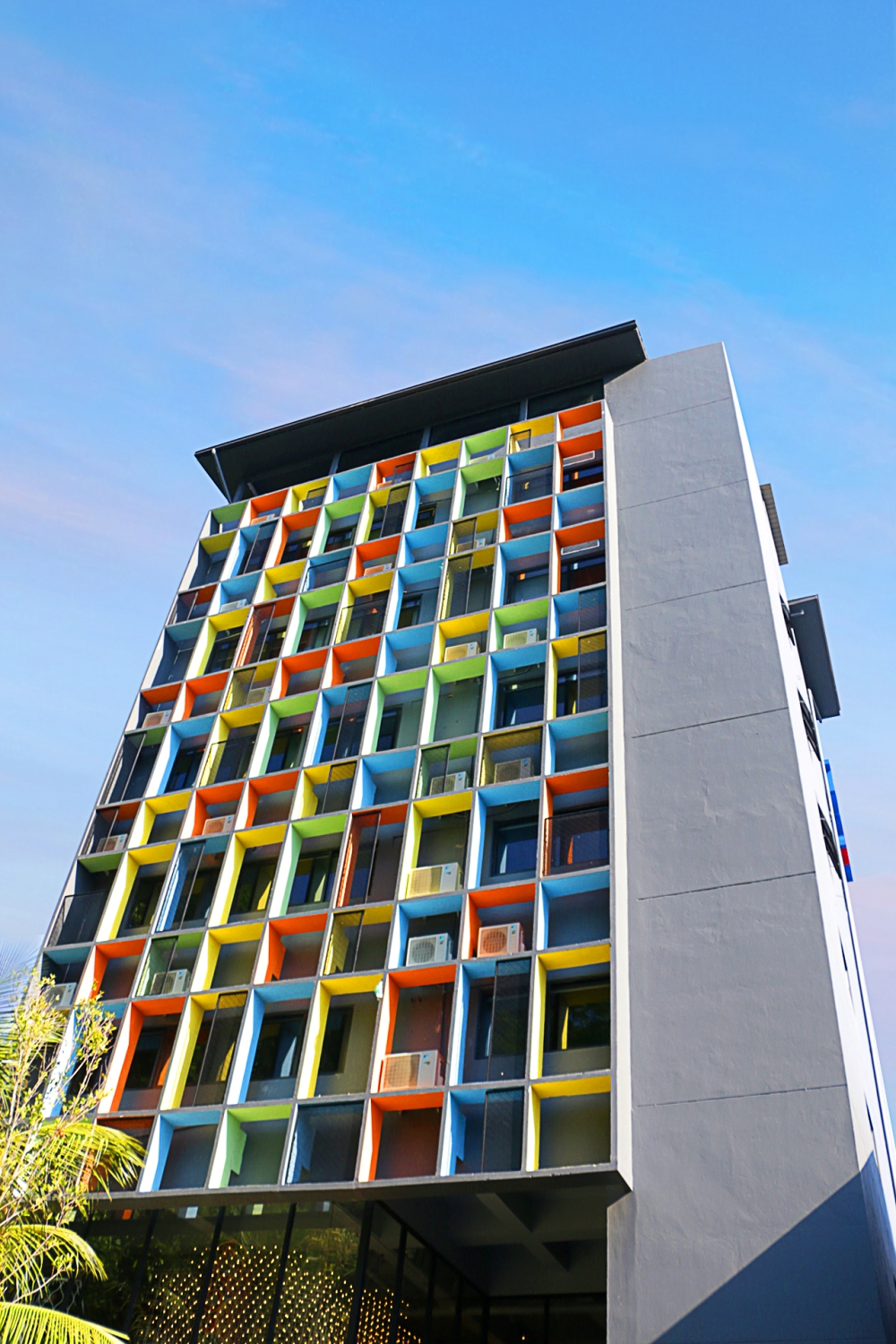
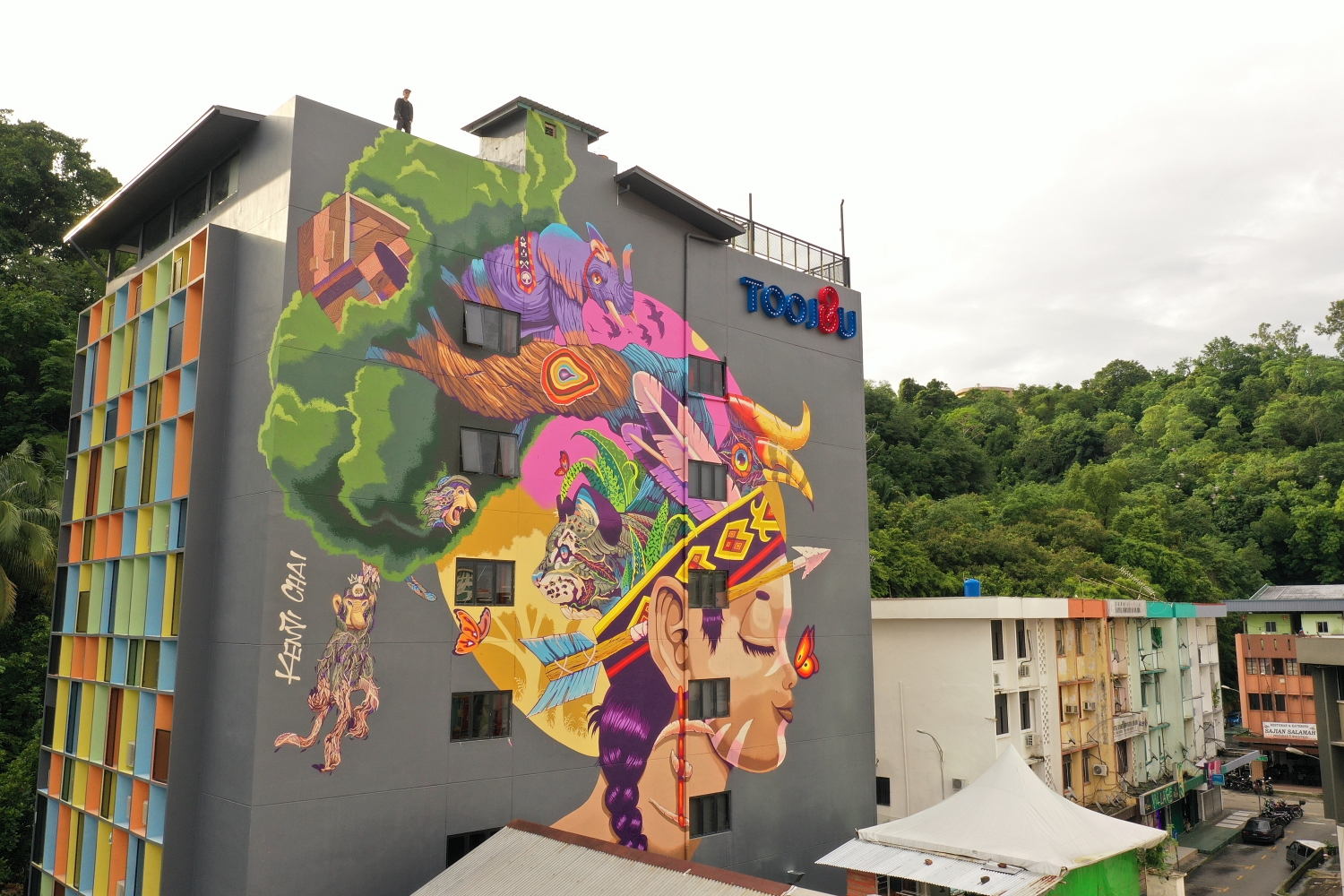
Brightly painted grids and perforated metal screens were strategically placed to camouflage some of the air conditioning units, creating a colourful multi-layered egg crate façade design.
The big idea when it came to designing Toojou was to celebrate the local culture of Sabah while creating experiences and opportunities where travel meets social.We want to celebrate all things Sabah, incorporate it into the design concept and even services.Toojou celebrates localisation by creating opportunities for localised service employing locals and tour guides; incorporating the rich nature escapades, local arts and crafts, colours, materials and textures into the interior design.The final concept heavily revolved around adventure and Sabahan cultural references.
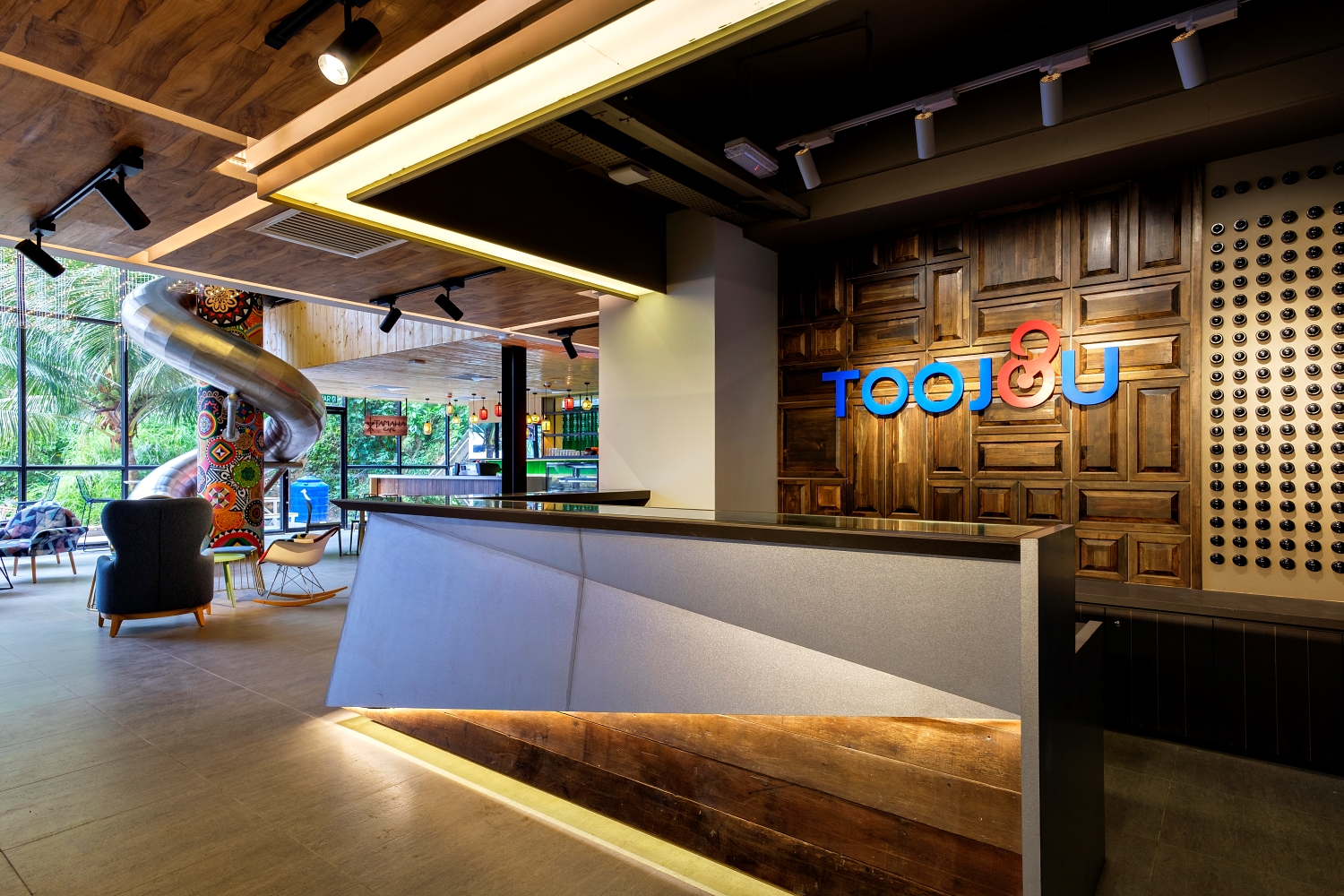
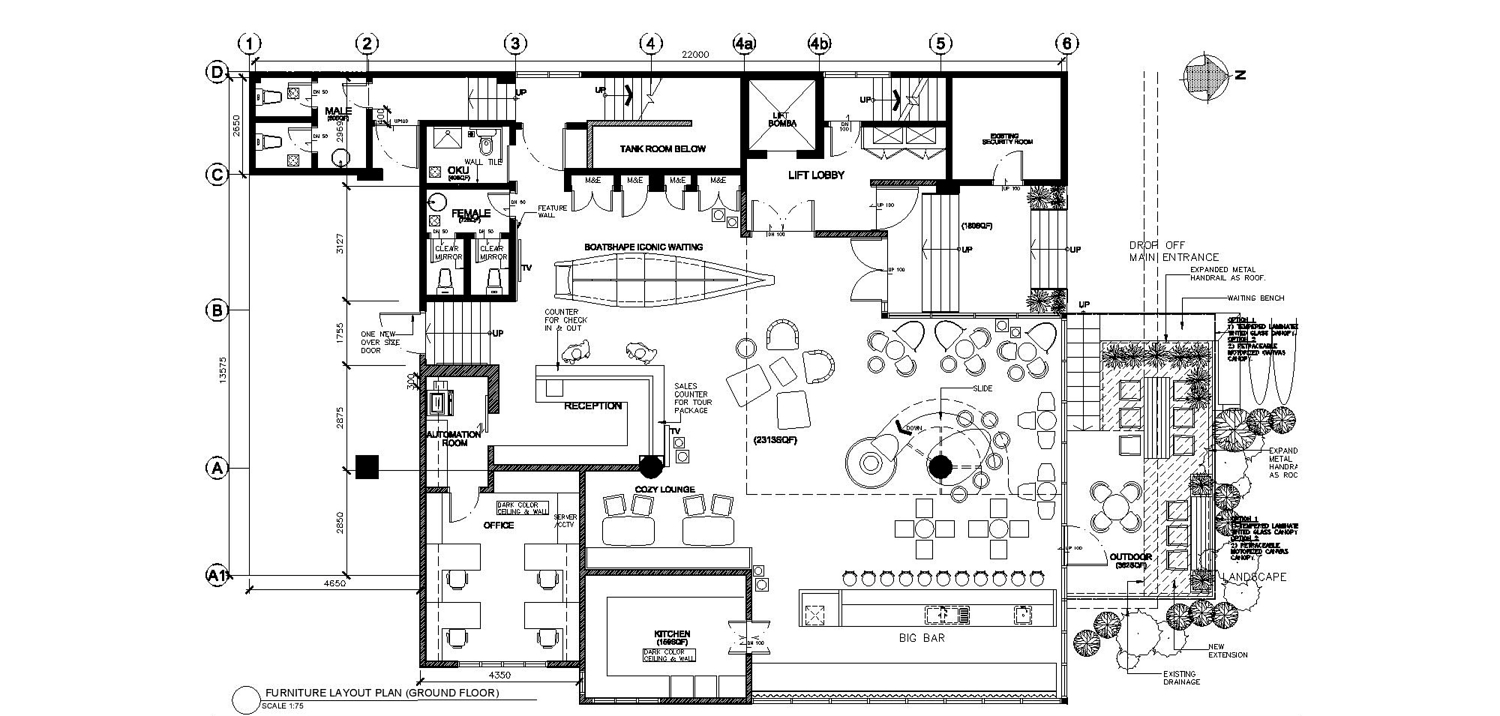
Toojou’s reception counter with recycled wooden planks at the front desk, while the reception backdrop used vintage Bakelite light switches and wooden panels to add to the sense of nostalgia.
As designers, it was important to understand Toojou’s existing site and location to determine the factors that could make or break the project.One of Toojou’s selling points is its strategic location that sits along the main road, while offering views of both lush greenery as well as the Sabahan Township with the backdrop of the South China Sea.These views can be enjoyed from Toojou’s upper floors, while the lower floors make full use of the neighbouring forestry as a live, green backdrop.The façade of Toojou was also transformed from its previously aged and weathered walls to a large piece of artwork, with brightly painted grids and perforated metal screens that are strategically placed to camouflage some of the air conditioning units, creating a colourful multilayered egg-crate façade design.
Brightly painted grids and perforated metal screens were strategically placed to camouflage some of the air conditioning units, creating a colourful multi-layered egg crate façade design.
Formerly the budget Century Hotel, Toojou has since undergone its transformation by keeping the shell of the building, adding a new roof, and a complete interior overhaul, to become Sabah’s next retrofit hotspot.
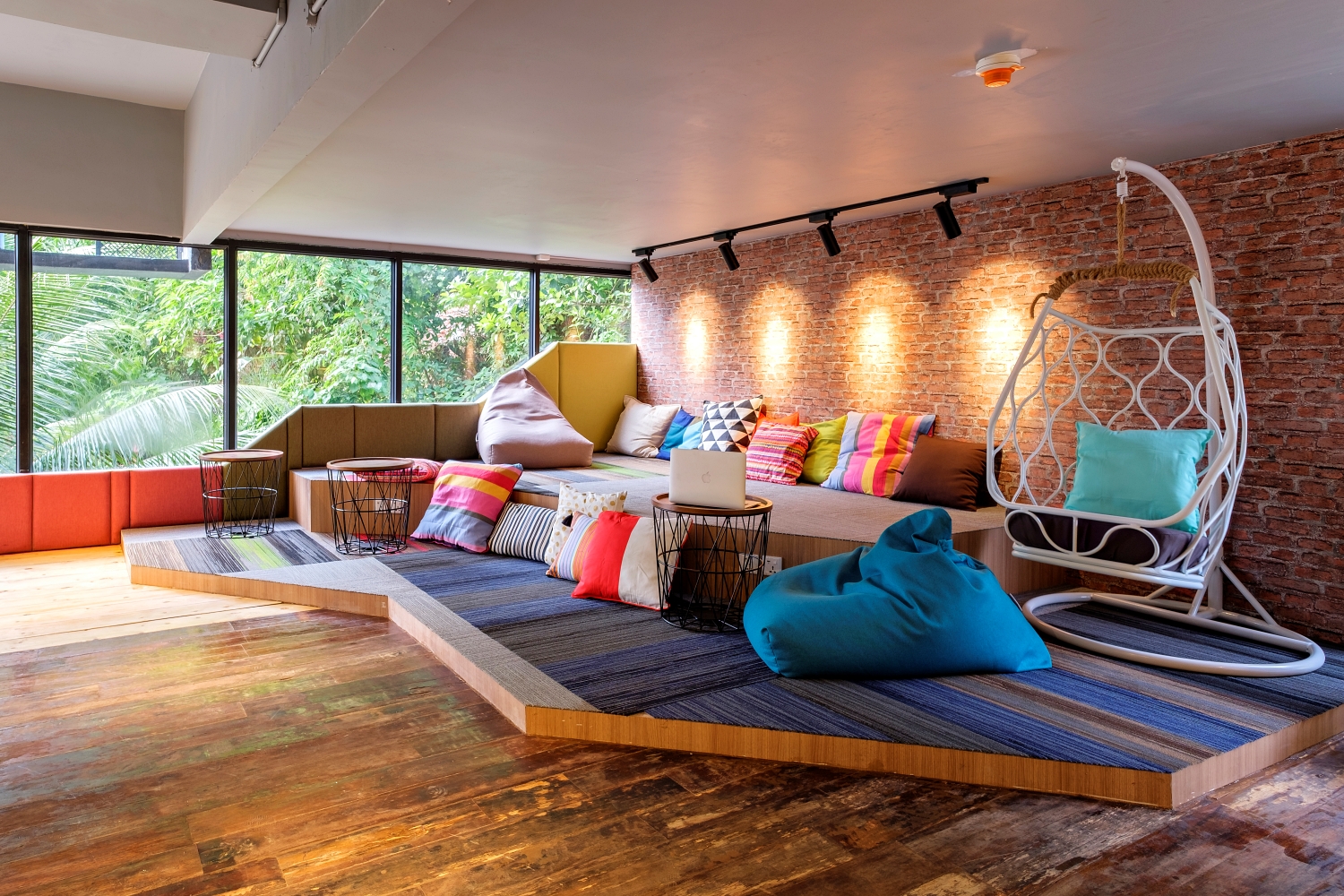
Recycled wooden planks are used for the flooring of the cozy platform area that can be found at the mezzanine floor.
With its position strategically facing the main road, Toojou’s façade has been designed as a large piece of artwork, with local artists commissioned to paint a large cultural-themed mural art spanning across the full height of the building.
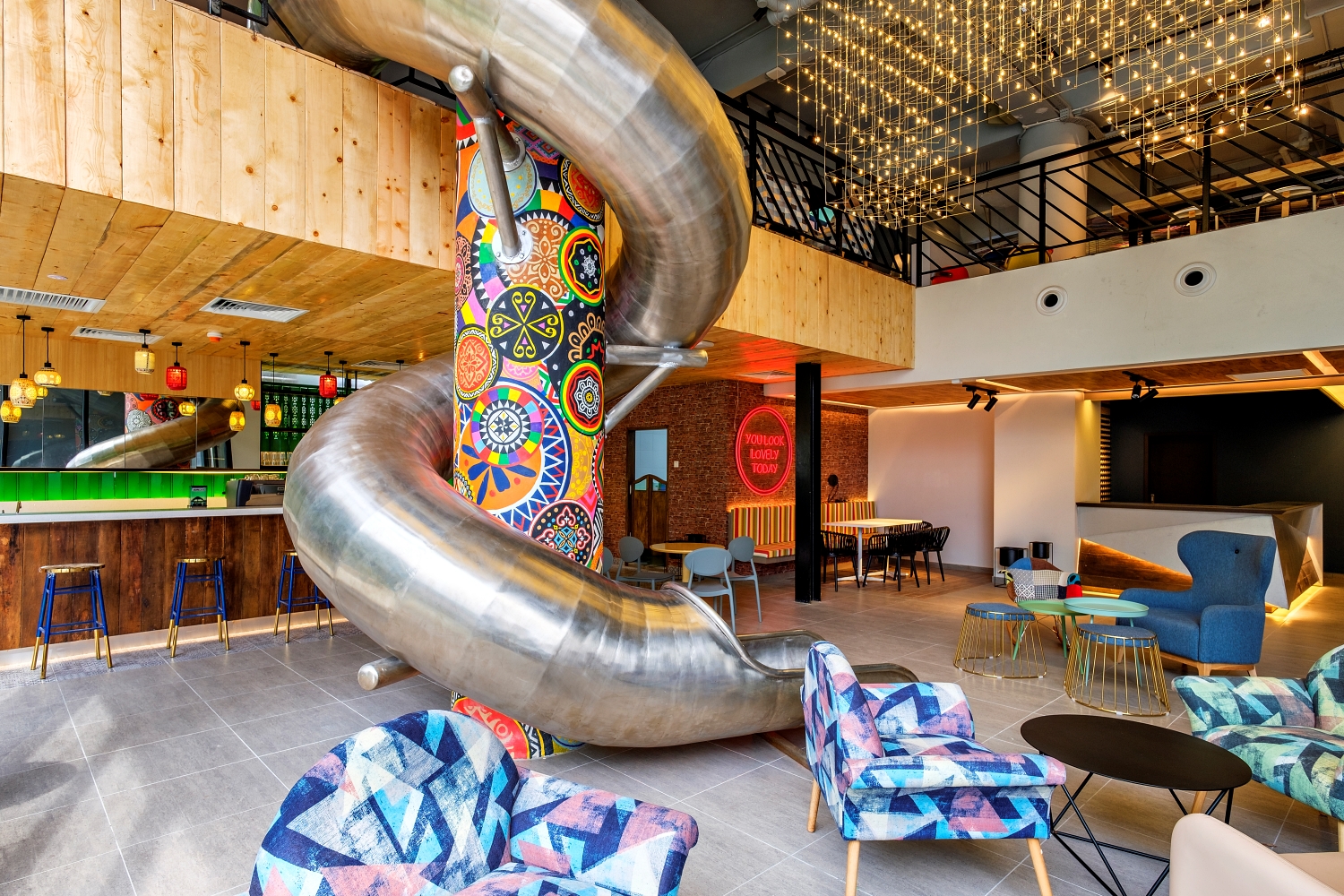
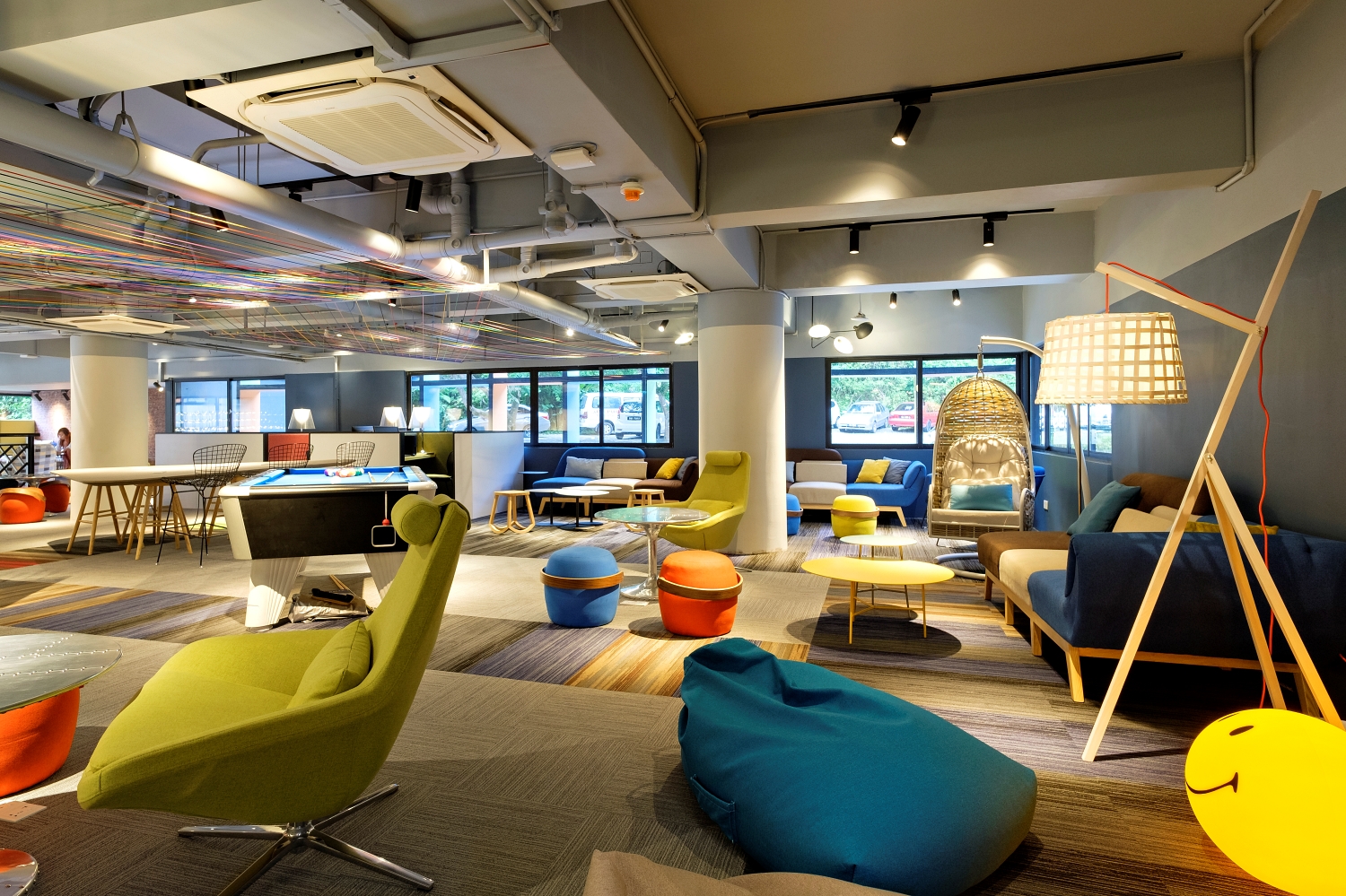
Century Hotel previously ran its business for a solid three decades before reaching its deteriorated state.Although the hotel was still open for business, its appeal amongst customers faded due to its run-down conditions and outdated style.The overall shell of the building was in relatively good condition, while certain architectural features showed promising potential for creating good interiors such as the full height glass windows and double-volumed space on the ground floor.To take full advantage of these features, Toojou’s design incorporated a new mezzanine floor to expand into a portion of the double-volumed space, which effectively provided more grounds for spatial planning while offering different experiences and views.The newly designed ground floor also allows one to immediately be transported to a bright, bold and cheerful atmosphere.There are many fun features incorporated into the design such as a ‘sampan’ seating at the waiting area and a large central slide that connects the mezzanine to the ground floor.A clever play of words can be seen implemented on the wall using coloured LED lights, while colourful graphics dressed the existing central column, transforming this once pale and outdated space into a fun and colourful environment.Beautiful pendant lights were designed to gracefully hang down from the double volume ceiling to emphasize the beauty of the void and high ceiling.Taking full advantage of the inherited full-length windows, ample natural daylight could be brought in to fill the communal spaces, which in return allowed for further cost efficiency as fewer lights were needed to brighten the ground and mezzanine floors.
Mural art across the full height of the building by artist Kenji Chai.
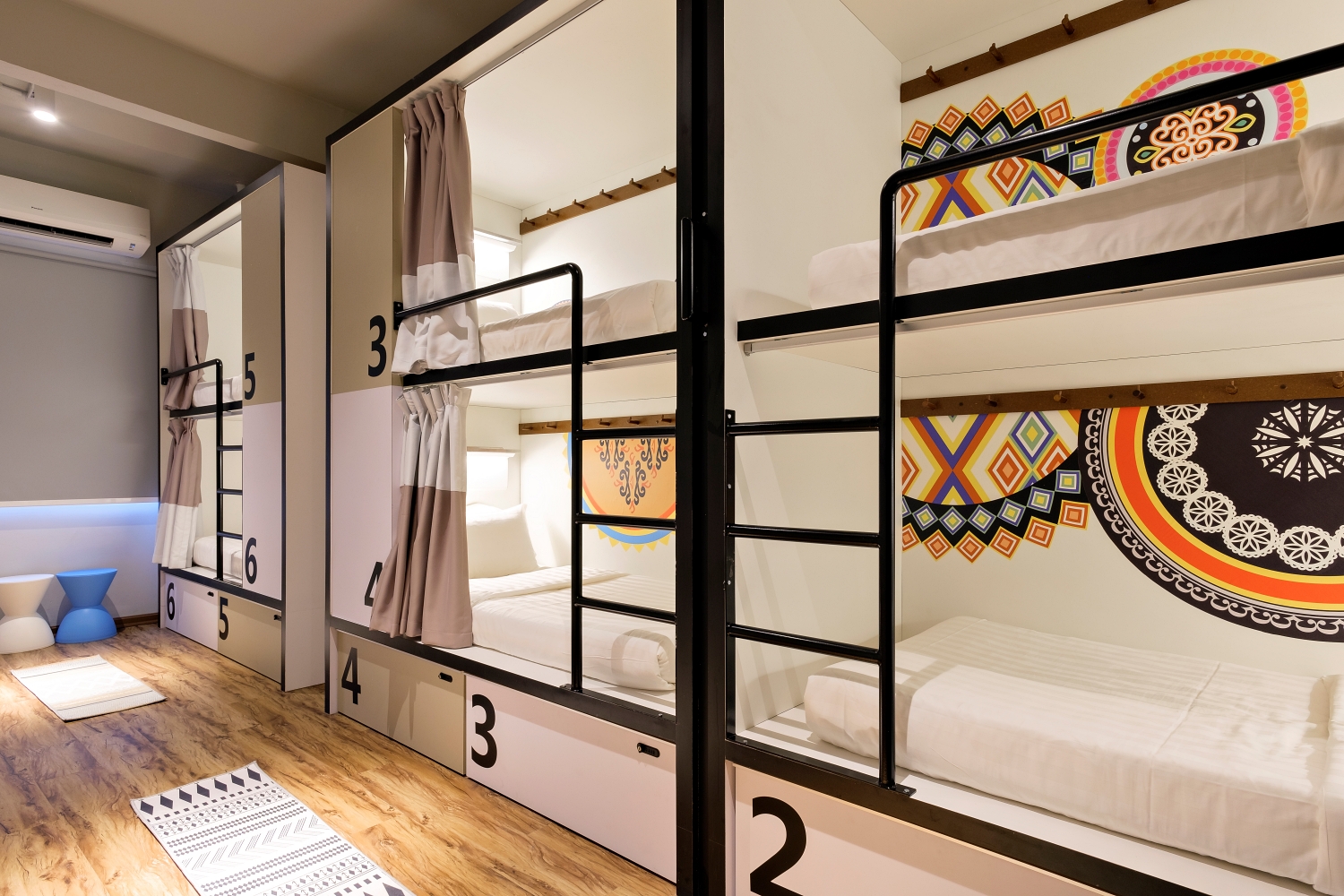
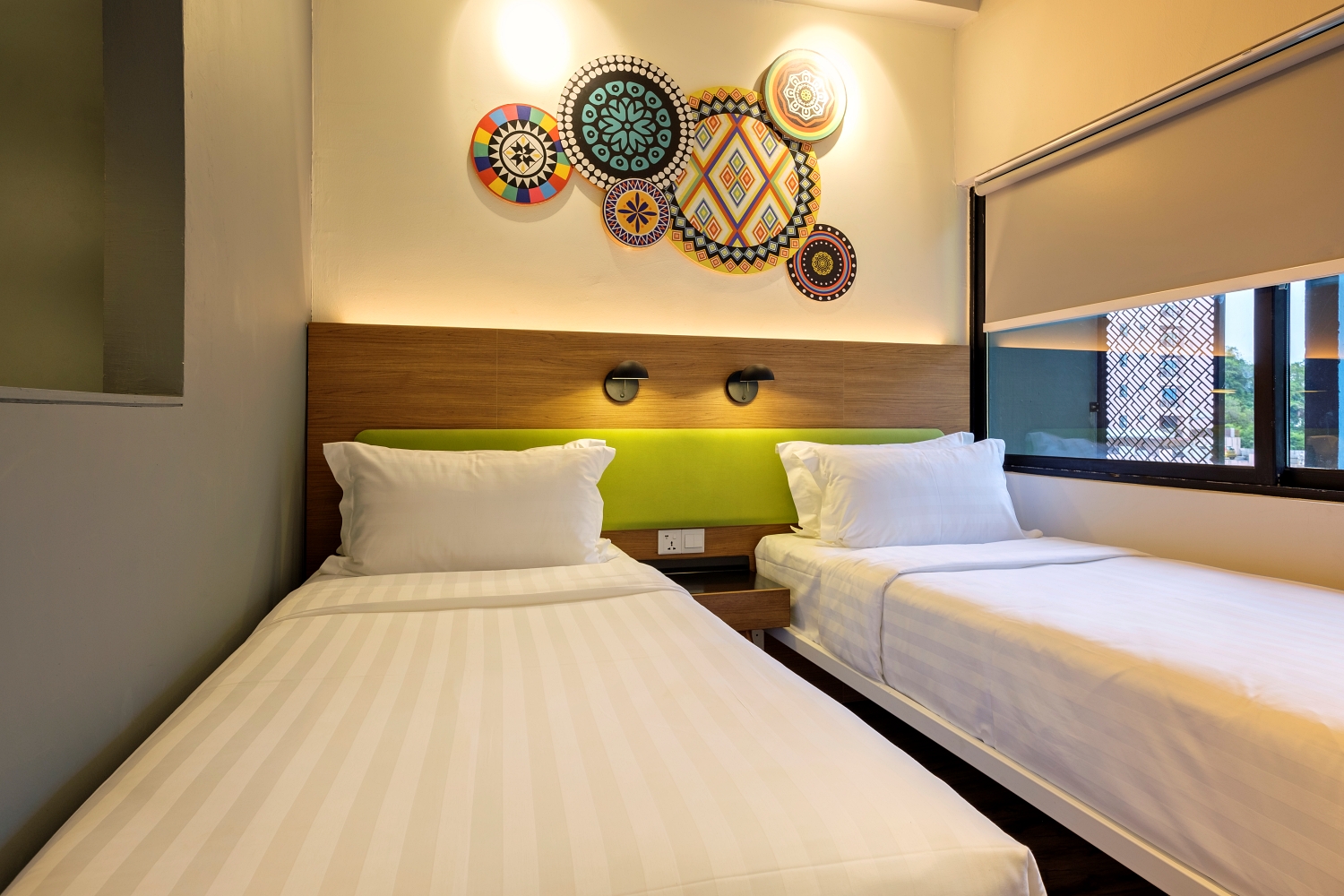
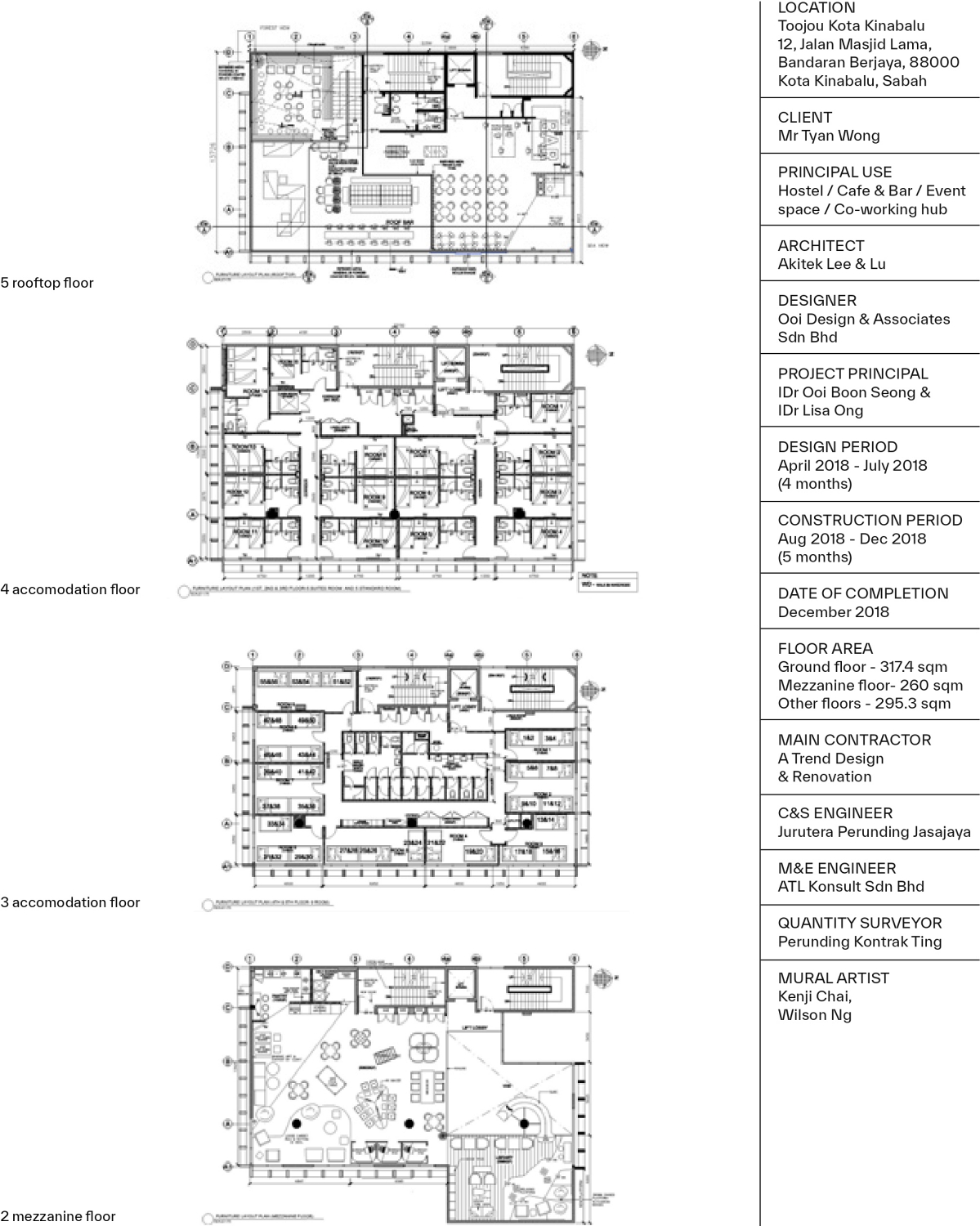
As for the accommodation floors of the previous hotel, most of the existing walls and corridors were demolished to make way for a fresh and new layout to suit Toojou’s lodging style and design direction.Toojou’s accommodation spaces cover five floors in total.The first to third floor features 45 hotel-like studio rooms which contain twin beds or a double-bed respectively, with attached washrooms.The fourth and fifth floor, on the other hand, features 18 capsule rooms, which houses bunk beds and shared washrooms.Touches of local flavour were added to the wall graphics of each of these rooms to ensure the concept is carried throughout all accommodation spaces.
A clever use of loose furniture was implemented at the co-working and lounge area for flexibility of space usage.
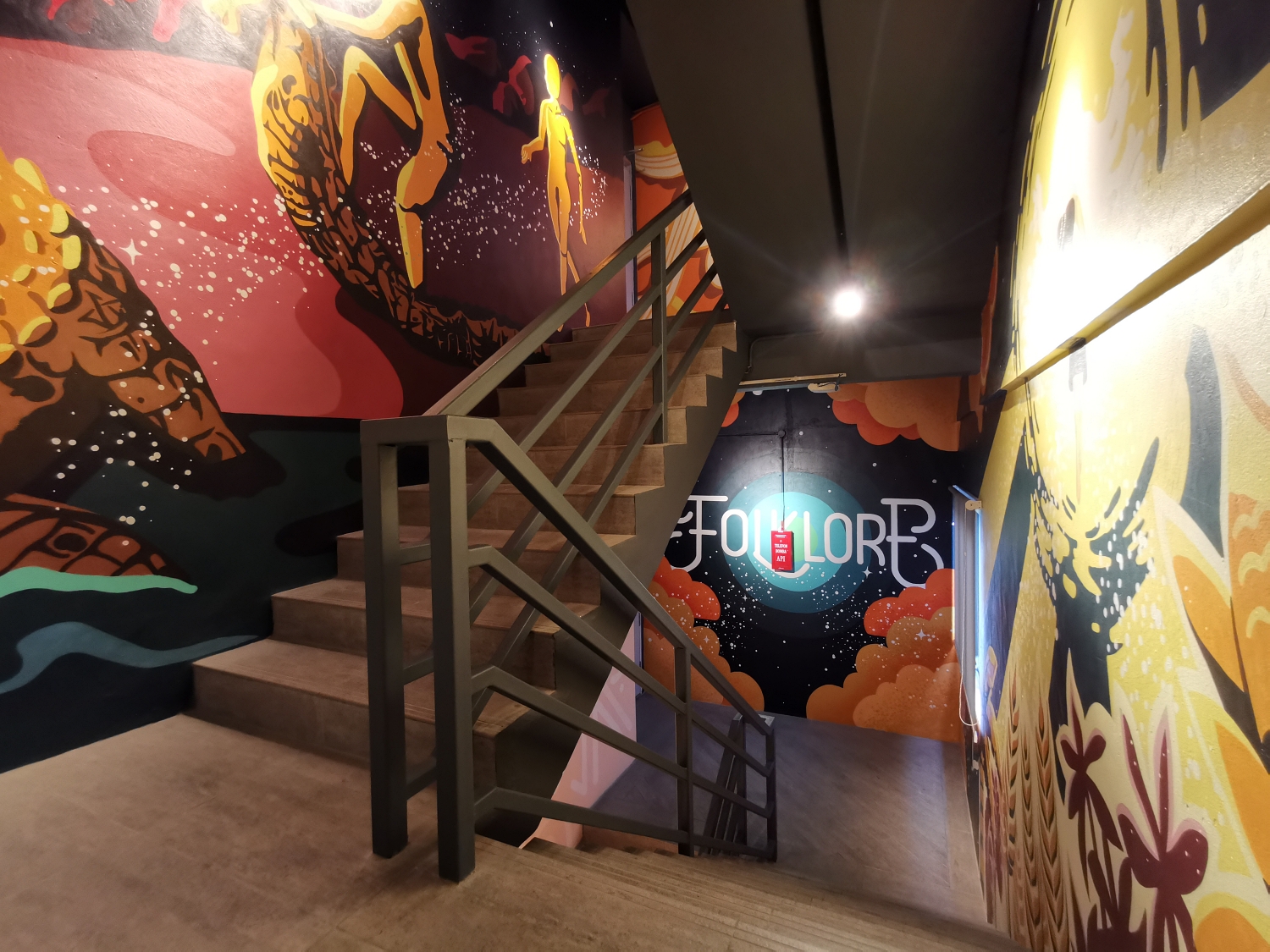
Besides that, the main stairwell at Toojou has been creatively transformed from its previous bare and basic state to a crowd-generating focal point of the whole design.Re-designing the stairwell was an important part of our design brief as there was only one lift with a small capacity in the existing layout.It was our responsibility to find creative ways to encourage the crowd to use the stairs.
The stairwell, which starts from the ground floor and reaches the top floor features a continuous long mural wall with amazing graphics, designed and painted by local artist Wilson Ng who is well-known and active in social media.It also features questions and trivia content, providing an interactive experience that encourages people to use the stairs.
Toujou's accommodation features tastefully designed bunk beds with a splash of Sabahan culture on the walls.
Toojou’s accommodation also offers studio rooms which contain twin beds with attached bathrooms.
As for the accommodation floors of the previous hotel, most of the existing walls and corridors were demolished to make way for a fresh and new layout that suited Toojou’s lodging style and design direction.
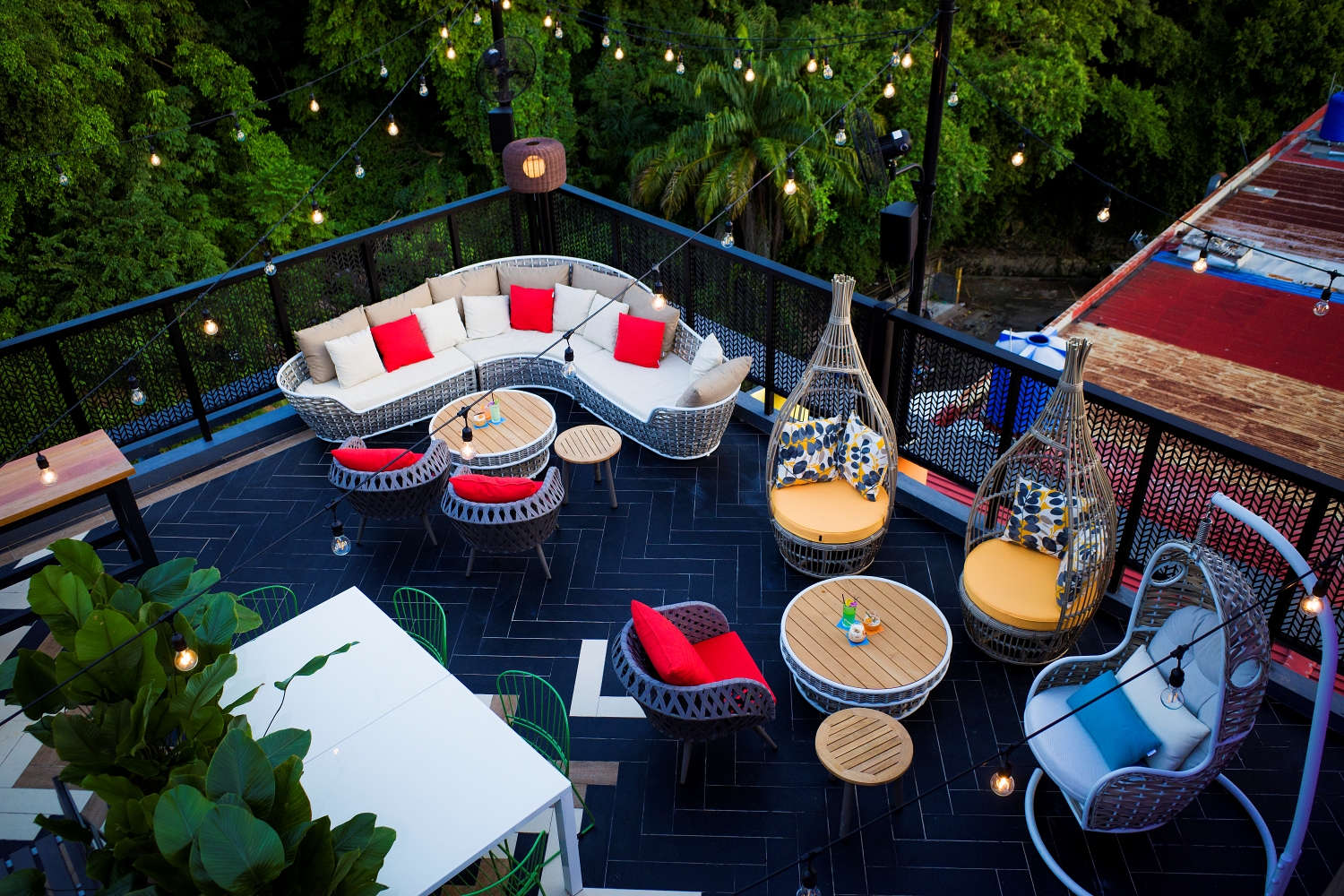
A clever combination of fun seating gives guest the option to experience the space in various ways.
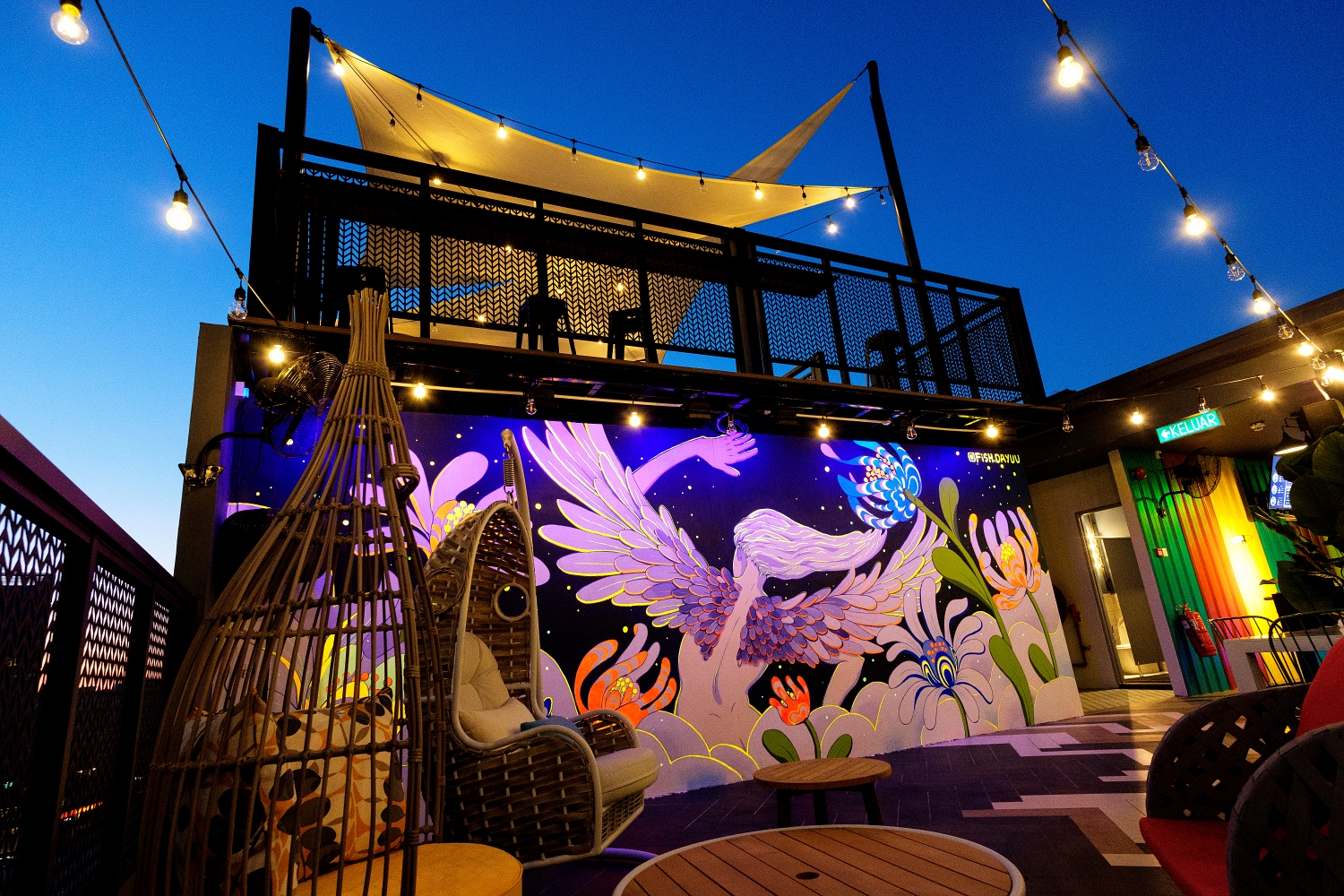
The raised platform provides guest with an alternative dining experience and breathtaking views of the city, while cleverly hiding the water tank storage below.
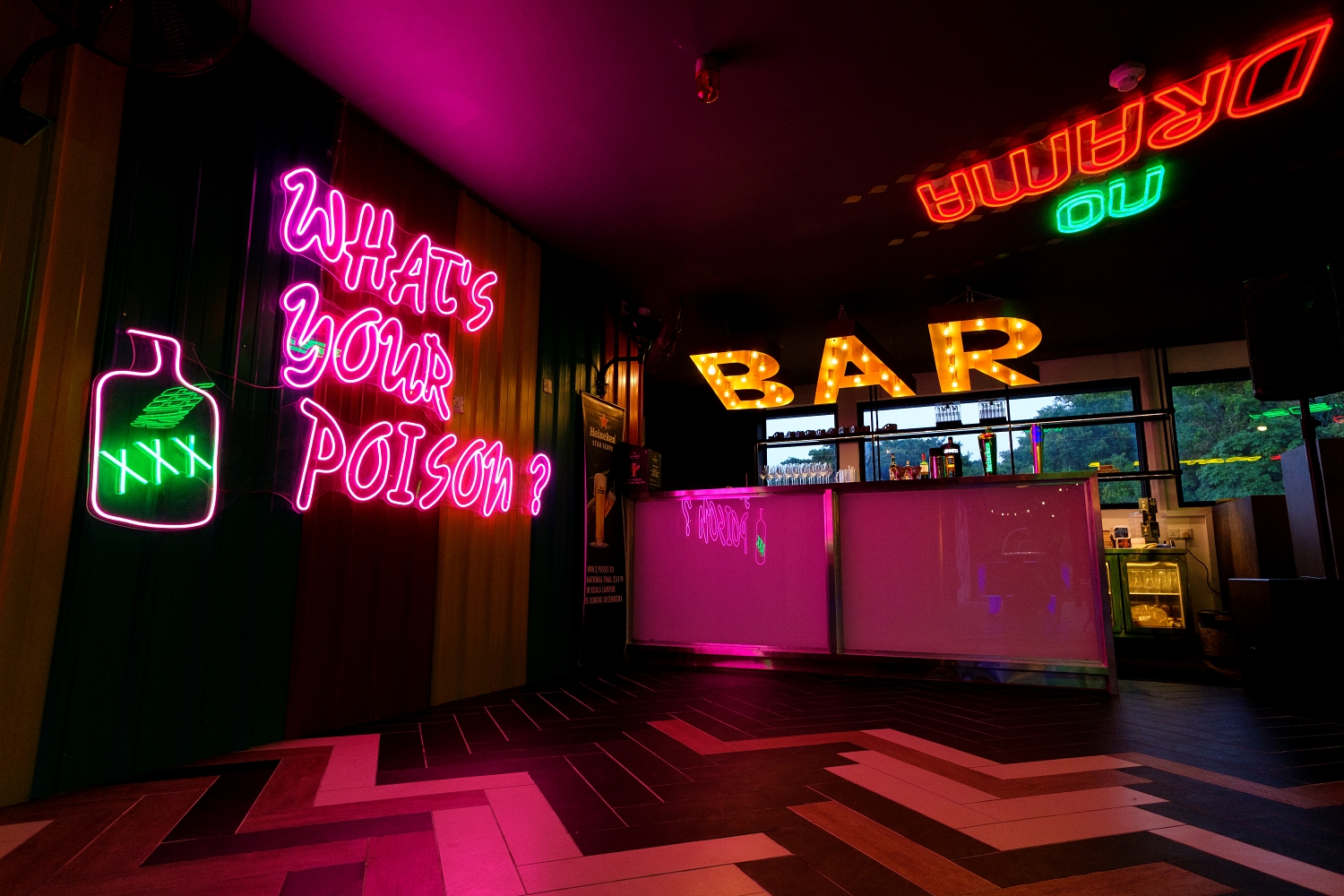
A playful array of neon quotes and can be found along the walls and ceiling of the rooftop bar.
The main stairwell has been transformed into a long continuous mural art wall that features amazing graphics, designed and painted by Wilson Ng.