SPATIAL INTERVENTION

Revamping the existing housing typology by creating an urban courtyard house
to enable connectivity with nature
Text by the architect
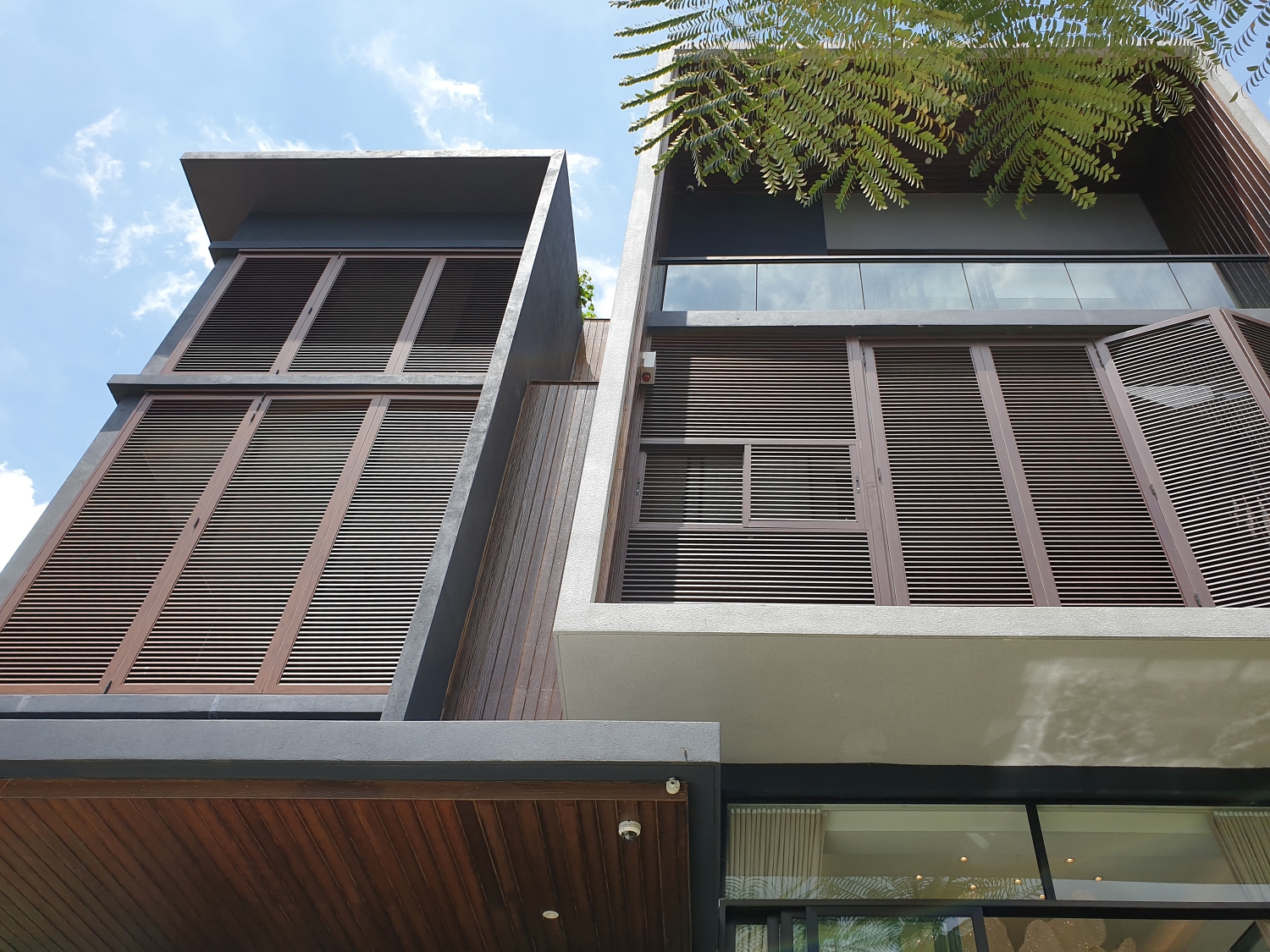
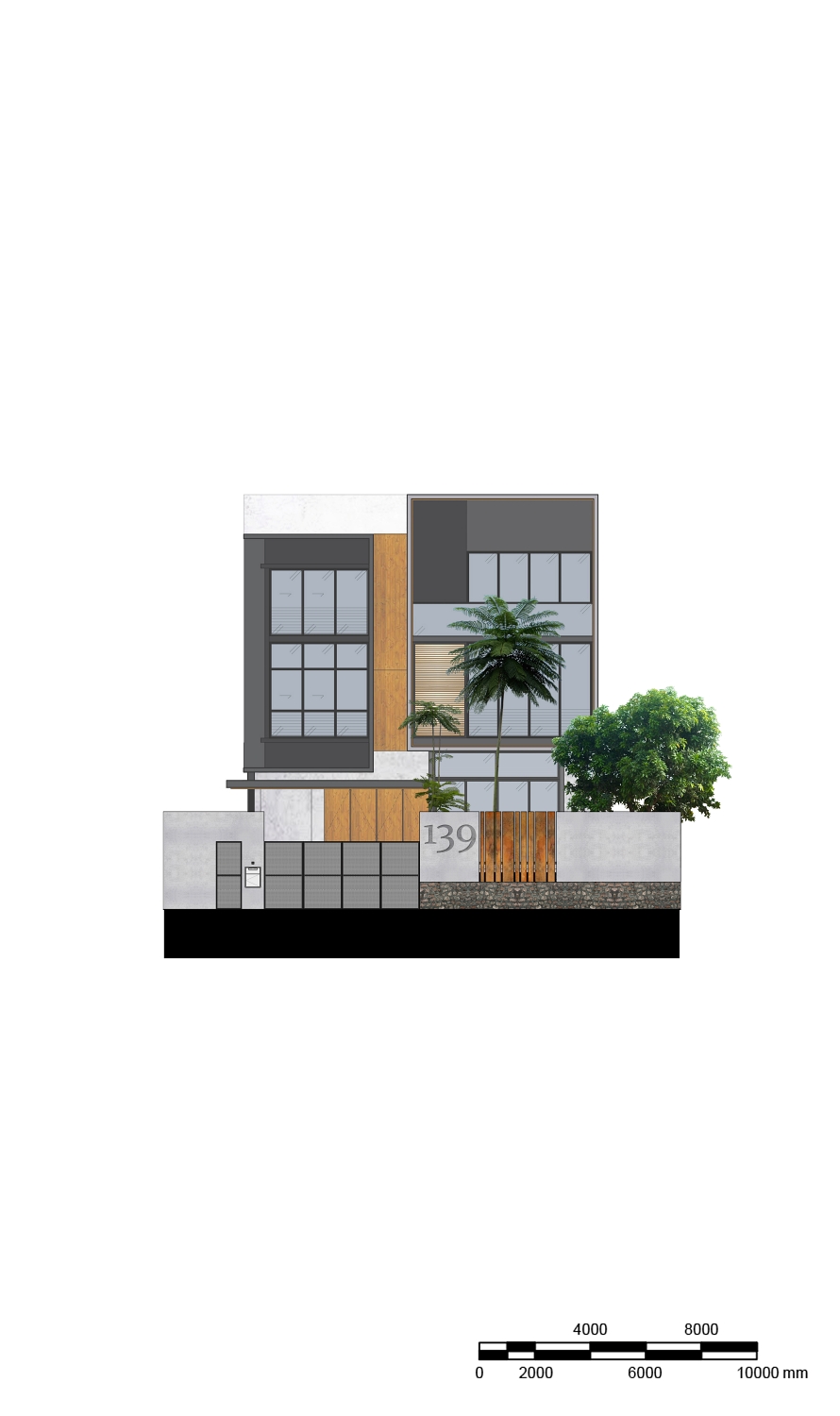
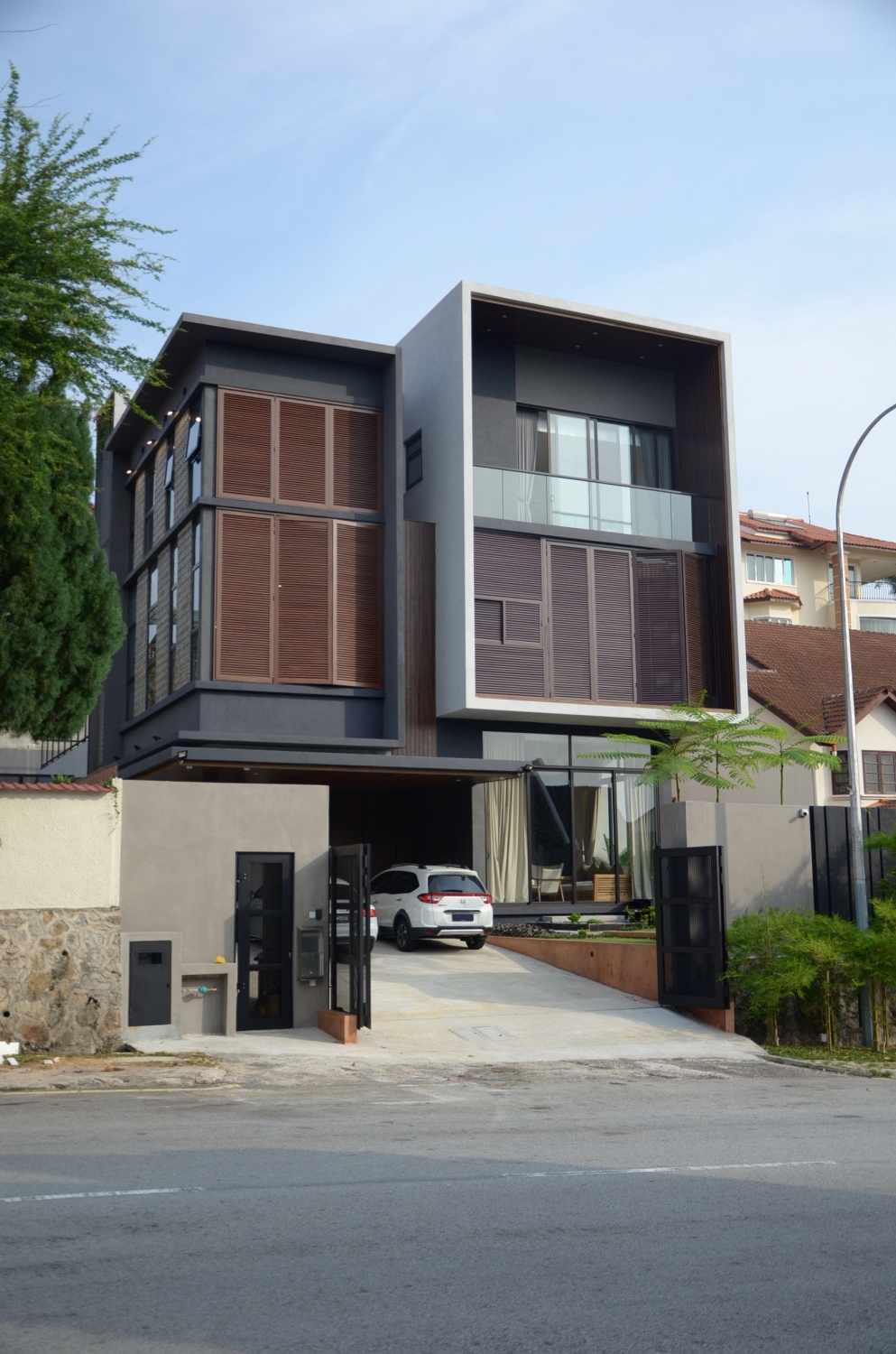
A close-up of the front façade. The façade is rich in texture, where timber grain fiber board and louvers are singing along.

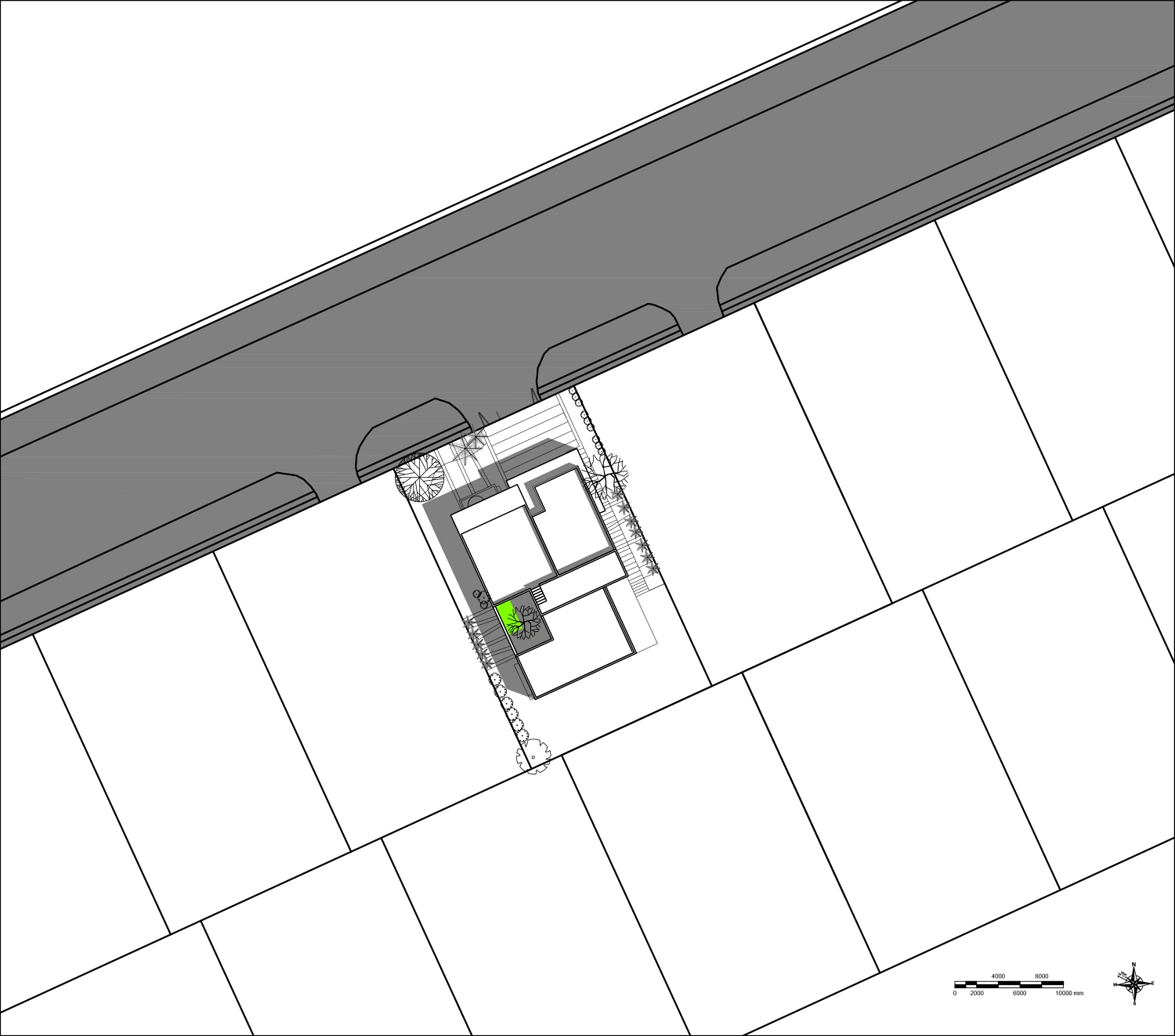
Zen House is an alteration and addition project of an existing bungalow in response to the existing house structure, site contour, climate and client’s needs.Although the project is small, it is able to demonstrate creativity in resolving the design brief.

Responding to the client’s needs is one of the most important elements that we constantly work on. We believe that good architecture is responsive architecture. Hence we take design brief very carefully to create spaces that are unique to our client.

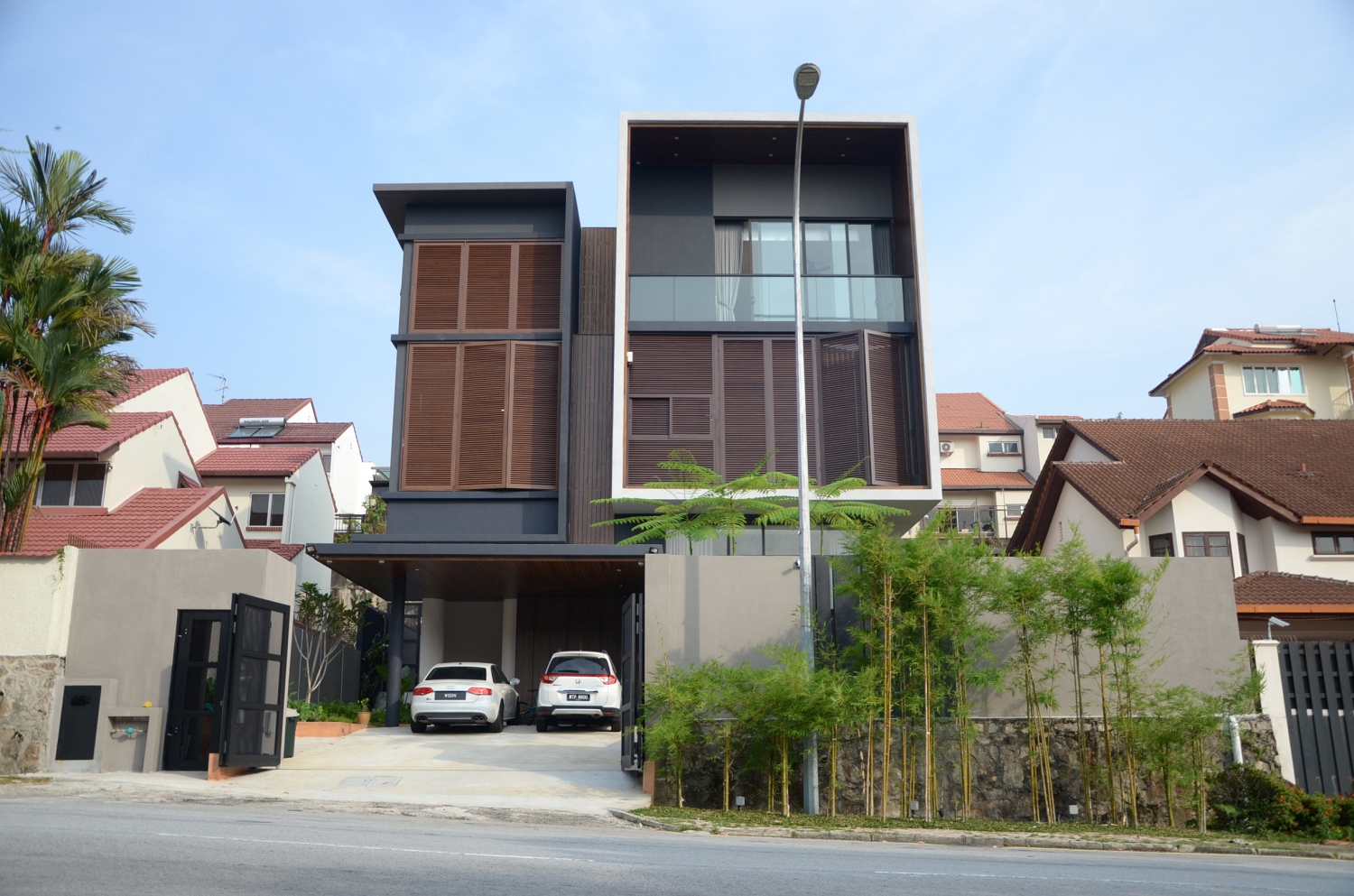
The front façade from the opposite. The opposite neighbor complimented the building outlook during completion to be pleasant to the eye although it is out standing in the pitched roof neighborhood. He described it as ‘unexpected’ as the initial structure look monstrous before the finishes and the colour came in.
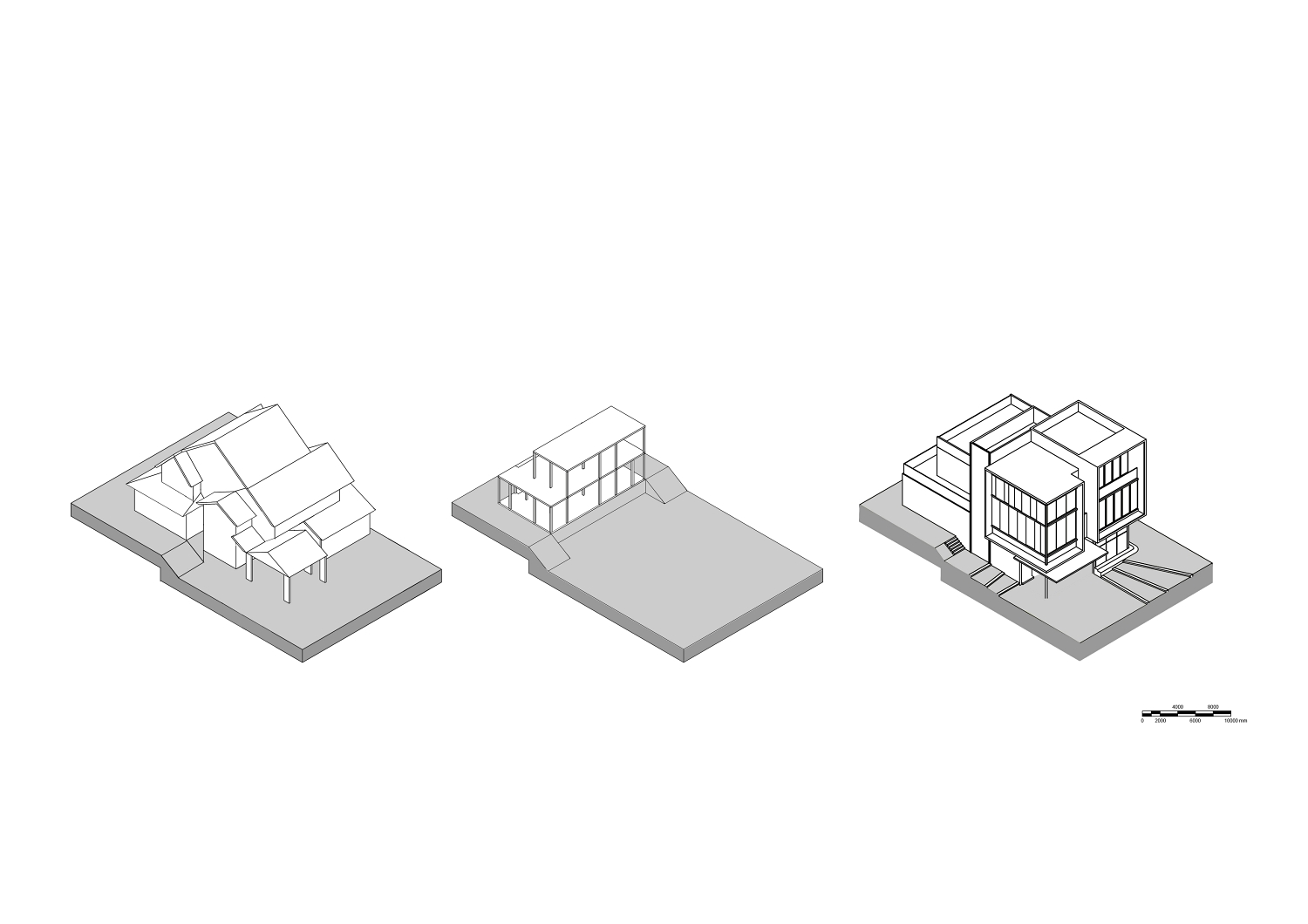
The challenge of the project was to work with the existing introvert split-leveled bungalow.The client first came to us with a long list of comments on the existing house design that they didn’t like. The original house had a very low headroom, complicated pitch roof structures, dark stuffy dungeon-like rooms, and a half-storey split level on all floors.The budget was also a concern, hence we decided to save and work along with a portion of the existing house structure.Half of the house structure was reused and maintained in 2 storeys, and the other half was demolished and redesigned into a 3-storey building.
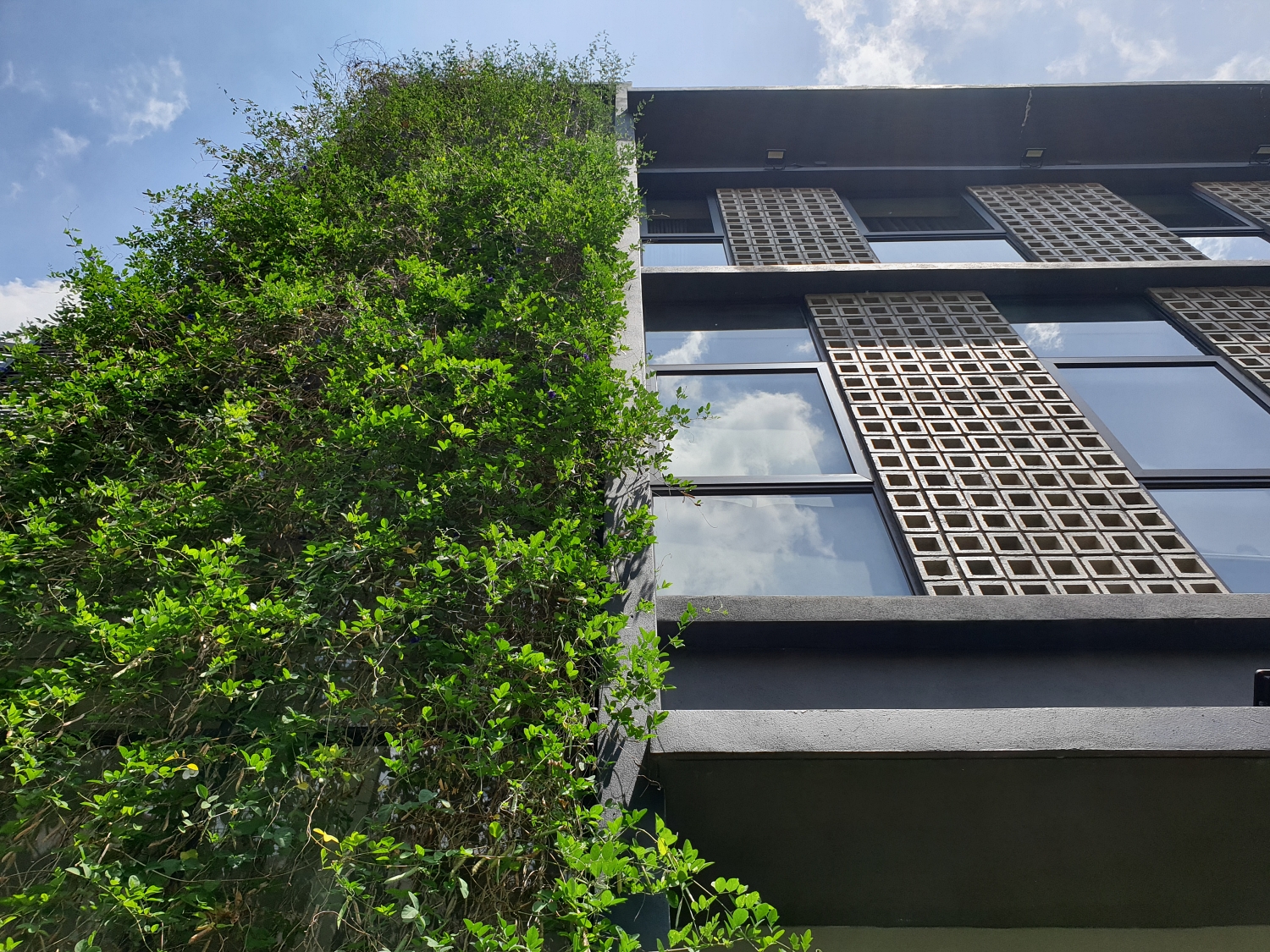
The side view of the house. The client wanted something playful and less mundane. We used solid ventilation block to provide the texture on the façade, at the same time helps to reduce the heat gain as vent blocks casts shadow on itself. The staircase had wires externally for creepers to creep on it.
Looking back at our ancestor’s homes in this hot and humid climate, they lived in harmony with the rain, wind, and sun.Indigenous houses were opened, cross-ventilated, airy, and heavily shaded. On the other hand, indigenous courtyard houses were arranged in cluster forms to promote communal living, at the same time reduce the absorbency of radiant heat by using indigenous solutions.However, the existing bungalow was of the opposite. It had overexposed roof tiles which absorb heat during the day, and radiate heat at night.The rooms were confined and stuffy, and highly dependent on the air-conditioning system.There was no cross ventilation in the house as windows were small and there was no communication between spaces as the house is split up in the staircase area.The headroom was very low, and the feeling of suppression was very high in the internal spaces.
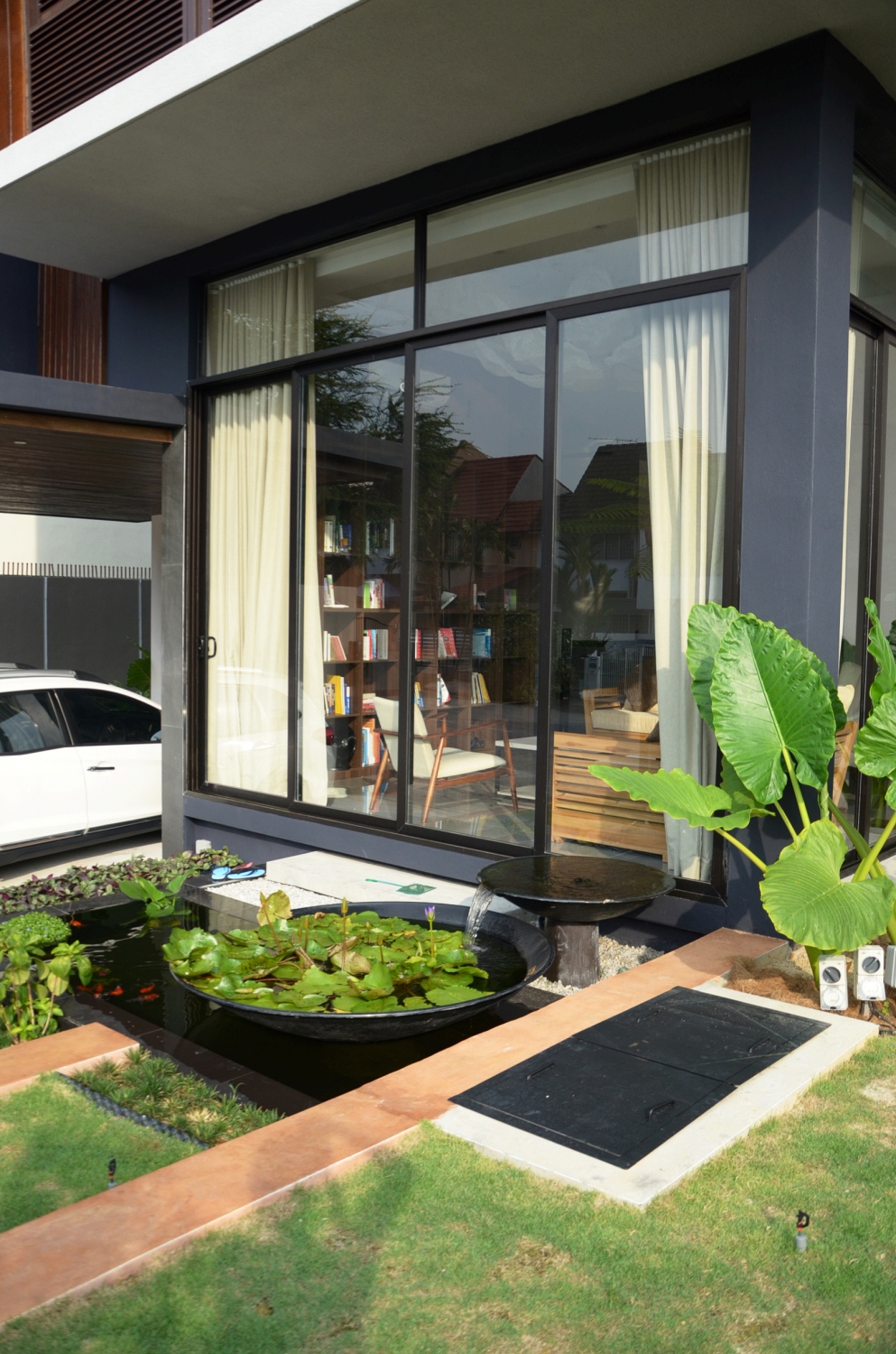
The water feature in front of the living room is calm and Zen. The dish was custom made to float above the water.
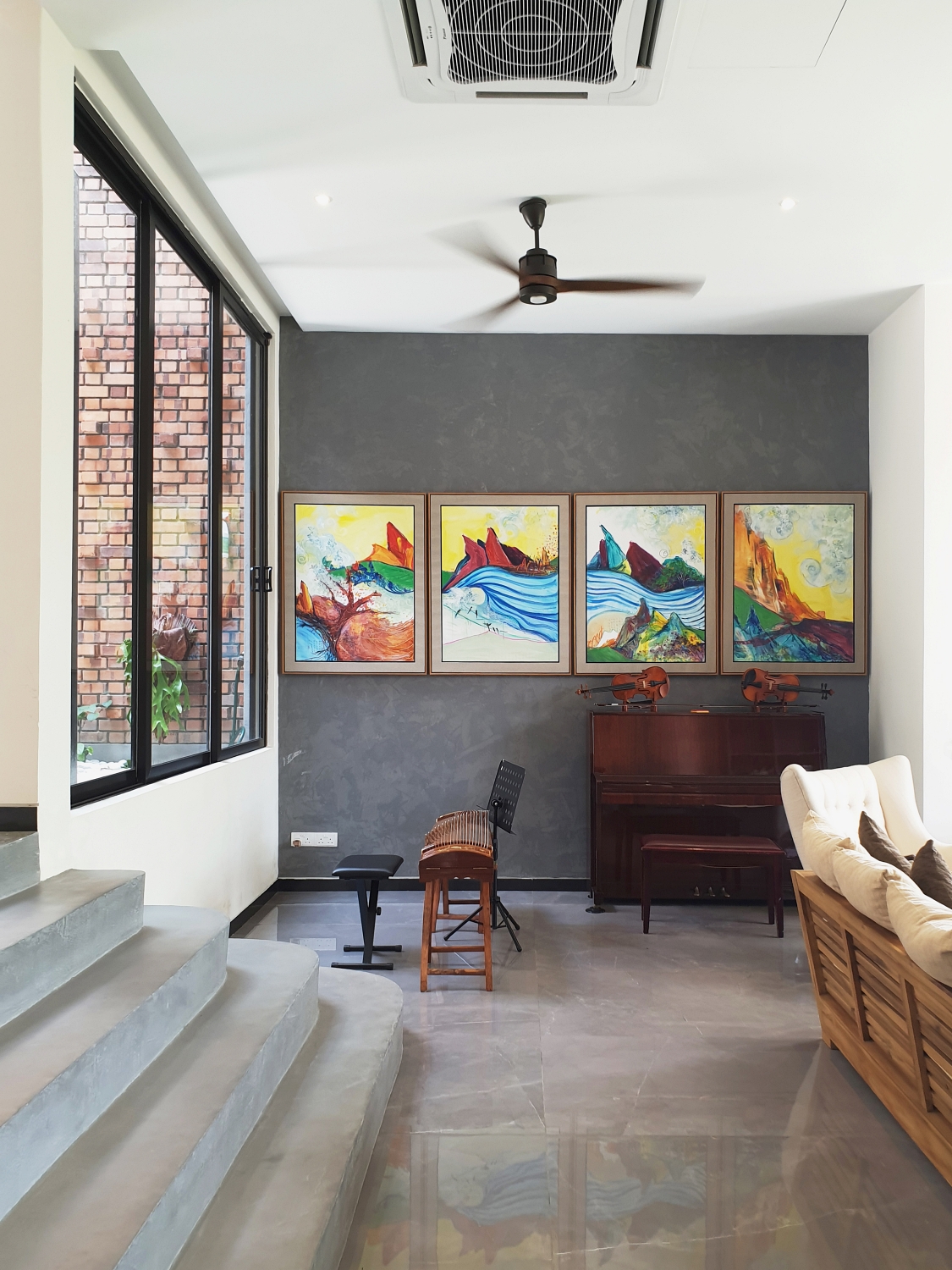
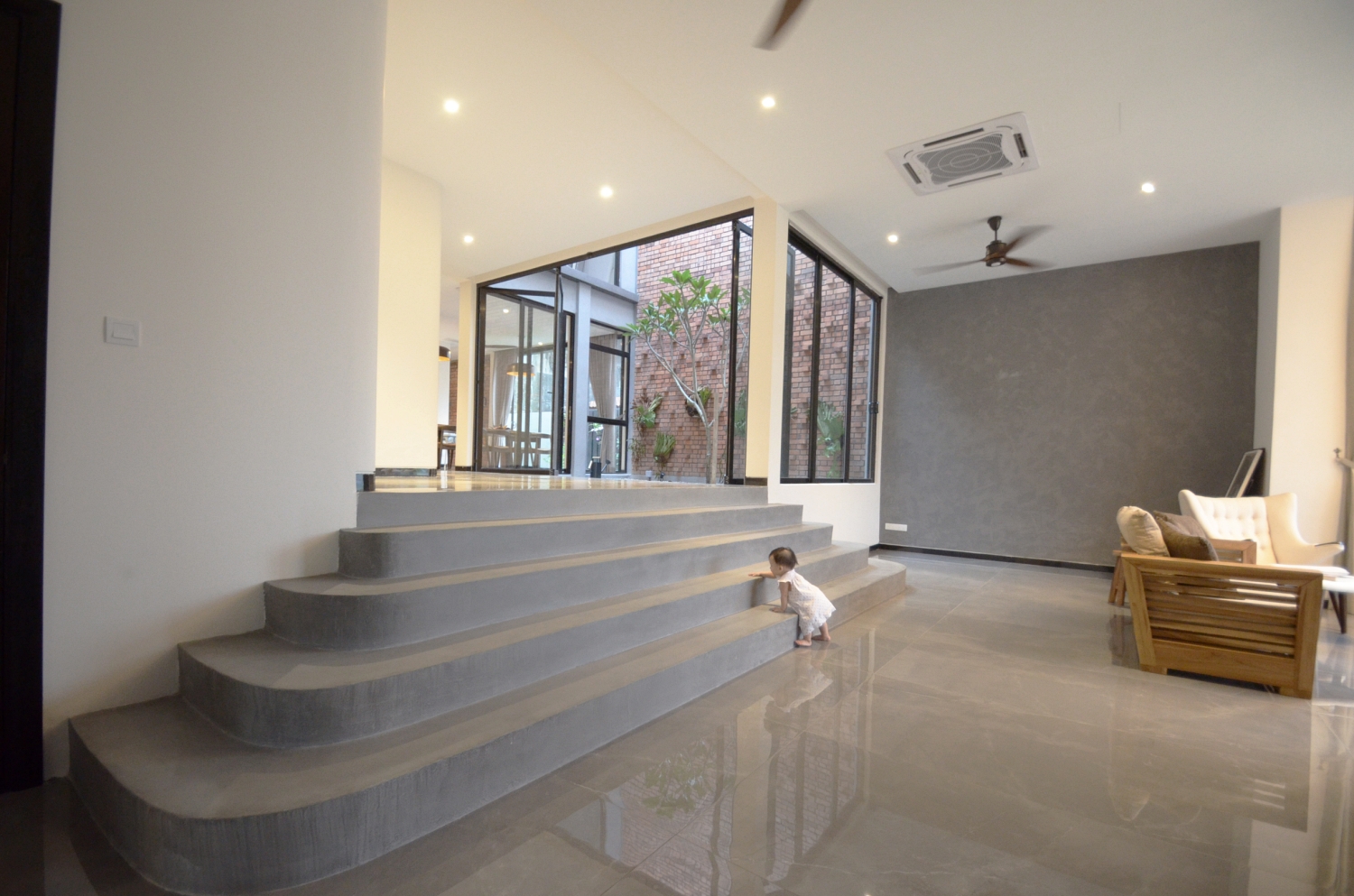
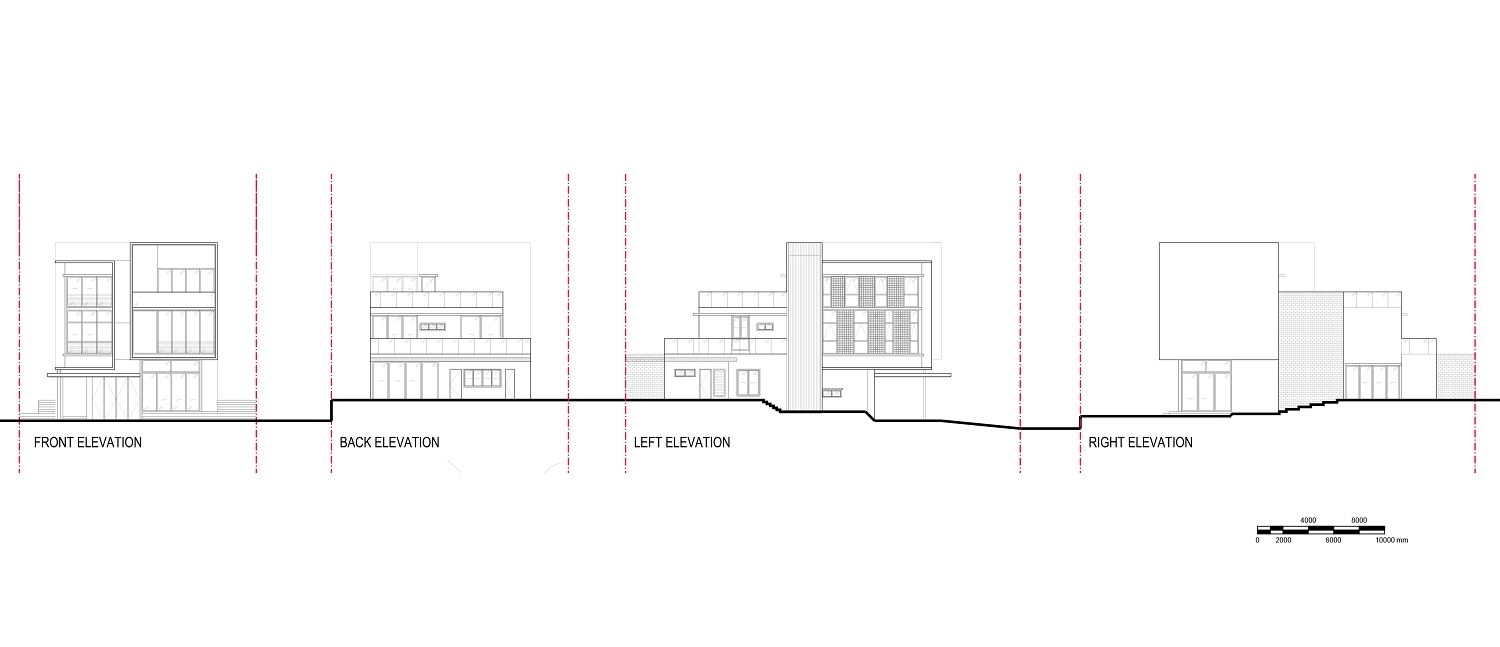
The split level is reduced from 9 steps to 5 steps by raising the front portion of the house.

In Zen house, we revamped the existing housing typology by creating an urban courtyard house.To enable connectivity with nature, the introvert bungalow was opened up. Solid walls were removed to provide transparency and a free flow of light and air.The house was then designed revolving around a centralised atrium.A courtyard was introduced in the heart of the house to allow a good connection with the outdoors at the same time having maximised privacy.Revitalised from a forgotten space in the original abandoned bungalow, this courtyard is now a focal point of the house.

Now, the courtyard enables all adjacent rooms to have cross ventilation and diffused daylighting.Filtering the indoor spaces from heat and glare, the courtyard is the source of natural day- lighting.At the same time, the courtyard allows the rooms to be breathable by enabling cross-ventilation, yet filtered from the rain and storm.The red bricks in the courtyard are of a natural vibrant colour that shines throughout the day.There is also some random brick formation on the wall which casts pretty shadows that changes along with the sun’s position.The clients love how the lights and shadow transform in the living spaces at different times of the day, especially in the bedrooms where the sunlight seeps through the louvers and form gentle stripes on the quiet timber floor.They were excited as these were some of a few elements of surprise that they did not expect from the renovation outcome.

The split level is reduced from 9 steps to 5 steps by raising the front portion of the house.
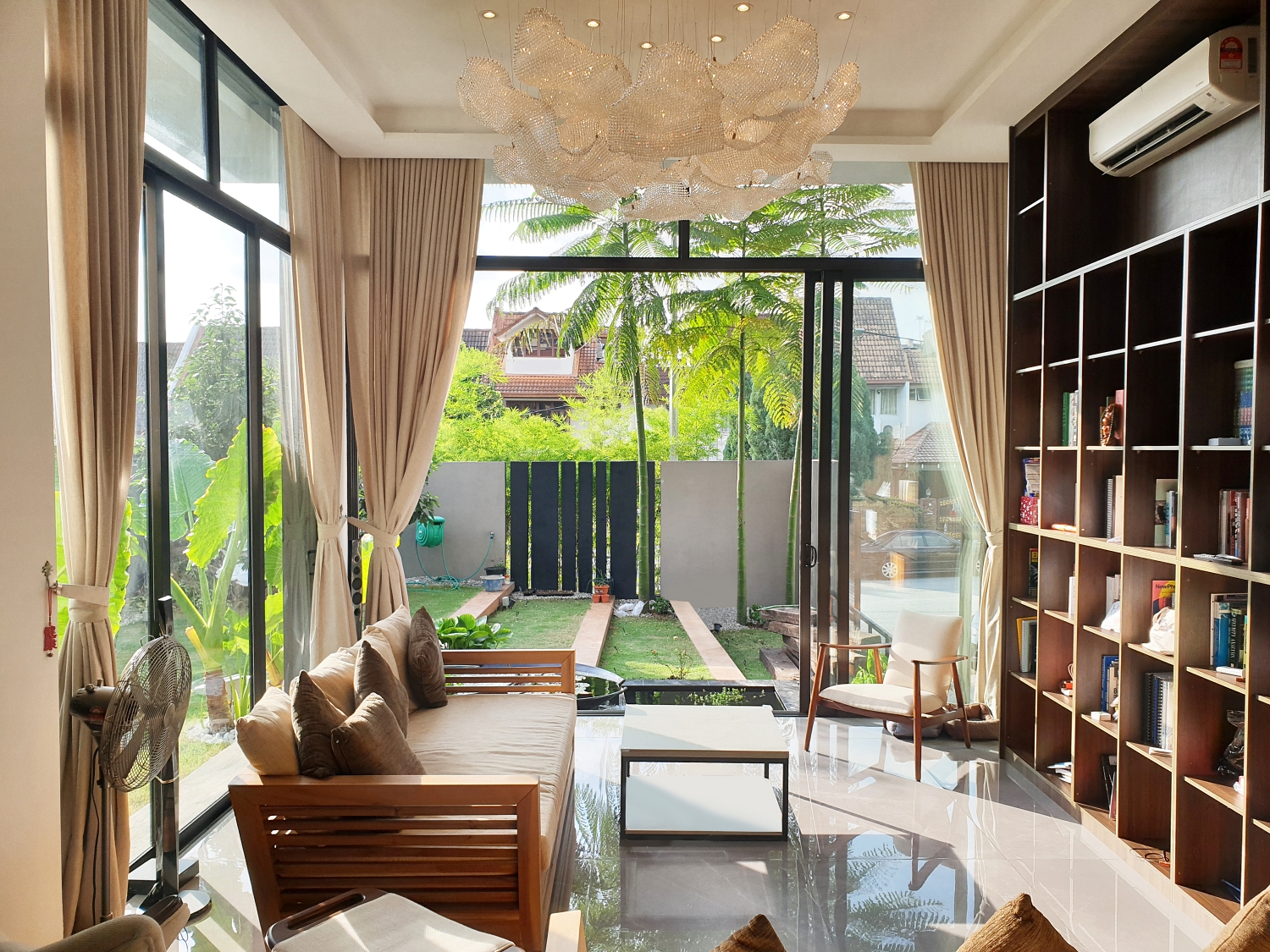
The living room has a full height bookshelf backdrop, reflecting the client’s love towards knowledge. From the living room, the lawn gradually staggers uphill to match the living room level, blurring out the difference on the split level.

It is also important for the building skin to be able to change with the climate.The clients wanted a house that enables windows to be opened during rain or shine for maximum ventilation.So, we made the external building skin foldable for it to be tucked when maximum daylighting is desired.When the day is hot or raining, the louvers can be closed to achieve the intended light intensity indoors.And during the storm, the louvers can provide a layer of filtration from rain splashing, at the same time allowing ventilation and they will never have to worry that they forgot to close their window.

Construction materials were mostly sought from local sources.To create a homey yet timeless effect, the selection of materials was via a natural approach.Building materials were made to appear in their most natural state for instance, railway sleepers, teak wood flooring, fair-faced bricks, Balau timber strips, Nyatoh tabletop, concrete vent blocks, up-cycled and polished concrete floor.Materials like autoclaved cellulose fibre reinforced cement board, timber grain louvers, polished concrete and textured spray tile paint were used to keep the building low in maintenance and for it to glow and look good effortlessly in a Zen way.

Louvres were partially opened. The windows are floor-to-ceiling sliding doors to promote ventilation.
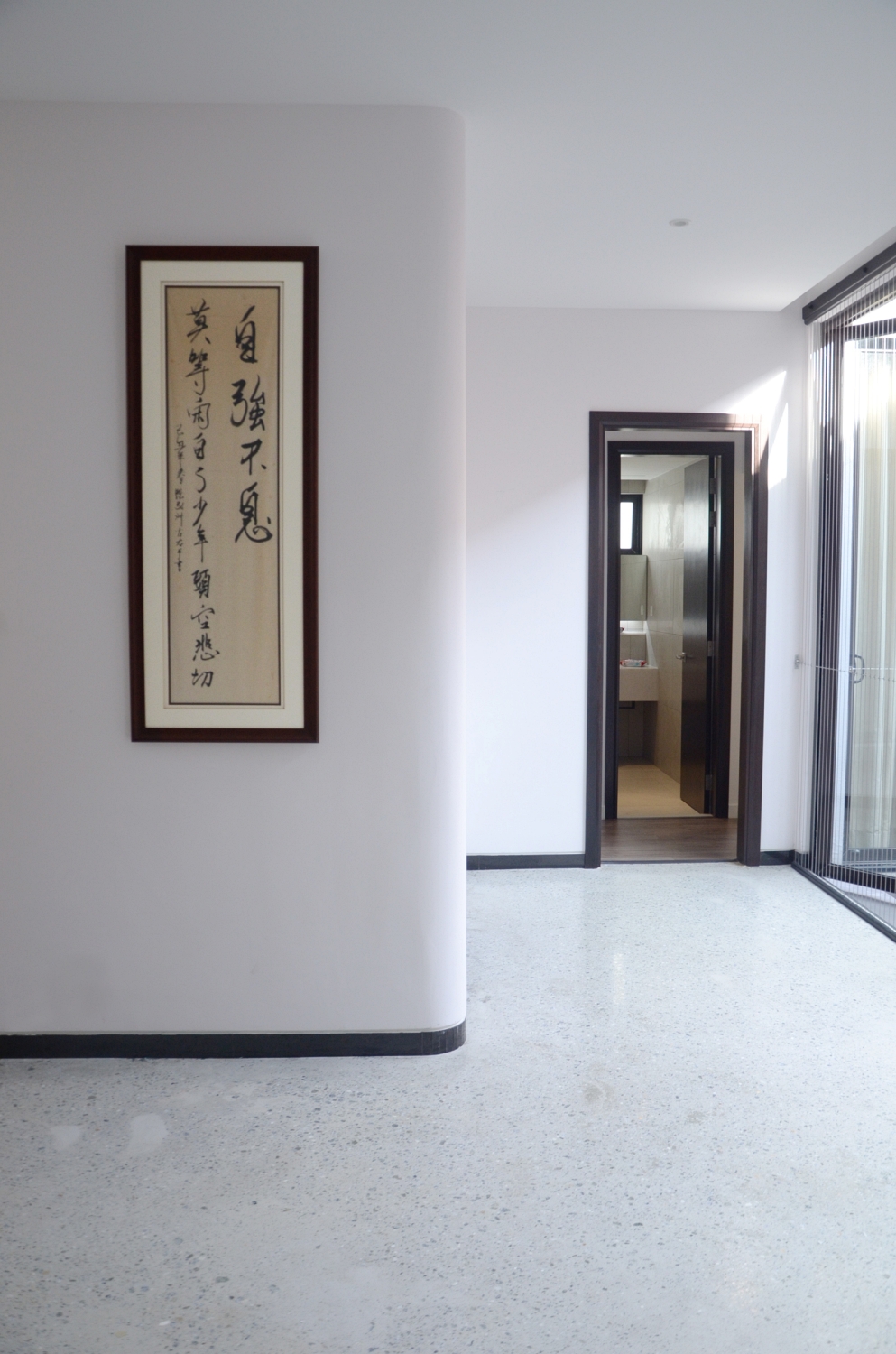
The corner of walls is filleted to reduce sharp angles in the house.
To enable connectivity with nature, the introvert bungalow was opened up. Solid walls were removed to provide transparency and a free flow of light and air.
Illustration shows the transformation of the house
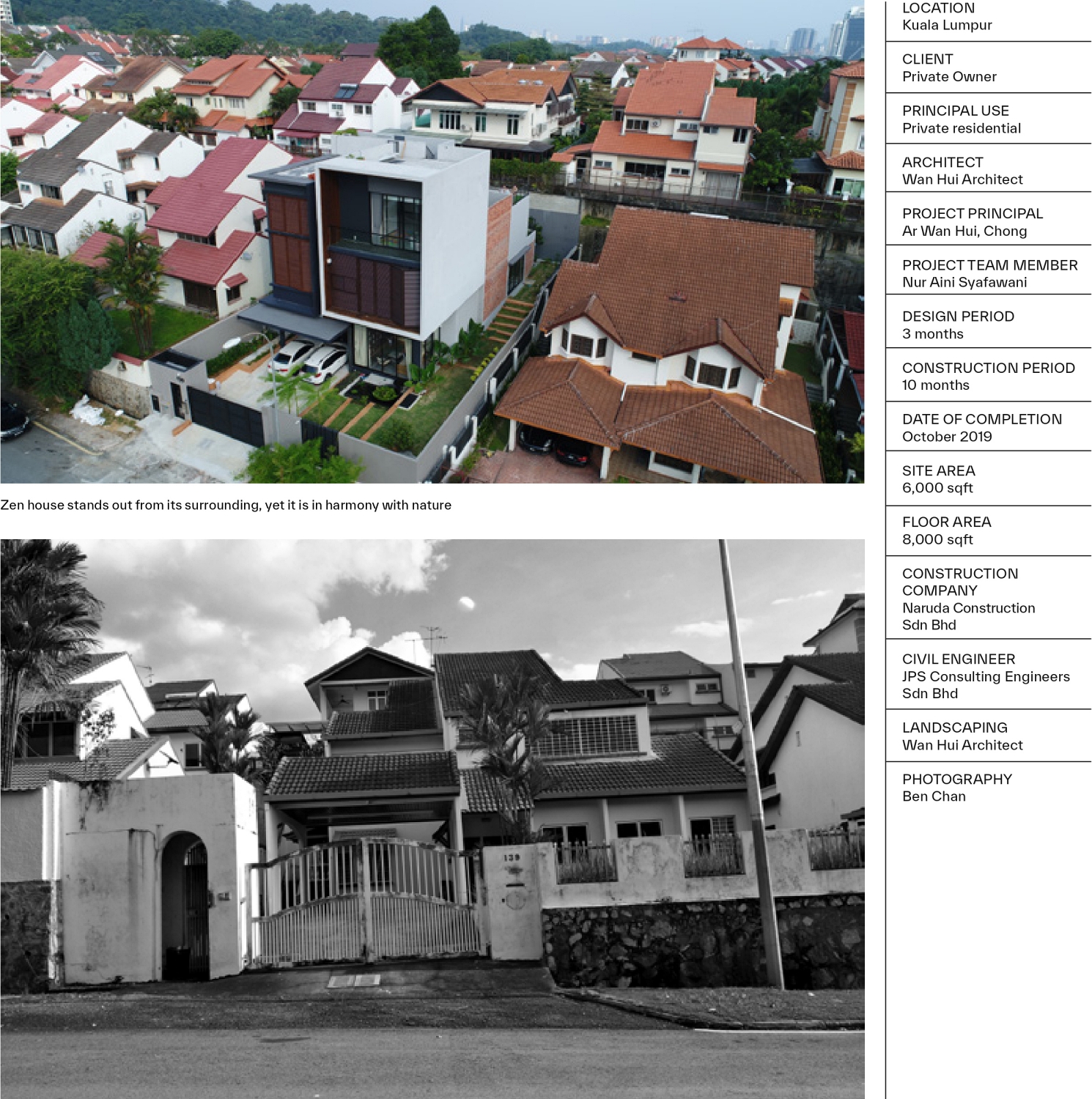
Zen house stands out from its surrounding, yet it is in harmony with nature
The front façade of the old house

FEATURES

RELATED ARTICLES