SECOND NATURE

A home and its aesthetics of imperfection, impermanence and incompletion
Text by designer and homeowner

House 44 is our humble abode that celebrates the notion of being at home.The design of House 44 fuses the familiarities of a simple Australian verandah house that is in dialogue with the tropicality of the place.Borrowing the Japanese concept of wabi-sabi, the design of the home was centred on the aesthetics of imperfection, impermanence, and incompletion.Wabi – expressed through raw simplicity of nature, materiality and space; while, Sabi – evoked through aged aesthetics.

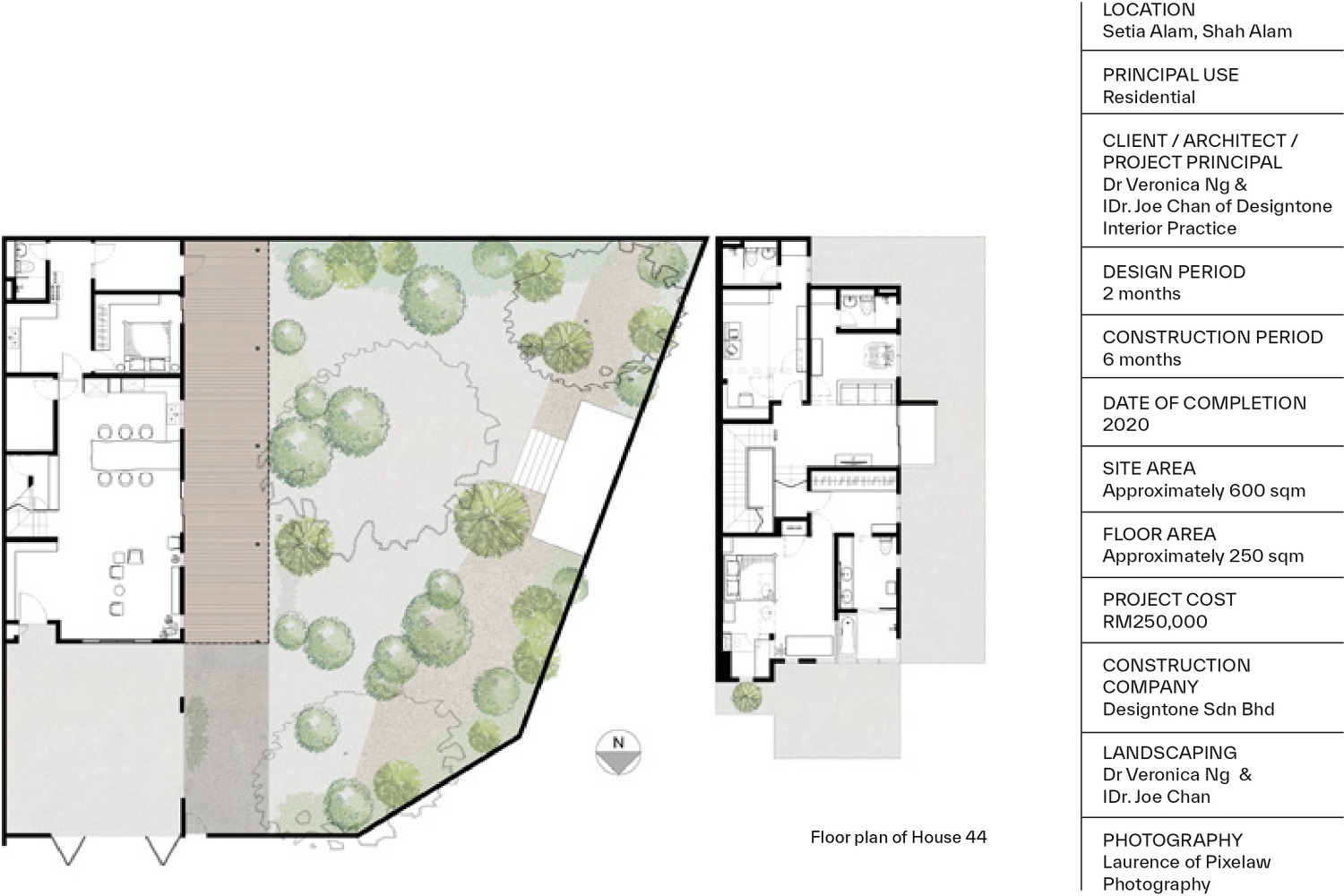
On a site of approximately 6,000sqft, we created an environment that has a balanced ecosystem between ‘space’ and the garden.Spending our education years in Australia, we appreciated the outdoors. Thus, we took advantage of the generous land size and maintained the open space by curating a large garden, contrasting the typical Malaysian mindset of building spaces to occupy excess land.We consciously retained the open space, creating a spatial buffer where a micro-climate and ecosystem flourish.

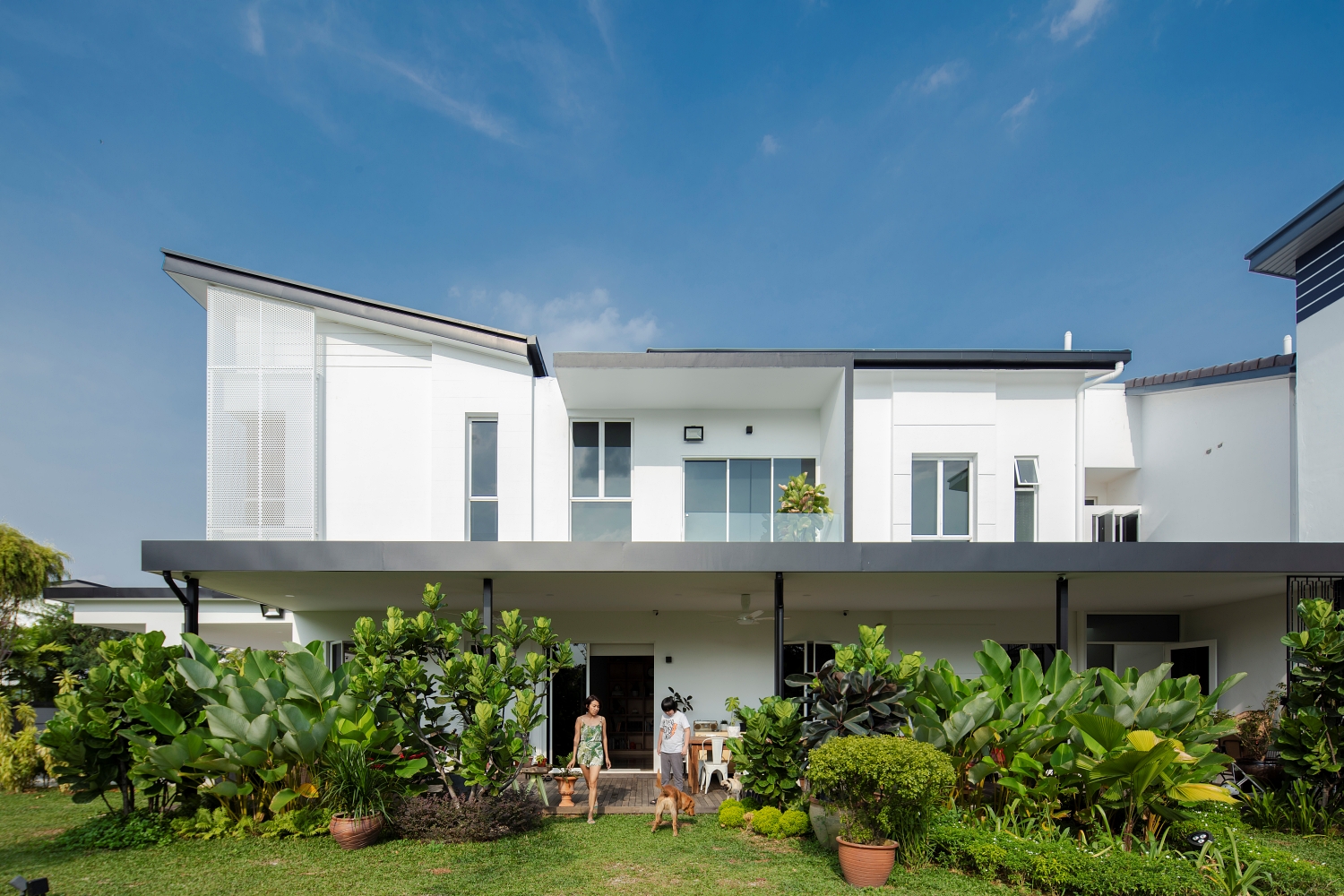
The verandah space at the longitudinal elevation of the house

Being urbanites – commuting, working and residing in the rapid and condensed built environment – our goal is to create a space that is akin to being a gallery, a garden, a retreat in the attempt to fuse multi-programmatic spaces into a place we call home.Being surrounded by natural, transient spaces help us connect to our real world and escape potentially stressful distractions.Building on the notion that space impacts the psychology of its occupants, the house explores the use of natural light, wind and nature to improve the occupants’ well-being.

Analysing the lifestyle of our small modern family of 2 adults and a child, we explored the idea of the house being a singular unified space – the house as a large family room.Bringing lessons and memories from our past homes, our travels and our living habits, we explored a contrasting ground and upper floor.

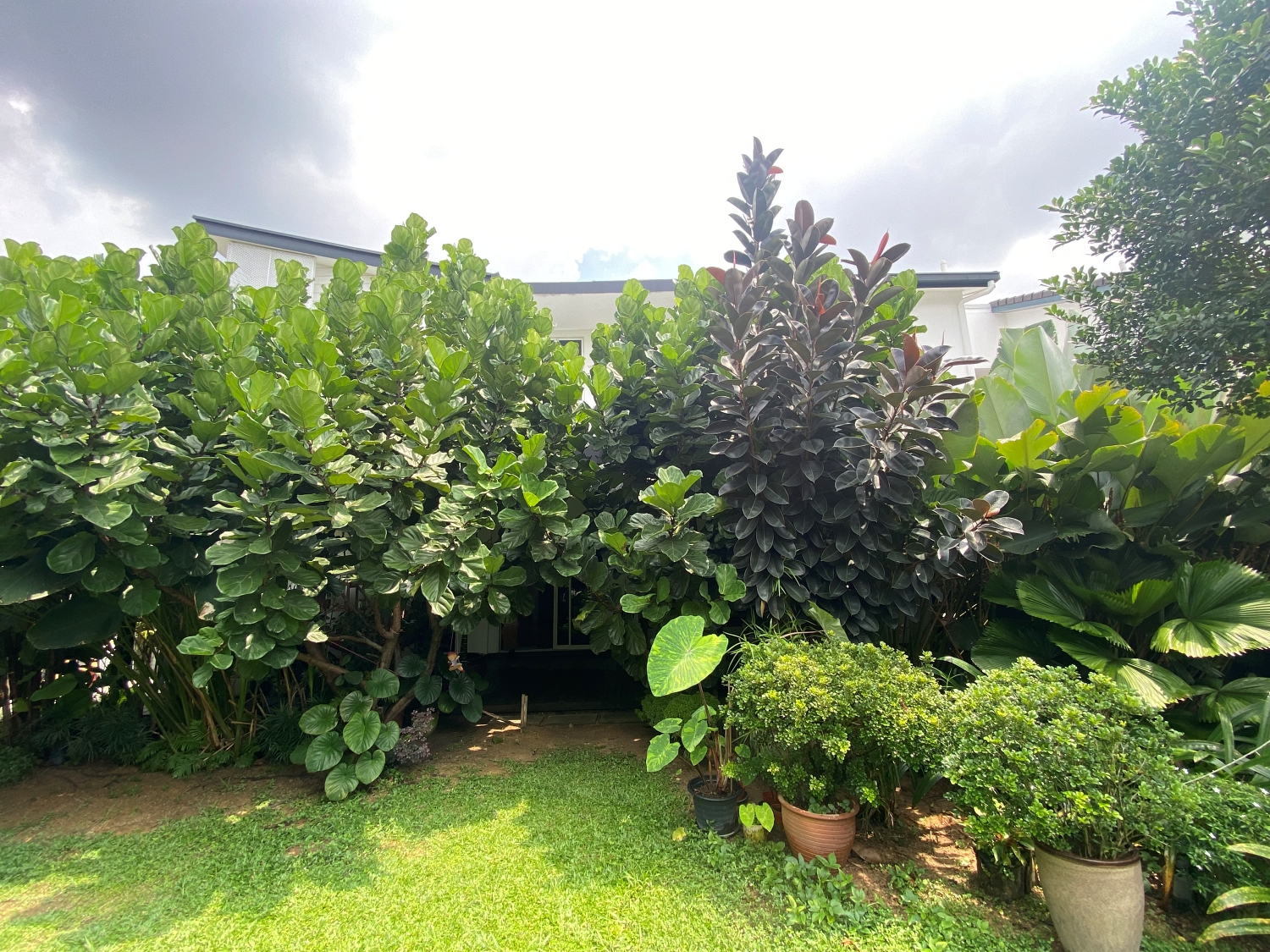
A verdant garden a year later
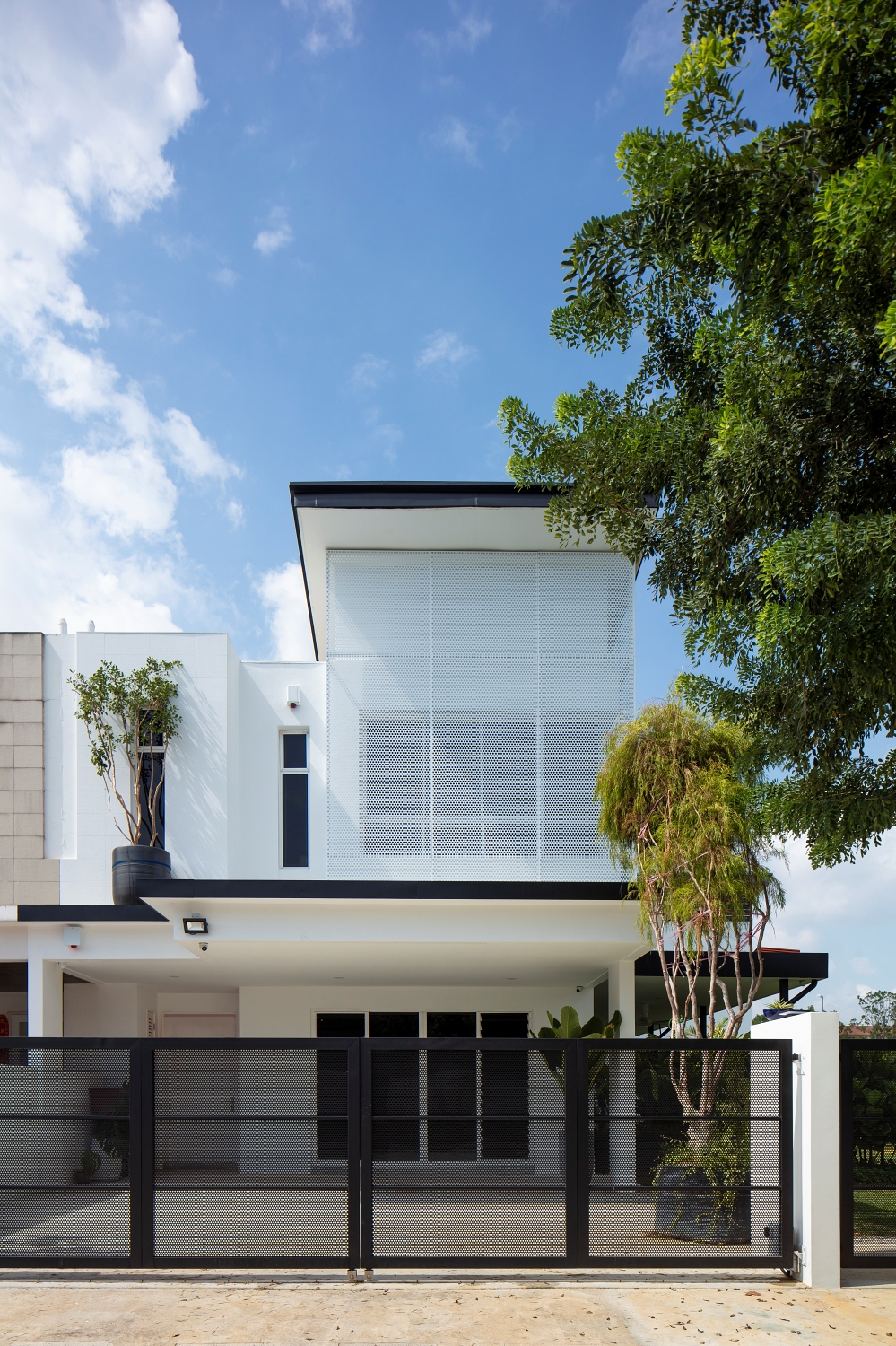
The front facade of House 44
On the ground floor, the living-dining-kitchen-working-patio-garden fuses into a singular space with its functions and spatial qualities changing throughout the day to suit the behaviours of our family. Living in a tropical condition, determinants of shade, wind and light form key aspects of the living environment.We created a linear verandah decked with recycled Merbau timber as a spatial transition between the inside and outside, mediating between the interior and the garden and shading the direct heat and light from the western sun.Having the privilege of a large garden, we curated a tropical garden, creating a comfortable average temperature of 28 degrees Celsius in the house.A few months after moving in, we added a container into the garden to function as a home office and workshop. The garden grew magnanimous throughout a year and a half, resulting in the house appearing as a background shadowed by the garden.
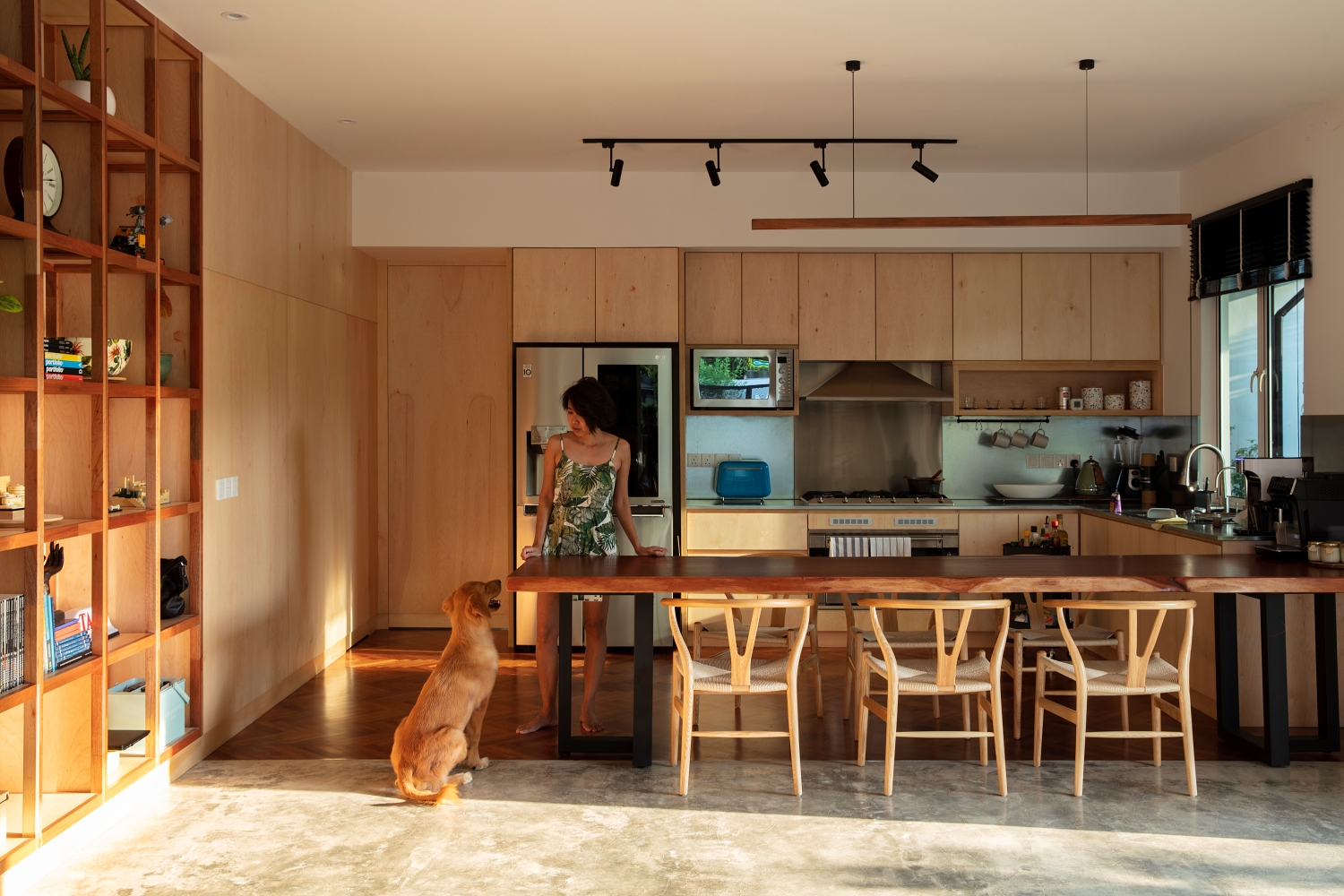
The dining space and kitchen

Sitting at different spots within the house, we experience a tapestry of view, nature, light, and shade.We can sense the exterior from the interior – such layering of greens was achieved via the borrowed landscape from the external streets.In totality, it is a space where its occupants can live through the senses and engage in daily life through a heightened awareness of their environment.

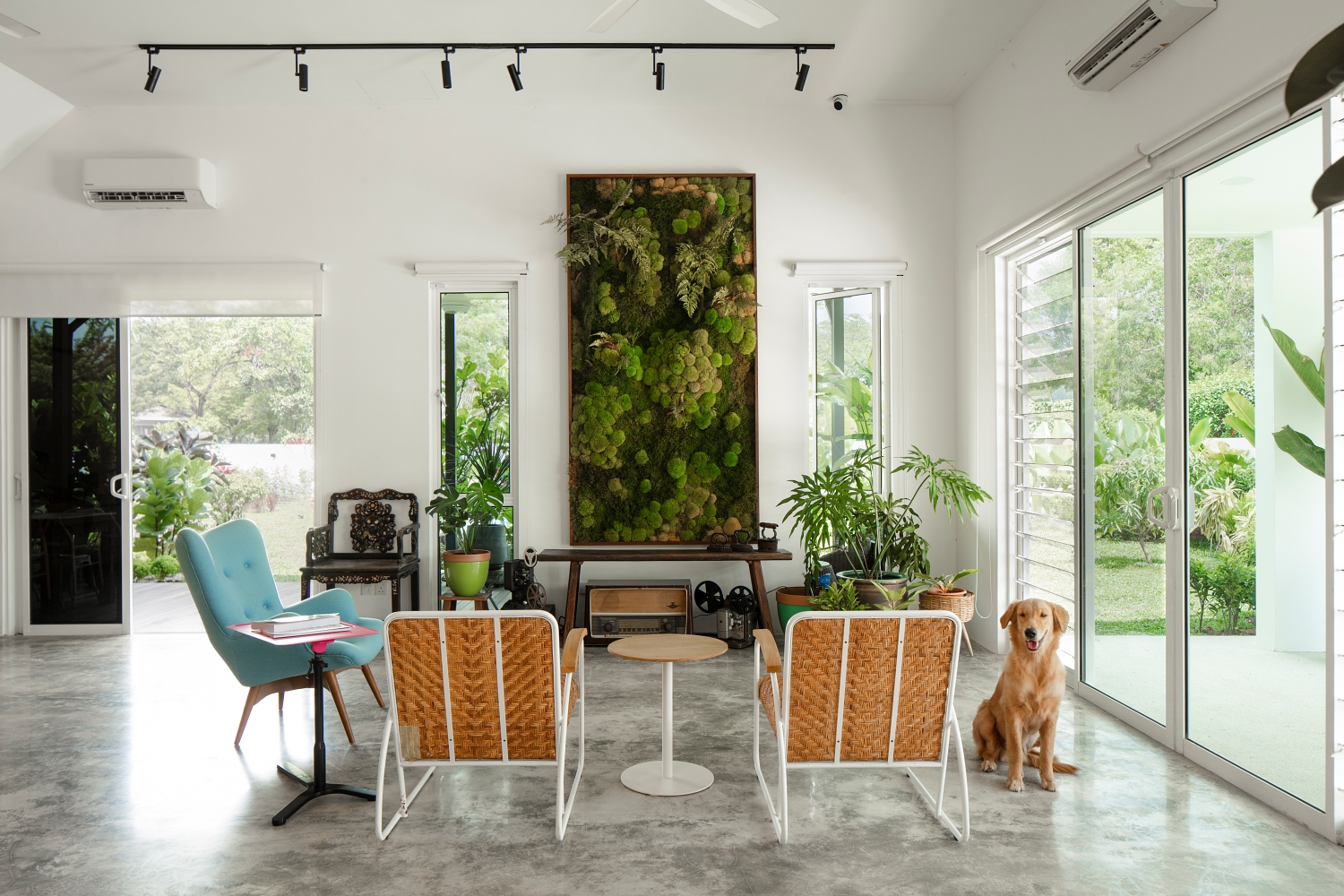
Adorned with a combination of interior finishes of cement, plywood, natural wood, vintage and aged pieces that were passed down from generations, the house accepts and celebrates imperfections and portrays a sense of impermanence.Amplifying the dialogue between the garden and the interior, the garden was scaled into the interior artfully with a large botanical installation of preserved moss wall by plant artist Ronnie Khoo.

The living space
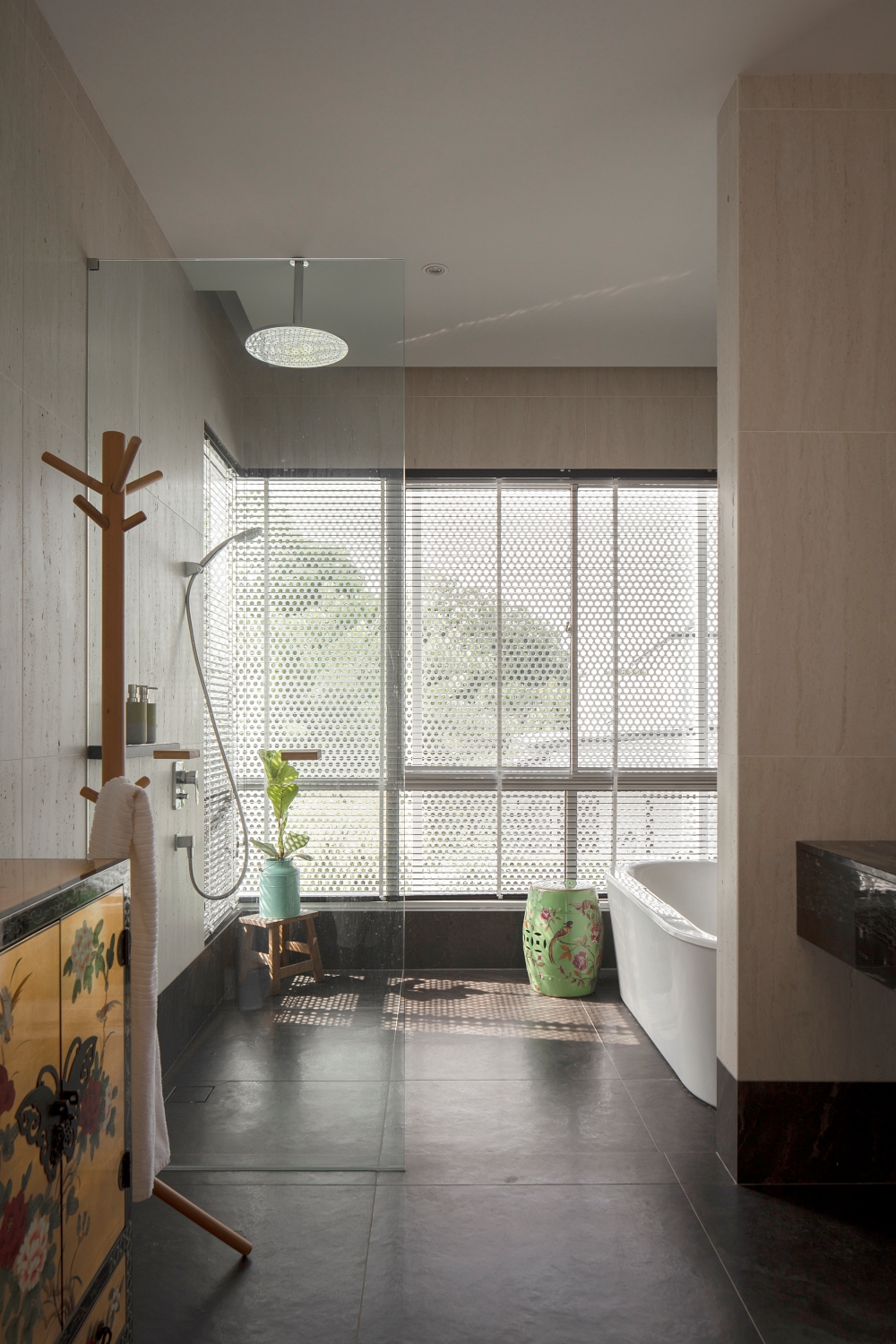
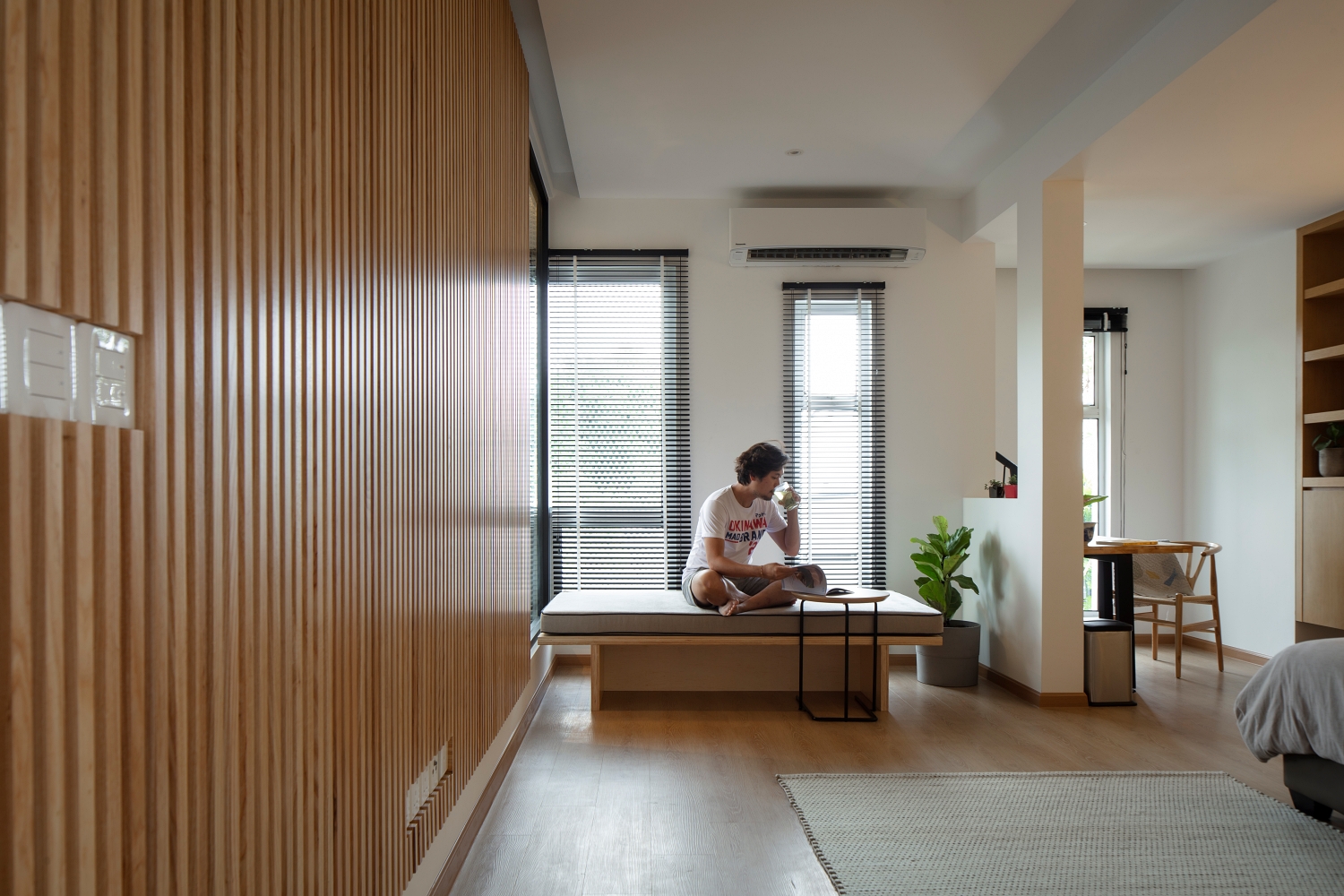
Contrasting the openness of the ground floor living space, the upper bedroom is a private and intimate space, designed to embody the minimalist philosophy.Again, the spaces make use of natural materials, rejecting clutter and allowing the rooms to be relaxing and soothing.Only one particular space that we wanted to look polished is the master bath which is purported to contrast from the overall design approach.
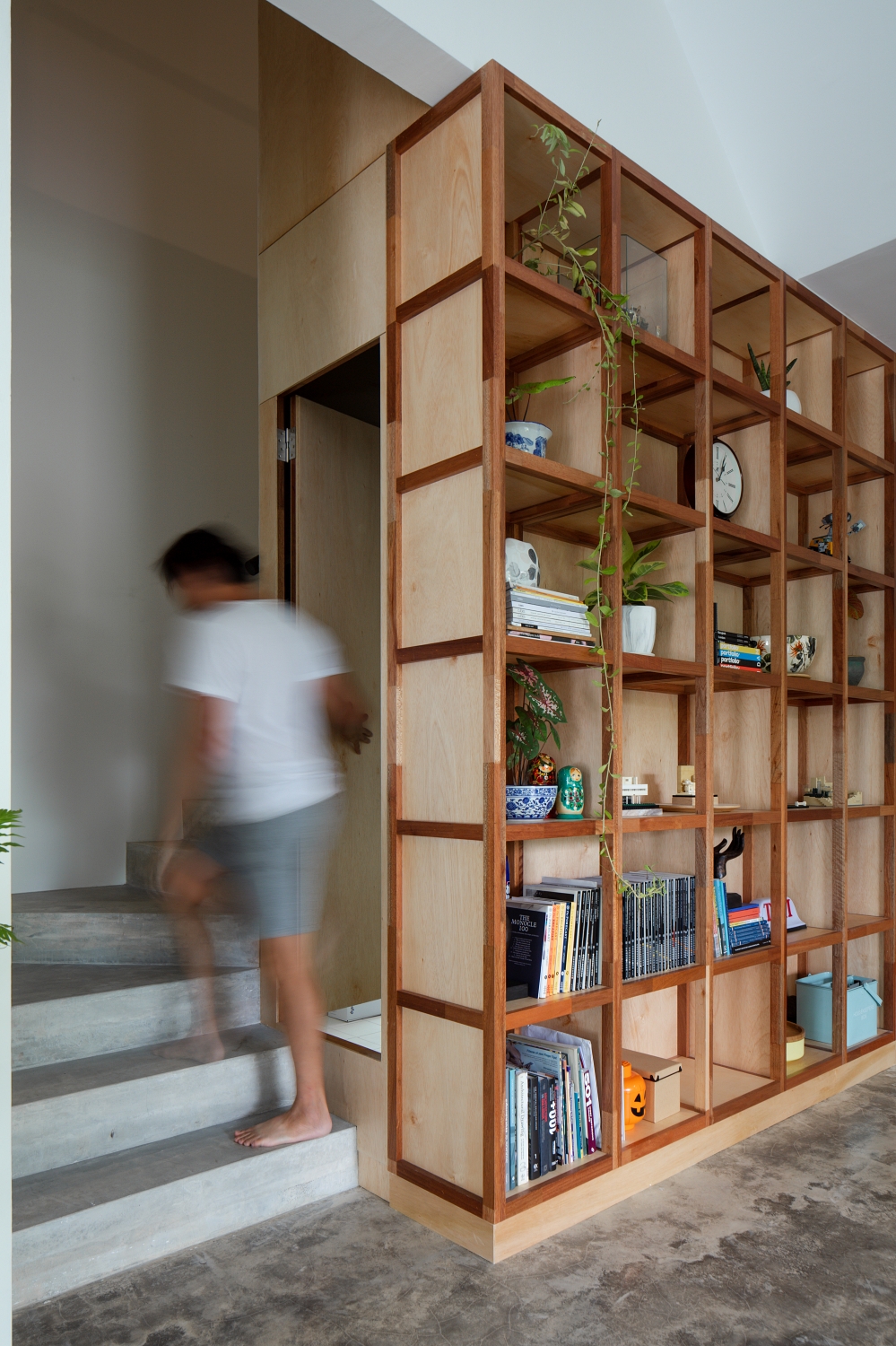
Concealed storage to maximise spatial efficiency

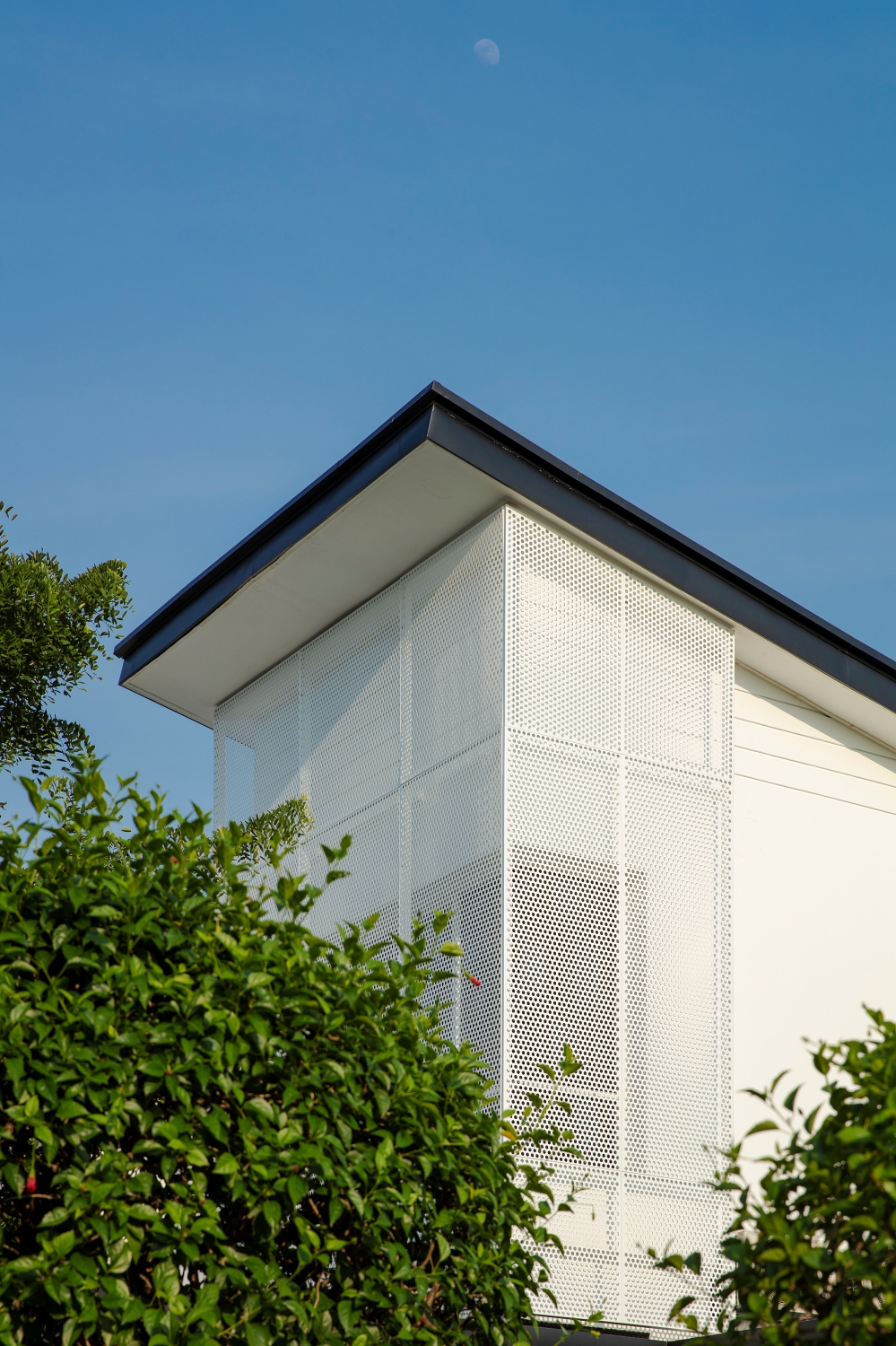
Sited within the quiet suburb in Setia Alam, the two-storey semi-detached house took on minimal intervention and disruption to the original architecture as not to disrupt the neighbouring architecture.The approach has to be subtle yet distinct and this was executed by giving an extension of verticality from the first-floor level to the highest point of the roof by using a perforated screen and also to provide a little sense of privacy to the peering large window at the master bedroom and bath.The demarcation on the existing unit from the neighbour is also subtly punctuated by using a large pot and tree, further giving character to the front of the architecture.

Collectively, the house becomes a living environment – one that is physical, emotive, and psychological – exemplifying the spirit of being at home.

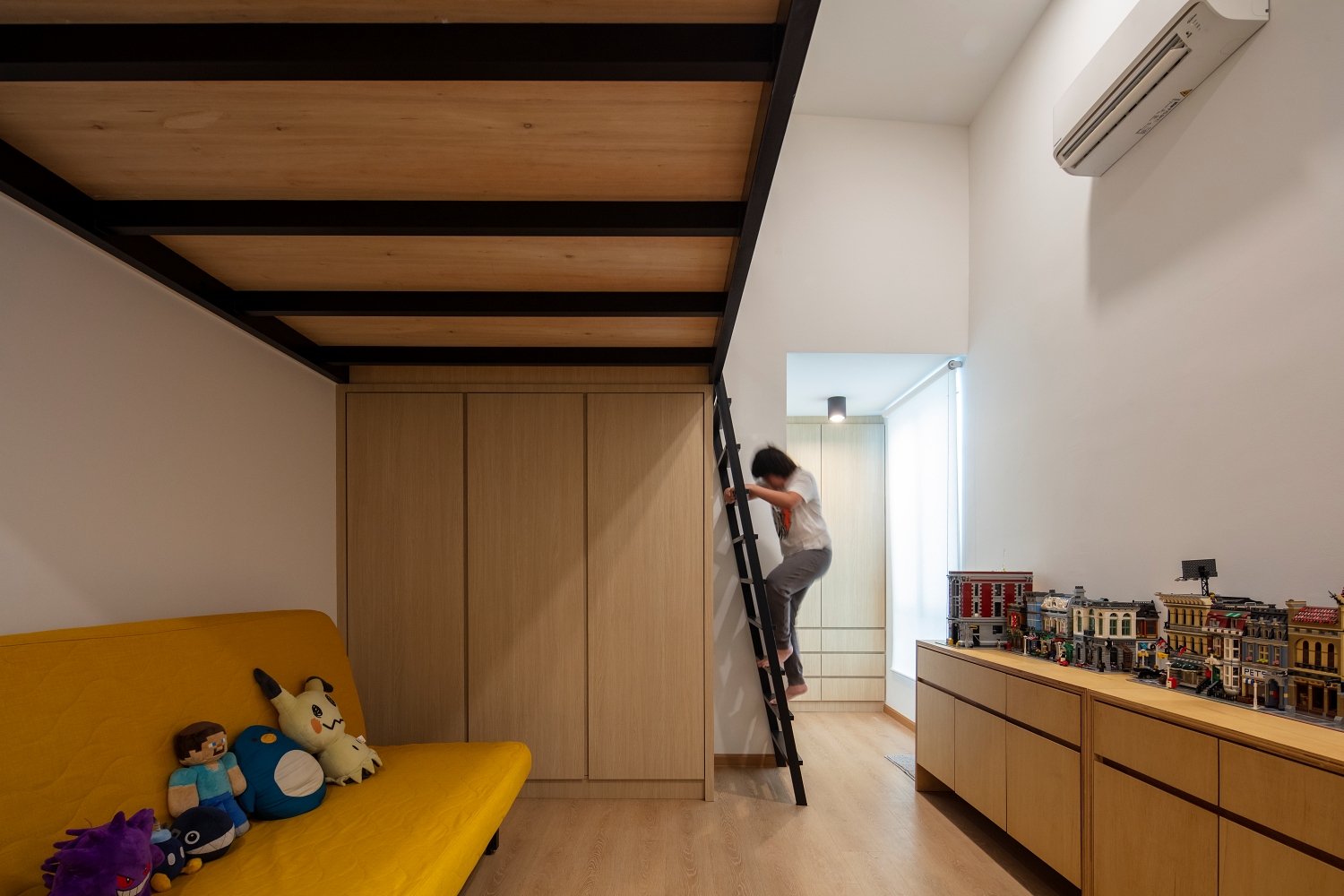
A loft space in the bedroom to maximise breakout space for play at the lower level
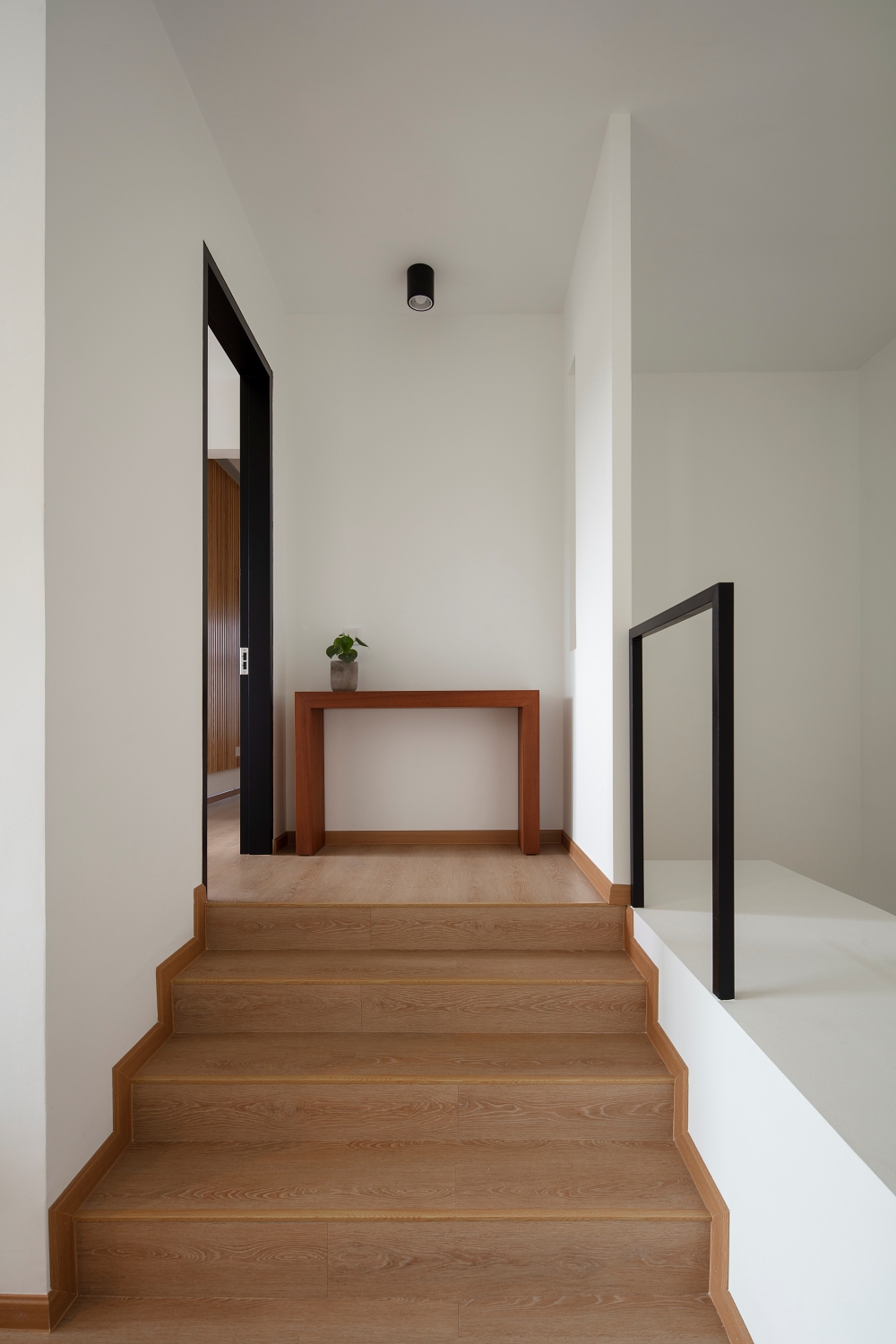
Entry foyer into master bedroom
Master bedroom bath space
Reading space in the master bedroom
Floor plan of House 44

FEATURES

RELATED ARTICLES