FLIGHT OF THE KETITIR

Angled louvres enveloping the house harness the infinite natural resources,
turning Ketitir House into a perpetual theatre of light and wind
Text by the architect

Nestled in a farm-like setting at the fringe of the city, the Ketitir House provides a shell for the occupants to fit-out and develop edible gardens reminiscing the site’s agricultural past.

The project reinforces a participatory relationship between Client, Architect and Contractor, by allowing the small budget to act as the catalyst for creative and quality solutions.Empowered by the Architect’s guidance, the Client was actively involved in the design development and decision-making for construction, interior fittings and landscaping of the house.

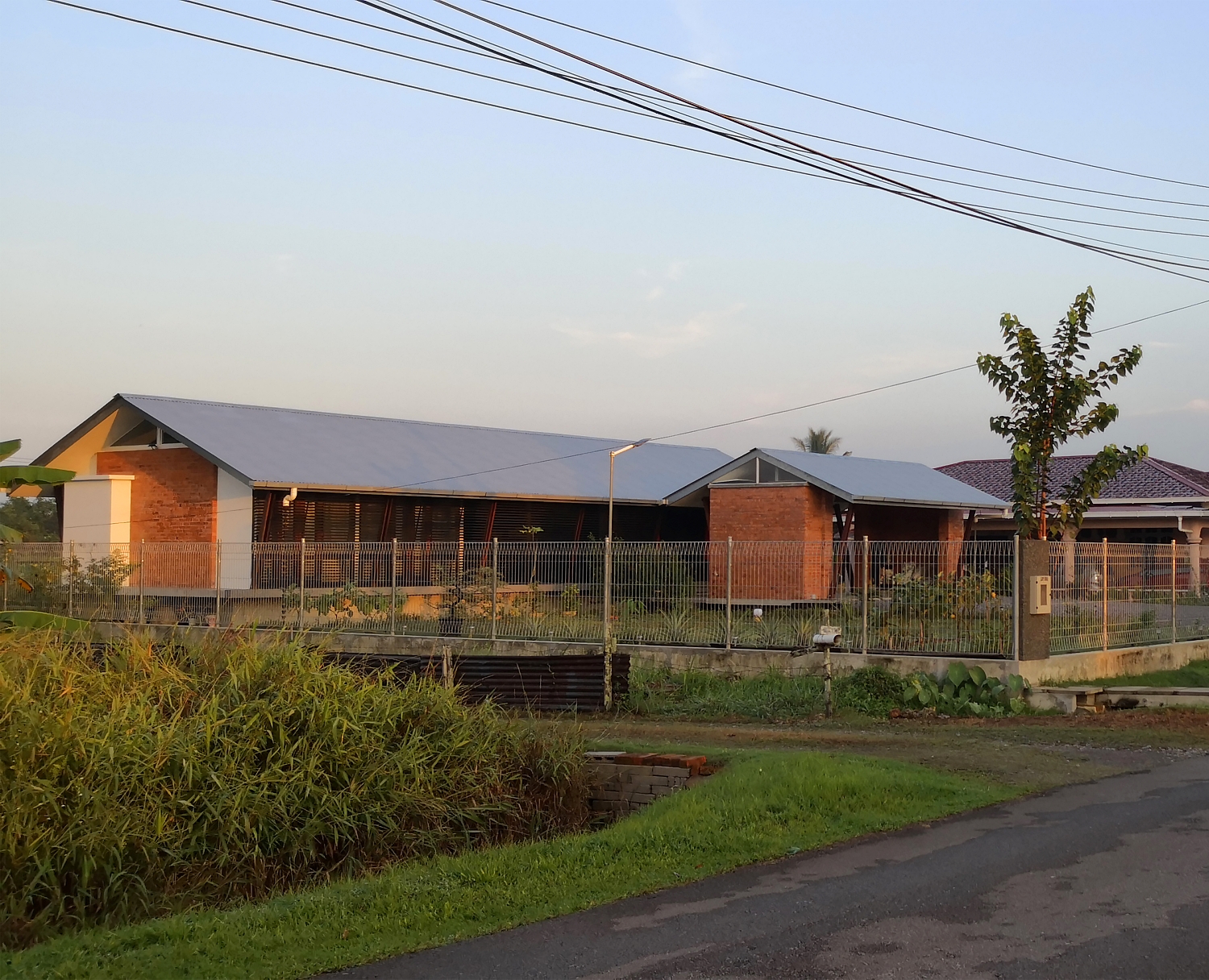
View of Ketitir House from the main road
This house challenges the Client’s perspectives on what they perceive a house should be.The process interrogates socio-cultural traditions and sustainable design principles, whilst encouraging the occupants to rethink their present and future way of life. Inspired by the traditional chicken coop, the house is constructed using locally sourced and commonly available materials.It harnesses the freely-available “infinite” natural resources such as light and wind with simple, effective, yet low-maintenance solutions.
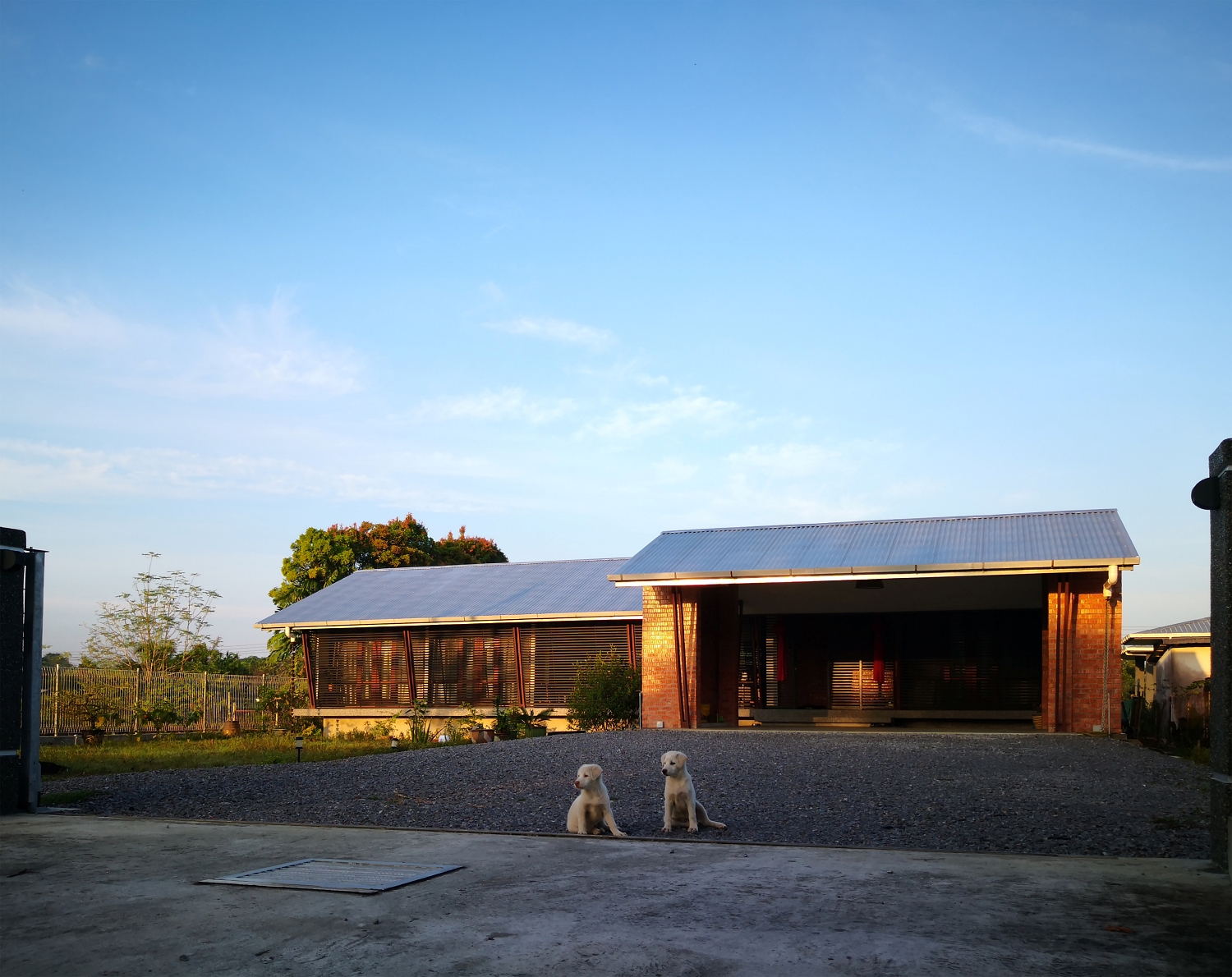
Simple pitched metal roof with wide roof eaves provide protection from the elements
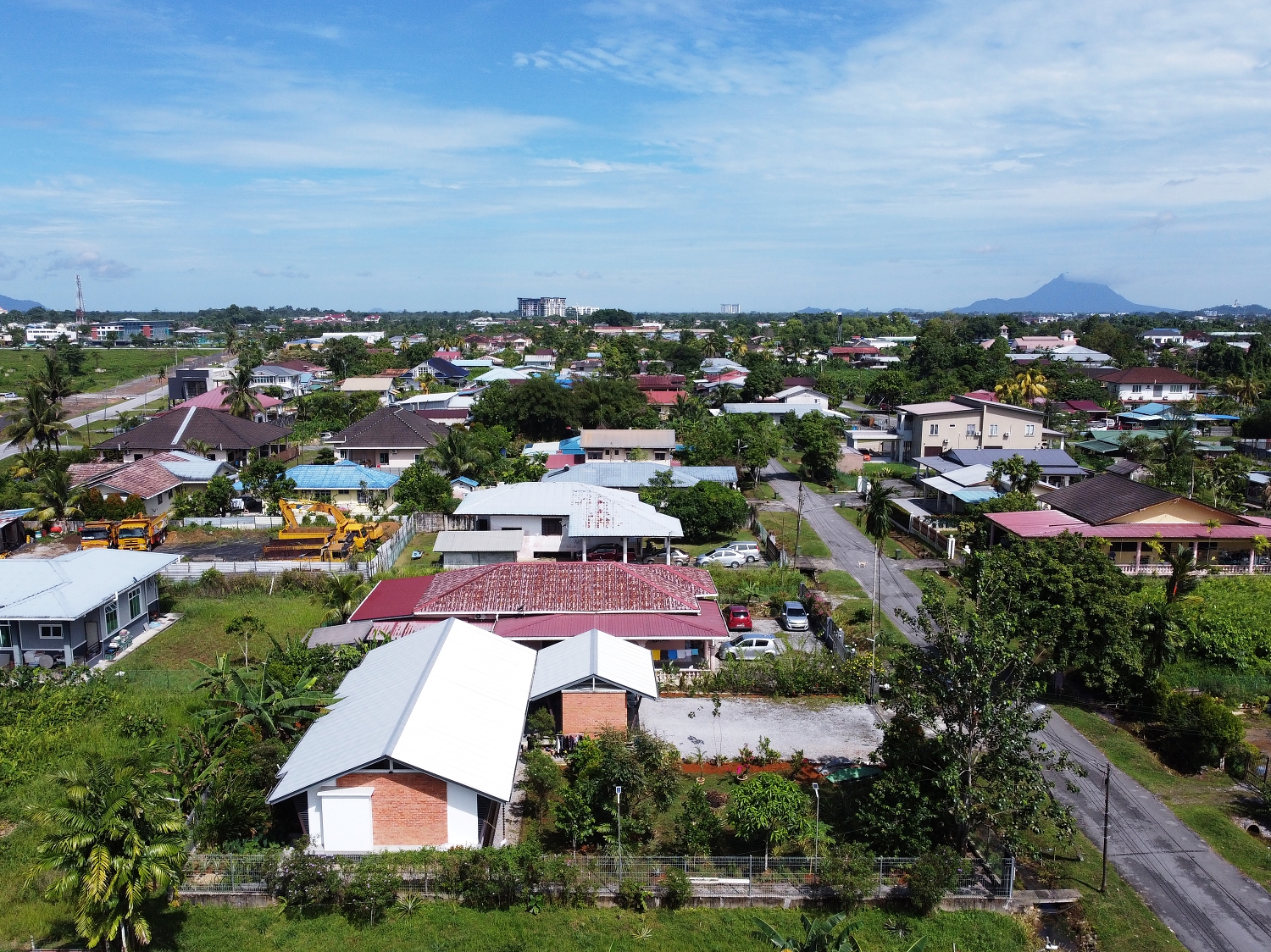
Aerial view of Ketitir House with surrounding context

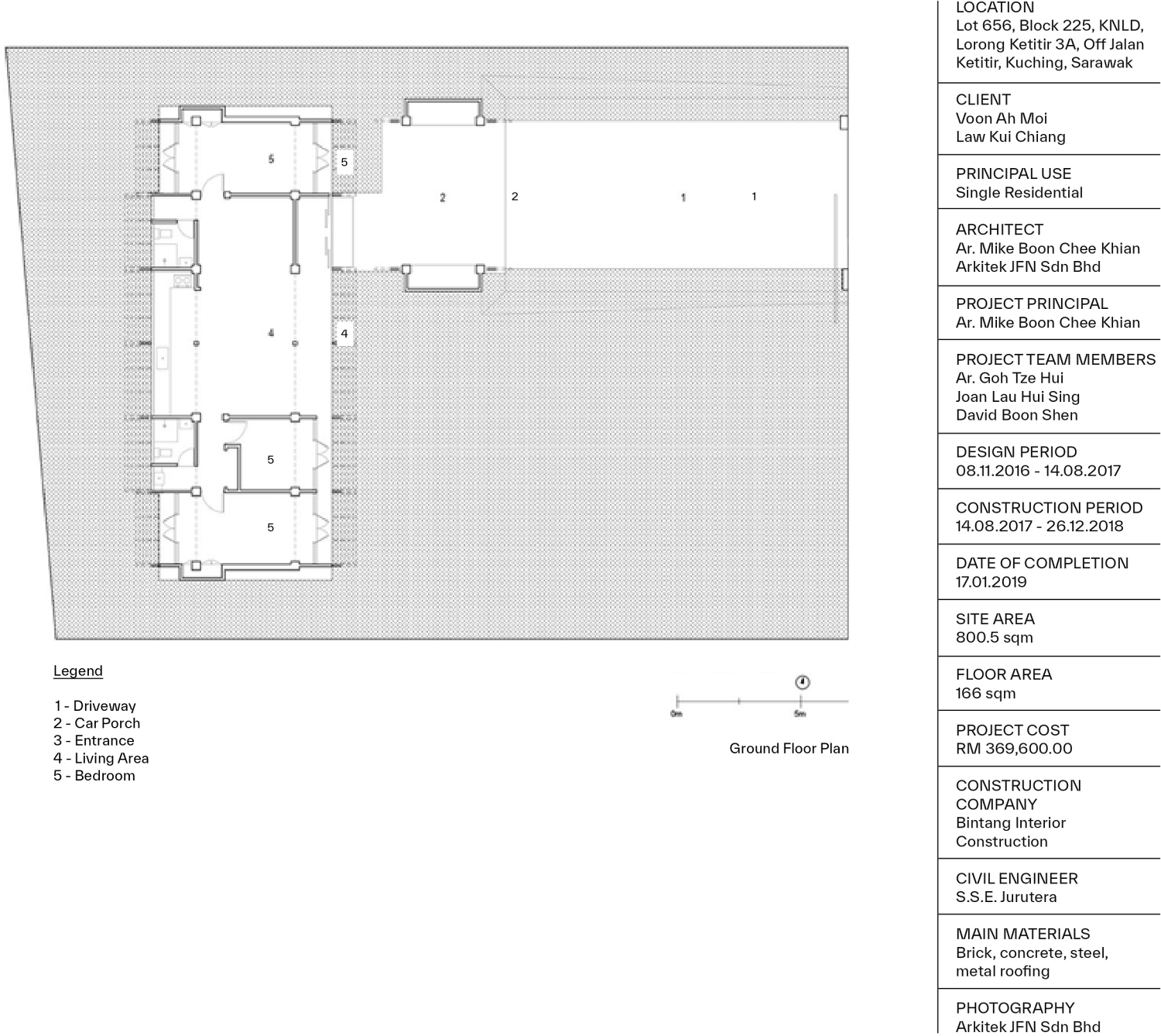
The design delivers a simple single-storey linear plan with flexibility to facilitate future changes.

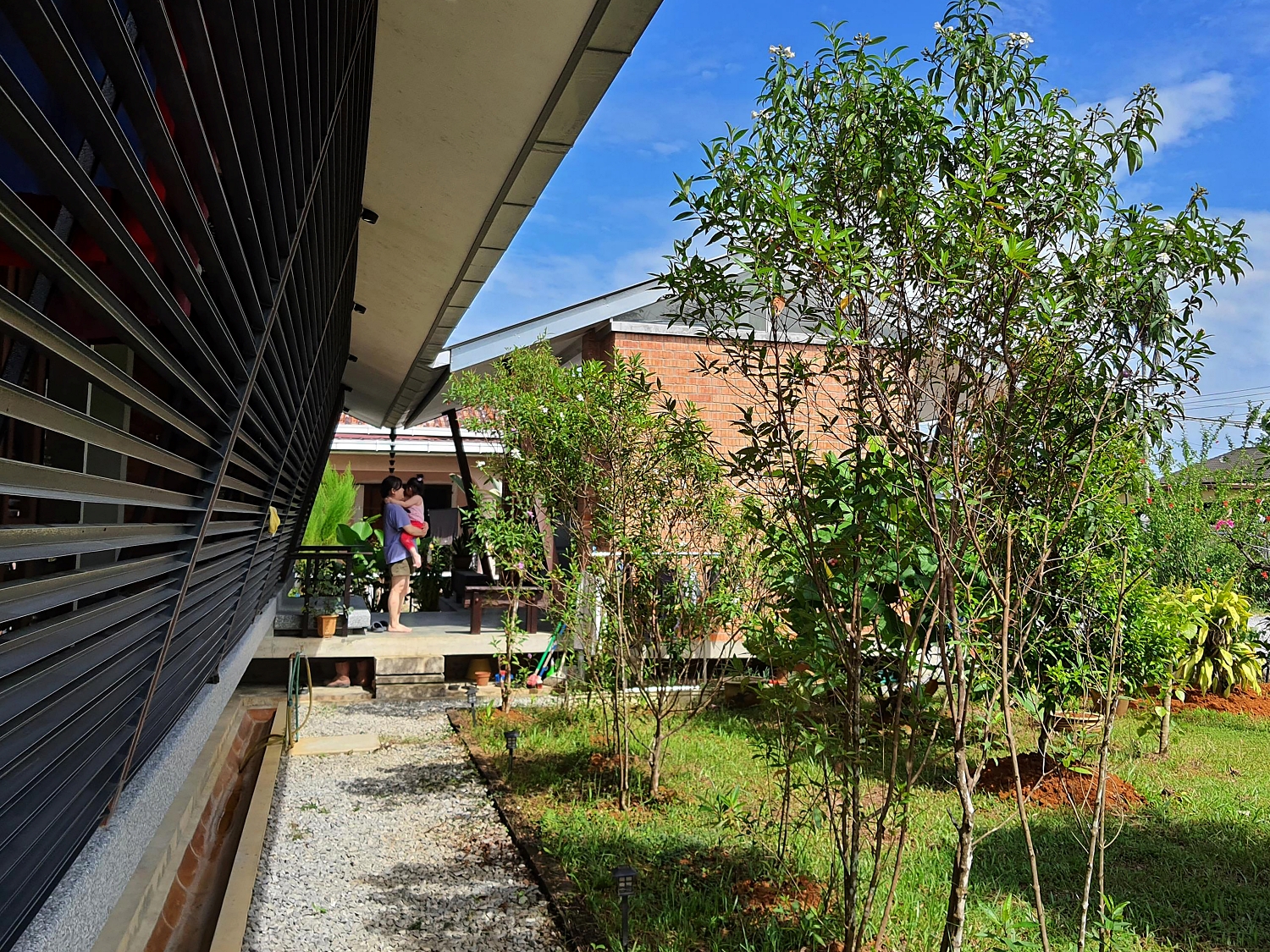
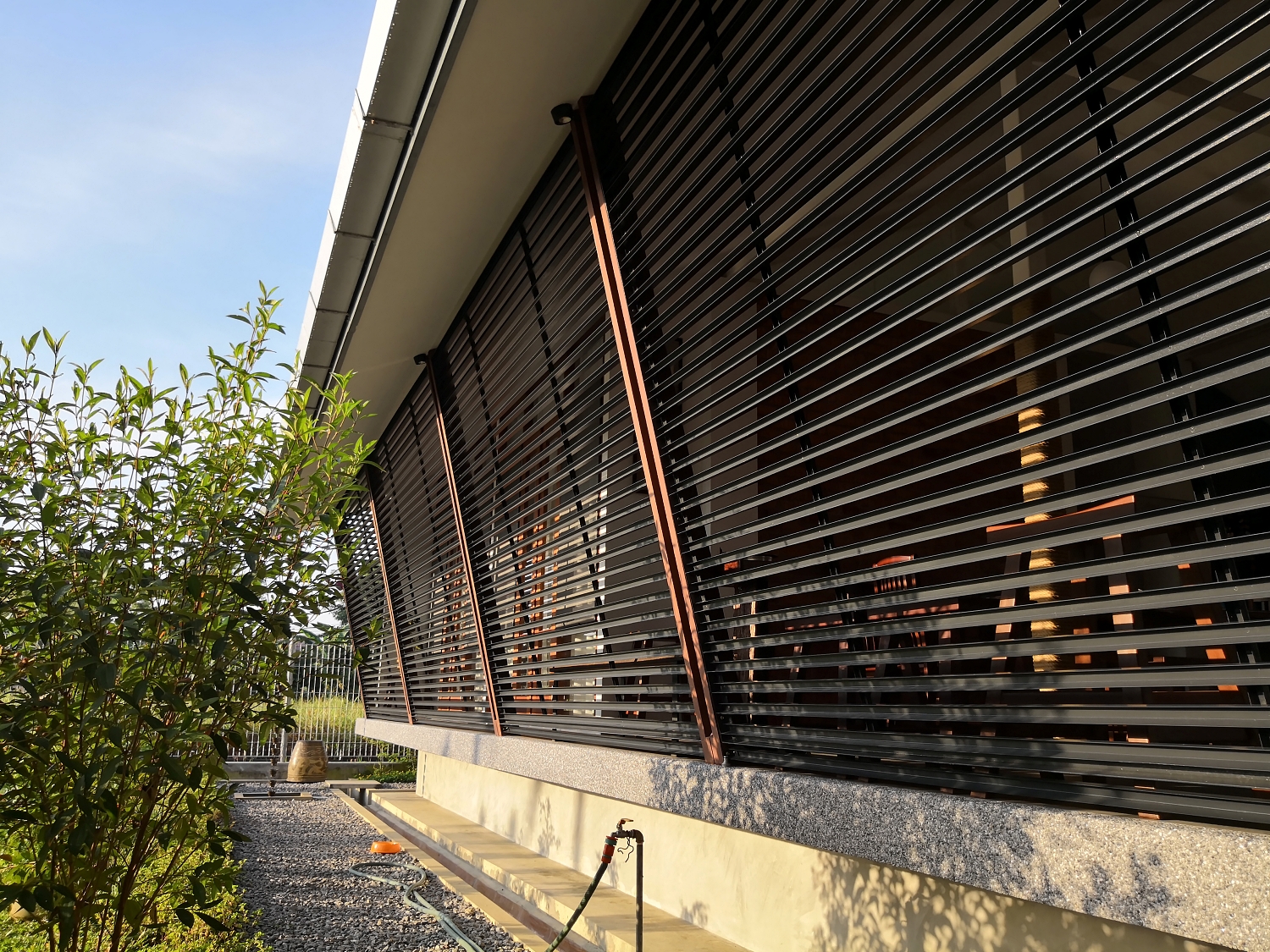
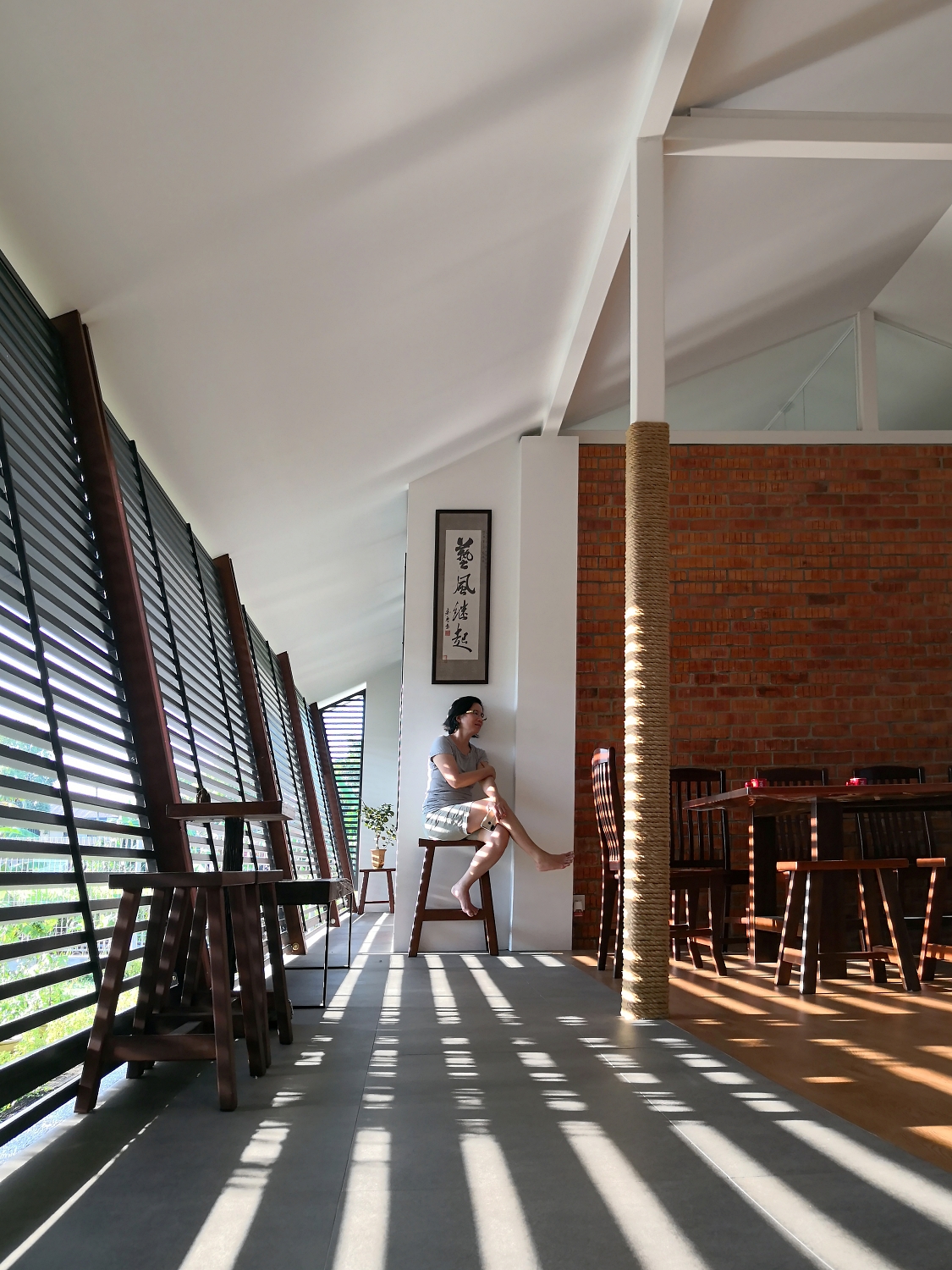
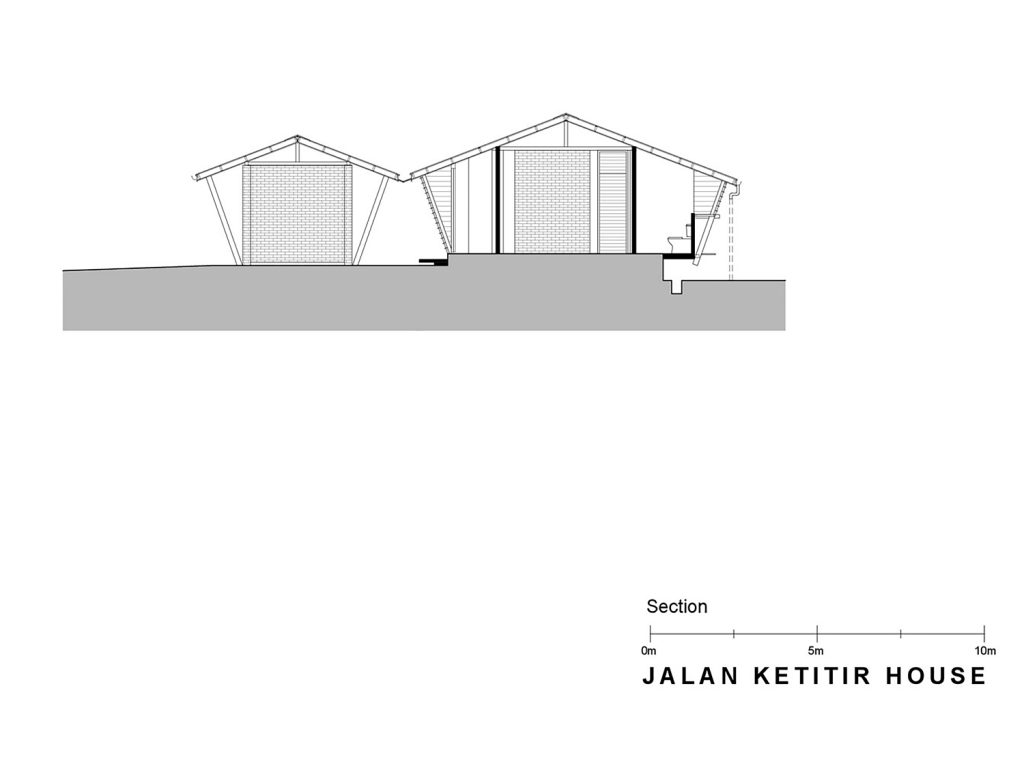
The building sits on an elevated 7m x 18m platform with the bedrooms at both ends, separated by the central living / dining / kitchen spaces.Optimised for cross ventilation, the building platform is oriented with its long elevations facing Northeast and Southeast.The wide roof eaves provide protection from the elements, while the angular profiled metal louvre screens allow for continuous natural ventilation, regardless of the weather conditions.

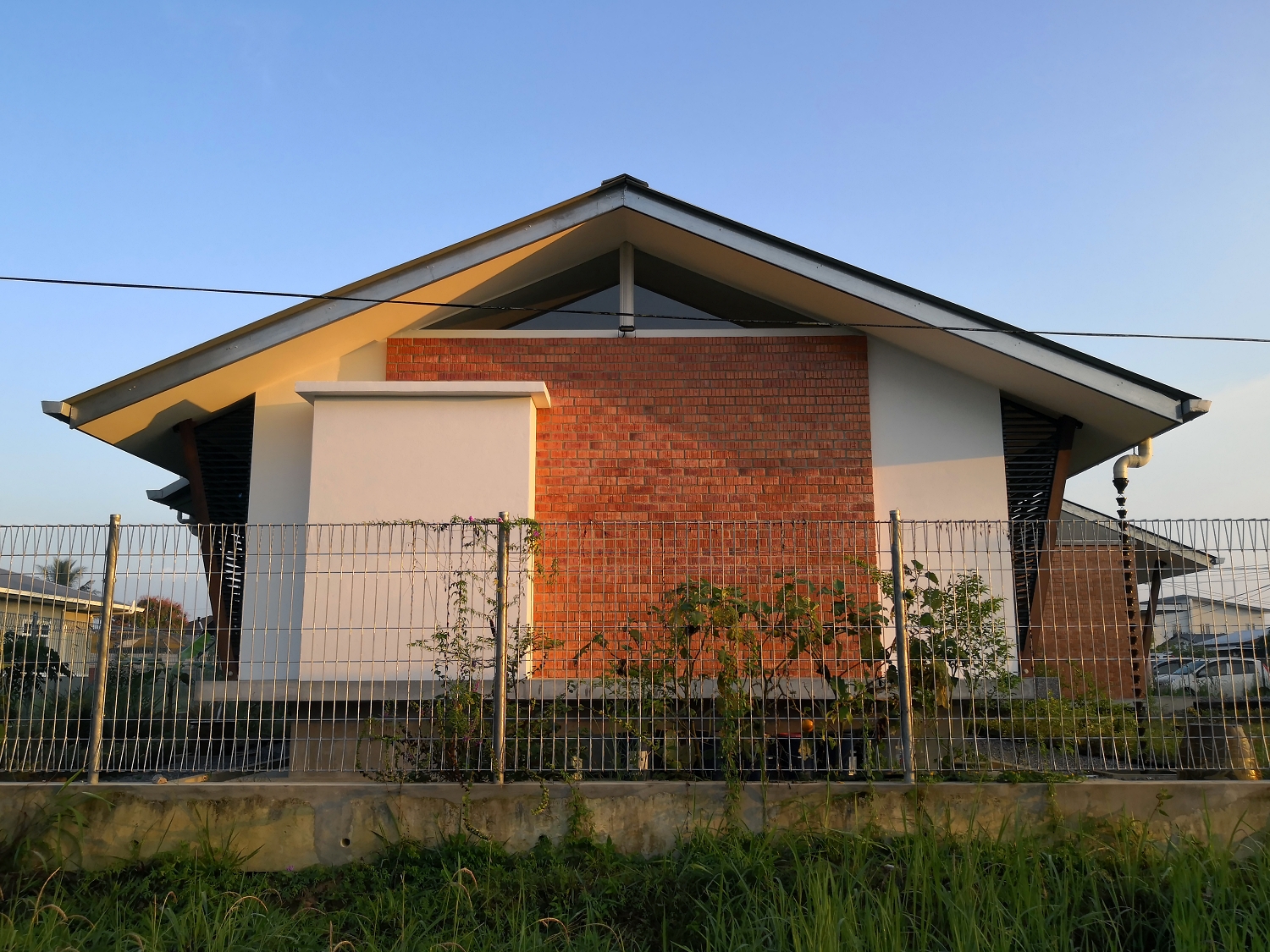
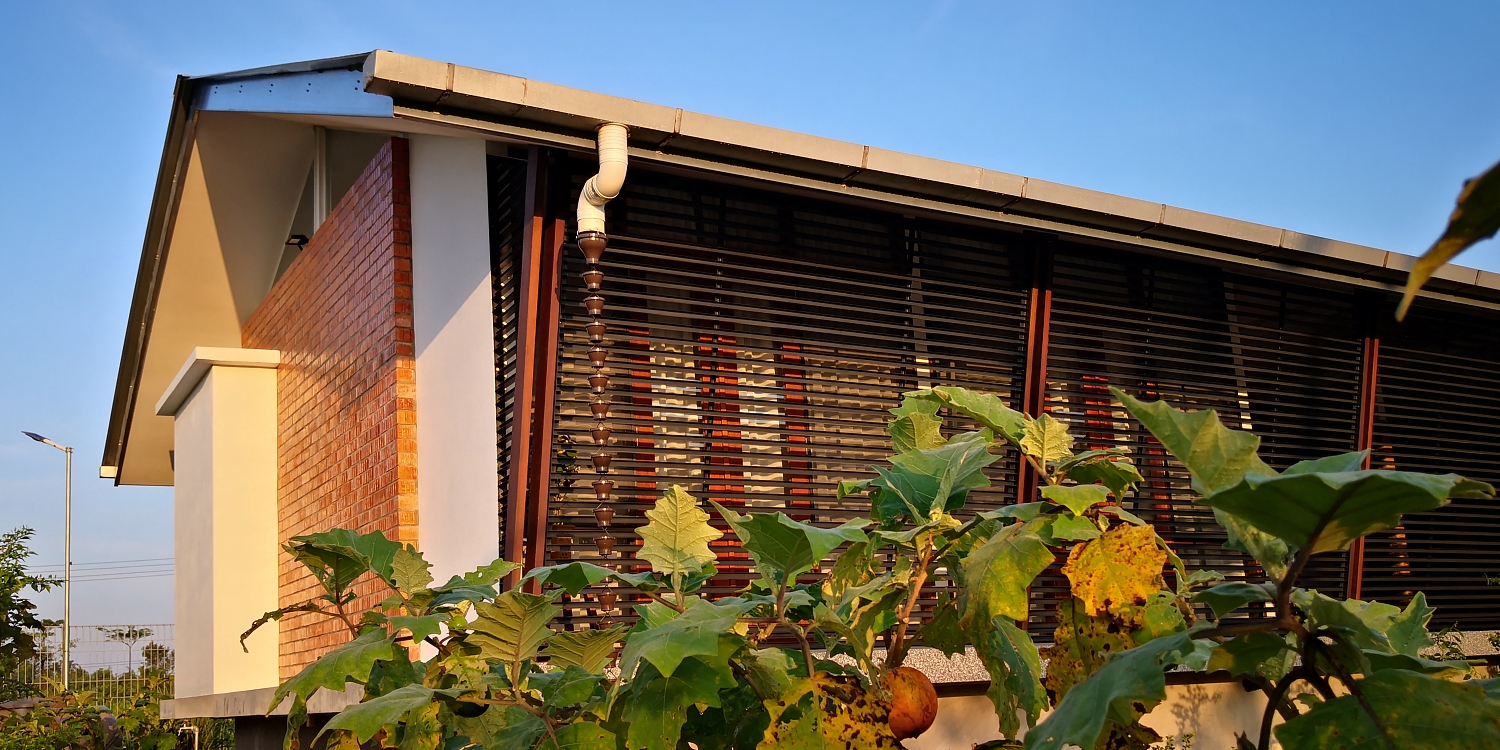
Run-off from the metal roof is redirected into large earthen jars with the use of rain chains, whereby the harvested rainwater is used for watering the edible garden cultivated by the Client as part of their dynamic landscaping.

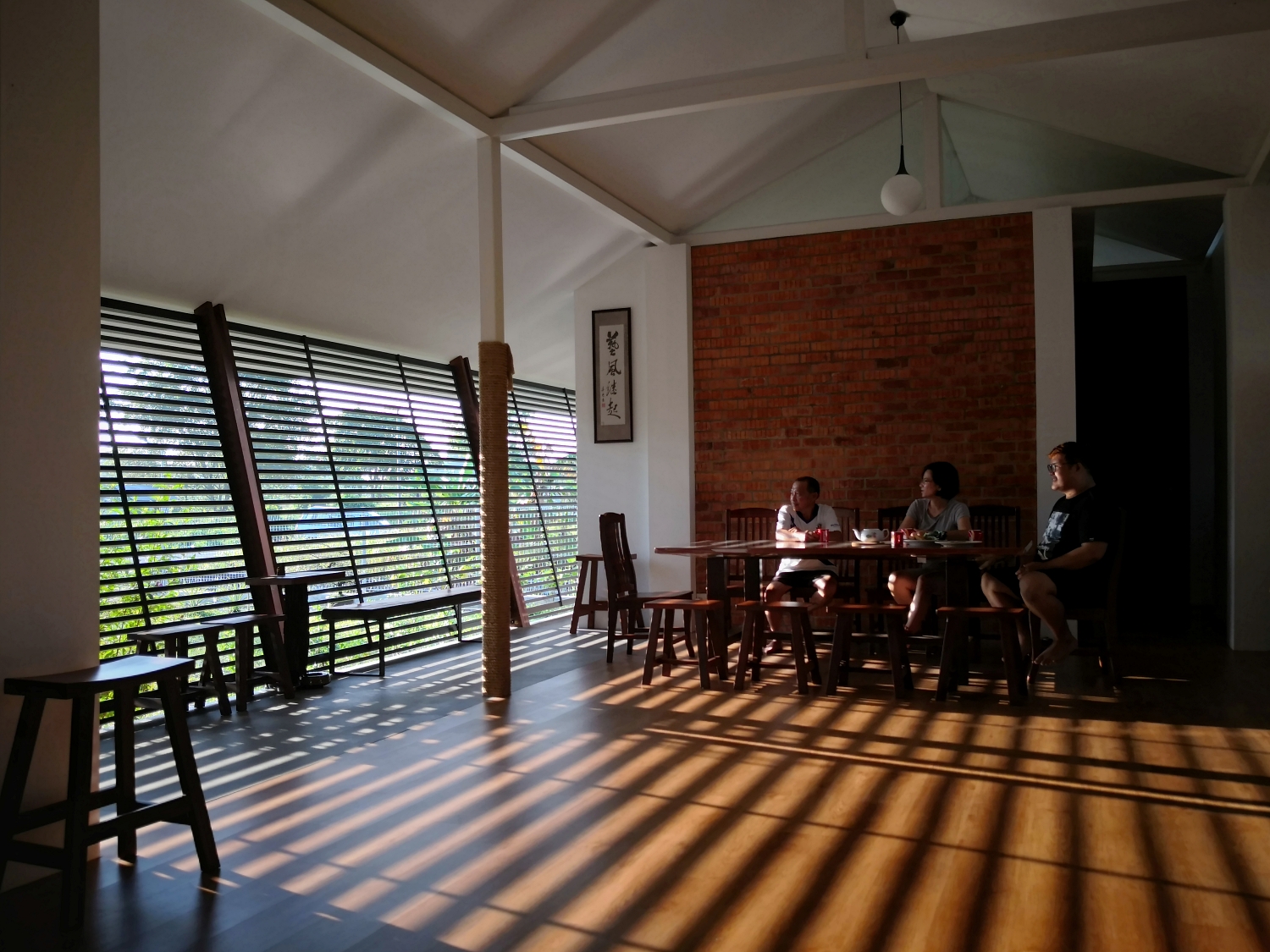
The dining space and kitchen
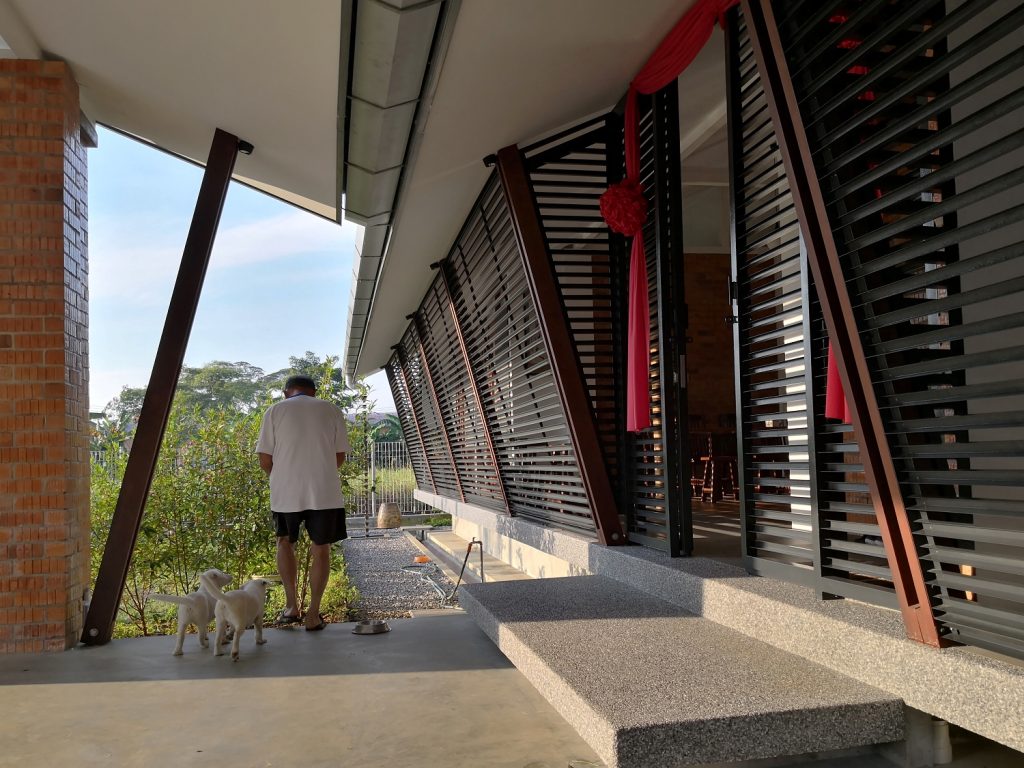
Threshold space between carporch (left) and living spaces (right
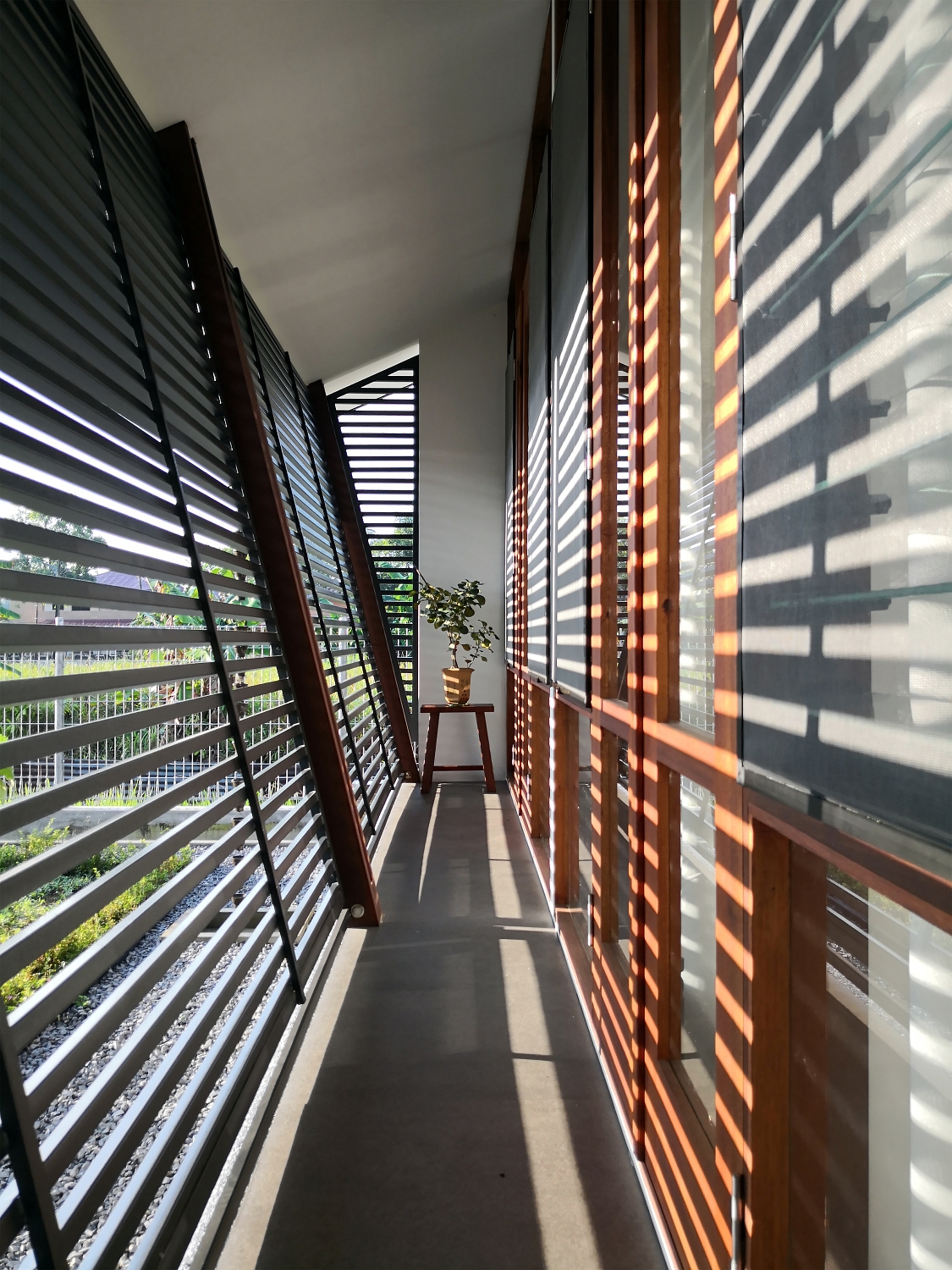
Angular profiled metal louvre screens doubles as a security feature as well as a sun shading device to cut out glare and direct sun from heating up the internal spaces.
Edible garden as landscaping
Natural lighting permeating throughout the house, a play of light and shadows.
The external metal screen acts as a second skin to further protect the building from the elements, allowing the bedroom to be fully cross-ventilated, regardless of weather conditions.
The living / dining spaces are fully cross-ventilated
Ground Floor Plan
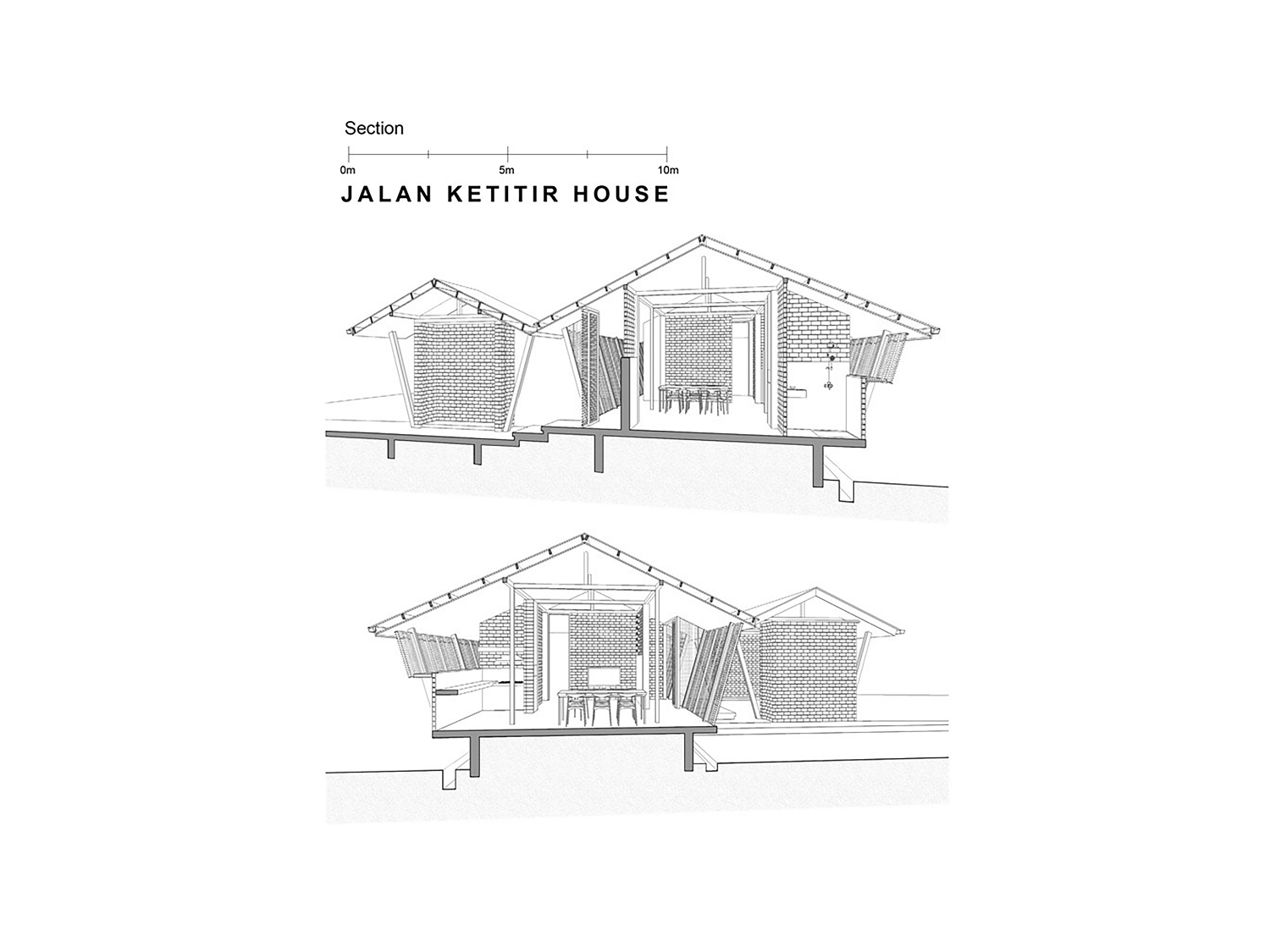
Section Plan
Section Plan

FEATURES

RELATED ARTICLES